Seeing a Grasshopper Meaning: Luck, Bible and Omens
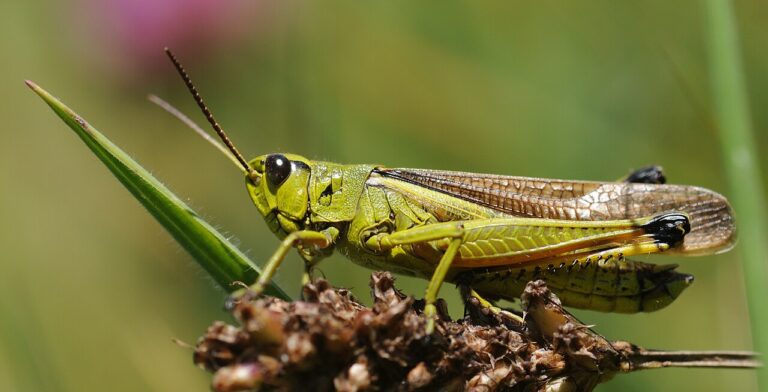
Spiritually, seeing a grasshopper is a call to leap forward, to trust a move you have been weighing, and to stop waiting for perfect conditions. A grasshopper covers ground by jumping, and that single motion carries most of its meaning. This seeing a grasshopper meaning sits beside a plain biological one, because most sightings happen where grasshoppers feed, rest or follow light.
The Bible names grasshoppers in Numbers, Leviticus, Ecclesiastes and Isaiah, and none of those verses makes the insect an omen. English translations of Greek sources add a golden hair ornament in Athens and a careless singer in Aesop, although the original insect is a cicada. In temperate parts of the US, adult grasshoppers are typically conspicuous in summer and fall, with timing varying by species and climate.
As a sign, a grasshopper points to a leap of faith, steady progress and good timing. Biologically, a sighting reflects season and habitat. Grasshoppers can enter houses accidentally through open doors or damaged screens, and some species gather around lights. Green is a normal camouflage color in several species and is not inherently rare.
What is the spiritual meaning of a grasshopper?
The spiritual meaning of a grasshopper is forward movement backed by trust. The insect jumps before it can see exactly where it lands, so it stands for the step you take without full certainty. Its hind legs store energy and release it in one burst. That pattern turns into a lesson about preparation followed by sudden action.

Patience is the second layer. A grasshopper typically develops through several nymphal stages before reaching adulthood, although not every species develops functional wings. That gradual growth makes it an image of change that arrives in stages. A sighting points to a process that is further along than it feels.
Change is the third layer, and it ties the first two together. The grasshopper develops from an egg through nymphal stages to adulthood, with timing depending on species and climate. Seen that way, the insect tells you that the current phase is short and the next one is close. Its message is simple. Prepare, then jump.
What is a grasshopper trying to tell you?
A grasshopper is telling you to stop circling a decision and make it. Once disturbed, the insect does not sit on a stem and deliberate. It jumps, lands and adjusts. That sequence is the message for anyone stuck in planning mode.
The second part of the message concerns scale. Grasshoppers are small, yet they clear distances far beyond their own size. A sighting reminds you that a modest effort made at the right moment covers more ground than months of hesitation.
The third part is about listening. Many grasshoppers sing by rubbing a hind leg against a wing, and they hear through organs on the sides of the abdomen. The insect pairs action with attention. Act, and keep your ears open to what comes back.
What does it mean when you see a grasshopper?
When you see a grasshopper, the place and the season shape the meaning. A grasshopper in your garden points to growth in a project you have tended. One on your doorstep or porch points to an opportunity arriving at home. One on your car or your path points to a move or a trip that deserves a decision.
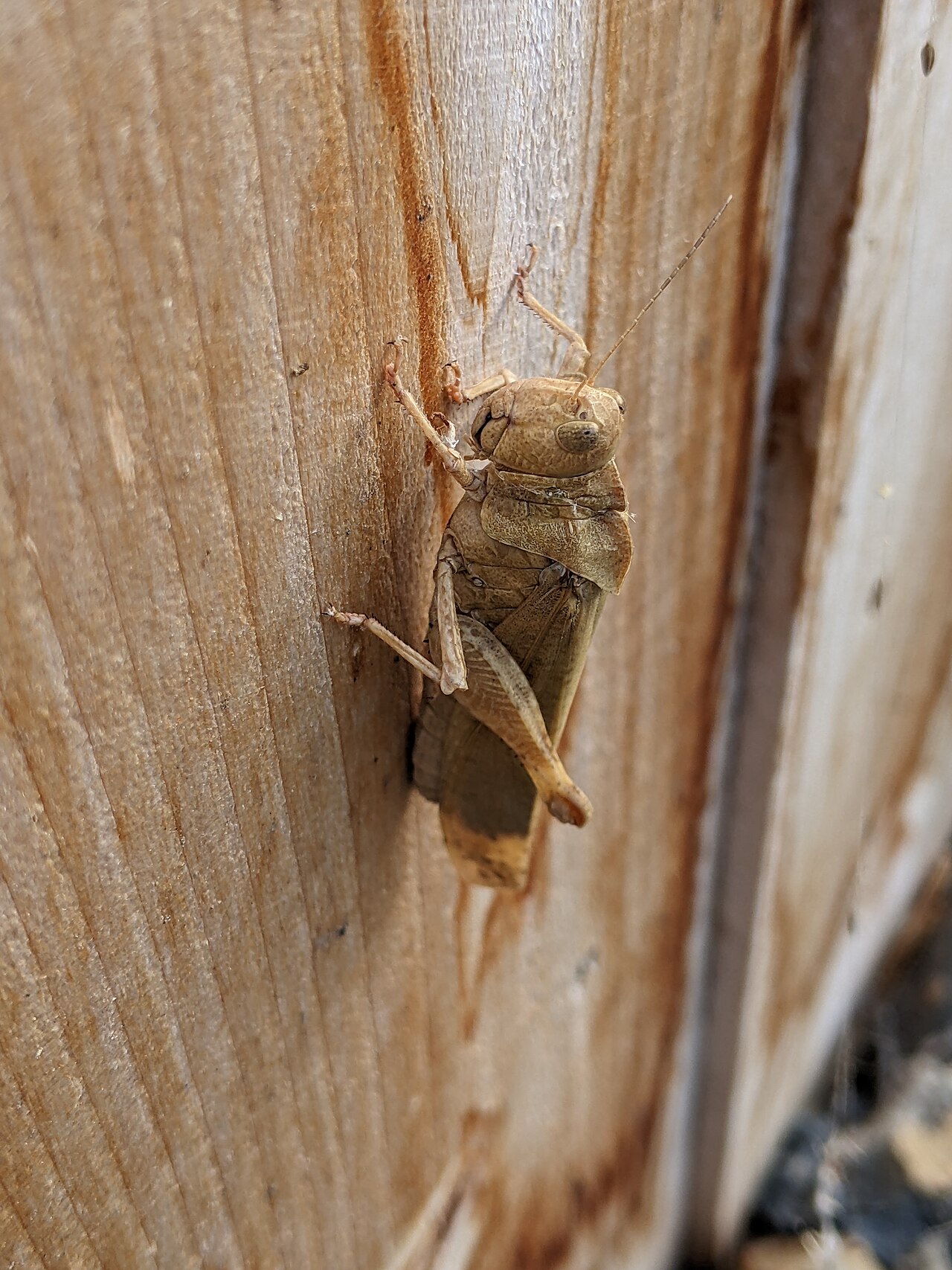
Season matters as well. In midsummer, adults fill fields and yards, so a sighting then is ordinary and its message concerns momentum already under way. A grasshopper in late fall, close to the first frost, points to finishing what you started before the cycle closes. A tiny nymph in spring points to a beginning that is still small.
Repeated sightings strengthen the message. A grasshopper three days in a row points to a decision that keeps returning because it is unfinished. Dragonflies landing on you carry a related theme of change and lightness, and the two insects together point to a season of movement.
Grasshopper sightings at a glance
Every common grasshopper sighting has a plain cause and a symbolic layer, and both belong in the answer.
| Sighting | Biological cause | Symbolic meaning |
|---|---|---|
| Garden or yard | Feeding on leaves and grass | Growth in work you have tended |
| Porch or doorstep | Drawn by porch lights or warm walls | An opportunity arriving at home |
| Inside the house | Entered through an open door or torn screen | Change in your private life |
| On your car or path | Resting on a sun-warmed surface | A move or decision ahead |
| Late fall, near frost | Last adults before the season ends | Finish what you started |
| Green grasshopper | Normal camouflage color | Renewal and abundance |
The cause column explains why the insect is there. The meaning column is the layer you add, and it works best when it fits the cause.
Is seeing a grasshopper good luck?
Yes, seeing or finding a grasshopper can represent good luck. Cora Linn Daniels and C. M. Stevans’s 1903 Encyclopedia of Superstitions, Folklore, and the Occult Sciences of the World records grasshoppers as an omen of a favorable outcome. The insect’s leap also makes it an image of opportunity and forward movement.
The biblical images have a different setting: Exodus 10 describes a destructive locust swarm, and Revelation 9 places locusts in a vision. A lone grasshopper in your yard carries none of that weight. It is an insect of plenty and forward motion.
Ladybugs landing on you carry a related theme of good fortune. The grasshopper’s gift is timing and the chance to act on an opportunity.
Black beetles sit at the other end of the insect range, with meanings tied to endurance and renewal rather than quick fortune.
What does the Bible say about grasshoppers?
The Bible uses grasshoppers mainly as a picture of smallness and as permitted food. In Numbers 13:33 (KJV), the spies return from Canaan and say of the giants, “we were in our own sight as grasshoppers, and so we were in their sight.” Isaiah 40:22 uses the same image for humanity before God, who sits “upon the circle of the earth, and the inhabitants thereof are as grasshoppers.” Both verses make the grasshopper a measure of human size, not a messenger.
Leviticus 11:22 lists the grasshopper among the winged insects Israel may eat. The KJV reads “the locust after his kind, and the bald locust after his kind, and the beetle after his kind, and the grasshopper after his kind.” Matthew 3:4 later says John the Baptist lived on locusts and wild honey. A grasshopper in Scripture is clean food, not an unclean sign.
Ecclesiastes 12:5 gives the most poetic line. In a passage about old age it says “the grasshopper shall be a burden, and desire shall fail,” an image of a body so frail that even a light insect feels heavy. Translation shapes all of these verses. The Hebrew words chagav and arbeh appear as “grasshopper” or “locust” depending on the version, so quote the translation you read.
Are grasshoppers harmful? Bites, spit and toxic species
Grasshoppers are typically harmless when left alone, but a large one can pinch or bite if restrained. Avoid squeezing the insect, and use a glass and card to move it outdoors.
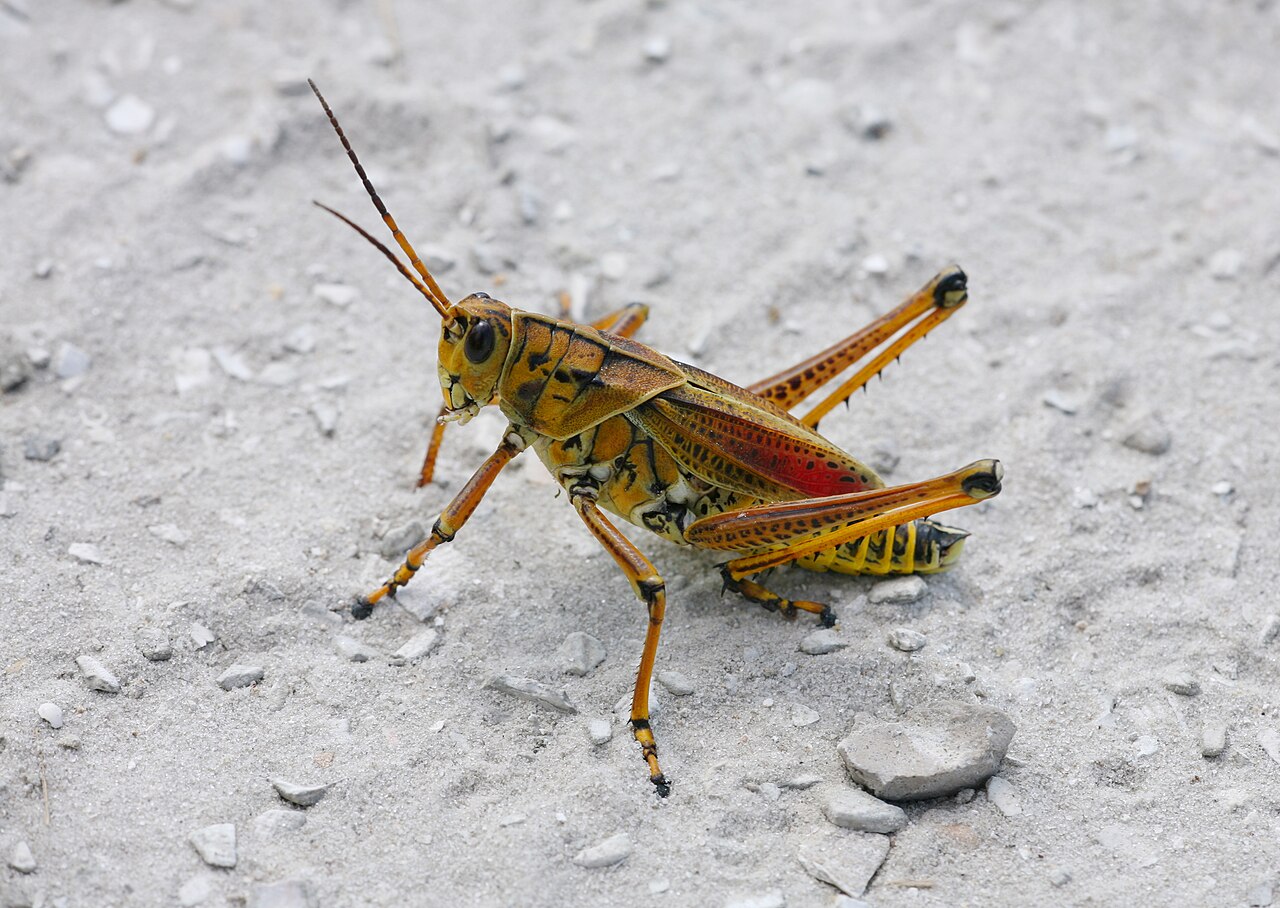
The brown liquid a grasshopper releases when handled is a defensive fluid from its mouth, nicknamed tobacco juice. It tastes bad to predators and stains skin for a short while. Soap and water remove it.
The Eastern lubber grasshopper (Romalea microptera) of the Southeast has chemical defenses. When threatened, it can hiss and release foul-smelling froth from its spiracles, and it can poison vertebrate predators that eat it. Avoid handling it directly, do not eat it, and keep pets from chewing on it. The University of Florida’s Eastern lubber guide describes the insect as essentially harmless to humans.
Why are grasshoppers coming into your house?
Grasshoppers can come into your house accidentally through open doors, torn screens and gaps around frames. Some species gather around porch lights and bright windows at night. Nearby vegetation provides food and cover, bringing them close to possible entry points.
Dry weather can also bring them closer to buildings. When surrounding vegetation dries out or food becomes scarce, grasshoppers may move into watered lawns and gardens to feed. From there, an open doorway or damaged screen can let them inside.
The symbolic layer sits on top of the biology. A grasshopper inside the home points to change arriving in your private life, such as a move, a new routine or a family decision. Beetles landing on you follow the same pattern, a plain cause underneath and a meaning built on the insect’s habits.
What does a green grasshopper mean, and how rare is it?
A green grasshopper points to growth, health and a fresh start. Green itself is not rare: it is a normal camouflage color in several grasshopper species, helping them blend into living vegetation.
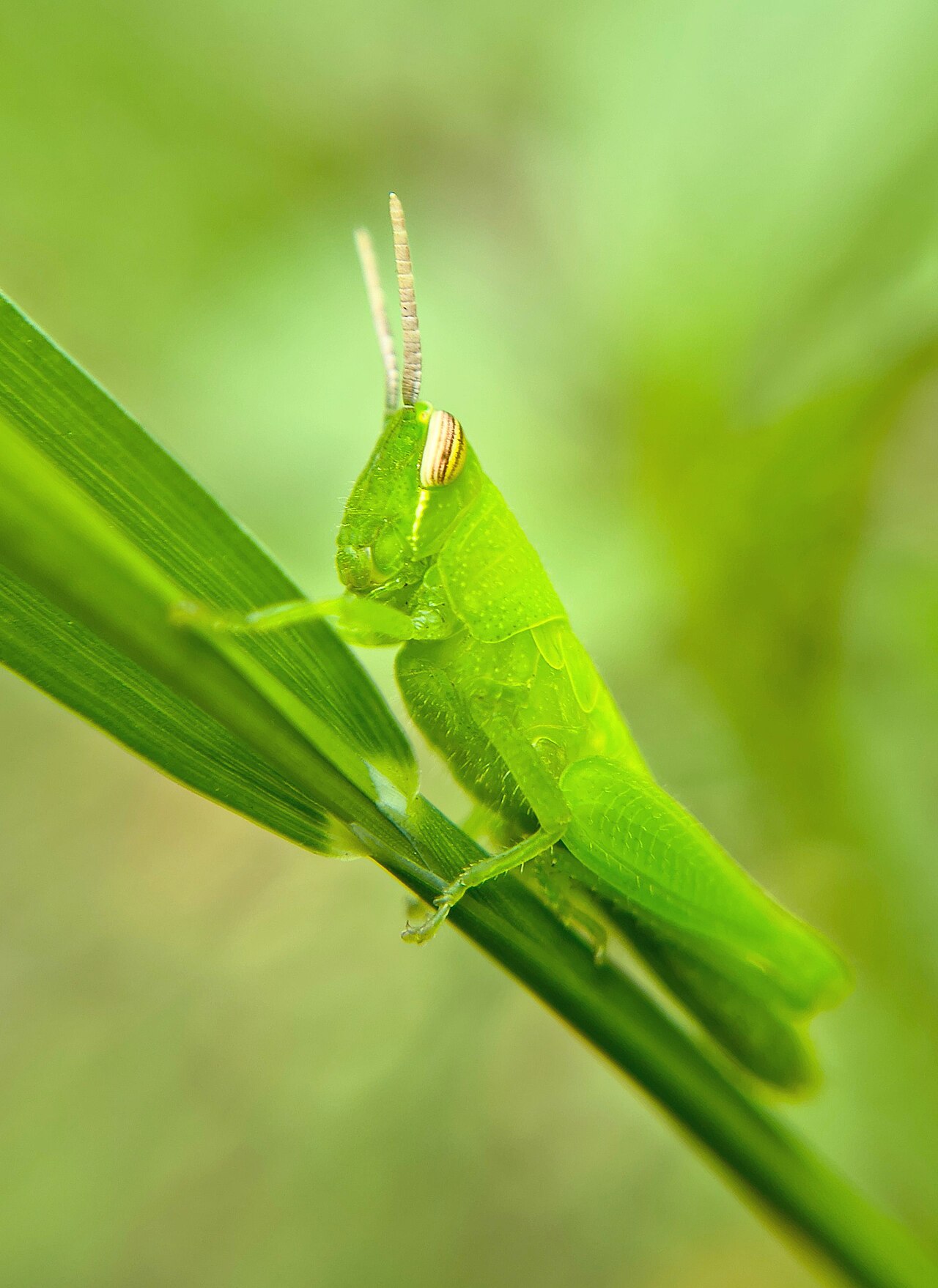
Color varies with species and life stage, so a green individual alone does not establish how damp or well watered its surroundings are.
The renewal meaning of green comes from its association with fresh plant growth.
Grasshopper symbolism in Greek tradition and Aesop’s fable
The Greek examples behind these English grasshopper references concern cicadas, old Athenian style and summer song. Thucydides writes in his History (1.6) that older wealthy Athenians once tied their hair in a knot fastened with golden grasshoppers. In the Crawley translation the ornament is a grasshopper, though the Greek word tettix names the cicada. Thucydides adds that this fashion had already gone out of use in his day.
English versions of Aesop’s fable “The Ant and the Grasshopper” give the insect a role as a careless musician. In the Library of Congress version, the grasshopper makes music instead of storing food, then asks the ants for help when food runs short. They refuse, and the lesson is to balance present enjoyment with preparation for future needs.
Translation changes the cast here too. Jean de La Fontaine retold the story in 1668 as “La Cigale et la Fourmi,” and his singer is a cicada. English versions of Aesop turned the cicada into a grasshopper, the insect most American readers know from childhood.
Grasshopper, cricket, katydid or locust: what did you see?
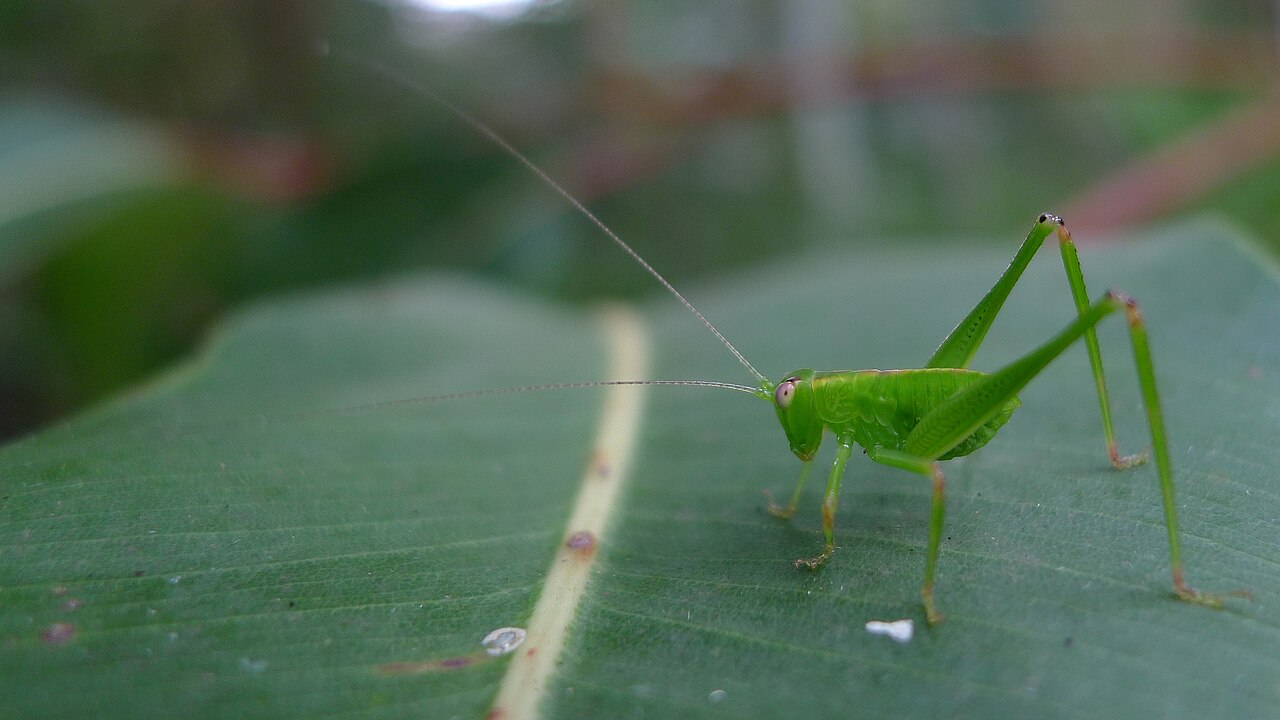
Relatively short antennae and enlarged hind legs are useful clues that you saw a grasshopper. Crickets and katydids typically have much longer antennae, often as long as their bodies or longer. Daytime activity alone does not settle the identification. In species with hearing organs, these are on the abdomen in grasshoppers and on the front legs in crickets and katydids.
Crickets and grasshoppers also differ in how they sing. Crickets rub one wing against the other, and many grasshoppers rub a hind leg against a wing. Katydids look like green grasshoppers but have the long antennae of their cricket relatives.
Locusts are grasshoppers of certain species in the family Acrididae that can shift between solitary and swarming phases, as NASA’s desert locust overview explains, so a lone insect does not rule out a locust.
What should you do if a grasshopper is in your house or on you?
Catch a grasshopper in your house with a glass and a stiff card, then release it outside in grass or shrubs. Lower the glass over the insect, slide the card underneath, and carry it out with the card held flat. Let it go away from the door so it does not hop straight back in.
Avoid grabbing a grasshopper by the body or legs. A tight grip invites a pinch and a spot of brown fluid, and the hind legs break off easily. A still, open hand lets the insect climb on and jump away by itself.
Grasshoppers landing on you carry their own set of meanings, from a shoulder landing to one on your head. Avoid squeezing the insect while it rests on your skin. Let it rest, then walk outside and nudge it toward the grass.
Frequently Asked Questions
How long do grasshoppers live?
Adult grasshoppers typically live for roughly two to three months, according to University of California IPM. Many species overwinter as eggs, hatch in spring and mature in summer, but seasonal timing varies. Some species overwinter as nymphs or adults, so an October sighting alone does not establish the insect’s age.
Do grasshoppers bite?
Yes, a large grasshopper can pinch or bite if restrained. Avoid squeezing it, and use a glass and card to release it outdoors. Wash your hands with soap and water after handling it or coming into contact with its brown defensive fluid.
Which grasshopper is toxic?
The Eastern lubber grasshopper (Romalea microptera) is one US species with toxic chemical defenses. When threatened, it can hiss and release foul-smelling froth, and vertebrate predators can be poisoned by eating it. Avoid direct handling, do not eat it, and keep pets from chewing on it.
What does a grasshopper in a dream mean?
A grasshopper in a dream stands for a leap forward, a decision you feel ready to make, or a change in plans that comes quickly. Its jump brings timing and readiness into focus, while its pauses point to preparation before action.
Are grasshoppers a sign of a coming plague?
No, a grasshopper in your yard does not signal a plague. Only a few species shift into swarming forms when crowded. In the western US, the USDA Animal and Plant Health Inspection Service surveys grasshopper outbreaks on rangeland, and those surveys track insect numbers, not omens.
What does the Aesop grasshopper represent?
The Aesop grasshopper represents carelessness in good times. It sings through summer while the ant stores food, then has nothing when winter arrives. The moral is foresight and preparation. The fable teaches practical wisdom and carries no spiritual message about grasshoppers you meet outdoors.
Sources
- Bible Gateway, Numbers 13:33 (KJV)
- Bible Gateway, Leviticus 11:22 (KJV)
- Bible Gateway, Isaiah 40:22 (KJV)
- University of Florida Featured Creatures, Eastern lubber grasshopper
- Perseus Digital Library, Thucydides, The Peloponnesian War 1.6
Explore more: Insect Spiritual Meanings: 15 Bugs and What They Signal