Zebra Spiritual Meaning: 7 Meanings, Dreams and Signs
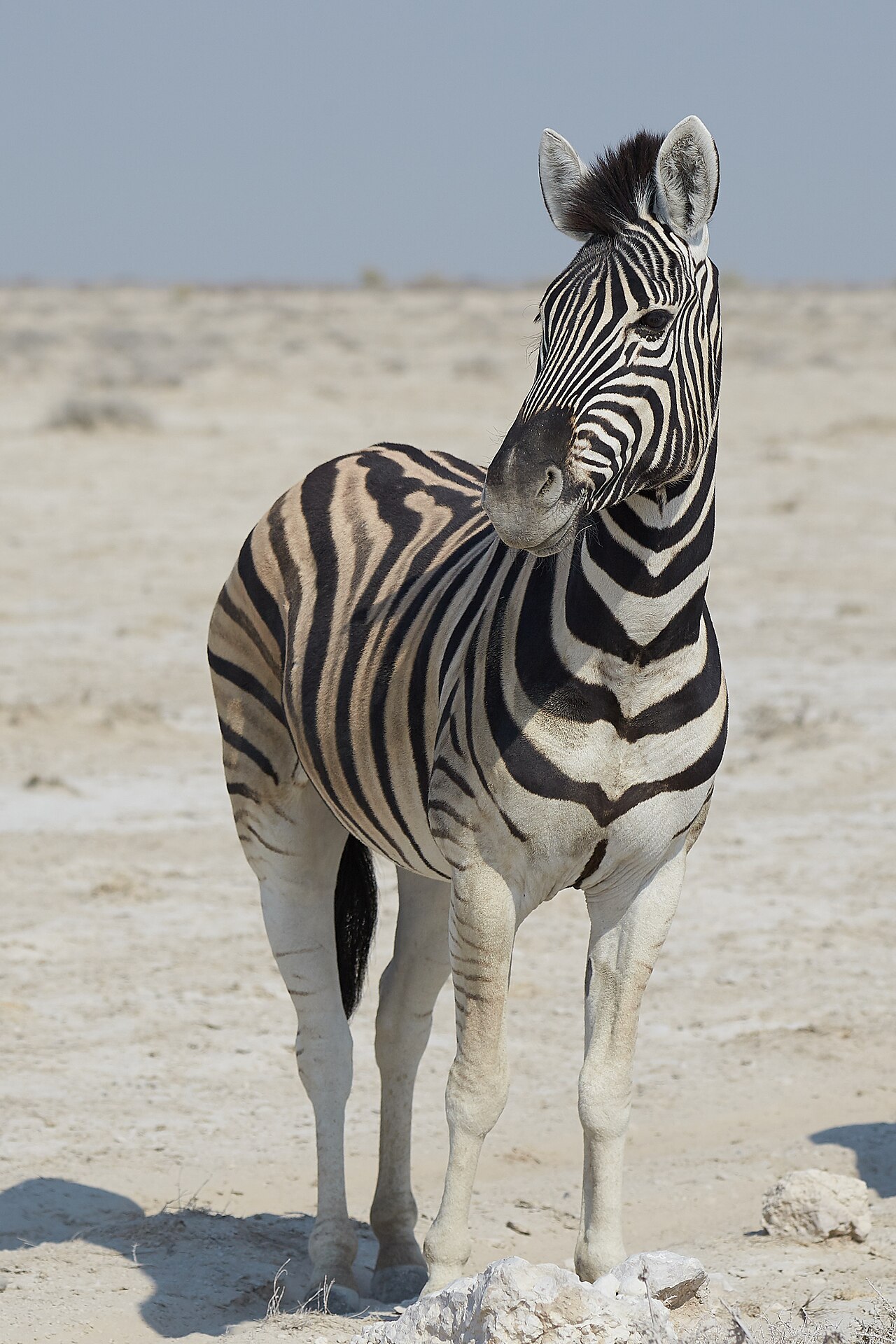
Symbolically, the zebra stands for balance, individuality and community. It carries black and white in one body and still lives as one animal among hundreds in the herd. That tension between standing out and belonging is the zebra’s core lesson. A zebra in your dreams, on a safari drive or in your thoughts asks one question. Can you stay yourself without leaving your people?
The real animal backs this up. Every zebra wears a stripe pattern no other zebra has, yet it survives by staying close to others and watching the grass line for lions. Seven meanings grow out of that life, and each one traces back to something a zebra actually does.
Spiritually, the zebra carries seven meanings. They are individuality, balance, duality, freedom, community, resilience and protection. Its unique stripes stand for being yourself, its black and white coat for holding opposites, and its herd for safety in numbers. A zebra in a dream or on safari points to finding your place without losing your pattern.
What Does a Zebra Symbolize Spiritually?
A zebra symbolizes balance between opposites, individuality inside a group, and the strength that comes from community. Its coat puts black and white side by side without either color winning. That picture of two forces in one body is the core of the symbol. The zebra does not choose a side, it wears both and keeps moving.
| Meaning | Zebra trait behind it | Lesson for you |
|---|---|---|
| Individuality | A stripe pattern unique to each animal | Your own pattern is not a flaw |
| Balance | Black and white side by side | Hold opposites without forcing a winner |
| Duality | Dark skin under a striped coat | There is more beneath the surface |
| Freedom | Never domesticated | Protect the part of you that cannot be tamed |
| Community | Family groups inside large herds | Safety grows with trusted company |
| Resilience | Long migrations through dry country | Keep moving when conditions turn hard |
| Protection | Shared watch and a powerful kick | Defend your boundaries clearly |
Individuality comes from the stripes themselves. No two zebras share the same pattern, so every animal in a herd of hundreds is still one of a kind. As a symbol, that is permission to be different without being alone. From a distance the zebra blends into the herd, and up close it stands apart.
Community and protection come from the herd. A zebra on its own is an easy target, while a zebra in a group has dozens of eyes and ears on watch. The bison is another grazing herd animal, but its symbolism centers on abundance, while the zebra’s centers on belonging without blending in. The Swahili name for the animal, punda milia, simply means striped donkey.
Zebra Spirit Animal and Totem Meaning
The zebra spirit animal belongs to people who stay true to their own pattern while staying loyal to their group. It stands for a clear sense of self, steady loyalty and quiet alertness. Zebras rest standing up while others in the group keep watch, and that shared vigilance is the heart of the totem. You do not have to guard everything alone.
No animal is the strongest spiritual animal, and no ranking exists that settles the question. Symbolic strength depends on the quality you need. The zebra’s strength is staying power and alertness, not raw force. The elephant fits the strength question better, because its symbolism rests on size, memory and endurance.
The zebra totem teaches you to keep your guard up without turning hostile. Its shadow side is the same alertness turned into constant suspicion, or a need to stand out that leaves no room for the group. Black and white thinking is the other trap. The stripes hold both colors at once, and they do not stand for seeing the world in absolutes.
Seeing a Zebra: Dreams, Sightings and Signs
A zebra in a dream points to a choice between two sides of your life, or to a part of you that wants to stand out. A herd of zebras points to belonging and to the people you rely on. A running zebra points to a need to escape pressure or to move before a threat closes in. A zebra standing still and looking at you points to a decision that needs your attention now.
A real zebra at a zoo or on safari is first an animal doing ordinary things. It grazes, flicks its tail at flies and keeps an ear turned toward the herd. A sighting points to balance and belonging, the same themes as the dream readings above. If the moment stays with you, use it as a prompt to ask where you keep two sides of your life apart.
A black horse in dreams and signs carries its own set of meanings built on a single dark color. The zebra adds the white back in. Its message is about holding two sides at once rather than facing one. If you dream of both animals, read them as two different signs, not as one.
What Zebra Stripes Really Mean
Zebra stripes are an identity mark and an insect shield, not a code painted on by nature. Each pattern is unique to one animal. Under the fur, zebra skin is typically dark, and the white bands are hair without pigment.
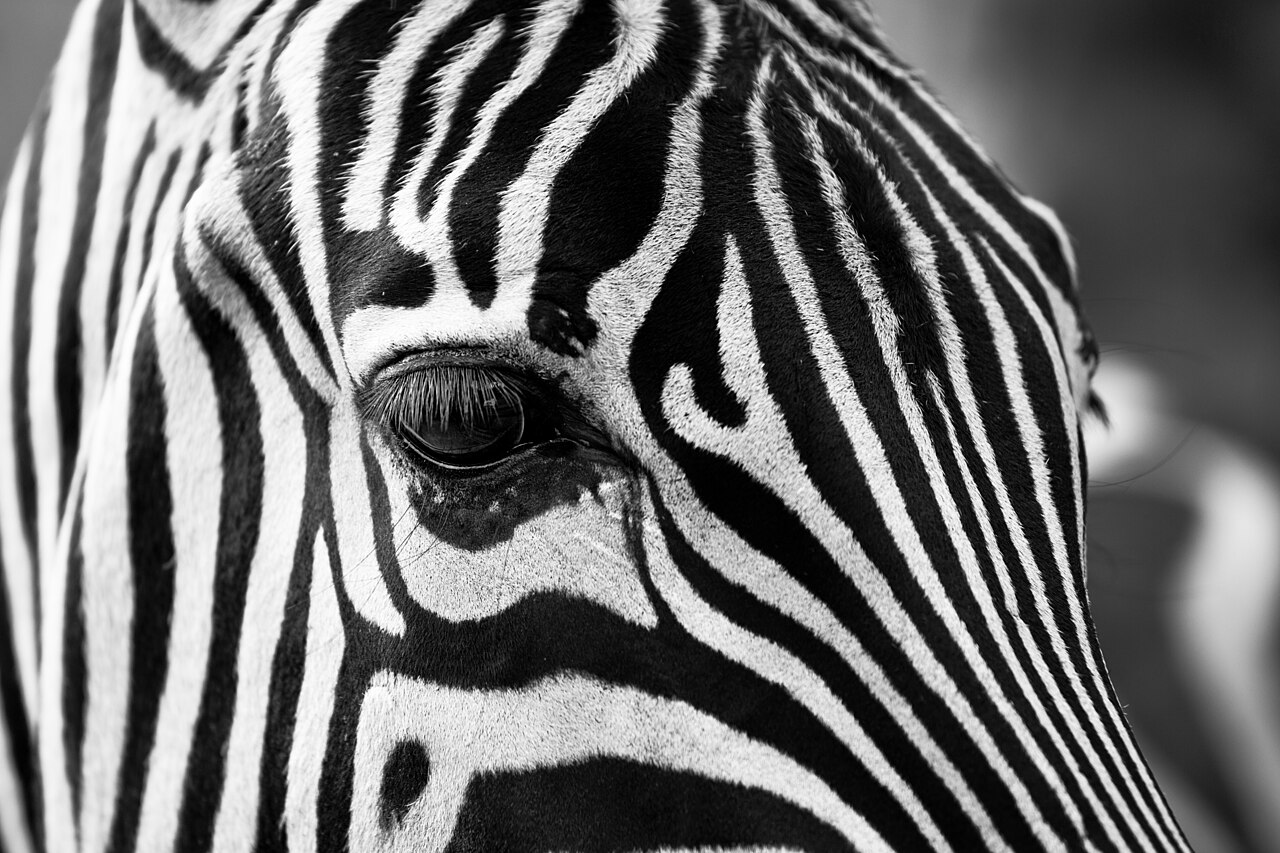
The best supported function is defense against biting flies. In a study published in PLOS ONE, horse flies approached zebras but failed to make controlled landings on their striped coats, while they landed on plain horses with ease. Camouflage and heat control remain hypotheses with weaker support.
The white horse stands at the opposite pole, one pure color carrying one meaning. The zebra’s black and white is biology first and symbol second. The symbol holds up best when it respects that.
Zebra Personality: What Zebras Are Really Like
Zebras are social, alert and quick to defend themselves, not gentle striped horses. Plains zebras (Equus quagga) and mountain zebras (Equus zebra) live in harems of one stallion, several mares and their foals. Young males without mares form bachelor groups. Grevy’s zebras (Equus grevyi) live differently, with stallions holding territories and mares moving between them.
Their first answer to danger is flight. The herd bolts and bunches together, and a moving wall of stripes makes it harder for a lion to single out one target. When cornered, a zebra fights back. Its kick can seriously injure a lion, and stallions bite and rear when they fight each other over mares.
Zebras also share the plains well. They graze in mixed herds with blue wildebeest, cropping the tall stems and leaving shorter grass behind for the wildebeest. They have never been domesticated, and a kick or bite is dangerous to people. The giraffe shares the same savanna, and its meaning leans toward vision and perspective rather than the herd bond that defines the zebra.
How Zebras Communicate and What Their Noises Mean
A zebra barks, brays, snorts and squeals, and each sound has a job. Plains zebras use a repeated barking call, a high “kwa-ha,” to keep contact with their group. Grevy’s zebras make a deep bray closer to a donkey’s. A loud snort signals alarm, a soft snort signals calm, and a squeal comes with pain or a fight.
Ears carry the rest of the message. Ears pointed forward mean the zebra is alert or curious, and ears pinned flat back mean anger or fear. A lashing tail signals agitation, and bared teeth warn another zebra to back off. Zebras in a family group groom each other by nibbling along the neck and withers, which keeps their bonds strong.
Mother and foal build their bond through stripes and sound. A mare keeps other zebras away from her newborn for the first days, so the foal learns her stripe pattern, voice and scent. After that, the foal finds her inside a moving herd. A lost foal calls, and the mother answers.
Zebra Diet, Predators and Survival in the Wild
A zebra’s favorite food is grass, and it spends most of its day eating. Zebras handle tall, coarse grass that other grazers leave behind. In dry seasons they add leaves, bark, shoots and roots. Plains zebras stay within reach of water, which shapes where herds travel.
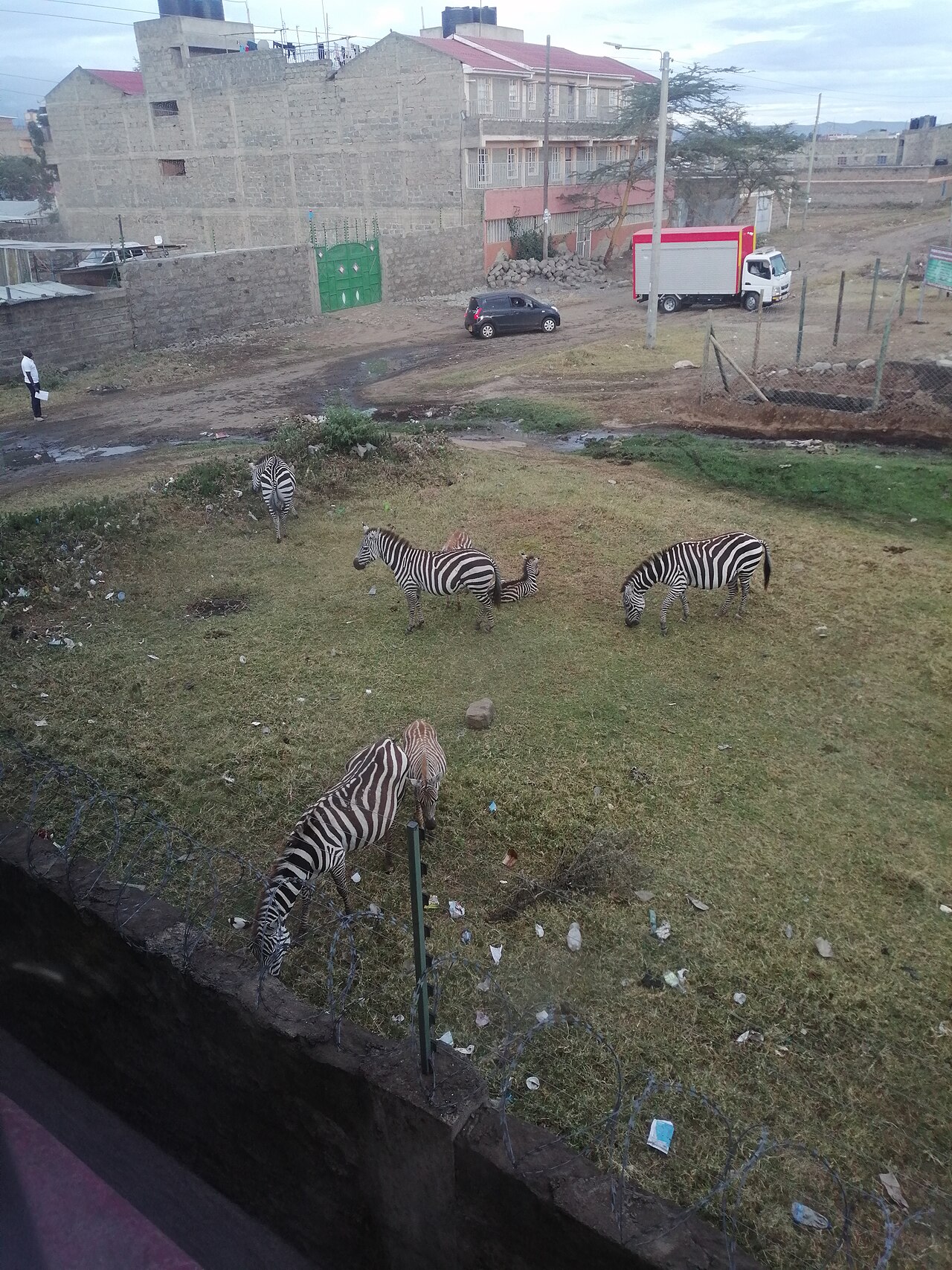
The lion is the zebra’s biggest enemy. Spotted hyenas, African wild dogs and leopards also take zebras, foals most of all. Nile crocodiles ambush zebras at river crossings during the Serengeti migration. A healthy adult in a tight herd is a hard target, so predators wait for the young, the old and the stragglers.
People are the larger long-term threat. Hunting, fencing, competition with livestock for grass and water, and habitat loss have cut zebra numbers. The IUCN lists Grevy’s zebra as Endangered, the mountain zebra as Vulnerable and the plains zebra as Near Threatened. Smithsonian’s National Zoo profiles the Grevy’s zebra as the largest zebra species and the one in the most trouble.
Frequently Asked Questions
Does a zebra whinny?
Yes, but it sounds little like a horse. The plains zebra’s whinny comes out as a barking, two-part call, closer to a yapping dog or a braying donkey. Herd members answer the call, which keeps the group in contact.
What is a zebra’s biggest enemy?
The lion is a zebra’s biggest enemy, and it wins most often by ambush near water holes. A healthy adult zebra in open country outlasts a lion over distance and fights back with hooves and teeth. Lions therefore stalk from cover and strike before the herd can run.
Are zebra stripes unique to each animal?
Yes. No two zebras share the same stripe pattern, much like human fingerprints. Researchers use this to identify individual animals from photographs, and Grevy’s zebra counts in Kenya rely on volunteers photographing the right side of each zebra so software can match the stripes.
Can you ride a zebra?
No. Zebras have never been domesticated, and they bite, kick and panic under pressure. Walter Rothschild drove a carriage pulled by zebras through London in the 1890s, but that stunt never turned into lasting use. Attempts to train zebras as working animals never caught on, and horses and donkeys kept doing the job.
Is a zebra a good omen?
Yes. A zebra points to balance, belonging and a clear sense of self, and none of those carry a warning. If the sighting comes during a stressful stretch, take it as a nudge to lean on the people around you instead of carrying everything alone, the way a zebra trusts its herd.
What is a zebra’s favorite food?
Grass is a zebra’s favorite food, with red oat grass (Themeda triandra) a staple on East African plains. Zebras have sharp upper and lower incisors that clip tough stems cleanly. That lets them eat coarse grass that cattle and many antelope avoid, so they keep moving ahead of other grazers.
Sources
- Encyclopaedia Britannica, Zebra
- Smithsonian’s National Zoo, Grevy’s Zebra
- San Diego Zoo Wildlife Alliance, Zebra
- PLOS ONE, Benefits of zebra stripes: Behaviour of tabanid flies around zebras and horses