White Horse Symbolism: Spiritual Meaning and Dream Signs
White horse symbolism centers on purity, victory and leadership. Symbolically, a white horse is the mount of whoever deserves to win, a clean hand on the reins of great power. The color brings the purity and the horse brings the strength, so the pair stands for strength put to a right cause.
The image comes from texts you can still read today. Scripture gives white horses to the victors of the last battle, Greek and Hindu myth give them to heroes and gods, and a Roman historian describes Germanic tribes keeping them as living oracles. Real white horses add a twist. Most of them earned their color over years.
In the Book of Revelation, a white horse carries the rider called Faithful and True, who judges and makes war in righteousness. That scene fixes the core meaning of the white horse as purity joined to victory. Greek, Hindu and Buddhist stories add heroic flight, a coming savior and spiritual departure.
What a White Horse Symbolizes
A white horse symbolizes purity put to work. White marks the rider as clean of motive, and the horse turns that purity into speed and force. The pair shows up at moments of arrival, victory and judgment, not grazing quietly at the edge of a story.
Victory is the strongest strand. Leadership follows from it. The figure on the white horse is the one an army follows, so the symbol also marks the person who goes first and takes the risk first.
The roots are old and specific. Scripture, Greek myth, the Hindu Puranas, Buddhist accounts of the Buddha’s life and the Roman historian Tacitus each place a white horse at a turning point. Each source adds its own shade, from judgment to escape.
| Source | White horse figure | Color in the source | What the horse marks |
|---|---|---|---|
| Revelation 19:11 | Mount of Faithful and True | White | Righteous victory |
| Revelation 6:2 | First horseman, with bow and crown | White | Conquest, meaning disputed |
| Zechariah 1:8 and 6:3 | Patrol horses and chariot team | White among red, black and dappled | Heaven keeping watch |
| Greek myth | Pegasus | Winged, white only in later art | Heroic flight |
| Hindu Puranas | Uchchaihshravas and the horse of Kalki | White | Divine power and renewal |
| Buddhist texts | Kanthaka | White | Leaving comfort to seek truth |
| Tacitus, Germania | Sacred horses of Germanic tribes | White | Messages from the gods |
White Horse Spiritual Meaning and Spirit Animal Virtues
As a spirit animal, the white horse stands for power, endurance, courage, purity, trust and wisdom. The spirit animal idea is a modern framework, and none of the ancient sources in the table uses it. The virtues come from the horse itself and from the color white.
Power and endurance come straight from the animal. A horse carries a rider for hours and still has a sprint left. Courage belongs to any horse that moves toward noise instead of away from it, against its instinct as a prey animal. Purity is what the white coat contributes.
Trust and wisdom come from the bond between horse and rider. A horse lets a person sit on its back, and it feels that person’s tension through the reins. A white horse as a guide points to the same exchange. Lead with calm and you are carried farther than you could walk alone.
White Horse in the Bible
The Bible places white horses in two very different scenes in Revelation, and readers mix them up. In Revelation 19:11, heaven opens and a rider on a white horse appears, called Faithful and True, who judges and makes war in righteousness. Christian tradition identifies him with Christ, since verse 13 names him the Word of God.
Revelation 6:2 shows a different rider. He is the first of the four horsemen, he receives a crown and he goes out conquering. Commentators split on him. One line of reading sees the gospel going out into the world, another sees a conqueror who only imitates Christ.
The Old Testament has white horses too. In Zechariah 1:8 the prophet sees a rider among myrtle trees with red, dappled and white horses behind him. In Zechariah 6:3 white horses pull the third of the chariots. There they serve as patrols sent across the earth, a picture of heaven keeping watch.
What Does the Bible Say About Riding a White Horse?
In Revelation, riding a white horse belongs to Faithful and True, whom Christian tradition identifies with Christ, and to his army at the final victory. Revelation 19:14 says the armies of heaven followed him on white horses, dressed in fine linen, white and clean. Rider, robe and horse share one color, so the whole army appears pure.
Revelation 19:8 explains the linen as the righteous acts of the saints. That ties the white of the army to conduct, not to decoration. No verse commands believers to ride a white horse or forbids it. The image belongs to vision, and its point is who rides and on whose side.
White Horse in Myth: Greek, Hindu, Buddhist, Celtic and Germanic
Myth gives white horses to heroes, gods and saviors. In Greek myth, Pegasus springs from the neck of Medusa when Perseus beheads her, and Bellerophon later rides him against the Chimera. The ancient sources call him winged, not white. His white coat comes from later art, a sign of how firmly the color had fused with heroic flight.
Hindu texts hold two famous white horses. Uchchaihshravas, the seven-headed horse, rises from the churning of the ocean and becomes the mount of Indra. Kalki, the tenth avatar of Vishnu, is still to come. The Puranas describe him arriving on a white horse with a sword to end the age of decline, so the horse becomes a promise of renewal.
Buddhist texts center on Kanthaka, the white horse that carried Prince Siddhartha out of his palace on the night he left to seek enlightenment. The horse marks the Great Departure. It is the step from comfort into the search, and the horse carries the prince across it.
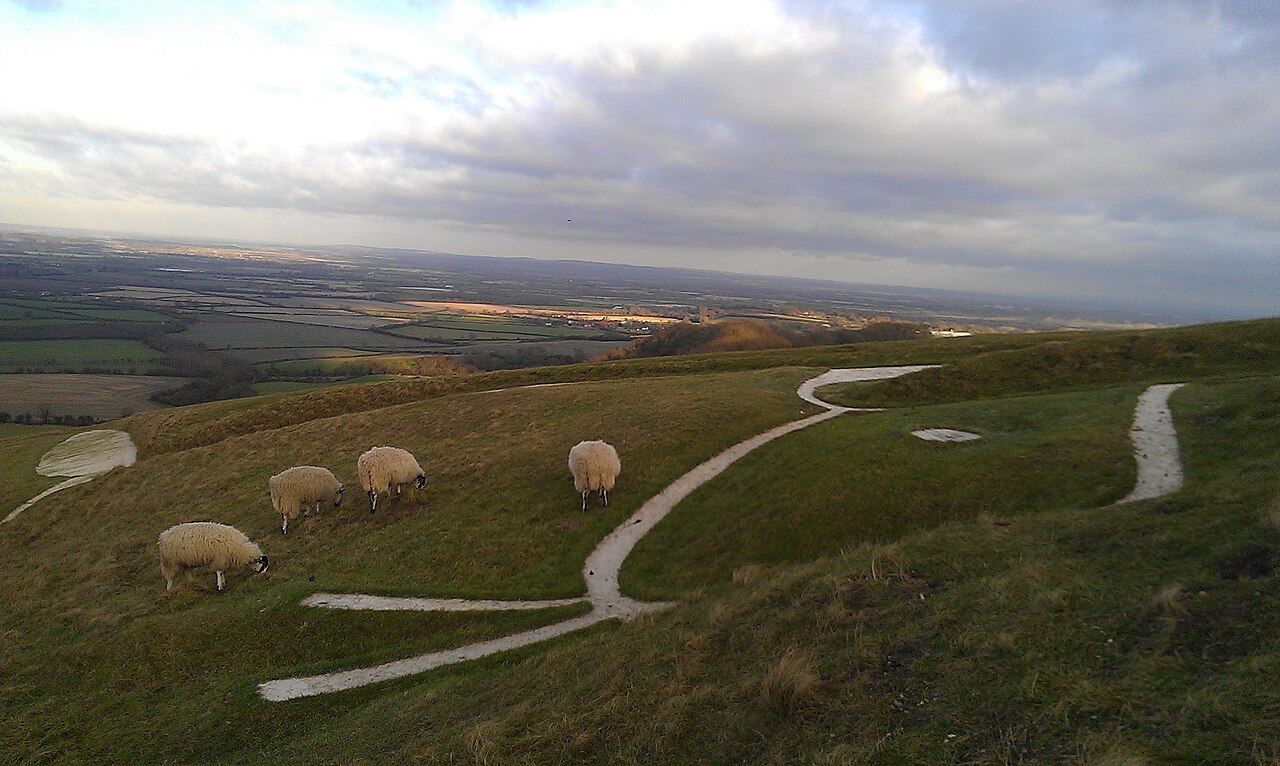
Celtic and Germanic sources are less direct. Epona, the Gallo-Roman goddess of horses, appears with mares and foals, though her horses have no fixed color. In Britain, the Uffington White Horse shows how old the fascination with a pale horse on green ground is.
Tacitus gives the clearest Germanic case. In his Germania he describes tribes keeping sacred white horses in groves, untouched by any work. Priests yoked them to a sacred chariot and watched their neighing and snorting as omens. Sleipnir, the eight-legged horse of Odin, is gray in the Norse sources, not white.
White Horse in Dreams
A white horse in a dream points to a clean start backed by real strength. The horse shows energy you can use, and the white tells you the motive behind it is sound. A calm white horse standing near you marks support that is arriving.
The action changes the message. Riding a white horse points to control and progress on a path you chose. A white horse running away from you points to an opportunity, or a part of yourself, slipping out of reach. Being chased by one points to a demand you keep avoiding, even when the demand is a good one.
A dying white horse points to the end of an ideal, a hope you held as pure that no longer carries you. Grief in the dream is part of letting that hope go. The dead horse idiom is a different matter, about wasted effort rather than dreams, and it has its own history.
White Horse Omens: Seeing One in Real Life
Seeing a white horse in real life is a sign to move forward with a clean conscience. Watch what the horse is doing. A white horse at a gallop points to momentum you already have. A white horse standing still at the fence points to a pause before a clean start.
A white cat crossing your path shares the purity theme but adds luck and quiet independence. The cat asks you to trust your own timing.
A white butterfly carries a lighter message, tied to souls and angels rather than strength. Of the three white animals, the horse is the sign that asks you to act.
Black and Other Horse Colors Compared
A black horse symbolizes scarcity and judgment in the Bible, the opposite pole to the white. In Revelation 6:5 the third horseman rides a black horse and holds a pair of scales, a picture of famine and rationed bread. The red horse of Revelation 6:4 brings war.
The pale horse of Revelation 6:8 is not white. The Greek word describes a sickly green, and its rider is Death. Horse symbolism across all coat colors also covers the dark horse, the outsider who wins.
What Is a Pure White Horse Called?
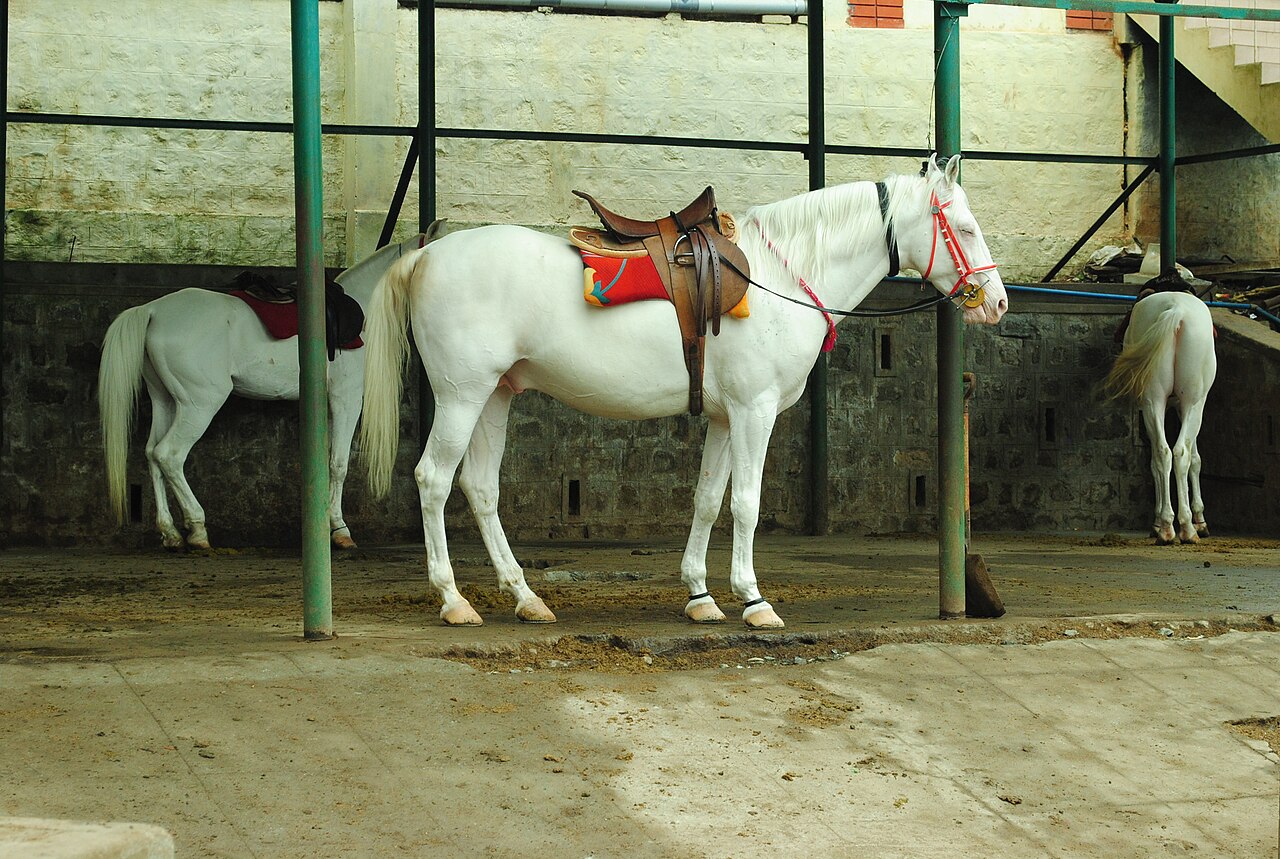
A pure white horse is called a dominant white when it is born white with pink skin, a coat set by variants of the KIT gene. Most horses that look white are grays instead. Gray is a coat color, not a breed, and it shows up in Arabians, Lipizzans and many other breeds.
Horses are not albinos. A cremello has pink skin and blue eyes from two copies of the cream gene, and a dominant white lacks pigment cells in the white areas. Neither one is albinism. Anyone handling horses of any color should wash their hands after contact, as the CDC guidance on farm animals advises.
Mythical Names for White Horses
Mythical names for white horses come from scripture, legend and fiction. Pegasus, from Greek myth, suits a white horse that loves to jump. Shadowfax, the horse Gandalf rides in J.R.R. Tolkien’s The Lord of the Rings, has a silver-gray coat and fits a gray. As chief of the Mearas, the lords of horses in Tolkien’s world, he is also the coolest name on this list. Silver, the white stallion of the Lone Ranger, gives a name with an American pedigree. For a cute name with a true story, try Snowman, the gray former plow horse that Harry deLeyer saved from slaughter and rode to show jumping championships in the late 1950s.
Kanthaka and Uchchaihshravas suit owners who want a name with a story behind it. A female horse has its own word, mare, so a white mare named Epona gets both the legend and the right term.
Frequently Asked Questions
Are white horses really white?
No. Most horses that look white are grays. They are born bay, black or chestnut, lighten year by year and keep dark skin under the white coat. Only dominant whites are born white with pink skin, and they are far rarer than grays. A gray foal looks nothing like the white horse it becomes.
What is the White Horse of Uffington?
The White Horse of Uffington is a stylized horse cut into the chalk of White Horse Hill in Oxfordshire, England, and dated to the Bronze Age. Trenches filled with chalk form its lines. Local people kept it visible through regular cleaning, called scouring, once a festival with games. The National Trust cares for it today.
What did Romans use white horses for?
Romans tied white horses to the triumph, the parade for a victorious general. Livy reports that Camillus rode into Rome behind white horses at his triumph and drew sharp criticism. Romans saw the team as fit for Jupiter and the Sun, not for a mortal citizen, so the color carried divine weight.
Is the rider on the white horse in Revelation 6:2 Jesus?
No, not by name. The text never identifies him and commentators disagree, but his gear sets him apart from the rider of Revelation 19. The first horseman carries a bow and receives a single crown. The rider called Faithful and True wears many crowns and strikes with a sharp sword that comes out of his mouth.
Are gray horses prone to skin cancer?
Yes. Melanomas are common in older gray horses and appear as dark lumps under the tail, around the anus, on the lips and near the eyes. Some grow slowly for years, others spread. Check a gray’s skin during grooming and have a veterinarian examine any new lump early.
Do white horses need sun protection?
Yes, when the skin under the white coat is pink. Pink skin on the muzzle and around the eyes burns in strong sun, so owners use shade, fly masks with UV protection and sunscreen made for horses. Grays with dark skin need far less care, though their muzzles still deserve a look in summer.
Sources