What Eats Grasshoppers? Predators at Every Life Stage
Almost everything with a mouth eats grasshoppers. In North America they are staple protein for birds, rodents, lizards, snakes, spiders, toads, and insects that hunt other insects, and a field can lose most of a generation before the survivors ever lay eggs.
Which predator matters depends on the life stage. Eggs sit in the soil all winter and get eaten by beetle larvae. Flightless nymphs are easy prey for spiders. Adults need something faster: a shrike, a kestrel, or a mantis waiting in the grass.
Grasshoppers are eaten by birds such as kestrels, shrikes, turkeys, and bluebirds, by mammals including skunks, mice, and foxes, and by reptiles, toads, spiders, praying mantises, robber flies, and parasitic flesh fly larvae. Blister beetle larvae and ground beetles destroy the eggs underground before they ever hatch.
| Predator | Stage taken | US region | How often |
|---|---|---|---|
| American kestrel | Adult | Nationwide | Very common in summer |
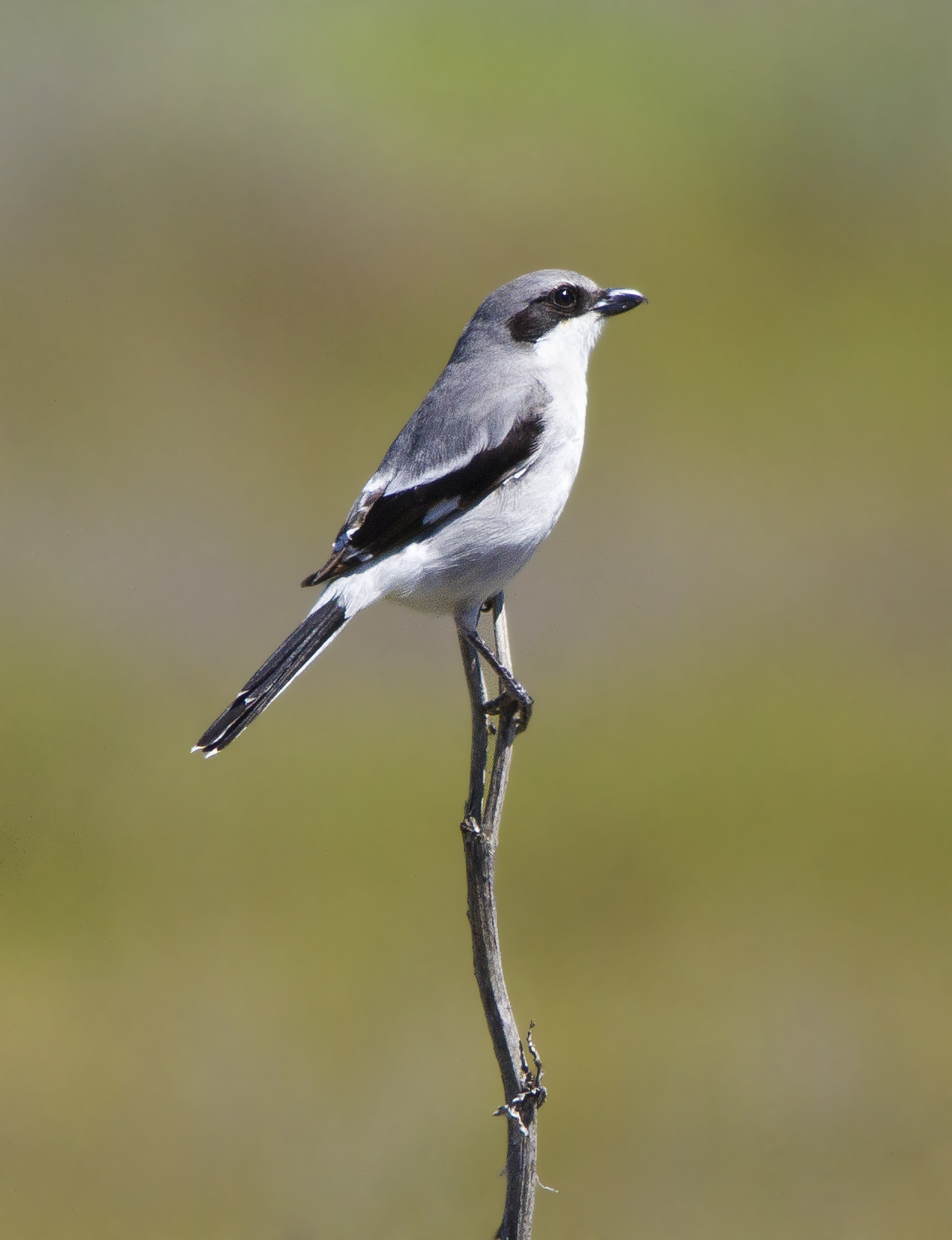
| Loggerhead shrike | Adult, nymph | South, Great Plains | Very common |
| Wild turkey | Adult, nymph | East, Midwest, Southwest | Common |
| Praying mantis | Adult, nymph | Nationwide | Common in gardens |
| Blister beetle larvae | Eggs | Great Plains, West | Major egg mortality |
| Striped skunk | Nymph, eggs | Nationwide | Seasonal, high in late summer |
| Flesh fly larvae | Adult | Nationwide | Parasitic, often heavy |
What Eats Grasshoppers in the Wild?
Birds take the largest share of adult grasshoppers in open country. American kestrels drop on them from roadside hovers, loggerhead shrikes impale them on barbed wire as a larder, and wild turkeys sweep through grass eating them by the dozen. Meadowlarks, bluebirds, and burrowing owls load up during nesting season.
Mammals contribute more than people expect. Skunks, badgers, shrews, deer mice, and ground squirrels all eat hoppers, and coyotes and red foxes take them in late summer when hopper numbers peak. Reptiles and amphibians finish the job: garter snakes, fence lizards, horned lizards, box turtles, and American toads take whatever size they can handle. The full bird list is broken out in our guide to birds that eat grasshoppers.
What Eats Grasshopper Eggs and Nymphs?
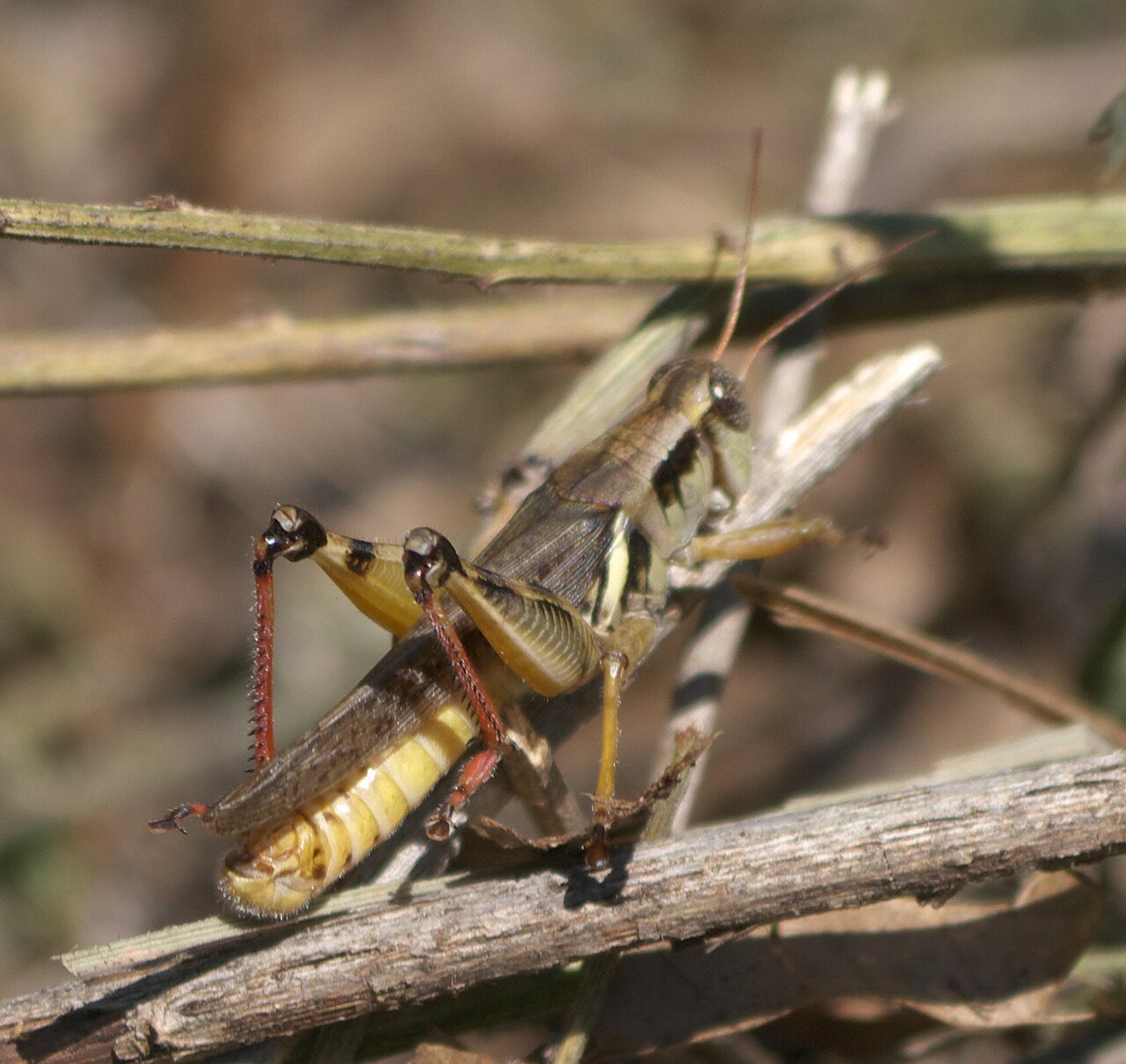
Grasshoppers lay egg pods 0.5 to 2 in (1 to 5 cm) deep in undisturbed soil, and those pods are the most vulnerable stage of the life cycle. Blister beetle larvae specialize in finding and eating them, and in heavy years they destroy a large share of a field’s eggs. Ground beetles, field crickets, and digging rodents take more.
Nymphs hatch in spring and stay flightless for four to six weeks, which makes them easy for wolf spiders, crab spiders, ants, assassin bugs, and tiger beetles. This is the window when predation does the most to flatten a population, long before the adults you notice in August. For the other side of the diet question, see what do grasshoppers eat.
What Eats Grasshoppers in the Garden and Around Homes?

In a yard, your allies are the predators that stay put. Praying mantises take adult hoppers cleanly, wolf spiders patrol mulch and bed edges, and toads work the damp margins at night. Chickens, guinea fowl, and ducks are the most effective control available to anyone with a fenced run.
You can tilt the odds without spraying. Leave a water dish and brush pile for toads, keep a strip of unmowed grass for spiders, mount a perch post for bluebirds and kestrels, and skip broad spectrum insecticides, which kill mantises faster than hoppers. Tilling in fall exposes egg pods to birds and frost, and keepers with poultry can open the run into the worst area for a week. Our notes on green grasshopper species cover the worst garden offenders, and cricket vs grasshopper explains what you are looking at.
What Eats Grasshoppers at Night?
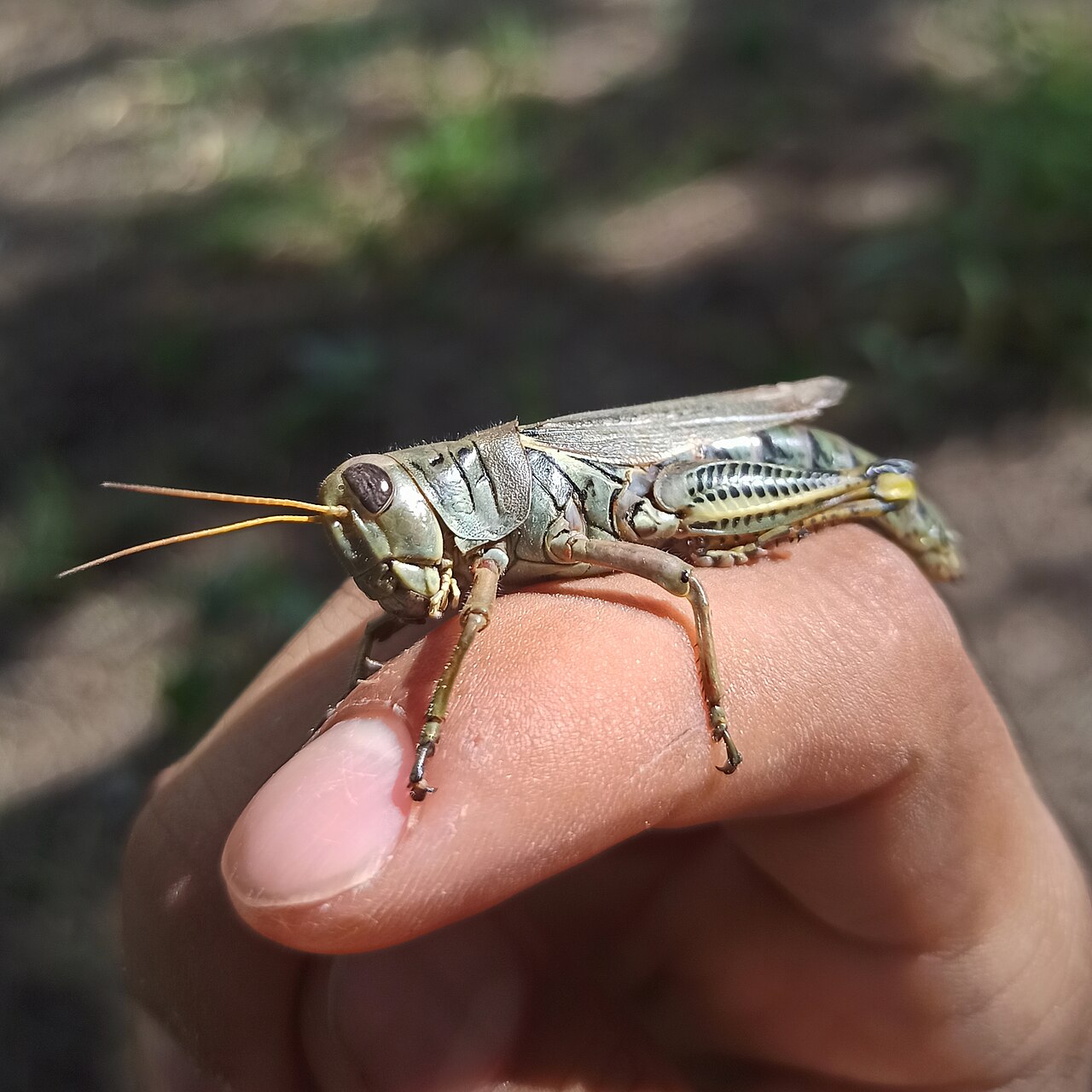
Grasshoppers roost on vegetation after dark and sit nearly motionless, which makes them easy targets for anything hunting by touch or smell. Toads, skunks, opossums, raccoons, mice, and spiders all take roosting hoppers overnight.
Parasites work around the clock. Flesh fly and tachinid fly larvae develop inside living grasshoppers and kill them from within, and the fungus Entomophaga grylli kills hoppers outright in humid years, leaving them clinging dead to grass stems. The USDA tracks these natural controls through APHIS because they outperform insecticides across rangeland. Folklore gave the insect a different reputation, which we cover in grasshopper symbolism.
Related reading: what eats birds.
Frequently Asked Questions
What is the main predator of grasshoppers?
Birds take the most adults, with kestrels, shrikes, turkeys, and meadowlarks leading in open US habitat. Counting all life stages, egg predators and parasitic flies likely kill more, because they hit the stages where hoppers are most numerous.
Do grasshoppers eat meat or each other?
Mostly no, but it happens. Grasshoppers are plant eaters that scavenge dead insects, including other grasshoppers, when protein or moisture runs short. During dense outbreaks cannibalism of injured individuals is common, and crowded mormon crickets are notorious for it.
Will chickens control a grasshopper problem?
They help in a small area. A dozen chickens or guinea fowl working a quarter acre will knock down nymph numbers in a few weeks, and guineas hunt harder. They will not clear a pasture, and they eat seedlings too, so fence what you want to keep.
What kills grasshoppers naturally without harming other insects?
Nosema locustae bait, a protozoan sold for rangeland, targets grasshoppers and spares bees and beetles. It works slowly and best on young nymphs. Fall tilling and good predator habitat do more over a season than any spray.
Explore more: What Eats What: The Backyard Food Chain Explained