Mosquito Sounds: What That Buzz Means and When You Hear It
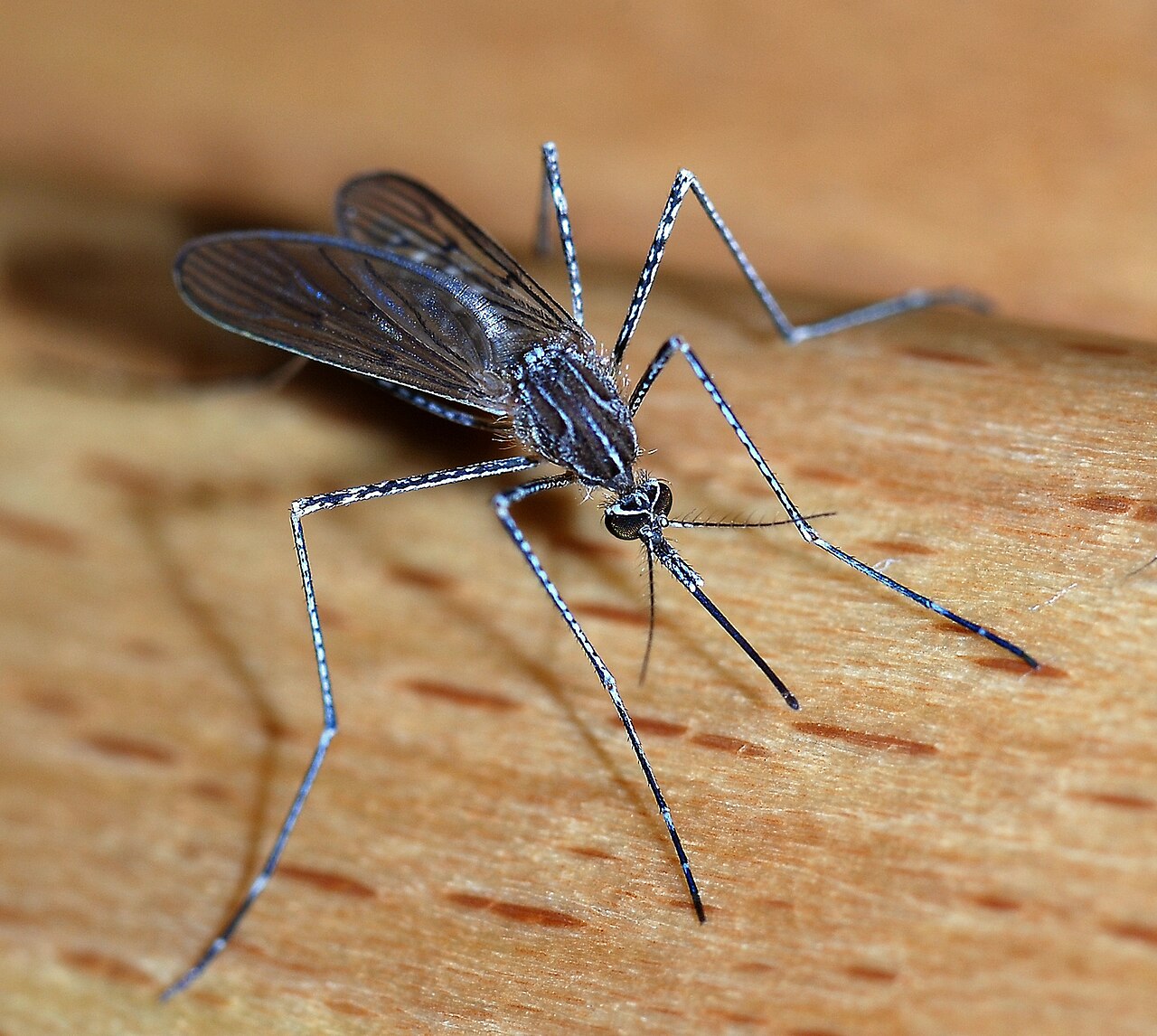
Mosquito sounds come from wings, not from a voice. The high whine you hear next to your ear at night is the beat of a mosquito’s wings moving 250 to 800 times per second, and the pitch tells you something useful: the deeper, slower hum usually belongs to a female looking for blood, while the thinner, higher tone belongs to a male circling in a mating swarm.
Once you know what produces mosquito noises, the sound becomes information instead of irritation. It tells you whether the insect is hunting you, whether it is one mosquito or twenty, how close it is, and whether the ringing you hear at 2 a.m. is even a mosquito at all. This guide walks through each sound a mosquito makes, when in the day and year you hear it, and the household noises people mistake for it.
A mosquito’s sound is its wingbeat, called a flight tone. Females beat their wings roughly 250 to 500 times per second and sound lower, like a soft whine. Males beat faster, near 600 to 800 times per second, and sound thinner and higher. Only females bite, so the lower buzz near your ear is the one that matters.
| Sound | Who makes it | Pitch | When you hear it |
|---|---|---|---|
| Feeding whine | Female hunting a host | Low, about 250 to 500 Hz | Dusk to dawn, close to your head |
| Swarm hum | Males gathered over a landmark | Higher, 600 to 800 Hz | First and last hour of daylight |
| Courtship duet | Male and female together | Brief shared tone near 1,200 Hz | Inside or at the edge of a swarm |
| Stop and start buzz | Female landing and relaunching | Pulsing, cuts in and out | Bedrooms at night |
| Steady room hum | Often not a mosquito | Constant, no movement | Any hour, from electronics |
| Silence | Larvae in standing water | None audible | 7 to 14 days before adults appear |
What a Mosquito Sound Actually Is
The buzz is pure mechanics. A mosquito has one pair of functional wings, and those wings move faster relative to body size than almost any other insect of comparable weight, pushing air at a rate your ear registers as a tone. Entomologists call that tone the flight tone, and it is specific enough that researchers identify species from recordings alone.
Body size sets the pitch. Larger insects beat their wings more slowly, which is why a housefly produces a rough drone and a mosquito produces a thin whine. Within a single species the females are the larger sex, so their flight tone sits below the males’ by roughly a musical third. That difference is not a quirk. It is the basis of how mosquitoes find each other.
Why You Only Hear Mosquitoes at Night
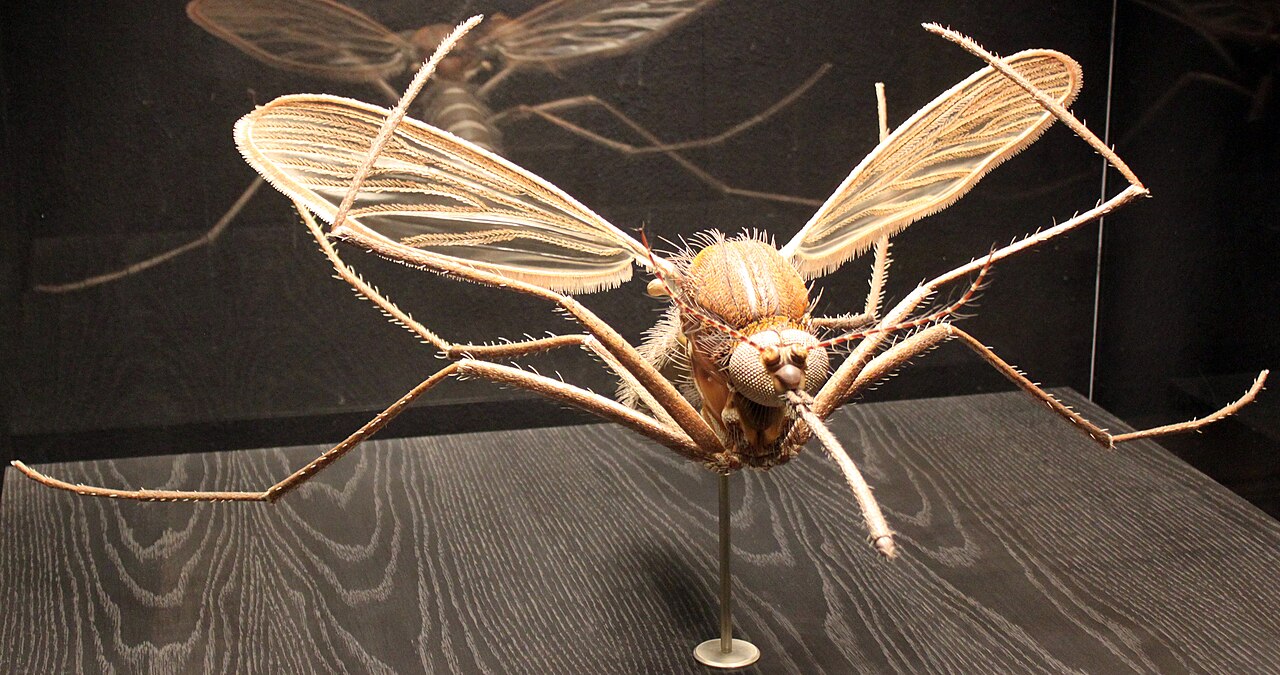
Most of the mosquitoes that bother people indoors after dark belong to the genera Culex and Anopheles, and both are crepuscular to nocturnal, peaking in the hour after sunset and again before sunrise. Daytime biters exist, notably the Asian tiger mosquito (Aedes albopictus), but they tend to attack ankles outdoors rather than hover over a pillow.
The other half of the answer is you. At night the room is quiet, so a sound at 40 decibels carries, and your exhaled carbon dioxide pools around your head. A female tracks that plume upwind, which puts her at ear level exactly when there is nothing else to listen to. Nocturnal animals are easier to hear for the same reason, which is why bat chirps above a yard and barn owl screeches also seem to belong to the small hours.
The Female Feeding Buzz: The Sound Before a Bite

A hunting female makes the lowest and most insistent mosquito sound, and it behaves differently from a swarm hum. It approaches, retreats, circles, and goes quiet when she lands. If the whine disappears and then returns four seconds later from another direction, she touched down, was disturbed, and relaunched.
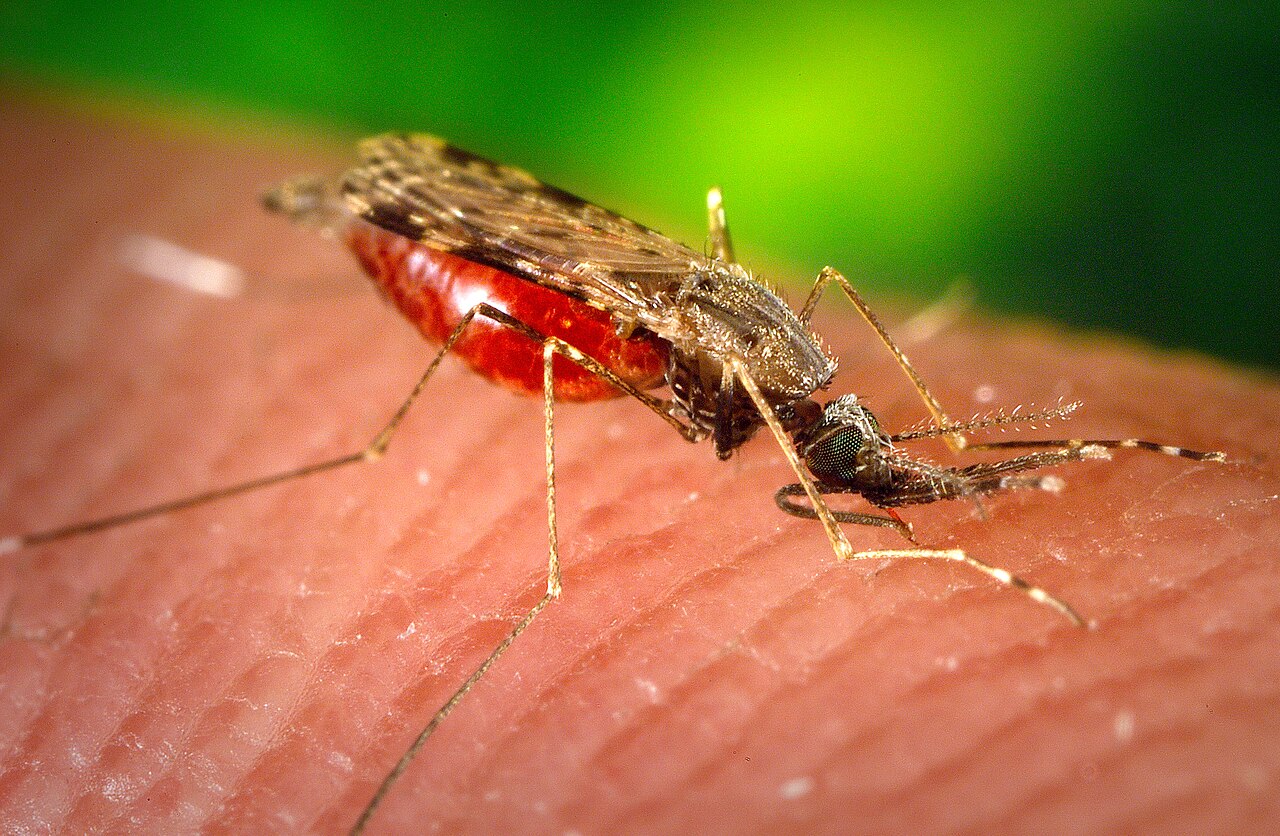
She is also loaded, which changes the sound. A blood meal can double her weight, and a fed female flies slowly and heavily with an audibly lower tone as she looks for a dark surface to rest on. The practical use of this: a sudden drop in pitch in a bedroom usually means she has already bitten someone and is now easy to find on a wall.
The Male Swarm Hum: What a Mating Call Sounds Like

Male mosquitoes never bite, but they make the loudest aggregate noise. In the hour around sunset they gather in columns above a visual landmark, a fence post, a pale rock, a person’s head, sometimes a few dozen individuals, and the combined wingbeats produce a thin ringing hum that seems to come from everywhere at once.
Walk through one and the hum follows you, because the swarm holds station over the landmark rather than over the ground. This is the mosquito equivalent of a mating call: the males are not searching for you, they are waiting for a female to fly in. Swarms sit 3 to 10 ft off the ground and break up within about 30 minutes of full dark.
Harmonic Convergence: The Mosquito Courtship Duet
When a female enters a swarm, the pair performs something close to a duet. Within a second or two of meeting, the male and the female adjust their wingbeats until a shared harmonic, roughly the third multiple of her tone and the second of his, lines up near 1,200 Hz. Researchers working with Culex quinquefasciatus and Aedes aegypti named this harmonic convergence, and pairs that achieve it are far more likely to mate.
Mosquitoes hear through the Johnston’s organ, a dense cluster of sensory cells at the base of each antenna that detects the tiny air movements a nearby wingbeat creates. The range is short, on the order of a few inches, so the duet is a private exchange. You will not pick it out by ear, but it explains why wingbeat frequency is under such precise control in the first place.
High Pitch Mosquito Sound Meaning: Species and Size
A noticeably high pitch mosquito sound usually means a male or a small-bodied species, not an aggressive one. Flight tone rises as body mass falls, so a small Aedes reared in a crowded container buzzes higher than a well-fed Culex from the same yard. Temperature pushes the tone up too: warm muscle contracts faster, and the same insect sounds brighter at 90 degrees F than at 60 degrees F.
What a high pitch does not reliably indicate is danger. Since only females bite and females run lower, a thin, fast, searching tone is more often a harmless male than a feeding threat. Judge by behavior instead, since a mosquito that circles your head and goes silent is the one to swat.
Mosquito Larvae: Do Young Mosquitoes Make Sound?
Young mosquitoes make no sound you can hear. Eggs, larvae, and pupae all develop in standing water, and the larvae, the wrigglers that hang head down from the surface breathing through a siphon, move by thrashing rather than by flight. They have no wings yet, so there is no flight tone and nothing to detect from outside the water.
That silence is worth acting on. From egg to flying adult takes about 7 to 14 days in warm weather, so a soundless bucket, clogged gutter, or plant saucer today is a week of buzzing later. Half an inch of water in a bottle cap is enough for a brood, and tipping it out costs less effort than any control you can apply to the adults.
Mosquito Sound in Ear vs Tinnitus: How to Tell the Difference
A real mosquito moves and a ringing ear does not. If the tone changes direction, rises and falls in volume, cuts out for a few seconds, or stops when you cover one ear, an insect is producing it. Tinnitus holds a steady pitch, is often described as a continuous high ring or hiss, usually sits in one or both ears regardless of head position, and does not pause.
Two more checks help. Turn on a light: a mosquito is visible within a minute or two against a pale ceiling, and nothing appears if the sound is internal. Then record 30 seconds on a phone, since a mosquito registers on the recording and tinnitus never does. Ringing that persists for days, follows loud noise exposure, or comes with hearing loss is worth raising with a doctor rather than treating as a pest problem.
What Else Sounds Like a Mosquito Indoors
Several household noises are mistaken for mosquito noises every summer. Fungus gnats and small midges fly through the same frequency band but drift aimlessly instead of homing in on a person. A fruit fly is lower and coarser. Outside, a cicada or a katydid can ring at a similar pitch through a window screen, and the odd rattles and mechanical calls of birds, including the bird that sounds like a machine gun, catch people off guard at dawn.
Electronics are the bigger culprit. A failing LED driver, a phone charger, a laptop coil, or a dimmer switch emits a thin continuous whine in the 1 to 15 kHz range that does not move and does not stop. The test is simple: unplug the suspect device. If the sound ends, the mosquito was a power supply.
Do Mosquito Sound Killer Apps and Ultrasonic Devices Work?
No. Apps and plug-in gadgets that claim to repel mosquitoes with ultrasound have been tested repeatedly in the laboratory and in the field, and reviews of those trials find no reduction in biting. The usual marketing claim, that the device mimics a male’s wingbeat or a dragonfly, misreads mosquito hearing: the Johnston’s organ works over a few inches, not across a patio, and female mosquitoes are not driven off by male flight tones.
Two different products share the name and add to the confusion. The teenager deterrent sold as a mosquito alarm emits a genuinely unpleasant 17 kHz tone aimed at young human ears and has nothing to do with insects. Sound based deterrents for vertebrates, such as a bird deterrent sound system, do have measurable effects on some species, which is probably why the idea feels plausible for mosquitoes. For actual protection, use EPA registered repellents, screens, a fan on the patio, and standing water removal, per guidance from the Centers for Disease Control and Prevention.
When and Where You Hear Mosquitoes Through the Year
Mosquito sound follows water and warmth. Activity begins when nights hold above about 50 degrees F, builds through early summer, and peaks a week or two after heavy rain fills ditches and containers. In most of the lower 48 states that puts the loudest stretch between June and early September, while the Gulf Coast and southern Florida hear mosquitoes nearly year round.
Place matters as much as season. Buzzing concentrates near marsh edges, slow creeks, and the still backwaters that beaver activity creates, and the same wet margins feed the amphibians that help keep numbers down, which is part of what eats frogs and what frogs eat. Through winter, females of several species shelter in crawl spaces, basements, and culverts in a dormant state, which is why a single mosquito occasionally whines through a January thaw.
Frequently Asked Questions
What is the sound of a mosquito called?
In everyday English it is a buzz, a whine, or a hum. Scientists call it the flight tone, since it is produced by wingbeat rather than by any vocal structure. Flight tone is measured in hertz and is specific enough to identify species and sex, which is how acoustic mosquito traps and survey microphones work.
Can mosquitoes bite through clothing?
Yes, through thin or stretchy fabric. A mosquito proboscis is roughly 2 mm long and passes easily through a single layer of jersey knit, loose weave linen, or tight leggings, especially where cloth is pressed against skin. Loose fitting, tightly woven garments and long sleeves cut bites substantially, and permethrin treated clothing adds real protection outdoors.
Why do mosquito bites itch?
The itch is your immune reaction, not the bite itself. Mosquito saliva contains anticoagulants and other proteins that keep blood flowing, and your body releases histamine in response, which swells the site and triggers nerve endings. Sensitivity differs widely between people, and reactions often fade with repeated exposure to the same local species.
What body part do mosquitoes bite the most?
Ankles and feet are hit hardest outdoors, and the head and arms indoors at night. Mosquitoes orient to carbon dioxide, body heat, and skin odor compounds, and foot bacteria produce an especially attractive scent profile. In bed the plume of exhaled air leads them to the face, which is also why you hear them at your ear.
What smell do mosquitoes hate most?
Lemon eucalyptus oil, specifically refined oil of lemon eucalyptus containing PMD, is the best supported plant based option and is EPA registered. Citronella, lavender, and clove oils repel weakly and wear off within an hour or so. Nothing applied to a yard or burned in a bucket reliably clears an area, so skin applied repellent and screens still do the work.
What diseases do mosquitoes carry?
In the United States the main concerns are West Nile virus, which Culex species transmit and which is reported in nearly every state, plus eastern equine encephalitis, La Crosse encephalitis, St. Louis encephalitis, and dog heartworm. Dengue, Zika, chikungunya, and malaria occur mostly in travelers, with occasional local transmission in Florida, Texas, and the territories.