Skink in House Meaning: Spiritual Signs and Totem
Spiritually, the skink in house meaning is a call to drop what weighs on you and adapt fast, the way the lizard slips out of a tight spot and keeps going. A skink on your floor or along a baseboard points to a change you are ready for, even if you have not named it yet. The house carries a second, practical message. Something inside is feeding or sheltering a small hunter, and somewhere there is a way in.
Skinks pose little threat to people. They carry no venom, they hunt ants, crickets and spiders, and they do not stay indoors by choice. Read the visit in both layers. One concerns your own season of change, and the other concerns a door sweep, a vent or a damp corner.
As a sign, a skink in the house points to renewal and a timely exit, since a skink sheds its tail to escape danger and regrows it. Practically, it means insects, damp or a gap drew it in. Skinks have no venom. Carry it outside in a cup and seal the entry point.
What Does a Skink in the House Mean Spiritually?
A skink in the house means renewal through release. The lizard survives a predator by dropping its tail, then grows a new one, so its visit points to something you can let go of without losing yourself. The cost is real but small next to the escape. That makes the skink a sign for endings that free you, such as a job, a habit or a role you have outgrown.
Season and room sharpen the message. A skink in spring, when these lizards wake and breed, points to a fresh start that wants action now. A skink in late fall is hunting for warmth before winter, and the message turns to rest and saving energy. The room adds the subject. In the kitchen it touches nourishment and the habits you feed, in the bedroom rest and closeness, in the bathroom cleansing, and in the basement the foundations you rarely look at.
Other house visitors carry other messages, and the contrast helps. A bat in the house speaks of the night, intuition and passage through darkness, while the skink is a creature of daylight and sun-warmed stone. The skink’s message is quieter and closer to the ground. It asks for one clean break, not a total upheaval. Notice what you keep holding because letting go feels like loss, and take the skink as permission to release it.
Skink Spirit Animal and Totem Meaning
As a spirit animal, the skink stands for adaptability and a fast, well-timed exit. It does not fight what it cannot beat. It reads the moment, moves, and gives up a part to save the whole. With the skink as a guide, the lesson is to change course early rather than hold a losing position.
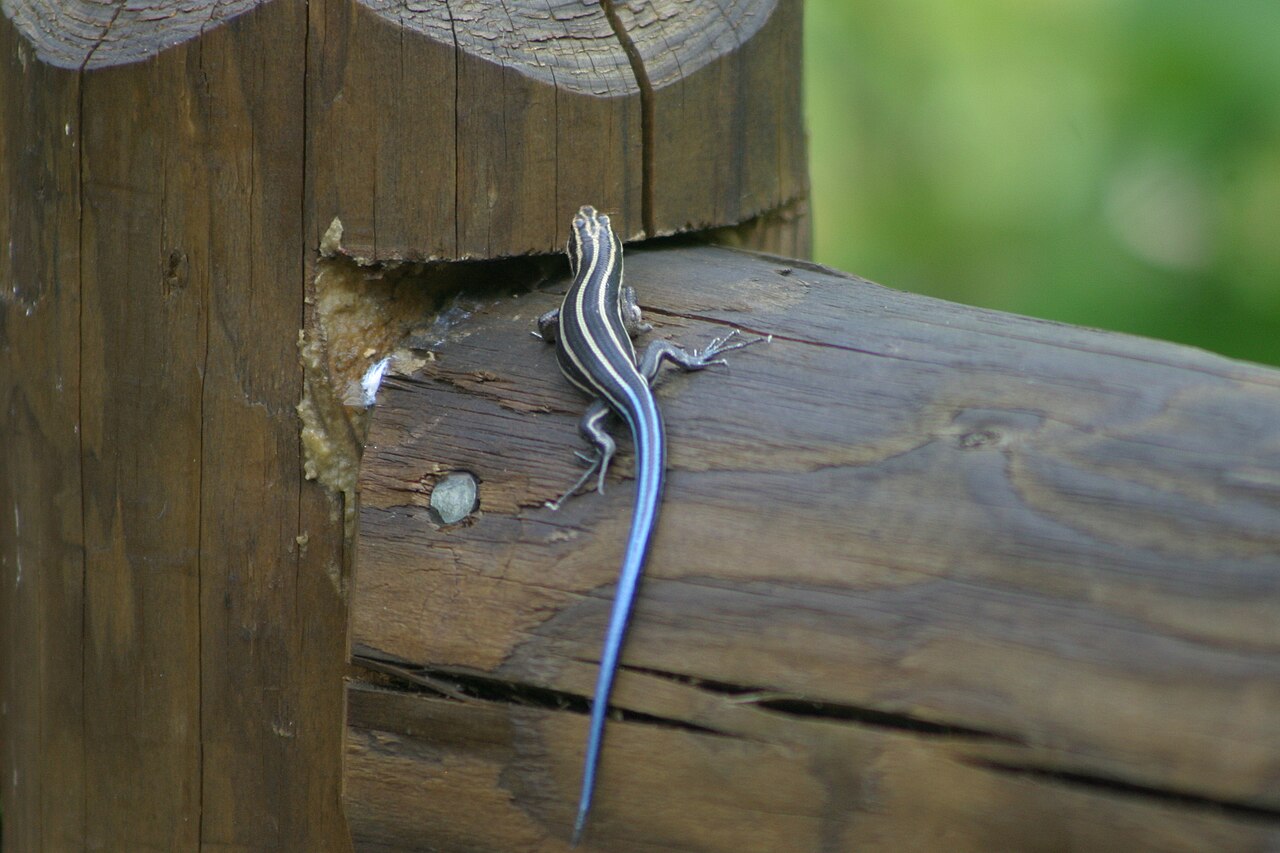
The skink also lives by the sun. Like every reptile it draws its body heat from its surroundings, so it basks before it hunts. The lesson here is to recharge before you act and to choose places and people that warm you. Its glossy, close-fitting scales add a point about boundaries. A grip slides off a skink, and criticism can slide off you.
The word totem has a specific origin. It comes from the Ojibwe odoodem, a term for a clan and its emblem, and it belongs to a kinship system with real obligations. A skink totem is a modern, personal reading and not a clan tradition of any nation. Use spirit animal or personal symbol when you describe your own bond with the skink, and keep totem for its Ojibwe sense.
Cultural and Mythological Meanings of the Skink
In Māori tradition, the lizard is a figure of caution. Mokomoko is a Māori word for lizard that covers the skinks and geckos of Aotearoa New Zealand. Lizards are linked to Whiro, the atua of darkness and death, and a lizard near a home or on a path served as an omen. Lizards could also act as kaitiaki, guardians of sacred places.
In Hawaiian tradition, mo’o are lizard spirits, and the word covers lizards in general rather than skinks alone. Mo’o guard freshwater pools, streams and fishponds, and some are honored as ancestral guardians of families. They protect or punish depending on how people treat the water in their care. The tradition ties lizards to water and to respect for place, not to simple luck.
Rome looked at the skink through medicine. Pliny the Elder, in his Natural History, describes the scincus, a lizard that he compares to a small land crocodile, and lists its flesh among remedies. The Latin name scincus passed into science and gives the skink family, Scincidae, its name. Black snakes are the other reptile with a deep symbolic record, and like skinks they shed their skin as they grow.
How Did a Skink Get in Your House?
A skink got into your house through a gap at ground level, most often under a door, through a vent or with firewood and potted plants. Skinks live on the ground and in leaf litter, so they enter low. A worn door sweep, a garage door that does not seal, a crawl space vent with a torn screen or a gap where pipes enter the wall all work. Some ride in, tucked into a log or the soil of a plant brought in from the porch.
Food is the second reason. Skinks hunt insects and spiders, and a home with a steady supply draws them along the trail. Ants in the house are a common lure, along with crickets in the basement and spiders in quiet corners. If you see a skink more than once, look for the prey first, because the lizard follows it.
Temperature and moisture finish the picture. Skinks cannot make their own body heat, so on cold fall nights they look for shelter, and a house wall or garage feels like a good rock. In summer heat they go the other way and seek cool, damp spots such as basements, laundry rooms and the space under a sink. A damp corner full of insects is close to ideal skink habitat, so a dehumidifier and a fixed leak help as much as a door sweep.
What Does It Mean When You Have Lizards in Your Home?
Lizards in your home mean the house offers food, shelter and a way in, and the species tells you where to look. Three groups often turn up indoors in the US. Skinks come in at floor level, house geckos work walls and ceilings near lights at night, and green anoles (Anolis carolinensis) slip through open windows or ride in on plants in the Southeast.
| Feature | Skink | House gecko | Green anole |
|---|---|---|---|
| Skin | Smooth, glossy, tight scales | Soft, bumpy, pale and translucent | Fine scales, green to brown |
| Toe pads | None | Broad sticky pads | Adhesive pads |
| Climbs glass | No | Yes | Yes |
| Active | Day | Night | Day |
| Voice | Silent | Chirps and clicks | Silent |
| Where you find it indoors | Floors, baseboards, basements | Walls and ceilings near lights | Windows, sills, houseplants |
A lizard that returns repeats its message. One skink is a single prompt to release and adapt, while a lizard that shows up every week points to a pattern you keep missing, in the house and in yourself. Start with the house. Fix the gap and the prey, then see whether the visits stop.
Is a Skink in the House Good or Bad? Skinks vs Geckos
A skink in the house is more good than bad. It eats ants, crickets, roaches and spiders, it has no venom, and it does not damage wiring, wood or food. A cornered skink may bite, but the bite is typically a pinch from small jaws. The main downside is hygiene, not danger.
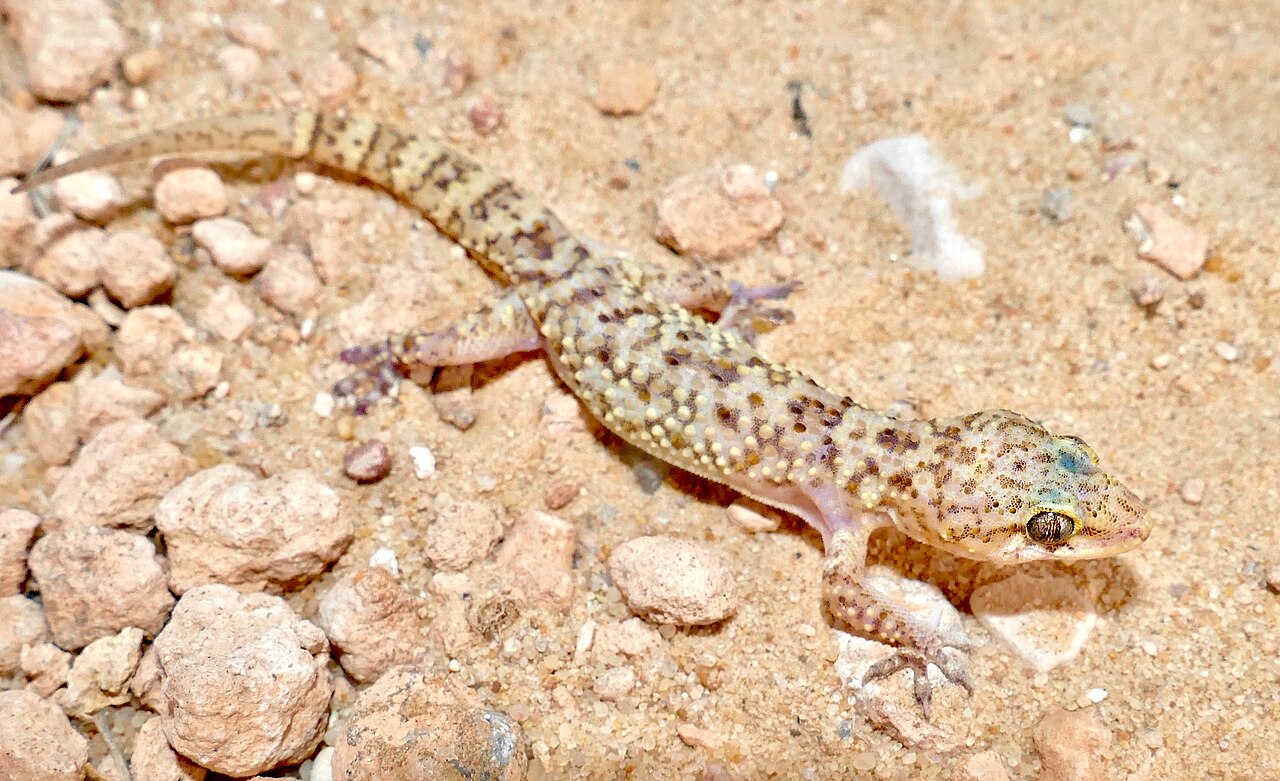
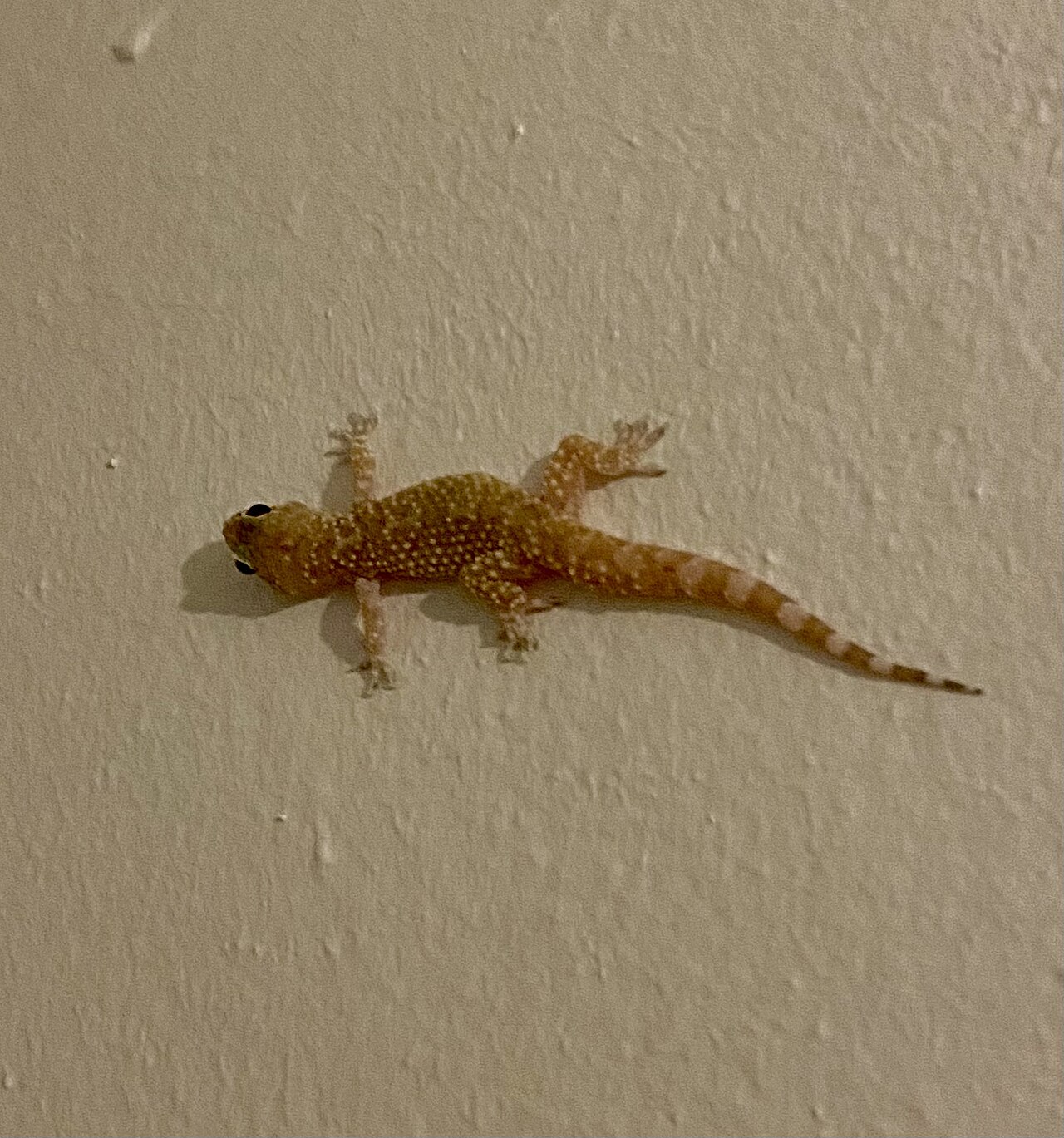
Geckos are good guests on the same terms. The Mediterranean house gecko (Hemidactylus turcicus), common in Southern states, hunts moths and other insects drawn to porch lights and windows at night. Geckos climb walls and even glass on sticky toe pads, and many species call with chirps and clicks, which skinks rarely do. Skinks mostly stay near the floor, move by day and keep quiet. Both leave small droppings with a white tip, and those are worth cleaning up.
The real risk is Salmonella. The CDC Salmonella page details outbreaks linked to pet turtles and pet veiled chameleons and offers tips for preventing infection from pets. Treat a wild skink the same way, wash your hands with soap and water after contact, and wipe surfaces where droppings landed. A snake in the house calls for more caution than a skink, because some US snakes are venomous.
What Does Skink Mean? Name, Slang and Synonyms
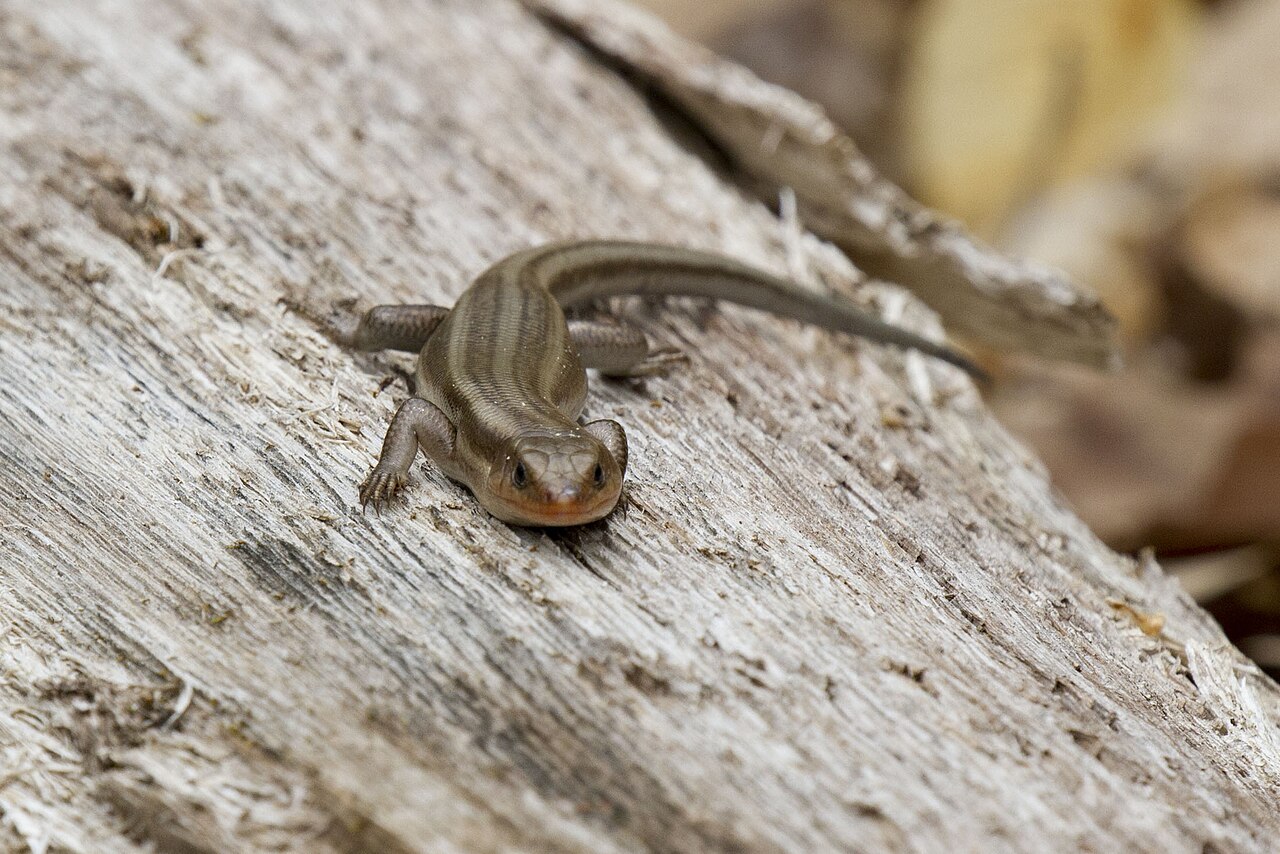
Skink means a lizard of the family Scincidae, a name that runs from Greek skinkos through Latin scincus into English. Merriam-Webster lists the skink as a lizard of that family. Skinks are the smooth, shiny-scaled lizards with short legs and long bodies, and some species have lost their legs almost entirely.
Beyond the lizard, skink has two older meanings, both from British English. In Scots, skink is a word for a shin of beef and the broth made from it, and it survives in cullen skink, a smoked haddock soup with no lizard in it. An older English verb skink means to pour or serve drink, and a skinker was the person who poured it. Neither sense has anything to do with the reptile beyond spelling.
Another word for skink is scincid, the scientific term for any member of the family. Five near synonyms cover most uses, namely lizard, scincid, saurian, reptile and, in parts of the American South, scorpion, a folk name for skinks such as the broad-headed skink. That last name causes needless fear. A skink has no stinger and no venom.
What Are Some Common Names for Skinks?
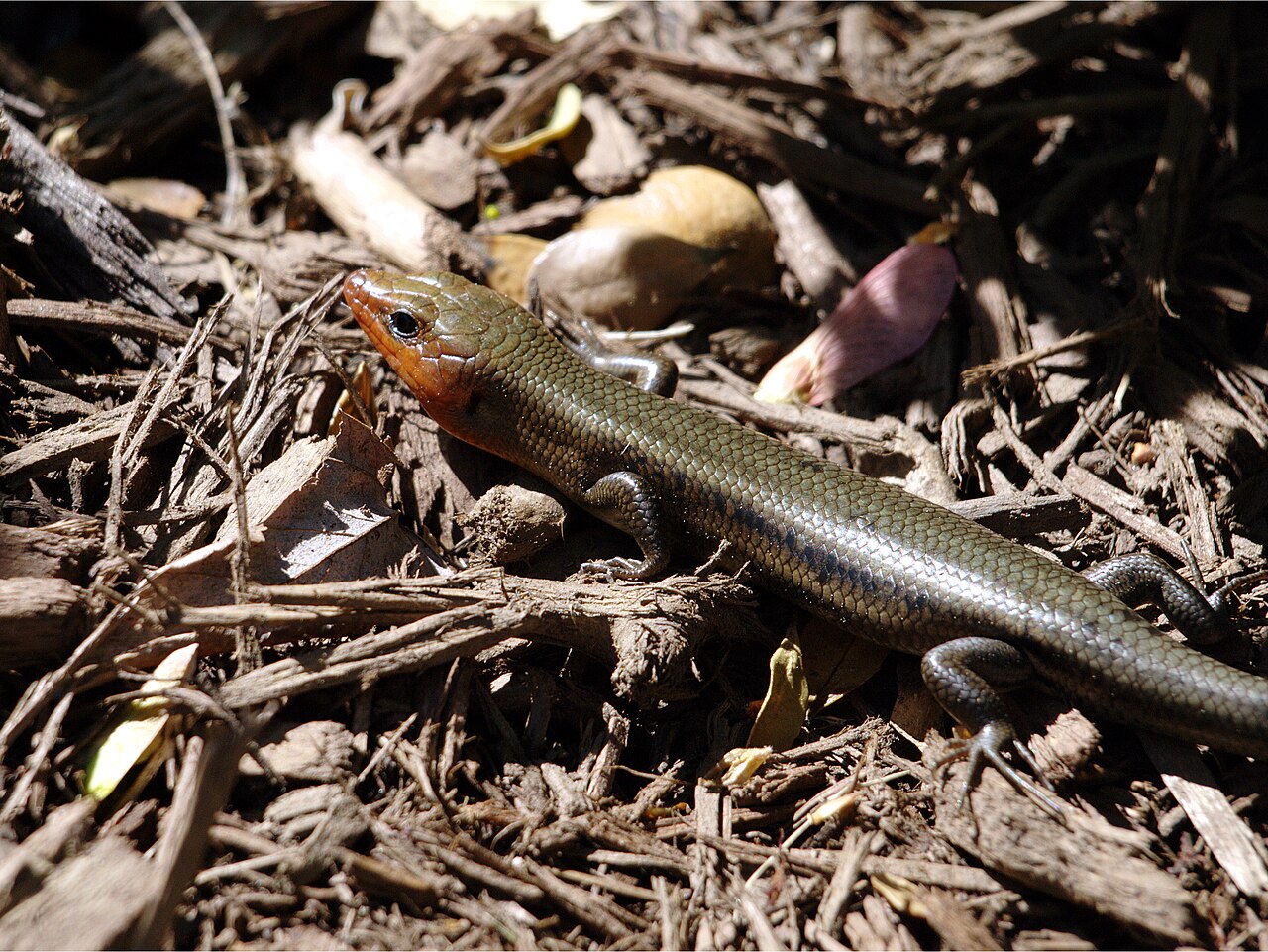
The common names you hear in the US are five-lined skink, broad-headed skink, little brown skink, blue-tailed skink and blue-tongued skink. The common five-lined skink (Plestiodon fasciatus) ranges across much of the East. The broad-headed skink (Plestiodon laticeps) is the biggest of its eastern relatives, and adult males grow wide orange-red heads in spring. The little brown skink (Scincella lateralis), also called the ground skink, is a small bronze lizard of Southeastern leaf litter.
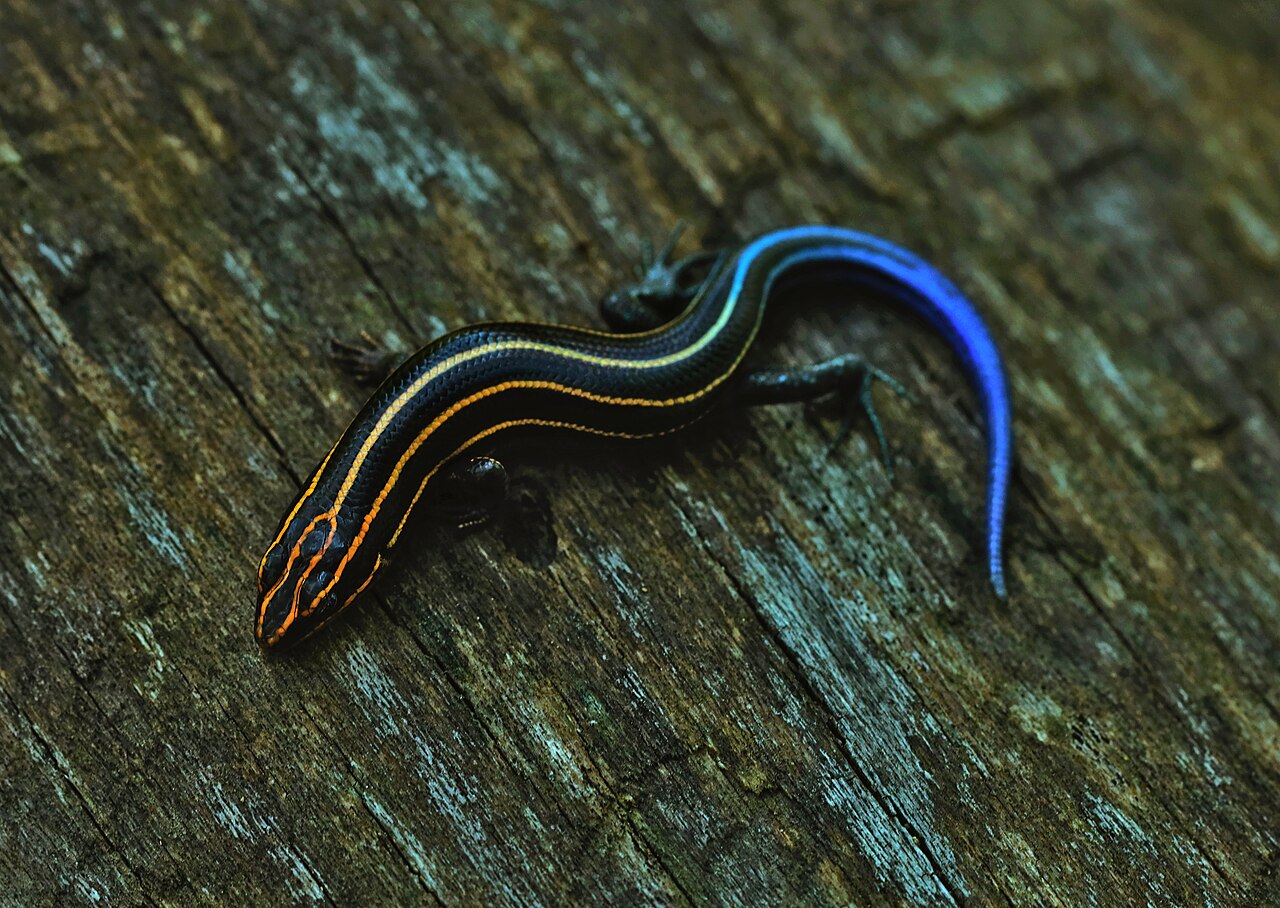
Blue-tailed skink is a nickname, not one species. The bright blue tail belongs to young five-lined, southeastern five-lined (Plestiodon inexpectatus) and broad-headed skinks, and it fades as they age. Out West, the young western skink (Plestiodon skiltonianus) shows the same blue tail.
Blue-tongued skinks (Tiliqua) are a different case. They are large skinks from Australia and New Guinea sold in the US pet trade, so one in a house is an escaped or released pet, not a wild visitor. Return it to its owner or contact a reptile rescue, and never release it outdoors.
What to Do With a Skink in Your House
To get a skink out, cover it with a cup or jar, slide a stiff card underneath and carry it outside. Release it near cover such as a shrub border, a woodpile or a stone wall, on the side of the house away from the door it used. Move slowly and keep your hands off its tail. Never use glue traps, which catch skinks along with the insects and kill them slowly.
Then close the way in and the reason to stay. Add or replace door sweeps, repair torn crawl space vent screens, and seal pipe gaps with caulk or expanding foam. Cut the prey by dealing with ants and crickets, and dry out damp rooms. A bird in the house needs the same calm sequence of a clear exit first and repairs after.
Leave wild skinks wild. Federal law protects two Florida skinks, and state wildlife rules cover others, so a quick release is always the safe choice. If you cannot identify a skink or find an injured one, call your state wildlife agency for guidance.
Frequently Asked Questions
Are skinks dangerous or venomous?
No. Skinks have no venom, and a bite from a wild skink is rare and mild, more pinch than wound. The real concern is Salmonella, which the CDC tracks in reptiles such as pet turtles and veiled chameleons. Wash your hands with soap and water after you touch a skink or clean up its droppings.
Do skinks lose their tails?
Yes. A skink drops its tail when a predator grabs it, and the loose tail keeps wriggling to hold the attacker’s attention while the lizard runs. The skink then grows a replacement. The new tail is often shorter and duller in color, and built around a rod of cartilage instead of bone.
What is cullen skink?
Cullen skink is a thick Scottish soup named for Cullen, a fishing village in Moray on the northeast coast of Scotland. Cooks make it with smoked haddock, potatoes, onions and milk, and serve it as a starter or as a meal with bread. The soup has nothing to do with the lizard.
How can I tell a skink from a salamander?
Look at the skin and toes. Skinks are reptiles with dry, shiny scales and claws on their toes. Salamanders are amphibians with moist, scaleless skin and no claws, and they dry out fast in a house. A salamander indoors points to standing water or a wet basement nearby.
Are skinks protected?
Yes, some are. The sand skink (Plestiodon reynoldsi) and the blue-tailed mole skink (Plestiodon egregius lividus) of central Florida are federally listed as threatened. Other species fall under state wildlife rules, so release a house skink outside unharmed and check with your state wildlife agency before you keep or kill one.
Can a skink live in your house?
No, not for long. A house is typically dry, often has too few insects and lacks sunny spots to bask, so a trapped skink weakens without water, food and warmth. Move it outside near cover such as a woodpile or shrub border, ideally on the day you find it.
Sources
- Centers for Disease Control and Prevention, Salmonella
- Merriam-Webster, Skink Definition and Meaning
- Online Etymology Dictionary, Skink