Vole Tracks: How to ID Them and Rule Out Moles and Gophers
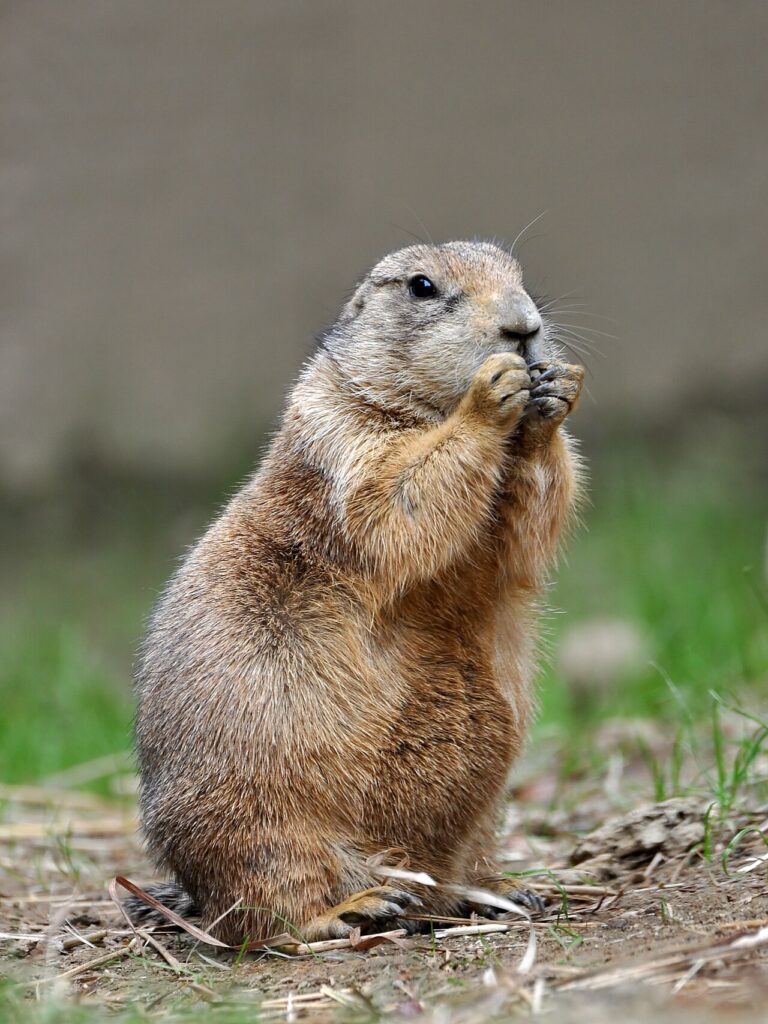
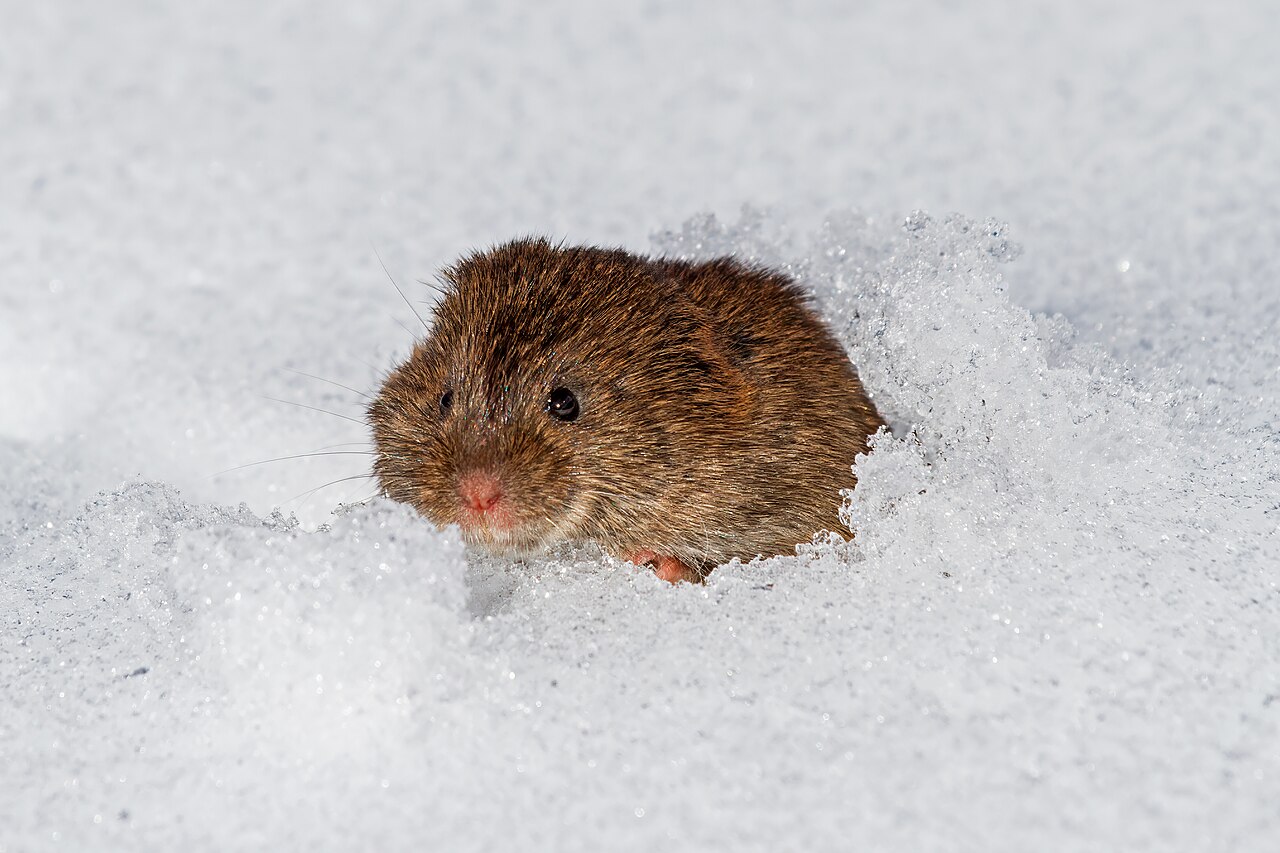
Vole tracks are tiny, close-set footprints that land in groups of two or four, depending on speed, and run along narrow surface runways through grass, mulch or snow. The meadow vole (Microtus pennsylvanicus) is the species most Americans find, a stocky, short-tailed rodent with small ears and a blunt face. Most people find the runways and holes long before they find a clear print.
Vole tracks are tiny prints that follow narrow, clipped runways across the surface and end at open holes with no soil pile. Moles push up raised ridges and volcano-shaped hills. Pocket gophers leave fan-shaped mounds with a plugged hole on one side. Check the hole first.
What Vole Tracks Look Like
Vole tracks are small rodent prints with four toes on each front foot and five on each hind foot. The whole print is smaller than a fingertip, with the toes splayed like a tiny star.
The pattern matters more than one print. Meadow voles often trot or walk under cover and leave a regular trail of alternating prints. Out in the open or at speed they bound and the prints land in closer groups. The tail is short, so it leaves little or no drag line in snow or dust.
Mouse tracks look much the same at the print level. The difference is the route: deer mice (Peromyscus maniculatus) wander across open snow and drag a long tail, while a vole stays inside its runways.
Vole Tracks in Snow, Mud and Sand
In snow, vole tracks appear as short lines of hopping prints that start at one small hole and end at another. Voles spend winter in tunnels at ground level under the snow and surface only briefly.
As the snow pulls back in spring, the winter tunnels appear on the lawn as winding, raised trails of matted grass and loose clippings. Mud keeps toe detail best; in sand, read the spacing and the runway instead.
Rabbit tracks are the common mix-up in snow. An eastern cottontail (Sylvilagus floridanus) bounds too, but its prints are several times larger and the long hind feet land ahead of the small front feet.
Vole Runways, Holes and Tunnels in Your Lawn
Vole runways are narrow, worn paths at the surface of the lawn where the grass is clipped short. They measure 1 to 2 in (2.5 to 5 cm) wide and hide under taller grass, so part the blades with your hand to find them.
Burrow entrances are open, clean holes with no soil pile beside them. That single detail separates voles from moles and gophers, which both push soil out.
Vole poop in a runway tells you the network is still in use. Look for small, greenish-brown pellets in clusters next to fresh green grass clippings. Brown, crumbling clippings and no droppings point to an old runway. Wear gloves when you check them, and never sweep droppings dry.
Mouse poop vs vole poop differs mainly by place, with mouse pellets found mainly indoors and vole pellets outdoors in runways and near burrow holes.
Vole vs Mole vs Gopher: How to Tell the Signs Apart
Start with the hole. Voles leave open, clean holes at the surface. Moles keep their tunnels closed to the air, and pocket gophers plug theirs with soil from the inside.
Mounds and ridges confirm the call. The eastern mole (Scalopus aquaticus) pushes up raised ridges as it tunnels just under the turf and builds round, volcano-shaped hills from deeper digging. Moles eat mostly grubs and earthworms, not plant roots, so their lawn damage comes from heaved soil rather than chewing. Pocket gophers (family Geomyidae) leave fan-shaped or crescent-shaped mounds with the plugged hole off to one side, and they eat roots and pull whole plants down from below.
Range narrows the choice before you dig. Pocket gophers live in the western and central US, with a few species in parts of the Southeast, so New England and the Mid-Atlantic have none. For a field test, flatten a mound or step down a ridge and mark the spot. A ridge that rises again within a day or two means an active mole, a reopened fan mound means a gopher, and a hole you plug with leaves that is open again within two days means voles.
| Animal | Hole and mound | Tunnel or runway | Typical damage |
|---|---|---|---|
| Meadow vole | Open, clean hole with no soil pile | Clipped surface runways in grass, tunnels under snow | Runways in the lawn, girdled trunks, eaten bulbs |
| Pine vole (Microtus pinetorum) | Small open holes, no mound | Shallow tunnels just under soil and leaf litter | Roots of fruit trees, shrubs and perennials eaten |
| Eastern mole | No open hole, round volcano-shaped hills | Raised ridges under the turf, deeper runs below | Heaved, spongy lawn, little root damage |
| Pocket gopher | Fan-shaped mound, hole plugged off to one side | Deep tunnels, no surface ridges | Roots eaten, plants pulled down from below |
| Shrew | Small open holes, no mound | Borrows vole and mole runways | None to plants, eats insects and worms |
Vole Damage to Lawns, Gardens and Trees
Vole damage on trees shows as bark gnawed away in a ring at the base of the trunk, with fine, irregular tooth marks. It happens in winter under snow or mulch and shows after the thaw. A full ring cuts the bark layer that carries sugars to the roots, and the tree usually dies within a year or two.
Underground, voles eat bulbs, root crops and perennial roots from below. Tulip bulbs vanish, carrots and potatoes show hollow bites, and hostas wilt and lift out of the soil with no roots left. In the lawn, the damage is the runway network itself, brown trails that green up again once the voles move on.
How to Prevent Vole Damage in Your Yard
Vole prevention starts with removing the cover they travel under. Keep a 3 ft circle around each trunk free of mulch, grass and ground cover, and mow the lawn short in late fall so winter runways have no roof. Young trees need guards of 1/4 in hardware cloth at least 18 in tall, buried 4 to 6 in (10 to 15 cm) deep, to stop girdling under snow. Line bulb beds with the same mesh or a layer of sharp gravel.
Getting rid of voles that already live in the lawn calls for traps or barriers once the signs confirm them.
Where and When to Look for Vole Tracks
Look for vole tracks where dense cover meets food. Voles favor thick grass, field edges, ground cover such as vinca and ivy, and mulched beds. Start along fences, woodpiles, stone walls and garden borders.
The best tracking day is the morning after a light, fresh snow. A thin dusting records every hop between holes and leaves no older trails to confuse you.
Walk the lawn on the first warm day after snowmelt, before rain and mowing flatten the trails, and note where runways meet trunks and beds.
Frequently Asked Questions
What is a vole in your yard?
A vole in your yard is in most cases a meadow vole, a mouse-sized rodent about 5 to 7 in long with a short tail, small ears and a blunt face that lives in surface runways and eats grass, roots and bark.
How deep do vole tunnels go?
Most vole tunnels run within a few inches of the surface, and pine voles dig about 3 to 4 in deep around roots. Pocket gopher tunnels run 6 to 12 in down, which is why a gopher mound shows fresh subsoil and a vole hole shows none.
Will voles eventually go away?
No, not for good while dense cover remains. Vole numbers boom and crash, with peaks every 3 to 6 years in some areas, so they drop on their own after a peak, but a yard with tall grass, mulch and ground cover gets resettled after each crash.
What time of day do voles come out?
Voles are active day and night, all year round, in short bursts of feeding and rest. Activity often peaks around dawn and dusk, though field studies differ on timing, so those hours suit watching a runway from a distance.
Do chipmunks leave holes like voles?
Yes, chipmunk holes are also open with no soil pile, but they measure about 2 in across, sit alone beside walls, stumps or steps and have no runways leading to them.
Is it safe to touch vole droppings or a dead vole?
No, not with bare hands. Rodent waste and carcasses can spread leptospirosis and tularemia, and the CDC advises the same care for all rodent droppings, although the deer mouse is the main hantavirus carrier in the US. Wet droppings with a bleach solution before wiping them up and pick up a dead vole with a bag turned inside out.
Sources