Yellow Birds: 12 Common Yellow Birds in North America with Identification (2026)
Yellow is one of the most common colors in North American birds, appearing on dozens of species ranging from the brilliant American Goldfinch to the diverse warbler family. Yellow plumage typically signals high health in birds (yellow comes from dietary carotenoids), so brilliant yellow males are advertising fitness to potential mates. This guide helps you identify the yellow bird you’ve spotted by combining yellow intensity and pattern, body size, geographic range, habitat, and the key field marks that separate similar-looking species, particularly important among the confusing warbler family.
Quick Reference: 12 Yellow Birds at a Glance
| Species | Size | Key ID Feature | Range |
|---|---|---|---|
| American Goldfinch | 5″ | Yellow body + black wings + cap (summer male) | Continent-wide |
| Lesser Goldfinch | 4.5″ | Yellow underparts + dark olive/black back | Western US |
| Yellow Warbler | 5″ | All-yellow body + chestnut breast streaks | Continent-wide |
| Common Yellowthroat | 5″ | Yellow throat + black mask (male) | Continent-wide |
| Magnolia Warbler | 5″ | Yellow below + black streaks + white wing bars | Eastern forests |
| Yellow-Rumped Warbler | 5.5″ | Yellow rump + yellow side patches | Continent-wide |
| Prothonotary Warbler | 5.5″ | Brilliant golden head + olive back | Southeast US |
| Western Tanager | 7.5″ | Yellow body + red head + black wings | Western US |
| Evening Grosbeak | 8″ | Yellow body + dark head + bright yellow eyebrow | Northern forests |
| Yellow-Breasted Chat | 7.5″ | Bright yellow breast + olive back | Continent-wide |
| Eastern Meadowlark | 9.5″ | Yellow breast + bold black V | Eastern US fields |
| Wilson’s Warbler | 4.5″ | Yellow body + black cap (male) | Continent-wide |
Species Identification
American Goldfinch
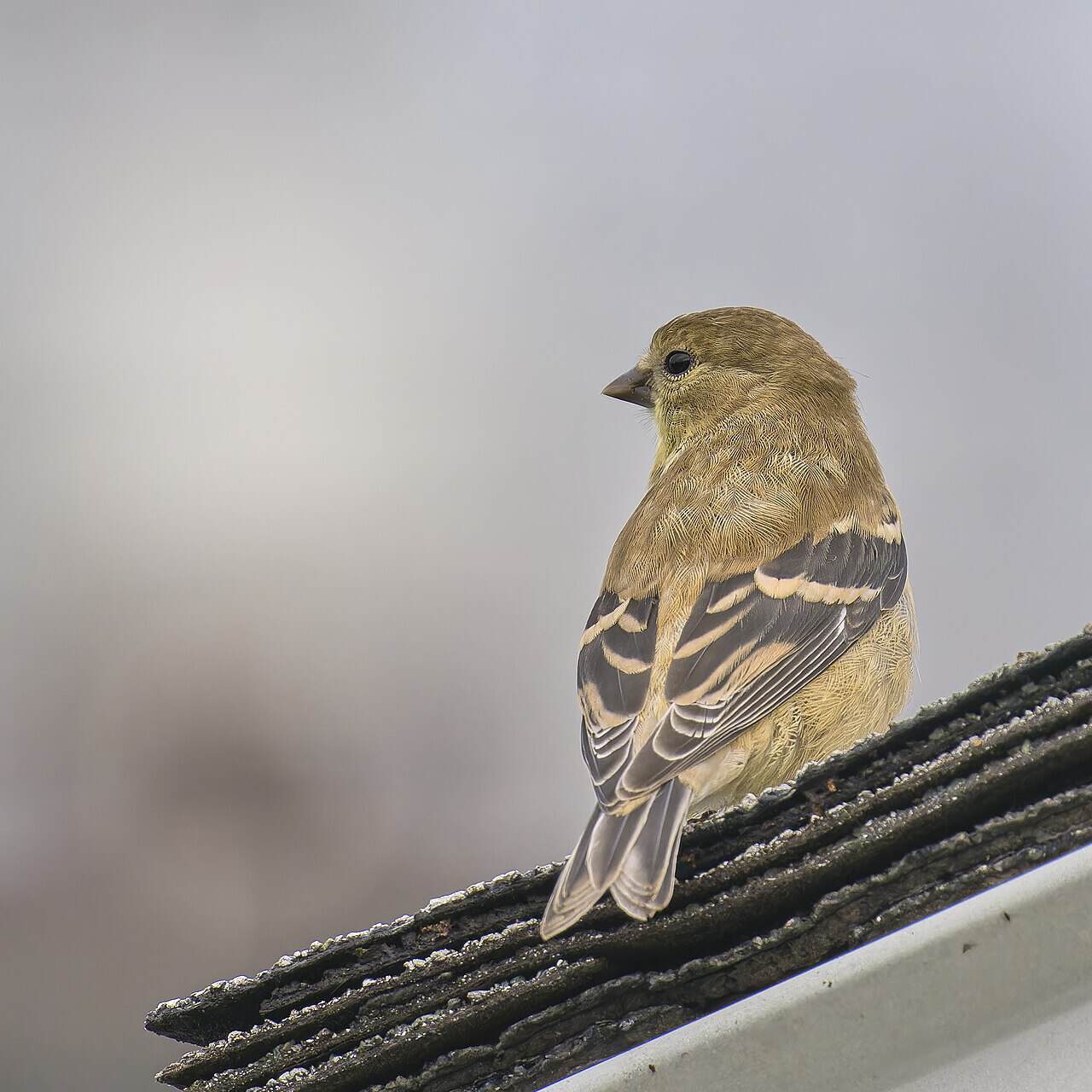
The most familiar yellow bird at North American feeders. Summer male American Goldfinches are brilliant lemon-yellow overall with jet-black wings, white wing bars, and a black cap on the forehead. In winter, both sexes turn dull olive-brown, many people don’t recognize them as the same species.
Range: Continent-wide. Year-round in most regions.
Habitat: Open fields, meadows, weedy areas, backyard feeders.
Key ID: Summer males are unmistakable. Winter birds: small, conical bill + white wing bars + dull olive coloration.
Where to see: Nyjer (thistle) finch socks at feeders. American Goldfinches are highly social, often in flocks.
Lesser Goldfinch
The Western counterpart to American Goldfinch. Lesser Goldfinches are smaller with bright yellow underparts and a dark olive-green to black back (varies by region). The throat is bright yellow in males.
Range: Western US.
Habitat: Open woodlands, gardens, weedy areas.
Key ID: Yellow below + dark back (no black cap like American Goldfinch). Smaller size.
Where to see: Western backyards. Visit nyjer feeders alongside American Goldfinches in overlap zones.
Yellow Warbler
The most uniformly yellow songbird in North America. Yellow Warblers are bright lemon-yellow all over, with subtle chestnut streaks on the breast (male), overall appearance is just brilliant yellow. The most common warbler in most of North America.
Range: Continent-wide in summer. Migrates to Central/South America for winter.
Habitat: Wetlands, willow thickets, gardens with shrubs.
Key ID: Brilliant all-yellow body, subtle breast streaking. No bold markings. Often the only fully-yellow warbler in their habitat.
Where to see: Look near water and willow trees in summer. Listen for their ‘sweet-sweet-sweet-I’m-so-sweet’ song.
Common Yellowthroat
A small, striking warbler. Male Common Yellowthroats have a bright yellow throat and breast, an olive back, and a distinctive black mask across the face. Females lack the black mask but have similar yellow throat.
Range: Continent-wide in summer (most of North America). Some southern populations year-round.
Habitat: Marshes, wetlands, brushy fields, overgrown gardens.
Key ID: Black mask on male = unique. Bright yellow throat. Often skulks in dense vegetation.
Where to see: Listen for their distinctive ‘wichity-wichity-wichity’ song from dense brush.
Magnolia Warbler
Among the most striking warblers. Magnolia Warblers have bright yellow underparts with bold black streaks down the breast, an olive-yellow head, a white belly band, and white wing bars. Distinctive combination of yellow + black streaks + white markings.
Range: Northeastern US and Canada in summer. Migrates to Caribbean and Central America for winter.
Habitat: Coniferous forests, especially young pine and spruce stands.
Key ID: Yellow underparts + heavy black streaking + white belly band + white wing bars.
Where to see: Northern coniferous forests in summer. Often in lower portions of trees.
Yellow-Rumped Warbler
Often called ‘butter-butts’ for their distinctive yellow rump patch. Yellow-Rumped Warblers have variable plumage, eastern ‘Myrtle’ form has white throat; western ‘Audubon’ form has yellow throat. Both have yellow side patches and yellow rump.
Range: Continent-wide. Northern North America in summer, southern US in winter.
Habitat: Coniferous forests in summer; varied habitats in winter.
Key ID: Yellow rump (visible when flying away) + yellow side patches. Most adaptable warbler.
Where to see: Common in winter throughout the southern US. Will visit feeders occasionally for suet.
Prothonotary Warbler
The ‘swamp canary’ of the Southeast. Prothonotary Warblers have a brilliant golden-yellow head, breast, and underparts contrasted against olive-green wings and back. The only warbler that nests in tree cavities.
Range: Southeastern US in summer. Migrates to Central/South America for winter.
Habitat: Wooded swamps, bottomland forests, areas with standing water.
Key ID: Brilliant golden head and underparts (more intense than other yellow warblers). Cavity-nesting.
Where to see: Southern swamps in summer. Will use nest boxes placed near water.
Western Tanager
A spectacular western bird. Male Western Tanagers have a brilliant yellow body, jet-black wings with two yellow/white wing bars, and a red-orange head. The combination is unique, no other North American bird has yellow body + red head.
Range: Western US in summer. Migrates to Mexico/Central America for winter.
Habitat: Coniferous and mixed forests at all elevations.
Key ID: Yellow body + red head + black wings = Western Tanager. Females are yellow-olive overall.
Where to see: Western forests in summer. May visit fruit feeders (oranges, grape jelly) during migration.
Evening Grosbeak
A large, robust finch. Male Evening Grosbeaks have a yellow body with a dark head, bright yellow eyebrow stripe, and white patches on jet-black wings. The thick conical bill is pale (greenish in summer, ivory in winter). Females are duller gray-yellow.
Range: Northern coniferous forests, with irregular southern irruptions.
Habitat: Coniferous and mixed forests.
Key ID: Large size + dark head + yellow eyebrow + black wings with white patches. Heavy seed-eating bill.
Where to see: Variable, appear in winter at southern feeders during irruption years. Sunflower seed.
Yellow-Breasted Chat
A large, robust songbird (formerly classified as a warbler). Yellow-Breasted Chats have a brilliant yellow breast, olive-green back, white throat, and a distinctive face pattern with white eyebrows and spectacles.
Range: Continent-wide in summer. Migrates to Mexico/Central America for winter.
Habitat: Dense brushy thickets, especially in early-successional habitat.
Key ID: Bright yellow breast + olive back + white spectacles around eyes. Bulkier and louder than most warblers.
Where to see: Listen for their loud, varied song from dense brush. Hard to see, easy to hear.
Eastern Meadowlark
Not a true lark, but a yellow-breasted grassland bird with a distinctive black V on the chest. Eastern Meadowlarks have a brown-streaked back, bright yellow breast and belly, and a bold black ‘V’ across the upper breast.
Range: Eastern and central US year-round.
Habitat: Open grasslands, hayfields, pastures.
Key ID: Yellow breast + bold black V + brown-streaked back. Often perches on fenceposts.
Where to see: Grasslands and fields. Listen for their clear, flute-like ‘see-you-see-yer’ song.
Wilson’s Warbler
A small, bright warbler. Male Wilson’s Warblers have a brilliant yellow body and a distinctive small black cap on the head. Females lack the cap but are similarly yellow. The black cap is unique among yellow warblers.
Range: Continent-wide in summer (northern North America). Migrates to Mexico/Central America for winter.
Habitat: Riparian thickets, willow stands, wet woodlands.
Key ID: All-yellow body + small black cap (male only). Olive-green wings without prominent wing bars.
Where to see: Migration in spring/fall throughout the US. Breeding in northern wet thickets.
How to Attract Yellow Birds to Your Yard
Different yellow birds respond to different attractants:
Goldfinches (American, Lesser): Offer nyjer seed in finch socks or specialty thistle feeders. They prefer multiple feeders and feed in flocks.
Warblers (Yellow, Common Yellowthroat, etc.): Most warblers don’t visit seed feeders. Attract them with native shrubs, water features, and pesticide-free yards. Insect-eaters need bug-friendly habitat.
Western Tanagers: During migration, offer fresh orange halves and grape jelly in shallow dishes.
Yellow-Rumped Warblers: One of few warblers that visits feeders. Offer suet, especially in winter.
Evening Grosbeaks: During irruption years, offer black oil sunflower seed in hopper feeders.
Universal attractant: A clean, fresh water source. Bird baths attract more yellow birds than any single feeder type.
Frequently Asked Questions
What’s the most common yellow bird in North America?
The American Goldfinch is the most common and widely recognized yellow bird. Yellow Warblers are also very abundant during summer. Yellow-Rumped Warblers are the most common yellow bird in winter throughout the southern US.
What yellow bird has a black cap?
Wilson’s Warbler males have a distinctive small black cap on a bright yellow body. American Goldfinch summer males also have a small black cap on the forehead, but with black wings, Wilson’s Warbler has olive wings without wing bars.
Why do birds turn yellow?
Yellow color in birds comes from carotenoid pigments in their diet (from plants and insects). Birds that eat more carotenoid-rich foods develop more brilliant yellow plumage, making yellow a signal of foraging quality and health.
Are American Goldfinches yellow year-round?
No. Summer males are brilliant lemon-yellow with black wings and cap. Winter males and all females are dull olive-brown. Many people don’t recognize winter goldfinches as the same species.
What yellow bird visits feeders?
American Goldfinches and Lesser Goldfinches visit nyjer (thistle) feeders. Evening Grosbeaks visit sunflower feeders during irruption years. Yellow-Rumped Warblers occasionally visit suet feeders. Most other yellow birds don’t visit seed feeders.
What’s the difference between American Goldfinch and Yellow Warbler?
American Goldfinches have a thick conical seed-eating bill, distinct white wing bars, and a black cap. Yellow Warblers have a thin pointed insect-catching bill, no wing bars, and chestnut breast streaks.
Where can I see Western Tanagers?
Western coniferous forests in summer. During spring migration, they may visit yards with offered oranges and grape jelly. Listen for their robin-like song from forest canopy.
Related reading: Birds with Yellow Breasts.
Related reading: Backyard Birds with Yellow Bellies.