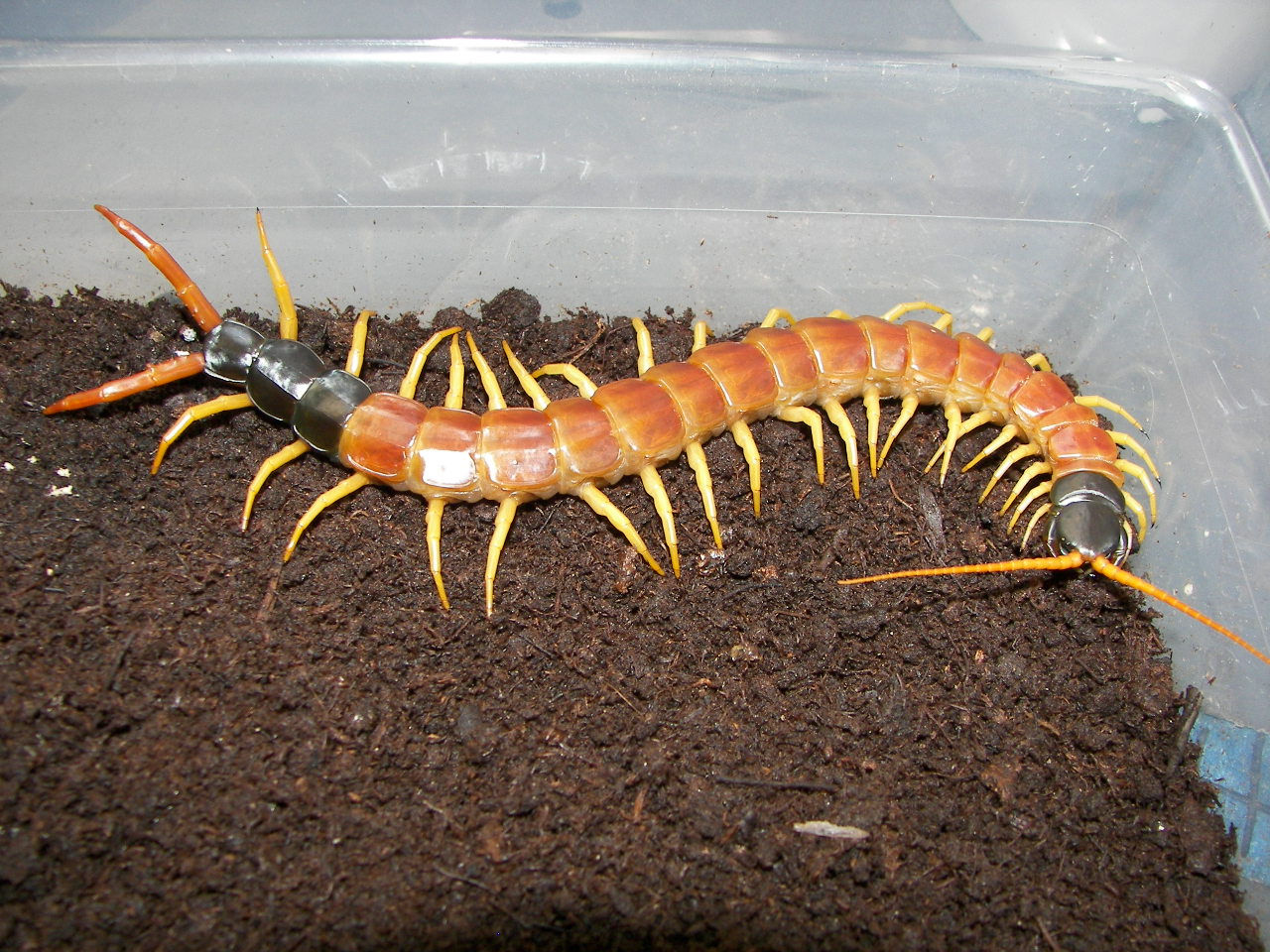
Giant Desert Centipede: Identification and Bite Risk
The giant desert centipede (Scolopendra heros) is the largest centipede in North America, reaching up to 8 inches long, and it delivers a venomous bite that is painful but rarely dangerous to healthy adults. Also called the Texas redheaded centipede or giant Sonoran centipede, it is found across the arid Southwest and northern Mexico.
Despite its intimidating size and speed, this centipede plays a useful role as a nighttime predator of insects, spiders, and small vertebrates in desert ecosystems. This guide covers identification, venom risk, habitat, diet, and what to do if you find one near your home.
The giant desert centipede is a large, fast, nocturnal predator native to the American Southwest, growing up to 8 inches long. Its bite causes intense pain and swelling but is not considered life threatening to healthy adults.
| Trait | Detail |
|---|---|
| Scientific name | Scolopendra heros |
| Length | 6.5 to 8 in (16 to 20 cm) |
| Legs | 21 or 23 pairs |
| Range | Southwestern US and northern Mexico |
| Habitat | Desert, arid grassland, rocky woodland |
| Venomous | Yes, painful but rarely dangerous |
| Lifespan | Up to 10 or more years |
What Is a Giant Desert Centipede?
The giant desert centipede is a large arthropod in the genus Scolopendra, known scientifically as Scolopendra heros. It is the largest centipede species found in the United States, with confirmed adults reaching lengths of up to 8 inches.
Common names for this species include Texas redheaded centipede, giant Sonoran centipede, Arizona desert centipede, and Texas black-tailed centipede, depending on the regional color form. All of these names refer to the same species, just different color variants across its range.
Like all centipedes, it has one pair of legs per body segment, with a total of 21 or 23 pairs of legs plus a modified front pair called forcipules that inject venom into prey and, occasionally, into a curious hand or bare foot.
How to Identify a Giant Desert Centipede
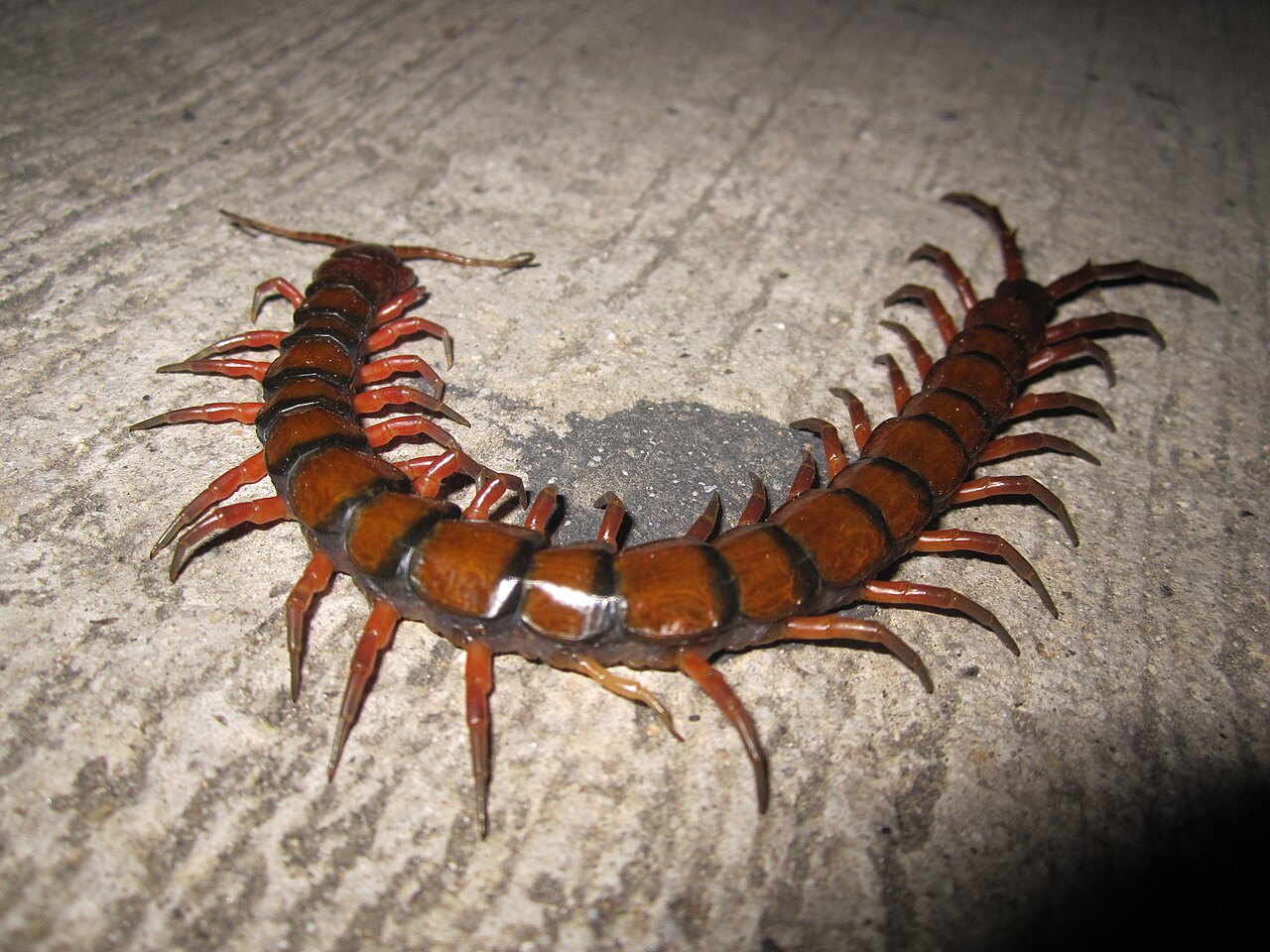
The most reliable identification feature is size combined with color: a centipede over 6 inches long with a segmented, flattened body and one pair of legs per segment is almost certainly Scolopendra heros in the Southwest. Coloration varies by regional form, from solid reddish brown to the striking castaneiceps variant with a black body and bright red head.
The last pair of legs, called ultimate legs, is noticeably longer and thicker than the walking legs and is sometimes mistaken by first time observers for a second set of antennae at the tail end. This is a useful feature for telling centipedes apart from millipedes, which lack this trait entirely.
Younger individuals are typically smaller and lighter colored than mature adults, gradually darkening and lengthening with each molt as they grow toward their full adult size over several years, a growth pattern shared with many arthropods, including a baby centipede of any species right after hatching.
Giant Desert Centipede vs House Centipede
The giant desert centipede and the house centipede look almost nothing alike beyond both having many legs. House centipedes are pale yellowish gray, have extremely long, delicate legs, and rarely exceed 1.5 inches in body length.
Scolopendra heros, by contrast, has short, sturdy legs relative to its body, a thick armored exoskeleton, and a body length that can be five times longer than a house centipede. House centipedes are also common indoor pests that hunt insects inside homes, while the giant desert centipede strongly prefers outdoor, arid habitat.
Bite risk differs sharply between the two as well. House centipede bites are rare and mild, while a giant desert centipede bite is significantly more painful due to its larger venom glands and stronger forcipules.
Giant Desert Centipede vs Millipede
Centipedes and millipedes are often confused, but a few quick checks separate them reliably. A giant millipede has two pairs of legs per body segment, moves slowly, and is a harmless detritus feeder, while the giant desert centipede has one pair of legs per segment, moves quickly, and is an active venomous predator.
Millipedes also tend to curl into a tight spiral when disturbed and release a mild defensive odor, while centipedes flee rapidly or raise their front end defensively when threatened. Body shape differs too, with millipedes appearing rounder in cross section compared to the flattened body of Scolopendra heros.
Anyone unsure which they are looking at should avoid handling the animal either way until identification is confirmed, since centipede bites can be genuinely painful even though millipedes pose no bite risk at all. A side by side centipede vs millipede comparison is a useful reference for anyone who regularly finds either one in the yard.
Where Do Giant Desert Centipedes Live?
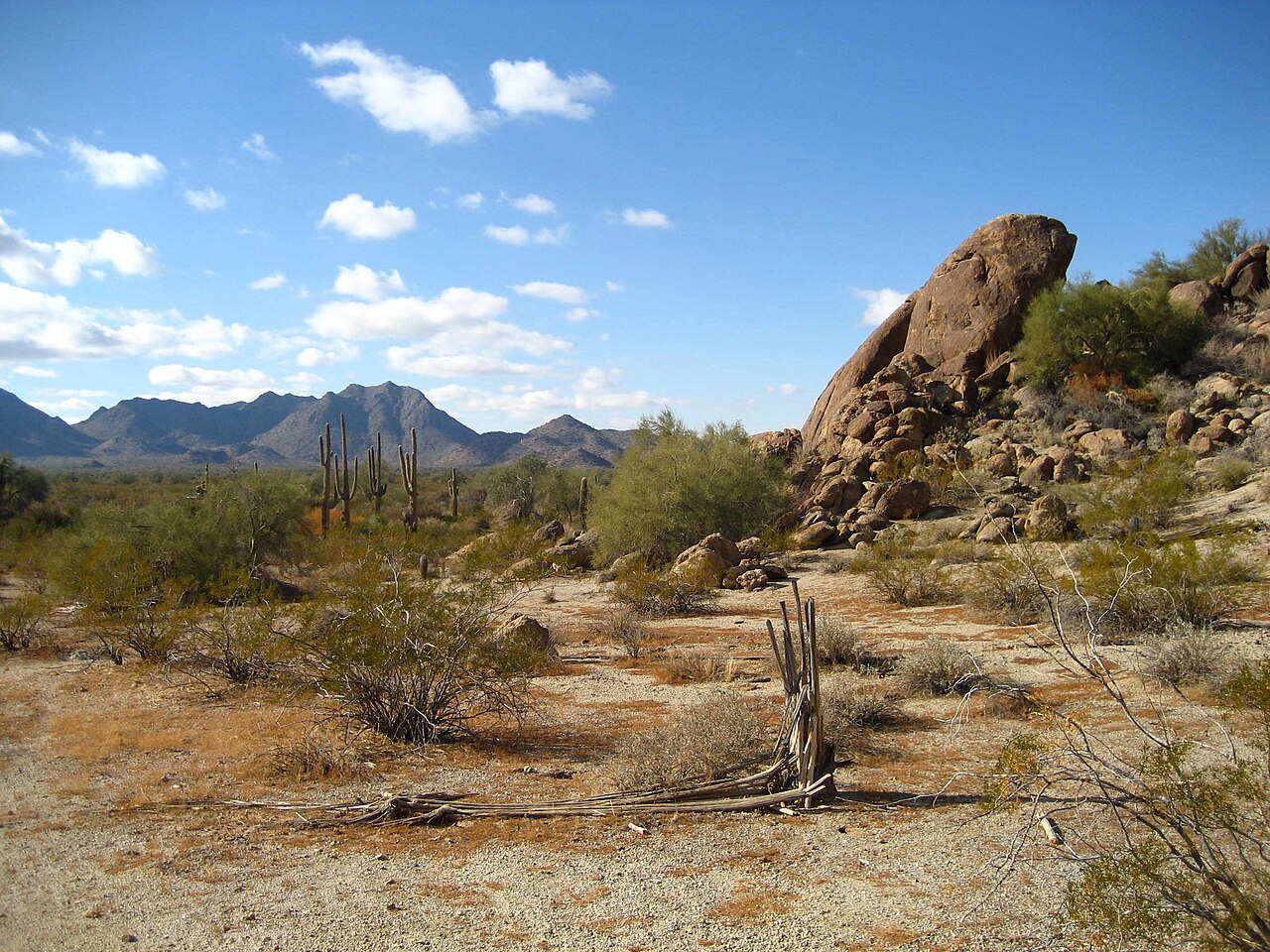
Giant desert centipedes are native to the Sonoran and Chihuahuan Deserts, ranging from Arizona and New Mexico eastward through Texas and into parts of Oklahoma, Arkansas, Missouri, and Louisiana. They also occur south of the US border in northern Mexico.
Within this range, they favor arid and semi-arid habitat, including desert scrub, dry grassland, and rocky outcrops, though populations in the eastern edge of their range also turn up in rocky woodland areas that are noticeably more humid than typical desert terrain.
During the day, giant desert centipedes stay hidden underground, under rocks, or beneath fallen logs to avoid heat and predators, emerging primarily at night or during cloudy, cooler conditions to hunt.
What Do Giant Desert Centipedes Eat?
Giant desert centipedes are aggressive nocturnal predators that hunt insects, spiders, scorpions, and other invertebrates, and larger individuals are capable of taking small vertebrates such as lizards, mice, and even small snakes. They inject venom through their forcipules to subdue prey before feeding.
Hunting typically happens after dark, when the centipede emerges from its daytime shelter to actively search the ground and rock crevices for movement. Some individuals are agile enough to leap short distances to snatch flying insects out of the air.
Their broad diet and willingness to take on prey much larger than typical for an arthropod their size makes them one of the more formidable invertebrate predators found in North American deserts, easily outmatching a giant moth or other soft bodied insect unlucky enough to cross its path.
Is a Giant Desert Centipede Bite Dangerous?
A giant desert centipede bite causes intense, immediate pain, swelling, and redness at the site, but is not considered life threatening to a healthy adult human. Symptoms typically peak within the first few hours and resolve over one to several days with basic supportive care.
Rare but documented complications include tissue necrosis at the bite site, localized muscle breakdown, and in isolated case reports, cardiac symptoms. A case published in the Western Journal of Medicine and archived by the National Library of Medicine described acute kidney injury following a Scolopendra heros bite, illustrating why medical attention is worth seeking for severe or unusual symptoms.
Anyone bitten who experiences difficulty breathing, chest pain, spreading numbness, or symptoms beyond localized pain and swelling should seek medical care promptly rather than assuming the reaction will resolve on its own.
What to Do If You Get Bitten
For a typical giant desert centipede bite, wash the area with soap and water, apply a cold compress to reduce swelling and pain, and take an over the counter pain reliever if needed. Most healthy adults recover within a few days with no lasting effects.
Elevating the bitten limb and avoiding unnecessary movement in the first few hours can help limit swelling. Antihistamines may help with localized itching or mild allergic style reactions, though they do not neutralize the venom itself.
Children, elderly individuals, and anyone with a known history of severe reactions to insect or arthropod stings should be monitored more closely and should contact a doctor or poison control center after any bite from this species.
Are Giant Desert Centipedes Aggressive?
Giant desert centipedes are not aggressive toward humans in the sense of seeking out confrontation, but they will bite readily and forcefully if they feel cornered, handled, or stepped on. Most bites happen when someone accidentally touches or steps near one hiding under debris or clothing left outdoors.
When threatened, this species typically tries to flee first, using its speed to escape into a crevice or burrow rather than confront a much larger animal. Bites are a defensive last resort rather than a hunting behavior directed at people.
Simple precautions like shaking out shoes and gloves left outside overnight, wearing closed footwear in desert terrain, and avoiding bare handed handling of rocks or logs in centipede habitat greatly reduce the chance of an accidental encounter, the same commonsense habits that also help avoid an unexpected run in with a giant swallowtail butterfly caterpillar or other large arthropod hiding in garden debris.
How to Keep Giant Desert Centipedes Out of Your Home
Sealing gaps around doors, windows, and foundation cracks is the most effective way to prevent giant desert centipedes from entering a home, since they typically follow existing entry points rather than creating new ones. Reducing clutter and debris piles near the foundation removes daytime hiding spots close to the house.
Because centipedes often follow their prey indoors, controlling other insect populations, such as crickets and roaches, indirectly reduces centipede activity as well. A dry, well ventilated crawl space or basement is less attractive than a consistently damp one.
Outdoor lighting can also play a role, since insects drawn to porch lights attract hunting centipedes toward entry points. Switching to yellow, insect resistant bulbs near doorways can reduce this indirect attraction.
Can You Keep a Giant Desert Centipede as a Pet?
Giant desert centipedes are kept in the invertebrate pet trade by experienced hobbyists, valued for their impressive size, bold coloration, and relatively simple care requirements compared to many other exotic pets. They are not recommended for beginners or households with young children due to the bite risk.
A suitable enclosure needs a secure, escape proof lid, several inches of substrate for burrowing, a shallow water dish, and a hide such as bark or a small clay pot. Feeding typically consists of appropriately sized crickets or roaches offered every 7 to 10 days for an adult.
Handling is strongly discouraged even for tame looking individuals, since this species retains its full bite and pinch capability regardless of how long it has been in captivity. Most keepers manage their centipedes entirely through tongs and enclosure design rather than direct contact.
Are Giant Desert Centipedes Protected or Endangered?
Giant desert centipedes are not listed as endangered or threatened and remain common throughout their native range in the Southwestern United States and northern Mexico. No federal protections currently apply to the species.
Some states or municipalities may have local rules regarding the collection or sale of native wildlife, including invertebrates, so anyone interested in keeping one as part of the invertebrate pet trade should check state and local regulations before collecting a wild individual.
Because populations are stable and widespread, casual observation, photography, or occasional collection for educational purposes generally has minimal impact on the species compared to more sensitive desert wildlife.
Frequently Asked Questions
How dangerous is a giant desert centipede bite?
A giant desert centipede bite is very painful but rarely dangerous for a healthy adult. Serious complications are documented but uncommon, and most people recover within a few days with basic home care.
Where do giant desert centipedes live?
Giant desert centipedes live throughout the Sonoran and Chihuahuan Deserts, from Arizona and New Mexico east through Texas and into parts of Oklahoma, Arkansas, Missouri, and Louisiana, as well as northern Mexico.
How big do giant desert centipedes get?
Giant desert centipedes typically reach 6.5 to 8 inches in length, making them the largest centipede species found in North America. Some individuals in captivity have been reported to grow even larger.
What is the difference between a giant desert centipede and a house centipede?
A house centipede is small, pale, and long legged, rarely exceeding 1.5 inches, while a giant desert centipede is much larger, more robust, and confined mostly to outdoor arid habitat rather than homes.
Can a giant desert centipede kill you?
A giant desert centipede bite has not been confirmed to cause human death, though rare severe reactions including kidney and cardiac complications have been documented in medical literature. Most bites cause only localized pain and swelling.
Do giant desert centipedes come out during the day?
Giant desert centipedes are primarily nocturnal and stay hidden under rocks, logs, or underground during the day, emerging mainly at night or during cooler, cloudy conditions to hunt.