Spring Peeper Sound: Why That Peeping Is So Loud at Night
The spring peeper sound is a single high, clear peep repeated about once per second, rising slightly at the end, and multiplied by hundreds of males into a chorus that can carry for half a mile. It is the sound most people in the eastern United States actually mean when they say spring has arrived, and almost nobody ever sees the frog making it.
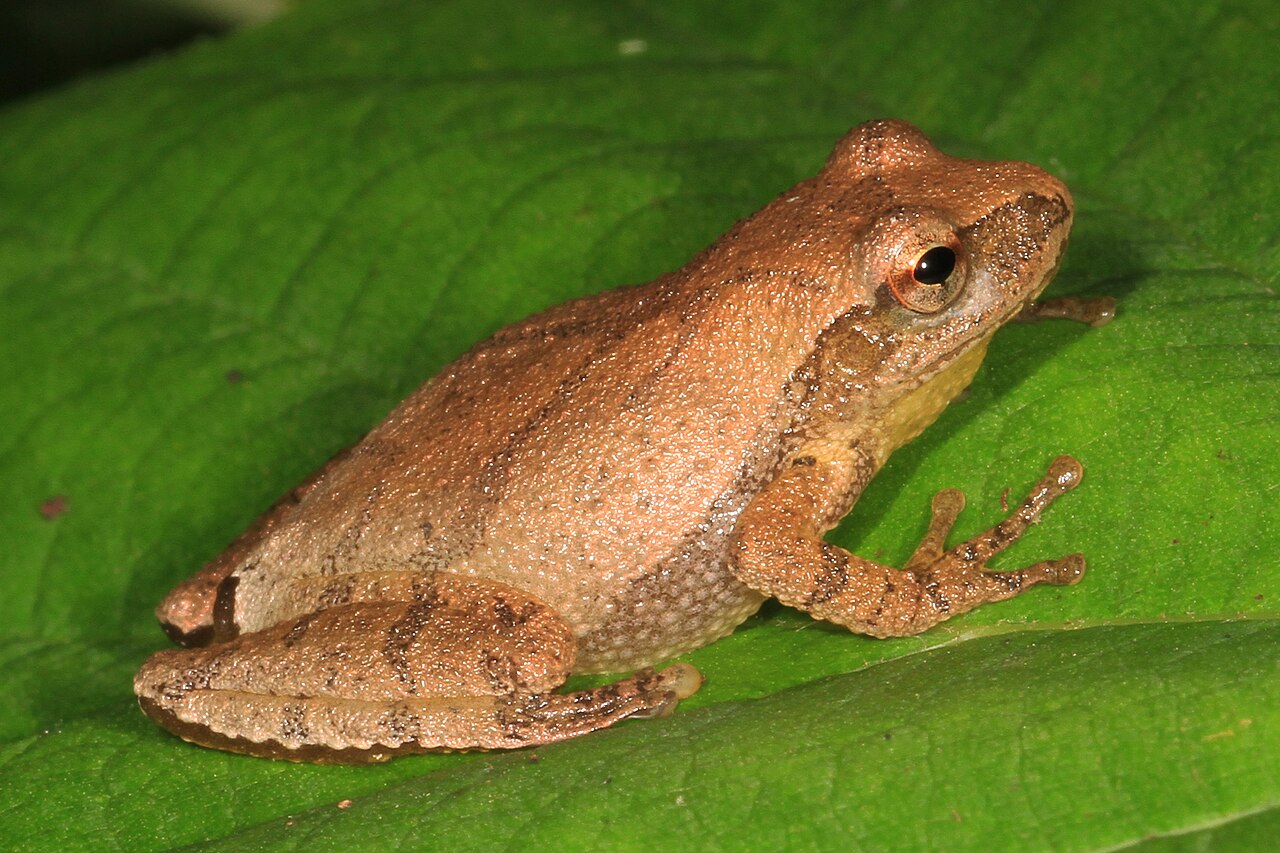
That gap between how loud the sound is and how invisible the animal is causes most of the confusion. A spring peeper (Pseudacris crucifer) is under an inch and a half long, sits in dead cattails or leaf litter at the edge of a wet spot, and stops the moment your flashlight swings its way. Learning the call is the only realistic way to know what is out there.
A spring peeper sounds like a single sharp peep on a rising note, repeated roughly once per second, near 3 kHz. One frog resembles a bird chick. A full chorus becomes a shrill, pulsing ring of sleigh bells audible up to half a mile away, loudest from dusk to midnight in early spring.
What Does a Spring Peeper Sound Like?
A single spring peeper sound is one short, pure whistle that slides upward at the end, which is why so many people first mistake it for a bird. There is no rasp, no trill and no croak in it. The note lands near 3 kHz, right in the range human ears hear best, and a calling male close to you can reach about 90 decibels at 1 ft (30 cm).
The chorus is a different experience entirely. Dozens or hundreds of males call out of phase with one another, and the individual peeps blur into a continuous shimmer often compared to sleigh bells. Males also produce a second sound, a rising trill, aimed at rivals that crowd their calling perch rather than at females.
| Species | Call | When you hear it |
|---|---|---|
| Spring peeper | Single rising peep, about 1 per second | Late winter to late spring, dusk onward |
| Chorus frog | Short creek, like a thumb over comb teeth | Same ponds, often the same night |
| Wood frog | Clucking quack, like distant ducks | Earliest of the three, sometimes on ice |
| Gray treefrog | Slow, nasal, musical trill | Late spring into summer, after peepers fade |
| American toad | Long, even, high trill lasting many seconds | Mid spring, day and night |
| Green frog | Single loose banjo note | Late spring through summer |
Why Are Spring Peepers So Loud?
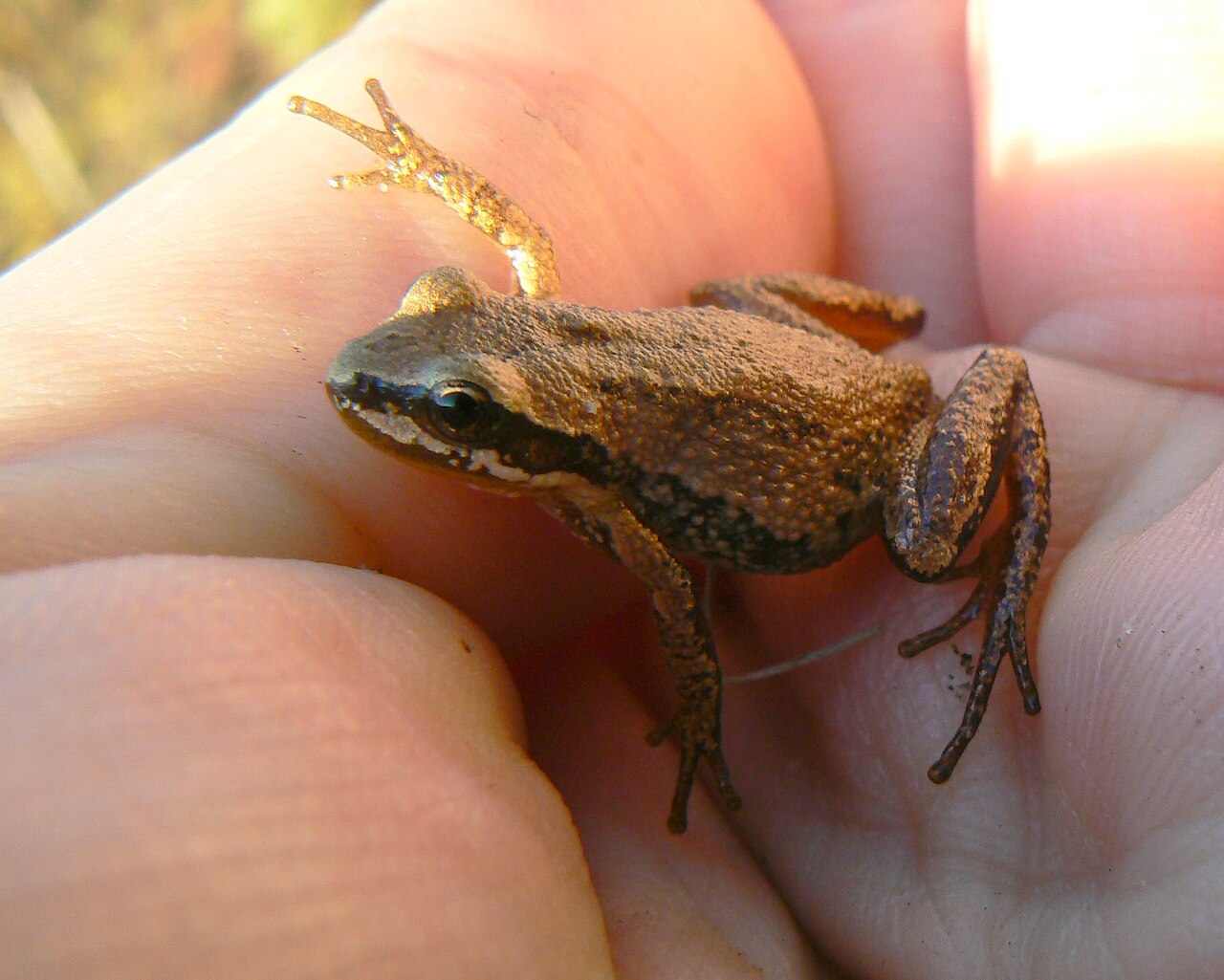
The sound is produced by pushing air back and forth across the vocal cords into a throat pouch that inflates to roughly the size of the frog’s own head. That pouch works as a resonator, turning a tiny body into an efficient speaker. Relative to body mass, few animals on the continent are louder.
The volume exists because the competition is brutal. Only males call, only for a few weeks, and females choose by call rate and persistence, so a male that calls faster and longer than his neighbors wins. Calling burns energy fast enough that males lose noticeable weight over a breeding season.
What Month Do Spring Peepers Come Out?

It depends entirely on latitude, and the trigger is temperature rather than the calendar. In Florida and the Gulf states, peepers call from October through March. In the mid Atlantic, the chorus usually starts in late February. In New England and the Great Lakes, mid March to mid April is typical, and in southern Canada it can be early May.
The practical rule is the first stretch of nights above about 40 F (4 C) after the ground thaws, especially if it rains. A warm rain in late winter will start a chorus within hours. A hard frost the following week will silence it just as fast, and the frogs simply wait.
Where Do Spring Peepers Live?
Spring peepers occupy most of eastern North America, from the Gulf Coast and eastern Texas north to Manitoba, Ontario and the Maritime provinces, and west roughly to the edge of the Great Plains. The requirement is a pairing rather than a single habitat: woodland or dense shrub cover for eleven months of the year, and shallow standing water that holds through spring for the other one.
That water almost always has to be fish free. Vernal pools, flooded ditches, beaver ponds and swampy field corners qualify; a stocked farm pond usually does not, because sunfish and bass strip the tadpoles out. This is why a suburban lot with one wet corner and mature trees can be deafening in April while a landscaped pond down the road stays silent.
Do Spring Peepers Make Noise All Night?
Close to it during peak breeding. Calling ramps up sharply around sunset, holds its highest intensity from dusk until roughly midnight, then thins out through the small hours without stopping completely. On overcast, humid days they also call in daylight, which surprises people who assume peepers are strictly nocturnal.
Whether it runs all night depends on weather. Warm, still, damp nights produce the longest choruses; cold, windy or bright moonlit nights shorten them. If the noise is keeping you awake, understand that the season is short, usually four to six weeks in any one pond, unlike the summer long trilling of crickets that replaces it.
Why Do Peepers Suddenly Stop Peeping?
The most common reason is you. Peepers detect ground vibration and light, and a chorus will cut out within a second or two when a person walks up to the pond edge. Stand still and stay quiet, and the calling restarts in three to five minutes, usually beginning with one bold male and spreading outward.
Other causes are a predator moving through the shallows, a sharp temperature drop, or simply the end of the breeding window. Late in the season the chorus thins night by night as females finish laying and males leave the water. A raccoon or a hunting barn owl passing overhead produces the same abrupt silence as a footstep does.
Spring Peeper vs Chorus Frog: Telling the Calls Apart
These two share ponds across most of the Midwest and East, and they are the pair people mix up most often. A peeper gives clean, separated single notes. A chorus frog (Pseudacris triseriata and its relatives) gives a short pulsed creek, the exact sound of running a thumb across the teeth of a plastic comb.
Pace is the second tell. Peepers keep a steady metronome of about one note per second regardless of how many are calling. Chorus frogs bunch their creeks irregularly, with pauses. Once you have heard the comb sound consciously, you cannot unhear it, and the two separate instantly even in a mixed chorus.
Are Tree Frogs and Peepers the Same?
Spring peepers belong to the treefrog family Hylidae, so a peeper is a treefrog in the broad sense, but it is not the animal most people picture. It has toe pads and can climb, yet it spends most of its life low in leaf litter and shrubs rather than up in trees. The green and gray treefrogs that sit on windows in summer are different species with completely different calls.
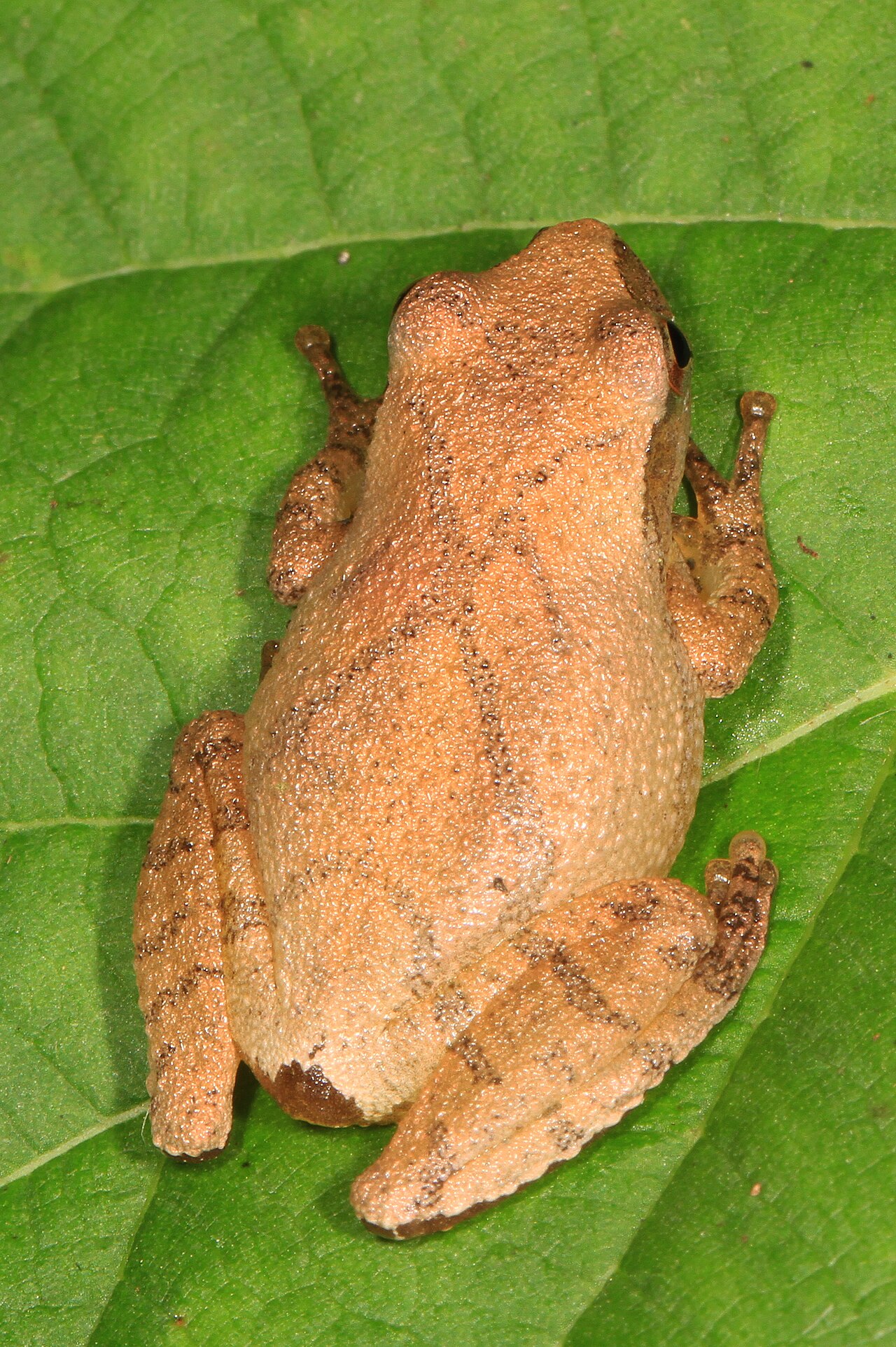
The name to know is the one on its back. Crucifer means cross bearer, a reference to the dark X marking that runs across the shoulders of nearly every individual. Detailed range and taxonomy notes for the species are available from Britannica.
What Happens to Spring Peepers in the Summer?
They leave the water and disappear into the woods. Once breeding finishes, adults go terrestrial, hunting ants, spiders, mites and small beetles in damp leaf litter and low vegetation, and they call only sporadically. Scattered single peeps in September and October are common enough to have a name, fall peeping, and they are not a second breeding season.
Winter is the more remarkable part. Peepers hibernate under logs and loose bark and tolerate partial freezing, flooding their tissues with glucose that protects cells while ice forms around them. Frogs found stiff at 17 F (8 C below zero) thaw and call the same spring, a trick the much larger bullfrog does not share.
Related reading: Wood Frog.
Frequently Asked Questions
Why does a spring peeper sound like a bird?
Because the note is short, high and pure, with the same rising inflection many bird chicks use. Two things separate them. Peepers repeat the identical note at a machine-like rate, while birds vary pitch and phrasing, and the sound comes from ground level near water. Compare it to the ringing calls of a Carolina wren and the difference is obvious.
What does it mean when you hear peepers?
It means night air temperatures have stayed above roughly 40 F (4 C) and the local wetlands have thawed. Peepers are one of the most reliable phenological markers in the eastern United States, which is why so many naturalists log the first chorus each year. In practical terms it means spring is a few weeks ahead, not that frost is finished.
What eats a spring peeper?
Garter snakes, water snakes, salamanders, wading birds, skunks, raccoons, diving beetle larvae and larger frogs all take them, and the eggs and tadpoles are eaten by newts and aquatic insects. That predation pressure is why peepers breed in fish free vernal pools. Aerial predators including foraging bats target the insects at the same ponds rather than the frogs themselves.
How loud is a spring peeper?
A single calling male measures around 90 decibels at 1 ft (30 cm), comparable to a lawnmower held at arm’s length, from an animal weighing less than a paperclip. A full chorus at the water’s edge is loud enough that people raise their voices to talk over it, and prolonged close exposure is genuinely uncomfortable.
Why can’t I find the frog I am hearing?
Because the call is pitched near 3 kHz and sounds at that frequency are hard for humans to place, so the frog is rarely where you think it is. Peepers also sit low and motionless, and they fall silent when a light hits them. Triangulating with a second listener standing 30 ft (9 m) away works far better than searching alone.
Can you keep a spring peeper as a pet?
It is legal in some states and a poor idea in all of them. Peepers are tiny, need live pinhead crickets and fruit flies year round, and rarely call in captivity, which removes the only reason most people want one. Several states protect native amphibians outright. Listening at a pond costs nothing and works better, much like learning chickadee calls instead of caging one.