Pleco Fish Care: Tank Size, Diet, and 6 Species That Stay Small
A pleco fish is an armored, algae rasping catfish from South America, and the one sold in nearly every US pet store as a cheap cleanup crew is the common pleco (Hypostomus plecostomus), a fish that reaches 18 to 24 in (46 to 61 cm) and needs a tank most buyers will never own. That mismatch, not the fish itself, is the source of almost every pleco problem you will read about online.
There are more than 150 described species in the family Loricariidae in the aquarium trade, and several of them top out under 5 in (13 cm) and genuinely suit a home tank. Choosing well at the store is the entire game, because a pleco that outgrows its aquarium has no good exit: rehoming is difficult, and releasing it is both illegal in most states and ecologically destructive.
Pleco fish are armored suckermouth catfish native to South America. The common pleco grows to 18 to 24 in (46 to 61 cm) and needs a 125 gallon tank, while bristlenose and clown plecos stay under 5 in (13 cm) and thrive in 20 to 30 gallons. All plecos need driftwood, sinking wafers, and strong filtration, and none are pure algae eaters.
| Species | Adult size | Minimum tank | Temperament |
|---|---|---|---|
| Common pleco (Hypostomus plecostomus) | 18 to 24 in (46 to 61 cm) | 125 gal | Territorial when adult |
| Sailfin pleco (Pterygoplichthys gibbiceps) | 16 to 19 in (41 to 48 cm) | 125 gal | Peaceful but huge |
| Bristlenose pleco (Ancistrus sp.) | 4 to 5 in (10 to 13 cm) | 25 gal | Peaceful |
| Clown pleco (Panaqolus maccus) | 3.5 in (9 cm) | 20 gal | Shy, wood dependent |
| Rubber lip pleco (Chaetostoma sp.) | 4 to 5 in (10 to 13 cm) | 25 gal | Peaceful |
| Zebra pleco (Hypancistrus zebra) | 3 to 4 in (8 to 10 cm) | 20 gal | Peaceful, carnivorous |
| Royal pleco (Panaque nigrolineatus) | 14 to 17 in (36 to 43 cm) | 125 gal | Territorial |
What Is a Pleco Fish?
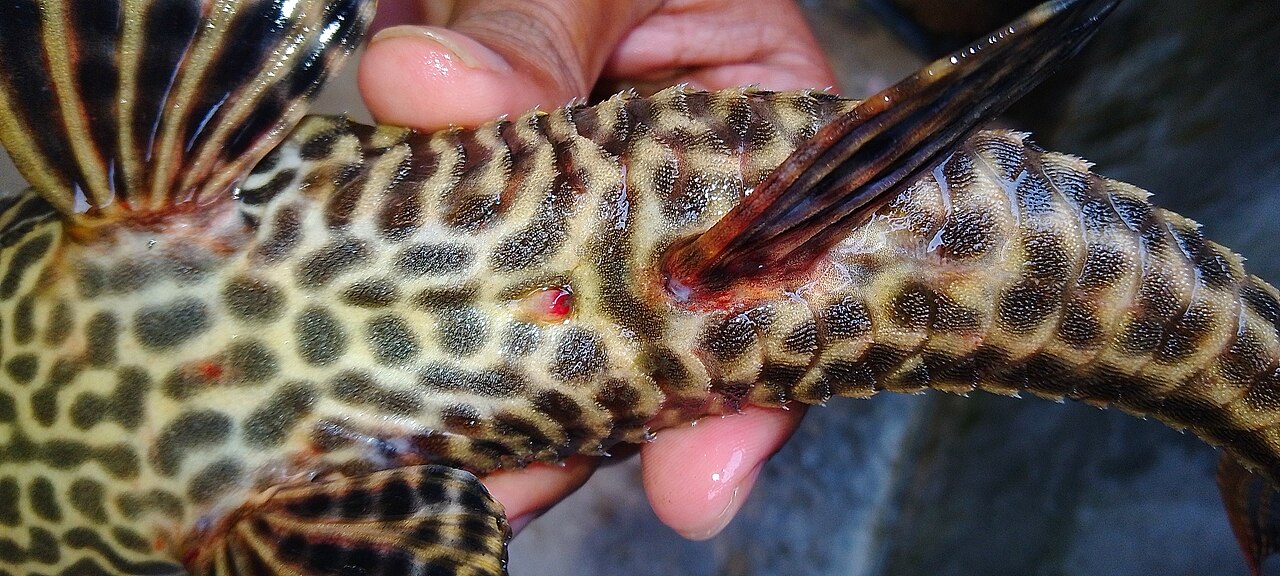
Plecos are loricariid catfish, a South American family defined by two features: a ventral sucker mouth lined with rasping teeth, and rows of bony plates called scutes that armor the body instead of scales. The sucker lets the fish hold position on rock in fast current while it scrapes biofilm, and the armor makes it an awkward mouthful for predators.
The name plecostomus attached itself to the whole group through the pet trade, where unidentified juveniles are still sold simply as plecos. In reality the bin usually holds two or three species at once, most often Hypostomus plecostomus and a Pterygoplichthys sailfin, which look nearly identical at 2 in (5 cm) and diverge dramatically by adulthood.
One anatomical quirk matters for tank keeping. Many plecos can breathe air by gulping at the surface and absorbing oxygen through a modified stomach wall, which is why a pleco survives conditions that kill a molly or a tetra. Survival is not the same as health, and a pleco doing this regularly is telling you the tank is under filtered.
How Big Will a Pleco Fish Get?
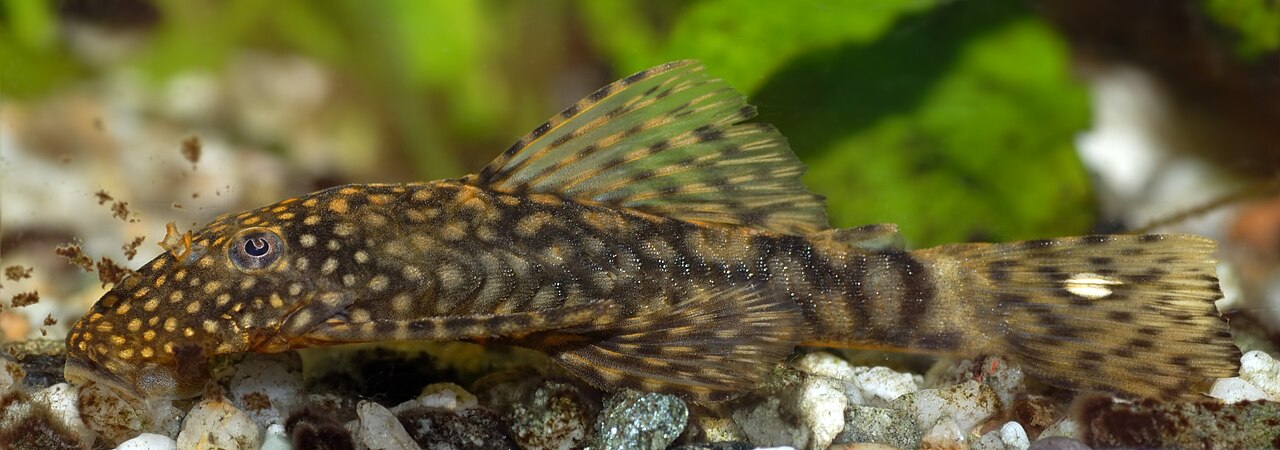
The common pleco reaches 18 to 24 in (46 to 61 cm), and specimens past 20 in are routine in public aquariums and ponds. It grows fast on a heavy diet, adding several inches in the first year, and the 2 in juvenile in the store bag is roughly a tenth of its final length.
Sailfin plecos are similar, 16 to 19 in (41 to 48 cm), and the royal pleco reaches 14 to 17 in (36 to 43 cm). Against that, the bristlenose tops out at 4 to 5 in (10 to 13 cm), the clown pleco at 3.5 in (9 cm), and the zebra pleco at 3 to 4 in (8 to 10 cm).
Stunting is not a solution. A pleco kept in a small tank does grow more slowly, but the internal organs keep developing on schedule, and the result is spinal deformity, organ failure, and a shortened life rather than a conveniently small fish. Buy the species that fits the tank you already have.
Are Plecos Good for Your Fish Tank?
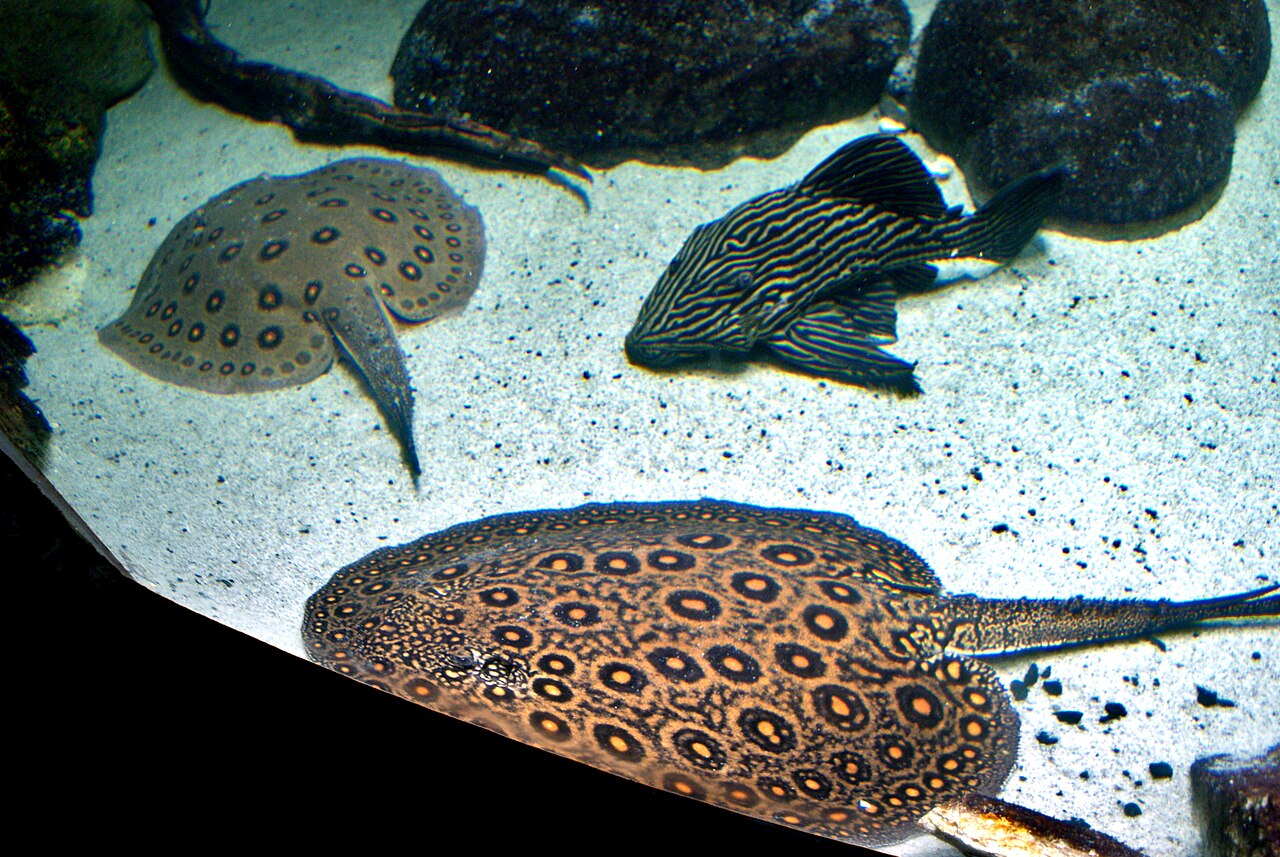
A correctly chosen pleco is a genuine asset. Bristlenose and rubber lip plecos work over glass, driftwood, and broad leaves, keep green spot and diatom algae in check, and consume leftover food that would otherwise feed a nitrate spike. In a planted community tank a single bristlenose does real, visible work.
The common pleco does not deliver the same value. Its algae grazing drops off sharply as it matures, its waste output at 18 in is enormous, and a large adult will uproot plants and shove decor around at night. The cleanup fish becomes the dirtiest animal in the system.
Plecos also do nothing for the water column. They will not touch floating debris, they will not eat hair algae in most cases, and they are no substitute for filtration and water changes. Treat one as a grazer with a personality, not as equipment. Pond keepers sometimes move an outgrown common pleco outdoors with their butterfly koi for the summer, which works only in the Deep South, since the fish dies below about 60 F (15 C).
Why Are Plecos Bad?
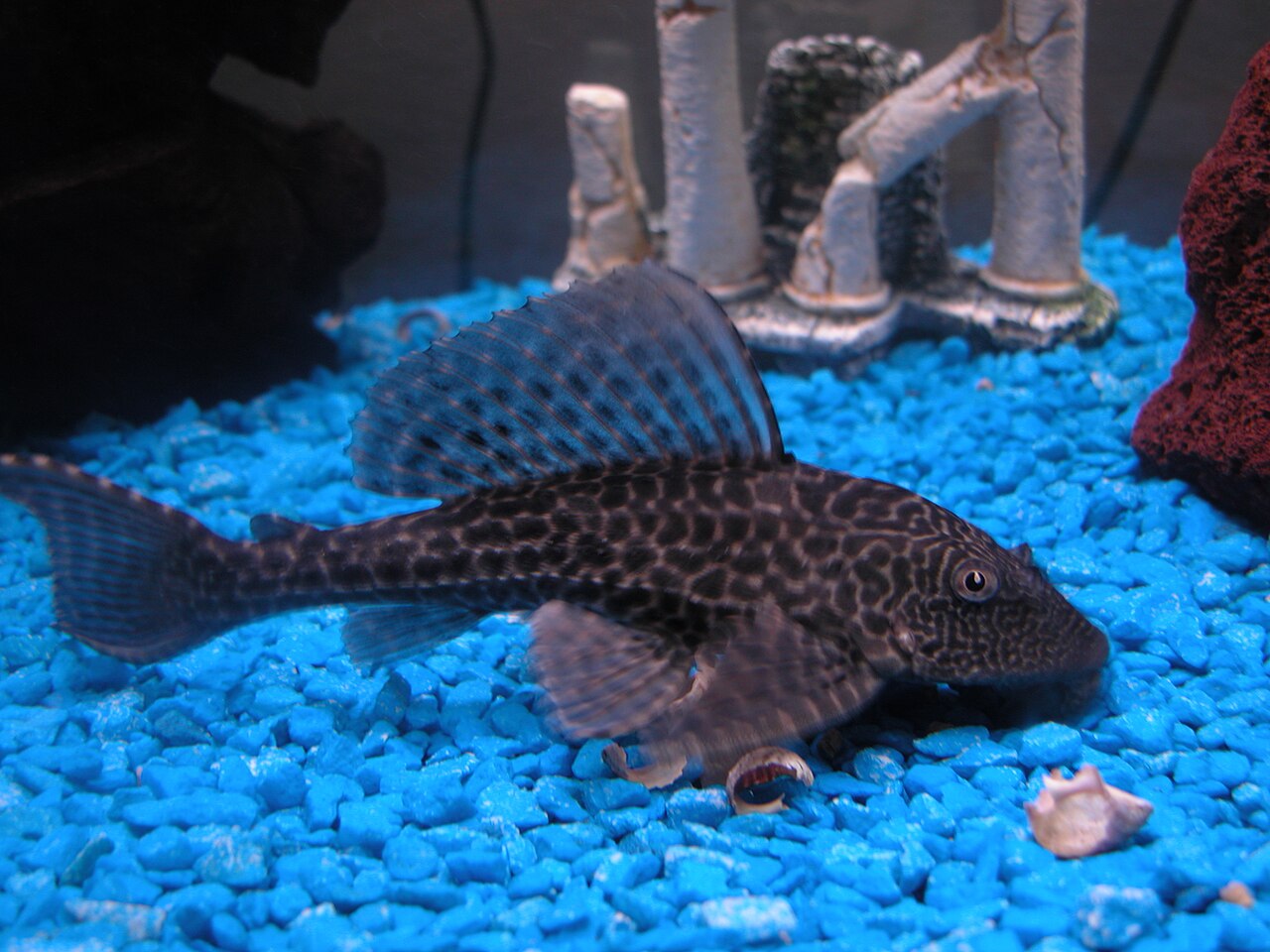
The complaint has three legitimate parts. First, mislabeled size: a fish that needs 125 gallons is sold for three dollars next to a 10 gallon starter kit. Second, bioload: a mature common pleco produces more waste than the rest of a community tank combined, and undersized filtration cannot keep pace.
Third, and least known to new keepers, large plecos will occasionally rasp the slime coat off flat sided, slow moving fish at night. Discus, angelfish, and fancy goldfish are the usual victims, and the damage shows up as a cloudy patch that opens the door to infection.
None of this makes plecos bad fish. It makes the common pleco a bad choice for a typical home aquarium, which is a different statement. Small loricariids carry none of these drawbacks.
Pleco Species That Stay Small
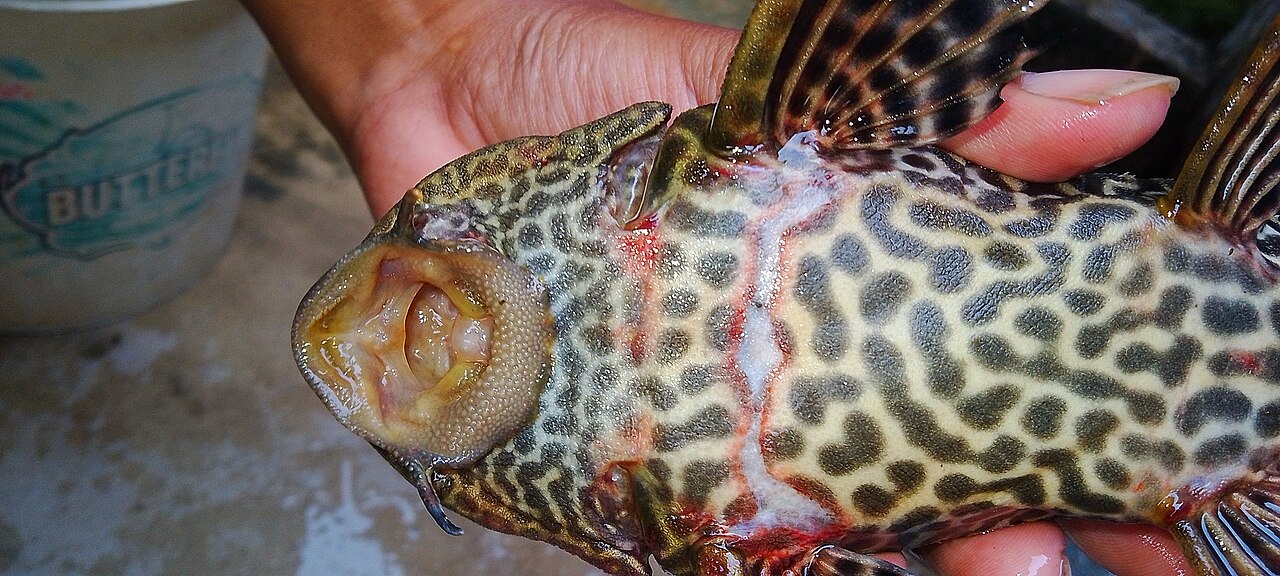
The bristlenose pleco (Ancistrus sp.) is the default recommendation and deserves it. At 4 to 5 in (10 to 13 cm) it fits a 25 gallon tank, it grazes algae throughout its life rather than only as a juvenile, it breeds readily in a cave, and mature males grow the branching facial tentacles that give the fish its name.
The clown pleco (Panaqolus maccus) stays at 3.5 in (9 cm) and is a wood eater, meaning driftwood is a dietary requirement rather than decoration. The rubber lip pleco handles cooler water down to 70 F (21 C) and suits an unheated room. The zebra pleco is the showpiece at 3 to 4 in (8 to 10 cm), though its price and its need for warm, fast, spotless water put it well beyond a first tank.
Ask the store for the scientific name before you buy. Common names rotate constantly in the trade, and a tag reading algae eater tells you nothing about whether the fish will be 3 in or 20 in in two years.
What Plecos Actually Eat
No pleco is a pure algae eater. Most are omnivores that need a mixed diet: sinking algae wafers as the staple, blanched vegetables two or three times a week, and a protein source such as frozen bloodworms or a sinking carnivore pellet on a weekly basis. Zucchini, cucumber, and deshelled peas are the standard vegetables, weighted down and removed after 24 hours.
Driftwood is not optional for Panaque and Panaqolus species. These fish rasp and digest wood fiber with the help of gut microbes, and without a piece of untreated hardwood in the tank they slowly decline. Even species that do not require wood use it as a grazing surface and a hiding place.
Feed after lights out. Plecos are nocturnal, and in a community tank a daytime wafer will be gone before the pleco leaves its cave. This is the same timing logic that applies when you work out what and when to feed a betta in a shared setup.
Tank Setup and Water Conditions
Most plecos want 74 to 80 F (23 to 27 C), a pH between 6.5 and 7.8, and moderate to strong flow. They come from oxygen rich, moving water, so a powerhead or a spray bar aimed across the surface matters more than it does for most community fish. Nitrates should stay under 20 ppm, which on a heavily stocked tank means weekly water changes of 30 to 40 percent.
Provide a cave per pleco. A length of PVC pipe, a ceramic tube, or a stacked slate overhang all work, and without one the fish will spend the day pressed against the glass in obvious stress. Substrate should be sand or smooth gravel, since sharp gravel abrades the belly of a fish that spends its life on the bottom. Dark substrate also brings out the contrast in a mottled pleco the same way it deepens koi colors in a viewing pond.
Filtration is where new keepers under invest. A canister or a large sponge and hang on back combination rated well above the tank volume is the minimum for any pleco, and even a small bristlenose benefits. The principle is the same one behind whether a betta needs a filter, just at a much larger waste load.
Are Pleco Fish Aggressive?
Small plecos are peaceful with other species and mostly indifferent to tankmates. The friction is intraspecific: two male bristlenose in a 20 gallon tank will fight over the single best cave, and the loser stops eating. One male per 20 gallons with extra caves solves it.
Large plecos are a different animal. Common, sailfin, and royal plecos become territorial as they mature and will claim a section of the tank floor and defend it, occasionally with enough force to injure a smaller bottom dweller. Their nocturnal slime rasping on flat sided fish falls into the same category.
Plecos are not dangerous to people. The dorsal and pectoral spines lock erect and are sharp enough to draw blood if you grab one bare handed, and they snag mesh instantly, so move a pleco in a rigid container rather than a net. There is no venom involved, but puncture wounds from any aquarium fish should be cleaned properly.
Never Release a Pleco
Released plecos have established breeding populations in Florida, Texas, Hawaii, and Puerto Rico, where they burrow into canal and river banks for nesting and cause measurable bank collapse and turbidity. Texas Parks and Wildlife lists suckermouth catfish as prohibited exotic species, and Florida restricts them as conditional species.
Releasing a live aquarium fish into public water is illegal in most states regardless of the species, and it is the single worst option available to an owner with a fish that got too big. Distribution data for introduced loricariids in US waters is maintained by the USGS at nas.er.usgs.gov.
The workable exits are a local fish club, an aquarium society rehoming list, a store that accepts surrenders, or, where the fish is suffering and no home exists, humane euthanasia by a veterinarian or clove oil overdose. Planning for adult size at purchase avoids the choice entirely.
Frequently Asked Questions
Can we eat pleco fish?
Yes. Plecos are eaten across northern South America, where they are grilled whole in the armor or smoked, and the flesh is firm and white. In Venezuela and Colombia the fish is a regular market item. Aquarium specimens are a poor candidate for the table because of accumulated medication and unknown water history.
Why don’t we eat plecos?
Mostly yield and unfamiliarity. The heavy bony armor means a large share of the body weight is inedible, and cleaning one takes real effort compared with a tilapia or catfish of the same size. In the United States plecos also arrive as pets rather than food, and there is no commercial fishery supplying them.
Will a pleco eat guppies?
A healthy adult guppy is not on the menu, but a large pleco will readily consume a dead or dying one overnight, which is how the rumor starts. Large plecos may also rasp at slow, flat sided fish. Small species such as bristlenose and clown plecos are entirely safe with bettas, guppies, and other small community fish.
Is killing a pleco illegal?
No. Humanely euthanizing a fish you own is legal throughout the United States, and in states where suckermouth catfish are prohibited exotics it can be required if you capture one in the wild. Use clove oil sedation followed by an overdose, or ask a veterinarian. Do not freeze or flush a live fish.
Is it illegal to throw a pleco back in the water?
In most states, yes. Releasing aquarium fish into public waterways violates state law almost everywhere, and in Texas and Florida returning a captured suckermouth catfish to the water carries specific penalties. Check your state wildlife agency before handling one you find outside an aquarium.
Are pleco fish dangerous to humans?
Not in any meaningful way. Plecos have no venom, no teeth capable of biting a person, and no interest in anything larger than a wafer. The only injury risk is a puncture from the locking dorsal or pectoral spines when the fish is handled, which is a clean wound that should be washed and watched for infection.