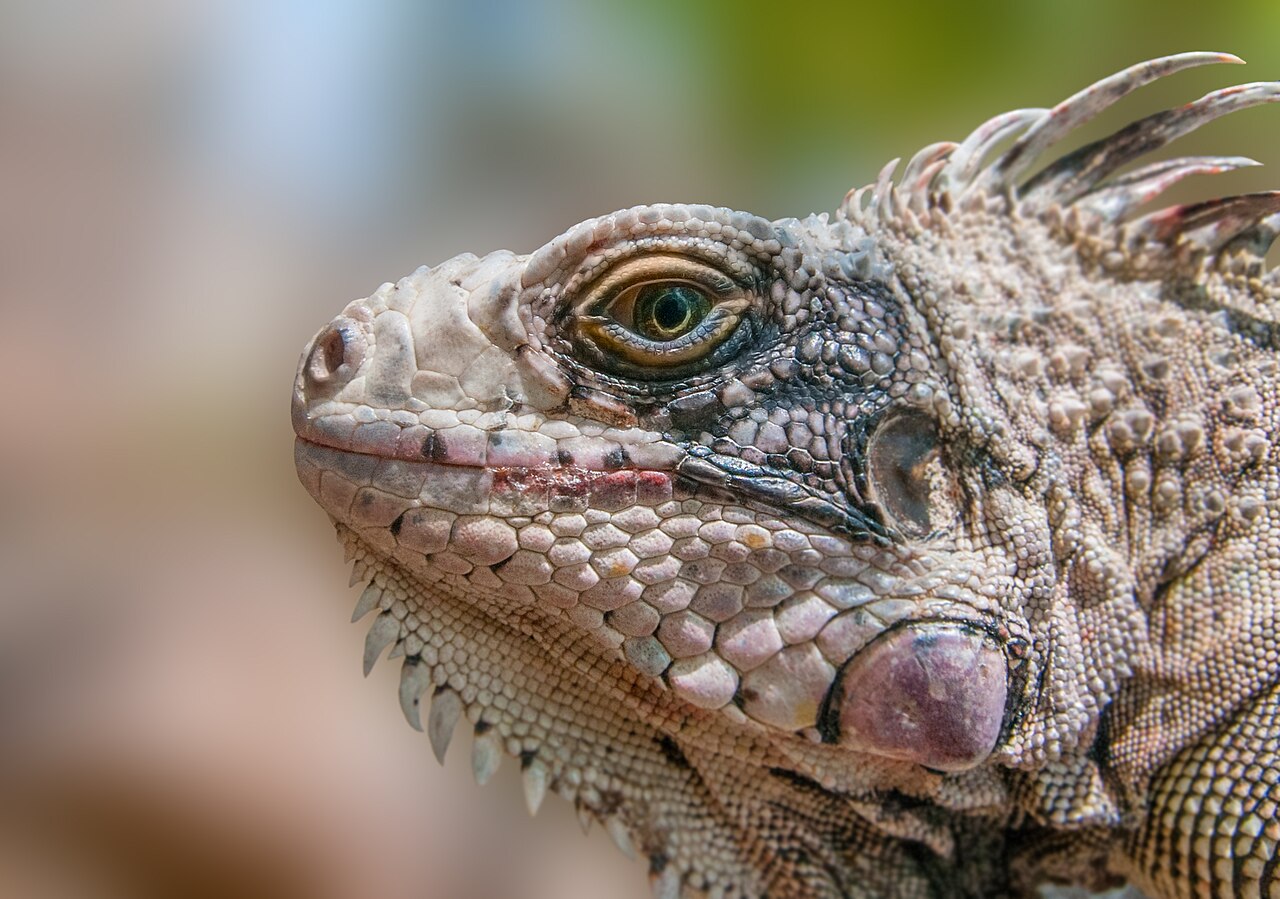
Iguana Bite: How Bad It Is and What to Do First
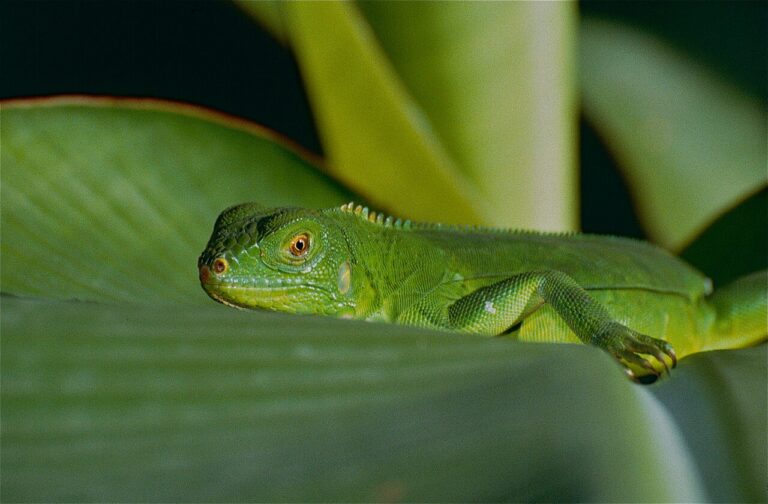
An iguana bite is a laceration, not a crush injury. Green iguanas (Iguana iguana) carry dozens of small, serrated, blade-shaped teeth built to shear tough leaves, and when one bites a hand it slices rather than punctures. Most bites from a calm pet are warning nips that barely mark the skin, but a full defensive bite from a large adult male has sent people to the emergency room with tendon damage and infections that needed weeks of antibiotics.
The risk is easy to manage once you know what drives it. Iguanas give clear warnings before they bite, they bite hardest during breeding season, and the real medical danger is usually what grows in the wound afterward. Here is what actually happens, how much force is behind it, and what to do in the first ten minutes.
An iguana bite causes a clean, often deep laceration from serrated teeth, plus bruising from the jaw grip. Most bites are minor, but large males can cut through skin, muscle, and tendon. Wash the wound immediately, control bleeding, and see a doctor for any bite that gapes, bleeds heavily, or reaches a joint.
| Bite Factor | What to Expect |
|---|---|
| Wound type | Ragged laceration or shallow avulsion, rarely a clean puncture |
| Typical severity | Minor in juveniles, moderate to severe from adult males over 4 ft (1.2 m) |
| Tooth fragments | Common; teeth break off in the wound and are easy to miss |
| Main infection risks | Salmonella, Serratia marcescens, other gram-negative bacteria |
| Venom | None of medical significance to humans |
| Peak risk period | Breeding season, when adult males become territorial |
| Healing time | 7 to 14 days for minor bites, weeks for deep or infected wounds |
What Happens If an Iguana Bites You?
A bite starts with a fast head turn and a clamp. The iguana grips, holds, and often twists or pulls back, and that pulling motion is what turns a shallow cut into a real wound. Because the teeth are edged like tiny saw blades, the skin opens along a line instead of being punched through.
Minor bites leave a row of scratches and a bruise, sting for an hour, and heal without treatment. Serious bites look different at once: the wound gapes, bleeds steadily, and the surrounding tissue swells within a few hours. Published case reports include a green iguana bite to the hand that required surgical exploration for tendon injury, so the upper end of this range is real.
The animal usually lets go on its own within a second or two. If it holds on, do not yank your hand free, because pulling against a set of backward-edged teeth deepens the cut. Support the iguana’s body, set it down, and wait for the jaw to open.
How Strong Is an Iguana’s Bite?
Bite force in green iguanas is modest for the animal’s size. Herbivorous lizards do not need the crushing power of a monitor or a snapping turtle; their jaws are built for repetitive shearing of leaves, so peak force is low compared to a carnivore of the same weight. Nobody has been killed by iguana jaw pressure.
What makes the bite consequential is tooth geometry and body size. A 5 ft (1.5 m) male with a heavy head can apply enough force through a serrated edge to open skin down to fascia, and if the grip lands on a finger the tissue between skin and bone is thin enough that tendons are immediately at risk.
For comparison, a defensive snapping turtle bite crushes and amputates through sheer force, while a gila monster bite does its damage by clamping and grinding venom into the wound. An iguana does neither. It cuts.
Are Iguana Teeth Sharp?
Iguana teeth are extremely sharp and easy to underestimate because they are so small. Each tooth is a flattened, leaf-shaped blade with serrations along both edges, and the whole row sits on the inner face of the jaw bone rather than in sockets, an arrangement called pleurodont dentition.
The teeth are also replaced continuously throughout life, which means they are frequently loose. A bite that meets resistance can snap several off, and those fragments stay in the wound. Retained tooth material is a common reason an iguana bite that looked clean becomes inflamed a few days later.
You usually cannot see the teeth at all. They are hidden behind the gum line and the fleshy edge of the jaw, so an open iguana mouth looks harmless right up until it closes. Assume any adult iguana can cut you, regardless of how calm it looks.
Why Iguanas Bite: The Warnings You Can Read
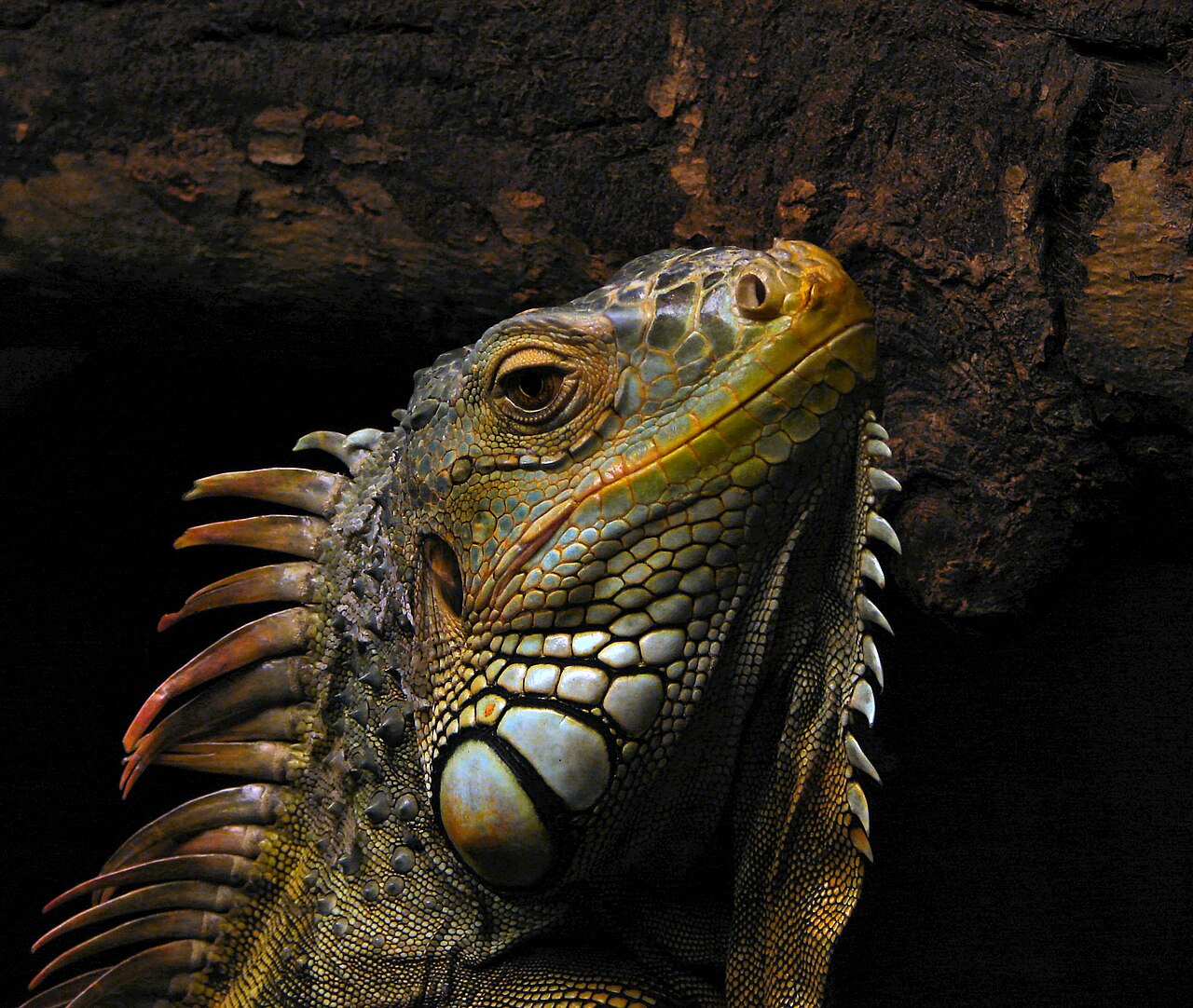
Iguanas telegraph almost every bite. The standard sequence runs from stiffening and standing tall, to rapid head bobbing, to laterally flattening the body and turning side on, to darkening color, to an open mouth and a hiss. Biting comes last, after the animal decides the display failed.
The most common trigger is being grabbed from above, because a hand descending onto the back is exactly how a hawk arrives. Iguanas have a parietal eye on top of the head that detects overhead shadows specifically for that reason, and it reads an approaching hand the same way.
The second trigger is food confusion. An iguana that associates hands with feeding will lunge at fingers that smell like fruit or greens, and it is not being aggressive at all. Wash your hands before handling, and never feed directly from your fingers.
Do Iguanas Get Aggressive?
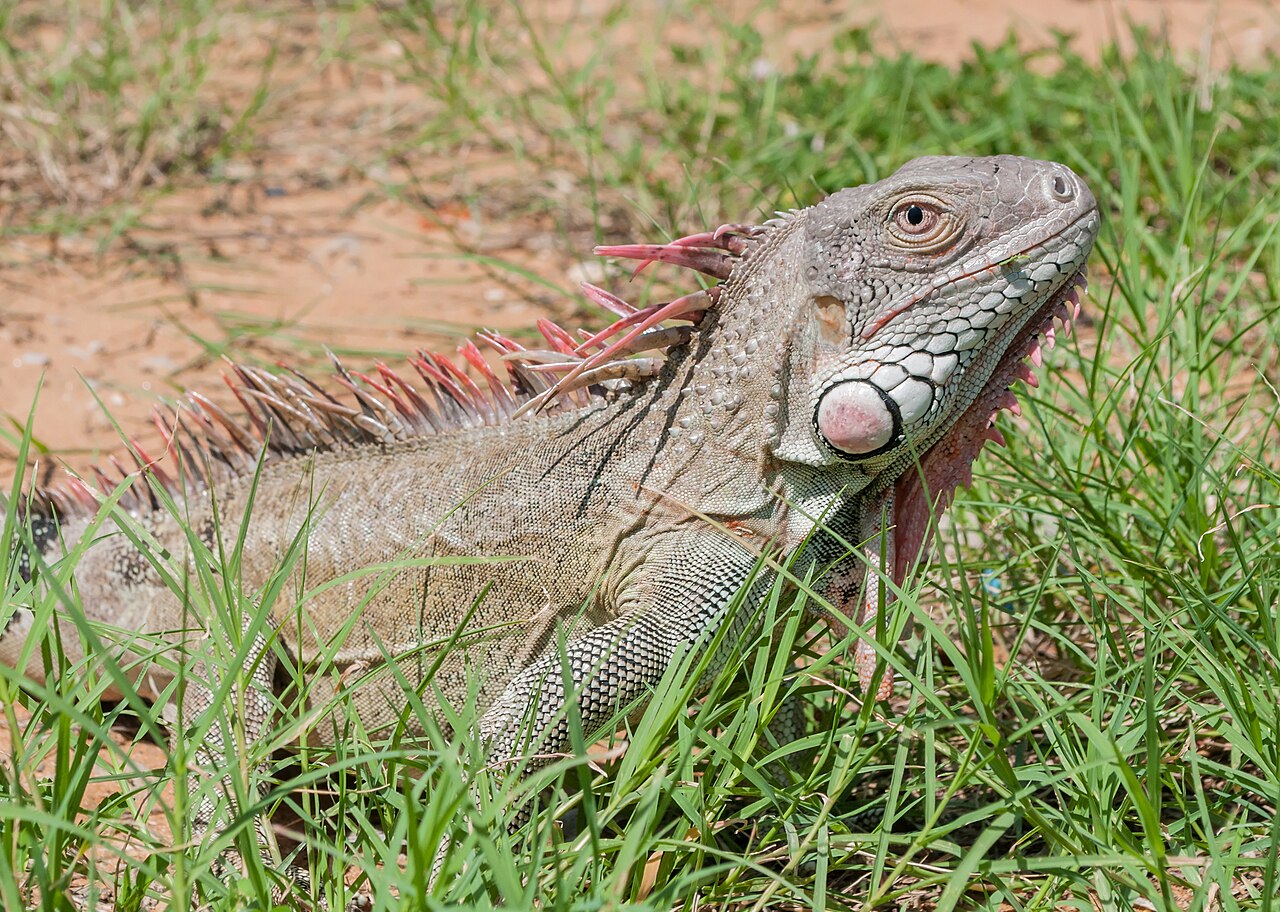
Adult male green iguanas do become genuinely aggressive during breeding season, which in Florida populations runs from roughly October through January. Territorial males go bright orange, bob constantly, charge at anything they read as a rival, and in captivity a male who was placid for years can become dangerous for several weeks.
Keepers report that some males single out one person, often a woman during menstruation or anyone wearing a particular color, and the pattern is consistent enough in the hobby that it should be planned for. The seasonal color change is normal; if you want the detail on what that shift means, see our guide on the orange iguana.
Outside breeding season, most bites come from fear rather than aggression. A wild iguana in a Florida yard will run or drop into water long before it fights, and iguanas that bite people in the open are usually cornered, injured, or being handled by someone who tried to catch one bare-handed.
Tail Whips and Claws: The Injuries People Overlook
An iguana’s tail makes up more than half its total length and is heavily muscled. A defensive whip from a large adult stings hard enough to raise a welt and has caused corneal injuries when it caught someone across the face. Approach from the front or the side, never from directly behind.
The claws cause more injuries than the teeth do. Iguana nails are long, curved, and needle-tipped, built for bark, and an animal that panics while being held will shred forearms in seconds. Most emergency room visits tied to pet iguanas involve scratches, not bites.
Tails also detach. Juveniles can drop a section of tail when grabbed, a defense called caudal autotomy, and the regrown tail is shorter and duller for life. That alone is a reason to never restrain an iguana by the tail.
First Aid After an Iguana Bite
Wash the wound immediately under running water with soap for several minutes. Flushing matters more than any antiseptic, because the goal is to move bacteria and debris out of the tissue before they establish. Do not scrub hard enough to drive contamination deeper.
Control bleeding with direct pressure and a clean cloth for 10 to 15 minutes. Once the bleeding slows, apply an antibiotic ointment and cover the wound with a sterile dressing. Elevate a bitten hand above heart level for the first few hours to limit swelling, and change the dressing daily.
Then watch it. Standard wound care guidance from institutions like the Mayo Clinic treats any animal bite that breaks skin as contaminated by default, and reptile bites deserve the same caution as mammal bites even though rabies is not a factor.
Infection Risk: Salmonella, Serratia, and Tetanus
Infection is the main medical risk of an iguana bite, not the cut itself. Reptile mouths and skin carry gram-negative bacteria that human wounds handle poorly, and the published literature includes cases of Serratia marcescens cellulitis and Salmonella infection traced directly to iguana bites.
Roughly 90 percent of pet reptiles shed Salmonella at some point without showing any illness themselves, so a healthy-looking iguana is not a clean one. The bacteria live in the gut and get onto skin, cage furniture, and water, which is why hand washing after every contact matters as much as wound care after a bite.
Tetanus is the other item to check. If your last booster was more than five years ago and the wound is deep or dirty, a clinician will usually update it. Bites over a joint, on the hand, or in anyone immunocompromised warrant prophylactic antibiotics rather than watchful waiting, much as a deep bot fly wound does.
When to See a Doctor
Go in for any bite that gapes open, will not stop bleeding after 15 minutes of pressure, reaches a joint or a tendon, or leaves a finger that cannot move through its full range. Hand wounds have a low tolerance for delay, since infection there spreads along tendon sheaths.
Return within 24 to 48 hours if you see spreading redness, increasing pain, warmth, pus, a red streak running up the limb, or a fever. Those are signs of an established infection, and reptile bite infections progress faster than most people expect.
Tell the clinician the wound came from a reptile. It changes the antibiotic choice, because the organisms involved differ from the ones expected in a dog or cat bite, and it prompts a look for retained tooth fragments on imaging.
How to Avoid Being Bitten
Approach from the side and at eye level, never from above. Let the iguana see your hand, then scoop it from underneath, supporting the chest and hind legs so the whole body is stable. An animal that feels secure has no reason to bite.
Read the display and stop when it starts. Head bobbing, a flattened body, and a dark throat fan mean the iguana wants space, and pushing past that point is how people get hurt. Put it back and try again later, exactly as you would back off from a coiled garter snake that has gone into a defensive posture.
Keep handling sessions short and regular rather than long and rare, feed from tongs instead of fingers, and give large males extra space during breeding season. Consistency does more for tameness than any single technique.
What Smell Do Iguanas Hate?
In yards, iguanas avoid strong sulfur and capsaicin odors. Garlic and onion sprays, neem oil, and hot pepper solutions built around habanero or cayenne are the most widely used home deterrents, and commercial repellents usually combine the same ingredients. Effect is real but short: rain washes it off, and applications need repeating weekly.
Physical exclusion works far better. Sheet-metal collars on trees, wire mesh over seawall gaps, filled burrows, and removal of fruiting plants take away the food and shelter that hold iguanas on a property in the first place.
In Florida, green iguanas are an invasive species that is not protected except by anti-cruelty law, and homeowners may remove them from their own property year round. Handle removal through a licensed trapper rather than cornering a 5 ft lizard yourself, since that is precisely the situation that produces serious bites.
Which Iguanas Bite Hardest?
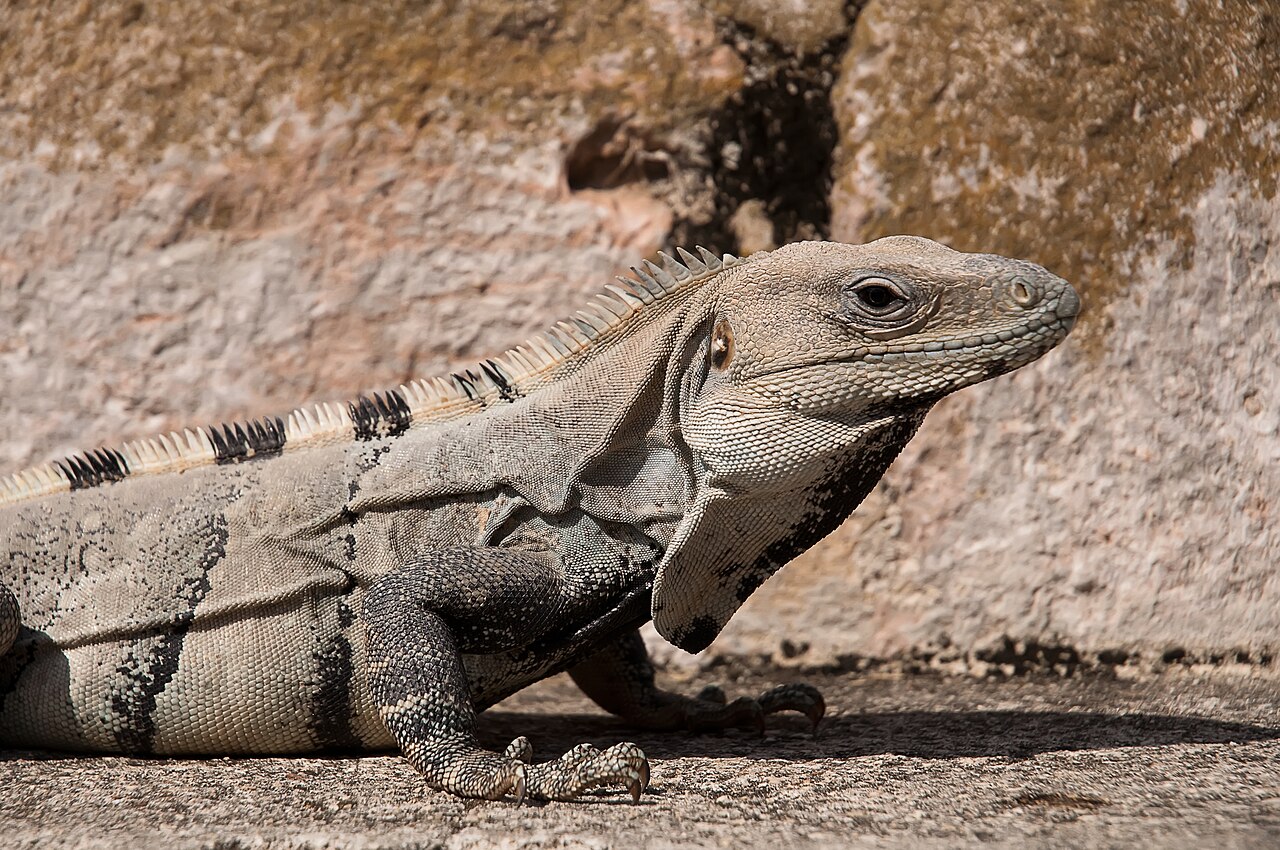
Green iguanas cause nearly all reported bites in the United States because they are the species people keep and the species that colonized South Florida. Their size does the damage; jaw force is unremarkable, but a big male has the mass to back up a grip.
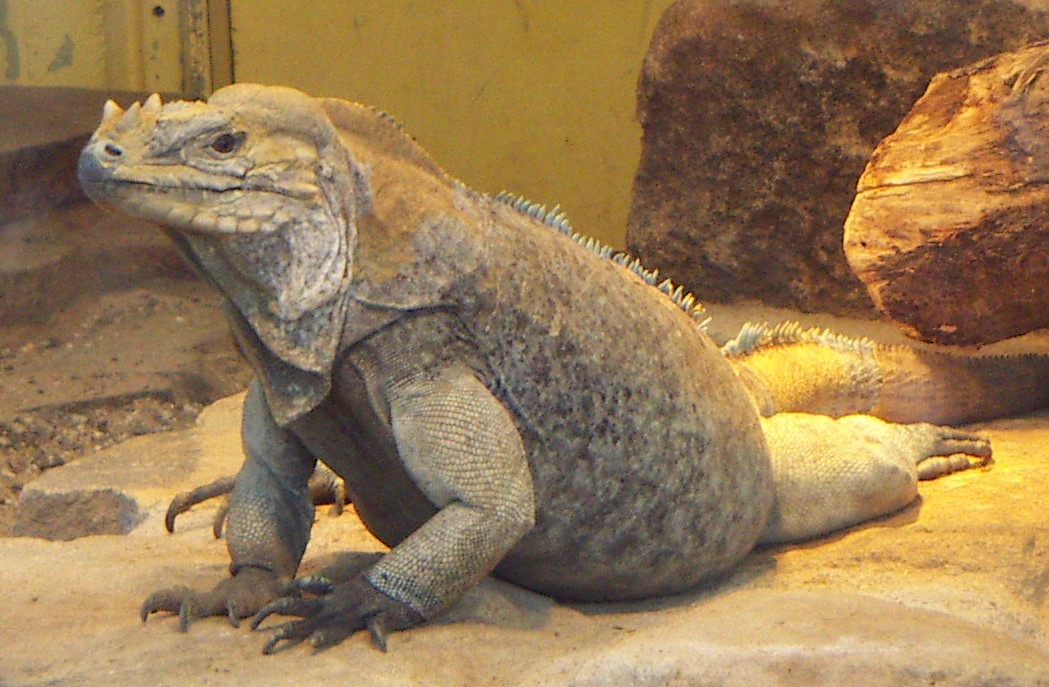
Spiny-tailed iguanas (Ctenosaura similis), also established in Florida, are faster, more skittish, and more willing to bite when cornered, though their smaller heads limit the wound size. Rock iguanas of the genus Cyclura are heavier-jawed than green iguanas and more omnivorous, and bites from them are documented but rare, since almost all are in zoos or on protected Caribbean islands.
Across all three, the pattern is identical: bites follow handling, cornering, or feeding mistakes. A reptile left alone in its own space, whether an iguana or a calm eastern mud turtle, has no interest in your hand at all.
Frequently Asked Questions
Are iguana bites poisonous?
No. Iguanas are not venomous in any way that matters to humans. Some iguanian lizards produce trace oral secretions with venom-related proteins, but the amounts are biologically insignificant. Damage comes from the serrated teeth and from bacteria in the wound, never from toxin.
Do iguanas bond with humans?
Iguanas recognize their keeper, tolerate that person more than strangers, and visibly calm down with routine handling. That is habituation and learned association rather than affection. A well-socialized iguana stops treating you as a threat, which is as close to a bond as the species offers.
Do iguanas like to be petted?
Most tolerate it rather than enjoy it. Many relax when stroked gently along the jaw, the dewlap, or the top of the head, which resembles the pressure of a basking branch. Avoid the back and tail, where contact reads as a predator’s grip and often triggers a whip.
Can I cut my iguana’s nails?
Yes, and you should. Trim only the clear tip with a cat nail clipper, staying well clear of the pink quick inside. Have styptic powder ready in case you cut too deep. Trimming every four to six weeks prevents most of the scratch injuries keepers report.
What animals are iguanas afraid of?
Hawks and other raptors top the list, which is why anything approaching from above triggers panic. Dogs, raccoons, large snakes, crocodilians, and cats all prey on iguanas as well. Wild iguanas near water almost always escape by dropping straight in and swimming away.
How long does an iguana bite take to heal?
A minor bite closes in about 7 to 14 days. Deep lacerations, wounds with retained tooth fragments, and any bite that becomes infected can take several weeks and may need antibiotics or surgical cleaning. Wounds on the hands heal slowest because tendons and joints sit so close to the surface.