Cichlid Fish: 1,700 Species and the 6 Groups That Matter
Cichlid fish are a family of roughly 1,700 described freshwater species, most of them from Africa and South America, and almost all of them share three traits: strong color, territorial behavior, and unusually careful parenting. That combination is why a cichlid tank behaves less like a community aquarium and more like a small ecosystem with politics.
The family runs from a 1.5 in (4 cm) shell dweller to an 18 in (45 cm) peacock bass. That range matters more than any general care sheet, because a Lake Malawi mbuna and an Amazonian discus want opposite water, opposite food, and opposite neighbors.
Cichlids are freshwater fish in the family Cichlidae, with about 1,700 species from Africa, South America, and Central America. Most are 3 to 8 in (8 to 20 cm) long, live 5 to 10 years, and defend territories. They are hardy and easy to feed, but they need more space per fish than community species.
| Group | Typical Size | Water | Temperament | Beginner Friendly |
|---|---|---|---|---|
| Malawi mbuna | 4 to 6 in (10 to 15 cm) | pH 7.8 to 8.6, hard | High aggression | Yes, crowded 55 gal |
| Peacock cichlids | 5 to 6 in (13 to 15 cm) | pH 7.8 to 8.6, hard | Moderate | Yes |
| Kribensis | 3 to 4 in (8 to 10 cm) | pH 6.5 to 7.5 | Peaceful until breeding | Yes |
| Angelfish | 6 in (15 cm) tall | pH 6.5 to 7.5 | Moderate | Yes |
| Oscar | 12 to 14 in (30 to 36 cm) | pH 6.5 to 7.5 | Bold, destructive | No, 75 gal plus |
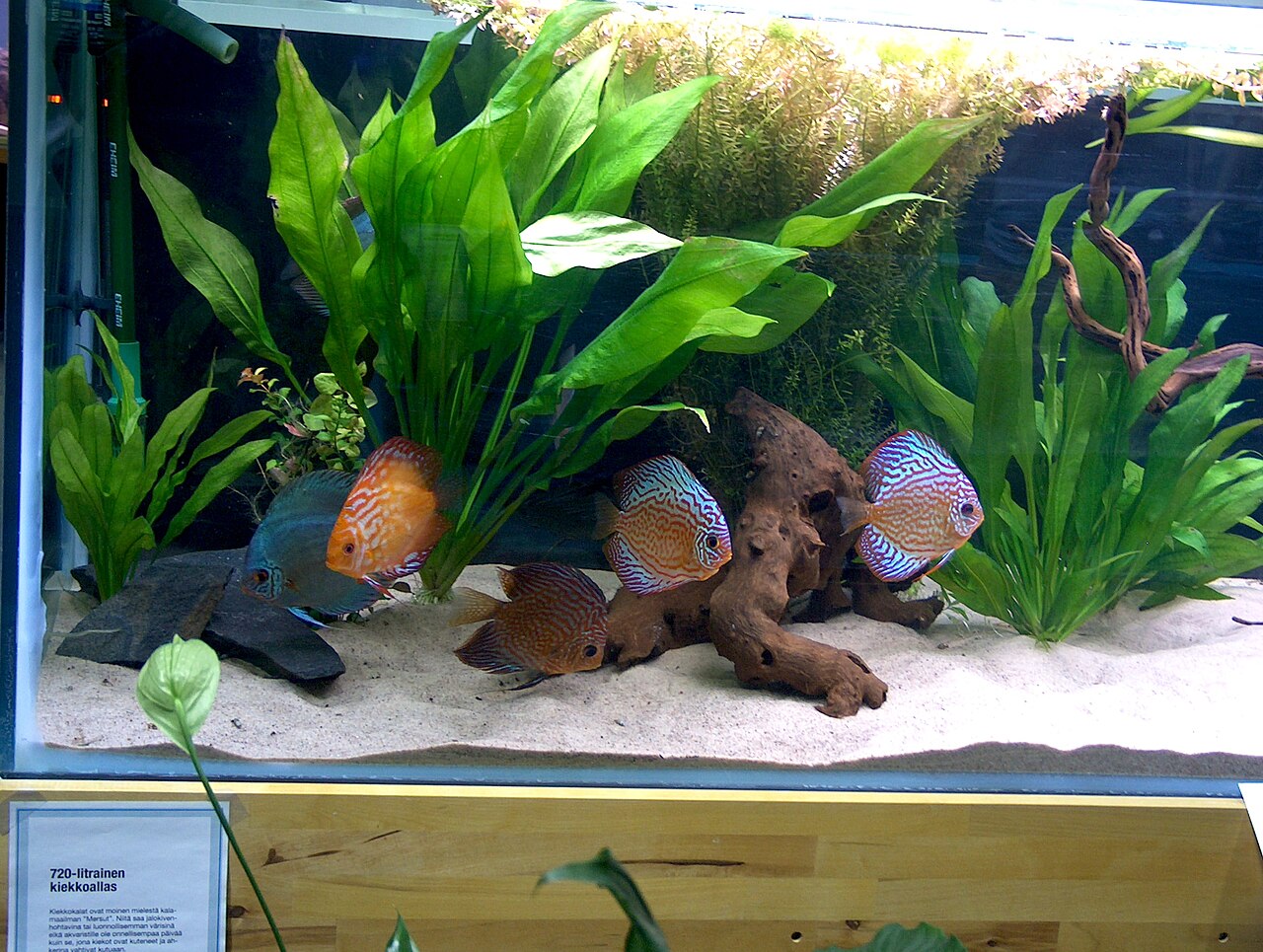
| Discus | 6 to 8 in (15 to 20 cm) | pH 6.0 to 7.0, soft | Shy | No |
What Cichlid Fish Are and Where They Come From
Cichlidae is one of the largest vertebrate families on earth, and most of its species live in three African rift lakes plus the rivers of South and Central America. Lake Malawi alone holds more than 800 species found nowhere else, which is why African stock lists read like a catalog of color morphs from one lake.
What unites them anatomically is a second set of jaws in the throat, the pharyngeal jaws, which process food while the outer jaws only grab it. That split let the family specialize into algae scrapers, snail crushers, and fish hunters without changing body plan much. Several species have since been released into Florida waters, and the US Geological Survey tracks them in its nonindigenous aquatic species database.
The practical takeaway is regional. Rift lake species need hard, alkaline water; South American species need soft, slightly acidic water. Mixing both in one tank means neither group sits where it evolved to, and the weaker one shows it first through faded color and slow fin rot.
Are Cichlid Fish Aggressive?
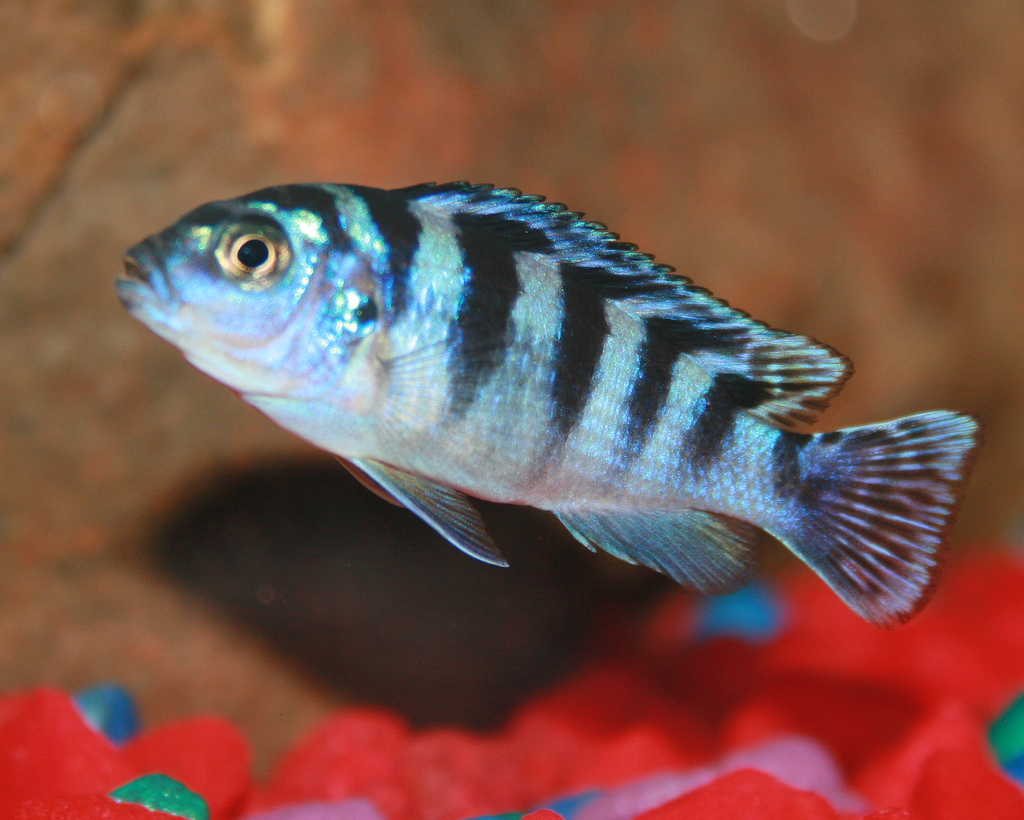
Most cichlids are aggressive, but the aggression is territorial rather than predatory, and it spikes around spawning. A male claims a cave or a flat stone and drives off anything that crosses an invisible boundary a few inches wide. Outside that radius the same fish often ignores its tank mates.
Intensity varies by group. Mbuna are the classic hard cases, while kribensis and most peacocks stay calm until they pair off. Oscars are not so much aggressive as large and clumsy, rearranging the tank and eating anything that fits.
Aggression is managed by layout. Rockwork that breaks sightlines, more caves than fish, and slight overstocking spread the pressure so no single fish becomes the target. An underpopulated cichlid tank is usually more violent than a crowded one, the opposite of how a black molly community behaves.
Are Cichlids Hard to Keep?
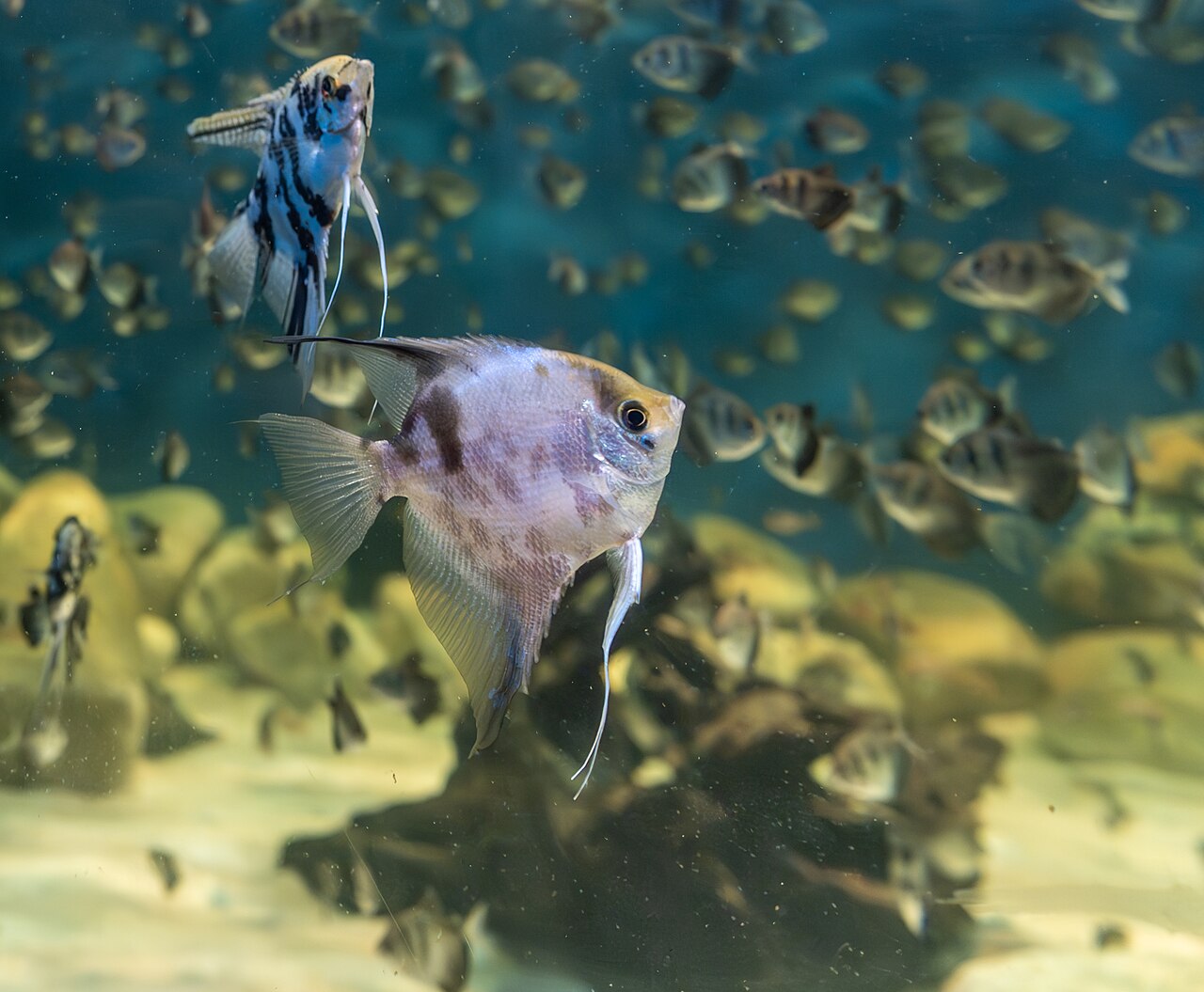
Cichlids are not hard to keep alive, they are hard to keep together. They eat readily, tolerate a wide temperature band, and shrug off chemistry swings that would kill soft water tetras. Most losses in a new tank come from fighting or from ammonia after overfeeding, not from disease.
The two non negotiables are filtration and water changes: filtration rated at least double the tank volume per hour, and 25 to 30 percent changed weekly. That is more work than a betta setup but less finicky than discus, which sit at the genuinely difficult end of the family.
How Many Cichlids Should Be in a Tank?
For African mbuna the working rule is one fish per 5 gallons in a tank of at least 55 gallons, so 10 to 12 adults, stocked all at once so nobody establishes seniority. For larger South American species the number drops hard: a pair of oscars fills a 75 gallon tank, and breeding angelfish want 29 gallons to themselves.
Sex ratio matters as much as the count. Keep one male to three or four females in mbuna and peacocks, because a lone female absorbs the full weight of a male’s courtship and rarely survives a season of it. Add new fish only after rearranging the rockwork.
What Fish Can I Pair With Cichlids?
Pair cichlids with fast, similarly sized fish that use a different level of the tank. For rift lake setups the standard companions are synodontis catfish, rainbowfish, and larger barbs, all of which handle hard alkaline water. For South American tanks, plecos, larger tetras, and corydoras work with angelfish and kribensis.
Avoid anything slow, long finned, or small enough to swallow. Guppies and long lived bettas fail on at least one count, and pond fish such as koi share nothing with a tropical cichlid tank.
Do Cichlids Prefer Gravel or Sand?
Most cichlids prefer sand. Rift lake species sift mouthfuls of substrate and spit it back through the gills, which only works with fine grains, and many Central American species dig pits to spawn in. Sand also keeps uneaten food on the surface where a siphon can reach it instead of rotting two inches down.
Pool filter sand or aragonite at 1 to 2 in (2.5 to 5 cm) deep is the usual choice, with aragonite adding buffering that holds African tanks above pH 8. Gravel is not harmful, it just works against the fish and traps more waste, the way it complicates a lightly filtered betta tank.
Frequently Asked Questions
Can I keep cichlids in a 20 gallon tank?
A 20 gallon works for one pair of small species: shell dwelling Neolamprologus, kribensis, or German blue rams. It is too small for mbuna, peacocks, angelfish, or anything reaching 5 in (13 cm), because territorial fish need horizontal distance more than volume. A 20 gallon long beats a standard 20.
Can I have just one cichlid?
Yes, a single cichlid does well alone and often shows better color without rivals. Oscars, jack dempseys, and single male peacocks are commonly kept as show fish in their own tank. The exception is schooling species such as Tropheus, which turn stressed and skittish without a group.
Can I put betta fish with cichlids?
No, that pairing fails both ways. A betta’s long fins are an obvious target for nipping cichlids, and African species need hard water near pH 8, well outside a betta’s range. A betta also cannot escape a territorial fish in a normal tank. Keep the betta in its own warm, soft water tank.
Are cichlids good aquarium fish?
Cichlids are excellent aquarium fish for anyone willing to plan the stocking list before buying. They are colorful, live 5 to 10 years, act visibly intelligent, and breed readily enough that most keepers see parental care firsthand. They are a poor choice for a mixed community of small peaceful species.