Russian Tortoise Care: Setup, Diet, and Temperatures
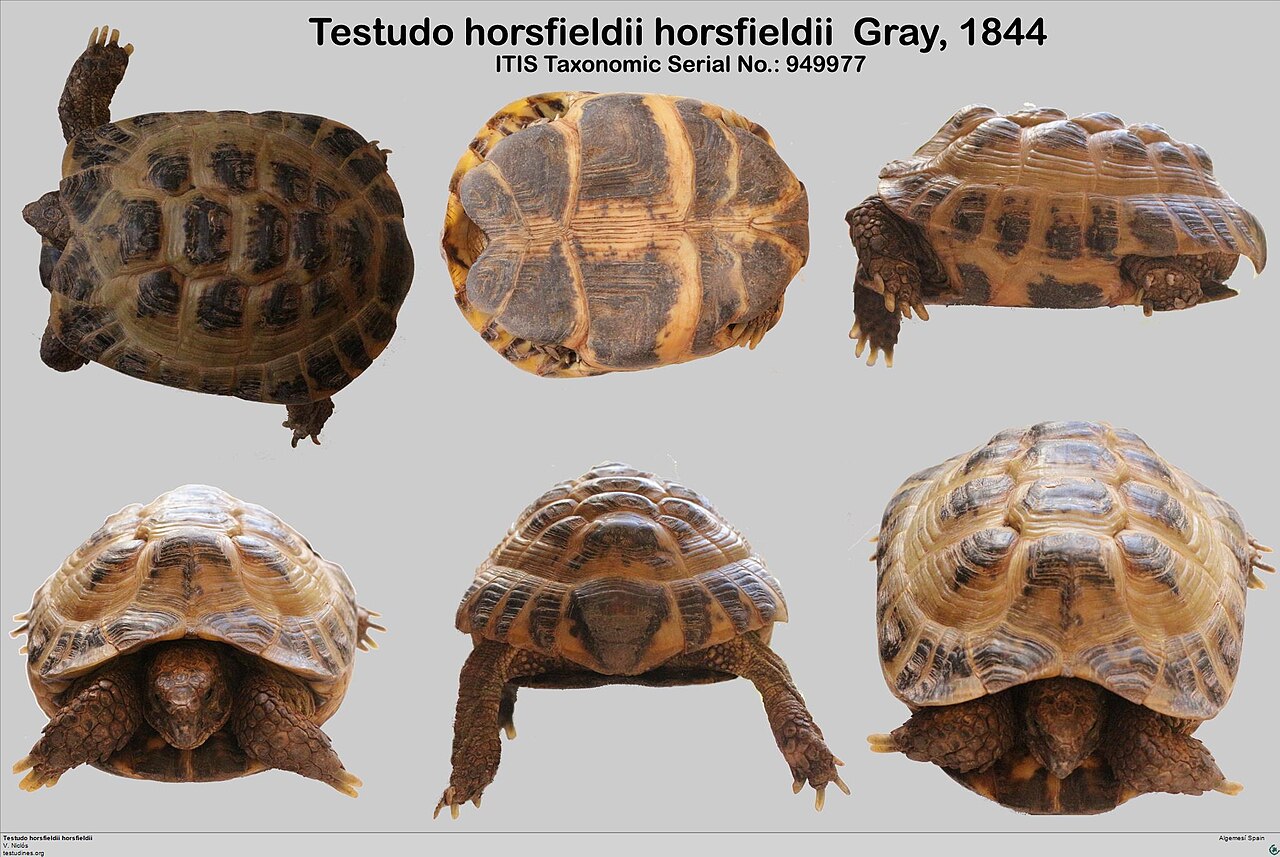
Russian tortoise care comes down to five things done consistently: a large flat enclosure with deep diggable substrate, a basking spot near 95 F (35 C), strong UVB, a diet of broadleaf weeds and dark greens with no fruit, and regular soaks. Get those right and Testudo horsfieldii is one of the most forgiving tortoises in the hobby, which is exactly why it is the species most often sold to first time keepers.
The mistakes that shorten these animals’ lives are predictable. Glass tanks that are too small, coil UVB bulbs mounted too far away, salad greens with no calcium behind them, and winters spent at room temperature account for most of the sick tortoises that reach exotics vets. A Russian tortoise can live past 40 years, so the setup you build is a decades long commitment, not a starter kit.
A Russian tortoise needs at least 8 sq ft (0.75 sq m) of floor space, 4 to 6 in (10 to 15 cm) of diggable substrate, a basking spot of 95 to 100 F (35 to 38 C), a linear 10 percent UVB tube, and a daily diet of broadleaf weeds and dark leafy greens. No fruit, no protein, no cat food.
| Care point | Target |
|---|---|
| Adult size | 5 to 8 in (13 to 20 cm), females larger than males |
| Enclosure floor | 8 sq ft (0.75 sq m) minimum indoors, more is always better |
| Basking surface | 95 to 100 F (35 to 38 C) |
| Cool end | 70 to 80 F (21 to 27 C), night drop to 65 F (18 C) is fine |
| UVB | Linear T5 10 percent tube, replaced every 12 months |
| Staple diet | Dandelion, endive, escarole, plantain weed, clover, mallow |
| Lifespan | 40 years or more with correct husbandry |
Are Russian Tortoises Hard to Care For?
No, and that is the honest answer that most care sheets bury. Russian tortoises come from the dry steppes of Central Asia, where they endure baking summers and hard freezes underground, and that background makes them tolerant of household conditions that would kill a tropical species. They are active, they eat almost anything green, and they rarely refuse food.
What they are not is low effort. The daily work is small, perhaps ten minutes for food and water, but the setup cost is real and the enclosure is larger than most new keepers expect. A tortoise kept in a 40 gallon tank with a coil bulb is being kept badly even if it survives for years.
The species also lives long enough to outlast jobs, moves, and relationships. Before buying, look at how long Russian tortoises actually live and decide honestly whether a reptile that may still be eating dandelions in 2070 fits your life.
Enclosure Size and Setup
Floor space matters more than anything else in this setup. A single adult needs a minimum of 8 sq ft (0.75 sq m), which means a footprint of roughly 4 ft by 2 ft (120 by 60 cm), and keepers who give 16 sq ft or more consistently report more active, better conditioned animals.
Use an open topped tortoise table rather than an aquarium. Glass walls confuse tortoises, which walk the perimeter trying to reach what they can see, and the enclosed sides trap stale humid air at substrate level. A plywood or melamine table with 12 in (30 cm) sides, sealed against moisture, costs less than a large tank and works better.
Russian tortoises are strong diggers and determined climbers. Bury the enclosure walls or use a solid base, keep hides away from the corners so the animal cannot use them as a step, and check the perimeter regularly. Outdoor pens need a buried barrier at least 8 in (20 cm) deep and a secure top against raccoons, dogs, and birds.
Substrate and Digging Depth
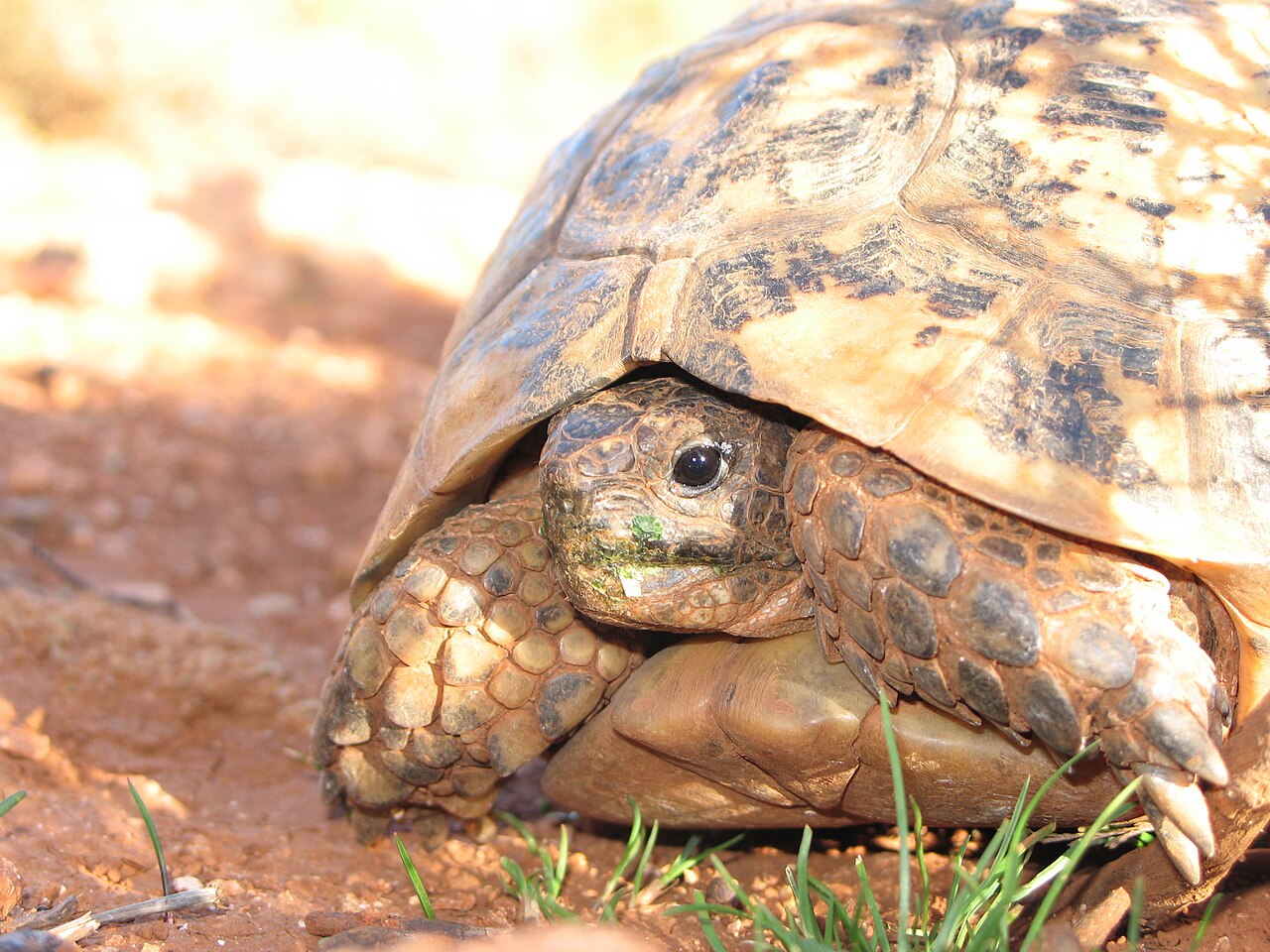
Provide 4 to 6 in (10 to 15 cm) of substrate so the tortoise can dig. A mix of organic topsoil and coconut coir at roughly three parts to one holds a burrow without going dusty, and a handful of play sand improves the structure. Avoid pine and cedar shavings, calcium sand, and bare newspaper.
Digging is not optional behavior for this species. Wild Russian tortoises spend the hottest and coldest parts of the year in burrows they excavate themselves, and a captive animal denied that depth paces and scrapes at the walls instead. Spot clean waste daily and replace the substrate every three to four months.
Hides and Enclosure Humidity
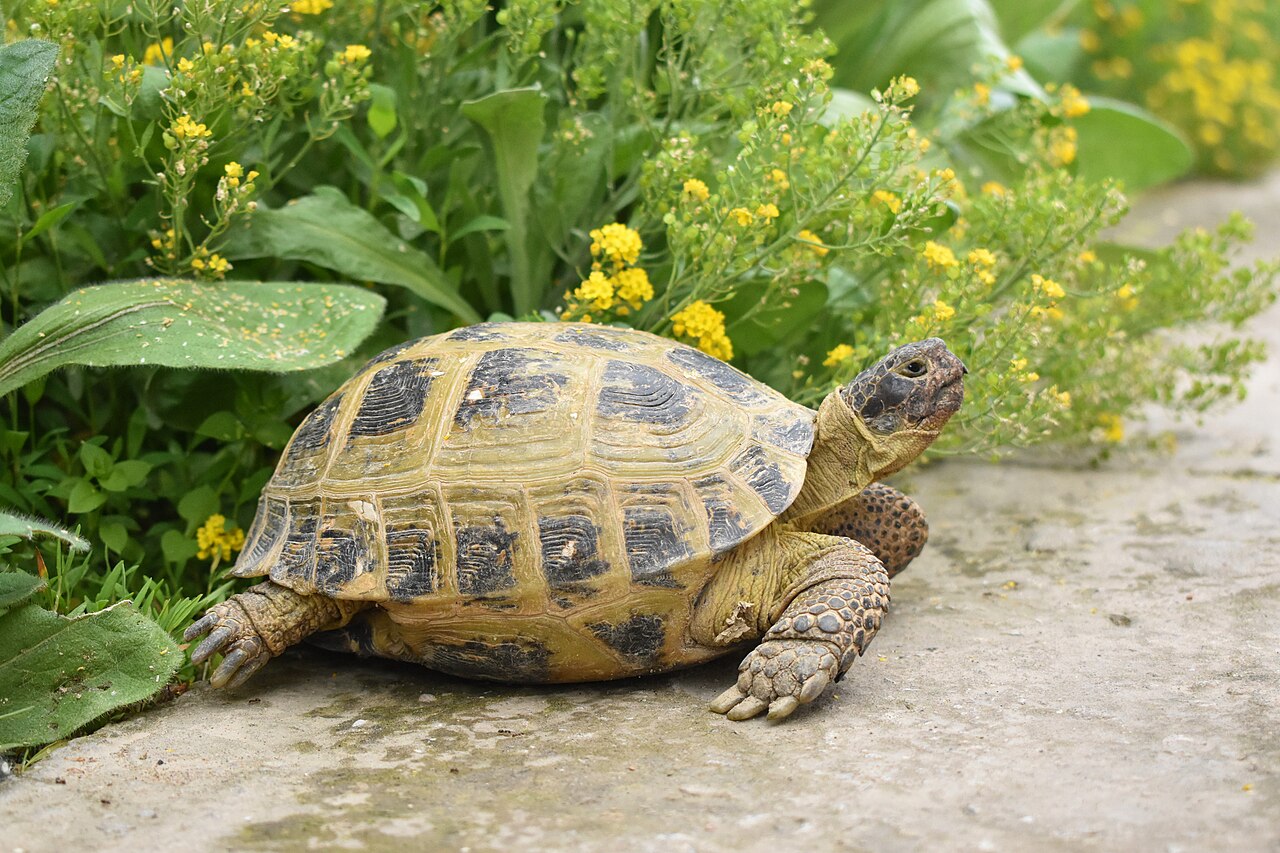
Two hides work better than one. Place a cool hide at the far end and a second near the warm end, both dark and just large enough for the animal to turn around in. Dampen the substrate under the cool hide once or twice a week; the humid microclimate there prevents the dehydration that drives shell pyramiding.
Ambient humidity in the enclosure should sit between 40 and 60 percent. That is drier than a tropical species needs and considerably wetter than a heated living room in winter, which is why the damp hide matters. Wild Russian tortoises spend most of the day in burrows where the air is humid even when the surface is arid.
Lighting: UVB and Basking Temperatures
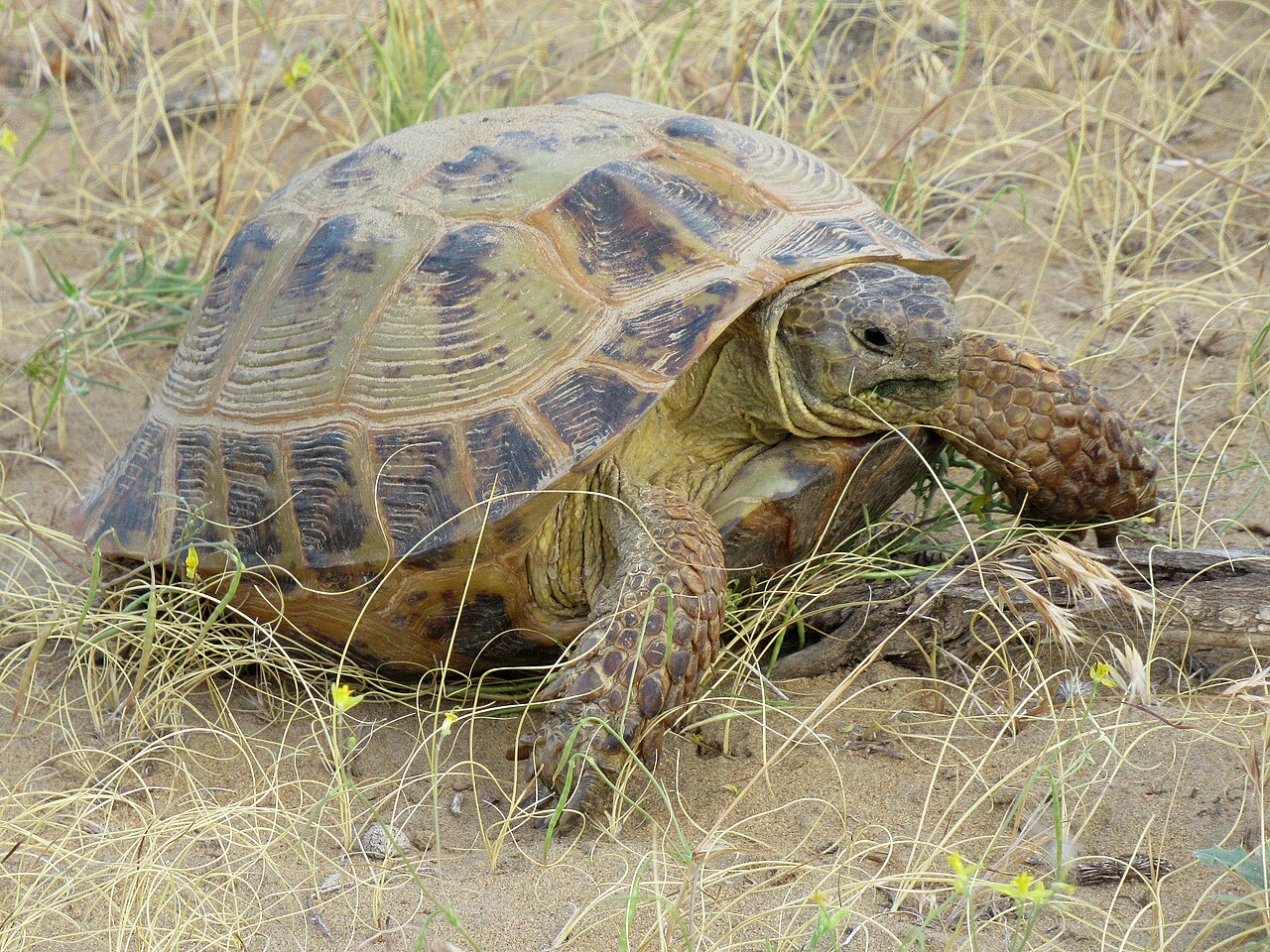
UVB drives vitamin D3 synthesis, which drives calcium absorption, which determines whether the shell grows correctly. Use a linear T5 high output tube rated at 10 percent UVB, mounted in a reflective fixture spanning at least two thirds of the enclosure length, 12 to 15 in (30 to 38 cm) above the substrate with no glass or plastic in the way.
Compact and coil bulbs are not adequate for a tortoise. They light a small circle, deliver usable UVB only at close range, and force the animal to choose between warmth and ultraviolet. Replace the tube every 12 months even though it still emits visible light, because UVB output falls long before the lamp dies.
Heat comes from a separate basking lamp over one end. Aim for 95 to 100 F (35 to 38 C) measured on the surface where the tortoise sits, a cool end of 70 to 80 F (21 to 27 C), and 12 to 14 hours of light on a timer. Both lamps go off at night.
How Cold Is Too Cold for a Russian Tortoise?
Night temperatures down to 65 F (18 C) are normal and healthy for an active tortoise indoors. Below about 60 F (15 C) digestion slows, and food already in the gut can sit and ferment, which is the real danger of a cold snap in an animal that has just eaten.
Sustained temperatures under 50 F (10 C) trigger brumation behavior. The tortoise stops eating, digs down, and becomes inactive. That is natural for the species, but an unplanned cold brumation in a tortoise that has not been fasted and vet checked is how keepers lose animals over winter.
Outdoor pens need a hard cutoff. Bring the tortoise inside when overnight lows drop below 50 F (10 C) unless you are deliberately running a controlled brumation, and never leave one outside in wet cold. Cold plus damp causes respiratory infections faster than cold alone.
What to Feed a Russian Tortoise
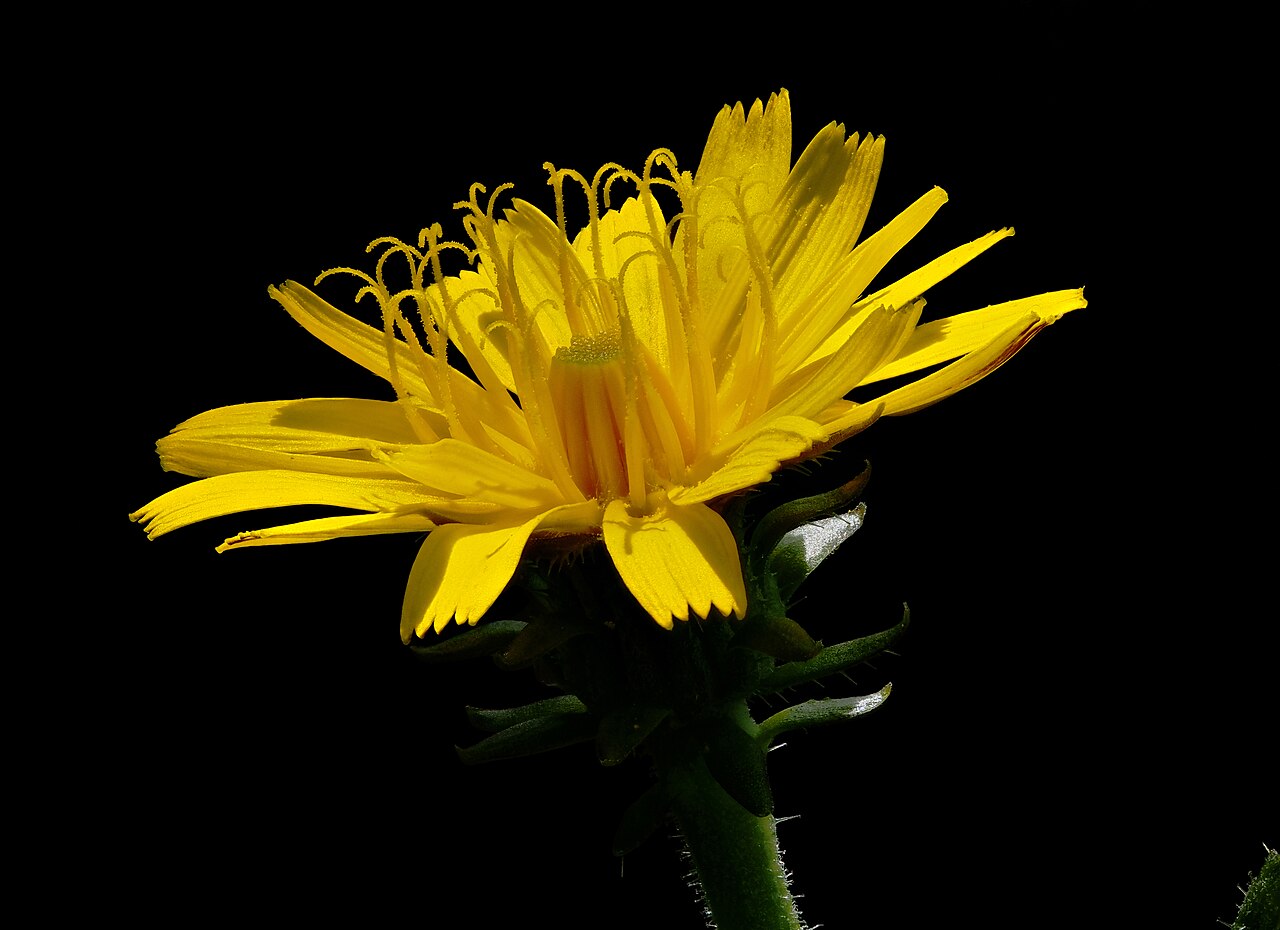
The staple diet is broadleaf weeds and dark leafy greens, high in fiber and calcium, low in protein and sugar. Dandelion leaves and flowers, plantain weed, clover, mallow, sow thistle, endive, escarole, radicchio, and spring mix without spinach form the base. Grocery greens work; a pesticide free weed patch works better and costs nothing.
Rotate at least four items through a week rather than feeding one green every day. Variety spreads out the oxalates and goitrogens that any single plant carries, and it keeps a picky animal eating. Dust food with a plain calcium powder twice a week and a calcium with D3 product once a week if UVB is strong.
Leave a cuttlebone in the enclosure permanently. The tortoise will use it when it needs the calcium and ignore it otherwise, and it keeps the beak worn down. A deeper breakdown of ratios and seasonal options sits in the full Russian tortoise diet guide.
How Many Times a Day Should a Russian Tortoise Be Fed?
Feed once a day, in the morning, after the basking lamp has been on long enough for the tortoise to warm up. A cold tortoise cannot digest, so food offered before the animal reaches working temperature sits in the gut doing nothing useful.
Portion by shell size. A daily serving roughly equal to the area of the tortoise’s carapace is the standard rule of thumb, and it should be eaten within a few hours. Hatchlings and juveniles eat daily without exception; well grown adults do fine with one fast day per week, which mimics the patchy food supply of the steppe.
Uneaten food is data. A tortoise that clears the plate every morning and then stops eating for two days needs a temperature check and a soak before anything else. Persistent refusal in a warm, well lit enclosure is a vet visit, not a diet problem.
Can Russian Tortoises Eat Cucumbers?
Yes, occasionally, but cucumber is close to nutritionally empty. It is about 95 percent water with very little calcium, fiber, or vitamin content, so a tortoise filling up on cucumber is eating instead of eating well. Use it as a hydration aid for an animal that refuses to drink, not as a regular item.
The genuinely harmful foods are the ones that look generous. Fruit causes loose stools and disrupts gut flora in a grazing species, spinach and beet greens bind calcium through their oxalate content, iceberg lettuce is water with a crunch, and any animal protein, including dog food and cat food, drives fast shell growth and kidney damage.
Two more to avoid outright: avocado, which is toxic to reptiles, and rhubarb leaves. Grass hay is not a staple for this species either, unlike a sulcata tortoise, which is a true grazer built for it.
Water Dish and Drinking
Keep a shallow water dish in the enclosure at all times, sunk level with the substrate and no deeper than the gap between the tortoise’s plastron and the top of its front legs. Russian tortoises drink more than keepers expect and often defecate in the dish, so rinse and refill it daily.
Use a heavy terracotta saucer rather than a light plastic bowl, which a determined adult will tip over and then walk through. Position it at the cool end so the water does not heat under the basking lamp, and set it on a paver if the substrate keeps washing in.
Soaking and Hydration
Soaking is separate and it matters. Place the tortoise in lukewarm water at about 90 F (32 C), deep enough to reach the seam between the shells, for 15 to 20 minutes. Juveniles need this three times a week, adults once a week, and any animal that looks dull or sunken eyed needs it immediately.
Well hydrated tortoises pass clear urine with a soft white urate. Chalky, gritty, or pasty urates mean the animal is running dry, and that is the start of the pathway toward bladder stones, one of the more common surgical problems in this species.
Do Russian Tortoises Like Being Held?
No. Tortoises tolerate handling, they do not enjoy it. Being lifted removes the animal’s only real defense, which is contact with the ground, and a tortoise held in the air will often empty its bladder in alarm, losing water it may not be able to replace quickly.
That said, Russian tortoises are among the bolder chelonians and most stop retracting within a few weeks of settling in. Keep handling functional: lift with both hands supporting the plastron, keep sessions under a couple of minutes, and put the animal down on a surface rather than releasing it from height.
Supervised floor time in a warm, closed room is the better way to interact. The tortoise gets exercise and stimulation, you get to watch actual behavior, and nothing about the experience frightens the animal. The same principle holds for a Hermann’s tortoise and most other Mediterranean species.
What Are the Signs That a Russian Tortoise Is Happy?
Read behavior, not expression. A thriving Russian tortoise basks in the morning, patrols the enclosure with its head up, digs in the substrate, eats within minutes of food appearing, and retreats to a hide in the afternoon. That daily rhythm repeating week after week is the clearest health signal you will get.
The physical markers are just as readable. Clear bright eyes with no swelling, a dry nose with no bubbles, a smooth firm shell without soft spots or steep pyramiding, a beak that meets cleanly, and formed brown droppings with a soft white urate all indicate a system running correctly.
Warning signs invert that list: lethargy at basking time, sunken eyes, nasal discharge, wheezing, a beak that has overgrown into a hook, soft shell edges, and repeated attempts to climb the walls all day. Constant frantic pacing usually means the enclosure is too small or too bright, not that the tortoise is bored.
Common Health Problems and When to See a Vet
Shell pyramiding is the most visible husbandry failure: raised, cone shaped scutes caused by a combination of low humidity, high protein, and rapid growth. It cannot be reversed, only stopped, which is why the damp hide and the weed based diet matter from day one.
Respiratory infections announce themselves with nasal bubbles, wheezing, open mouth breathing, and a tortoise that stretches its neck out to breathe. They usually follow a cold or damp period, they do not resolve on their own, and they need a reptile vet and antibiotics. Metabolic bone disease follows inadequate UVB or calcium and shows as a soft or misshapen shell.
Wild caught imports carry parasites at high rates, so any new tortoise of unknown origin should have a fecal screen. Find an exotics vet before you need one, because general practices often do not see chelonians. The Smithsonian’s National Zoo publishes reliable background on tortoise biology and husbandry standards.
Frequently Asked Questions
Can I leave my Russian tortoise alone for 2 days?
Yes. A healthy adult with lamps on timers, a full water dish, and a pile of greens handles a weekend without any problem, and adults naturally fast for short periods. For anything beyond three days, arrange a visitor. Hatchlings and juveniles should not be left more than 48 hours.
Does a Russian tortoise bite hurt?
A little. They have no teeth but a sharp keratin beak, and a determined bite from an adult can pinch hard enough to bruise or break skin on a fingertip. Bites are almost always food mistakes, so offer greens with tongs or a flat dish rather than from your fingers.
Do Russian tortoises recognize their owners?
They recognize routines and, to a degree, individual people. Kept tortoises learn to associate a specific person with food, approach when that person enters the room, and react differently to strangers. Calling it affection overstates it, but the learning is real and documented across chelonians.
Do Russian tortoises need to brumate?
Not strictly. Healthy adults can be kept active year round under stable lighting and heat, and many keepers do exactly that. Brumation supports natural breeding cycles, but it must be planned: a vet check, a two to four week fast, and controlled temperatures near 40 to 50 F (4 to 10 C).
Can two Russian tortoises live together?
Only with caution and space. Males fight, ram, and bite each other’s legs, and a single male will harass a single female relentlessly. If you keep more than one, use a large enclosure with visual barriers and keep one male to two or more females, never two males.
How is a Russian tortoise different from a Greek tortoise?
Russian tortoises have four claws on each front foot, a rounder and flatter shell, and a more oval outline, while a Greek tortoise has five front claws and thigh spurs. Care requirements overlap closely, though Greek tortoises generally want slightly higher humidity.