Otter Poop: 7 Signs That Identify Spraint on a Riverbank
Otter poop is a loose, dark, strong smelling deposit about 2 to 4 inches (5 to 10 cm) long, packed with fish scales, fish bones and crayfish shell, and left in the open on a rock, log or grassy mound right beside water. No other North American scat combines shiny scales, a tarry black green color and a deliberately chosen high spot on a riverbank. Once you know that combination, otter poop is one of the easiest signs in the field to call with confidence.
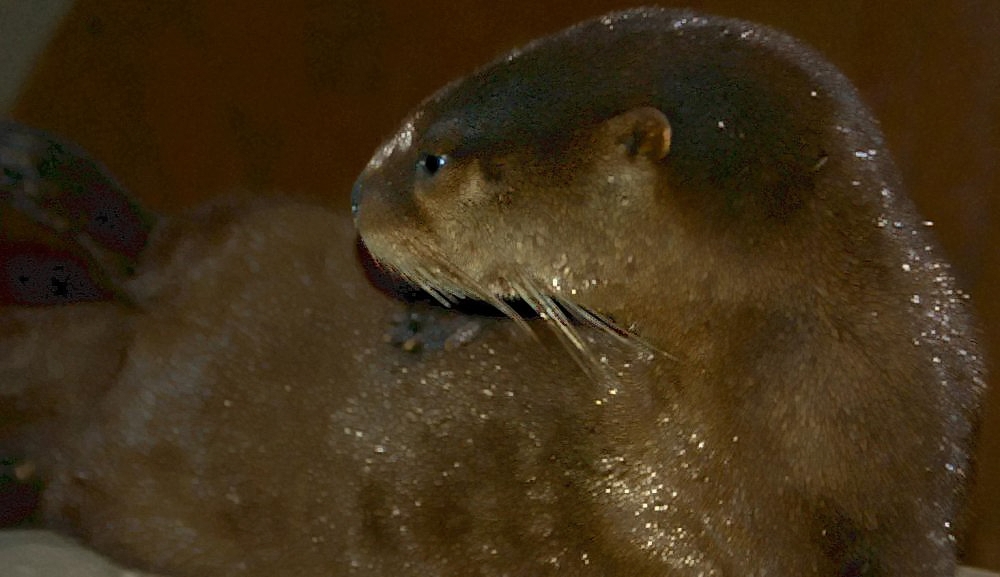
The animal behind it is almost always the North American river otter (Lontra canadensis), which lives along rivers, lakes, marshes and coastlines in most of the United States. Sea otters (Enhydra lutris) leave something different along the Pacific coast, closer to a pile of crushed shell and urchin fragments. Both species use their droppings as signposts, which is why you find them stacked in the same spots year after year.
Otter poop, called spraint, is 2 to 4 inches (5 to 10 cm) long, loose to tubular, black green when fresh and fading to gray, and visibly full of fish scales, bone fragments and crayfish shell. It is deposited on raised, open sites such as rocks, logs and bank mounds beside water, usually in repeated latrines, and it smells fishy and oddly sweet.
| Feature | Otter spraint |
|---|---|
| Length | 2 to 4 in (5 to 10 cm), often in clumps |
| Diameter | 0.4 to 0.8 in (1 to 2 cm) |
| Shape | Loose, tapered or shapeless, rarely firm pellets |
| Color | Black green when fresh, gray and crumbly when old |
| Contents | Fish scales, fine bones, crayfish shell, occasional feathers |
| Smell | Fishy with a sweet, hay like note |
| Location | Raised rocks, logs, bank mounds, under bridges, always near water |
What Does Otter Poop Look Like?
Fresh otter poop looks wet, dark and slightly glossy, more like a smear or a soft tube than a firm dropping. The color runs from black green to dark brown, and the surface catches light because of the fish scales packed inside it. Most deposits are small, between 2 and 4 inches (5 to 10 cm) long, and they often sit in a loose cluster rather than as a single piece.
Age changes the look quickly. Within a few days the moisture goes and the deposit turns gray, chalky and crumbly, until all that remains is a pale patch of scales and bone grit that looks like spilled ash. Weathered spraint at a well used site can form a crust several inches across. If you see both fresh black material and gray crust on the same rock, you are standing at an active latrine.
What Are Otter Droppings Called?
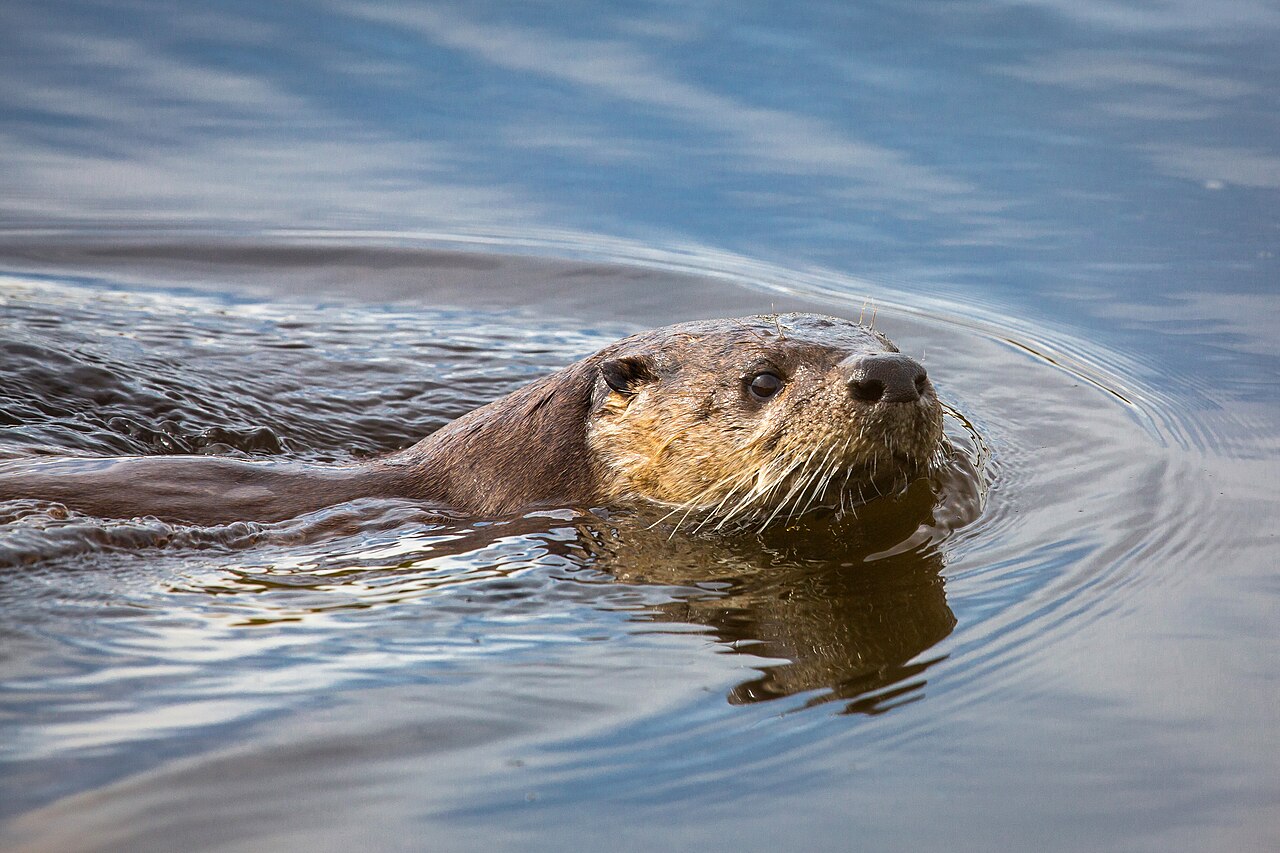
Otter droppings are called spraint, a term borrowed from British otter tracking that biologists in the United States now use as well. The word covers both the dropping itself and the act of leaving it, and a site used repeatedly is a spraint site or an otter latrine. You will also see the word in survey reports, where spraint counts stand in for otter numbers because the animals themselves are rarely seen.
The name matters for identification because spraint is not simply waste. Otters deposit it deliberately on landmarks to advertise territory, condition and breeding status, often adding a jelly like secretion with no solid content at all. That is why a deposit can look like nothing more than a blob of mucus on a rock and still be otter sign.
How Big Is Otter Scat?
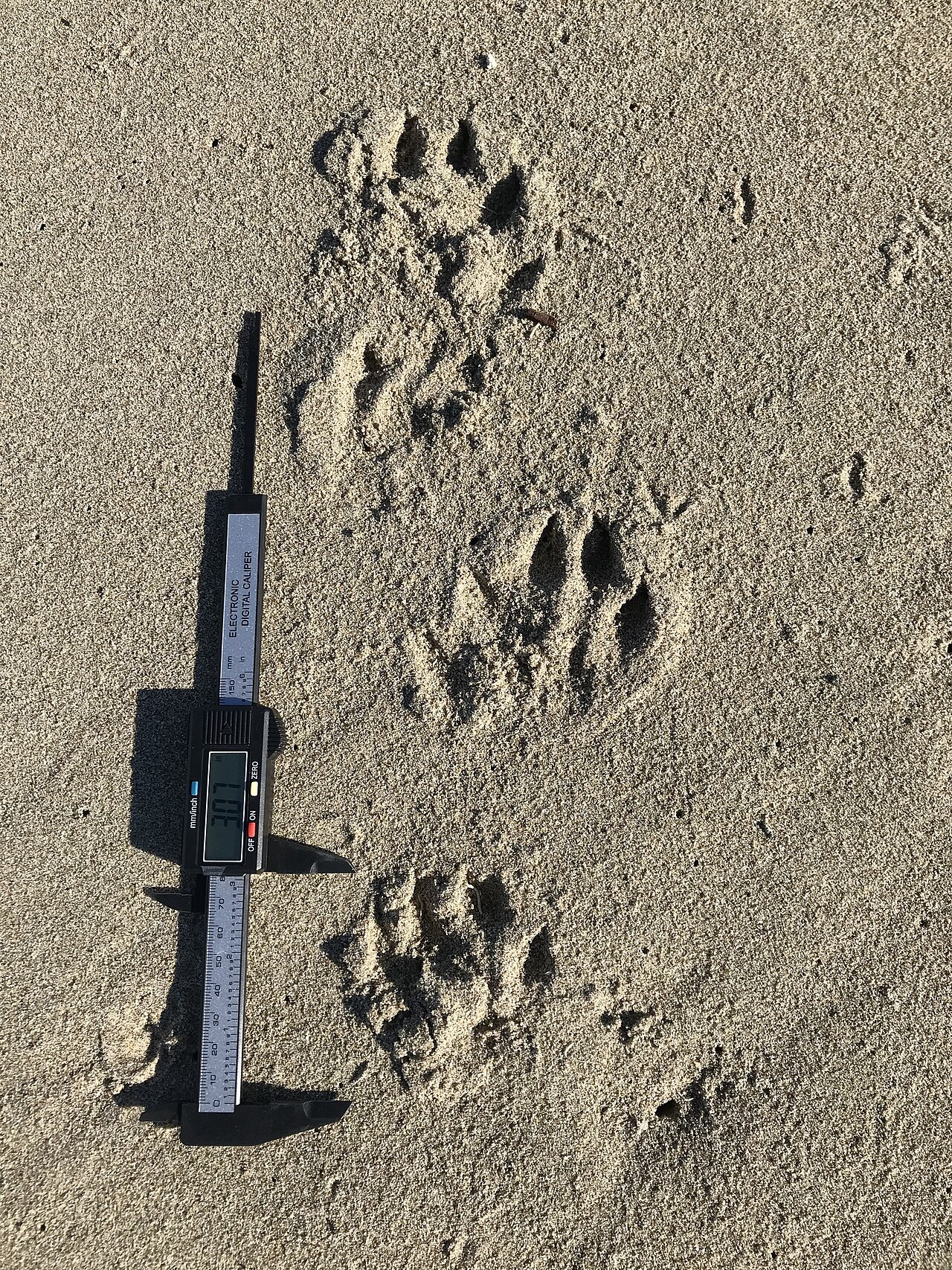
Individual pieces of otter scat measure 2 to 4 inches (5 to 10 cm) long and 0.4 to 0.8 inches (1 to 2 cm) across, which puts them between mink and raccoon in size. The pieces rarely hold a clean cylinder shape. Because otters eat soft, bony prey, the material collapses as it dries and spreads out instead of standing proud like dog scat.
Volume is more useful than any single measurement. An otter visiting a latrine leaves several small deposits at once, so the total patch can cover a dinner plate even though no single piece is large. Sea otter scat on Pacific beaches looks bulkier still, since it carries crushed shell, urchin spines and purple fragments that stay intact in the pile.
What Is Inside Otter Poop?

Break a dry spraint apart and you find the otter’s diet laid out in pieces: fish scales by the hundred, needle fine vertebrae and rib bones, crayfish claw and carapace fragments, and sometimes amphibian bones, insect wing cases or a few feathers. Scales are the giveaway. They glitter in sunlight and no herbivore scat contains them.
Seasonal shifts show up clearly. Crayfish dominate in warm months in much of the South and Midwest, so summer spraint often looks orange or rust red from the shell. In winter the same latrine may produce almost pure scale and bone. Researchers use exactly this material to reconstruct what otters eat without ever handling an animal, which is why biologists collect spraint in bulk. Amphibian remains show up often enough that it helps to know what frog droppings look like on their own.
Where Otters Leave Their Droppings
Otters choose raised, conspicuous places within a few feet of water: boulders in midstream, fallen logs, the top of a bank, a sandbar, a dock piling, the ledge under a bridge, or a flattened grass mound they have scraped up themselves. The site is almost never hidden. Visibility is the point, since the deposit is a message to other otters.
These latrines are reused for years and accumulate scat, scrapes and flattened vegetation. Grass at heavily used sites often turns a bright, fertilized green, which makes the spot easy to pick out from a boat. If you want to find otter sign on a river, check every rock that sits a little higher than the rest, and look for five toed prints in the mud at the water’s edge. Riverside latrines attract other animals too, and rat and mouse droppings turn up on the same docks.
What Does Otter Poop Smell Like?
Otter poop smells fishy, which anyone would expect, but it carries a second note that people describe as sweet, musky or close to jasmine tea or new mown hay. Trackers in Britain use that sweetness as a confirming test, because mink scat by contrast smells foul and sharply unpleasant. The sweetness comes from the secretion the otter adds to the deposit, not from the fish.
The smell fades as the spraint dries, so only fresh material gives a reliable reading. There is no need to put your nose against it. Hold the air a hand’s width above the deposit and the difference between otter and mink is usually obvious on the first breath, which is far safer than handling it.
Otter Poop vs Mink Poop
Mink poop is the dropping most often mistaken for otter, and size separates them first. American mink (Neogale vison) scat is slim, about 0.2 to 0.3 inches (5 to 8 mm) thick and 2 to 3 inches (5 to 8 cm) long, with twisted, tapered ends that hold their shape. Otter spraint is thicker, looser and falls apart.
Contents and smell finish the call. Mink take birds, small mammals and frogs as well as fish, so their scat often contains fur and feather rather than pure scale. The smell is the decisive test: mink scat is rank and offensive, otter spraint is fishy and sweet. Both animals use raised latrines near water, so location alone will not settle it.
Otter Poop vs Raccoon Poop
Raccoon poop is firm, blunt ended and tubular, roughly 0.5 to 0.75 inches (1.3 to 2 cm) thick, and it is usually full of seeds, berry skins, corn or trash. Otter spraint has no plant material of consequence and collapses instead of holding a cylinder. Raccoons also leave their deposits in piles at latrines on logs, rooftops and woodpiles, often well away from water.
Treat raccoon scat with more caution than otter scat. It can carry the raccoon roundworm Baylisascaris procyonis, whose eggs stay infectious in soil for years, so do not sweep or disturb a raccoon latrine dry. The same careful approach applies to other backyard finds, including squirrel and rat droppings on a deck rail and bat guano in an attic.
Otter Poop vs Beaver Poop
Beaver poop is the easiest of the three to rule out because it is made of wood. Beaver droppings are oval pellets about 1 inch (2.5 cm) long, packed with pale sawdust like fiber, and they are normally deposited in water, where they break apart within hours. Finding intact beaver scat on land is unusual.
Otter spraint is animal matter from end to end: scale, bone and shell, never wood fiber. Both species share ponds and slow rivers, and both leave slides on muddy banks, so track and scat together give a better answer than either alone. For a similar size against texture comparison in rodents, see deer and rabbit pellets.
Is Otter Poop Dangerous to People and Dogs?
Treat otter scat as a disease risk, even though otters themselves are not aggressive toward people. Wild carnivore droppings near water can carry Giardia and Cryptosporidium, both of which cause diarrheal illness in people and dogs, along with Salmonella and assorted parasite eggs. The CDC treats contact with animal feces as a standard route of infection and recommends gloves and handwashing for any cleanup.
Dogs are the usual way these organisms reach a household, because a dog that rolls in spraint or eats it carries the material home on its coat. Rinse the dog before it comes indoors, and keep it leashed around known latrines. Do not let children handle scat to show you, however proud they are of the find.
How to Clean Up Otter Scat Safely
If you need to clear spraint from a dock, boat ramp or deck, wear disposable gloves, dampen the material first with a spray bottle so nothing becomes airborne, lift it with a scoop or a plastic bag turned inside out, and double bag it for the trash. Never sweep or pressure wash dry scat, which turns parasite eggs into dust you can breathe.
Afterward, scrub the surface with hot soapy water and let it dry in sunlight, then wash your hands even though you wore gloves. Leave scat in the wild where you find it. A latrine on a riverbank is useful evidence of a healthy otter population, and removing it tells you nothing while erasing a record other observers could use. The same hands off principle applies to alligator droppings in the Southeast.
Frequently Asked Questions
What are otter droppings called?
Otter droppings are called spraint. The term comes from British otter tracking and is standard in wildlife surveys, where biologists count spraint along a river as a proxy for otter presence. A site used repeatedly is called a spraint site or an otter latrine, and a single otter may leave several deposits there in one visit.
Does otter poop smell?
Yes, and the smell is diagnostic. Fresh spraint smells distinctly of fish with a sweet undertone that trackers compare to jasmine tea or cut hay. That sweetness distinguishes it from mink scat, which smells rank and sour. The odor comes from a glandular secretion the otter adds and fades within a few days as the deposit dries out.
Can otters be toilet trained?
Not in any reliable sense. Spraint is territorial communication, not just waste, so an otter is driven to deposit it on raised landmarks throughout its range rather than in one chosen place. Captive otters in zoos may adopt favored latrine spots, but that is the animal’s own habit, not training, and it does not transfer to a home setting.
Is otter poop dangerous to dogs?
It can be. Spraint may carry Giardia, Cryptosporidium and Salmonella, all of which a dog can pick up by eating or rolling in the material. Keep dogs leashed near known latrines, rinse the coat if they roll in it, and call a veterinarian if diarrhea or vomiting follows a riverside walk by a day or two.
What states can legally own an otter?
Very few, and the rules change often. A small number of states allow private ownership of certain otter species with a permit, most prohibit it outright, and federal law adds protections for sea otters. Check your state wildlife agency before assuming anything, because native river otters are classed as furbearers and are regulated separately from exotic pets.
Where do 90% of sea otters live?
Roughly 90 percent of the world’s sea otters live along the coast of Alaska, with the remainder spread through California, Washington, British Columbia and the Russian Far East. That concentration matters for scat identification, since sea otter droppings full of crushed shell and urchin fragments are a Pacific coast find, not something you will see inland.