Wood Duck Sounds: 6 Calls, What Each Means and When You Hear It
Wood duck sounds are nothing like a mallard quack. The call almost everyone hears is the female’s rising, squealing “oo-eek, oo-eek” as she flushes off a creek or a beaver pond, a thin whistle that carries through flooded timber and sounds more like a startled bird of prey than a duck. The drake answers with a soft, high “jeeb” that most people walk right past without noticing.
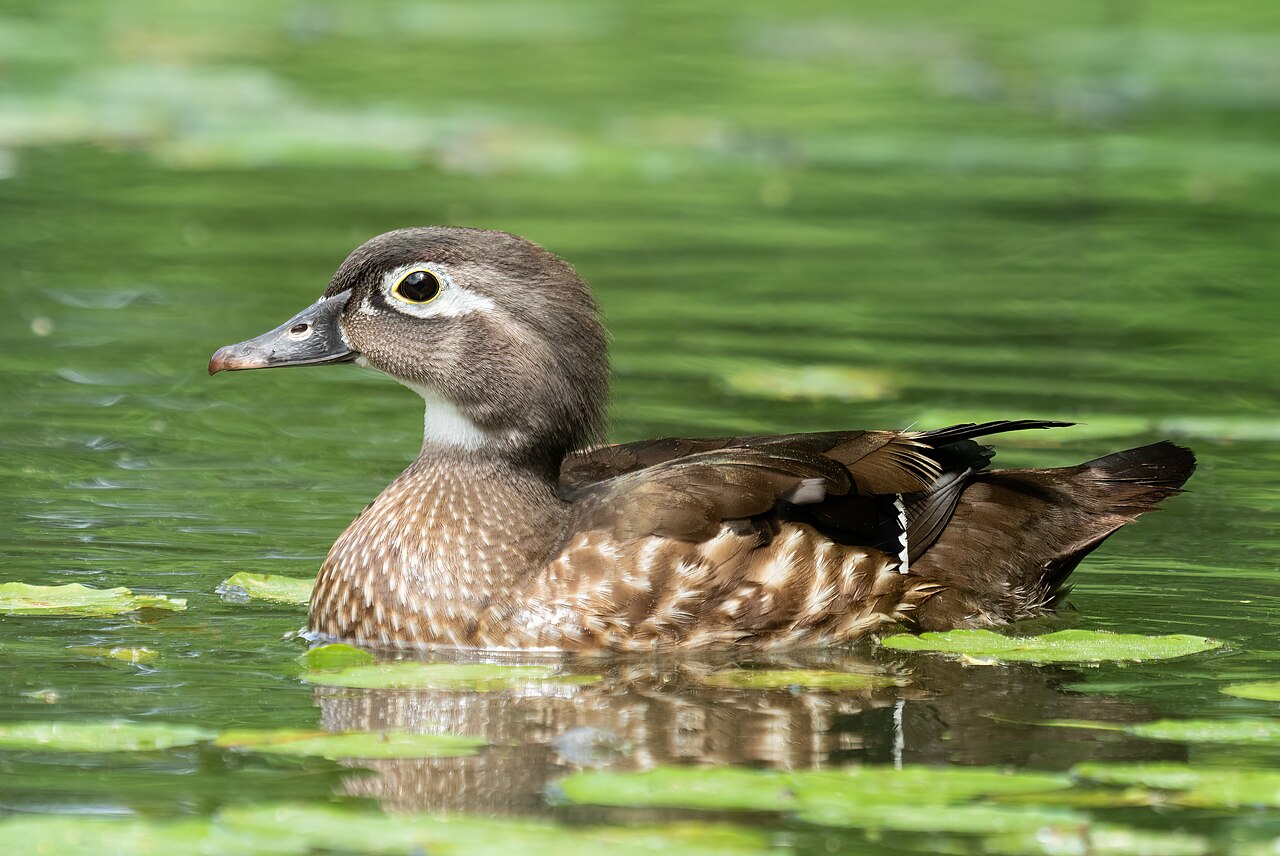
Wood ducks (Aix sponsa) are cavity nesters, which shapes their whole vocabulary: hens have to call ducklings out of a tree hole or a nest box, warn them in dense cover where nobody can see anybody, and keep a brood together in flooded woods. Each call below has a season, a time of day and a trigger, and knowing them turns a glimpse of a flushing duck into a certain identification.
The female wood duck gives a loud, rising “oo-eek, oo-eek” squeal when flushed or in flight, and a sharp “cr-r-ek” alarm. The drake gives a thin, rising “jeeb” whistle. Ducklings peep constantly, and hens call them from the nest with a soft, repeated “kuk, kuk, kuk.”
| Call | Who makes it | Sounds like | When you hear it |
|---|---|---|---|
| Flight squeal | Female | Rising “oo-eek, oo-eek” | Year round, loudest when flushed |
| Drake whistle | Male | Thin, rising “jeeb” or “jweep” | Year round, most in fall and winter |
| Alarm note | Female | Short, hard “cr-r-ek, cr-r-ek” | Any disturbance, especially near broods |
| Courtship notes | Both | Soft whistles and clucks in a group | October through March |
| Nest exit call | Female | Low, repeated “kuk, kuk, kuk” | Dawn, day after hatching |
| Duckling peeps | Young | High, rapid peeping | April through July |
What Do Wood Ducks Sound Like?
As a group, wood ducks whistle and squeal rather than quack. The sounds sit higher in pitch than almost any other North American dabbling duck, and they come in short bursts rather than long strings. If you hear a flat, repeated quack from a wood lot pond, you are hearing a mallard; if you hear a two note rising squeal that stops after four or five repeats, you have wood ducks.
Volume splits the sexes clearly. The hen is loud enough to locate from 300 ft (90 m) away in open timber, and she is the bird that gives away a pair every time. The drake is quiet, and his whistle often only registers when he is within about 100 ft (30 m). Comparing the two side by side is the fastest way in, and the broader catalog of duck sounds makes the contrast with mallards and teal obvious.
The Female Wood Duck Flight Call
This is the signature sound of the species. The hen’s flight call is a rising, squealing “oo-eek, oo-eek,” sometimes written as “wee-eek,” repeated two to six times and climbing in pitch at the end of each note. She gives it as she lifts off, while she climbs through trees, and again in level flight. The effect is piercing and slightly panicked, which is why first time listeners guess hawk before duck.
The call has a practical function in flooded woods: it keeps a pair or a flock together when visibility is a few yards. Hunters and birders both use it as an arrival signal, because the squeal usually comes before the birds appear through the canopy. More on how the sexes differ in both voice and plumage sits in the guide to the female wood duck.
The Male Wood Duck Whistle
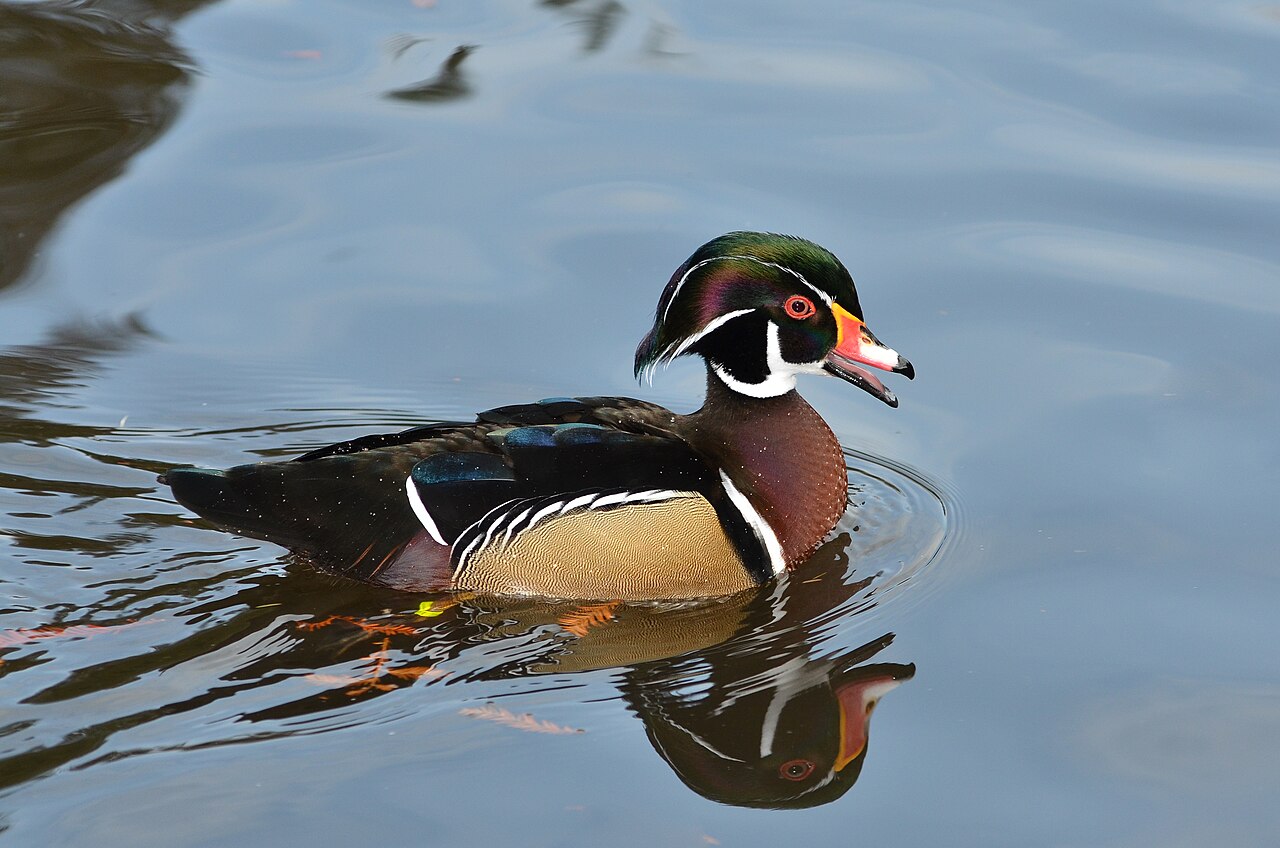
The drake’s call is a thin, upward slurred “jeeb,” also described as “jweep” or a soft rising squeak. It is quiet, breathy and easy to lose under wind or running water. He uses it to stay in contact with the hen, during courtship displays, and when mildly alarmed, in which case the note gets shorter and sharper.
Drakes are most vocal from late fall through late winter, when flocks pair up on wintering water. On a still December morning in a Carolina swamp or an Arkansas bottomland, the overlapping jeebs of a dozen drakes sound like a loose chorus of squeaky hinges. That is a sound worth learning, because it tells you a flock is settled and relaxed rather than leaving.
Wood Duck Alarm Calls
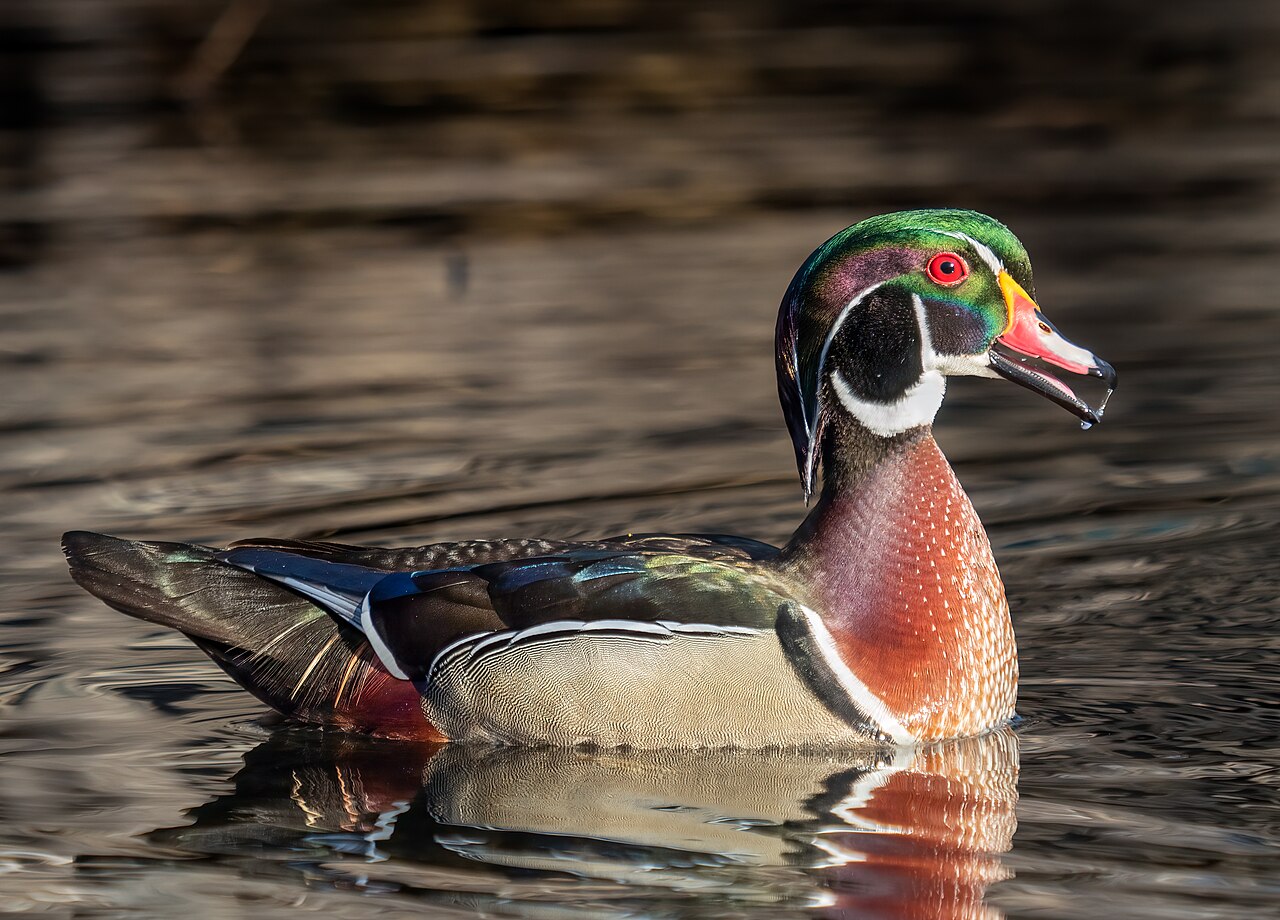
Alarm is coded differently from flight. A disturbed hen gives a hard, clipped “cr-r-ek, cr-r-ek,” lower and rougher than her flight squeal, often while sitting still in cover rather than flying. Drakes drop to a short, flat version of the jeeb. Both calls mean a predator or a person has been detected but the birds have not committed to flushing yet.
Those notes matter most in spring and early summer. A hen with ducklings in dense buttonbush will alarm call repeatedly while the brood freezes and scatters into vegetation. If you hear this, you are too close to a brood, and the right move is to back off 50 ft (15 m) and wait rather than push in for a look.
Courtship Sounds in Fall and Winter
Wood ducks pair earlier than most ducks, with courtship starting in October and running through March. Displaying groups produce a mix of soft drake whistles, short hen clucks and the occasional full squeal, all at low volume, punctuated by splashing as drakes rush and bill dip around a hen.
These are the sounds that get missed because they are quiet and happen on cold, early mornings on ice edges and backwater sloughs. Sit still for ten minutes at the edge of a wooded pond in January and the group chatter becomes obvious. A hen that is actually ready to leave switches to the loud flight squeal, which is the signal the whole group follows.
Baby Wood Duck Sounds
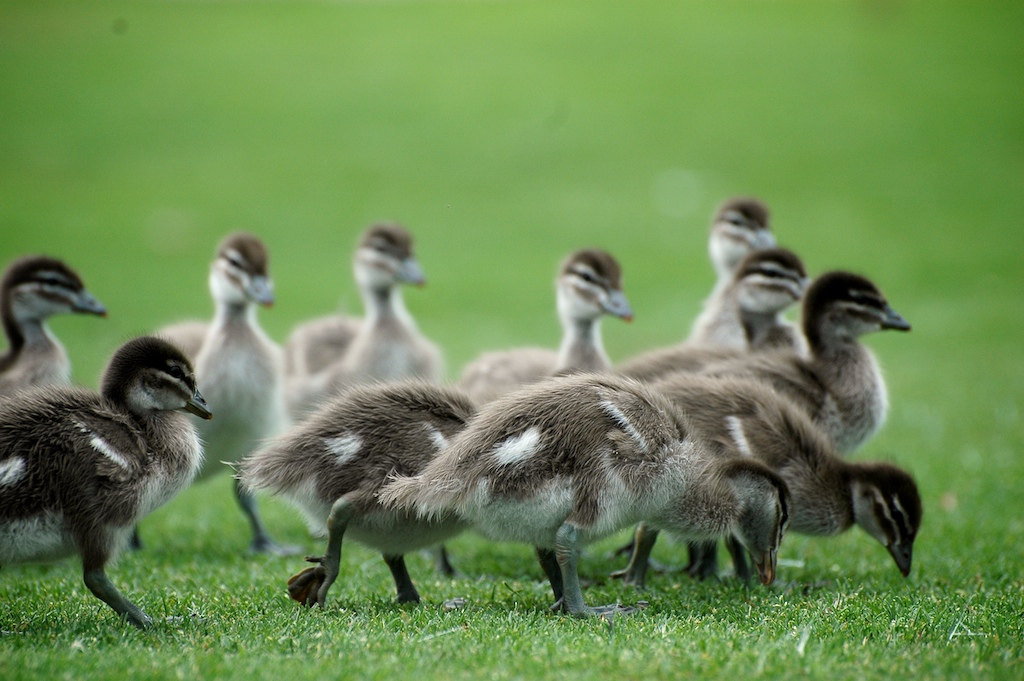
Ducklings peep, constantly and high, from inside the egg onward. Pipping young call from within the shell in the final day of incubation, and the hen answers, which is how the brood synchronizes hatching. Once out, their contact peeps run almost nonstop while swimming and feeding, and a distress peep is faster, louder and sharper.
The peeping is how people find a brood they could not see. In a flooded woodlot the hen stays silent and the ducklings do not, so the sound comes from the water surface while the adult watches from a few yards off. Those peeps also attract predators, which is one reason broods stay in heavy cover during their first two weeks.
The Hen’s Nest Exit Call
The day after hatching, the hen leaves the cavity, lands on the water or the ground below, and gives a low, repeated “kuk, kuk, kuk.” The ducklings climb the cavity wall with their claws and jump, dropping 10 to 50 ft (3 to 15 m) to the ground, cushioned by down and light weight. Falls from that height are survivable and routine.
This happens within an hour or two of sunrise and is over in a few minutes. Hearing a soft, insistent clucking under a nest box at dawn in late April almost always means a brood is coming out right then. Nest box monitors plan visits around it, because approaching during the exit call can push the hen off and strand the brood.
Wood Duck Sounds in Flight
In flight you get two layers. The hen’s squeal is the carrying sound, given on takeoff and repeated in the air. Underneath it, wood duck wings produce a soft, fast rustle rather than the hard mechanical whistle of a goldeneye or the trill of a mourning dove. The flush itself is noisy because wood ducks explode nearly vertically out of cover and hit branches on the way.
Flight calls also shift with the hour. Birds trading between night roost water and feeding areas call most in the first and last half hour of daylight, often while still too high and dark to see. Recordings of these calls are collected by the Cornell Lab, and the wood duck sound page at All About Birds is the reference worth checking against your own ear.
Wood Duck Sounds at Night
Wood ducks are not strongly nocturnal, and they do call at night. Birds moving to and from flooded feeding areas after dark give flight squeals overhead, and a disturbed roost of ducks on a beaver pond will erupt in squeals and splashing when a raccoon or a mink works the shoreline. Both are brief and both stop quickly.
What they are not is a source of steady night noise. If something near water calls all night without pause, check the alternatives first: a bullfrog chorus, wood frogs clucking in early spring, a Virginia rail, or an eastern screech owl trilling from a nest box the ducks also want. Several of the birds that sound like owls are active in the same wet woodlands.
Sounds People Confuse With Wood Ducks
Four mix ups account for most of them. A hooded merganser hen gives a rough, low croak that is nothing like a squeal but comes from the same wooded ponds. A mallard hen quacks flatly and repeatedly. Blue winged teal give short, high peeps in flight that read as duckling noises. And the hen wood duck’s squeal is regularly reported as a hawk, because a red shouldered hawk’s scream has a similar rising edge.
Owls complicate night listening further. A barred owl hunts the same bottomland and makes a wide range of shrieks and caterwauls, some of which sound genuinely duck like at a distance. Raptor calls over water, including the high chatter in the guide to bald eagle sounds, get attributed to ducks for the same reason: the pitch is higher than people expect from a large bird.
How Do You Use a Wood Duck Call?
Wood duck calls are short whistle style calls, and they reward restraint. The standard technique is a sharp, rising “wee-eek, wee-eek” made with a quick puff of air and a slight pitch bend at the end, given in series of two or three with long pauses between. Volume should match the distance: loud for birds passing high, barely audible for birds working the trees above you.
Overcalling is the common mistake, because wood ducks do not keep up long conversations the way mallards do. Hit them once as they pass, then stop and let them look. Spinning wing decoys are a mixed tool here; they pull mallards well and wood ducks often ignore them or flare in tight timber, where a few floating decoys in an opening work better.
Frequently Asked Questions
What is the average lifespan of a wood duck?
Most wood ducks live 3 to 4 years in the wild, with high first year mortality from predators, weather and hunting. Birds that survive their first year do considerably better. The banding record for the species is just over 22 years, which is exceptional rather than typical.
What sounds like a duck at night?
Wood frogs clucking in early spring, bullfrogs, Virginia rails, American bitterns and eastern screech owls all get reported as ducks after dark. Mallard hens also quack at night. Wood ducks themselves do call at night, but in brief bursts tied to flights or a disturbance, not continuously.
What is a wood duck’s favorite food?
Acorns, hands down, especially pin oak and willow oak acorns in flooded timber from fall through winter. They also take beechnuts, hickory nuts, duckweed, wild rice, smartweed seeds and waste corn, and ducklings eat mostly insects and other invertebrates for their first weeks.
What time of day are wood ducks most active?
The first and last hour of daylight. They move from night roost water to feeding areas at dawn, feed in flooded woods and along shaded shorelines, then trade back at dusk. Midday is spent loafing in cover, where they are quiet and easy to walk past.
What are the main predators of wood ducks?
Raccoons are the biggest threat to eggs and nesting hens, which is why nest boxes need predator guards. Mink, rat snakes and gray squirrels also raid cavities. Ducklings are taken by snapping turtles, largemouth bass, bullfrogs, mink and herons, and adults by great horned owls and red tailed hawks.
How many babies does a wood duck typically have?
A normal clutch is 9 to 14 eggs. Wood ducks also dump eggs in each other’s cavities, so boxes placed in plain sight of one another sometimes hold 30 or more eggs, and those overloaded clutches hatch poorly. Hens usually raise one brood a year, two in the southern United States.