Mouse Symbolism: Spiritual Meaning, Omens and What It Means to See One
Seeing a mouse is traditionally read as a message about small things: a detail you have overlooked, a resource you are not using, or a quiet fear that has grown larger than it deserves. Across most traditions the mouse spiritual meaning centers on resourcefulness, humility, scrutiny and survival through attention rather than strength.
Mice carry an unusual double load of meaning. They are the smallest mammals most people ever meet indoors, which makes them symbols of modesty and persistence, and they are also uninvited guests that eat stored food, which makes them omens of waste and encroachment. Which reading applies depends on where you saw the animal and what it was doing, and that is exactly how folk interpretation has always worked.
In symbolic traditions the mouse stands for resourcefulness, humility, close attention to detail and quiet survival. Seeing one is commonly read as a prompt to examine small overlooked matters, guard your resources and stop treating a minor worry as a crisis. Whether it counts as a good or bad omen depends on the setting and the tradition.
What Is the Mouse a Symbol Of?
The core symbolism is scale. A mouse survives in a world built for larger animals by noticing everything, moving in margins and taking only what it needs. Folk readings turn that biology into a lesson about working with what you have instead of waiting for abundance, and about the power of small repeated actions.
Mice also symbolize scrutiny. The animal investigates every inch of its territory with whiskers and nose, and interpreters have long used that image for the person who needs to look closer at a contract, a relationship or a household budget. The same traits read negatively as timidity, nervousness and an inability to see the larger picture.
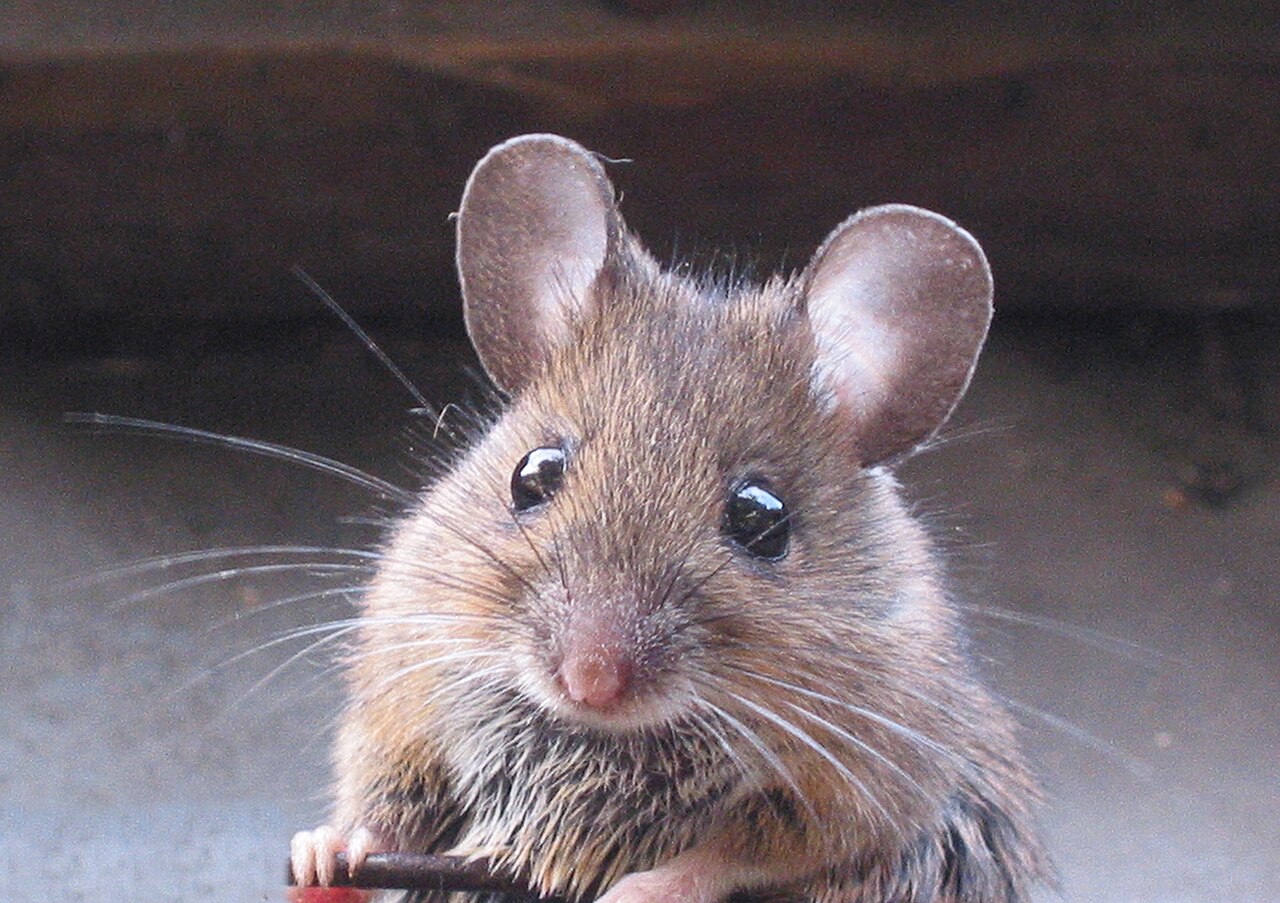
A third strand is fertility and multiplication. House mice (Mus musculus) breed fast, a fact well documented in natural history collections such as the Smithsonian Institution, and that fecundity attached itself to symbols of increase, both the welcome kind and the kind that gets out of hand.
Are Mice a Good Omen or a Bad One?

Both readings exist side by side, and the difference is usually the setting. A mouse seen outdoors, in a field or garden, is more often taken as a neutral or favorable sign of modest growth and sufficiency. A mouse inside the home, especially in the kitchen or near stored food, is the classic warning: something is leaking, whether that is money, energy or trust.
Several European folk traditions treated mice in grain stores as omens of a hard year ahead, which is a straightforward reading of a real agricultural problem. Other traditions reversed it: in some rural beliefs mice choosing your house meant the house was warm and well stocked, and therefore blessed.
The honest answer is that no tradition agrees with the others. Interpreters who promise a single fixed meaning are flattening a very mixed record. What the traditions do share is the instruction to pay attention after the sighting rather than to panic.
Mouse Symbolism in Native American Traditions

Native American nations are culturally distinct and their teachings are not interchangeable, so no single Indigenous mouse meaning exists. In some Plains teachings, including popular retellings of Lakota and Dakota medicine wheel traditions, Mouse is associated with the south and with close, immediate vision: it sees what is directly in front of it with great clarity and nothing beyond.
That teaching is usually told as a balance lesson rather than a compliment or an insult. Mouse knowledge is detailed and trustworthy at close range, and it needs Eagle’s distance to become wisdom. Storytellers use the pairing to explain why a person obsessed with details and a person obsessed with vision both fail alone.
Trickster cycles in several traditions also cast small rodents as survivors who outlast stronger animals by patience. Readers meeting these ideas secondhand should treat them as belonging to specific nations, told in specific contexts, not as a generic spirit guide system. The same caution applies to the symbolism attached to coyotes, which is far more culturally specific than popular sources suggest.
Christian and Biblical Meaning of the Mouse
Biblical treatment of mice is unambiguous and practical: in Leviticus the mouse is listed among the unclean creatures, and in First Samuel the Philistines send golden mice as a guilt offering after a plague struck their cities. The association is with ritual impurity, plague and the destruction of harvests.
Christian folk interpretation carried that forward. Mice in a church, a granary or a chest of linens were read as signs of neglect and of spiritual as well as physical decay, and the moral was usually vigilance over small sins that multiply unnoticed. Medieval sermon collections used the gnawing mouse as a figure for habits that quietly consume what is valuable.
A gentler strand exists in Christian storytelling, where the mouse appears as the humble creature God still provides for, closer to the sparrow of the Gospels. Both readings are held as beliefs within particular communities, not as doctrine, and neither has the weight of formal teaching.
Celtic and European Folk Beliefs About Mice
In Celtic folk belief mice belonged to the hidden world under the floor and inside the walls, and that placement made them messengers from the land and from the dead. Scottish and Irish household lore held that mice leaving a house in numbers predicted a death or a fire there, a belief recorded in several nineteenth century folklore collections.
Weather divination was the other common use. In parts of England and Germany, mice building nests high in barns meant a wet season ahead, and mice moving indoors early meant a hard winter. Those readings are plain animal observation turned into prophecy, and they were often right for reasons that had nothing to do with the supernatural.
Protective charms against mice existed alongside the omens, which tells you how the beliefs were really used: people wanted the message without the mice. Folk tradition filed them with other small uninvited visitors, much as it did the beliefs that gathered around bats in the same houses.
Mouse Meaning in East Asian and Hindu Traditions
In the Chinese zodiac the Rat, a category that includes the mouse in most retellings, is the first of the twelve signs and carries strongly positive meaning: wit, resourcefulness, quick judgment and wealth. Households in several East Asian traditions associated mice in a storehouse with prosperity on the logic that mice gather where there is surplus.
Japanese folk belief linked mice to Daikoku, one of the seven lucky gods, and white mice in particular were considered auspicious messengers of good fortune. In Hindu tradition the mouse or rat is the vahana, the mount of Ganesha, and in that role it represents desire and restless thought brought under control by wisdom.
These are the traditions most responsible for the modern idea that a mouse in the house is lucky. People searching for a Hindu or Islamic reading of a mouse indoors are usually meeting a belief that treats the animal as a vehicle of a deity in one case and as impure in the other, which is a good illustration of why context decides everything.
What It Means to See a Mouse in Your House, Garden or Crossing Your Path
Situation is the variable that interpreters actually use, and the readings are reasonably stable across sources. Indoors points to resources and boundaries; outdoors points to patience and small growth; repeated sightings point to something being ignored. The table below collects the readings that recur most often.
| Situation | Common reading |
|---|---|
| Mouse in the house | Something is draining your resources or trust; check what is unguarded |
| Mouse in the garden | Modest, steady growth; take only what you need |
| Mouse crossing your path | A small decision in front of you matters more than it looks |
| Mouse seen at night | Work on something private or unfinished; fear magnified by darkness |
| Mouse seen repeatedly | A warning already given and not acted on |
| Dead mouse found | An end to a small fear or a drain; closure rather than loss |
| Mouse in a dream | Anxiety about scarcity or exposure, read through the dream setting |
A mouse crossing your path is the sighting with the most consistent interpretation: in folk reading it marks a threshold moment, a choice that looks too small to deserve thought. Night sightings get the darker gloss because that is when mice are naturally most active, so the omen is largely an artifact of mouse behavior.
Finding a Dead Mouse: What People Read Into It
A dead mouse is read as a completed cycle more often than as a bad sign. In most folk interpretations it marks the end of a nagging worry, the close of a small chapter or the natural conclusion of something that was already failing. Traditions that treat mice as unclean read it instead as purification of the household.
Finding one on a doorstep has its own thread. Some European beliefs treated it as a gift returned, often with cats as the intermediary, and read it as protection rather than threat. Others saw any dead animal at a threshold as a warning to look at the health of the home.
Practically speaking, a dead mouse indoors means there are or were live ones, and it needs the same gloved cleanup as any rodent waste. Belief and hygiene operate on separate tracks here, and only one of them affects your health. The readings attached to dead blackbirds follow the same closure logic in bird traditions.
Mouse as Spirit Animal, Totem and Power Animal
In contemporary spirit animal practice, which draws loosely on many sources and is not itself a traditional system, the mouse spirit animal is assigned to people who notice details others miss and who build security in small increments. The stated shadow side is anxiety, hoarding and losing the larger goal in a pile of small tasks.
As a totem the mouse is described as teaching preparation: storing what you will need, knowing every exit, and trusting modest means. As a power animal it is called on for close work, for situations that require patience and invisibility rather than confrontation. These are modern formulations, offered as practice rather than as inherited teaching.
Readers who find the mouse too passive usually land on a louder messenger instead. The symbolism gathered around the cardinal and the bear runs almost opposite to this one, and comparing them shows how much of any animal reading is just projection of the animal’s visible habits.
Frequently Asked Questions
Is it lucky to see a mouse?
It depends entirely on the tradition. East Asian and Hindu readings treat mice as auspicious, tied to prosperity and to Ganesha’s mount, while biblical and much European folk tradition treats them as unclean omens of waste. Outdoor sightings are read more favorably than indoor ones in nearly every source.
What does a mouse symbolize spiritually?
Spiritually the mouse symbolizes humility, resourcefulness and close attention to detail, with a secondary meaning of fertility and multiplication. Its shadow meaning is timidity and anxiety over scarcity. Most interpretations read a sighting as an instruction to examine something small you have been avoiding.
What does it mean when you see mice repeatedly?
Repeated sightings are read as a message that was already delivered and ignored, usually about resources, boundaries or a neglected detail. Biologically, repeated daytime sightings indicate an established population rather than a wanderer, so the symbolic and practical readings point the same direction: investigate now.
What to do if I see one mouse in my house?
Treat it as evidence rather than an isolated event. Find and seal entry points larger than a quarter inch, move food into sealed containers, set traps along walls where droppings appear, and clean waste with gloves and a damp method rather than sweeping. One visible mouse rarely means only one mouse.
How many mice are in a house if you see one?
Pest control estimates commonly put the hidden population at five to a dozen when one mouse is seen in daylight, since mice are nocturnal and avoid open space. A single sighting at night in late fall can genuinely mean one animal that just moved in, so timing matters.
What smells do mice hate?
Peppermint oil, clove, ammonia and used cat litter are the deterrents most often reported, and mice do avoid strong volatile odors at first. None of them work as a standalone solution, because mice habituate within days when food and shelter are on the other side of the smell. Exclusion works, scent alone does not.
If the mouse appeared while you were asleep rather than in your kitchen, the reading shifts, and the setting of the dream carries most of the meaning. Our guide to mouse dream meaning covers the color, context and biblical variations in detail.