Bird That Sounds Like a Machine Gun: It Is the Shoebill Stork
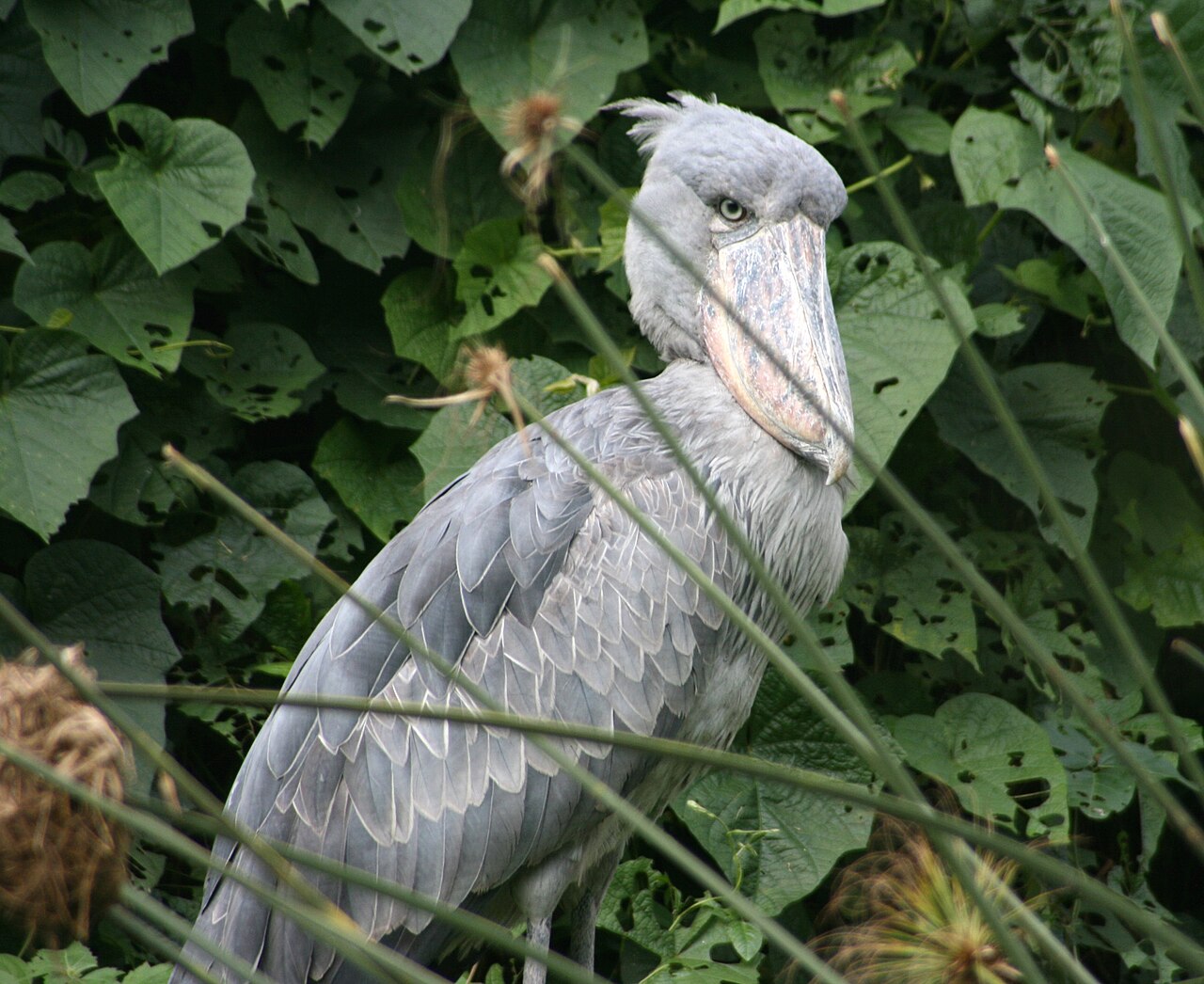
The bird that sounds like a machine gun is the shoebill stork (Balaeniceps rex), a five foot wading bird from central African swamps that fires off a rapid burst of bill claps when it greets another shoebill. The sound is not a voice. It is the upper and lower bill slapping together so fast that the clatter runs together into something close to automatic gunfire, which is why clips of it keep going viral on TikTok and Facebook.
If you heard a machine gun sound in your own yard in the United States, it was almost certainly not a shoebill. The same impression comes from woodpecker drumming on metal, the rattle of a belted kingfisher and the kek series of a clapper rail. This guide covers the shoebill’s clatter in detail, then the American birds most often mistaken for it, with the time of day and season that tells them apart.
The shoebill stork produces the machine gun sound. It claps its massive bill shut in bursts of roughly 8 to 15 strikes per second as a greeting and nest display, with no vocal cord involved. In the United States, a similar machine gun sound usually comes from woodpecker drumming or a belted kingfisher rattle.
Which Bird Sounds Like a Machine Gun?
The shoebill, also called the whalehead or shoe-billed stork, is the answer in every viral clip. An adult stands 43 to 60 in (110 to 152 cm) tall, carries a bill 9 to 10 in (23 to 25 cm) long and up to 4 in (10 cm) wide, and uses that bill as a percussion instrument. Because the bill is heavy and hard, each clap is a sharp crack, and a burst of them has the mechanical evenness people associate with a weapon rather than an animal.
Adult shoebills are nearly silent otherwise. They do not sing, they rarely call, and the clatter carries the social load that song carries in most birds. Keepers describe the display as a greeting, and it is often paired with a slow bow. The table below gives the quick comparison with the American birds that get reported for the same sound.
| Bird | What it sounds like | Where and when you hear it |
|---|---|---|
| Shoebill stork | Fast, hard bill claps in bursts, like automatic fire | African swamps and zoos, at greetings and the nest |
| Pileated woodpecker | Deep, rolling drum that trails off at the end | US woodlands, dawn, February through May |
| Northern flicker | Even, metallic machine gun burst on gutters and chimney caps | US yards, early morning in spring |
| Belted kingfisher | Dry wooden rattle, usually in flight over water | Creeks, ponds and shorelines, year round |
| Clapper rail | Harsh kek kek kek series that speeds up and slows down | Atlantic and Gulf salt marshes, dusk and night |
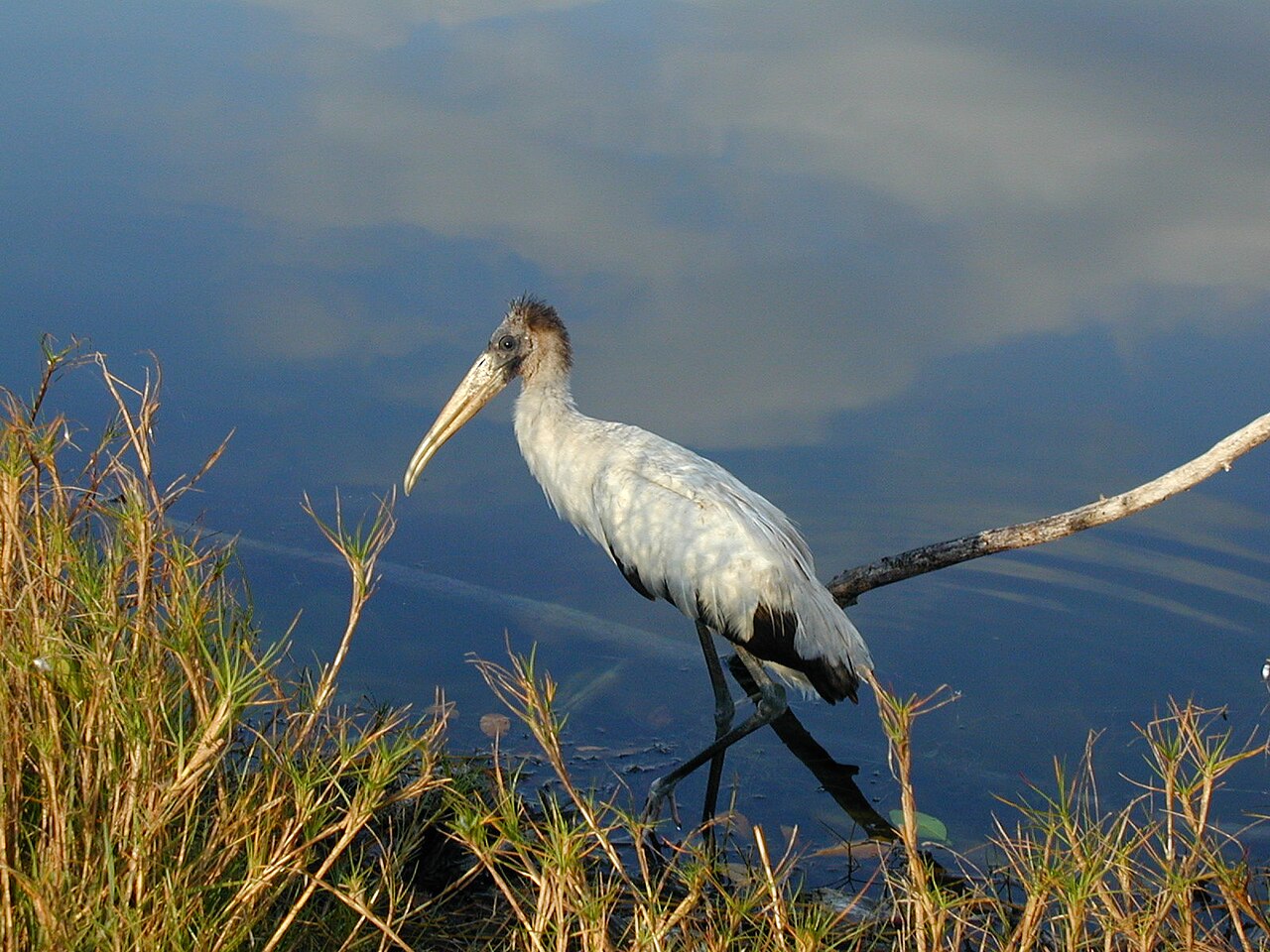
| Wood stork | Slower, hollow bill clattering at the colony | Florida and Gulf Coast swamps, nesting season |
How the Shoebill Makes Its Machine Gun Sound
The mechanism is purely mechanical. The bird opens the bill a few inches and snaps it shut repeatedly, driving the strike with neck and jaw muscles rather than with air. Each contact of the hard keratin surfaces produces a crack, and because the bird can repeat the strike many times per second, the individual cracks blur into a single rattling burst that lasts one to several seconds.
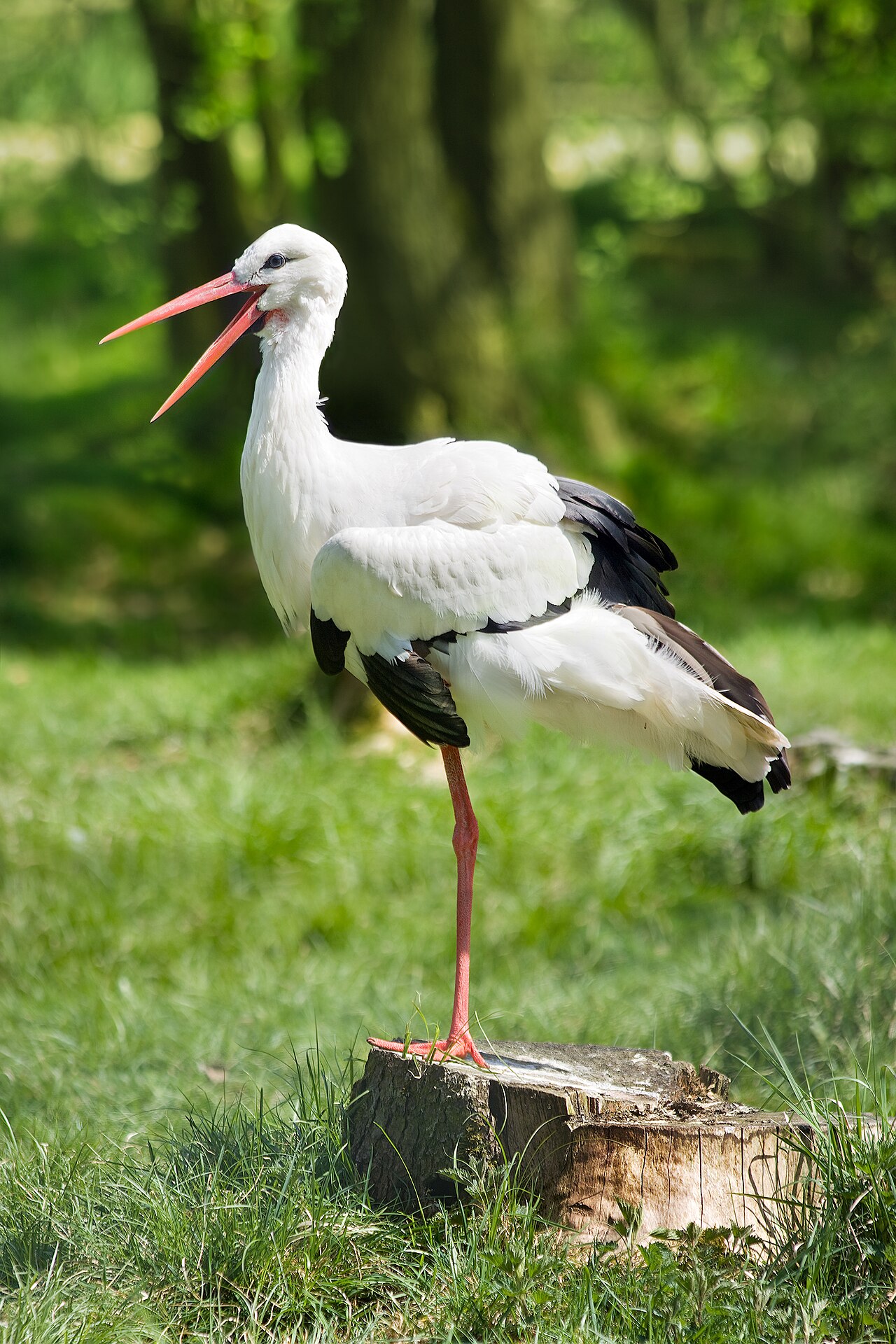
Shoebills often raise and lower the head while clattering, which changes how the sound is thrown and makes it seem to swing toward the listener. Bill clattering is widespread in storks, but the shoebill’s bill is far larger and blunter than a white stork’s, so the pitch is lower and the attack is harder. That size difference is most of the reason this species and not another gets the machine gun comparison.
What Bird Sounds Like an AK-47?
Same bird, different comparison. Clips titled “bird that sounds like an AK-47” are shoebill greeting displays recorded in zoos, where the enclosure walls add a slap of reverb that tightens the burst even further. A rifle comparison fits a slower burst and a machine gun comparison fits a faster one, and the shoebill produces both depending on how excited it is.
No bird anywhere imitates a firearm deliberately. The resemblance is coincidence of physics: a hard object struck in a rapid, even series sounds like any other hard object struck in a rapid, even series. Birds that genuinely copy human sounds, like mockingbirds and starlings, use the voice instead, and that is a different story from the one in these clips.
The Greeting Display: When the Clatter Happens
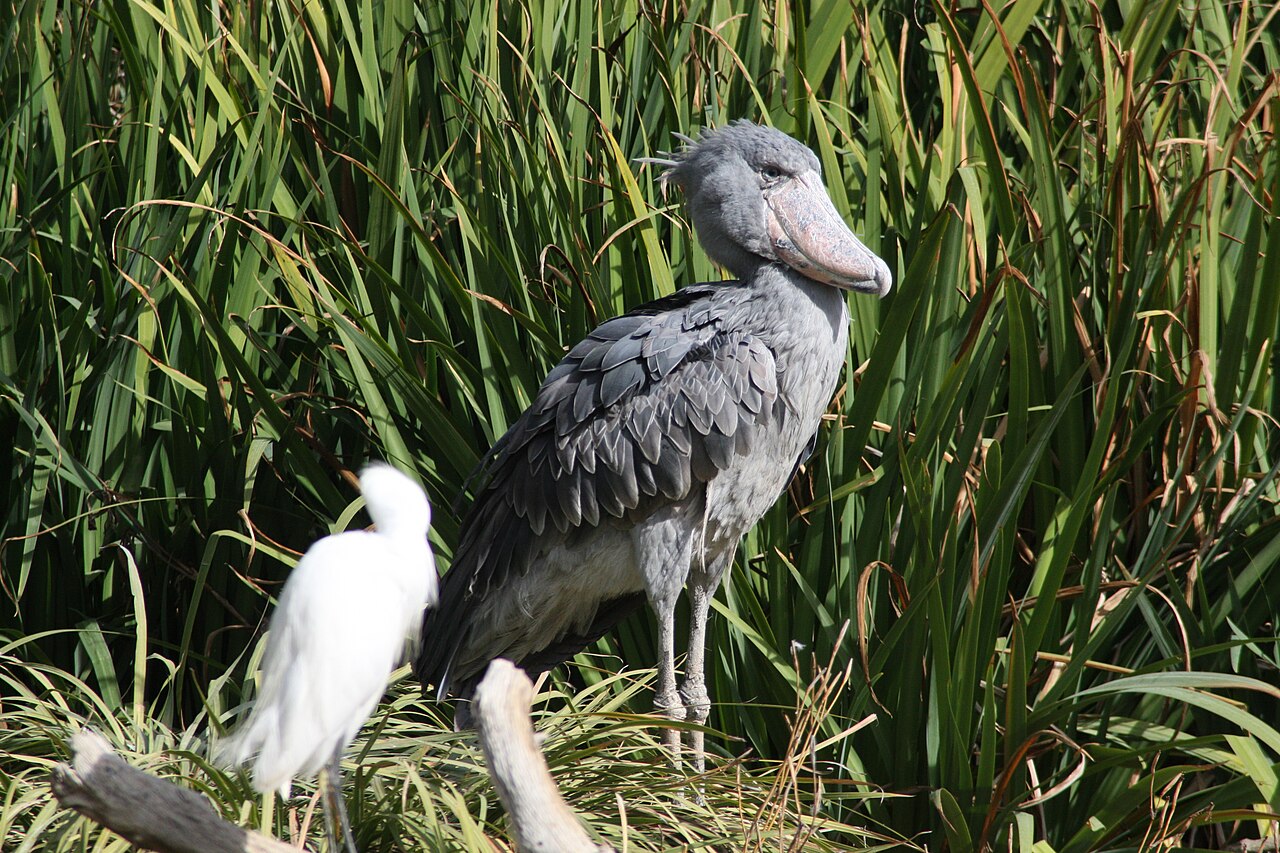
Shoebills clatter most around the nest and when one adult returns to a partner or a chick. The display functions as identification and bonding, and it is used by both sexes. In the wild, nesting is tied to the dry season in each region, so the sound peaks when water levels drop and the birds concentrate on papyrus swamps.
In captivity the clatter has become a greeting aimed at keepers as well, which is why so much footage comes from zoos rather than the field. Birds will bow, clatter, and then go back to standing motionless for long stretches. That stillness between bursts is what makes the sound so startling on video, much like the sudden blast of a bald eagle call in an otherwise quiet valley.
Shoebill Chick Calls: Hiccups and Begging
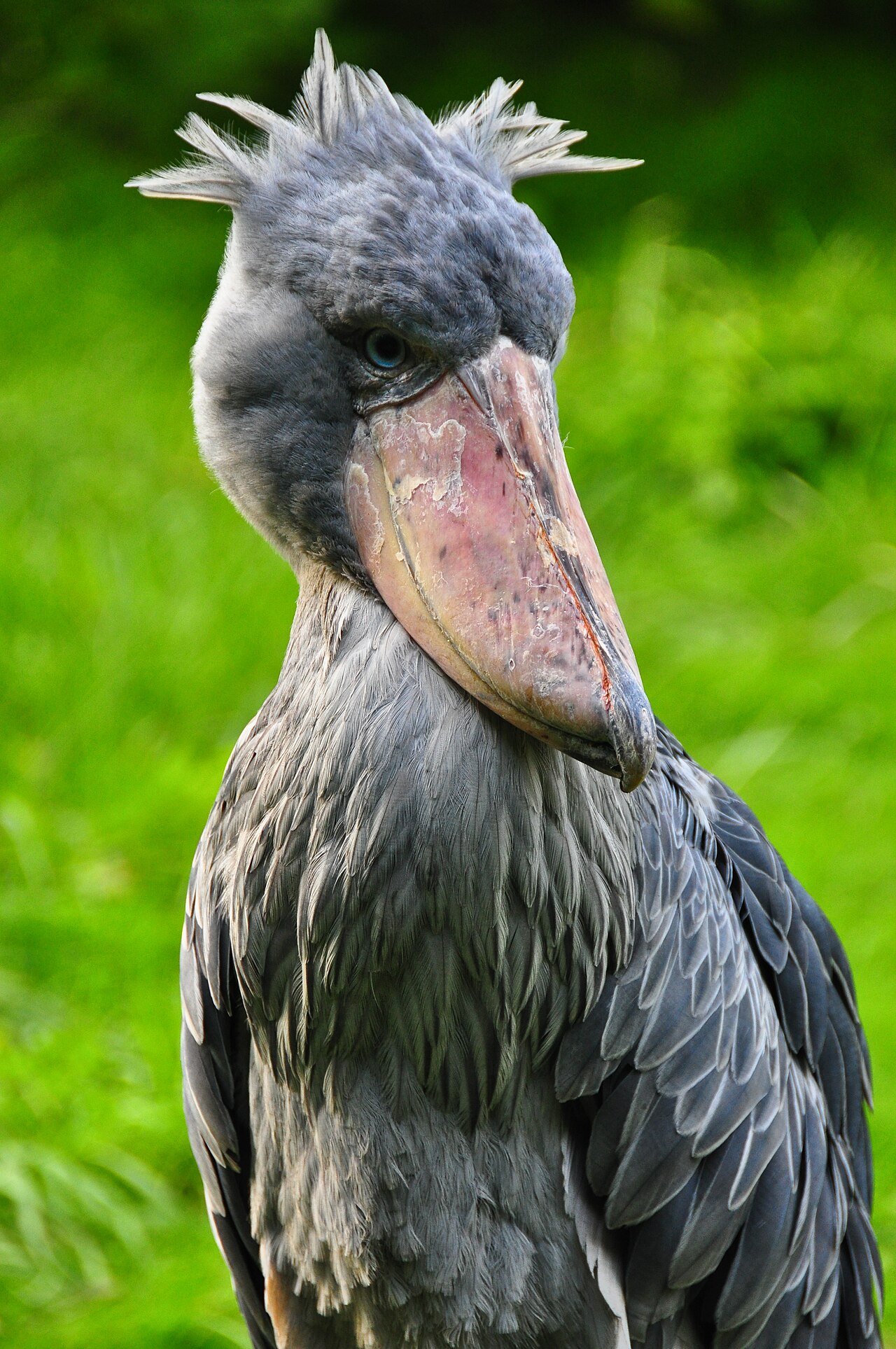
Young shoebills are not silent. Chicks produce a hiccup-like call while begging, described by observers as a soft, wet click or a small squeaky gasp, and they also clatter with their smaller bills well before fledging. The begging sound carries only a short distance and is nothing like the adult burst.
Chicks also make a repeated, low whining note when hot, and parents respond by carrying water in the bill and pouring it over them. Clattering in a juvenile is practice behavior and grows harder and faster as the bill hardens. By the time a young bird is independent, the clatter has reached adult speed.
Where Do Shoebill Storks Live?
Shoebills live in freshwater swamps and seasonally flooded papyrus marshes in central and eastern Africa, with the main populations in South Sudan, Uganda, Zambia, the Democratic Republic of the Congo, Tanzania and Rwanda. Uganda’s Mabamba Swamp and Zambia’s Bangweulu Wetlands are the two places where birders most reliably see one. They need shallow, poorly oxygenated water, because that forces lungfish to the surface where the bird can strike them.
Is there a shoebill in the USA? Not in the wild, and there never has been. A small number live in accredited American zoos, the roster changes over time, and any zoo visit planned around one is worth confirming by phone first. How many shoebills are there in the USA? Fewer than a dozen, which is why most Americans only ever hear the sound through a phone speaker.
Machine Gun Sounds in US Yards: Woodpecker Drumming
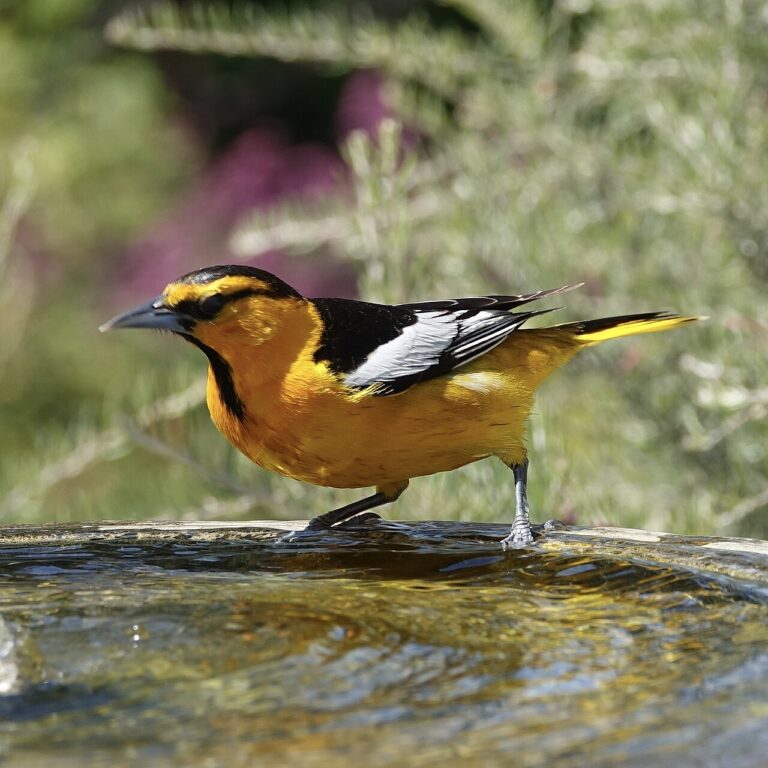
The single most common source of a backyard machine gun sound is a woodpecker drumming on metal. Northern flickers (Colaptes auratus) and downy woodpeckers pick gutters, chimney caps, flashing and satellite dishes on purpose, because metal carries farther than wood and the display is about volume, not excavation. Pileated woodpeckers (Dryocopus pileatus) drum on hollow trunks and produce a deeper roll that slows at the end.
Drumming is a spring territorial signal, concentrated from February into May and heaviest in the first two hours after sunrise. It is not feeding and not nest building, and a bird hammering a gutter at 6 a.m. is advertising, not damaging the house. If the same bird is drilling into siding rather than drumming on metal, that is a different problem, and the approaches in our guide to bird deterrent sound apply.
The Belted Kingfisher Rattle
A belted kingfisher (Megaceryle alcyon) announces itself with a dry, hard rattle that most people compare to a wooden noisemaker and some compare to a short burst of gunfire. It is almost always given in flight, low over a creek, pond or shoreline, and it moves steadily from one end of the water to the other.
Direction is the giveaway. Woodpecker drumming comes from a fixed point, while a kingfisher rattle travels. The bird is crested, blue gray above, roughly 11 to 14 in (28 to 35 cm) long, and it perches on bare branches and wires over water between flights. Anyone learning water bird voices will also want bullfrog sound in the ear, because frogs fill the same soundscape.
Clapper Rails and Marsh Birds
In Atlantic and Gulf Coast salt marshes, the clapper rail (Rallus crepitans) delivers a harsh kek kek kek series that accelerates, peaks and falls away. The name says it: clapper. The series can run five to ten seconds, far longer than any woodpecker drum, and it usually comes at dusk, at night or on a rising tide, from inside cordgrass where the bird stays hidden.
Virginia rails and soras produce related clattering and grunting series in freshwater marshes. One bird often sets off neighbors, so a single call becomes a chorus from several directions at once. Night marsh sounds are easy to misassign, which is also why hikers regularly credit an owl with sounds it never made; our guide to birds that sound like owls covers those mixups.
Other Storks That Clatter
Bill clattering is standard stork behavior and the shoebill is only the loudest version. The wood stork (Mycteria americana), the one native stork of the United States, clatters at nesting colonies in Florida and along the Gulf Coast, producing a hollower and slower sound than a shoebill because the bill is thinner. White storks (Ciconia ciconia) in Europe clatter as their main adult display, standing on the nest with the head thrown back.
In all three species the clatter replaces song. Adult storks have weak voices, so the bill does the work of a territorial and pair bonding signal. Hearing it at a Florida rookery is the closest an American birder gets to the shoebill sound without boarding a plane.
How to Tell These Sounds Apart
Three questions settle nearly every case. Did the sound come from one fixed spot or move across the sky? Fixed means woodpecker, moving means kingfisher. Did it stop after about a second or run on for several? Short means drumming, long means rail. Was it dawn in spring, or dusk in a coastal marsh? The first favors woodpeckers, the second favors rails.
Habitat finishes the job. Metal on a house points to a flicker, open water points to a kingfisher, cordgrass points to a clapper rail, and a phone screen points to a shoebill. Once you have those four filters, the machine gun mystery resolves quickly, the same way that separating barred owl sound from a neighbor’s call does.
Related reading: what orange sounds like a parrot.
Frequently Asked Questions
How rare is the shoebill bird?
The IUCN lists the shoebill as Vulnerable, with an estimated 5,000 to 8,000 mature individuals left and a declining trend. Habitat drainage, disturbance at nests and capture for the bird trade are the main pressures. It is not among the rarest birds on earth, but it is scarce and tied to a shrinking habitat.
What bird sounds like a fire alarm chirp?
Most reports turn out to be an actual smoke detector with a low battery, so check that first. Among birds, the Northern Cardinal’s sharp metallic chip is the usual culprit, and tufted titmice and house sparrows produce similar single notes. A true chirp every 30 to 60 seconds indoors is almost always a device.
How big is a shoebill stork?
Adults stand 43 to 60 in (110 to 152 cm) tall, weigh roughly 11 to 15 lb (5 to 7 kg) and have a wingspan around 90 to 100 in (230 to 255 cm). The bill alone is 9 to 10 in (23 to 25 cm) long. Standing next to a person, a shoebill reaches about chest height.
Is the shoebill friendly to humans, and has one ever attacked a person?
Shoebills are calm and famously still around people, and keepers report birds that bow in greeting. There are no documented accounts of a shoebill seriously injuring a person. That said, the bill has a hooked tip built to kill lungfish and small crocodiles, so zoo staff work with it at a respectful distance.
What is the most terrifying bird on the planet?
By injury record it is the southern cassowary, a flightless Australasian bird with a dagger-like inner claw that has killed people. By appearance and sound, many people pick the shoebill, because of the unblinking stare and the gunfire clatter. One is genuinely dangerous, the other mostly looks it.
Do shoebills make any sound besides clattering?
Rarely. Adults can produce a low moo-like note and a whining call, and chicks beg with a hiccup-like sound, but the species is effectively silent between displays. That silence is why the clatter lands so hard. A bird that stands motionless for twenty minutes then fires off a burst gets attention that a constant singer never would, much like the contrast in blue jay sounds.