Alligator Sounds: 6 Calls, What Each Means and When You Hear Them
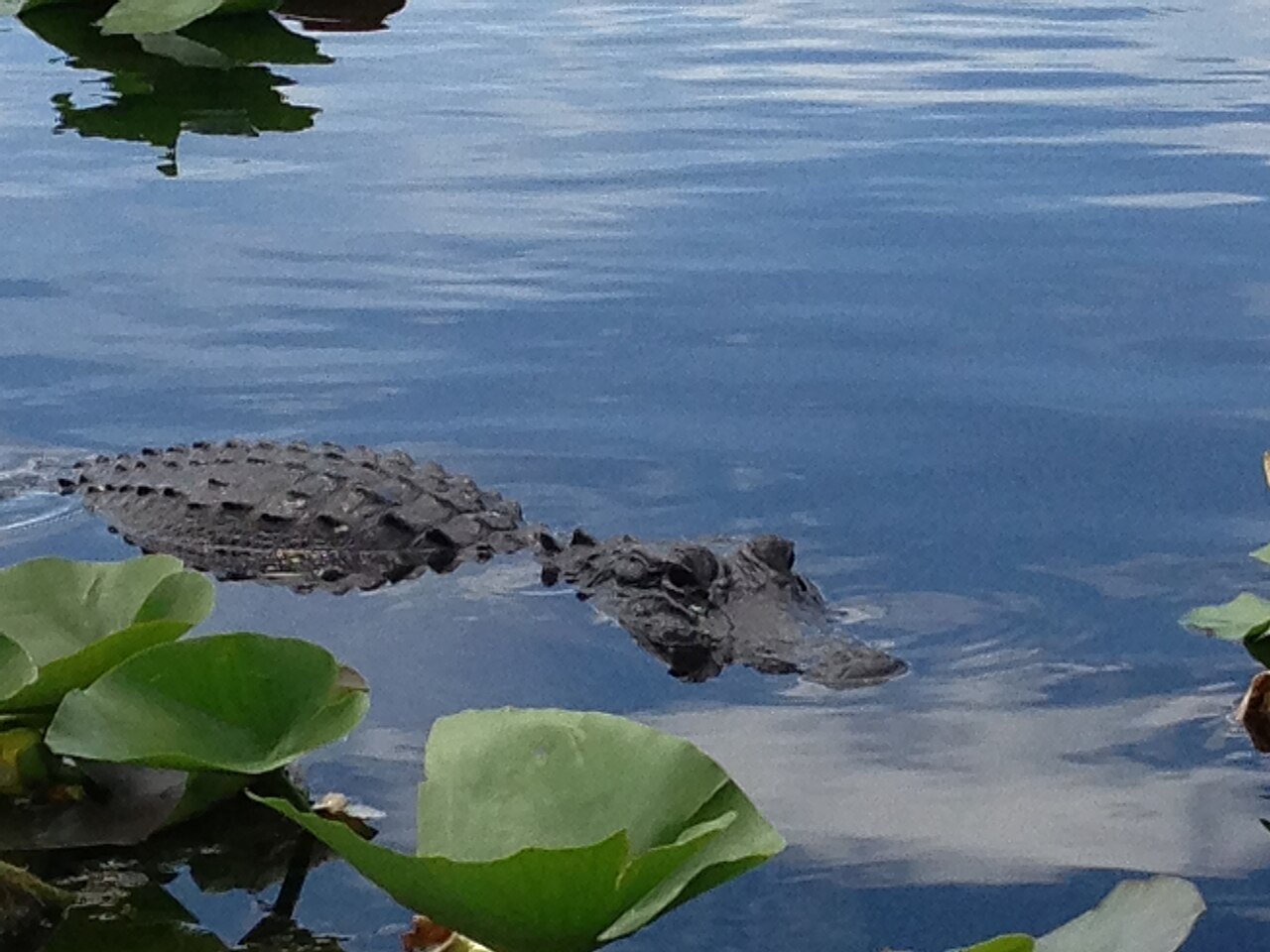
An American alligator (Alligator mississippiensis) makes six main sounds: a deep bellow, a hiss, a cough or growl, a headslap, a juvenile distress yelp, and the soft grunt a hatchling uses to call its mother. The bellow is the one people mean when they say an alligator roared, and it carries more than a quarter mile across open water on a still spring morning.
Knowing which sound you are hearing tells you more than the fact that a gator is nearby. A bellow in April is a male advertising for a mate. A hiss ten feet from your boat is a warning that you are already too close. A chorus of high chirps in a marsh in August means a nest hatched and the female is somewhere within a few yards of you.
Alligators bellow, hiss, growl, headslap, and chirp. Males bellow in spring to attract mates and defend territory, a low rumbling roar audible up to half a mile away. Hissing is a close range warning. Hatchlings make high pitched yelps and grunts that bring the female to them within seconds.
| Sound | What it sounds like | Who makes it | When you hear it | What it means |
|---|---|---|---|---|
| Bellow | Low rumbling roar, like distant thunder | Males mostly, females quieter | April to June, dawn and dusk | Courtship and territory |
| Hiss | Long sharp air release, like a punctured tire | All ages | Year round, close range | Warning, back away |
| Cough or growl | Short guttural bark | Adults | Year round | Mild threat or contact call |
| Headslap | Sharp wooden clap on water | Adult males | Breeding season | Display of size and presence |
| Hatchling grunt | High pitched umph umph, like a squeaky toy | Young under 2 ft | August to September | Calling the mother |
| Distress yelp | Rapid loud chirping | Juveniles | Any time they are grabbed | Emergency, female responds fast |
What Noises Do Alligators Make?
Alligators are the most vocal of all crocodilians, and they use sound at every stage of life. Unlike frogs or songbirds, they have no vocal cords. The sound is produced by forcing air through the larynx and resonating it in the throat and body cavity, which is why the bellow feels as much like a vibration as a noise.
The six sounds above cover nearly everything you will hear in the wild. Researchers also record subaudible infrasound, pulses too low for human ears that travel through water rather than air. You notice those as a shimmer of droplets dancing on the alligator’s back, not as a sound.
Volume varies with body size. A 12 ft bull produces a bellow in the range of 90 decibels at close distance, roughly a chainsaw at arm’s length. A 4 ft juvenile makes a thinner version that is easy to mistake for a large bullfrog, which is exactly the confusion described in our guide to the deep call of the American bullfrog.
Do Alligators Make a Roar?
Yes, though biologists call it a bellow rather than a roar. It is not a cat-like roar with a rising scream. It is a rolling, chesty rumble that starts low, holds for 1 to 2 seconds, and repeats in bouts of five to ten calls separated by a few seconds of silence.
The bellow travels. On a calm morning over open marsh, a large male can be heard at 0.5 mi (800 m). Through dense sawgrass it carries far less, perhaps 200 yd. Water transmits the low frequency component better than air does, which is why alligators bellow with the head and tail raised and the midsection pressed down.
The Bellow: Spring Courtship and Territory
Bellowing peaks in April and May across the Gulf states and runs into June in the Carolinas. Males bellow to advertise body size to females and to warn rival males off a stretch of water. Because the frequency of the call scales with body length, a female can judge a male’s size without seeing him.
Females bellow too, at a higher pitch and with shorter bouts. Their calls are easy to miss in a chorus dominated by bulls. Peak bellowing happens in the first two hours after sunrise, with a smaller burst near dusk, and drops off almost entirely at midday heat.
The Hiss: An Alligator’s Warning Sound

A hiss is the single sound that should change your behavior immediately. It is produced by a fast exhale through an open mouth and sounds like air escaping a tire, lasting 1 to 3 seconds. It carries only 30 to 50 ft, which tells you something important: if you can hear it, you are inside the animal’s reaction distance.
Alligators hiss when cornered, when a nesting female detects you near her mound, and when a basking animal is approached on land where it cannot slip into water. The correct response is to back away in a straight line, not to freeze and not to photograph it. Give 60 ft of distance and the hissing stops.
Growls, Coughs and Headslaps

Between the bellow and the hiss sits a set of short guttural sounds. A cough or low growl is a mild threat or a contact call between animals sharing a bank. It is abrupt, maybe half a second, and often goes unrecognized because people expect something dramatic.
The headslap is not a vocalization at all, but it functions as one. The alligator holds its jaws slightly open at the surface, then snaps them shut against the water and slaps the head down, producing a flat crack like a plank hitting a pond. It is a male display during breeding season, and it is often followed by a bellow from the same animal.
What Is the Sound of a Baby Alligator?
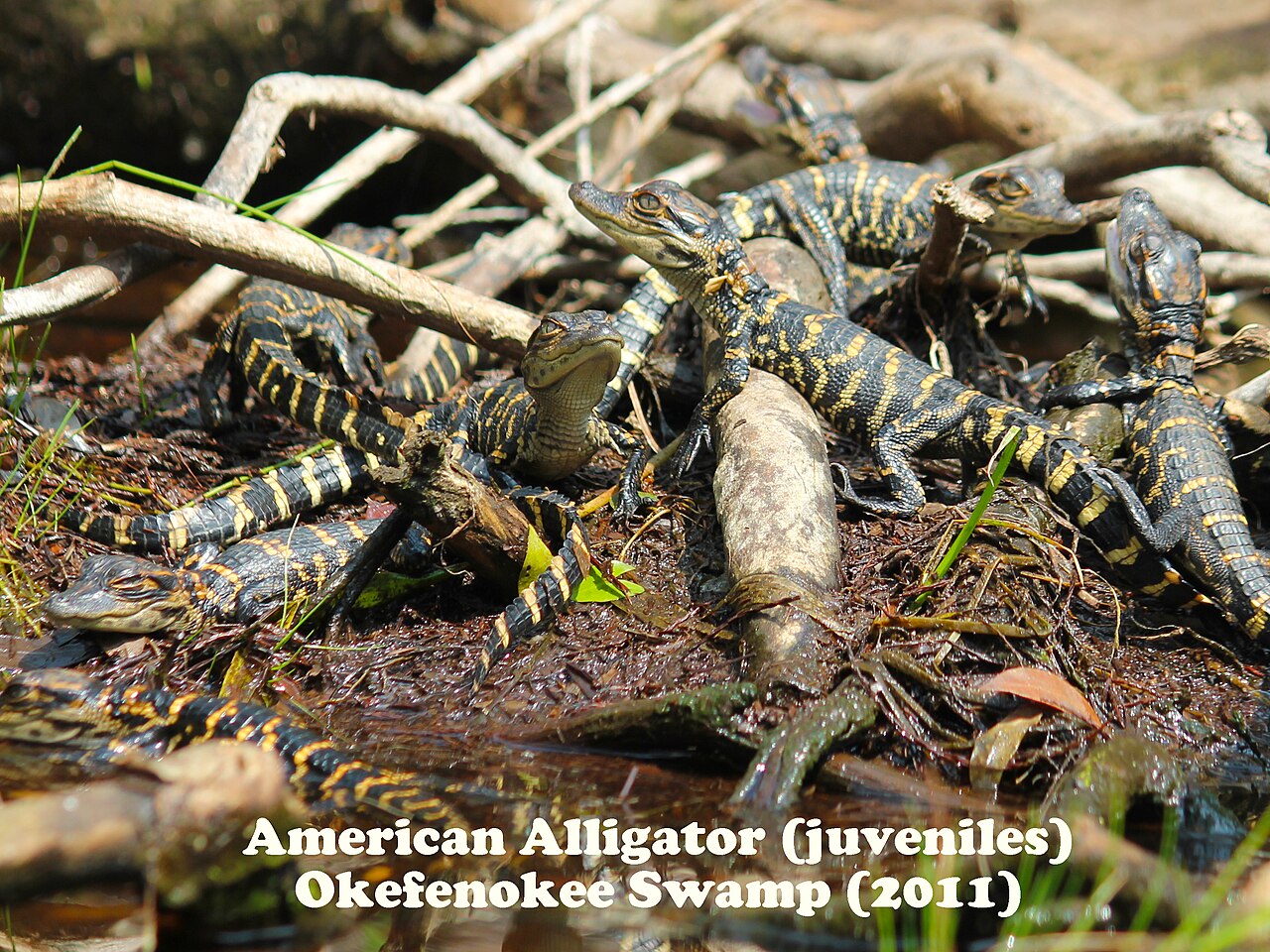
A baby alligator makes a high pitched umph umph umph, repeated quickly, often described as a squeaky toy or a small dog’s chew toy. Hatchlings begin calling before they leave the egg. The chirping from inside the nest mound is what tells the female to dig the hatchlings out, sometimes 60 of them at once.
These calls continue for the first two years of life. Juveniles stay in a pod near the female and use grunts to keep contact in thick vegetation. A distress yelp, which is louder, faster and sharper, brings her at speed from up to 100 ft away, and she will not hesitate to close that distance.
That reaction is the single most important safety fact about baby alligator sounds. Chirping in August or September in Florida, Louisiana or coastal Texas means a pod of hatchlings and a defensive female. Leave the area rather than searching for the source.
Alligator Sounds at Night: What You Hear After Dark
Alligators are active at night and most of their nocturnal noise is movement rather than voice: a heavy splash as a 10 ft animal enters the water, a slow slide through reeds, the dull knock of a tail against a dock piling. Bellowing does occur after dark during the peak of the season, but it is far less common than the dawn chorus.
What people most often report as a nighttime alligator is something else. Bullfrogs, barred owls and bobcats all produce low or startling calls over water at night. The scream people attribute to a gator is almost always a bobcat, described in detail in our piece on the screams and caterwauls bobcats make, or the rising call covered in the eight calls of the barred owl.
If you hear sharp rapid clicking from a roofline or attic rather than from water, you are listening to a mammal or a bird, not a reptile. Alligators do not climb into structures, and the sounds in the chirps and clicks bats make in attics are a far better match.
Alligator Sounds by Season
Sound follows temperature. From November to February, alligators in most of the range are in brumation and effectively silent, surfacing to breathe at a hole in the ice in Carolina marshes without making a sound. March brings the first basking and the occasional hiss.
April through June is the loud season: bellowing choruses at dawn, headslaps through the day, bubbling displays in shallow water. July quiets down as females settle onto nest mounds. August and September belong to the hatchlings, with chirping across the marsh and defensive hissing from females.
Sounds People Mistake for Alligators
Four sounds account for most false alarms. A chorus of bullfrogs at dusk produces a low continuous drone that resembles distant bellowing, but it never comes in separated bouts. A pig frog, common in the same Florida marshes, grunts in a way that is close enough to fool experienced birders.
Cattle lowing across a field at 0.5 mi sounds remarkably like a bellow, and in cattle country near wetlands this is the single most common misidentification. The fourth is mechanical: a distant diesel engine or a generator can produce the same low pulsing rumble. Mechanical sounds stay perfectly even, while a bellow chorus builds, overlaps and fades.
Among birds, the deep sounds that confuse people tend to come from bitterns and herons rather than raptors. The thin whistle of an eagle surprises most people for the opposite reason, as covered in what a bald eagle actually sounds like.
How to Tell if an Alligator Is Near
Sound is one of four signals, and by itself it is the least reliable. Use it with the others. A hiss means an animal within 50 ft. A headslap means an adult male at the surface, usually visible if you scan for a wake. Hatchling chirps mean a nest and a female within about 100 ft.
The other three signals are visual. Look for a track with a tail drag down the center on a muddy bank, for a gator hole or flattened trail through grass, and for two eyes reflecting red in a flashlight beam held at eye level. Eyeshine works to 200 ft on calm water and is the fastest way to check a pond at night.
Alligator Sounds Near Your Home or Yard
Alligators do not get into attics, walls or crawl spaces, so a noise from the structure of your house is never a gator, no matter what it sounds like. The real residential encounter happens in retention ponds, canals, swimming pools and under parked cars, and it comes with a hiss or a heavy splash rather than a bellow.
In spring, bellowing from a neighborhood pond is normal across the Gulf and South Atlantic states and is not grounds for removal on its own. Call your state wildlife agency’s nuisance alligator line if an animal over 4 ft is in a yard, a pool or a garage, if it approaches people, or if it blocks a walkway.
Never feed an alligator and never try to move one. A fed alligator loses its distance from people and becomes the animal that has to be destroyed later. Devices that claim to repel them with sound do not work on reptiles; the ultrasonic units sold for yards target mammals and birds instead, and even there the results are limited, as our review of sound based bird deterrents explains. For regional detail on where these animals live and behave as they do, the National Park Service maintains an overview at Everglades National Park.
Frequently Asked Questions
Can alligators climb fences?
Yes. Alligators climb chain link fences up to about 5 ft routinely, using the mesh for grip, and juveniles are better climbers than adults. A smooth vertical wall of 4.5 ft or higher with no footholds is the only reliable barrier. This is why pond fencing in Florida neighborhoods is solid rather than chain link.
What is the only US state with crocodiles?
Florida. The American crocodile (Crocodylus acutus) lives in brackish and saltwater habitats in extreme south Florida, mainly the Keys, Florida Bay and Biscayne Bay. It is the only place in the world where crocodiles and alligators share a range. Crocodiles are quieter than alligators and rarely bellow.
What smell do gators hate?
No smell reliably repels alligators. Ammonia, mothballs, human hair and commercial sprays are all sold for this purpose and none hold up in testing. Alligators have a strong sense of smell used for finding food, not for avoiding areas. Removing food sources and fencing water access are the only measures that work.
What month are alligators most aggressive?
May and June. Breeding peaks in late spring, when males roam widely and defend territory, and females begin guarding nest sites. A second caution period runs from August to September, when females with hatchlings respond aggressively to anything approaching the chirping young. Bites remain rare throughout.
Is it safe to swim in a lake that has alligators?
Swim only in designated areas, never at dawn, dusk or night, and never with a dog in the water. Dogs trigger far more attacks than people do. Most Florida freshwater holds alligators, so the practical rule is not to avoid every water body but to avoid edges, overhanging vegetation and low light.
How loud is an alligator bellow?
A large male reaches roughly 90 decibels measured a few feet away, comparable to a lawn mower, and the low frequency part carries up to 0.5 mi over calm water. Human ears catch the audible band, while a strong infrasonic component below 20 hertz travels through the water and is felt rather than heard.