Snake Sounds: 6 Noises Snakes Make and What Each One Means
Snakes make six recognizable sounds, and the hiss is only the most famous one. A cornered snake forces air out of its windpipe to produce a flat, steady hiss, while rattlesnakes add a dry buzz from the keratin segments on the tail. Learning the snake sounds apart matters, because the noise usually reaches you before you see the animal.
Most people who report snake noises at night are hearing rodents, insects, or toads instead. Snakes have no vocal cords and no outer ear, so their repertoire is short and mechanical. Below is each sound a North American snake can actually produce and the common noise mistaken for it.
Snakes hiss by forcing air through the glottis, a small opening in the floor of the mouth. The hiss is a defensive warning, not a call, and it carries about 10 ft (3 m). Rattling, growling, shrieking, and cloacal popping are the other documented snake sounds, and none are used to talk to other snakes.
| Sound | How it is made | Species | When you hear it |
|---|---|---|---|
| Hiss | Air forced through the glottis | Nearly all snakes | When cornered, any time of day |
| Rattle | Keratin segments shaken on the tail | Rattlesnakes, pygmy rattlesnakes | Warm afternoons, spring to fall |
| Growl | Hiss amplified in a tracheal pouch | King cobra, bullsnake, pine snake | Face to face defense |
| Shriek | Fast exhale through a narrow glottis | Bullsnake, eastern indigo snake | When grabbed or restrained |
| Cloacal pop | Air expelled from the vent | Western hook-nosed snake, Sonoran coral snake | Night, desert Southwest |
| Tail buzz | Tail tip vibrated in dry litter | Rat snakes, gopher snakes, copperheads | Dry fall leaves |
What noises do snakes make?
A snake can hiss, rattle, growl, shriek, pop air from its vent, and vibrate its tail against dry material. That is the full documented list. Every one of those sounds comes from moving air or from moving a body part against something else, because snakes lack the larynx structures that let birds and mammals vocalize.
None of it is social. Snakes do not call to each other, defend territory by sound, or advertise for mates acoustically, and they hear airborne sound poorly, picking up ground vibration through the jaw instead. Lab recordings put hisses between 3 and 13 kHz, which is why the sound reads as static rather than a note. Compare a species that really does use its voice in alligator sounds.
Hissing: the sound nearly every snake can make
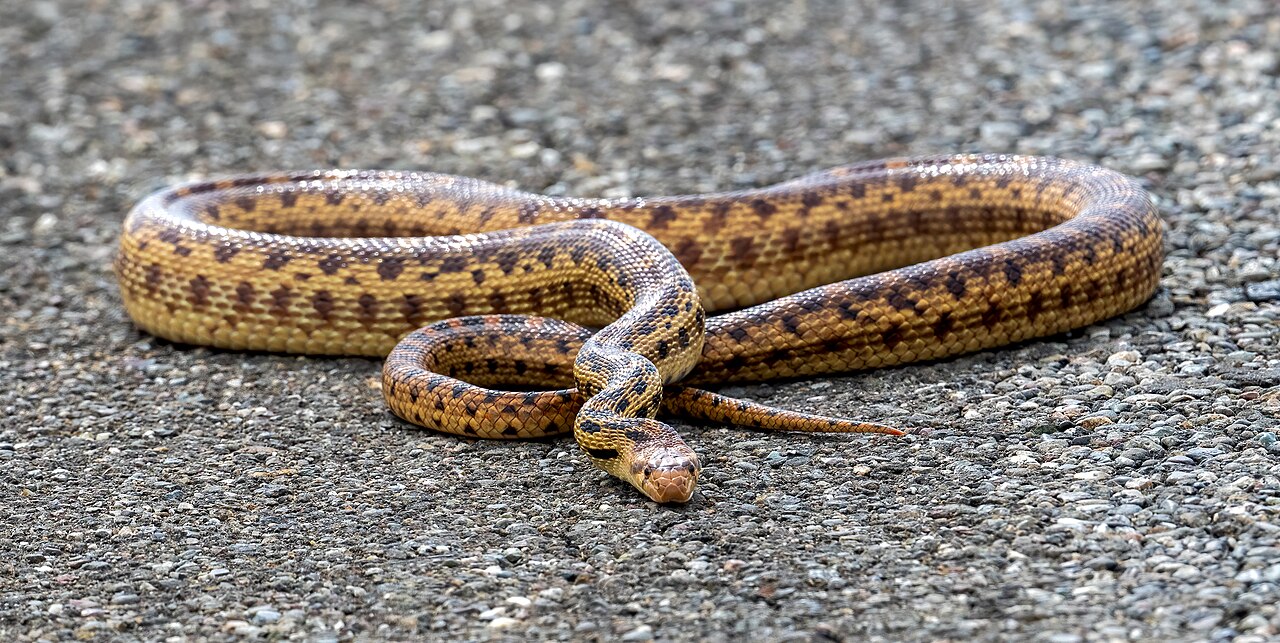
Hissing is defensive, and it means the snake has already decided it cannot escape. The animal inflates its lungs, then pushes the air back across the glottis while a flap of cartilage vibrates. The burst has no direction and no modulation, which is exactly why it works as a threat to almost any mammal.
Species differ in volume more than tone. Bullsnakes and pine snakes (Pituophis species) hiss loudest in the United States because a membrane inside the windpipe vibrates as air passes, and a large one registers near 80 decibels up close. Volume also rises with temperature: a cold spring snake manages a sputter, the same animal in July fills a yard. Pit vipers hiss too, so a hiss never tells you whether a snake is venomous, which takes pattern work like coral snake vs king snake.
Rattling: the buzz that means stop
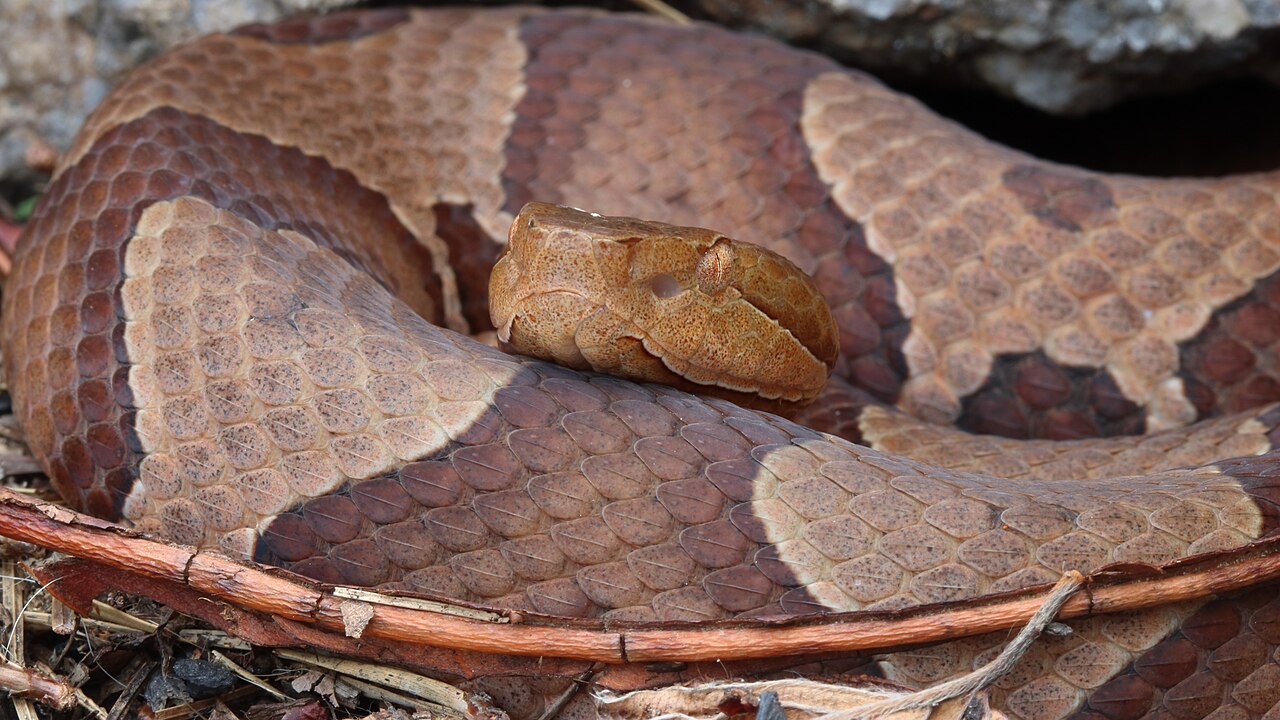
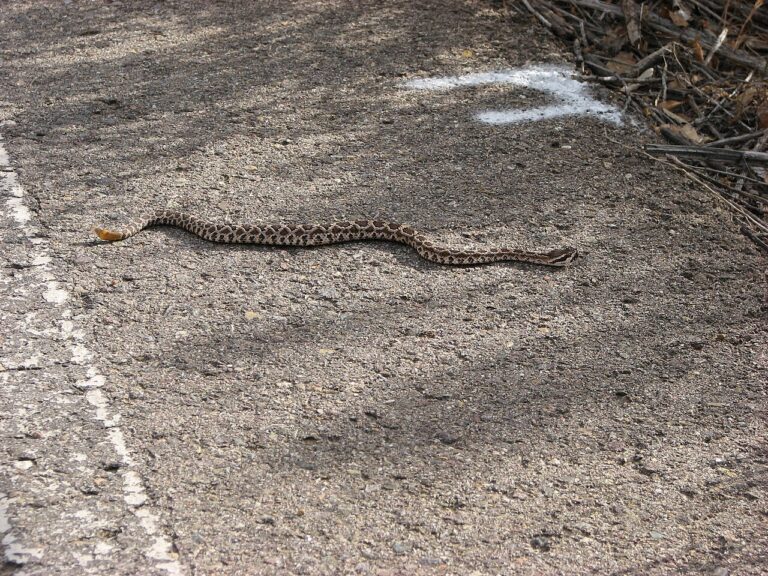
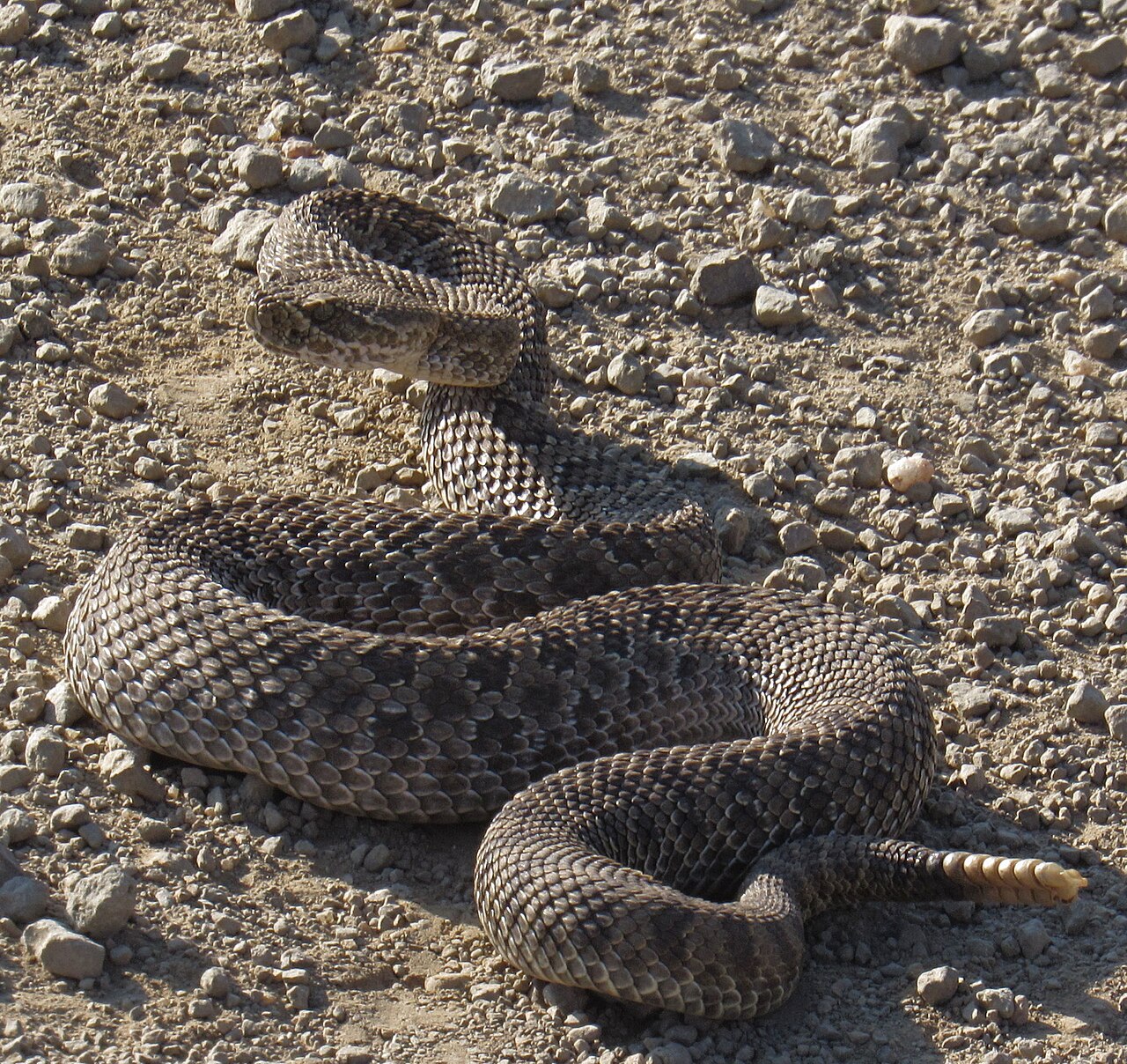
A rattle involves no air at all. The tail tip carries loosely interlocking keratin segments, and the muscles shake them 50 to 90 times per second. The result is a dry buzz, closer to a sprinkler head or a cicada than to any voice, and it carries farther than a hiss does.
The buzz warns large animals only. Hunting rattlesnakes stay silent, a freshly shed snake sounds muffled, and prairie rattlesnakes (Crotalus viridis) sometimes strike without rattling when a threat arrives suddenly, so silence is never proof of safety. Several harmless snakes fake the effect by vibrating the tail in leaf litter, convincingly enough to fool most people. Trust the thickened tail segments over the sound, and see how visual mimicry works in snakes that look like coral snakes.
Growls, shrieks, and cloacal pops: the rare snake sounds
A few species go beyond hissing. King cobras growl near 600 Hz, about two octaves below a normal hiss, using paired pouches off the windpipe as resonance chambers. Bullsnakes have a smaller version of the same anatomy, which is why a cornered bullsnake sounds like a cat in a box. Eastern indigo snakes and big bullsnakes sometimes squeal when picked up, a startle response that stops once the animal feels supported.
The strangest documented snake sound is the cloacal pop. Western hook-nosed snakes and Sonoran coral snakes expel air from the vent in bursts lasting a few milliseconds, which sounds like a small balloon squeak. Both species are tiny, nocturnal, and limited to the desert Southwest, so almost nobody hears it in person.
Do snakes make noise at night?
Snakes themselves are nearly silent after dark. They do not call, and a resting snake makes no sound at all. What people hear is the animal moving: scales dragging over gravel, drywall paper, or dry leaves produce a slow, continuous slide rather than the start and stop rhythm of a rodent.
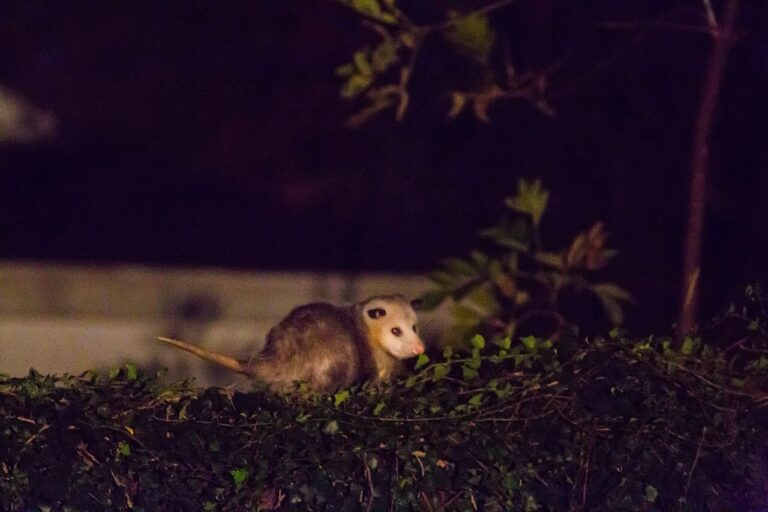
Scratching, gnawing, thumping, or squeaking in a wall is almost certainly not a snake. Mice and rats chew in short bursts, squirrels thump and roll acorns, and snakes entering wall voids are chasing those rodents as the quietest animal in the space. Two other night noises get misfiled: toads and tree frogs trill in a way that resembles a hiss through drywall, and a loud nocturnal hiss from a crawl space is usually an opossum. The contrast is clear against bat sounds and beaver sounds.
What is the sound a snake makes called, and how do you spell it?
The sound a snake makes is called a hiss, and the act is hissing or sibilation. In writing, the standard spelling of the snake sound is “hiss,” stretched for emphasis as “hissss” or “ssssss,” and comics render snake sound in words as a run of the letter s. For a rattlesnake, writers use “buzz,” “chchchch,” or simply “the rattle,” though gapped spellings misrepresent a sound that has no pauses in it.
If you came here asking how many sounds are in snake, that is a phonics question rather than a wildlife one: the word has four speech sounds, /s/, /n/, /ay/, and /k/, written with five letters. The animal makes one signature sound, the hiss, plus the five mechanical noises in the table. Pet reptiles add quiet huffs and body sounds, covered in bearded dragon sounds.
Frequently Asked Questions
Do snakes squeak?
Yes, a few do. Bullsnakes and eastern indigo snakes sometimes produce a short, high squeal when grabbed, caused by air rushing through a narrowed glottis. It is uncommon and never a social call. Persistent squeaking in a wall or ceiling is a rodent or a bat, not a snake.
What does a snake hiss mean?
A hiss means the snake feels trapped and wants you to back away. It is the last warning before a defensive strike, not a sign of hunting. Give the animal an open escape route and stand at least 6 ft (2 m) back, and most snakes stop hissing within a minute and leave.
Do baby snakes make sounds?
Baby snakes hiss from the day they hatch, though the sound is thin because their lungs are small. Newborn rattlesnakes carry only a single button on the tail and cannot produce a true buzz until after their first shed, which makes them harder to detect by ear than adults.
Can you hear a snake moving through grass?
Often yes. A snake crossing dry leaf litter makes a steady, unbroken rustle with no footfall rhythm, which is the clearest field clue available. In green grass or on bare soil the animal is effectively silent, so sound is a poor way to judge whether a yard holds snakes.