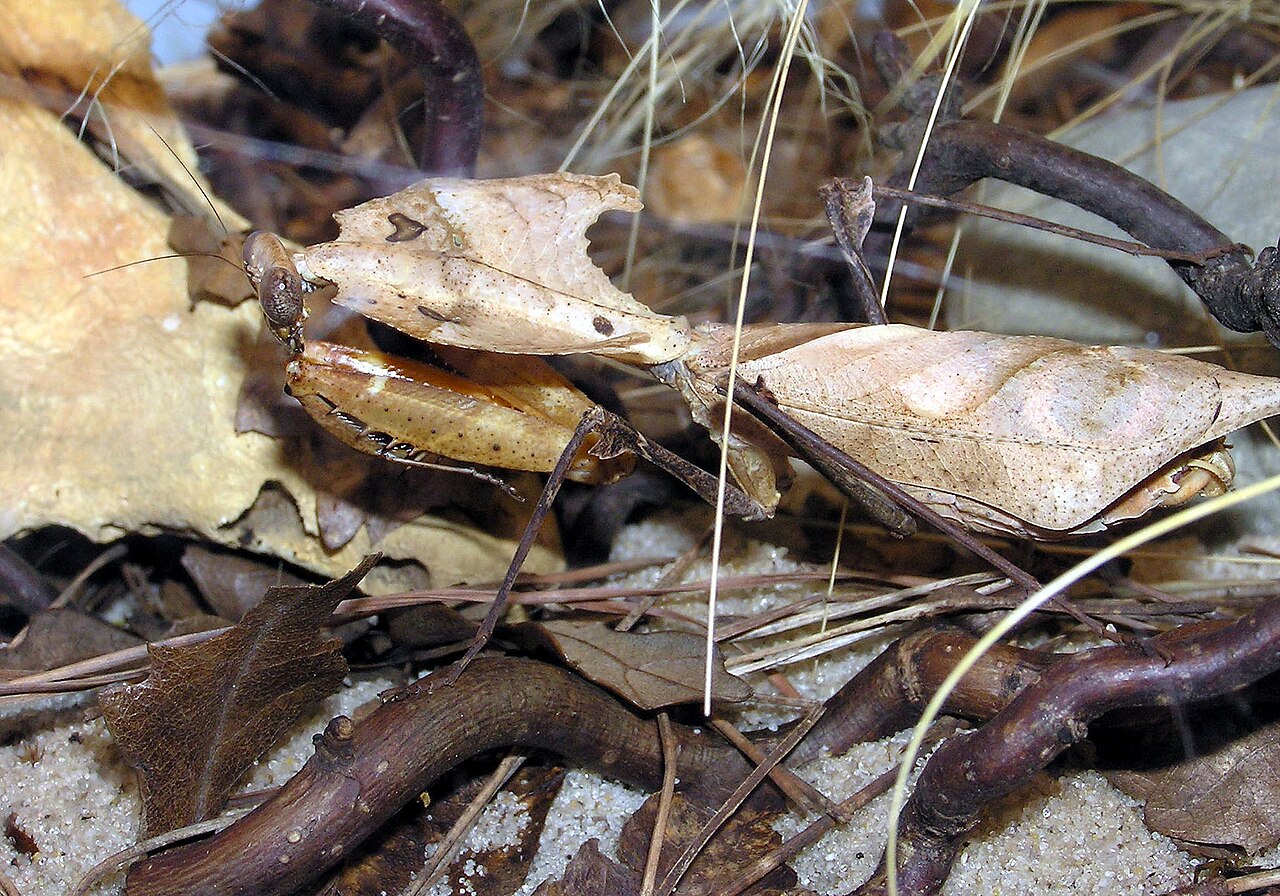
Dead Praying Mantis Meaning: Bad Omen or a New Start?
Finding a dead praying mantis signals that a stretch of patience is over and it is time to move.
Mantises in most of the US live a single season. The Connecticut Agricultural Experiment Station reports that adults of the Chinese mantis (Tenodera sinensis), the European mantis (Mantis religiosa) and the native Carolina mantis (Stagmomantis carolina) typically die with the first hard frosts, though some linger a few weeks into winter, so their bodies turn up in fall on porches, window sills and garden beds.
A dead praying mantis marks the end of a season of waiting or stillness and the start of change. It is not a death warning. The mantis lives by patience, so its body closes that chapter. Where you find it points to which part of life is turning.
What Does a Dead Praying Mantis Mean Spiritually?
A dead praying mantis means a period of waiting in your life is over. The living mantis is the symbol of stillness. It holds its front legs folded and stays motionless until prey comes within reach. When that hunter lies dead, the chapter of holding still closes with it.
Take the find as a release. The theme is transformation, the same way autumn clears a garden before spring. Fear-based readings treat every dead animal as a warning about illness or loss, but the mantis carries no such message. The find says the time to prepare is done and the time to act has come.
Praying mantis symbolism covers patience, focus and intuition, and the dead mantis turns only the first of those around. In ancient Greek, mantis means seer or prophet, and Linnaeus took the genus name from that word. The plan, project or relationship that has just run its course is the area where the mantis tells you to stop waiting and start.
Where You Found It, in the House, at the Door or in the Garden
Indoors points inward, outdoors points to the world around you.
In the House. A dead mantis inside your home points to a private matter. A family situation, a household routine or a question you kept to yourself is reaching its end. Mantises sometimes end up indoors in fall, and the one that dies there marks something closing under your own roof.
At the Door or on the Porch. A mantis on the doorstep marks a transition that arrives from outside. Expect an offer, a visitor or news that opens a new path. The threshold is the line between waiting inside and stepping out.
In the Garden. In the garden, the find marks the natural end of a growth cycle. The work you put in has ripened, and the harvest comes now. A garden mantis spent the summer hunting whatever insects it could catch among your plants, so its death fits the rhythm of the season.
On a Window Sill or a Car. A mantis on a window sill or a car points to perspective and movement. A view you held is shifting, or a move or a journey is ending.
| Where you found it | What is ending | Your next step |
|---|---|---|
| Inside the house | A private or family matter | Settle the open question at home |
| Doorstep or porch | A phase of waiting for news | Say yes to the next offer |
| Garden bed | A growth cycle | Collect the results of your effort |
| Window sill | An old point of view | Look at the problem from a new angle |
| On or near a car | A move or a journey | Plan the next destination |
| Next to an egg case | One generation | Protect what comes after |
A living praying mantis crossing your path carries a separate message about timing, and it does not apply to a dead one.
Is a Dead Praying Mantis a Bad Omen?
No, a dead praying mantis is not a bad omen. A mantis found in fall typically dies on schedule. Adults in most of the US live one season, and cold weather ends them after they mate and lay eggs. A death that follows a completed life cycle points to closure, not to a threat. Praying mantis good luck beliefs run deep in French folk tradition, where a mantis points a lost child the way home.
What Should You Do With a Dead Praying Mantis?
Move the body outside with a leaf or a sheet of paper. Bury it under a plant or set it in a garden bed, where it returns to the soil. Then pause and name the chapter that is closing.

Praying mantis eggs sit inside a foam case, called an ootheca, that the female glues to stems, twigs and fences in fall. The eggs survive the winter and hatch in spring.
Baby praying mantises leave the case by the dozens in late spring.
Frequently Asked Questions
Is the praying mantis a symbol of death?
No. In the /Xam San stories recorded by Wilhelm Bleek and Lucy Lloyd in the 1870s, the Mantis Kaggen plays dead as a hartebeest, is cut apart, and his pieces join again and run off. There the mantis stands for return after death.
Does the Bible mention the praying mantis?
No. The Bible never names the praying mantis. Leviticus 11, verse 22, lists only locusts, crickets and grasshoppers among the winged insects, and Christian readings of the mantis come from its folded, prayer-like front legs, which gave it its English name.
Is it okay to keep a dead praying mantis?
Yes. A dried mantis makes a lasting keepsake for people who want to hold on to the moment. Let it dry fully in a warm, airy spot, then store it in a sealed box or glass case so pantry pests and dermestid beetles cannot reach it.
Sources
- Utah State University Extension, Beneficial Insects, Mantids
- Texas A&M AgriLife Today, Praying mantid facts, friend or foe in the garden
- Connecticut Agricultural Experiment Station, Praying Mantis (Mantidae) fact sheet
Explore more: Insect Spiritual Meanings: 15 Bugs and What They Signal