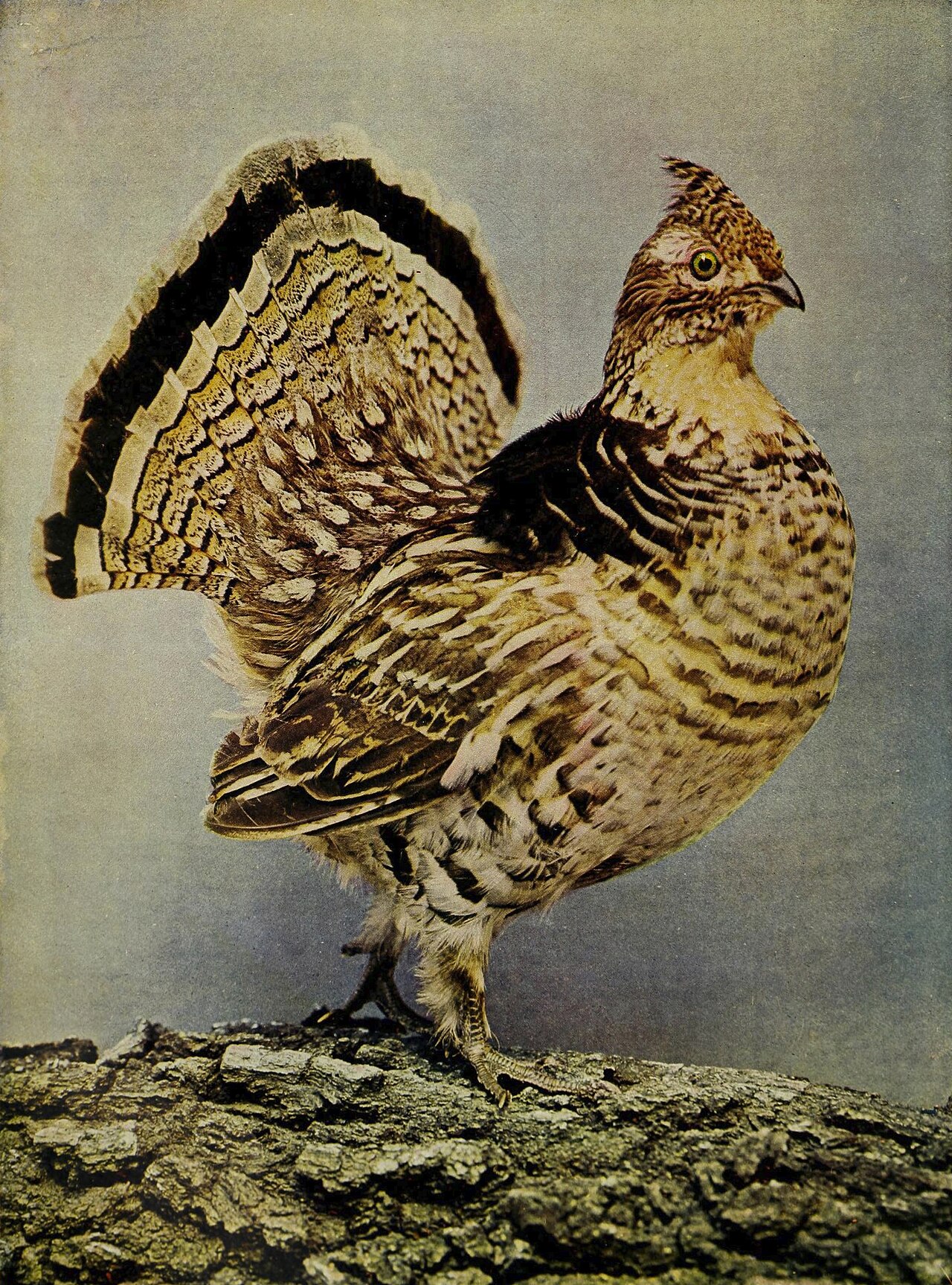
Ruffed Grouse Tracks in Snow: Tell Them From Other Birds
The ruffed grouse (Bonasa umbellus) spends much of its time on the ground, so one fresh snowfall records a long, readable trail from roost to feeding tree.
Ruffed grouse tracks in snow are about 2 in long, with three thick forward toes and a short hind toe that prints faintly or not at all. Comb-like winter fringes along each toe leave a jagged edge. The prints fall in a straight walking line, one foot ahead of the other, not in hopping pairs.
How to Identify Ruffed Grouse Tracks in Snow
You identify ruffed grouse tracks in snow by the print first and the gait second. A grouse foot leaves three forward toes that look thick and blunt. The short hind toe shows as a small dot or not at all.
Next, read the gait. Grouse walk, so each print sits ahead of the last in a straight line. Sparrows, juncos and other small birds hop and leave their prints in pairs. Duck tracks show a waddling line with toes turned inward.
Fresh, soft snow holds the toe outline best, while crust and wind blur it. When a print is unclear, look for wing marks or a roost hole nearby.
Track Shape and the Fringed Toes That Give Grouse Away
The fringed toes are the clearest mark of a ruffed grouse in winter. Each fall the bird grows rows of small horny scales, called pectinations, along the sides of every toe. They widen the foot like a snowshoe and keep the bird on top of soft snow.
In a print, the fringes leave a ragged, comb-like edge instead of a clean toe line. Other woodland birds lack that outline, except the spruce grouse. Bird tracks from songbirds, waterbirds and raptors differ in toe count, toe width and gait.
The fringes are shed in spring, so summer prints look smooth and slimmer. Chicken tracks share the three-toe layout and the walking gait, so only toe fringes and habitat separate them from grouse.
| Track | Print length | Key difference from ruffed grouse | Where you find it |
|---|---|---|---|
| Ruffed grouse (Bonasa umbellus) | 2 in | Thick toes, fringed in winter, straight walking line | Young mixed forest with aspen and birch |
| Wild turkey (Meleagris gallopavo) | 4 to 5 in | Twice as long, with long, slim toes and a longer stride | Open woods, field edges, farm country |
| Ring-necked pheasant (Phasianus colchicus) | 2.5 to 3 in | Longer, narrower print with slender, smooth toes | Farm fields, grassy edges, cattail marsh |
| Domestic chicken | varies by breed | Smooth toes, prints wandering in all directions in one spot | Farms, backyards, coops |
| Duck | varies by species | Webbing between the front toes, toes turned inward, waddling line | Pond, river and marsh edges |
| Black-capped chickadee (Poecile atricapillus) | under 1 in | Prints in hopping pairs, thin toes, long hind toe | Feeders, mixed woods, yards |
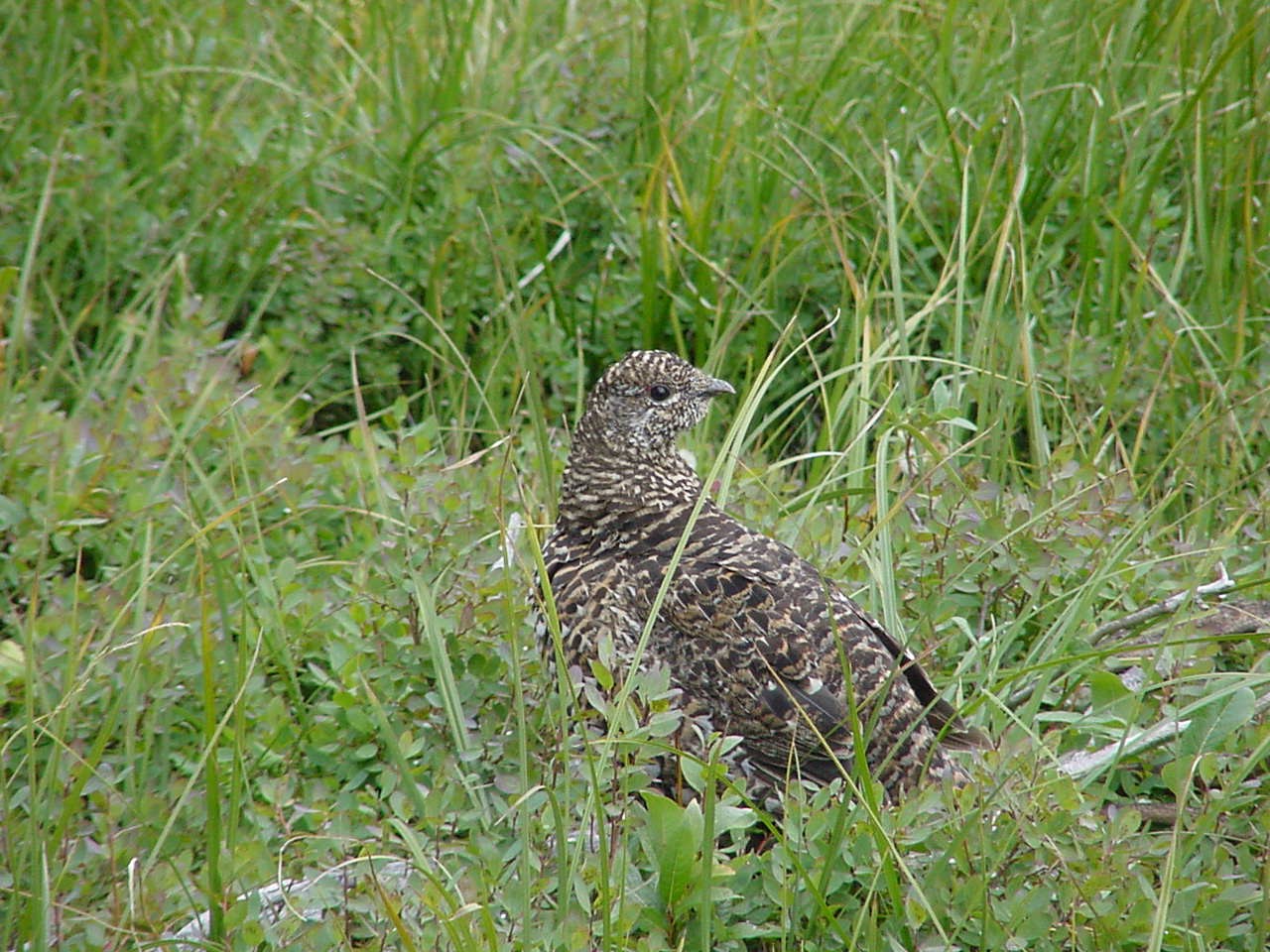
| Spruce grouse (Canachites canadensis) | same as ruffed grouse | Same fringed winter toes, so habitat separates them better than shape | Northern conifer forest and boreal bogs |
Trail Patterns, Wing Marks and Snow Roosts
A ruffed grouse trail wanders, ends in wing marks where the bird took off, and in deep powder leads to snow roosts. The bird zigzags between shrubs and stems, and the line stops without warning at a flush.
At a takeoff point, look for fan-shaped brush marks on both sides of the last prints. Those are wingtips striking the snow on the first beats.
In soft powder 10 in deep or more, a grouse dives or burrows into the snow to roost. The entry hole often has no tracks leading to it. A short tunnel leads to a separate, larger exit hole, where the bird leaves its droppings and sometimes wing marks.
Ruffed Grouse Tracks in Mud and Sand
Ruffed grouse tracks in mud look slimmer and cleaner than winter prints, because the toe fringes are gone. Wet mud along trails and creek edges holds toe detail longest. Dry sand collapses fast, so read the walking line there instead of the outline. Wild turkey tracks on the same logging road run twice as long as a grouse print.
Where Ruffed Grouse Live and Where to Look for Tracks
Ruffed grouse live from Alaska across Canada into the northern US and south along the Appalachians to northern Georgia. Minnesota, Wisconsin and Michigan hold the densest populations, and Minnesota ranks as the top ruffed grouse state. The Cornell Lab’s All About Birds maps this year-round range in detail.
Within that range, look for tracks in young, dense mixed forest with aspen and birch. The species favors regrowth after logging or fire, where stems grow thick and close.
Search the edges of clearcuts, logging roads and brushy creek bottoms first. Conifer stands next to hardwoods give winter cover, and fresh trails run between the two.
Other grouse species live in prairie, sagebrush, alpine and boreal habitats, and their ranges overlap with the ruffed grouse only in places.
Feeding Signs and What Ruffed Grouse Eat in Winter
In winter, ruffed grouse feed on the buds of aspen, birch and other trees and shrubs. Flower buds of male aspen trees are their first choice, because they are larger than leaf buds. In shallow snow, trails circle under shrubs that still hold fruit, such as sumac, rose hips and winterberry. A trail that runs from shrub to shrub and then stops under a tree marks a feeding spot.
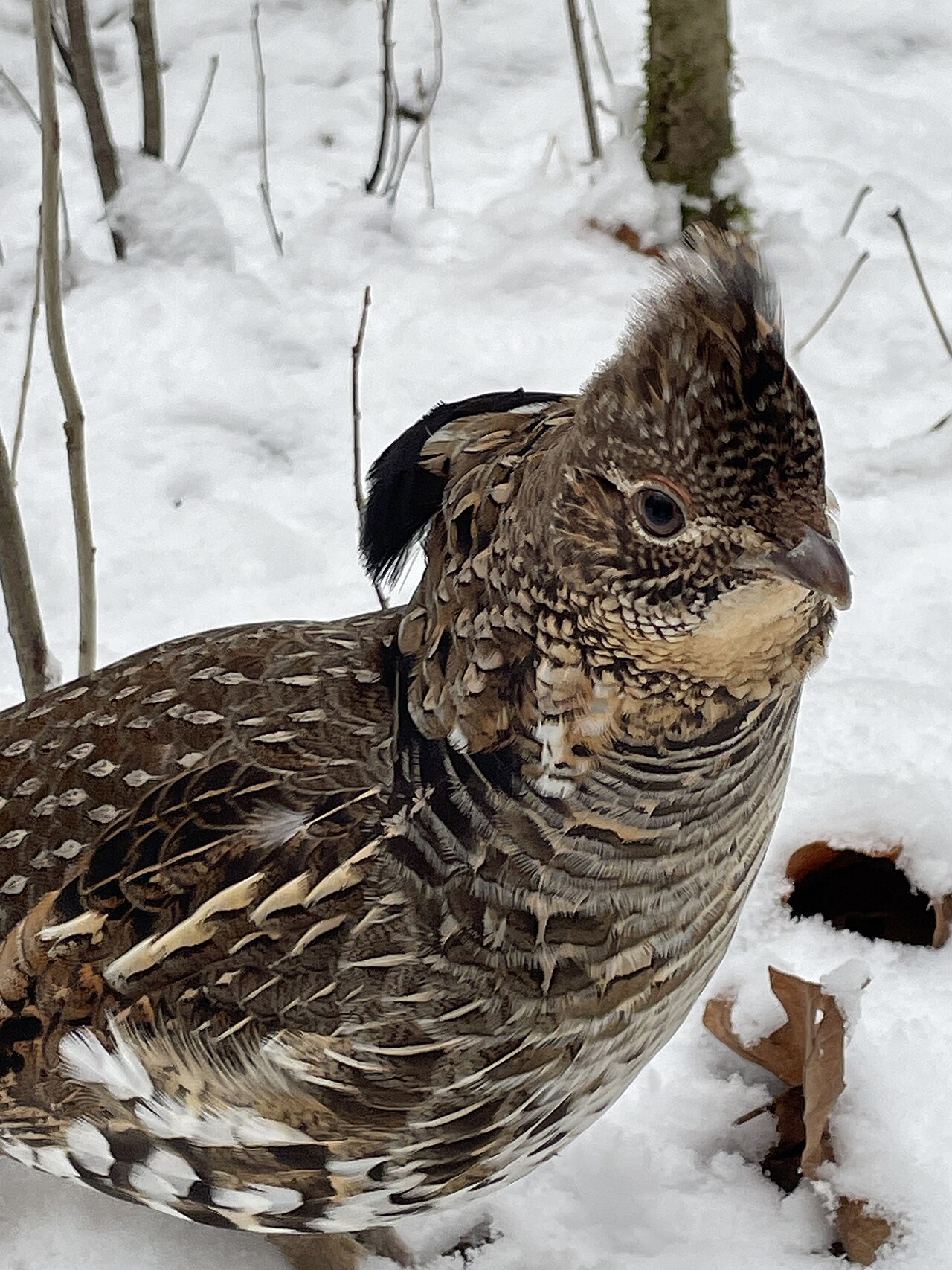
Below the tree you find bud scales and clipped twig tips on the snow. Droppings under the same tree confirm the visit. Winter droppings are elongated, slightly curved, fibrous pieces, often with a whitish coating on one end.
Frequently Asked Questions
What are the main predators of ruffed grouse?
Two groups, raptors such as northern goshawks and great horned owls, and mammals such as foxes and bobcats. A ring of scattered feathers in the snow with no body nearby marks a kill site. Raptors pluck their prey cleanly, while mammals chew or break feathers at the shaft.
What time of year do ruffed grouse drum?
Two seasons. Males drum in spring, peaking in April and May, and again in fall, when day length matches spring and young males claim territories. Each male drums from a favorite log or rock. Droppings collect on and beside a busy drumming log.
Where do grouse go when it rains?
In wet weather, grouse use dense cover such as conifers. Check the ground under evergreens for prints and droppings.
What time of day are grouse most active?
Two peaks, early morning and late afternoon. Grouse leave the roost after sunrise to feed and fly up to bud again before dark, so the freshest trails of the day appear right after dawn.
Sources
- National Park Service, Ruffed Grouse
- Maine Department of Inland Fisheries and Wildlife, Who loves fresh powder more than ruffed grouse