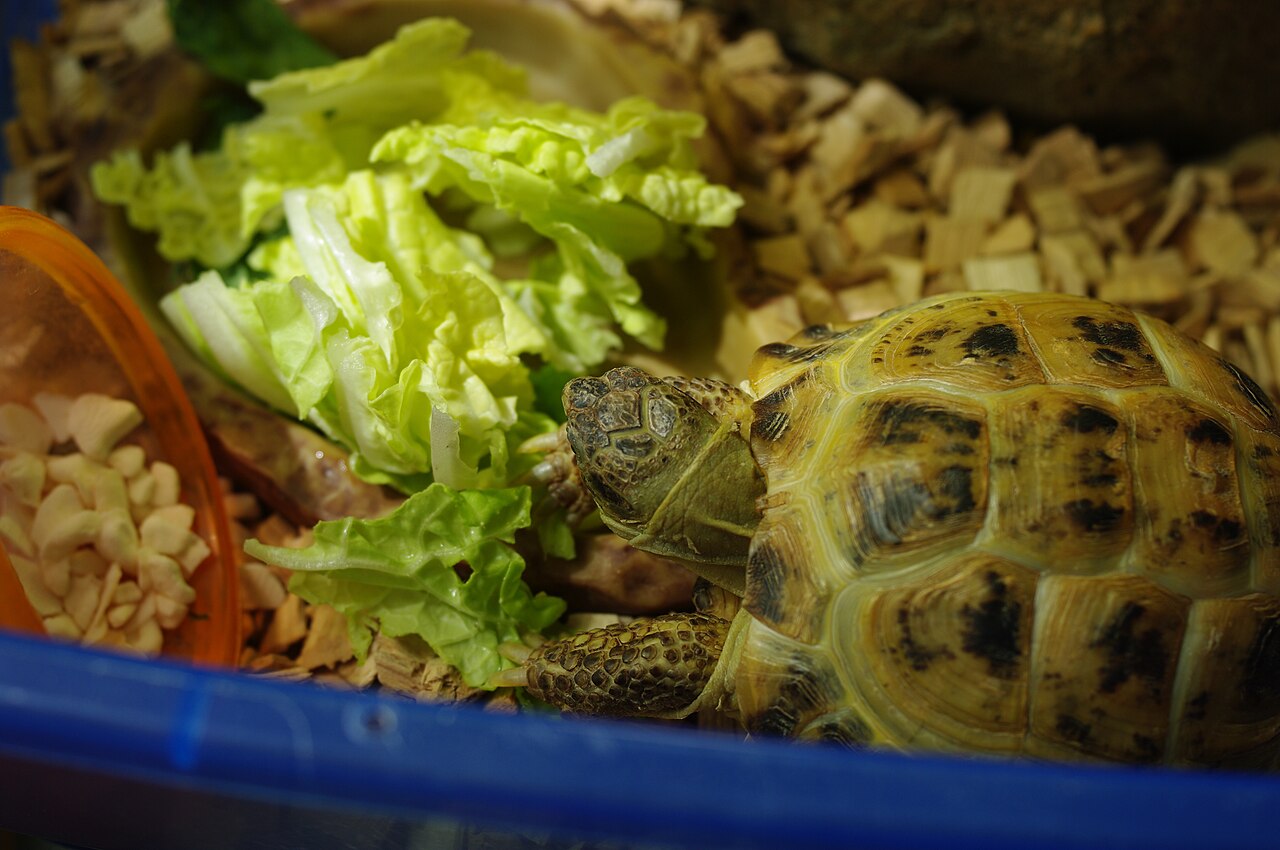
What Can Tortoises Eat? Safe Foods, Eggs and Water
Herbivorous tortoises eat a plant diet built on weeds, leafy greens and grasses, with a small share of vegetables. If you are asking what can tortoises eat, start with correctly identified plants from an unsprayed area. Dandelion, plantain and clover can be part of a varied mix. Eggs, meat and dairy do not belong in a herbivorous tortoise’s bowl.
Land tortoises and aquatic turtles are not fed the same way. The food chart below is for herbivorous species such as Russian, Greek and sulcata tortoises. Red-footed tortoises need an omnivore plan, and aquatic turtles, which take fish, insects and pellets, need a separate diet.
Herbivorous tortoises eat weeds, leafy greens and, for grazing species, grasses. Carrots are an occasional topping. Mediterranean tortoises should generally avoid fruit. Boiled or scrambled eggs are unsuitable for herbivorous species; red-foots need an omnivore plan. Provide a shallow water dish and supervised soaks, without pouring water over the animal.
| Food group | Examples | How often | Verdict |
|---|---|---|---|
| Weeds and wild greens | Dandelion, plantain, clover | Daily, most of the plate | Safe |
| Grasses and hay | Lawn grass, timothy hay | Daily, main food for sulcatas | Safe |
| Leafy greens | Romaine, endive, collard greens | Daily, in rotation | Safe |
| Carrots and squash | Grated carrot, grated squash | Occasionally, as a topping | Small amounts |
| Oxalate and goitrogen greens | Spinach, kale, cabbage | Rarely | Limit |
| Fruit | Strawberry, melon, apple | Rare treat | Limit |
| Animal protein and dairy | Boiled egg, scrambled egg, cheese | Never | Avoid |
What Can Tortoises Eat Every Day?
For herbivorous tortoises, broadleaf weeds, leafy greens and grasses should make up over 80 percent of the ration, with the mix adapted to the species. Dandelion (Taraxacum officinale), plantain and other suitable weeds provide variety; grasses are especially important for grazing species such as sulcatas. Pick plants from unsprayed ground, or grow a weed patch for the purpose.
Store-bought greens fill the gaps in winter. Romaine, endive, escarole, collard greens and turnip greens rotate well. Variety matters more than any single plant, so change the mix through the week.
Tortoises need steady calcium for their shell. Leave a piece of cuttlebone in the enclosure so the tortoise can gnaw on it when it wants. Many keepers also dust greens with a plain calcium powder. Ask a reptile vet whether your setup needs a supplement with vitamin D3 as well.
Which Vegetables Are Good for Tortoises, Including Carrots?

Vegetables can supplement a tortoise’s species-appropriate diet in small, varied portions, and carrots are fine when grated and served now and then. Grate a little carrot over the greens occasionally. Carrots are sweet and starchy next to weeds, so they work as a topping, not a meal. Spinach is high in oxalate, which can bind calcium and reduce its absorption, so it belongs in a tortoise’s rotation only rarely.
Some vegetables need a lighter hand. Spinach is high in oxalate, which can bind calcium and reduce its absorption. Cabbage, kale and broccoli contain goitrogens and belong in a varied rotation in small amounts.
Offer a varied base of species-appropriate weeds, grasses and leafy greens. Carrot, squash, bell pepper or green beans can be occasional small extras. Keep the vegetable share small next to the greens.
Can Tortoises Eat Fruit?

Fruit allowances depend on the species. Mediterranean tortoises and sulcatas should generally avoid fruit. Small fruit portions can be part of a red-footed tortoise’s diet, as described in the University of Liverpool’s tortoise care sheet. Apple fits the occasional fruit slot only for species whose feeding plan includes fruit, and the core and seeds should be removed first.
For a species whose feeding plan includes fruit, offer occasional small pieces. Remove apple cores and seeds, and cut grapes into small pieces. Strawberries and melon fit the same occasional slot. Grapes should be cut into small pieces when they are offered as an occasional treat to a species whose feeding plan includes fruit.
Can Tortoises Eat Boiled or Scrambled Eggs?
No, herbivorous tortoises such as the Russian tortoise (Testudo horsfieldii) should not eat boiled or scrambled eggs. Egg supplies concentrated animal protein and fat and is unsuitable for their plant-based diet. Scrambled eggs may also contain butter, milk or salt.
A study of sulcata hatchlings found that dry conditions had a stronger effect on shell pyramiding than dietary protein. A tortoise may eat egg eagerly, and that says nothing about whether it is an appropriate food.
The red-footed tortoise (Chelonoidis carbonarius) is the common pet species that eats some animal matter in the wild. Even for red-foots, egg is not a staple. A reptile vet should set any protein portion.
How Do Tortoises Get Water?
Tortoises get water from a shallow dish, from wet greens and from regular warm soaks. Set out a dish every day that is low enough for the tortoise to climb in and out of without tipping. Clean and refill it daily, since tortoises often soak and defecate in it.
For a routine soak, The Tortoise Table suggests about 15 to 20 minutes in lukewarm water. Use shallow water that allows the tortoise to keep its head clear without stretching, and supervise throughout. Adapt the frequency to the species, age and enclosure conditions with a reptile vet; hatchlings typically need more frequent soaks than adults.
Do not pour water over a tortoise to hydrate it. Offer drinking water and supervised shallow soaks that give it an opportunity to drink. Keep poured water away from its face. Clean a dirty shell gently, then return the tortoise to its appropriately heated enclosure.
Do Different Tortoise Species Eat Differently?
Different tortoise species do eat differently, and the split follows their native habitat. Russian tortoises come from dry steppe and live on broadleaf weeds. The Indian star tortoise needs a feeding plan checked against its own species, because a menu copied from a red-foot gives far too much sugar to an arid species.
Greek tortoises (Testudo graeca) graze weeds and flowers from dry Mediterranean scrub; fruit should generally be avoided.
Hermann tortoises (Testudo hermanni) follow the same weed-based plan. The sulcata tortoise (Centrochelys sulcata) is a grassland grazer that needs grass and hay as its main food. Red-footed tortoises from humid South American forests take more fruit than the arid species. Check the species before copying a feeding plan, because a red-foot menu gives a Greek tortoise far too much sugar.
Which Foods Are Dangerous for Tortoises?
For herbivorous tortoises, keep these unsuitable foods off the menu:
- Eggs and meat.
- Dog and cat food.
- Dairy products.
- Bread, sweets and processed human food.
Red-footed tortoises need a species-specific plan for animal protein.
Toxic plants are another risk. The Tortoise Trust identifies these plants as especially dangerous to tortoises:
- Daffodils.
- Foxgloves.
Identify every plant in the enclosure and garden before the tortoise grazes there. Remove houseplants and ornamental shrubs you cannot name with certainty. A plant that is safe for you is no proof that it is safe for a tortoise.
Feeding hygiene protects people as well, because reptiles often carry Salmonella bacteria in their digestive tracts, even when they look clean and healthy. Keep the tortoise’s food away from human food.
Frequently Asked Questions
How often should you feed a tortoise?
Hatchlings and juveniles typically eat every day. For adults, follow a feeding schedule suited to the species, season and body condition. Ask a reptile vet to help set portions, monitor weight and growth, and remove leftovers before they spoil in the enclosure.
Can tortoises eat lettuce?
Yes, romaine lettuce is a reasonable part of the greens mix. Iceberg lettuce is mostly water and low in nutrients, so offer it only now and then. Darker leaves such as endive, escarole and dandelion give the tortoise more fiber and calcium in each bite.
What do baby tortoises eat?
Baby tortoises typically eat the same kinds of food as adults of their species, prepared in manageable pieces and offered every day. Grazing species need suitable grasses as part of that diet, while red-footed tortoises need an omnivore plan. Provide calcium through suitable greens, cuttlebone and supplements as advised by a reptile vet. Hatchlings typically need more frequent supervised soaks than adults, with the schedule adapted to their enclosure conditions.
Can tortoises eat commercial pellets?
Yes, but only as a supplement to fresh plants. Pellets are convenient on travel days or in winter, yet weeds, grasses and leafy greens remain the base of the diet. Choose a tortoise-specific pellet, soak it if the label says so, and keep portions small.
Can tortoises eat grass and hay?
Yes, grass and hay suit tortoises well, and grazing species such as the sulcata need them as their main food. Offer unsprayed lawn grass or timothy and orchard hay. Mediterranean species eat grass too but prefer broadleaf weeds, so mix both into their daily plate.
Sources