Grouse Sounds: Drumming, Calls and Species ID
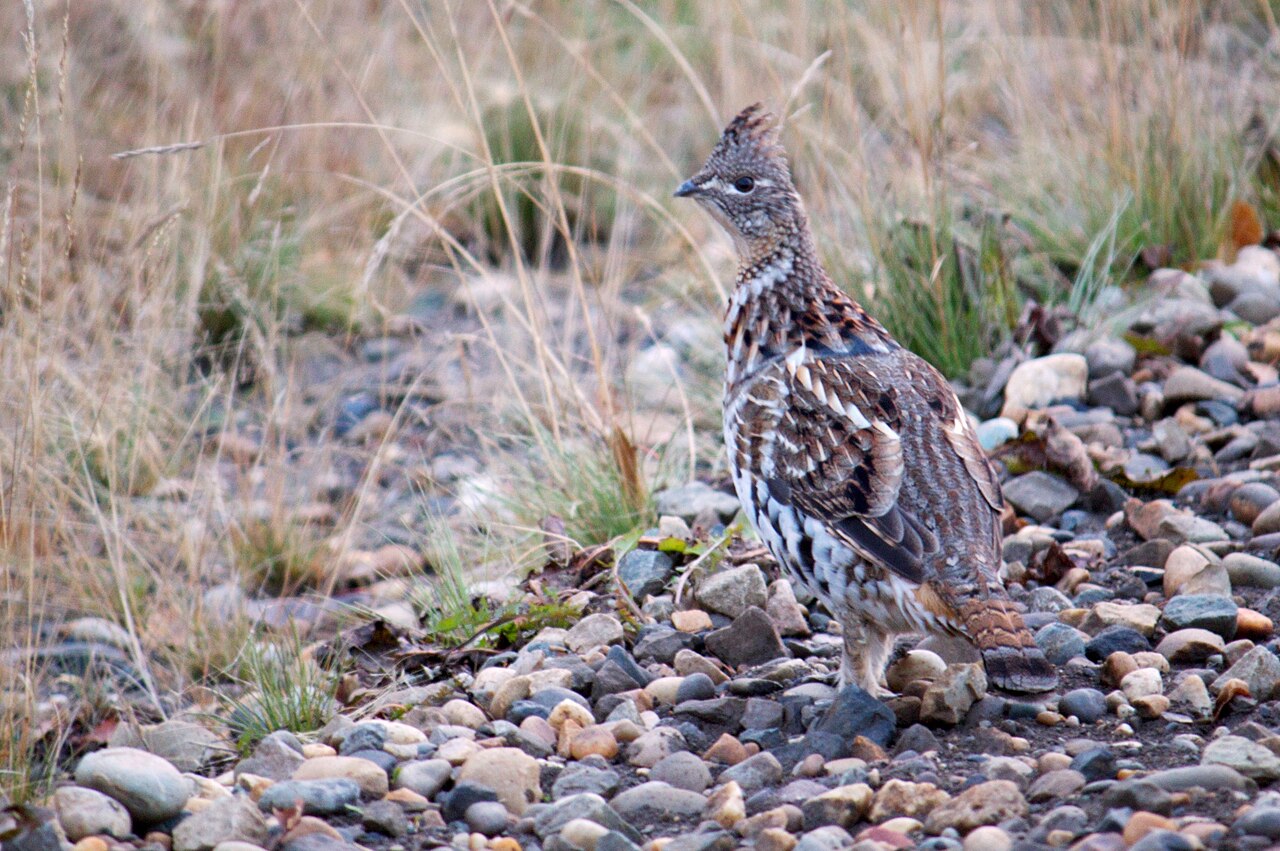
Grouse sounds range from a deep thump that rolls through spring woods to soft clucks, hisses and low hoots. The thump is the one most people notice, and it is not a voice at all. A male Ruffed Grouse (Bonasa umbellus) makes it with his wings.
What sound does a grouse make? The male Ruffed Grouse drums with its wings, a low thump that speeds up into a whir, to claim territory and attract hens in spring. Dusky and Sooty Grouse males hoot deeply. Hens cluck softly to chicks and hiss at intruders near the nest.
What Sound Does a Grouse Make?
The best-known grouse sound is the drumming of the male Ruffed Grouse, a hollow thump that starts slow and speeds up into a whir. He stands on a fallen log, braces his tail and beats his cupped wings forward through the air. The wings never strike the log or his chest. The boom comes from the air the wingbeats move.
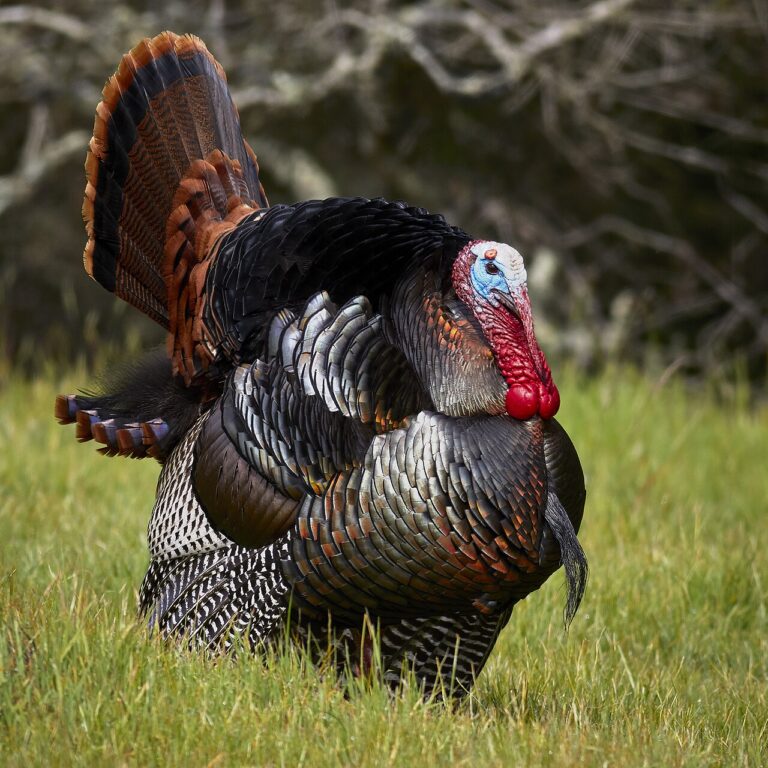
A male drums to claim his territory and to draw hens to his log. Drumming peaks in spring, with a smaller round in fall, and dawn is the best hour to hear it. Wild turkey gobbles, clucks and purrs fill the same spring woods, but every one of them comes from the throat.
The low pitch fools people into hearing a distant engine turning over or a woodpecker at work. A woodpecker taps at an even pace, while drumming accelerates and then stops. Hear it on the Cornell Lab’s Ruffed Grouse sound page.
Drumming and Mating Calls of Male Grouse
Ruffed grouse tracks in snow mark the same woods where the males drum once spring arrives.
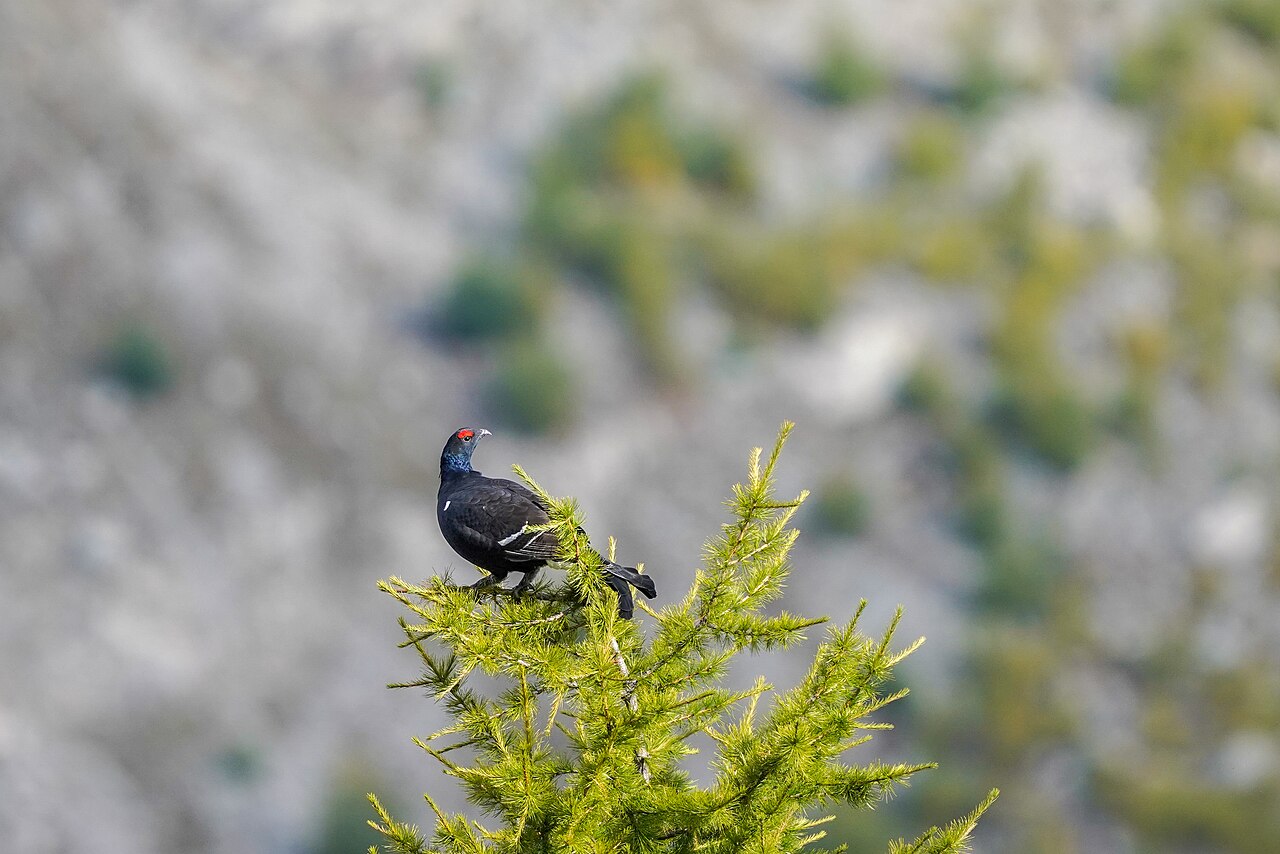
In the West, the Dusky Grouse (Dendragapus obscurus) and the Sooty Grouse (Dendragapus fuliginosus) court with deep hoots instead of drumming. The male inflates bare patches of skin on his neck and gives a series of low, soft hoots. Males hoot in spring to advertise to hens and hold a territory. The calling runs from dawn into the day.
The hoots are low enough that hikers take them for an owl. Barred owls call in a loud, rhythmic phrase with a drawn-out ending, while a grouse gives soft hoots without that rhythm. Compare the coastal species on the Cornell Lab’s Sooty Grouse sound page.
Calls of Female Grouse
Female grouse use soft clucks and contact calls, and a Ruffed Grouse hen never drums. She clucks gently to keep her brood together as the chicks feed on the forest floor. You hear these calls in late spring and summer, when hens lead chicks through the undergrowth.
A hen defends her nest and brood with sound too. She hisses and squeals when a predator or a person comes close, then drags a wing on the ground to lure the intruder away.
The clucks sound like a chicken or a turkey hen, only quieter and from cover at ground level. Birds that sound like owls include the hooting male Dusky and Sooty Grouse, not the hens. Listen to Ruffed Grouse recordings in the Audubon Ruffed Grouse field guide.
Identifying Grouse Species by Sound
You identify a grouse by its call pattern, its habitat and the rhythm of any drumming. All the types of grouse in North America differ in range as well as voice, so location narrows the list first.
| Species | Main sound | Habitat | Season |
|---|---|---|---|
| Ruffed Grouse | Wing drumming that speeds up | Eastern and northern forests | Spring, again in fall |
| Dusky Grouse | Soft, low hoots | Interior Rocky Mountain forests | Spring |
| Sooty Grouse | Louder low hoots from treetops | Pacific coast conifers | Spring |
| Spruce Grouse | Wing claps in short flutter flights | Boreal conifer forests | Spring |
| Sharp-tailed Grouse | Coos, clucks and foot stamping on leks | Prairies and brushland | Spring |
| Red Grouse (UK) | Cackling go-back call | Heather moorland | Year-round, loudest at dawn |
The Red Grouse (Lagopus lagopus scotica) of British and Irish heather moorland gives a loud, cackling go-back, go-back, go-back. Males call when flushed and in display flights over their territory. They call most at dawn, when males defend their ground. Its closest North American relative is the Willow Ptarmigan, not the Ruffed or Spruce Grouse. Hear it in the xeno-canto recordings of Lagopus lagopus.
Frequently Asked Questions
Are blue grouse and dusky grouse the same?
No. The Blue Grouse was split into two species, the Dusky Grouse of the interior Rocky Mountains and the Sooty Grouse of the Pacific coast ranges. The two differ in hoot volume and neck patch color.
Do female grouse drum?
No. Only male Ruffed Grouse drum, and they do it to claim a territory and attract hens. A hen clucks softly to her chicks and hisses at predators near the nest.
Sources
- Cornell Lab of Ornithology, Ruffed Grouse Sounds
- Cornell Lab of Ornithology, Dusky Grouse Sounds
- Cornell Lab of Ornithology, Sooty Grouse Sounds
- National Audubon Society, Ruffed Grouse Guide to North American Birds