Tortoise Care: Enclosure, Diet and Heat Done Right
Good tortoise care comes down to five things: a large enclosure with room to walk, a basking spot near 100 F (38 C) with UVB, a diet of grasses and weeds instead of fruit and pellets, humidity high enough to prevent shell deformity, and a weekly soak. Get those right and a tortoise is genuinely low-drama. Get the enclosure or the diet wrong and you produce a lumpy shell and a kidney problem that takes years to show.
Species matters more than any single care rule. A Russian tortoise lives comfortably in a 4 by 2 foot indoor pen, while a sulcata reaches 100 pounds and needs a heated shed and a fenced yard. The care sheet below covers what all pet tortoises share, and flags where the common species pull apart.
A pet tortoise needs an enclosure at least 8 times its adult shell length, a basking area at 95 to 100 F (35 to 38 C), UVB lighting for 12 hours daily, a diet that is 80 percent grasses and leafy weeds, humidity of 50 to 70 percent depending on species, and a shallow soak in lukewarm water once or twice a week.
| Species | Adult Size | Min. Enclosure | Humidity | Difficulty |
|---|---|---|---|---|
| Russian tortoise | 6 to 8 in (15 to 20 cm) | 4 x 2 ft | 40 to 60% | Beginner |
| Hermann’s tortoise | 5 to 8 in (13 to 20 cm) | 4 x 2 ft | 50 to 60% | Beginner |
| Greek tortoise | 5 to 8 in (13 to 20 cm) | 4 x 2 ft | 40 to 60% | Beginner |
| Red-footed tortoise | 11 to 14 in (28 to 36 cm) | 8 x 4 ft | 70 to 80% | Intermediate |
| Leopard tortoise | 16 to 18 in (41 to 46 cm) | 10 x 10 ft | 50 to 60% | Intermediate |
| Indian star tortoise | 7 to 10 in (18 to 25 cm) | 6 x 3 ft | 60 to 80% | Intermediate |
| Sulcata tortoise | 24 to 30 in (61 to 76 cm) | Fenced yard, heated shed | 40 to 60% | Advanced |
Are Tortoises Easy to Take Care Of?
Tortoises are easy to take care of on a daily basis and hard to take care of correctly over decades. The routine is simple: fresh greens each morning, water changed, enclosure spot-cleaned, lights on a timer. There is no walking, no litter box and no attention-seeking. A keeper spends perhaps 10 minutes a day on a small species.
The difficulty sits in the setup and the timeline. Almost every problem seen by reptile vets traces back to an enclosure too small, a diet too rich or air too dry, and none of those show up in the first year. Pyramiding, bladder stones and shell deformities develop slowly and do not reverse.
Then there is the lifespan. A Russian tortoise commonly reaches 50 years and a sulcata can pass 80, which means the animal may outlive the person who bought it. That makes a tortoise an easier pet than a dog week to week and a much heavier decision up front.
Indoor Tortoise Care: Enclosure Size and Substrate
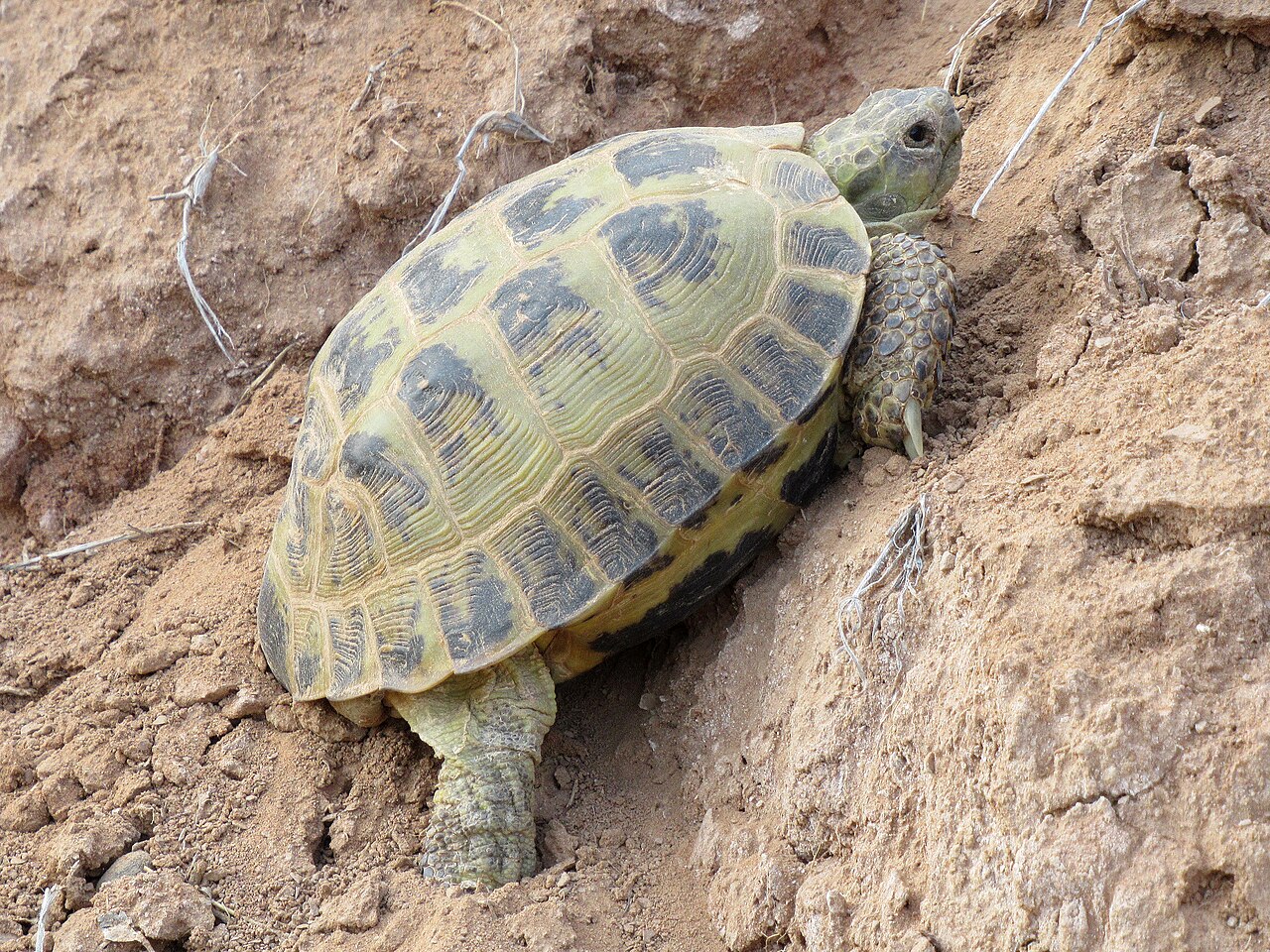
Indoor tortoise care fails most often on floor space. Glass aquariums are the wrong shape: they are too small, too tall and transparent on all sides, which stresses a ground-dwelling animal that paces the perimeter looking for an exit. Build or buy an open-topped tortoise table instead, with solid walls at least 12 inches high.
The working minimum is 8 times the adult shell length by 4 times the width. For a 7 inch Russian tortoise that is roughly 4 by 2 feet, and bigger is always better. Length matters more than any other dimension because walking is how a tortoise exercises and regulates its own temperature.
For substrate, use a 3 to 4 inch layer of topsoil mixed with coconut coir or cypress mulch. It holds humidity, lets the animal dig and does not abrade the shell. Avoid calcium sand, walnut shell and cedar: the first two cause impaction if swallowed, and cedar oils irritate the respiratory tract.
Outdoor Pens: The Setup Tortoises Actually Thrive In
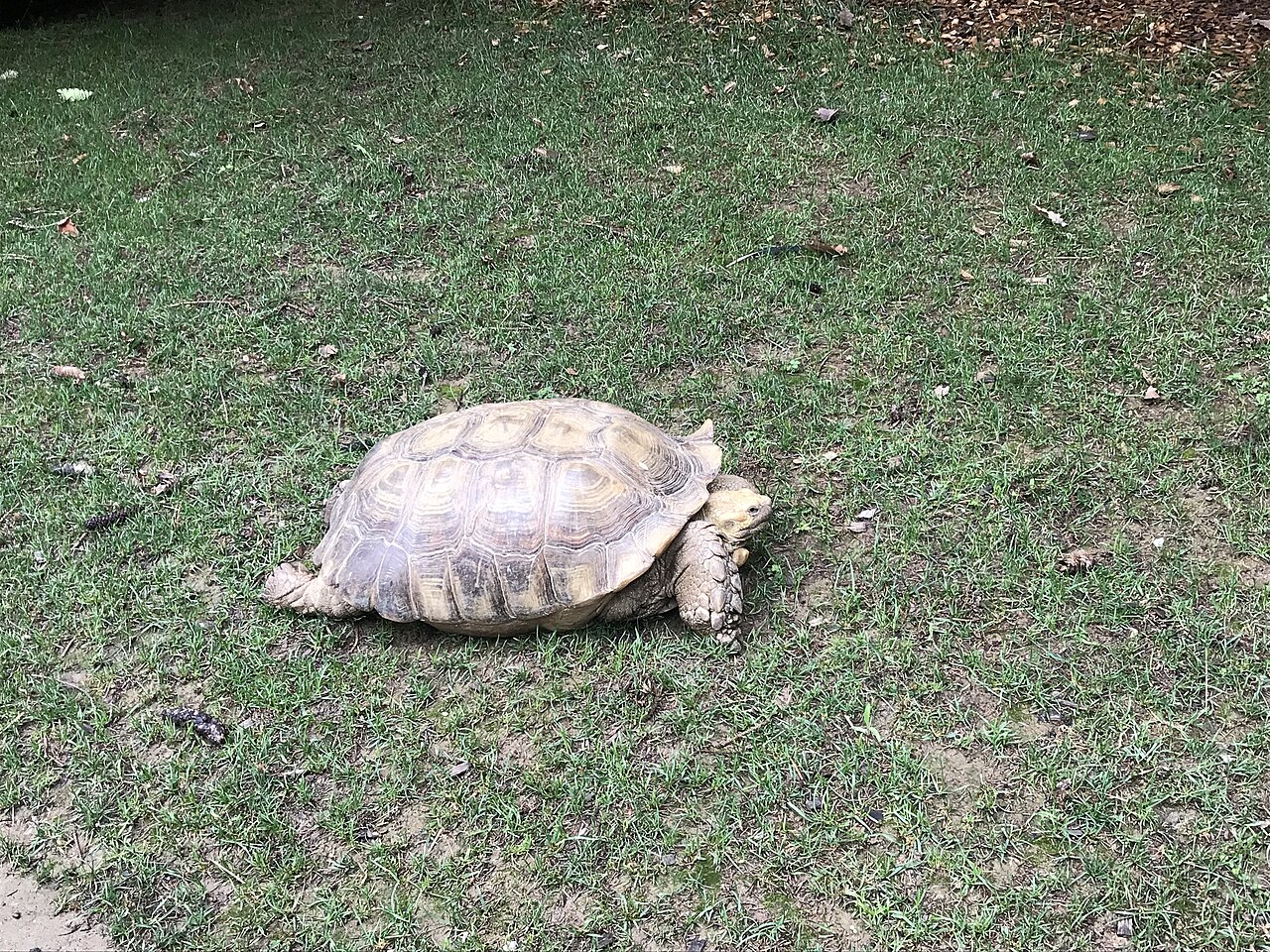
Outdoors beats indoors for every species that your climate allows. Natural sunlight provides UVB no bulb matches, grazing on lawn weeds supplies the fiber a tortoise evolved for, and the day and night temperature swing drives normal activity and appetite. Keepers who move a listless indoor tortoise outside usually report a different animal within a week.
Build walls the tortoise cannot see through, sunk 6 to 8 inches into the ground, because tortoises dig and climb better than they look like they can. Add a shaded hide, a sunny open area, a shallow sunken water dish and edible plantings such as dandelion, plantain and clover. Cover the pen with wire mesh if raccoons, dogs or large birds visit your yard.
Move a tortoise outside only when daytime highs hold above 70 F (21 C) and nights stay above 55 F (13 C), or provide a heated hide. The large species need this space permanently; a sulcata tortoise cannot be housed indoors long term at adult size under any realistic arrangement.
Heat, UVB and Lighting
A tortoise cannot digest food or fight infection at the wrong temperature, which makes the heat gradient the most important piece of equipment you own. Provide a basking spot of 95 to 100 F (35 to 38 C) under a flood bulb, an ambient range of 75 to 85 F (24 to 29 C) across the enclosure, and a cool end near 70 F (21 C). Night temperatures can drop to 65 F (18 C) for most species.
UVB is separate from heat unless you use a mercury vapor bulb that supplies both. Without UVB a tortoise cannot synthesize vitamin D3, cannot absorb dietary calcium and develops metabolic bone disease: a soft shell, splayed limbs and eventually fractures. Run UVB 12 hours a day and replace the bulb every 6 to 12 months, since output collapses long before the light looks dim.
Measure with two digital thermometers and an infrared temperature gun rather than trusting the bulb’s box. Wattage that produces 100 F in a cool basement will push 115 F in a warm room, and the difference is the line between a healthy basking site and a burn.
Humidity and Why Dry Keeping Causes Pyramiding
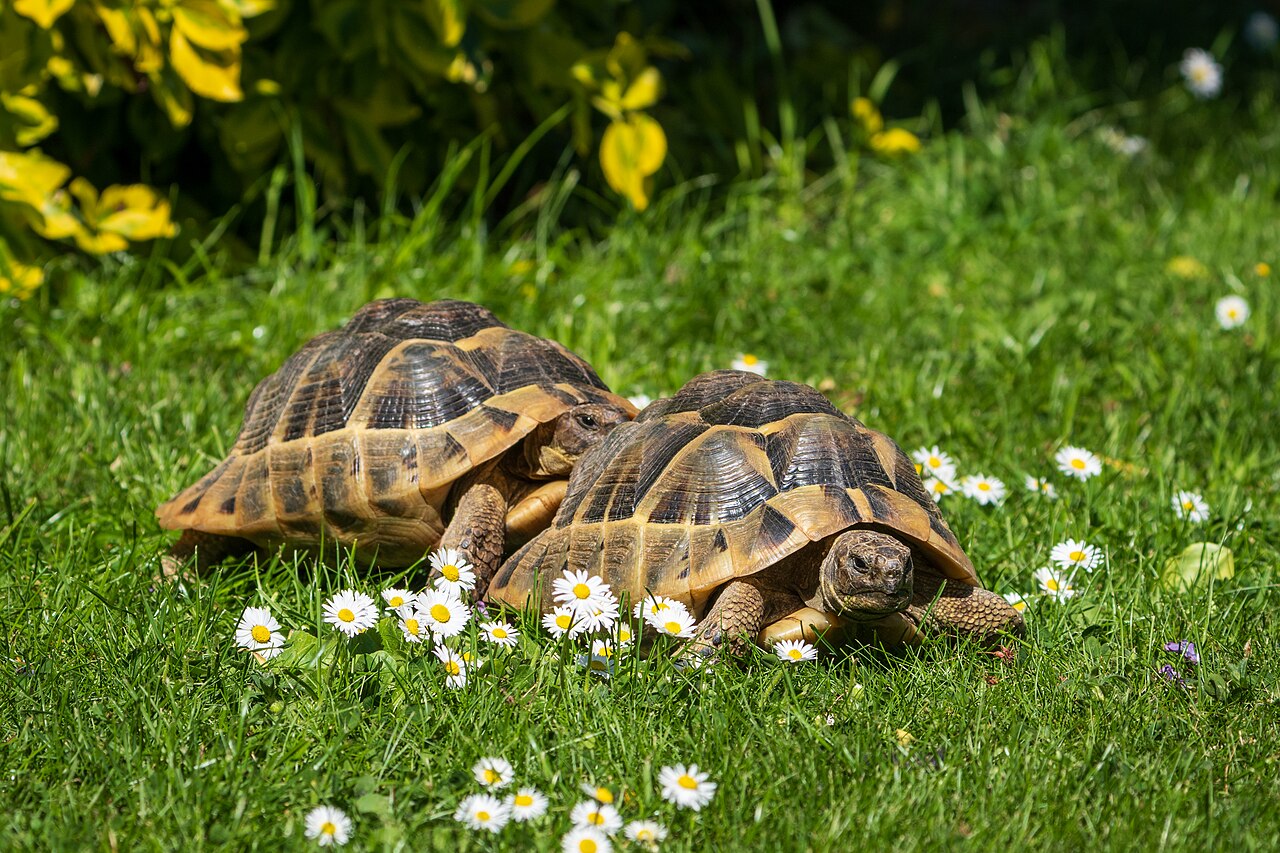
The old advice that tortoises need a desert-dry enclosure has been overturned by keepers raising smooth-shelled animals in humid setups. Pyramiding, where each scute grows into a raised cone, is now understood as a growth deformity driven mainly by low humidity, compounded by too much protein and too little exercise. It is cosmetic at first and structural later.
Target 50 to 70 percent for Mediterranean species like Russian, Greek and Hermann’s, and 70 to 80 percent for tropical species such as red-footed and Indian star. Hatchlings of every species need the higher end, because their shells are growing fastest and are most vulnerable.
Raise humidity with damp substrate and a humid hide rather than misting the air, which raises readings for 20 minutes and does nothing lasting. A plastic tub with a cut entrance, filled with moist sphagnum moss, holds 90 percent inside while the main enclosure stays dry enough to prevent shell rot.
What Do Tortoises Eat? Grass, Weeds and Greens
The correct tortoise diet is high fiber, low protein and low sugar, which in practice means grasses and broadleaf weeds. Dandelion, plantain, clover, mallow, hibiscus leaves, endive, escarole, mustard greens, collards and timothy or orchard grass hay should make up 80 percent or more of what a tortoise eats. Grazing species like leopards and sulcatas can live almost entirely on grass and hay.
Dust food with a calcium carbonate supplement without vitamin D3 two or three times a week, or leave a cuttlebone in the enclosure for the animal to gnaw. Tortoises self-regulate calcium intake surprisingly well when given the option.
Cut out commercial pellets as a staple, iceberg lettuce, spinach in quantity, and all animal protein. Dog food, cat food and high-protein pellets drive fast shell growth, pyramiding and kidney damage. Spinach and kale bind calcium through oxalates and are fine occasionally, wrong as a base. Tropical species like the red-footed tortoise are the exception and do take a small amount of animal protein.
Do You Have to Feed a Tortoise Every Day?
You do have to feed a tortoise every day if it is a hatchling or a juvenile, since growing animals eat daily and in volume. Adults of the small Mediterranean species do better on five or six feeding days a week with one or two fasting days, which mimics wild foraging and prevents the steady overfeeding that produces oversized, lumpy shells.
Portion by shell size: roughly the volume of the tortoise’s own shell in chopped greens per feeding for an adult. Remove uneaten food the same day, because wilted greens attract flies and mold in a humid enclosure.
Grazing species in an outdoor pen feed themselves and need no schedule at all, which is one of the strongest arguments for outdoor housing. If the pen has good weed cover, your job shifts from feeding to checking that nothing toxic has seeded in, particularly buttercup, foxglove, azalea and rhubarb leaves.
What Is a Tortoise’s Favorite Fruit, and Why Fruit Is a Problem
A tortoise’s favorite fruit is usually strawberry, melon or mango, and most will take any of them over a plate of grass every time. That preference is exactly the problem. Sugar ferments in a hindgut built for cellulose, disrupting the gut flora that digest fiber and causing loose stools and gas.
For Mediterranean and grazing species, treat fruit as a rare treat: a bite-sized piece once or twice a month, or never. Tortoises in those groups evolved in habitats where fruit essentially did not exist, and they have no adaptation for it.
Tropical forest species are different. Red-footed and yellow-footed tortoises eat fallen fruit in the wild, and 10 to 20 percent of their diet can reasonably be papaya, mango, figs, melon or prickly pear. Even there, variety matters more than quantity, and the base stays leafy.
Water, Soaking and Should I Pour Water on My Tortoise?
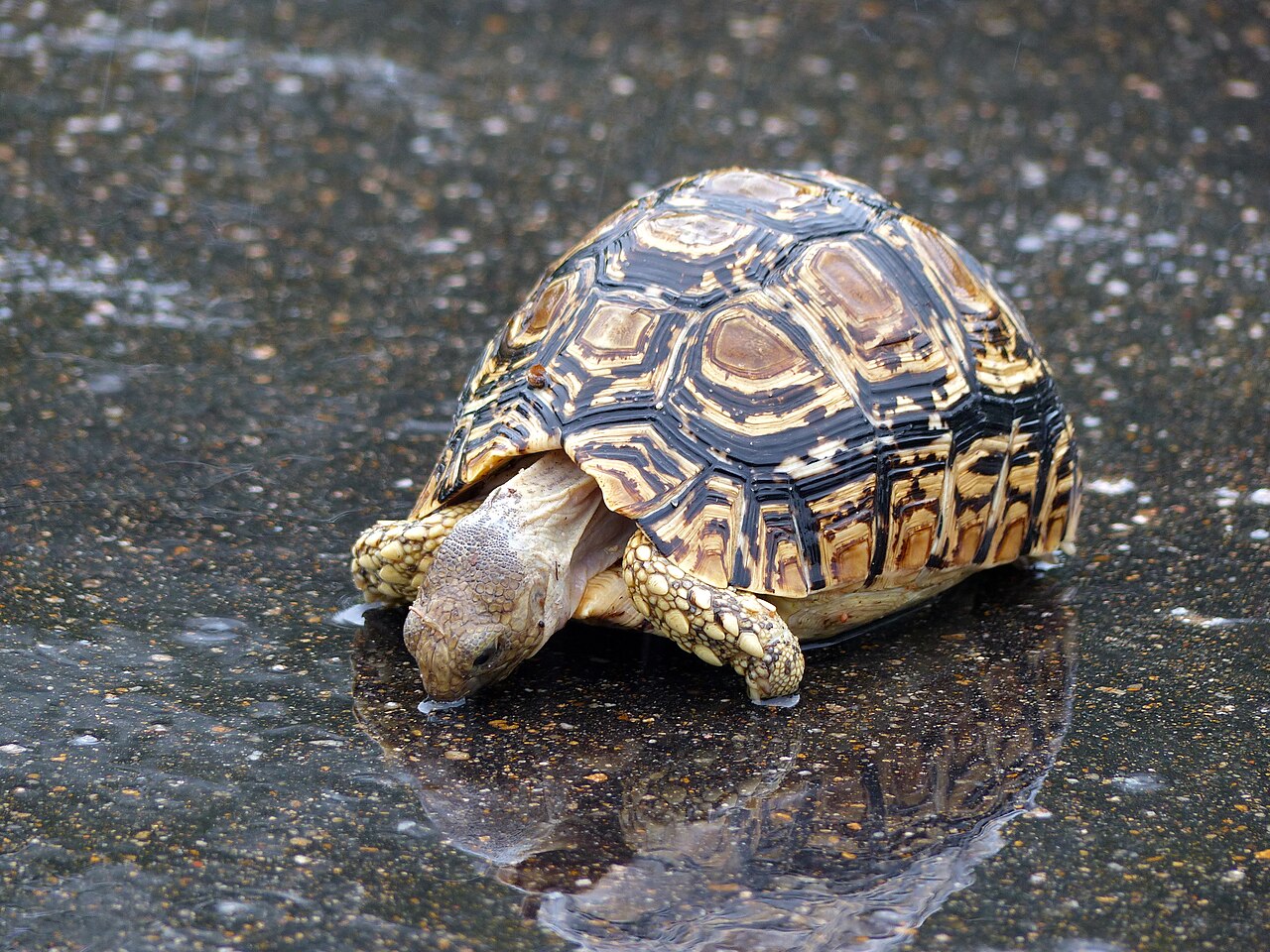
Do not pour water on your tortoise. Water over the shell does nothing for hydration, can chill the animal, and running water into the nostrils risks aspiration. What works is soaking from below: place the tortoise in a shallow tub of lukewarm water reaching the bottom third of its shell for 15 to 20 minutes.
Tortoises drink during soaks and also absorb water through the cloaca, then usually defecate, which is why soaking doubles as a way to keep the enclosure cleaner. Adults benefit from one or two soaks a week; hatchlings and juveniles should be soaked daily or every other day.
Keep a shallow, heavy water dish in the enclosure at all times, sunk level with the substrate so the animal can walk in and out. Dehydration is the quiet cause behind most bladder stones and much of the kidney failure that shows up in older captive tortoises, especially in species kept too dry for decades. Species with high humidity needs, like the Indian star tortoise, need soaking taken seriously from day one.
What Will Make a Tortoise Happy? Enrichment and Behavior
What will make a tortoise happy is space, warmth, sunlight and something to do with its day. Tortoises are not social and do not need company, but they are curious and highly active when conditions are right. A contented tortoise walks the enclosure in the morning, basks, grazes, digs, and settles into a hide in the evening.
Build in terrain: gentle slopes, a log to climb, plant clumps to push through, a dig box of damp soil. Scatter-feed greens across the enclosure rather than serving them on a dish, so the animal forages. These changes visibly increase activity and reduce the pacing and wall-climbing that signal an enclosure that is too small or too dull.
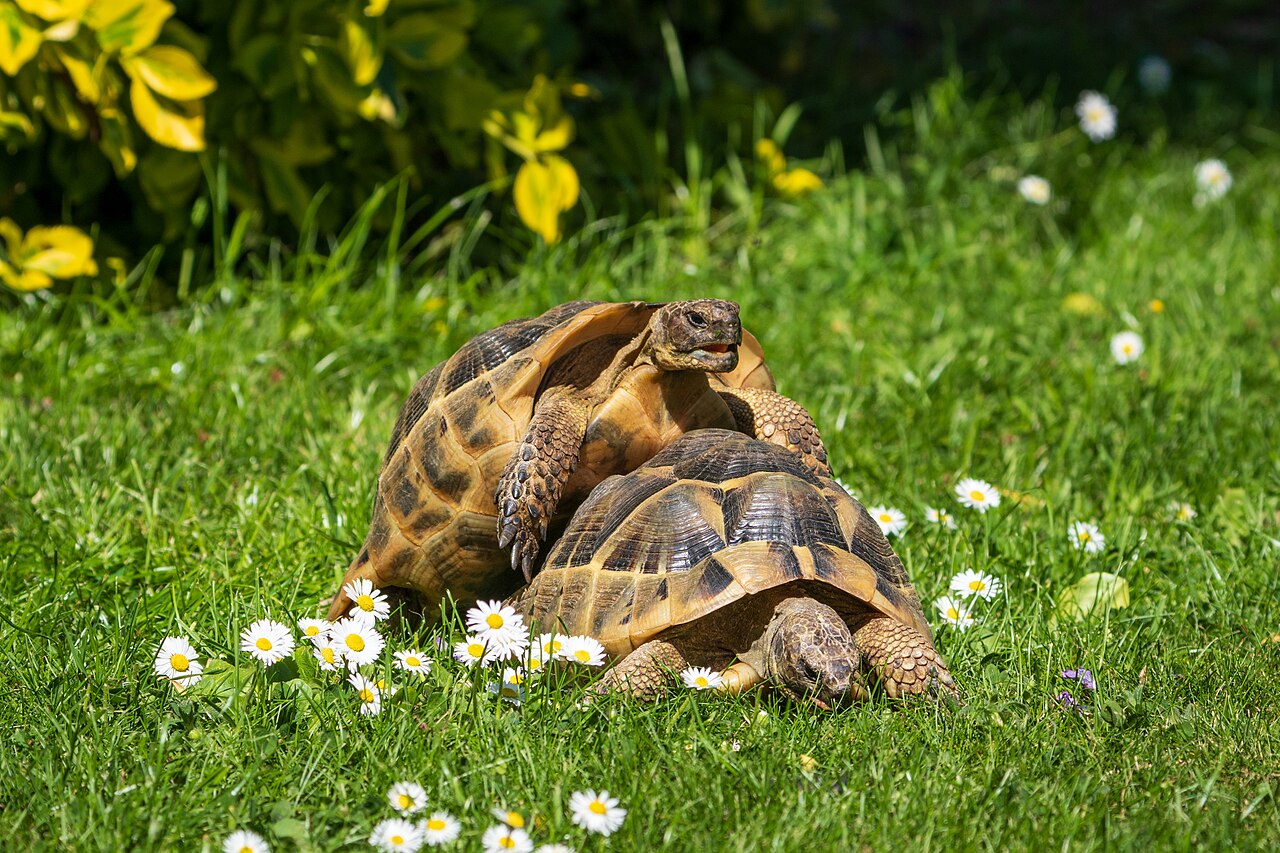
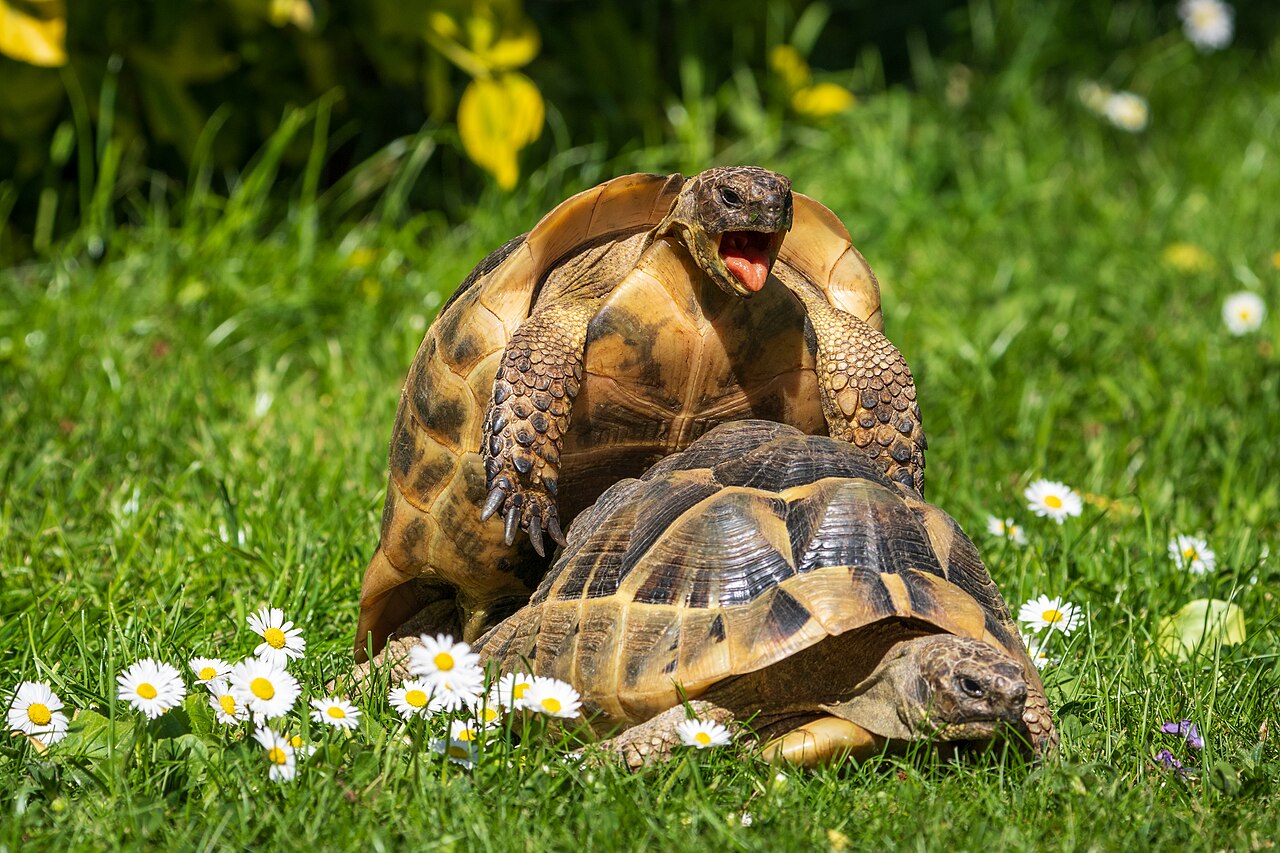
Housing two tortoises together is usually a mistake. Males harass females relentlessly and fight each other, and mixed species can pass parasites and pathogens both ways. One tortoise per enclosure is the default, and mixing species is never recommended.
What Is the Most Common Cause of Tortoise Death?
The most common cause of tortoise death in captivity is respiratory infection, typically following a period at temperatures too low for the immune system to function. Signs are nasal discharge, wheezing, open-mouth breathing, bubbles at the nostrils and a tortoise that stops eating. This is a vet case, not a wait-and-see case, and it kills quickly in hatchlings.
Behind it sit three slower killers: metabolic bone disease from missing UVB or calcium, kidney failure from years of chronic dehydration and excess protein, and impaction from swallowed substrate or a low-fiber diet. All four causes are husbandry, which means a thermometer, a fresh UVB bulb, a weekly soak and a grass-based diet remove most of the risk.
Injury accounts for the rest: dogs chewing shells, lawn mowers, falls from a height, and drowning in pools or deep water dishes. A tortoise flipped onto its back in direct summer sun can die of overheating within an hour, which is the argument for visible walls and no climbable corners in an outdoor pen.
Brumation, Vet Care and Long-Term Commitment
Mediterranean species brumate naturally, spending 8 to 14 weeks at 40 to 50 F (4 to 10 C) in a dormant state. It is not mandatory in captivity, but many keepers find that brumated animals feed better and breed more reliably afterward. Never brumate a tortoise that is underweight, sick, or has food in its gut; fast it for two to three weeks first and weigh it weekly throughout.
Find a reptile vet before you need one, and budget for a fecal exam in the first month to check for parasites in any newly acquired animal. Wild-caught imports, still common for some species, carry heavy worm loads and often arrive dehydrated.
Finally, plan for the animal to outlive your current situation. Wild tortoise populations are in decline across their ranges, and species such as the desert tortoise are federally protected, with details available from the US Fish and Wildlife Service. Buy captive-bred, never release a pet, and write the tortoise into your long-term plans the way you would a long-lived turtle. If you are still choosing a species, the Russian tortoise and Hermann’s tortoise are the two most forgiving starting points, while the leopard tortoise needs far more room than most homes have.
Frequently Asked Questions
Can I leave my tortoise alone for 2 days?
Yes. A healthy adult tortoise handles two days alone without difficulty, provided lights and heat run on timers and the water dish is full. Leave a pile of hay and greens rather than nothing at all. Past three or four days, have someone check temperatures and refill water.
Do tortoises like being touched?
Most tortoises tolerate touch rather than enjoy it, though many react to having the shell or neck gently scratched, a spot they cannot reach themselves. Picking a tortoise up is stressful for it, since being lifted mimics a predator. Handle for health checks and soaks, not for affection.
What do tortoises love the most?
Warm sunshine, room to walk and fresh weeds, in that order. Given an outdoor pen on a 80 F (27 C) day, a tortoise will graze and explore for hours. If you want one thing that reliably produces activity, it is natural sunlight on real ground.
Which tortoise species is best for beginners?
The Russian tortoise is the standard recommendation: 6 to 8 inches, hardy, widely captive-bred and content in a 4 by 2 foot enclosure. Hermann’s and Greek tortoises are equally suitable. Avoid sulcatas and leopard tortoises as a first animal, since both outgrow indoor housing entirely.
How long do tortoises live in captivity?
Small Mediterranean species commonly reach 50 to 80 years, leopard and sulcata tortoises 70 to 100, and Galapagos tortoises well past 150. Captive records are shorter than the potential because husbandry errors accumulate, but a well-kept Russian tortoise bought today will likely still be alive in 2080.
Can tortoises eat lettuce?
Romaine, red leaf and green leaf lettuce are acceptable fillers but low in nutrients, and iceberg is nearly worthless. Use lettuce as maybe a quarter of the greens at most, and build the diet on dandelion, plantain, clover, endive, escarole and grass hay instead.