Crab Symbolism: Spiritual Meaning and Signs
Symbolically, the crab stands for protection, adaptability and the indirect path, a soft body living inside a hard shell that moves sideways to get where it needs to go. Crab symbolism also carries a sharper edge through the idiom “crab mentality,” which describes people pulling a rising peer back down. The two meanings share an animal and little else.
Seeing a crab on a beach or in a dream asks for a personal reading, and the animal’s habits supply it. A crab that runs for cover points to a need for retreat and rest. A crab that stands and raises its claws points to a boundary you need to hold. Greek myth, Chinese wordplay and Japanese legend add depth to both readings.
As a sign, a crab you see on the shore or in a dream points to self-protection and a change of approach. It asks you to guard what is tender, adapt to shifting conditions and reach your goal by a side route. The shell protects, the claws defend.
| Tradition | Crab image | Meaning |
|---|---|---|
| Greek myth | Karkinos, sent by Hera | Loyalty rewarded with a place among the stars |
| Astrology | Cancer, ruled by the moon | Home, protection, moods |
| Rider-Waite tarot | Crayfish on the Moon card | The unconscious rising to the surface |
| China | Xie, a pun on hexie | Harmony and high rank |
| Japan | Heike crab | Spirits of Taira warriors lost at Dannoura |
| English idiom | Crabs in a bucket | Envy that pulls others down |
What Crab Symbolism Means
Crab symbolism means protection, adaptation and progress by an indirect route. The shell is armor, the claws are a last defense, and the sideways walk is the crab’s answer to a world that rarely offers a straight path. Crabs walk sideways because their leg joints bend outward. An Atlantic ghost crab (Ocypode quadrata) uses that lateral sprint to reach its burrow before a gull does.
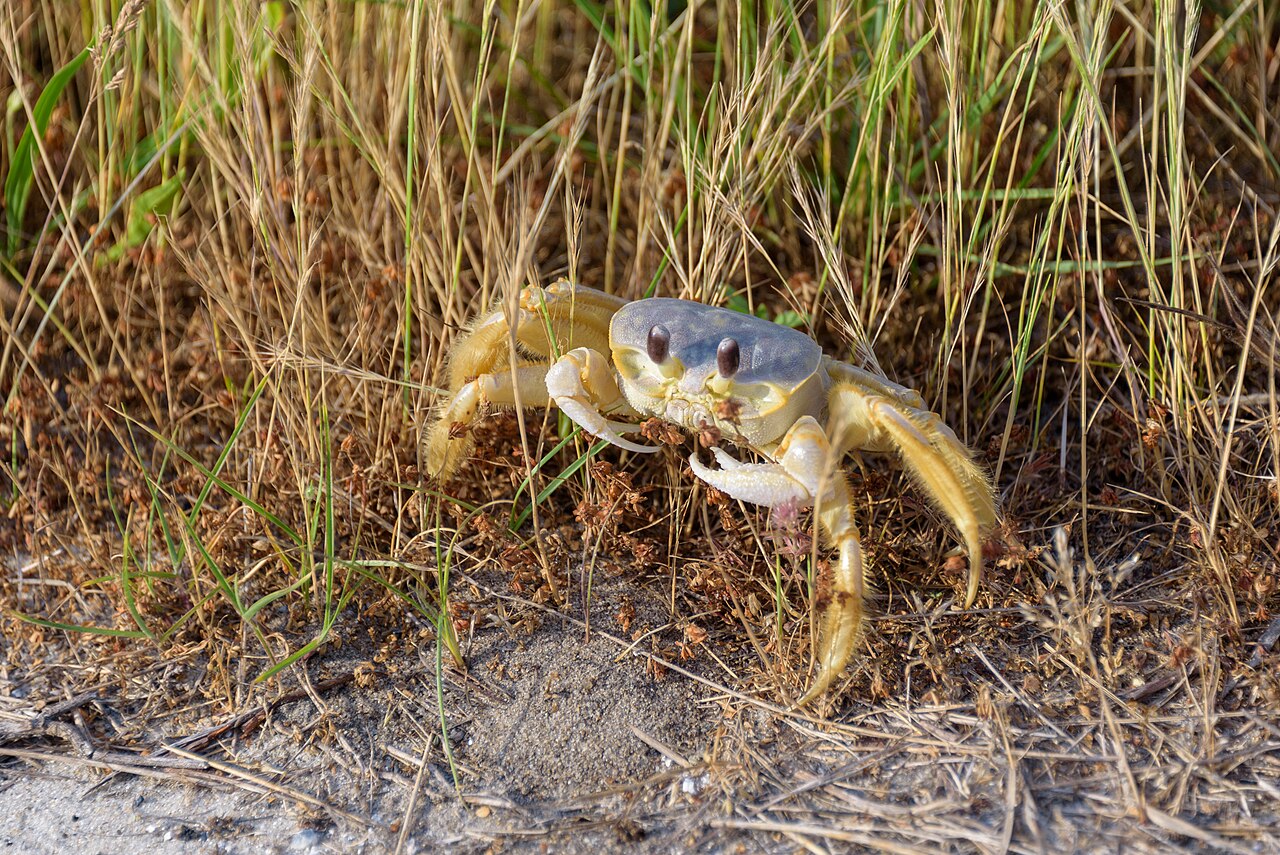
The second theme is the soft core under the hard shell. A crab grows by molting. It sheds the old exoskeleton and stays hidden while the new one hardens. That cycle makes the crab a symbol of growth that requires vulnerability, and of knowing when to hide while you rebuild.
The third theme is the moon and the tides. The Atlantic marsh fiddler crab (Minuca pugnax) times its feeding to the falling tide, and astrology links Cancer, the crab sign, to the moon. A crab therefore points to rhythm. Act when conditions open up, and wait when they close.
Crab Mentality: What It Means and Where It Comes From
Crab mentality means pulling down anyone who tries to rise above the group, the way crabs in a bucket are pictured dragging back the one that climbs toward the rim. The phrase describes people, not crabs. It names the coworker who mocks a colleague’s promotion, or the friend group that resents the one member who moves away.
The bucket image is the root of the idiom. A single crab can climb out, the story goes, but a group keeps each other in because every climber gets grabbed by the ones below. The picture works as a metaphor for envy and the fear of being left behind. It is an anecdote, not a documented behavior study.
The opposite of crab mentality is collective uplift. A group that celebrates whoever gets ahead treats the win as an open door for the rest. In animal symbolism the clearer counterimage is the shark. Shark symbolism centers on power, instinct and forward motion, a solitary predator that does not wait for the pack.
Crab Symbolism in Cancer and Greek Myth
In Greek myth, the crab is Karkinos, a giant crab Hera sent to attack Herakles while he fought the Hydra at Lerna. Karkinos bit the hero’s foot, and Herakles crushed it. Hera rewarded its loyalty by placing it among the stars.
The Roman author Hyginus records this story in his Astronomica as the origin of the constellation Cancer. The constellation is faint, and its best known feature is the Beehive Cluster (M44) at its center. The zodiac sign borrows the name and the image, so Cancer in astrology carries the crab’s traits of protectiveness, home and memory.
Keep the tarot apart from this. The Moon card in the Rider-Waite deck shows a crayfish crawling out of a pool, not a crab. The card speaks of the unconscious and of things rising from deep water. It overlaps with crab symbolism without showing the same animal.
Crab Symbolism in China, Japan and Beyond
In China, the crab is a symbol of harmony and high rank because of two puns. The word for crab, xie (蟹), sounds like xie in hexie (和谐), harmony. The crab’s shell is jia (甲), the same character that marks first rank, which made crabs a motif in paintings for students facing the imperial examinations.
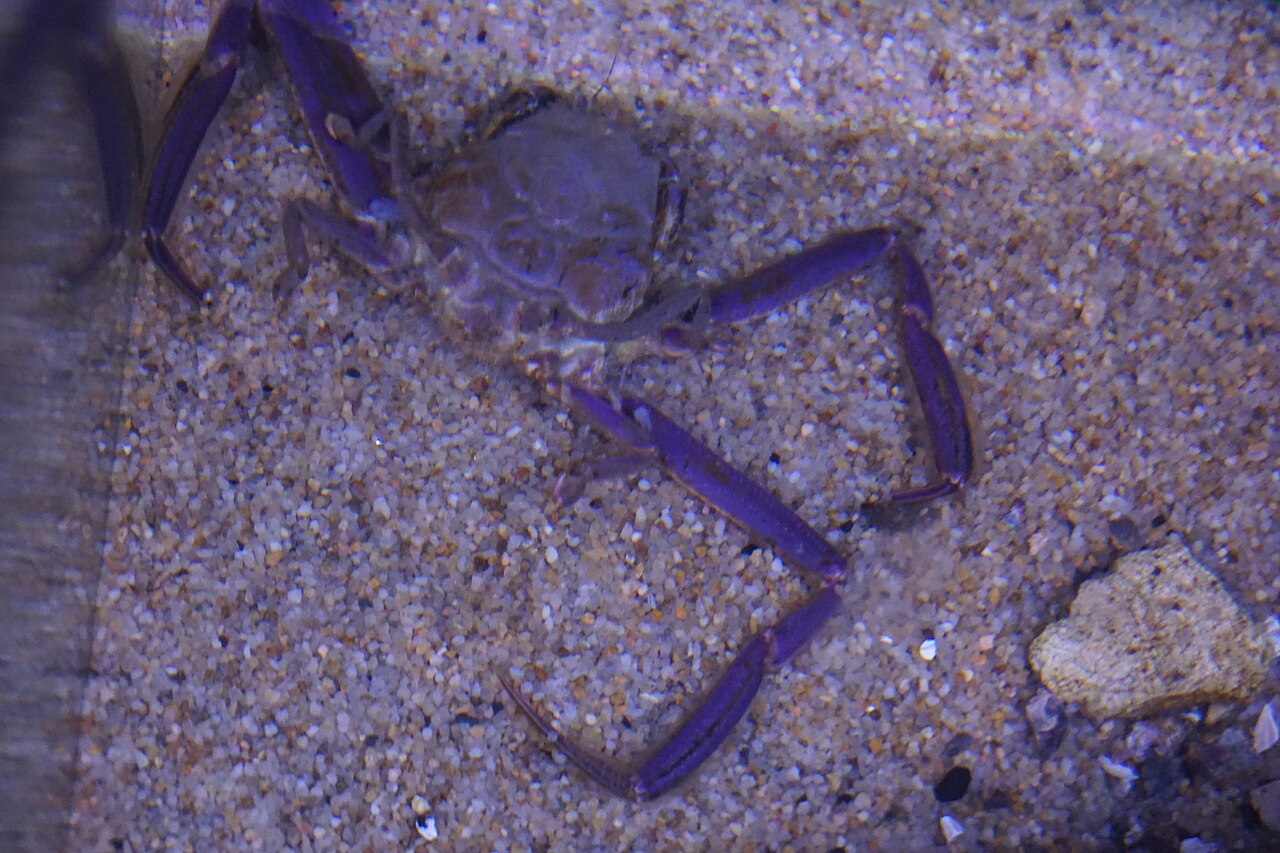
In Japan, the Heike crab (Heikeopsis japonica) carries a ghost story. Its shell bears ridges that resemble a frowning samurai face. Fishermen near Shimonoseki tell that the crabs hold the spirits of Taira (Heike) warriors who drowned at the Battle of Dannoura in 1185, and they return such crabs to the sea. Carl Sagan used the crab in Cosmos as an example of artificial selection, a claim biologists have since disputed.
Both traditions tie the crab to water and fate. Fish symbolism follows a similar line, from the Christian ichthys to Vishnu’s Matsya avatar in Hindu tradition.
Crab Spirit Animal and Personality Traits
A crab’s personality, judged by its behavior, is shy, tough and adaptable. A crab retreats first. It backs into a burrow, a crevice or a tangle of seaweed and fights only when cornered. As a spirit animal, the crab stands for people who guard their privacy, protect family hard and adapt to new ground without fuss.
The claw is the crab’s boundary. A blue crab (Callinectes sapidus) that cannot flee rises on its back legs and spreads its claws wide, a clear warning before any pinch. The lesson is to set limits early and visibly.
Octopus symbolism offers the contrast of a soft body with no shell, an animal that relies on camouflage and intelligence instead of armor.
Jellyfish symbolism goes further still, with an animal that drifts and lets the current carry it.
What a Crab Dream Means
A crab dream points to defensiveness, a situation you approach sideways or a feeling you keep under a hard shell. A pinching crab points to a conflict you have avoided. A crab walking away points to a problem you keep sidestepping.
Crab dream meaning shifts with the scene, from a crab in clear water to a crab inside the house.
Frequently Asked Questions
What does “she’s got crabs” mean?
“She’s got crabs” is slang for an infestation of pubic lice (Pthirus pubis), tiny insects whose claws resemble a crab’s. It has nothing to do with crab symbolism. The CDC lists over-the-counter lotions with 1% permethrin or pyrethrins with piperonyl butoxide as treatment, applied to the affected area and rinsed off as the label directs.
What are some sayings about crab mentality?
The core saying is “crabs in a bucket,” shorthand for a group that drags back whoever climbs toward the rim. A second is “if I can’t have it, neither can you,” which states the envy outright. Both describe the same behavior, resentment of a peer’s success expressed as sabotage rather than rivalry.
What is the root cause of crab mentality?
Social comparison and perceived scarcity are a common root of crab mentality. Psychologist Leon Festinger’s 1954 social comparison theory holds that people evaluate themselves against those around them. When jobs, money or status seem scarce, a peer’s rise can feel like a personal loss, and that feeling can drive the urge to hold others back.
Do crabs really pull each other down in a bucket?
No, not as a deliberate act. Crabs in a bucket climb over and grab whatever is nearest, so a climber gets snagged by the crabs below it. That is crowding, not envy. The crab mentality story is an anecdote that turns this scramble into a moral about people.
Are hermit crabs true crabs?
No. Hermit crabs belong to the Anomura, a separate group from the true crabs of the Brachyura. They have a soft, coiled abdomen and borrow empty snail shells for protection instead of growing a full shell of their own. The shell symbolism here applies to true crabs, not to hermit crabs.
Sources
- Theoi Project, Hyginus, Astronomica Book 2
- NOAA Fisheries, Blue Crab
- CDC, Pubic Lice
- Festinger, A Theory of Social Comparison Processes, Human Relations (1954)