Baby Red Eared Slider: Size, Diet, Care and Cost
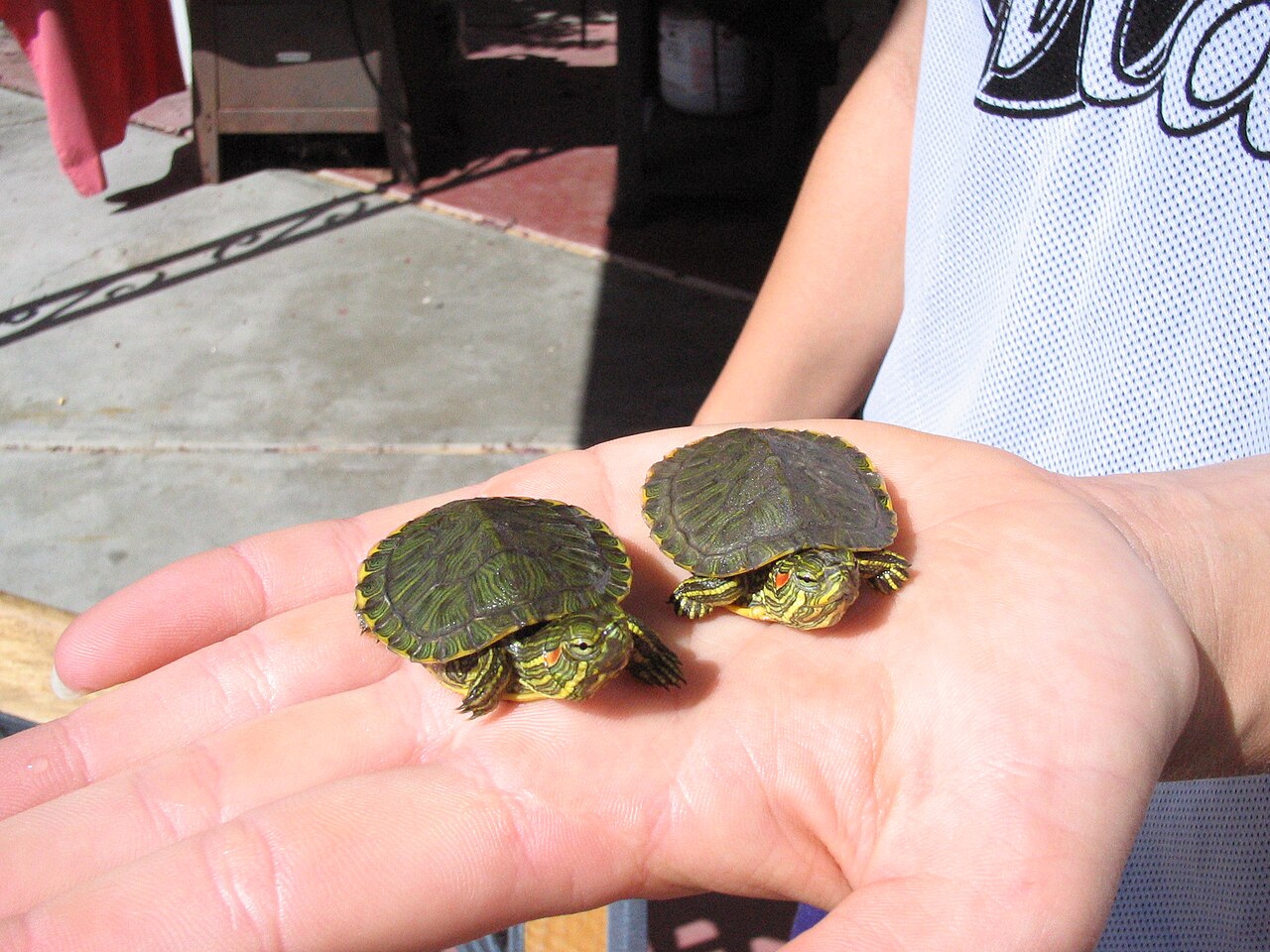
A baby red eared slider (Trachemys scripta elegans) hatches at 1 to 1.5 inches (2.5 to 3.8 cm) long, with a bright green shell, yellow stripes and a red patch behind each eye. It grows into an adult of 8 to 12 inches (20 to 30 cm) and, with good care, lives 20 to 30 years.
Federal law bans the sale of turtles with shells under 4 inches as pets, and hatchlings are a known source of Salmonella illness.
A baby red-eared slider is 1 to 1.5 inches long, green with yellow stripes and a red ear patch. It needs a 40-gallon tank, water at 75 to 80°F, a 90 to 95°F basking spot, UVB light and a filter. Feed pellets and protein daily. Adults reach 8 to 12 inches.
| Trait | Hatchling | Adult |
|---|---|---|
| Shell length | 1 to 1.5 in (2.5 to 3.8 cm) | 8 to 12 in (20 to 30 cm) |
| Shell color | Bright green with yellow lines | Darker olive green |
| Diet | Pellets and protein every day | More plants, fewer feedings |
| Legal pet sale in the US | No, shell under 4 in | Only where state and local rules permit |
| Larger sex | Not visible yet | Female |
| Salmonella | Known source of illness | Can still carry it |
What a Baby Red Eared Slider Looks Like and How Big It Is
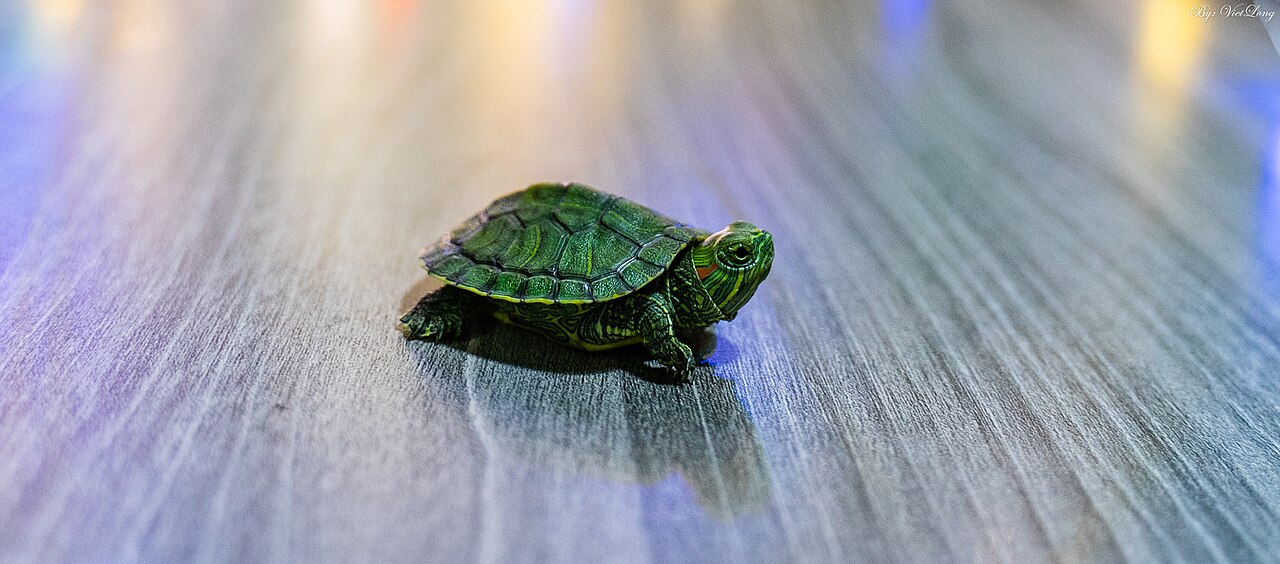
A baby red-eared slider is a coin-sized turtle, 1 to 1.5 inches (2.5 to 3.8 cm) across the shell at hatching. The shell is bright leaf green with thin yellow lines, and the skin carries the same yellow stripes. The red patch behind each eye is the “ear” in the name.
A baby painted turtle (Chrysemys picta) has a smoother, darker shell with red edging and red neck lines instead of one patch. A baby river cooter (Pseudemys concinna) has yellow head stripes but no red ear. Map turtles have yellow head markings and a saw-edged shell.
What Baby Red-Eared Sliders Need to Survive
A baby red-eared slider needs warm, clean water, a dry basking spot, UVB light and room to swim. Start with a 40-gallon (150 L) tank and review the size as the turtle grows. Keep the water at 75 to 80°F (24 to 27°C) with a guarded submersible heater.
The basking spot is a dock or ramp at 90 to 95°F (32 to 35°C) where the turtle can climb out fully and dry off. Place the heat lamp and UVB lamp over that spot, at the distance the maker specifies, and leave the rest of the tank cooler and shaded as a retreat. Replace the UVB bulb on the maker’s schedule, since it loses output long before it stops glowing.
Use a filter rated above the tank volume, and still test ammonia and nitrite regularly and do partial water changes, since sliders eat and defecate in the water. Tank water can spread Salmonella, so flush wastewater down the toilet and keep it away from sinks and bathtubs.
A red-footed tortoise lives on land and needs a humid enclosure, so no tortoise kit fits a slider.
Feeding a Baby Red-Eared Slider

Feed a baby red-eared slider once a day, with commercial aquatic turtle pellets as the base and a small portion of animal protein. Good protein options are earthworms, bloodworms, small feeder shrimp and insects. Offer an amount it finishes in a few minutes and remove leftovers before they foul the water.
Calcium matters as much as the menu. Leave a cuttlebone in the tank for the turtle to nibble, and dust protein with calcium powder a few times a week. Without calcium and UVB a slider can develop metabolic bone disease, with a soft shell and weak jaw.
Float duckweed, water lettuce or anacharis from the start, and expect a hatchling to ignore them at first. Babies lean carnivorous, and the share of plant food rises as they grow.
Baby snapping turtles stay far more carnivorous for life, and their care and diet follow a different plan.
Growth Rate and Lifespan
A red-eared slider grows fastest in its first years and reaches its adult size of 8 to 12 inches (20 to 30 cm) over several years. Extra protein does not make a healthier adult. Females end up larger than males.
With good care a slider lives 20 to 30 years, longer than many owners expect when they buy a hatchling.
Painted turtles share many of the same ponds, and their lifespan makes a useful comparison with sliders.
Buying a Baby Red-Eared Slider and What It Costs
Buying a baby red-eared slider under 4 inches as a pet is not legal in the US. A federal law bans the sale and distribution of turtles with shells under 4 inches, a rule in force since 1975, because they have caused many illnesses in young children. Flea markets, roadside stands and online sellers still offer them, and that does not make the sale legal.
A red-eared slider has no legal pet price in the US while its shell is under 4 inches; any price asked for a hatchling at a market or online is for an illegal sale. Legal routes are adopting from a reptile rescue, which charges an adoption fee, or buying a turtle over 4 inches. The tank, heater, filter, UVB tube, heat lamp and dock usually cost more than the animal. The CDC advises buying only turtles with shells longer than 4 inches, from a reputable pet store.
A musk turtle stays far smaller than a slider as an adult and suits a tighter space.
Before paying, look for clear eyes, a firm shell without soft patches, no nasal bubbles and level swimming. Adult red-eared slider turtles can be a legal purchase where state and local rules permit; their buying guide covers them in full.
Handling, Bonding and Keeping It Happy
A baby red-eared slider does not enjoy being held, so handle it rarely and briefly, mainly for cleaning and health checks. Lifted, it kicks, scratches or pulls into its shell. Wash your hands with soap and water every time. Pet turtles of any size can carry Salmonella in their droppings even when they look clean.
Food builds trust faster than touch. Feed from tongs at the same spot each day, and the turtle learns to swim toward you instead of away.
Stress shows as constant hiding, refusing food, frantic swimming against the glass or no basking. Check the water temperature and the lamp first.
Male or Female, Breeding and Housing Two Sliders
You cannot reliably sex a baby red-eared slider. Males develop long front claws and a longer, thicker tail with the vent beyond the shell edge. These traits show only after a few years.
Two sliders need a lot of space, and a 40-gallon tank is a one-turtle setup. Adult males court females by fluttering their long claws, and a pair kept together breeds repeatedly and stresses the female. Two males often fight until they bite each other, so keep males apart.
Frequently Asked Questions
Do baby turtles ever see their mom?
No. A female red-eared slider digs a nest on land, lays her eggs, covers them and leaves. The hatchlings dig out alone and head for water on their own. They get no parental care at all.
What should I do if I find a red-eared slider turtle?
Leave an uninjured wild turtle where you found it if it is within its confirmed native range. If you are unsure whether it is native locally, suspect an escaped pet or find an injured turtle, contact your state wildlife agency. Outside its native range, do not release it into another location.
What are the primary causes of death in red-eared sliders?
Common serious problems fall into two groups. Vitamin A deficiency and metabolic bone disease, with a soft shell, are nutrition and care problems linked to poor diet and missing UVB or calcium. Respiratory infections and shell infections such as shell rot are infections, and poor water quality or temperature can make them more likely. At signs like labored breathing, nasal discharge, lopsided swimming or an abnormal shell, contact a reptile vet promptly and correct the setup at the same time.
Is it legal to own a red-eared slider?
Yes, in many US jurisdictions, but some places restrict sliders because escaped or released animals threaten native wildlife. The federal rule separately bans selling and distributing pet turtles with shells under 4 inches because of Salmonella illness. Check current state and local rules before acquiring one.
Who should not keep a pet turtle?
Children younger than 5, adults 65 and older and people with weakened immune systems should not keep pet turtles, according to the CDC. Half of the sick people in a recent CDC turtle Salmonella outbreak were children under 5.
Sources
- CDC, Salmonella Outbreak Linked to Pet Turtles
- CDC Healthy Pets, Reptiles and Amphibians
- CDC, Salmonella Infection