Great Horned Owl Sounds: Hoots and Calls Explained
Great Horned Owl sounds are the deep, soft, resonant hoots that most people picture when they imagine an owl calling in the night, which is why the Great Horned Owl is often nicknamed the “hoot owl.” Its classic territorial song, a series of muffled hoots delivered in a distinctive rhythm, carries far through the dark and is one of the most familiar wild sounds in North America. But this powerful owl has a wider vocabulary too, from duetting pairs to hisses, bill-snaps, and the raspy screeches of hungry young. This guide explains what each Great Horned Owl sound means, why males and females sing together, when you are most likely to hear them, and how to tell the call apart.
| Call | Sounds like | Meaning |
|---|---|---|
| Territorial hoot | Deep “hoo-h’HOO-hoo-hoo” | Territory and contact |
| Duet | Male and female hooting together | Pair bonding |
| Hiss and bill-snap | Loud hiss with sharp bill clacks | Threat or defense |
| Raspy screech | Harsh, insistent rasp | Young begging for food |
What Great Horned Owl hoots sound like
The classic Great Horned Owl song is a series of four to five deep, soft hoots in a recognizable rhythm, often written as hoo-h’HOO-hoo-hoo or “who’s awake, me too.” The notes are muffled and resonant, pitched low, and they carry a remarkable distance through still night air. It is the archetypal owl hoot, the sound used in countless films to signal nightfall, and it is delivered from a prominent perch, often near the edge of woods or a clearing.
This hooting is the owl’s main territorial and contact call. Because Great Horned Owls hold territories year-round and pair up in the depths of winter, their hoots ring out especially on cold, clear nights from fall through late winter. If you hear deep, evenly spaced, muffled hoots in the dark almost anywhere in the Americas, you are very likely listening to a Great Horned Owl.
Why males and females duet
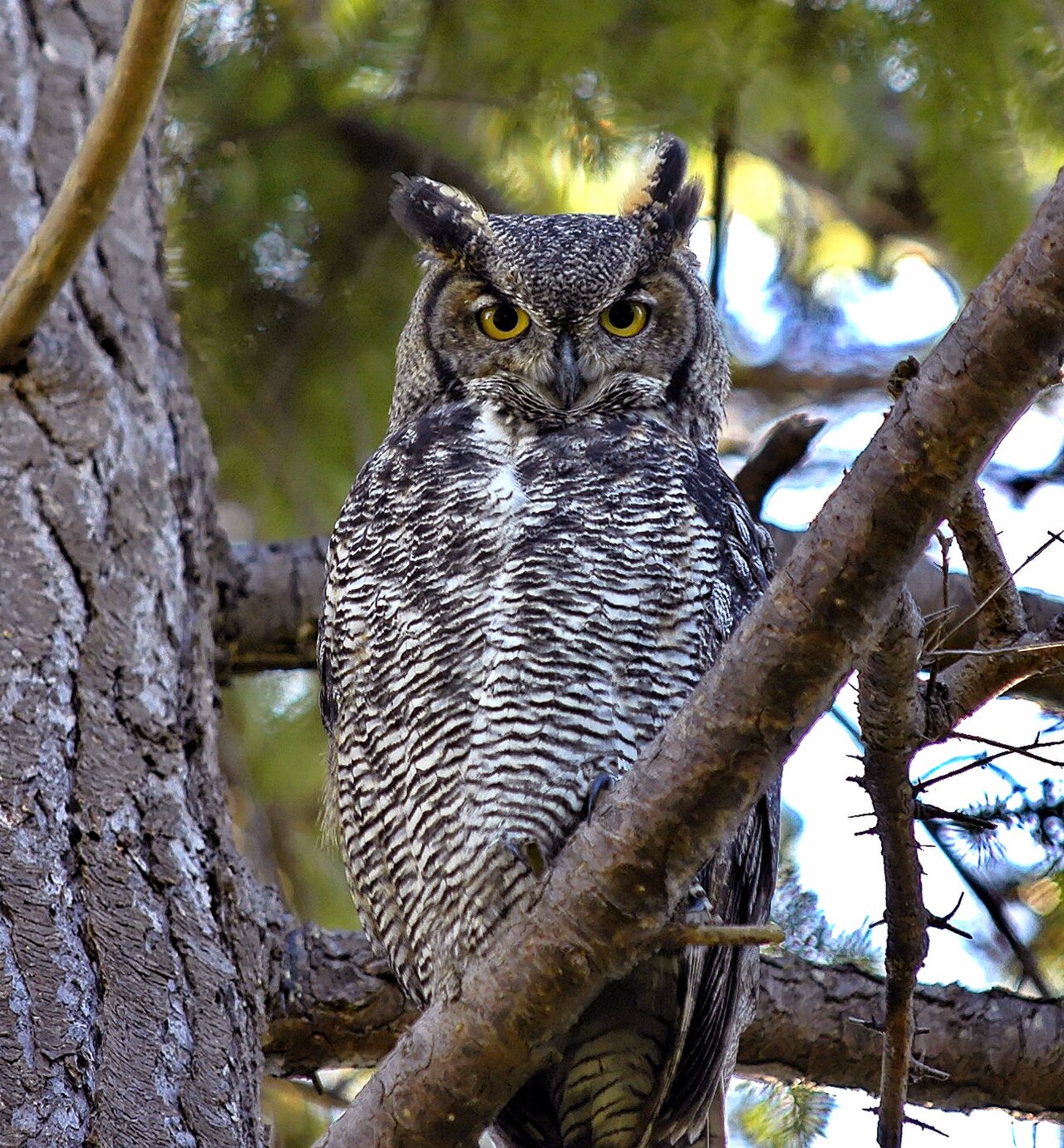
One of the most fascinating things about Great Horned Owl sounds is the duet. A mated pair will hoot back and forth, and, counterintuitively, the male’s voice is deeper than the female’s even though he is the smaller bird. This size-and-pitch reversal lets an attentive listener tell the two apart when a pair calls together, with the lower, slower hoots belonging to the male and the higher, often faster ones to the female.
These duets strengthen the pair bond and coordinate the pair as they establish and defend a territory ahead of their very early breeding season. Duetting peaks in fall and early winter, weeks or months before eggs are laid, so a pair hooting in counterpoint on a frosty November night is a sign of owls renewing their partnership for the year ahead.
Hisses, bill-snaps, and begging calls
Beyond hooting, Great Horned Owls have an array of other sounds. When threatened or cornered, an owl may give a loud hiss and snap its bill sharply, a clear warning to back off, often accompanied by a defensive posture with spread wings. Adults also give barks, growls, and screams in agitation, particularly when defending a nest, and they are famously fierce in that defense.
The most persistent Great Horned Owl sounds of late spring and summer come from the young. Fledgling owls give a harsh, raspy screech, repeated insistently for hours, as they beg the adults for food. This grating begging call sounds nothing like the adults’ mellow hooting and puzzles many people who hear it, but it simply means hungry young owls are nearby. For the full picture of the bird itself, see our Great Horned Owl profile.
When and where you will hear them
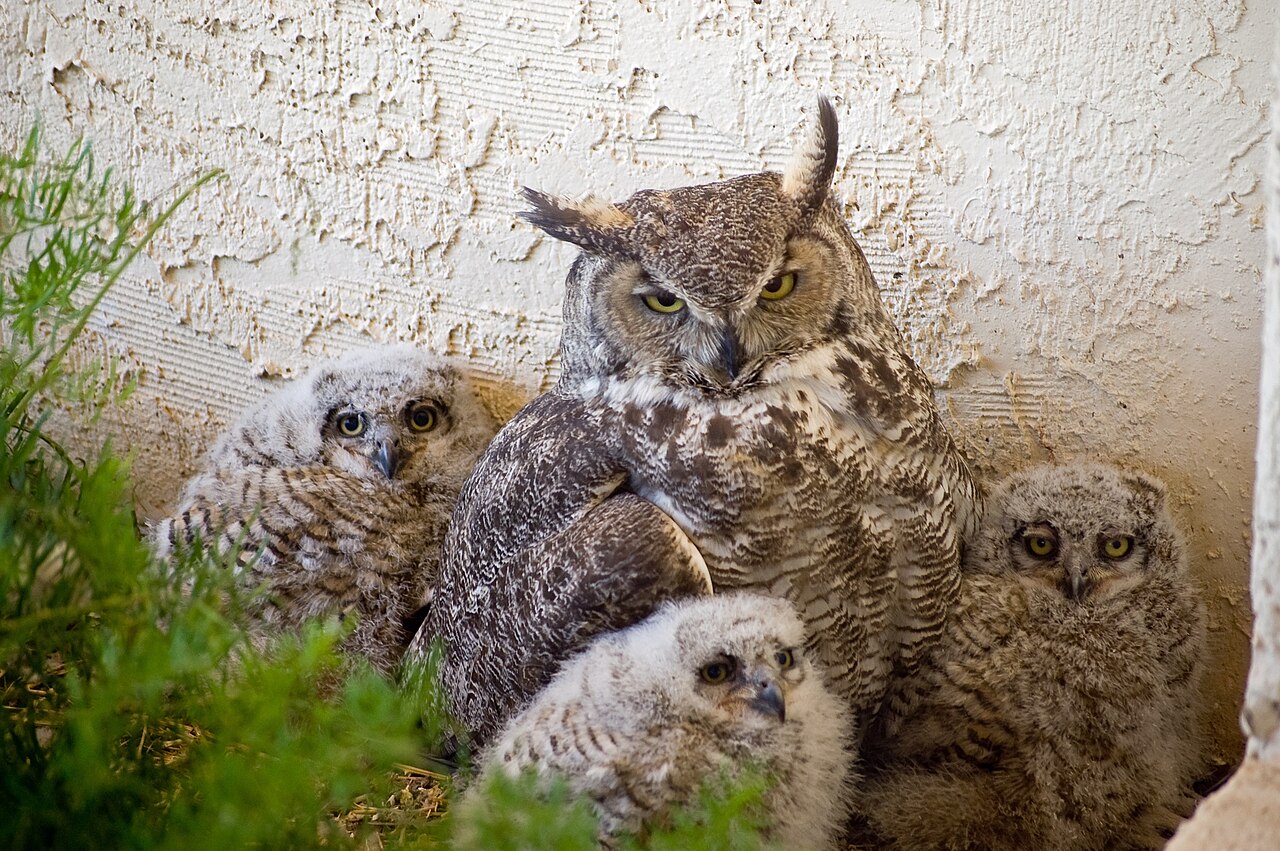
Great Horned Owls call most from fall through late winter, the season when they claim territory and court, with hooting concentrated in the hours around dusk and dawn and on clear, calm nights when sound travels far. Because the species is so widespread, occupying forests, deserts, farmland, wetlands, and city parks alike, its hoots can be heard almost anywhere in the Americas with a few trees.
In late spring and summer the mood shifts, and the dominant sound becomes the raspy begging of fledged young rather than the adults’ territorial hoots. Learning both the deep adult hoot and the juvenile screech lets you follow a family’s year by ear. Owls calling in the night have long fed folklore, explored in our guide to owls at night.
How to tell it apart from other owls
The Great Horned Owl’s deep, muffled, evenly spaced hoots are lower and less phrase-like than the calls of most other owls. The Barred Owl gives a rhythmic “who cooks for you” with a clear question-like cadence, higher and more emphatic than the Great Horned Owl’s soft hoots. The Eastern Screech-Owl gives a descending whinny or trill, and the Barn Owl screeches rather than hoots.
The keys to the Great Horned Owl are the low pitch, the soft muffled quality, the steady rhythm without a phrase-like structure, and the telltale duet in which the male sounds deeper than the female. The Cornell Lab of Ornithology and Audubon offer reference recordings of each call. For a full comparison of every species by ear, see our guide to owl calls by species.
What a hooting Great Horned Owl means for your area
If a Great Horned Owl is hooting regularly near your home, it usually means a territorial adult, or a pair, has claimed the surrounding area as its own. Because these owls hold the same ground year-round and pair up in midwinter, steady hooting through the cold months signals resident birds rather than passing visitors. A duet, with the male’s deeper hoots answered by the female’s higher ones, points to an established pair preparing to nest very early in the year.
For a yard, a resident Great Horned Owl is a mixed blessing worth understanding. As a top predator it helps keep rodent and rabbit numbers in check, part of the natural balance described in our guide to what owls eat, though it may also prey on other backyard wildlife. Hearing its deep hoots is a sign of a healthy local food web and a chance to follow a pair’s year by ear. To compare its voice with every other species, see our guide to owl calls by species.
Great Horned Owl calls through the year
The Great Horned Owl‘s calling follows a clear yearly rhythm. Territorial hooting and duetting peak from fall through midwinter, when pairs claim ground and court ahead of their remarkably early nesting. Midwinter is prime time for hearing a pair duet, with the male’s deeper hoots answered by the female’s higher ones on cold, clear nights when the sound travels far.
As spring arrives and eggs hatch, the dominant sound shifts to the harsh, raspy begging of fledged young, which can continue for hours at dusk through late spring and summer. By late summer most adults fall relatively quiet until the cycle begins again in autumn. Following this calendar lets you interpret what you hear, whether territorial adults, a courting pair, or hungry owlets. Compare the voice with every other species in our guide to owl calls by species.
Related reading: Eastern Screech-Owl Sounds.
Related reading: Coyote Sounds.
Frequently Asked Questions
What do Great Horned Owl sounds mean?
The deep classic hoot advertises territory and keeps mates in contact, duets strengthen the pair bond, hisses and bill-snaps are threats, and the raspy screech of summer is young owls begging for food.
What does a Great Horned Owl hoot sound like?
A series of four to five deep, soft, muffled hoots in a rhythm often written as hoo-h’HOO-hoo-hoo, or ‘who’s awake, me too.’ The low notes carry a long way through still night air.
Why does the male Great Horned Owl sound deeper than the female?
Counterintuitively, the smaller male has a deeper voice than the larger female. When a pair duets, the lower, slower hoots are the male’s and the higher ones the female’s, which helps tell them apart.
When do Great Horned Owls hoot the most?
From fall through late winter, when they claim territory and court, especially around dusk and dawn on clear, calm nights. They pair up and nest very early, so hooting peaks well before spring.
What is the raspy screeching owl sound in summer?
That harsh, repeated rasp is usually a fledgling Great Horned Owl begging for food. It sounds nothing like the adults’ mellow hooting and often means a family of young owls is nearby.
How far can a Great Horned Owl’s hoot travel?
A long way. The low, resonant hoots are pitched to carry through forest and across open country, so a calling owl can often be heard from a considerable distance on a still night.
How do I tell a Great Horned Owl from a Barred Owl by sound?
The Great Horned Owl gives deep, soft, evenly spaced hoots with no phrase-like structure, while the Barred Owl gives a higher, emphatic ‘who cooks for you’ with a clear question-like rhythm.
Do Great Horned Owls make sounds other than hooting?
Yes. They hiss and snap their bills in threat, give barks, growls, and screams in agitation, and their young give a persistent raspy begging screech through late spring and summer.