Eastern Phoebe: Identification, Nesting, and Behavior Guide
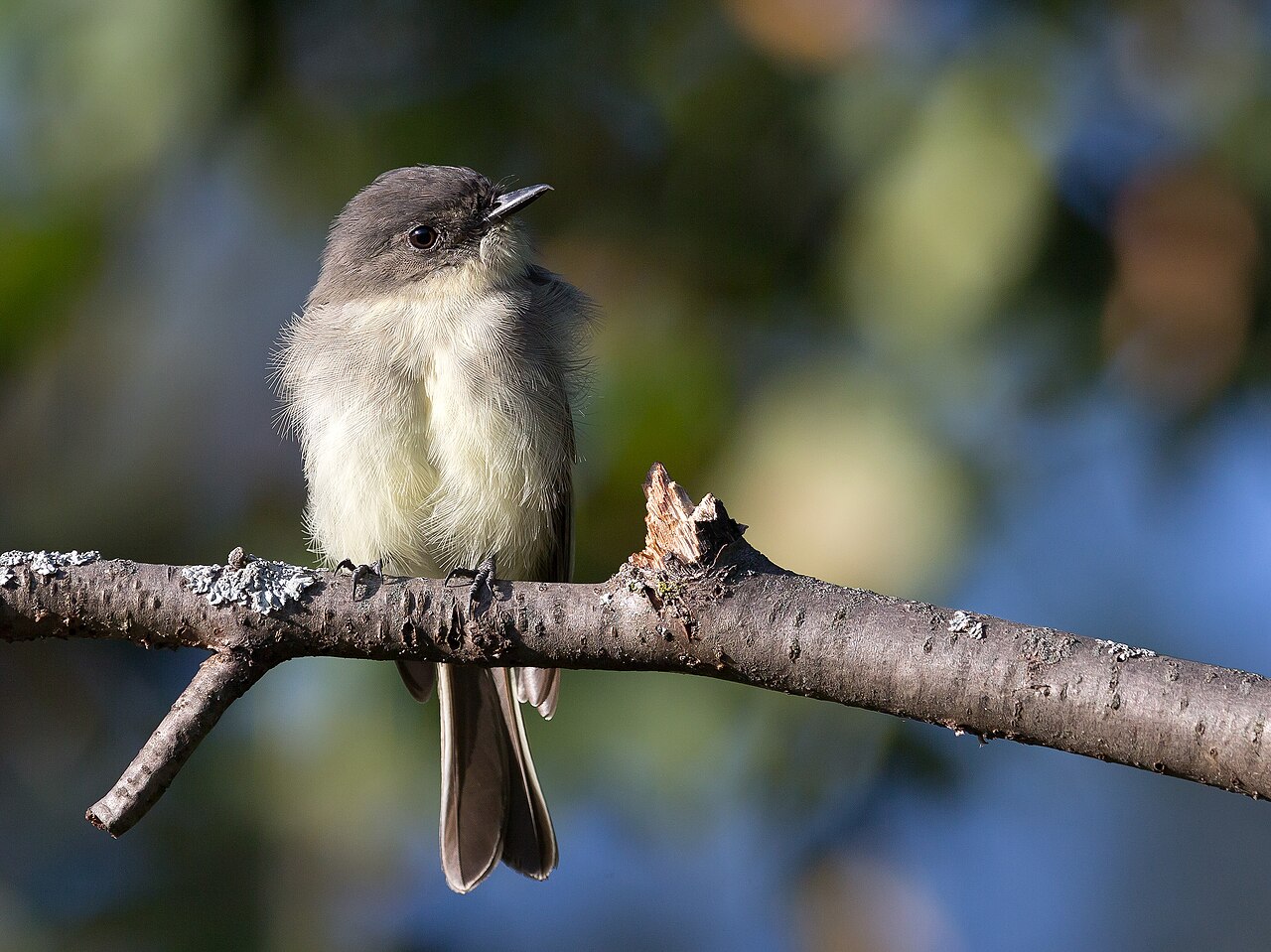
The Eastern phoebe (Sayornis phoebe) is a small, plain flycatcher best identified not by bright colors but by behavior: a constant, distinctive downward wag of its tail while perched, paired with a raspy, whistled call that sounds like its own name, “fee-bee.” Common across the eastern half of the United States, this unassuming brownish-gray bird has a habit unusual among wild birds, it frequently nests directly on human structures like porch eaves, barn rafters, and the undersides of bridges, making it one of the most commonly observed nesting birds around homes and outbuildings across its entire breeding range.
| Quick Reference | Detail |
|---|---|
| Length | 5.5 to 6.7 inches |
| Wingspan | 10.2 inches |
| Color | Grayish-brown above, whitish below, no wing bars |
| Signature behavior | Continuous downward tail-wagging while perched |
| Call | Raspy “fee-bee” whistle |
| Diet | Flying insects caught mid-air, some berries in winter |
| Nest sites | Porch eaves, bridges, barn rafters, rock ledges |
How to Identify an Eastern Phoebe
Eastern phoebes are plain birds by design: grayish-brown above, off-white below, with a slightly darker cap and no obvious wing bars or eye ring, which actually helps distinguish them from similar-looking flycatchers that do show these marks. The most reliable identification cue is behavioral rather than visual: phoebes perched on a low branch, fence, or wire will pump their tail downward in a steady, repetitive motion almost constantly, a habit shared by few other common backyard birds. Combined with the upright posture typical of flycatchers and a habit of returning to the same favorite perch repeatedly, the tail-wagging habit alone is often enough for a confident identification.
The Distinctive “Fee-Bee” Call

The Eastern phoebe’s name comes directly from its raspy, two-note call, a rising then falling “fee-bee” that it repeats frequently throughout the day, especially in spring when males are establishing territory. Unlike many songbirds with complex, musical songs, the phoebe’s call is harsh and unmusical, making it easy to distinguish once you’ve learned it, even without seeing the bird itself. Listening for this call is often the fastest way to locate a phoebe, since the bird tends to call from an exposed perch rather than staying hidden in dense cover, frequently returning to the exact same fence post, wire, or branch call after call throughout an entire morning of territorial defense.
Why Phoebes Nest on Human Structures
Eastern phoebes build a cup nest of mud, moss, and grass, traditionally placed on rock ledges or ledges under overhangs near streams, but the species has readily adapted to nesting on porch eaves, under decks, inside barns, and beneath bridges, essentially treating these structures as artificial cliff faces. This adaptation has made the phoebe one of the most frequently encountered nesting birds around rural and suburban homes, and many people first learn to recognize the species after finding a nest tucked under their own porch light or garage overhang, much like homeowners often first notice the species only once it starts building visibly in a high-traffic area of the property, similar to how gray catbirds often go unnoticed until their call gives away a nest hidden nearby.
Diet and Hunting Behavior
Eastern phoebes are true flycatchers, hunting almost exclusively by sallying, perching on an exposed branch or wire, watching for flying insects, then darting out to catch prey in midair before returning to the same or a nearby perch. Their diet consists mainly of flies, wasps, beetles, and moths during the warmer months, but they are notably one of the few flycatchers that shift to eating berries and small fruits in winter, allowing them to survive in the southern part of their range when insect activity drops, a dietary flexibility also seen in fruit-loving species like the cedar waxwing.
Migration and Range
Eastern phoebes breed across the eastern and central United States and southern Canada, and most populations migrate to the southeastern United States and parts of Mexico for winter, though a growing number now overwinter as far north as the mid-Atlantic states due to milder winters and their unique ability to eat fruit when insects are scarce. They are among the earliest migratory songbirds to return north in spring, often arriving in March while other flycatcher species and other winter-range songbirds wait for warmer, insect-rich conditions later in the season.
Breeding and Family Life
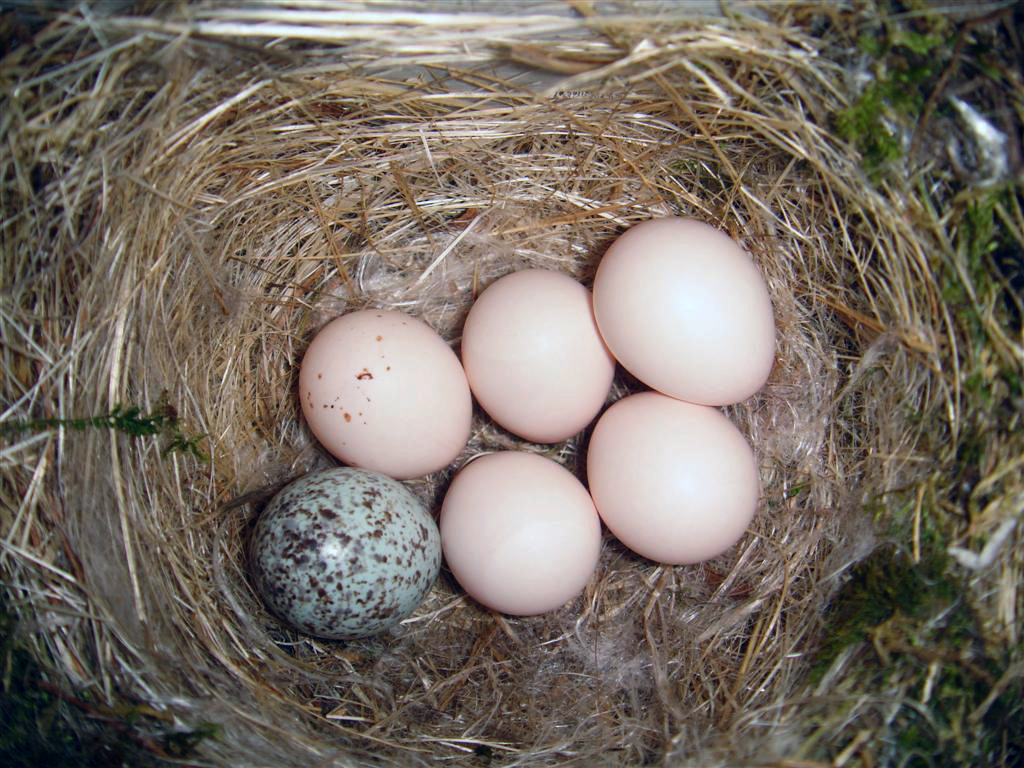
Eastern phoebes typically raise two broods per season, with the female building the mud-and-moss cup nest alone and incubating a clutch of 2 to 6 eggs for about 16 days. Both parents feed the nestlings, which fledge after roughly 16 to 20 days but continue to be fed by the parents for another few weeks after leaving the nest. Because they nest so close to human activity, phoebe nesting behavior is easier to observe directly than that of almost any other wild flycatcher species, giving backyard observers an unusually clear window into nestling development, feeding frequency, and fledging timelines that would otherwise require considerable field effort to document in a more remote, less accessible nesting location.
Similar-Looking Flycatchers
The Eastern phoebe can be confused with other small, drab flycatchers like the Eastern wood-pewee or various Empidonax flycatchers, but the phoebe’s constant tail-wagging, lack of a prominent eye ring, and habit of nesting on structures near water set it apart once you know what to look for. Voice remains the most reliable way to separate similar flycatcher species in the field, since many of them look nearly identical but sound completely different, a challenge that has made the Empidonax genus a running joke among experienced birders who often simply log an unidentified bird as “an empid” rather than commit to a specific species without a clear vocalization to confirm it.
A Uniquely Studied Species for Site Fidelity
According to the Cornell Lab of Ornithology, the Eastern phoebe holds a special place in the history of ornithology: it was the subject of one of the first bird-banding studies in North America, conducted by John James Audubon himself in 1804, when he tied a silver thread to the legs of nestlings near his home to confirm that the same individuals returned to nest in the same location the following year. This early experiment helped establish the scientific basis for what we now understand as strong nest-site fidelity, the tendency of many songbirds, phoebes especially, to return to the exact same nesting location year after year rather than choosing a new site each season.
Phoebes Compared to Other Small Flycatchers
Beyond the similar-looking species already mentioned, the Eastern phoebe’s tail-wagging habit and simple, unmusical call make it considerably easier to identify with confidence than most of the Empidonax flycatchers, a notoriously difficult group for even experienced birders to sort out visually. Unlike the gray catbird, which is a skilled vocal mimic capable of learning dozens of different sounds, the phoebe’s vocal repertoire stays simple and consistent throughout its life, repeating the same basic “fee-bee” pattern with only minor variation. This vocal simplicity, paired with the tail-wagging behavior, means new birders can often confirm an Eastern phoebe identification well before they’d be able to confidently sort out a more subtly marked flycatcher species using plumage alone, similar to how the distinctive silhouette of a pileated woodpecker makes it far easier to identify than smaller, more similar-looking woodpecker species.
Frequently Asked Questions
How do you identify an Eastern phoebe?
Look for a plain grayish-brown bird with no wing bars that constantly wags its tail downward while perched, combined with a raspy “fee-bee” call, a combination of traits that together are essentially unmistakable once learned.
Why does the Eastern phoebe wag its tail?
The exact reason isn’t fully settled, but the near-constant downward tail-wagging is one of the most reliable behavioral identification cues for this species among small flycatchers, and some researchers suspect it may help flush hidden insects or signal alertness to potential predators.
Where do Eastern phoebes build their nests?
Eastern phoebes build mud-and-moss cup nests on rock ledges, but readily use porch eaves, barn rafters, and the undersides of bridges as artificial substitutes.
What does an Eastern phoebe eat?
Eastern phoebes primarily eat flying insects caught in midair from a perch, and switch to eating berries and small fruits during winter when insects are scarce.
Do Eastern phoebes migrate?
Yes, most Eastern phoebes migrate to the southeastern United States and parts of Mexico for winter, though some now overwinter farther north due to milder winters.
What does an Eastern phoebe sound like?
Eastern phoebes make a raspy, unmusical two-note call that sounds like “fee-bee,” repeated frequently, especially by males establishing territory in spring.
Is it safe to leave a phoebe nest on my porch?
Yes, and it’s recommended. Eastern phoebes are protected under the Migratory Bird Treaty Act and often reuse the same nest site year after year if left undisturbed.