Cheetah vs Leopard: Every Key Difference Explained
The quickest way to tell a cheetah vs leopard apart is the coat and the face: a cheetah wears small, solid black spots and two dark tear lines running from its eyes to its mouth, while a leopard is covered in rose-shaped clusters called rosettes and has no tear marks. Beyond the pattern, the two cats are built for completely different lives. The cheetah is a lightweight sprinter built for open-ground speed, and the leopard is a powerful, stocky ambush hunter built for strength and climbing.
This guide breaks down every difference between cheetahs and leopards, from their spots and body shape to their speed, hunting style, habitat, and which cat would win in a fight. Once you know what to look for, you will never mix them up again.
| Feature | Cheetah | Leopard |
|---|---|---|
| Spots | Small solid round spots | Rosettes (rose-shaped clusters) |
| Face | Black tear marks | No tear marks |
| Build | Slender, tall, light | Muscular, stocky, heavy |
| Top speed | About 70 mph | About 35 mph |
| Climbing | Rarely climbs | Excellent climber |
| Active | Mostly daytime | Mostly night |
| Vocal | Chirps and purrs, cannot roar | Can roar |
Cheetah vs Leopard: The Fast Answer
Cheetahs and leopards are both spotted African big cats, which is why casual observers confuse them, but they belong to different branches of the cat family and live very different lives. The cheetah is the world’s fastest land animal, a slender specialist that runs down prey in open country during daylight. The leopard is a muscular, secretive generalist that ambushes prey under cover and hauls it into trees, usually at night.
The two most reliable marks are the spots and the face. Cheetah spots are small, round, and solid black, scattered evenly over a tan coat, while leopard markings are rosettes, dark rings enclosing a slightly darker center. Only the cheetah has the black tear lines running down its face, a feature no leopard shares.
Everything else about the two cats flows from their contrasting strategies. Speed versus strength, open plains versus dense cover, day versus night, and a lean sprinter’s frame versus a heavy climber’s build. Keeping the tear marks and spot shape in mind settles almost every identification instantly.
How to Tell Them Apart by Their Spots
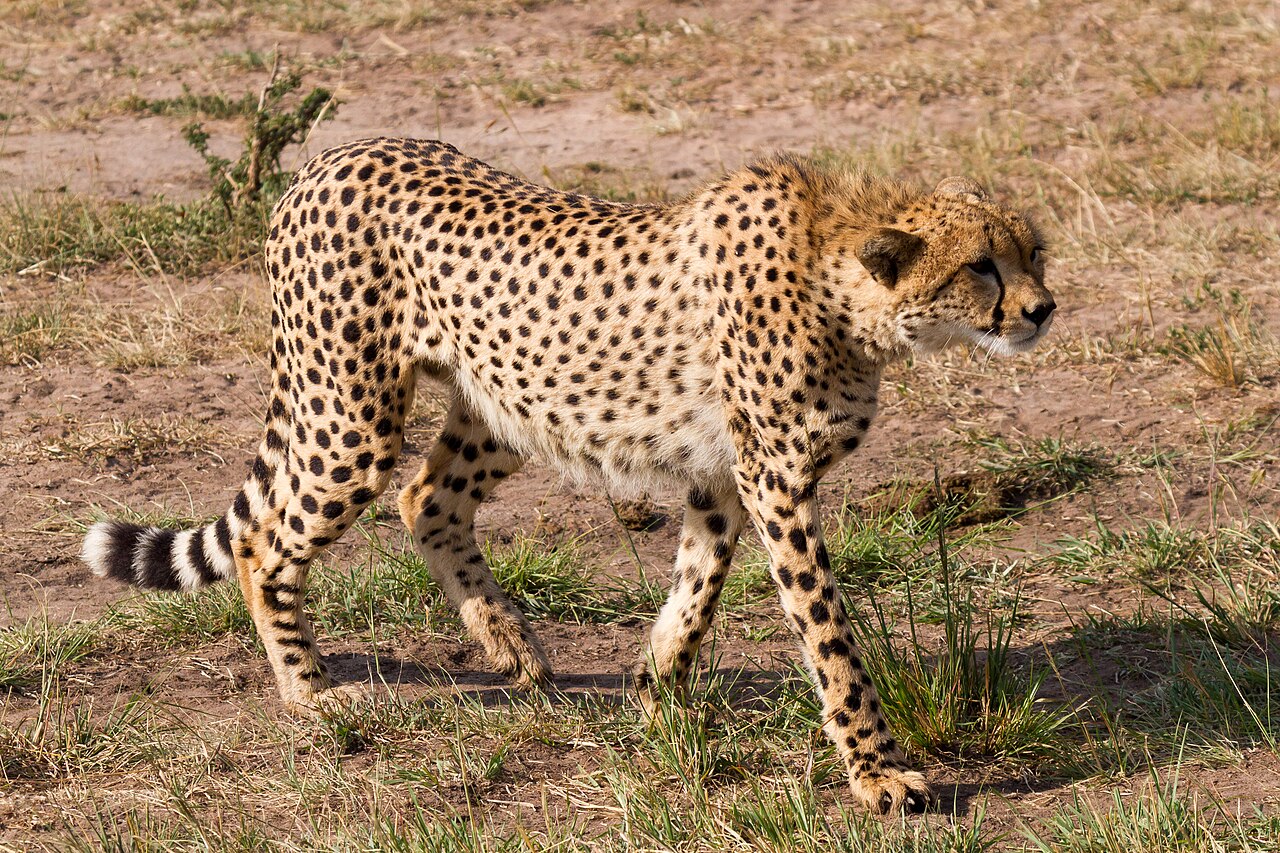
The coat pattern is the single most useful difference. A cheetah is covered in small, evenly spaced spots that are solid black, like ink dots pressed onto a tan background. The effect is a uniform, freckled look that is consistent from head to tail, and the spots never form rings or clusters.
A leopard, by contrast, wears rosettes. Each mark is a broken ring of black enclosing a patch of fur that is slightly darker gold than the surrounding coat, giving a rose-like shape. The rosettes are larger and more complex than cheetah spots, and up close the difference is unmistakable once you know to look for the open centers.
This is also how you separate leopards from jaguars, which have rosettes with small spots inside the ring, though jaguars live in the Americas and do not overlap with African leopards. For the cheetah versus leopard question, the rule is simple: solid dots mean cheetah, hollow rose-shaped rings mean leopard.
Body and Build
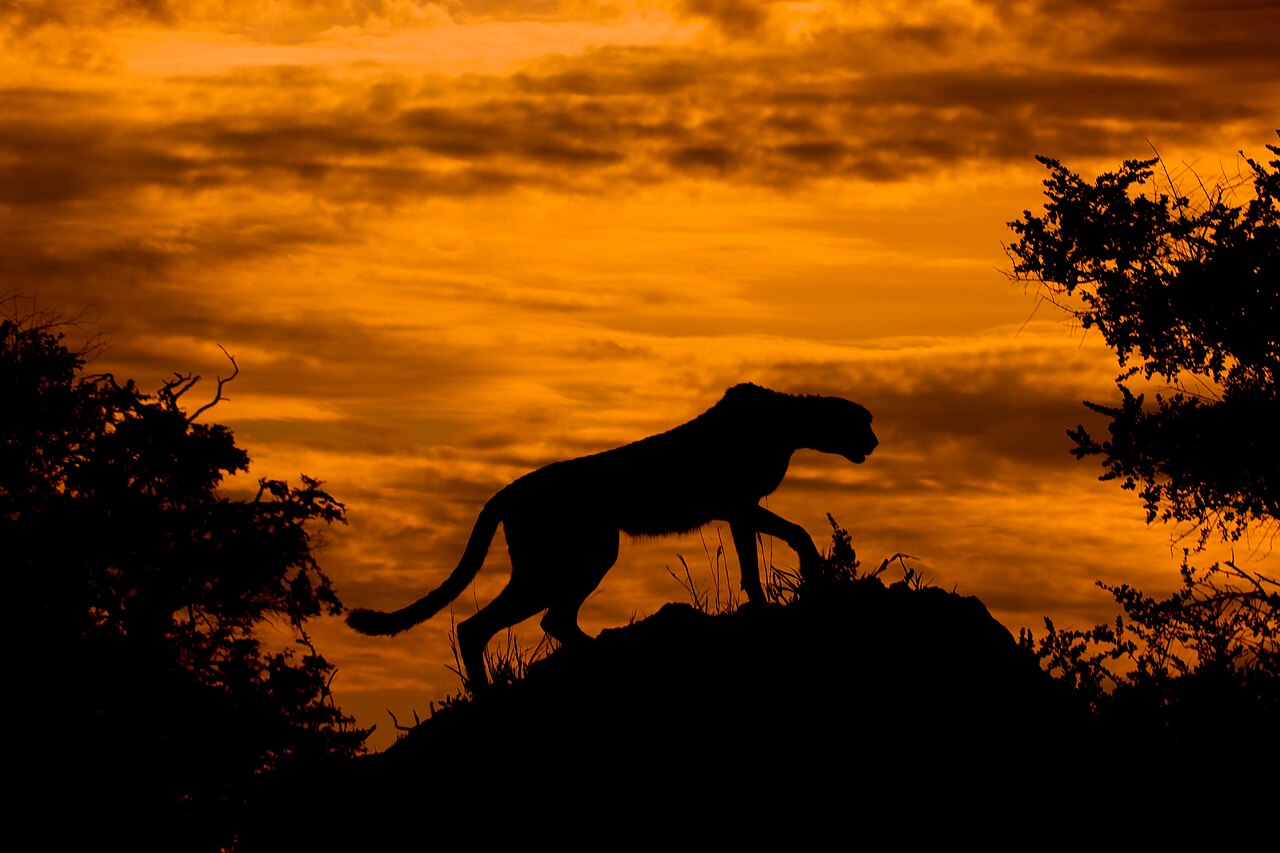
The cheetah has a body designed entirely around speed. It is tall and slender with a small rounded head, a deep narrow chest, a long spine, and long thin legs, giving it a greyhound-like silhouette. Everything is lightweight, and an adult cheetah weighs only around 75 to 140 pounds despite standing fairly tall at the shoulder.
The leopard is built for power rather than pace. It is stockier and more heavily muscled, especially through the shoulders and forelimbs, with a larger, blockier head and a thicker neck. Leopards are heavier than they look, with large males reaching well over 150 pounds, and that muscle is what lets them drag prey heavier than themselves up into trees.
These builds reflect their jobs. The cheetah trades strength for the lightness it needs to accelerate and turn at high speed, while the leopard trades speed for the raw power it needs to overpower, kill, and haul large prey. Standing side by side, the lean, leggy cheetah and the compact, muscular leopard look like two very different animals, much as other confusingly similar predators become easy to separate once you know the marks.
Speed and Movement
Speed is the cheetah’s defining trait and the leopard’s clearest disadvantage in a straight race. According to the Smithsonian, the cheetah is the fastest land animal on Earth, capable of bursts around 70 miles per hour over short distances, using its flexible spine, long stride, and semi-retractable claws that grip the ground like running spikes. It can go from a standstill to full speed in seconds.
The leopard is fast by any normal standard, reaching roughly 35 miles per hour, but it is not a sprinter and does not rely on speed to catch prey. Instead it depends on stealth, creeping close under cover and exploding into a short, powerful rush over the final few yards. A leopard that misses its ambush usually gives up rather than chasing.
The cheetah’s speed comes at a cost. A high-speed chase overheats its body and exhausts it quickly, so a cheetah can only sprint for a short time and must rest afterward, sometimes losing its kill to stronger predators before it recovers. The leopard’s slower, stronger approach is less spectacular but more secure.
The Face: Tear Marks and Eyes
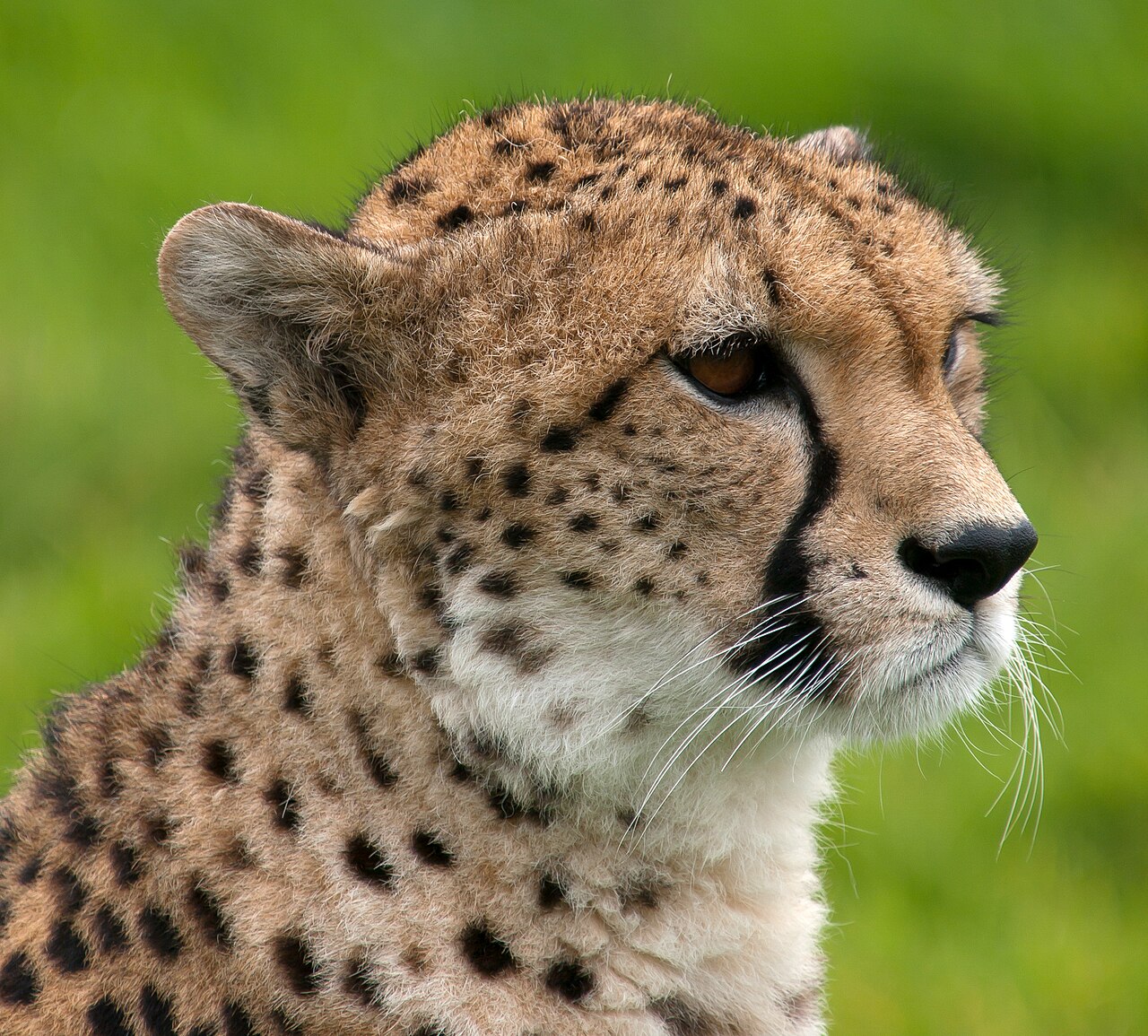
The face offers one of the fastest ways to identify a cheetah. Running from the inner corner of each eye down to the mouth are two distinct black lines known as tear marks or malar stripes. These are unique to the cheetah among big cats, and no leopard has them, so a spotted cat with dark tear lines is always a cheetah.
The tear marks are not just decoration. They are thought to reduce glare from the sun and help the cheetah focus on distant prey during daytime hunts, much like the black paint athletes wear under their eyes. This fits the cheetah’s lifestyle as a daylight hunter that spots quarry across open plains.
The leopard’s face is broader and heavier, without any tear lines, and its eyes are set in a more powerful, blockier skull suited to a strong bite. The leopard’s whole head reflects its role as a strength-based hunter, while the cheetah’s small, streamlined head reflects its need to stay light and fast.
Habitat and Range
Both cats live in Africa, but they favor different terrain and the leopard ranges far more widely. Cheetahs need open ground to use their speed, so they inhabit grasslands, savannas, and semi-desert regions where they can see and run down prey. Their range is now fragmented and much reduced, concentrated in parts of eastern and southern Africa, with a tiny population of a different subspecies in Iran.
Leopards are far more adaptable and are found across a huge range, from African savannas and forests to the mountains and jungles of Asia. This flexibility, along with their secretive habits, has helped leopards survive in places where other big cats have vanished, including near human settlements where they go largely unseen.
Where the two overlap, they avoid competition by hunting differently and at different times. The cheetah works the open daylight plains, while the leopard uses cover and darkness, so the same landscape can support both. That said, leopards will kill cheetah cubs when they can, and cheetahs lose kills to leopards, so the relationship is far from friendly.
Behavior and Hunting Style
The cheetah is primarily a daytime hunter that relies on eyesight and speed. It stalks moderately close, then launches a high-speed chase, tripping fleet-footed prey like gazelles with a swipe and suffocating them with a throat bite. Because cheetahs are relatively light, they hunt smaller, faster prey and must eat quickly before larger predators arrive.
The leopard is a nocturnal ambush hunter and one of the most successful predators in the world. It hunts by stealth under cover of darkness, taking a wide variety of prey, and its signature behavior is dragging heavy kills up into trees to keep them safe from lions and hyenas. This tree-caching ability is unique among the big cats at that scale.
Their social lives differ too. Cheetahs are more social than most cats, with males sometimes forming small coalitions, while leopards are strictly solitary and territorial outside of mating and raising cubs. Both are shy of humans, and both are quiet compared with lions, though only the leopard can produce a true roar, alongside the rasping saw-like call it uses at night, unlike the smaller mammals that share no such power.
Cheetah vs Leopard: Which Would Win a Fight?
In a direct confrontation, the leopard would almost certainly win. It is heavier, far more muscular, and built for grappling and killing large prey, with a powerful bite and thick, strong forelimbs. The cheetah is built for speed, not combat, and its light frame and blunt, non-retractable claws leave it poorly equipped for a physical fight.
This is exactly why the two cats avoid each other in the wild and why leopards dominate the relationship. A cheetah’s best defense is to flee, using the speed that makes it famous, rather than to stand and fight. Cheetahs even lose a large share of their kills to leopards, lions, and hyenas precisely because they cannot defend them.
So the honest answer is that speed wins the race but strength wins the fight. The cheetah is the specialist sprinter of the open plains, and the leopard is the powerful, adaptable ambusher of the shadows. Understanding that trade-off explains every difference between them, from their spots to their behavior, and makes them easy to tell apart in the same way that learning the marks of other wild animals and reading sign like predator scat turns confusion into confidence for anyone who enjoys watching wildlife of every size.
Related reading: Baby Raccoon.
Related reading: Jaguar vs Leopard.
Frequently Asked Questions
What is the main difference between a cheetah and a leopard?
The main differences are spots and build. Cheetahs have small solid black spots and black tear marks on the face, with a slender, lightweight body built for speed. Leopards have rose-shaped rosettes, no tear marks, and a stocky, muscular body built for strength and climbing.
Which is faster, a cheetah or a leopard?
The cheetah is far faster, reaching about 70 miles per hour and holding the title of fastest land animal. The leopard tops out around 35 miles per hour and relies on stealth and ambush rather than speed to catch its prey.
Which is stronger, a cheetah or a leopard?
The leopard is much stronger. It is heavier and more muscular, with a powerful bite and forelimbs strong enough to drag prey heavier than itself up into trees. A cheetah is built for speed, not combat, and would lose a physical fight.
Do cheetahs have rosettes like leopards?
No. Cheetahs have small, solid, round black spots, not rosettes. Rosettes are the rose-shaped rings with a darker center that are unique to leopards and jaguars. If a cat has hollow ring-shaped markings, it is not a cheetah.
Can a cheetah roar like a leopard?
No. Cheetahs cannot roar. They communicate with chirps, purrs, and other high-pitched sounds. Leopards belong to the group of big cats that can roar and also make a distinctive rasping, saw-like call at night.
Do cheetahs and leopards live in the same places?
Their ranges overlap in parts of Africa, but they use the habitat differently. Cheetahs hunt open plains by day, while leopards use cover and hunt at night, and leopards also range across Asia. Where they overlap, leopards dominate and will kill cheetah cubs.
Which has tear marks, the cheetah or the leopard?
Only the cheetah has tear marks, the two black lines running from the eyes to the mouth. They are unique to the cheetah and are thought to cut sun glare during daytime hunts. A spotted cat with tear lines on its face is always a cheetah.