Black Wasp: Identification, Behavior, and Safety
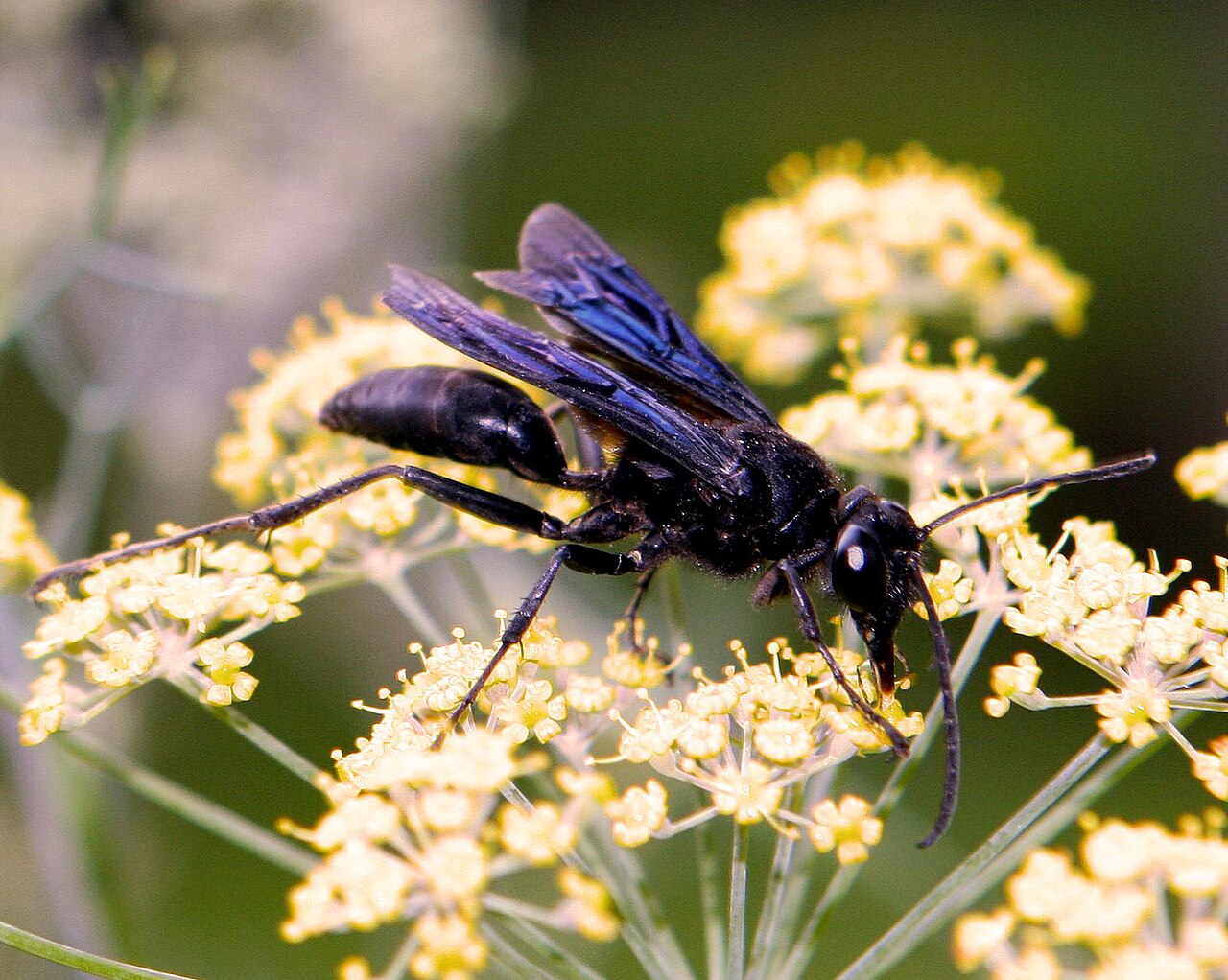
A large black wasp seen in a yard or garden, especially one with dark blue-tinted wings and orange-tinged legs, is most often the great black wasp, a solitary species that hunts grasshoppers and katydids rather than living in an aggressive social colony. Despite its intimidating size, sometimes over an inch long, it rarely stings people and has no interest in nesting inside a house.
The size and dark color of the great black wasp trigger more alarm than the actual risk warrants, and most people who find one indoors are seeing a wasp that wandered in accidentally rather than one nesting there. This guide covers identification, what attracts them, whether they are dangerous, and how to handle one safely.
A large black wasp is usually the great black wasp, a solitary species that hunts grasshoppers and katydids and rarely stings people despite its intimidating size. It is not aggressive, does not defend a colony, and finding one indoors is almost always an accidental wanderer rather than evidence of an indoor nest. Leave it alone or gently guide it back outside.
| Feature | Great Black Wasp |
|---|---|
| Size | Up to 1.4 inches; one of the larger solitary wasps |
| Color | Black body, dark blue-tinted wings |
| Social structure | Solitary, not colonial |
| Prey | Grasshoppers and katydids |
| Nest location | Underground burrows, not indoors |
| Aggression | Low; rarely stings without direct handling |
What Is a Black Wasp?
The great black wasp is the species most commonly meant by “black wasp” in the United States, a large, solid black solitary wasp with smoky, dark blue-tinted wings, sometimes reaching over an inch in length, making it one of the more visually striking solitary wasps people encounter.
Unlike a paper wasp or yellowjacket colony, a great black wasp works entirely alone. Each female digs her own underground burrow, hunts prey to provision it, and there is no shared nest, no worker caste, and no coordinated defense response the way there is with social species.
Several other dark-colored wasps get lumped under the same common name colloquially, including some spider wasps and other solitary hunting species, but the general behavioral pattern, solitary, non-aggressive, ground-nesting, holds across most of them despite differences in exact prey preference, similar to the animals that eat wasps that also target this whole group of solitary hunters as prey.
Are Black Wasps Harmful?
Rarely. Great black wasps can sting, and females possess venom used to paralyze prey, but stings on people are uncommon and generally require direct provocation, such as grabbing the wasp or stepping on it barefoot, rather than occurring during normal proximity.
The sting itself is described by most people who experience it as painful but not unusually severe compared to other wasp stings, and there is no elevated medical concern beyond the standard risk any wasp sting carries for someone with a diagnosed insect sting allergy.
Because the species is solitary and lacks colony defense instincts, there is no scenario comparable to disturbing a yellowjacket nest and facing multiple simultaneous stings, which is the more common source of serious wasp-related medical incidents. A single great black wasp poses a single, low-probability sting risk.
What Does It Mean When You See a Black Wasp?
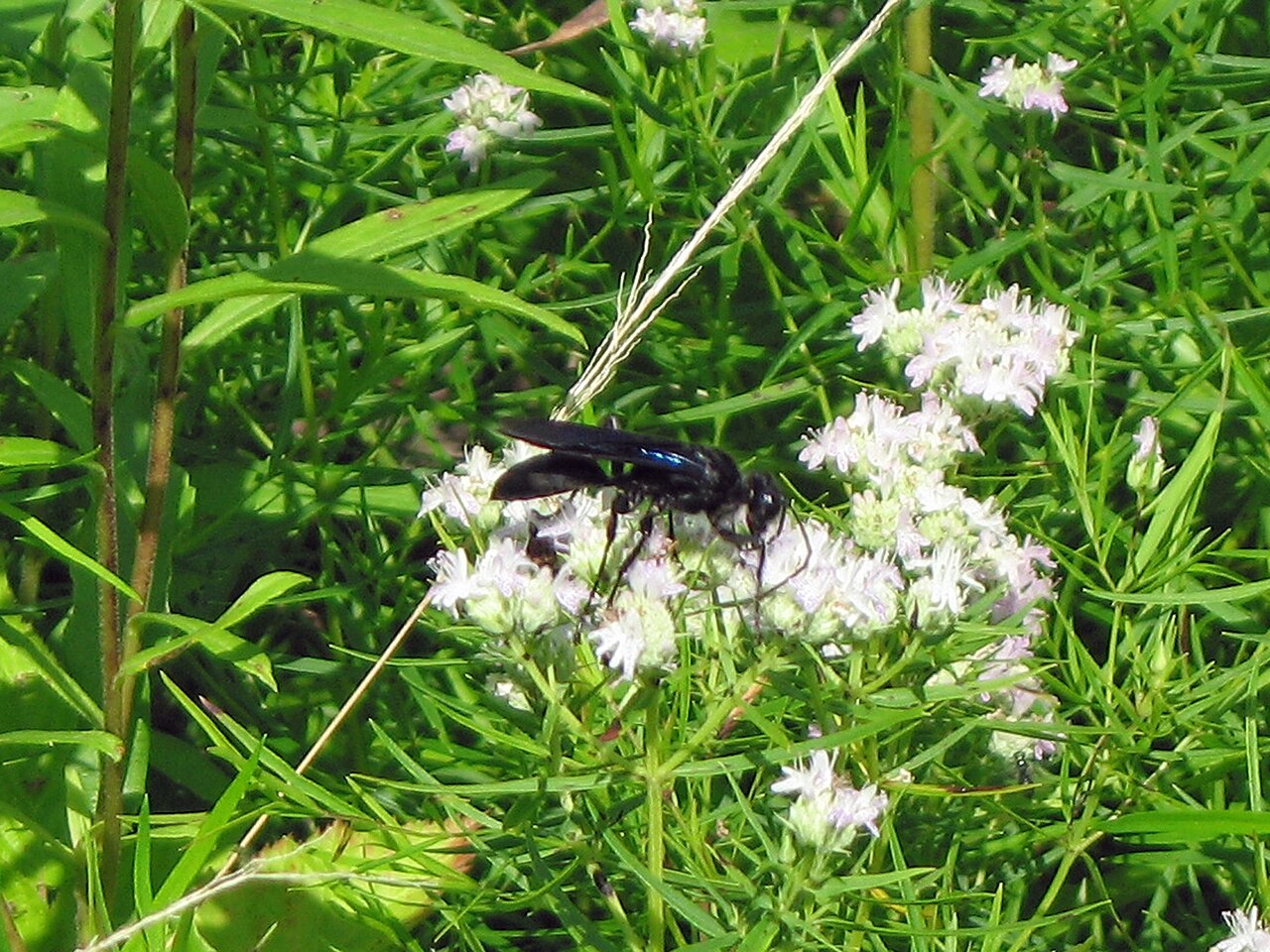
Practically, it usually means your yard has grasshoppers or katydids nearby, since great black wasps hunt these specific insects to provision their burrows, and their presence often correlates with a healthy population of the prey species they target rather than indicating anything else about the property.
A single sighting during summer, when the species is most active, is entirely ordinary in regions where it occurs and does not suggest an infestation or a problem requiring action, unlike a genuinely aggressive species such as the red wasp, where repeated sightings near a structure warrant closer attention. Great black wasps are widespread across much of North America and commonly seen in gardens with flowering plants, which adults visit for nectar.
Repeated sightings in the same specific spot, particularly bare, sandy, or loose soil areas, may indicate a nesting site nearby, since females favor these ground conditions for digging burrows, which is useful to know if you want to identify where the population is establishing itself. For a closely related question, see our guide to red and black wasp.
Why Are You Finding Black Wasps in Your House?
Since great black wasps nest in underground burrows rather than indoor cavities, finding one inside is almost always an accidental entry, drawn in through an open door or window, sometimes chasing prey or simply disoriented by light, rather than evidence of an indoor nesting problem.
Cooler evening temperatures in late summer and early autumn sometimes drive various solitary wasps to seek shelter, occasionally leading them indoors through small gaps, though this is opportunistic wandering rather than a deliberate attempt to establish residence inside a structure.
A wasp found indoors can generally be guided back outside using an open window and a container to trap and release it, or left to find its own way out, since it has no reason to stay once it recognizes the space does not offer what it needs. The birds that eat wasps guide covers a natural predator that keeps outdoor populations in check. The blue wasp guide covers another solitary species with similarly low indoor-nesting risk.
What Attracts Great Black Wasps?
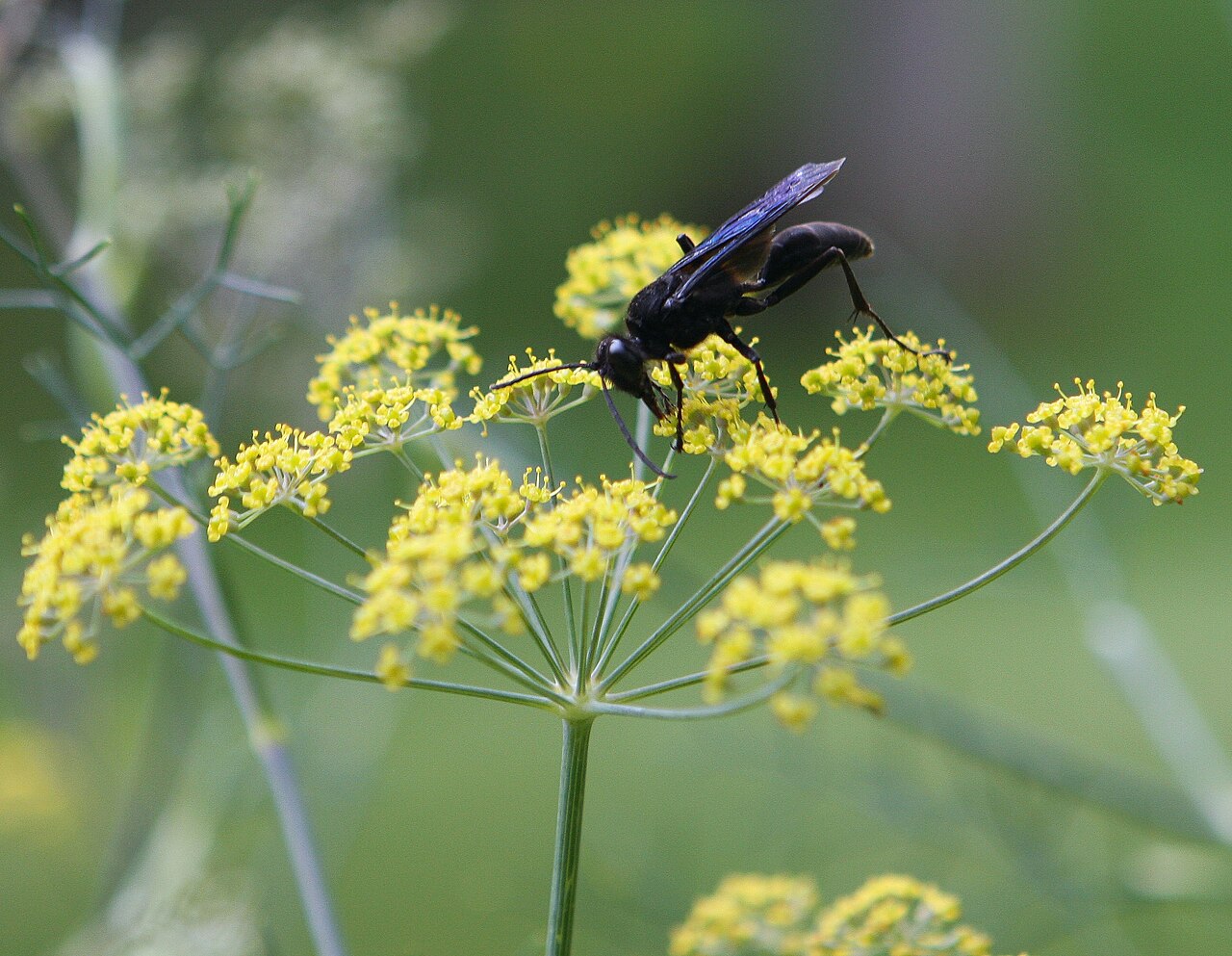
Flowering plants, particularly those with clusters of small flowers like milkweed, mountain mint, and goldenrod, attract adult great black wasps seeking nectar, making a pollinator garden more likely to see them regularly than a yard without much blooming vegetation.
A healthy grasshopper or katydid population is the other major draw, since females actively hunt these insects to provision their burrows, meaning a yard supporting a good insect population indirectly supports the wasps that prey on them as part of the same food web.
Loose, sandy, or bare soil in sunny spots provides suitable burrowing conditions and can concentrate nesting activity in specific areas of a yard, which is a more relevant factor for where they establish themselves than any single attractant on its own.
What Do Black Wasps Hate?
Strong essential oils, including peppermint, clove, and eucalyptus, are commonly cited as mild deterrents for wasps generally, though evidence for great black wasps specifically avoiding these scents in any strong or lasting way is limited, and the effect should be treated as modest at best.
Given how low the sting risk already is with this species, deterrent measures are rarely necessary in the first place, and most guidance aimed at “getting rid of black wasps” is better applied to genuinely aggressive social species like yellowjackets rather than a beneficial solitary hunter.
If a nesting area in loose soil is genuinely inconvenient, physically covering or compacting the bare soil, or planting ground cover there, removes the burrowing habitat more reliably than any scent-based repellent, addressing the underlying condition rather than the wasp itself.
Does WD-40 Kill Wasps?
WD-40 is sometimes used as an improvised wasp deterrent because its oily coating can suffocate small insects on contact and its solvent smell may briefly disrupt scent trails, but it is not designed, tested, or labeled as an insecticide, and effectiveness against an established nest is inconsistent at best.
Using WD-40 on stinging insects also carries real risk, since spraying near a nest can agitate the wasps before the product takes effect, and the flammable propellant in aerosol formulations is a genuine safety concern if used carelessly near any heat source.
A product actually labeled for wasp and hornet control, designed to spray at a distance and formulated to incapacitate quickly, is the safer and more reliable choice for an active nest that genuinely needs treatment, rather than repurposing a household lubricant for a job it was not built for.
Do Black Wasps Chase People?
Not typically. Great black wasps lack the colony-alert aggression of social wasps and generally fly away from disturbance rather than pursuing it, consistent with their solitary lifestyle and lack of a shared nest that would benefit from a coordinated defensive chase.
Occasional reports of a wasp seeming to follow a person are more often the wasp continuing to investigate a nearby flowering plant or food source the person happens to be standing near, rather than a targeted pursuit, and moving away from the immediate area usually resolves the encounter.
As with most solitary wasps, direct handling or accidentally stepping on one is what triggers a defensive sting, not casual proximity, which is why simply giving a foraging or hunting great black wasp space is enough to avoid any issue in the vast majority of encounters.
Do Wasps Return to Old Nests?
Social wasp colonies, such as paper wasps and yellowjackets, generally do not reuse the same nest structure the following year, since the colony dies off at the end of the season except for new queens, who start fresh nests elsewhere in spring.
Great black wasps, being solitary ground nesters, follow a somewhat different pattern: individual females dig new burrows each season, but favorable nesting conditions, loose sandy soil in a sunny spot, can attract new individuals to the same general area year after year, giving the impression of a returning population even though the specific burrows are new.
An old abandoned burrow or paper nest is generally not reoccupied by the same colony or individual, though the physical location and conditions that made it attractive in the first place often persist, which is the real reason wasp activity tends to recur in the same yard spots season after season. The hornet vs wasp guide covers nesting differences between related species in more detail.
How Do You Identify a Great Black Wasp’s Burrow?
Look for a small, round entrance hole in bare or loose soil, often with a slight mound of excavated dirt nearby, typically in a sunny, well-drained spot rather than shaded or heavily vegetated ground. A single burrow usually serves one female during her provisioning season.
Unlike social wasps, there is no visible paper nest structure above ground to spot, since all the activity happens underground in a tunnel the female digs herself, provisions with paralyzed grasshoppers or katydids, and seals once an egg is laid on the prey inside each chamber.
Multiple burrows can appear close together in favorable soil without indicating a shared colony, since several females may simply find the same patch of ground equally suitable, giving the appearance of a group nesting site even though each burrow remains an independent, solitary effort.
Related reading: Black and Yellow Wasp.
Frequently Asked Questions
What is a black wasp?
Usually the great black wasp, a large solitary species with a black body and dark blue-tinted wings that hunts grasshoppers and katydids rather than living in a colony.
Are black wasps dangerous?
Rarely. They can sting if handled directly, but they are not aggressive and pose low risk to anyone without a wasp allergy who leaves them alone.
Why do I keep finding black wasps in my house?
They nest underground, not indoors, so an indoor sighting is almost always an accidental wanderer through an open door or window rather than an indoor nest.
What attracts great black wasps to a yard?
Flowering plants for nectar and a healthy grasshopper or katydid population for hunting, along with loose, sandy soil suitable for burrowing.
Does WD-40 kill wasps?
It can incapacitate small insects on contact but isn’t a reliable, labeled insecticide for wasps. A product designed for wasp control is safer and more effective.
Do black wasps chase people?
Not typically. They lack the colony-defense aggression of social wasps and generally fly away from disturbance rather than pursuing it.