Squirrel Poop: Identification and How It Differs From Rat
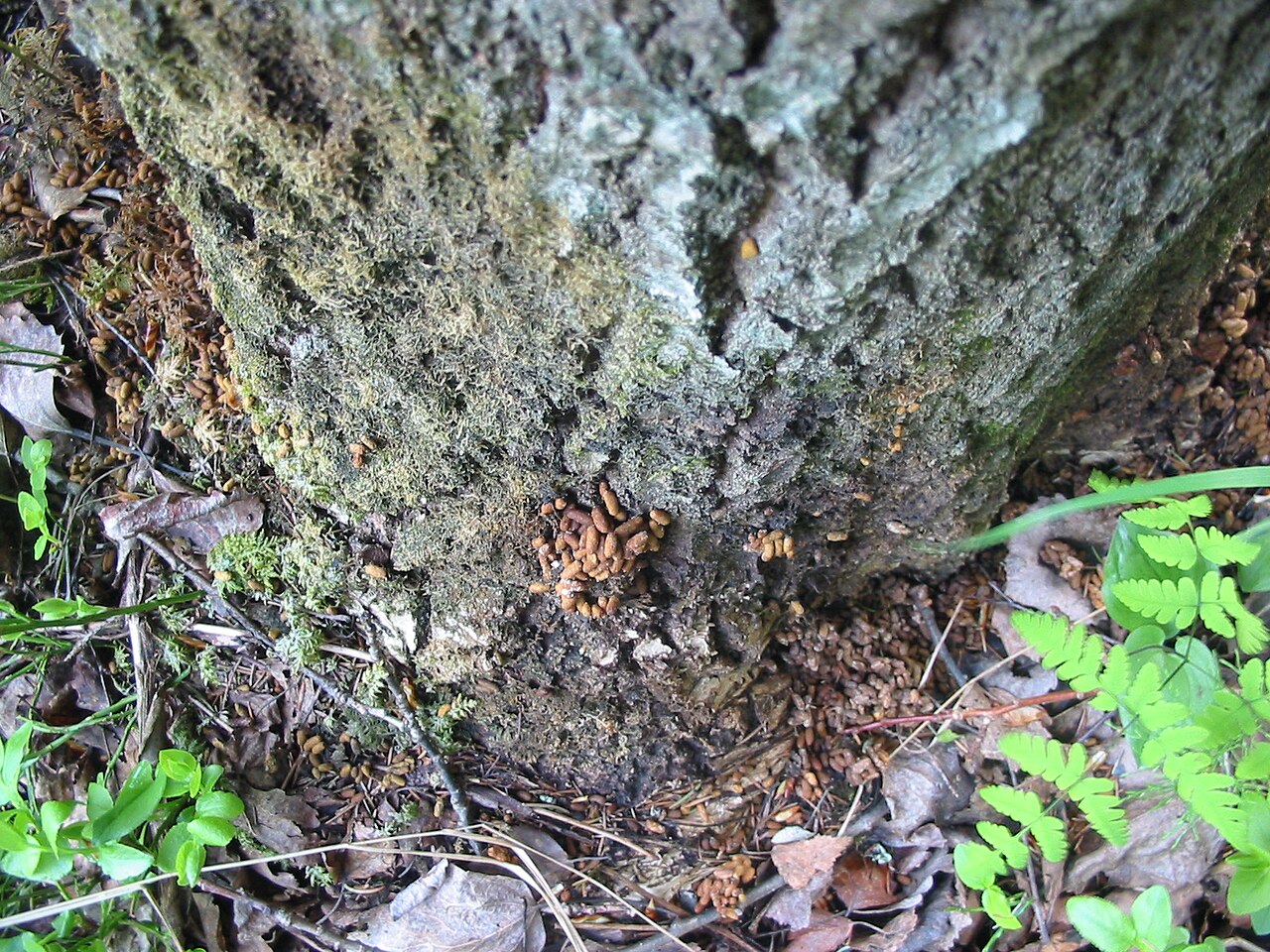
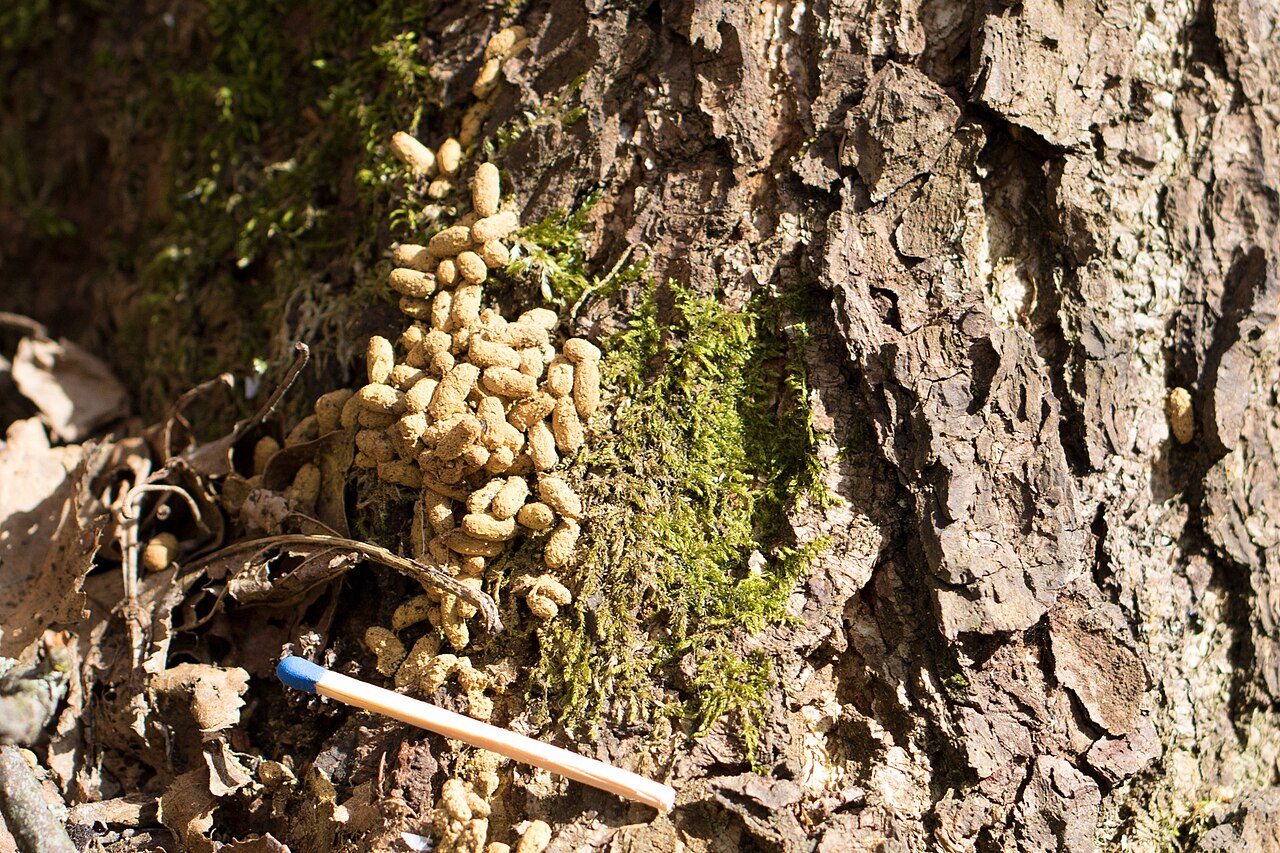
Squirrel poop looks like small dark pellets about 0.375 in long, roughly the shape of a grain of rice but thicker, with rounded ends and a slightly barrel-like profile. Fresh droppings are dark brown to nearly black and soften with handling, while older ones fade toward tan or gray and harden. They usually turn up scattered in loose groups rather than in trails.
The distinction that matters most is squirrel versus rat, because the two look similar at a glance and mean very different things for your house. Rat droppings taper to at least one pointed end and are typically deposited in runs along walls, while squirrel droppings have blunt rounded ends and appear in clusters near nesting or feeding spots. This guide covers that comparison in detail, plus mouse, chipmunk and rabbit droppings, where squirrel scat shows up, the real health risks, and how to clean it up without making things worse.
| Quick Facts | Squirrel Droppings |
|---|---|
| Length | About 0.375 in, roughly 8 to 10 mm |
| Shape | Oblong barrel with rounded ends |
| Color | Dark brown to black fresh, tan or gray when old |
| Pattern | Scattered clusters, not trails along walls |
| Common locations | Attics, decks, gutters, tree bases, bird feeders |
| Main health risks | Salmonella, leptospirosis, roundworm, parasites |
What Does Squirrel Poop Look Like?
Size is the first thing to note. A gray squirrel dropping is about 0.375 in long and 0.125 in thick, noticeably larger than a mouse dropping and slightly larger than most rat droppings. The shape is oblong and somewhat barrel-like, thicker in the middle and blunt at both ends rather than tapering.
Color tells you the age. Fresh droppings are dark brown to nearly black, slightly glossy, and soft enough to smear if disturbed. Within a few days they dry, harden, and lighten toward brown, and after weeks of exposure they become chalky tan or gray and crumble easily. Diet shifts the color too, since a squirrel eating heavily from a bird feeder produces different droppings than one on acorns.
The scattering pattern is diagnostic. Squirrels do not use latrines and do not follow walls, so droppings appear in loose clusters near where the animal spends time, meaning around a nest, along a favored branch, on a deck rail, or beneath a feeder. Anyone working through yard sign will find the same reading approach in our guides to deer droppings and possum droppings.
Squirrel Poop vs Rat Poop
 Squirrel Poop vs Rat Poop” class=”wp-image-5567″/>
This comparison is the single most searched question about squirrel droppings, and the answer comes down to the ends. Rat droppings taper to a point at one or both ends, giving them a spindle shape. Squirrel droppings are blunt and rounded at both ends. Once you know to look at the tips rather than the overall size, most cases resolve immediately.
Placement is the second and arguably stronger clue. Rats are thigmotactic, meaning they travel with their bodies against a surface, so their droppings accumulate in lines along walls, behind appliances, in cabinet corners, and in defined runways. Squirrels move across open surfaces and leave droppings in scattered clusters, often concentrated in one attic corner near the nest.
Quantity and timing complete the picture. A rat produces 40 to 50 droppings a day and an infestation generates a lot of material quickly, while squirrel deposits accumulate more slowly. Rats are nocturnal, so scratching and scampering at night points to rodents, whereas squirrels are diurnal and the noise comes at dawn and during daylight. That difference in activity time is often more reliable than the droppings themselves.
Squirrel Poop vs Mouse and Chipmunk Droppings
Mouse droppings are much smaller, around 0.125 to 0.25 in long, thin, and pointed at both ends, looking like dark grains of rice. A mouse produces 50 to 75 droppings per day, so they turn up in large numbers scattered across counters, in drawers, and inside cabinets. The size difference alone separates them from squirrel droppings without difficulty.
Chipmunk droppings sit between mouse and squirrel, running roughly 0.25 in with a shape closer to a squirrel dropping but proportionally smaller. Because chipmunks are ground-dwelling, their droppings appear near burrow entrances, along foundations, under decks, and in rock walls rather than in attics. Finding pellets in an elevated location generally rules chipmunks out.
Flying squirrel droppings are smaller than gray squirrel droppings but retain the same rounded profile, and they accumulate in concentrated piles because flying squirrels are colonial and often share a single nest site. A dense pile in one attic corner with small rounded pellets and nighttime activity points to flying squirrels rather than gray squirrels, which is a distinction worth making since the animals differ in habits. The rodents at the base of all these comparisons are covered in our guide to what mice eat.
Squirrel Poop vs Rabbit and Deer Pellets
Rabbit droppings are unmistakable once seen side by side. They are round spheres about 0.25 to 0.4 in across, dry, fibrous, and pale brown, and they crumble into what looks like sawdust when pressed. Squirrel droppings are oblong rather than spherical and considerably denser when fresh.
Deer pellets are larger, at 0.5 to 0.75 in, and typically show one pointed end and one dimpled end. They are deposited in piles of 20 to 100, an amount no squirrel produces at once. In spring and summer deer droppings clump into a soft mass, which looks nothing like squirrel scat.
Location resolves most remaining ambiguity. Squirrel droppings appear on decks, roofs, gutters, attic floors, and around feeders, all places associated with climbing. Rabbit and deer droppings appear on lawns, in garden beds, and along ground-level trails. Elevated droppings are almost never from a rabbit or a deer.
Where You Find Squirrel Droppings
Attics are the most common indoor location and the most consequential. Squirrels enter through gaps at rooflines, damaged soffits, uncapped chimneys, and gable vents, then nest in insulation. Droppings accumulate near the nest, along the beams they travel, and in the insulation itself, which is why an attic infestation frequently ends in insulation replacement rather than just cleanup.
Outdoors, droppings collect on deck rails, patio furniture, outdoor steps, roofs, and inside gutters, all surfaces squirrels use as travel routes. Bird feeders produce concentrations underneath them, and so do favored feeding perches such as a particular branch or fence post where a squirrel repeatedly sits to open nuts.
Other sign confirms what you are dealing with. Gnaw marks on wood, wire, and siding, torn insulation, nesting material made of leaves and shredded fiber, scratching at dawn, and chewed openings roughly 2 in across all point at squirrels. That entry hole size is a useful marker, since rats need only about 0.5 in and mice about 0.25 in.
Is Squirrel Poop Dangerous?
The risk is real but modest and comes primarily from handling contaminated material rather than from the presence of droppings alone. Squirrel droppings can carry Salmonella, and leptospirosis can be transmitted through urine contaminating the same material. Squirrels also carry a roundworm in the genus Baylisascaris, whose eggs are shed in feces and can cause serious illness if ingested, though human cases are rare.
The CDC (cdc.gov) advises against dry sweeping or vacuuming rodent droppings, and that guidance matters more than anything else here. Disturbing dried droppings aerosolizes particles that can then be inhaled, which turns a low-contact risk into a respiratory one. Damp cleanup is the standard approach for all rodent waste.
Squirrels are not a meaningful hantavirus reservoir in North America, which is a common point of confusion since that virus is associated with deer mice rather than squirrels. Fleas, ticks, and mites travel with squirrels and can move into a house after the animals are removed, and pets that eat droppings can pick up parasites, so a dog with attic access is worth keeping out.
How to Clean Up Squirrel Droppings Safely
Ventilate the space first. Open windows and vents and leave the area for 30 minutes before starting work, which reduces the concentration of airborne particles. Wear disposable gloves, an N95 respirator, and eye protection, and use clothing you can wash immediately afterward.
Wet everything before touching it. Spray droppings and the surrounding surface thoroughly with a disinfectant or a bleach solution of roughly one part bleach to nine parts water, let it sit for five minutes, then pick the material up with paper towels rather than sweeping it. Double bag the waste and place it directly in an outdoor bin.
Then disinfect the whole area, including surfaces the droppings touched and anything nearby that may have been contaminated by urine. Contaminated insulation usually cannot be salvaged and should be removed and replaced, which is a job most people hand to a professional. Wash hands thoroughly afterward, and wash the clothing separately in hot water.
Squirrels in the Attic: What to Do Next
Cleanup without exclusion accomplishes nothing, because the animals return to a familiar nest site. The sequence is to confirm the animals are out, seal every entry point, then clean. Sealing while young are still inside is both inhumane and expensive, since a trapped mother will chew her way back in and a dead litter in a wall is a serious problem.
Timing matters for that reason. Gray squirrels have two breeding seasons, roughly February to April and August to September, and young are dependent for about 10 to 12 weeks. If you find nesting material and hear squeaking, wait until the litter is mobile or hire a professional who can remove the family intact.
Exclusion means metal. Cover gaps with heavy gauge hardware cloth or sheet metal rather than foam or wood, cap the chimney, screen gable and soffit vents, and repair damaged fascia. Trim tree branches back at least 8 ft from the roofline, since squirrels jump farther than most people expect. Remove the food draw as well by using baffled feeders or moving them away from the house, and be aware that the pattern repeats with other climbers, as our guides to coyote droppings and snake droppings show for animals that follow the rodents in.
Related reading: Squirrel Poop vs Mouse Poop.
Frequently Asked Questions
What does squirrel poop look like?
Small dark pellets about 0.375 in long and 0.125 in thick, oblong and barrel-shaped with rounded ends at both tips. Fresh droppings are dark brown to nearly black and slightly glossy, fading to tan or gray and hardening with age. They appear in scattered clusters rather than trails.
How do I tell squirrel poop from rat poop?
Look at the ends. Rat droppings taper to a point at one or both ends, while squirrel droppings are blunt and rounded. Rat droppings also line up along walls and in runways, whereas squirrel droppings scatter in open areas. Rats are active at night, squirrels during the day.
Is squirrel poop dangerous?
It can carry Salmonella, leptospirosis through associated urine, and Baylisascaris roundworm eggs, though human infections are rare. The main risk comes from disturbing dried droppings, so never sweep or vacuum them dry. Squirrels are not a significant hantavirus reservoir in North America.
How do I clean up squirrel droppings?
Ventilate the space for 30 minutes, wear gloves, an N95 respirator, and eye protection, then spray the droppings with disinfectant or a one to nine bleach solution and let it sit five minutes. Pick the material up with paper towels, double bag it, disinfect the area, and wash hands and clothing afterward.
What is the difference between squirrel and mouse droppings?
Size and shape. Mouse droppings are 0.125 to 0.25 in, thin, and pointed at both ends, and they appear in large numbers on counters and in drawers. Squirrel droppings are about 0.375 in, thicker, and rounded at the ends, and they turn up in attics and on elevated outdoor surfaces.
Does squirrel poop in the attic mean I have an infestation?
Usually yes, since squirrels only leave significant droppings where they spend time. Look for gnaw marks, torn insulation, nesting material, chewed openings around 2 in across, and daytime scratching. Seal entry points only after confirming no young are present, then clean.
What do flying squirrel droppings look like?
Smaller than gray squirrel droppings but with the same rounded oblong shape. Because flying squirrels are colonial and share nest sites, their droppings accumulate in dense concentrated piles rather than scattered clusters, and the associated activity happens at night rather than during the day.