Hornet Nest vs Wasp Nest: How to Read What You Found
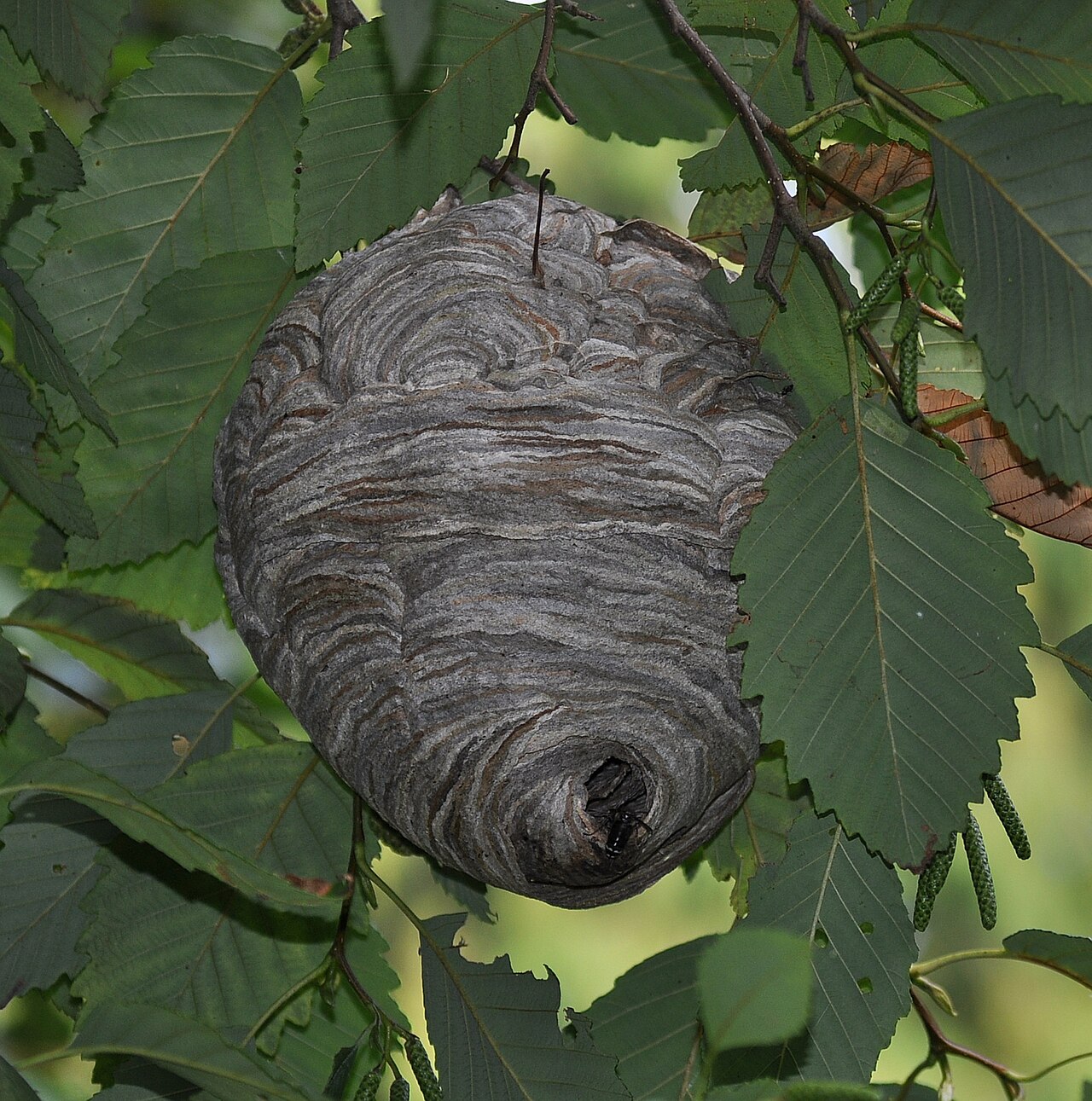
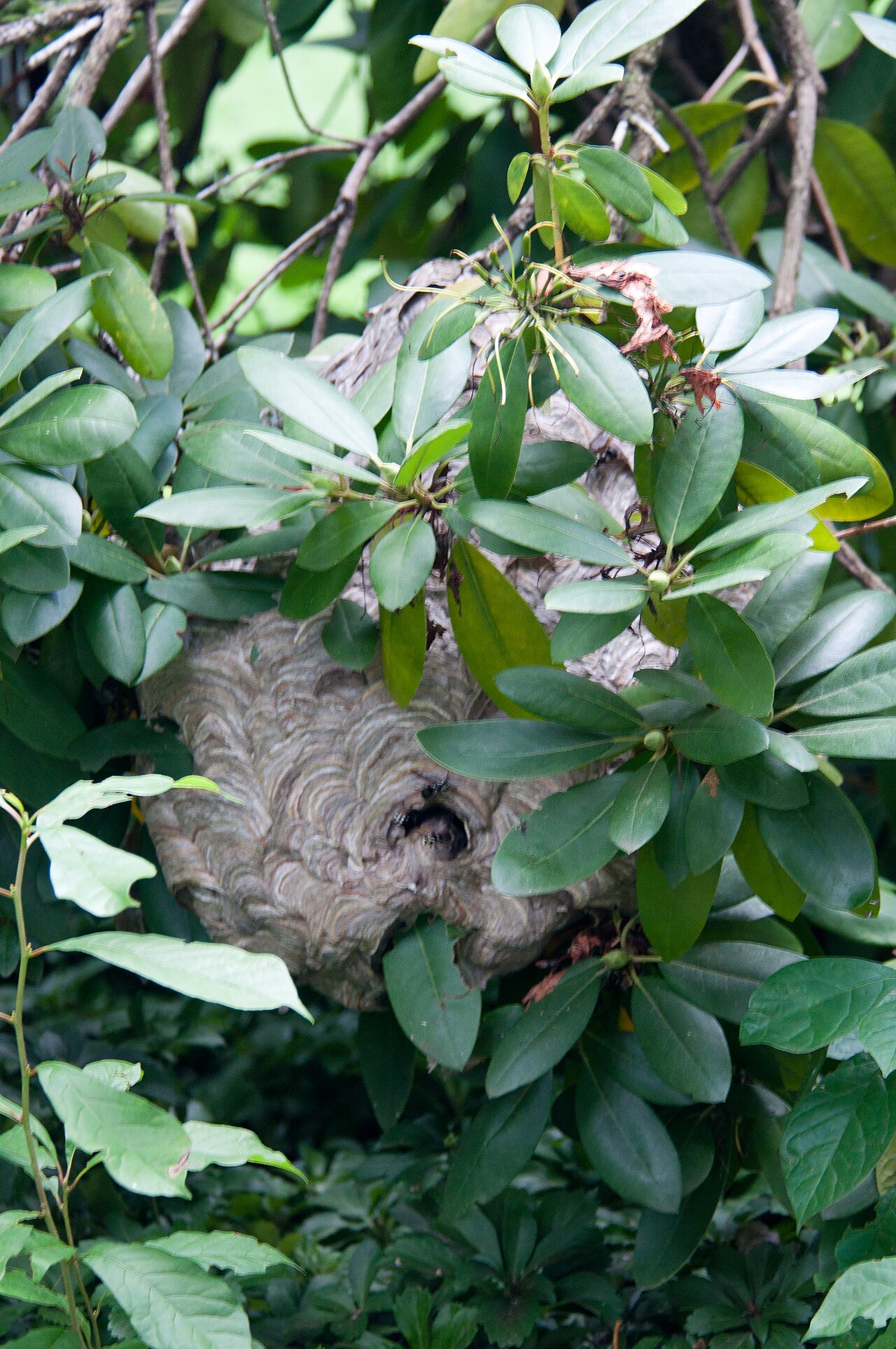
The fastest way to tell a hornet nest from a wasp nest is whether it has a covering. Hornet nests are fully enclosed in grey papery shell with a single small entrance near the bottom, typically football-shaped and hanging from a branch or eave. Paper wasp nests are open, with the hexagonal cells visible from below and no covering at all.
Location narrows it further. An enclosed grey ball hanging in the open is a bald-faced hornet, an open umbrella of cells under a soffit is a paper wasp, a hole in the ground with heavy traffic is a yellowjacket, and a tube of dried mud on a wall is a solitary mud dauber that will not sting you. This guide covers each nest type, which builders are dangerous, and how to deal with them.
| Nest Type | Builder and Location |
|---|---|
| Enclosed grey ball, hanging | Bald-faced hornet, trees and eaves |
| Open umbrella of cells | Paper wasp, soffits, decks, sheds |
| Enclosed, in a cavity or underground | Yellowjacket, burrows and wall voids |
| Enclosed, in a hollow tree or wall | European hornet, brown papery |
| Mud tubes on walls | Mud dauber, solitary and harmless |
| Small mud pots | Potter wasp, solitary and harmless |
The Enclosed Grey Ball
This is the nest most people mean by hornet nest, and in North America it is almost always built by the bald-faced hornet. It is a rounded or teardrop-shaped structure of grey papery material, growing to the size of a basketball by late summer, with a single small entrance hole near the bottom.
The construction is genuinely impressive. Workers chew weathered wood fibers and mix them with saliva to produce paper, building tiers of hexagonal cells inside and wrapping the whole thing in multiple insulating layers of envelope.
The complication is the name. Bald-faced hornets are not true hornets at all but a species of yellowjacket, Dolichovespula maculata, and the only true hornet in most of North America is the introduced European hornet. That distinction has no practical bearing on how you should treat the nest, which is with respect and distance, but it explains why sources disagree. Our guide to hornets versus wasps covers the insects themselves.
The Open Umbrella
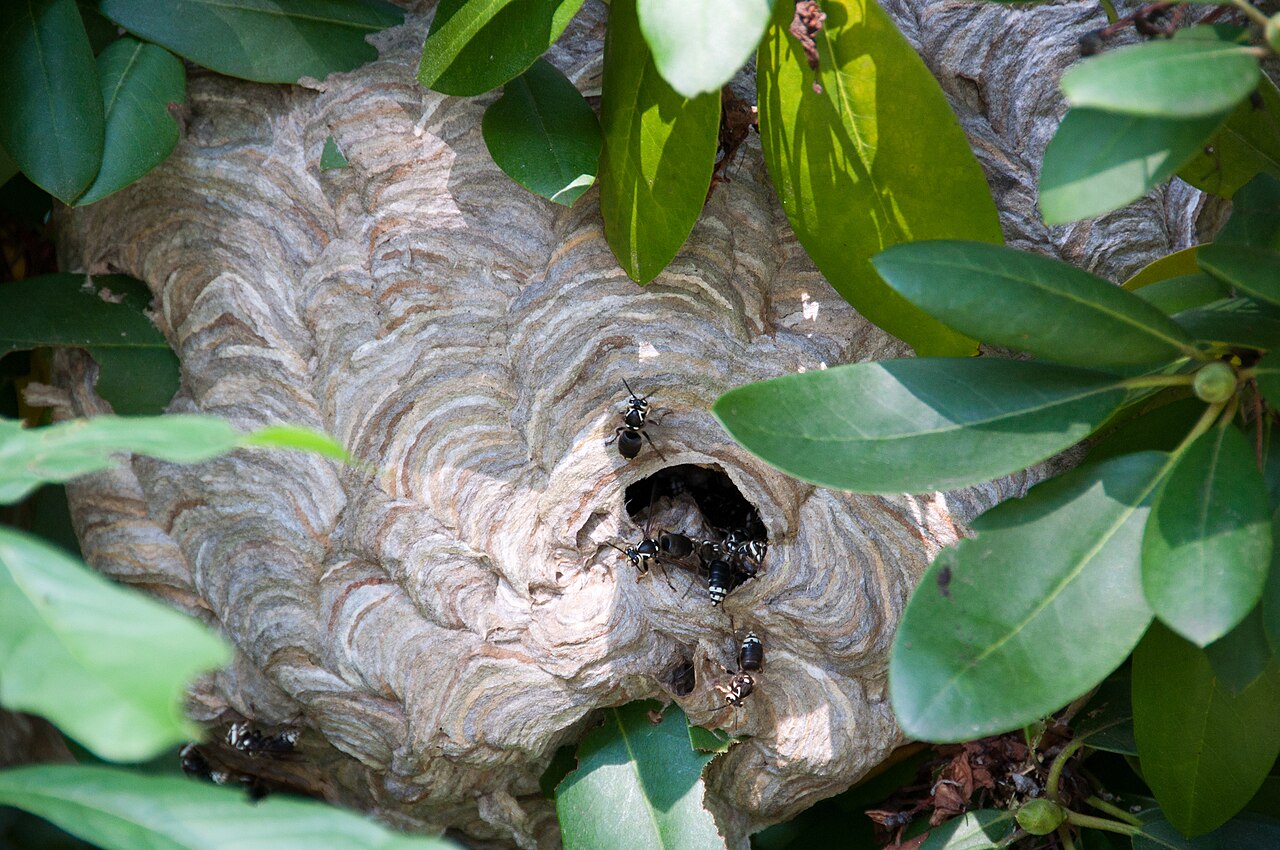
Paper wasp nests are the other common aerial nest and they look completely different. A single horizontal comb of hexagonal cells hangs from a short stalk, the cells face downward, and there is no envelope covering them, so the whole structure and its occupants are visible from below.
They stay small. A mature paper wasp nest typically holds fewer than a hundred cells and rarely exceeds the size of a hand, compared with a bald-faced hornet nest containing several hundred workers.
Placement is characteristic. Under eaves and soffits, inside porch roofs, beneath deck railings and garden furniture, in sheds and garages, and inside pipe ends and grill covers, essentially anywhere with an overhead surface and shelter from rain. Paper wasps are markedly less aggressive than yellowjackets and bald-faced hornets, and a nest away from foot traffic can often be left alone.
Underground and Cavity Nests
Yellowjacket nests are enclosed like hornet nests but hidden, built in abandoned rodent burrows, under sheds and decks, in wall voids, and inside dense shrubs. What you see is not the nest but a hole with continuous heavy two-way traffic.
These are the most dangerous nests in most yards, and the reason is that they are invisible until disturbed. A mower, a strimmer, or a footstep near the entrance triggers a defensive response from a colony that can number in the thousands by late summer, and yellowjackets sting repeatedly.
European hornets nest in hollow trees, wall voids, attics, and outbuildings, producing a brown papery structure that may be partly visible where it fills a cavity opening. They are large and alarming but less aggressive than yellowjackets, and they are also unusual among wasps in flying at night, which brings them to lit windows. Our guide to getting rid of ground bees works through the underground identification question in detail.
Mud Nests Are Something Else Entirely
Mud dauber nests are the ones people worry about unnecessarily. These are tubes or lumps of dried mud plastered onto walls, ceilings, sheds, and under eaves, often in clusters that look like organ pipes or a lumpy grey smear.
Mud daubers are solitary. A single female builds the nest, provisions each cell with paralyzed spiders as food for her larva, seals it, and leaves. There is no colony, no worker caste, and no nest defense whatsoever.
They essentially never sting people, and they are actively beneficial, since a single female stocks her cells with dozens of spiders including black widows. Potter wasps build similar small mud pots and behave the same way. If a mud nest is somewhere inconvenient, scraping it off costs nothing and no defensive response follows, which is not true of any social wasp nest.
Reading the Nest to Judge the Risk
Size indicates colony strength and therefore danger. Wasp and hornet colonies are annual, founded by a single queen in spring and growing through the season, so a nest in May is small and lightly defended while the same nest in August holds hundreds or thousands of workers and is defended aggressively.
Entrance traffic is the other measure. Watching for a minute tells you far more than looking at the nest, and a steady stream of insects in both directions means a mature colony.
Location determines whether anything needs doing at all. A nest 20 ft up in a tree at the back of a property poses no realistic risk and will die off with the first hard frosts. The same nest above a doorway, beside a play area, or where someone will mow is a genuine problem. Judge by proximity to people rather than by the presence of the nest.
What to Do About Each
University extension entomology programs consistently advise treating only nests that create genuine risk, and the reasoning is worth following. Leave the ones you can. All of these colonies die in autumn, with only mated queens surviving to overwinter elsewhere, and the old nest is never reused. A nest in a far corner, high in a tree, or in an unused outbuilding costs nothing to tolerate and provides free caterpillar and fly control through the summer.
Treat what you cannot avoid, and do it correctly. Work at night when the colony is inside and inactive, use a product labeled for wasp and hornet nests with a jet spray so you can stay back, wear covering clothing, use a torch with a red filter since white light attracts them, and leave immediately rather than watching.
Call a professional for anything you cannot reach safely, anything inside a wall void or underground where treatment may drive insects into living space, any nest above head height requiring a ladder, and any situation involving a sting allergy in the household. Never seal a cavity entrance without treating first, since the colony will chew through into the building interior.
What Not to Do
Several popular approaches are dangerous rather than merely ineffective. Burning a nest sets buildings alight and produces a cloud of enraged insects, and using petrol or other fuels is illegal in many places, contaminates soil, and creates an obvious fire risk.
Blocking the entrance without treatment simply redirects the colony, and wasps in a wall void will chew through plasterboard into a room. Knocking down an aerial nest during the day produces a mass defensive response from hundreds of insects.
Fake paper nests marketed as deterrents have little evidence behind them, since the territorial spacing they supposedly exploit is not that reliable in practice. Traps catch foraging workers but do not affect the colony, though they can reduce nuisance around outdoor eating in late summer, which is when yellowjackets switch to sugar and become a picnic problem. Our guide to birds that eat wasps covers the natural controls.
Why the Colonies Die Every Year
Understanding the annual cycle removes most of the urgency from wasp problems. A single fertilized queen emerges from overwintering in spring, builds a small nest alone, raises the first workers herself, and then confines herself to laying while the workers expand the colony.
The colony peaks in late summer, which is precisely when nests become conspicuous and encounters spike. Late in the season new queens and males are produced, they leave and mate, and the founding queen, all the workers, and the males die with the first hard frosts.
Only the mated new queens survive, overwintering under bark, in leaf litter, or in sheltered cavities, and each starts a new nest elsewhere in spring. The old nest is never reoccupied, which means an empty winter nest is simply an artifact and can be removed safely once it has been cold for a sustained period.
Why Wasps Are Worth Tolerating
Social wasps are significant predators and the case for leaving distant nests alone is stronger than most people assume. A single colony consumes thousands of caterpillars, flies, aphids, and other insects over a season, feeding them to developing larvae.
They also pollinate, less efficiently than bees but meaningfully, and some plant species depend on wasps specifically. The late-summer switch to sugar that makes them a nuisance at picnics happens because larval production has stopped and the adults need carbohydrate.
The realistic position is targeted rather than blanket action. Remove nests that create genuine risk near doors, paths, and play areas, leave the ones that do not, and accept that the whole thing resolves itself by November. Our guides to the murder hornet and the red wasp cover species where public reaction has run well ahead of the actual threat.
Related reading: Hornet Nest Removal.
Frequently Asked Questions
How do I tell a hornet nest from a wasp nest?
By the covering. Hornet nests are fully enclosed in grey paper with one small entrance near the bottom, usually football-shaped and hanging in the open. Paper wasp nests are open umbrellas of hexagonal cells with no covering, visible from below.
What builds the big grey ball nest?
Almost always the bald-faced hornet, which is technically a yellowjacket rather than a true hornet. The nest grows to basketball size by late summer and can hold several hundred workers, defended aggressively.
What are the mud tubes on my wall?
Mud dauber nests, built by solitary wasps that provision each cell with paralyzed spiders and leave. There is no colony and no nest defense, they essentially never sting, and they are beneficial, so scraping the nest off is entirely safe.
Which nest is most dangerous?
Underground yellowjacket nests, because they are invisible until disturbed and colonies can number in the thousands by late summer. A mower or footstep near the entrance triggers a mass defensive response, and yellowjackets sting repeatedly.
Can I remove a wasp nest myself?
Small accessible aerial nests can be treated at night with a labeled jet spray, wearing covering clothing and using a red-filtered torch, then leaving immediately. Call a professional for wall voids, underground nests, anything needing a ladder, or if anyone has a sting allergy.
Do wasps reuse old nests?
No. Colonies are annual and die with the first hard frosts, with only mated queens surviving to build elsewhere in spring. An old nest in winter is an empty artifact and can be removed safely after sustained cold.
Should I remove every nest I find?
No. A nest high in a tree or in an unused outbuilding poses no realistic risk and dies off by November, while providing substantial caterpillar and fly control. Judge by proximity to doors, paths, and play areas rather than by the nest’s existence.