Baby Cottonmouth Snake: Venomous From Birth, Explained
A baby cottonmouth, also called a water moccasin, hatches already venomous and fully capable of delivering a medically significant bite from birth, unlike the harmless colubrid species covered in several of our companion snake guides, since cottonmouths are pit vipers born through live birth rather than egg-laying, emerging as fully independent, venom-equipped young requiring no parental care whatsoever from the moment of birth, making correct identification of this species genuinely important for anyone spending time in its native wetland habitat across the southeastern United States.
Baby cottonmouths display a genuinely distinctive bright yellow or greenish-yellow tail tip that adults lack entirely, a color feature believed to function as a caudal lure attracting small prey like frogs or lizards within striking distance, making this bright tail tip both a fascinating documented hunting adaptation and a genuinely useful identification feature for anyone encountering a young cottonmouth specifically. This guide covers cottonmouth birth and the venomous nature of hatchlings, the specific caudal luring behavior and its documented function, growth toward adulthood, and critically important safety guidance for anyone in cottonmouth territory.
| Fact | Baby Cottonmouth |
|---|---|
| Birth method | Live birth (viviparous) |
| Litter size | Typically 1 to 20 young |
| Venomous at birth? | Yes, fully venomous immediately |
| Distinctive feature | Bright yellow/green tail tip (caudal lure) |
| Adult size | 2 to 4 feet, sometimes larger |
| Range | Southeastern United States wetlands |
A baby cottonmouth is venomous from birth and can deliver a medically significant bite. Newborns are 7 to 13 inches, boldly banded in brown and tan, and carry a bright yellow or greenish tail tip used to lure frogs and lizards within striking range.
Venomous From Birth: A Critical Safety Fact
Unlike the harmless colubrid snake species covered in our companion guides, including the corn snake and king snake, cottonmouths are pit vipers, meaning baby cottonmouths are genuinely venomous and capable of delivering a medically significant bite from the very moment of birth, with no gradual venom development period or reduced-risk juvenile stage that some people mistakenly assume applies to young venomous snakes generally.
This immediate venom capability means baby cottonmouths should be treated with exactly the same caution and respect afforded to adult cottonmouths, since size alone provides no meaningful reduction in the genuine medical risk a bite from this species can present, making the common but genuinely dangerous assumption that smaller or younger venomous snakes pose less serious risk a myth that anyone spending time in cottonmouth territory should specifically understand and disregard.
Cottonmouths belong to the pit viper family, sharing this venomous status with rattlesnakes and copperheads found across overlapping portions of the southeastern United States, a genuinely important family-level identification to understand given that pit vipers as a group display certain shared physical features, including the heat-sensing pit between the eye and nostril that gives this snake family its common name, distinguishing them from the harmless colubrid species covered throughout most of our other snake identification guides.
Live Birth: How Cottonmouths Reproduce
Cottonmouths reproduce through live birth rather than egg-laying, with females giving birth to litters typically ranging from 1 to 20 young depending on the individual female’s size and health, a reproductive strategy shared with several other pit viper species and genuinely distinct from the egg-laying reproduction covered throughout our other snake guides focused on harmless colubrid species.
This live-birth reproductive method means baby cottonmouths emerge already fully formed and independent, requiring no incubation period or nest-guarding behavior from the mother, who typically does not provide any meaningful parental care following birth, leaving newly born cottonmouths to immediately begin independent life, hunting, and self-protection from their very first moments.
Birth typically occurs during summer months across most of the cottonmouth’s range, with young cottonmouths displaying the same basic dark, banded pattern adults show, though often with somewhat more pronounced, higher-contrast banding that may become less distinct as the snake matures and its overall coloring darkens toward the more uniformly dark appearance many adult cottonmouths eventually display.
The Bright Tail Tip: A Documented Hunting Lure
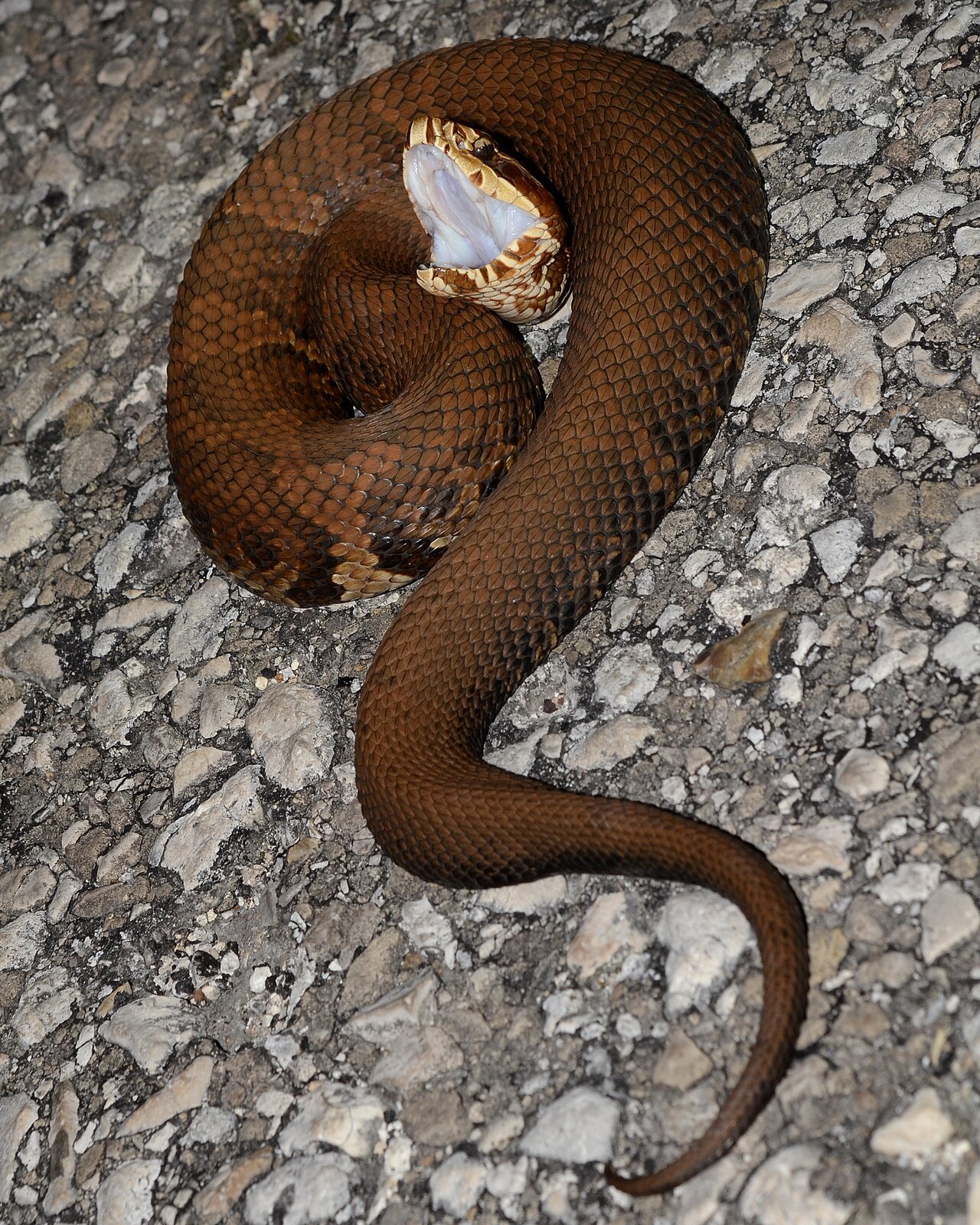
One of the most genuinely distinctive features of baby cottonmouths is a bright yellow or greenish-yellow tail tip, a coloring feature entirely absent in adults, which display the more uniformly dark coloring characteristic of mature cottonmouths, making this bright juvenile tail tip a genuinely useful identification feature specifically for confirming a young cottonmouth versus other similarly patterned snake species.
This bright tail coloring is believed to function as a caudal lure, with young cottonmouths wiggling their brightly colored tail tip to mimic the appearance and movement of a small prey item like a worm or insect, attracting the attention of frogs, lizards, or other small prey animals close enough for the young snake to then strike and capture, a documented hunting strategy that provides genuine predatory advantage during this vulnerable early life stage before the snake grows large enough to reliably capture larger prey through more direct pursuit.
This caudal luring behavior is shared with several other young pit viper species, representing a documented adaptation that specifically benefits smaller, less experienced hunters by essentially bringing prey within striking range rather than requiring the more active pursuit hunting strategy larger, more capable adult snakes typically rely on instead, making this bright tail tip a genuine functional hunting tool rather than simply a passive juvenile coloring difference.
Growth Toward Adulthood
Baby cottonmouths grow toward their adult size of typically 2 to 4 feet, with some individuals reaching somewhat larger sizes, over the course of several years, with growth rate depending on prey availability and regional climate conditions, and as cottonmouths mature, their coloring generally darkens considerably, with the bright juvenile tail tip fading and the overall pattern becoming less distinctly banded and more uniformly dark in many adult individuals.
This darkening process means older juvenile and adult cottonmouths can present genuine identification challenges compared to the more distinctively marked younger snakes, since the loss of the bright tail tip and the general darkening of overall body pattern removes some of the more reliable younger-snake identification features covered throughout this guide, making other identification approaches, including the pit viper head shape and heat-sensing pit, increasingly important for confirming adult cottonmouth identification.
Cottonmouths reach sexual maturity at various ages depending on growth rate and specific conditions, with wild cottonmouths capable of living a decade or more under favorable conditions, making this species, like several other snake species, a genuinely long-term presence within suitable wetland habitat rather than a short-lived opportunistic species passing through quickly.
Habitat and Range
Cottonmouths inhabit wetland environments across the southeastern United States, including swamps, marshes, slow-moving streams, and the edges of lakes and ponds, with this species showing a strong preference for aquatic and semi-aquatic habitat that distinguishes it from the more purely terrestrial habitat preferences several other snake species covered throughout our broader snake identification resources typically favor instead.
This aquatic habitat association means cottonmouths are genuinely more likely to be encountered near water specifically, whether swimming, basking on logs or banks near water, or moving through wetland vegetation, making water proximity itself a useful contextual clue when trying to identify a potentially unfamiliar snake within this species’ geographic range across the southeastern states.
Understanding this specific habitat preference matters practically for anyone recreating in or near wetland areas within cottonmouth range, since awareness of the specific environments where this venomous species is most likely to be encountered supports appropriately heightened caution in genuinely relevant locations, water edges, swamps, and similar wetland habitat, compared to drier, more upland habitat where cottonmouth encounters would be considerably less likely.
Cottonmouth vs Harmless Water Snakes
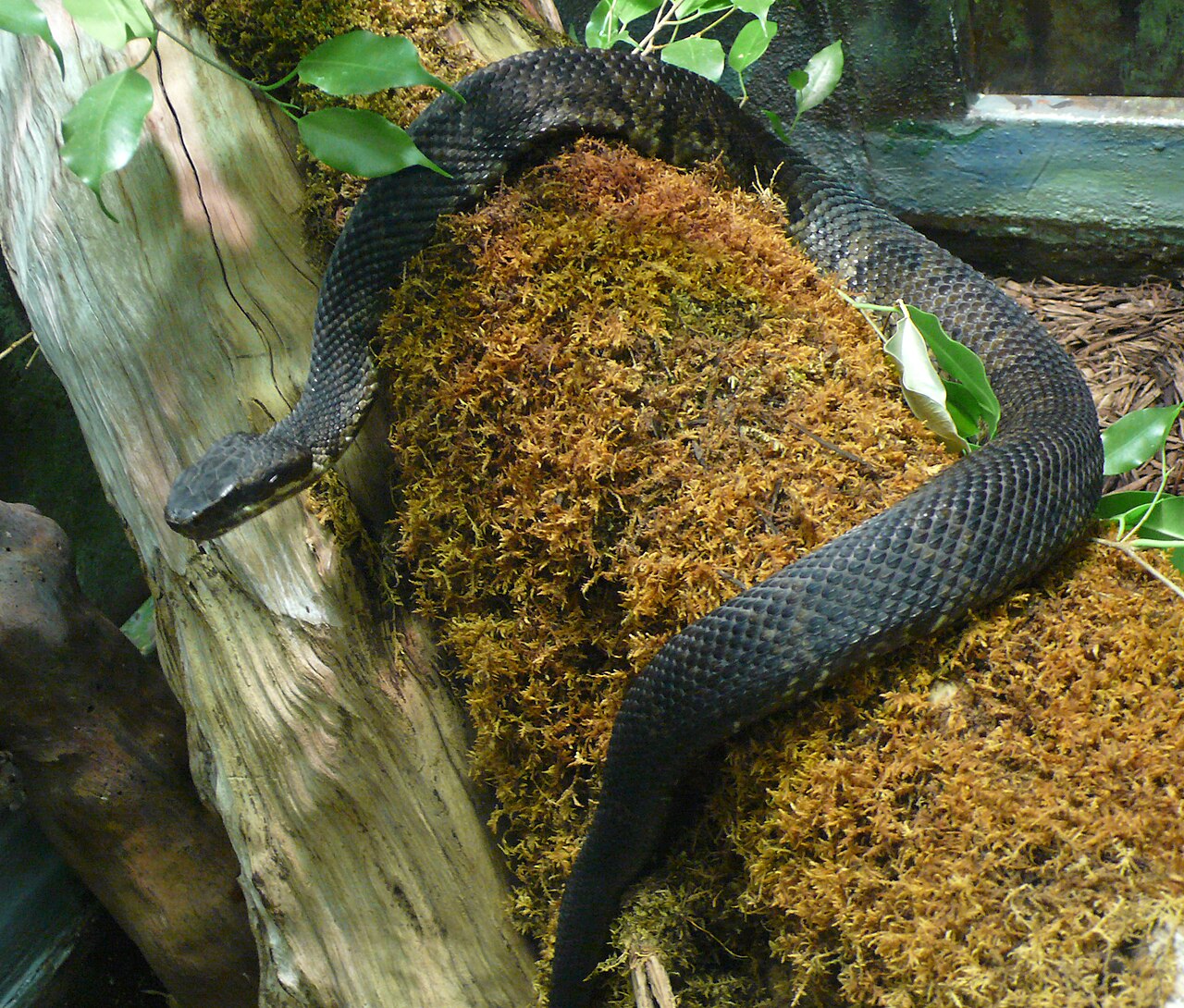
Cottonmouths are frequently confused with several harmless water snake species sharing similar aquatic habitat and generally dark coloring, similar to how the rat snake sometimes gets confused with other similarly patterned species, a genuinely significant identification challenge given the real difference in risk between these species, with cottonmouths displaying a notably thicker, more heavy-bodied build compared to the generally more slender build of most harmless water snake species found in similar habitat.
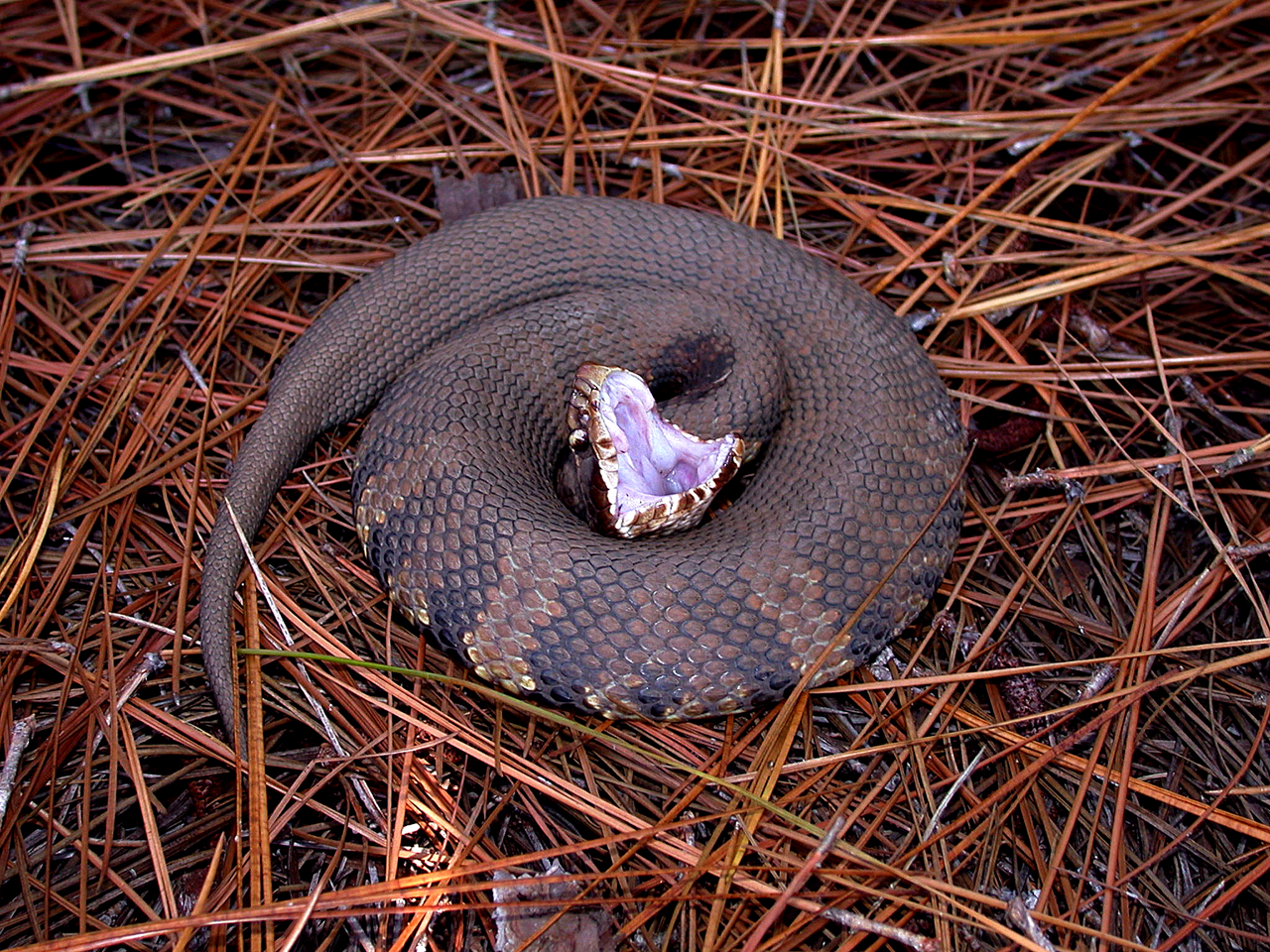
Behavioral differences also provide useful distinguishing clues, since cottonmouths often display a distinctive open-mouth threat display, showing the pale, cotton-white interior of their mouth that gives this species its common name, when feeling threatened, a specific defensive behavior harmless water snakes generally do not display in the same characteristic manner.
Given the genuine difficulty many people, including some experienced outdoor enthusiasts, have reliably distinguishing cottonmouths from harmless water snakes based on quick visual assessment alone, the safest practical approach in any area where cottonmouths are known to occur involves maintaining respectful distance from any snake encountered near water rather than attempting close identification, treating any uncertain sighting with the same caution appropriate for a confirmed venomous snake.
How Cottonmouths Differ From Harmless Colubrid Snakes Generally
Beyond the specific water snake confusion covered in the previous section, cottonmouths differ fundamentally from the entire broader colubrid family covered throughout most of our other snake guides, including the black snake and species involved in the coral snake vs king snake mimicry comparison, since colubrids as a group lack venom delivery systems capable of the medically significant bite cottonmouths and other pit vipers can deliver.
This fundamental venom-delivery difference means the identification stakes genuinely differ between confirming a cottonmouth versus confirming most other snake species covered across our broader identification resources, since misidentifying a harmless colubrid as dangerous carries only the modest cost of unnecessary caution, while misidentifying a genuinely venomous cottonmouth as harmless carries considerably more serious potential consequences given the real medical risk involved.
This asymmetry in identification stakes reinforces why the safest practical approach specifically within cottonmouth range involves defaulting toward caution with any uncertain snake sighting near water, rather than applying the more relaxed observational approach appropriate for confirmed harmless species covered throughout our other snake identification guides, since the cost of excessive caution remains far lower than the cost of a missed venomous identification.
Safety Guidance for Cottonmouth Territory
Anyone spending time in wetland areas within cottonmouth range should wear appropriate protective footwear, remain on established paths where visibility is better, and use a flashlight when moving through vegetation or near water during low-light conditions, since cottonmouths, like other pit vipers, rely partly on camouflage and can be genuinely difficult to spot before an unwitting close encounter occurs.
If a cottonmouth is encountered, maintaining distance and allowing the snake to retreat on its own terms represents the appropriate response, since cottonmouths, despite their sometimes undeserved reputation for aggression, generally prefer to avoid human confrontation and will typically retreat if given adequate space and time rather than being cornered or provoked into defensive action.
Anyone bitten by a suspected cottonmouth or any snake that cannot be confidently identified as harmless should seek immediate emergency medical attention rather than attempting any home treatment, since proper antivenom treatment, when medically indicated, requires prompt professional medical care that significantly improves outcomes compared to delayed treatment following a venomous snake bite.
What Snake Is Mistaken for a Baby Cottonmouth?
The snakes most often mistaken for baby cottonmouths are harmless watersnakes, particularly the northern and banded watersnakes, which share the same wet habitat, the same banded pattern and the same habit of basking at the water’s edge. Juvenile watersnakes are also boldly patterned and fade with age, exactly like young cottonmouths, so age adds a second layer of confusion.
Three features separate them reliably and none require getting close. A cottonmouth has a broad, blocky, triangular head clearly wider than the neck, a dark band running through the eye, and vertical cat-like pupils. A watersnake has a slender head barely wider than the neck, no eye stripe, and round pupils. Behaviour differs too: a cottonmouth swims with its body riding high and buoyant on the surface, while a watersnake swims mostly submerged with only the head showing.
The yellow tail tip is not diagnostic on its own, since juvenile copperheads and some harmless species also have pale tail tips. Treat any thick-bodied banded snake near southern water as venomous until identified from a distance, and never handle one to check. The University of Florida’s venomous snake identification guidance covers the head, eye and swimming differences in detail.
Frequently Asked Questions
Are baby cottonmouths venomous?
Yes, cottonmouths are fully venomous from the moment of birth, with no reduced-risk juvenile stage, meaning baby cottonmouths should be treated with exactly the same caution as adults.
Do cottonmouths lay eggs or give live birth?
Cottonmouths give live birth, with females producing litters typically ranging from 1 to 20 young that emerge fully independent, requiring no parental care after birth.
Why do baby cottonmouths have bright yellow tails?
This bright tail tip functions as a caudal lure, with young cottonmouths wiggling it to mimic prey like a worm, attracting frogs or lizards close enough to strike, a hunting adaptation adults no longer display.
How can I tell a cottonmouth from a harmless water snake?
Cottonmouths show a notably thicker, heavier build, a wide triangular head, vertical pupils, and often a distinctive open-mouth white-interior threat display that harmless water snakes generally do not show.
Where do cottonmouths live?
Wetland habitats across the southeastern United States, including swamps, marshes, slow-moving streams, and lake or pond edges, with a strong preference for aquatic and semi-aquatic environments.
Are cottonmouths aggressive?
Despite their reputation, cottonmouths generally prefer to avoid human confrontation and typically retreat if given adequate space, though they will defend themselves if cornered or provoked.
What should I do if bitten by a cottonmouth?
Seek immediate emergency medical attention rather than attempting home treatment, since prompt professional medical care significantly improves outcomes following a venomous snake bite.