Birds That Eat Bees: Which Species Hunt Them and Why
Birds that eat bees include summer tanagers, eastern and western kingbirds, red-headed woodpeckers, purple martins, scrub jays, and northern mockingbirds, along with the true bee-eaters of the family Meropidae, which do not occur anywhere in North America. Bee predation by birds is real but far more selective than most people assume: the majority of backyard birds ignore bees entirely, and the handful that specialise in them have evolved specific techniques for removing the sting before swallowing.
For beekeepers the practical answer is reassuring. Bird predation almost never causes measurable colony loss in North America, and the pressures that genuinely damage hives come from mites, wasps, and mammals rather than from birds. Knowing which species actually take bees, and how they manage it without being stung, also explains why a summer tanager can raid a hive entrance repeatedly while a chickadee at the same feeder never touches one.
| Question | Answer |
|---|---|
| Main US bee specialist | Summer tanager (Piranga rubra) |
| True bee-eaters in the US | None, Meropidae is Old World only |
| Other regular US predators | Kingbirds, red-headed woodpeckers, purple martins |
| Sting-removal method | Beat and wipe abdomen against a branch |
| Risk to managed hives | Low, rarely colony-threatening |
| Biggest actual bee predator | Not a bird: varroa mites and wasps |
| Peak predation season | Late spring through summer |
Which Birds Actually Eat Bees
Bee predation among birds splits into two groups. The first is a small set of genuine specialists that seek out bees and wasps as a preferred food, invest energy in handling them safely, and return repeatedly to reliable sources such as hive entrances or nest aggregations. The second and much larger group takes bees opportunistically, catching one during general aerial foraging and eating it only if handling proves easy.
In North America the specialists number fewer than a dozen species. Summer tanagers are the clearest case, followed by eastern and western kingbirds, red-headed woodpeckers, purple martins, and both scrub jay species. Northern mockingbirds, great crested flycatchers, and phoebes take bees regularly enough to count, though bees form a smaller share of their diet.
Everything else that people assume eats bees mostly does not. Chickadees, titmice, cardinals, finches, and sparrows almost never take an adult bee, and swallows, despite feeding almost entirely on flying insects, take mostly small soft-bodied prey. If you are compiling a picture of what different backyard species actually eat, our overview of what birds eat lays out the broader dietary categories.
Are There Bee-Eaters in the United States?
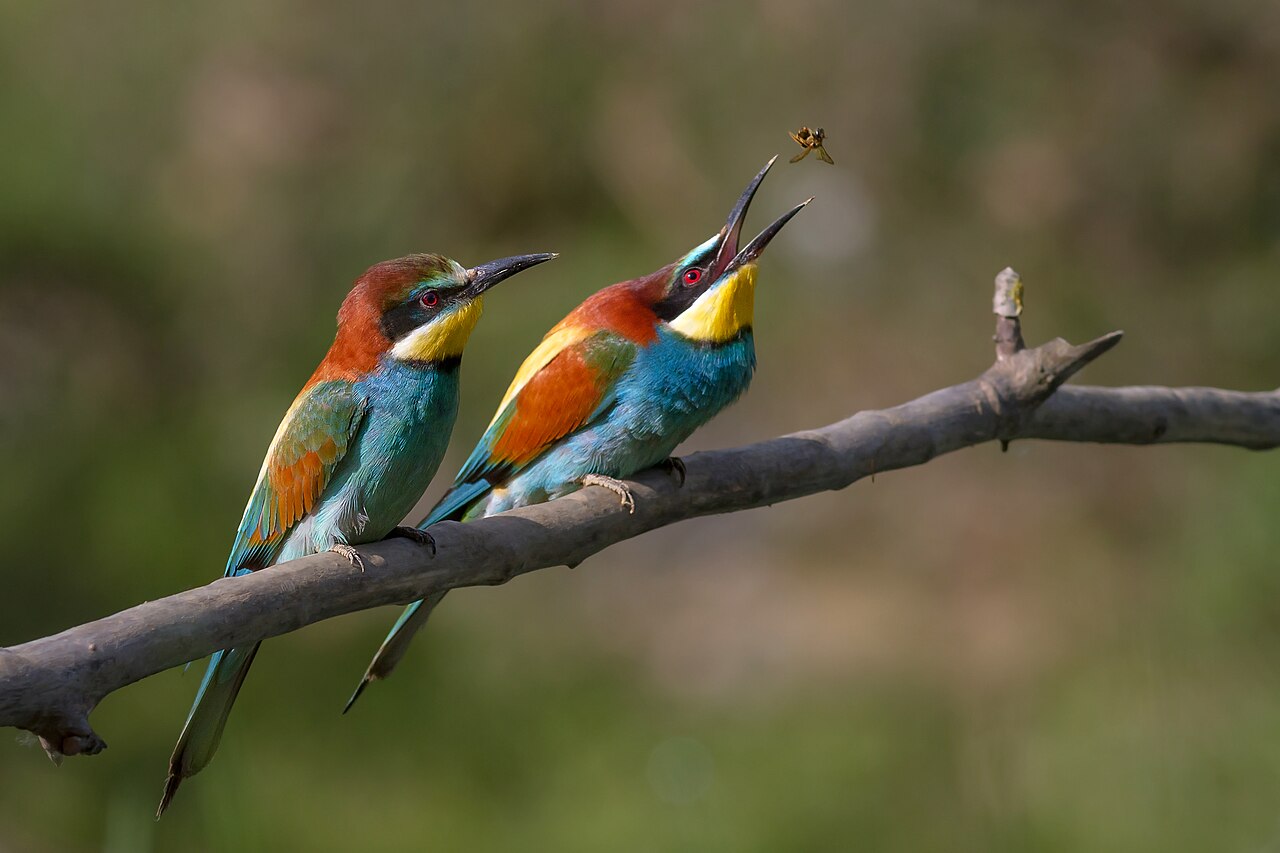
No. The birds properly called bee-eaters belong to the family Meropidae, which contains roughly 30 species distributed across Africa, southern Europe, the Middle East, Asia, and Australia. None of them occurs naturally anywhere in the Americas, and there is no established introduced population in the United States. The European bee-eater and the little bee-eater that dominate image searches are Old World birds.
The confusion arises because the search term is generic while the family name is specific. People searching for birds that eat bees in the USA reliably land on photographs of Merops apiaster, a brilliantly coloured Eurasian bird that will never appear in an American backyard. The Smithsonian’s National Zoo maintains bee-eaters in its bird collection, which puts more American-hosted photographs of them into circulation and deepens the impression they are local.
What the United States has instead is a set of unrelated birds that converged on similar behaviour. Summer tanagers and kingbirds hunt bees using comparable perch-and-sally tactics and comparable sting-removal handling, but they belong to entirely different families and evolved the technique independently. Functionally they are the American bee-eaters, taxonomically they are nothing of the sort.
Summer Tanager: North America’s Closest Thing to a Bee-Eater
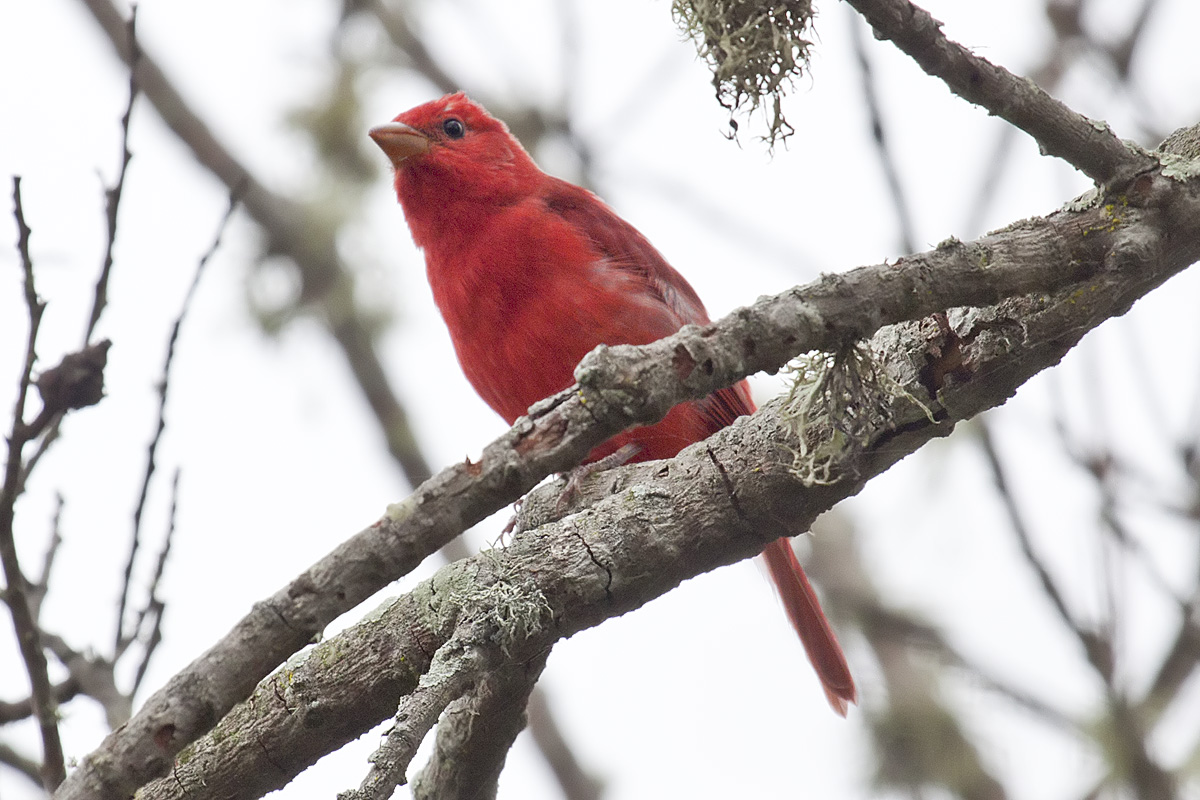
The summer tanager is the only widespread North American bird whose diet is genuinely dominated by bees and wasps. Adult males are entirely rose red, females a warm mustard yellow, and both hunt by perching in the mid canopy, scanning, and then sallying out to catch flying insects. Their range covers the southern and southeastern United States in summer, extending up through the lower Midwest.
Their handling technique is what makes them notable. After catching a bee or wasp the tanager returns to a perch, grips the insect, and beats it repeatedly against the branch, then wipes the abdomen along the bark to break off or discharge the sting before swallowing. The same birds will also tear open paper wasp nests to eat larvae, taking stings in the process without apparent lasting harm.
Summer tanagers do visit managed hives, and beekeepers in the southern states occasionally report a bird working a hive entrance for days. Losses are usually in the range of dozens of bees per day, which a healthy colony of 30,000 or more replaces without difficulty. The behaviour is worth watching but almost never worth intervening in.
Woodpeckers, Kingbirds, and Other US Bee Predators
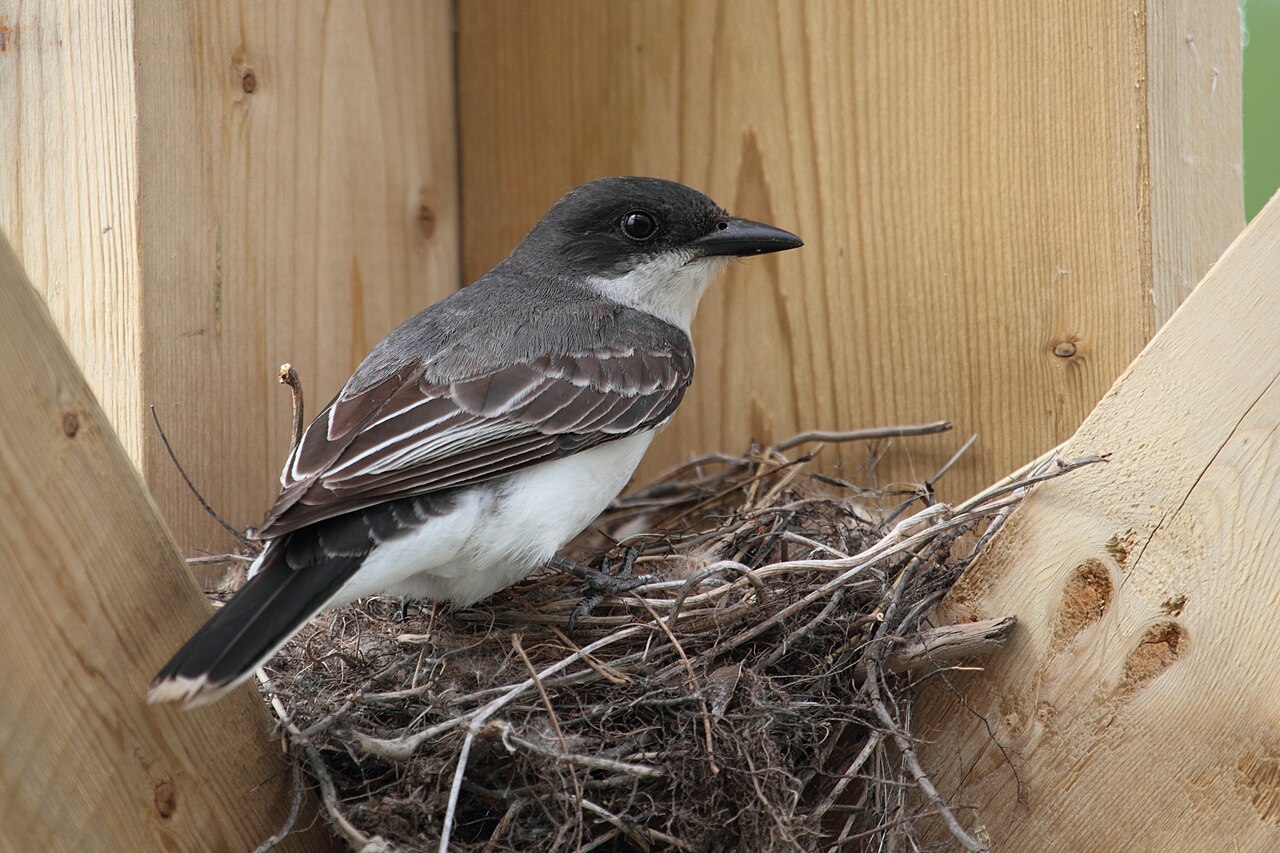
Eastern and western kingbirds are the second most reliable bee predators in North America. Both are flycatchers that hunt from exposed perches on fence lines and wires, and both take bees, wasps, and hornets at rates high enough that early beekeeping literature treated them as pests. Their handling is similar to the tanager’s, and they show the same tolerance for stinging prey.
Red-headed woodpeckers take bees more often than any other North American woodpecker, catching them in flight rather than gleaning them from bark, which is unusual behaviour for the family. Purple martins, despite their popular reputation as mosquito eaters, take considerably more bees, wasps, and dragonflies than mosquitoes, a finding that has repeatedly surprised people who put up martin houses specifically for mosquito control.
Scrub jays, northern mockingbirds, and great crested flycatchers round out the list. Jays in particular will work ground bee nest entrances, which is one of the few situations where a bird meaningfully affects a bee population. If you have ground-nesting bees in your lawn, our guide on dealing with ground bees covers the situation from the other direction.
How Birds Eat Bees Without Getting Stung
Birds are not immune to bee venom, and a sting to the mouth or throat can genuinely injure or kill a bird. What the specialists have instead is a behavioural solution: they never swallow a bee with a functional sting attached. The universal method across unrelated bee-eating species is to immobilise the insect first, then mechanically disable the stinger before consumption.
The sequence is consistent. The bird catches the bee in the bill, returns to a perch, and strikes the insect against a hard surface several times, which stuns or kills it. It then rubs the abdomen firmly along the perch, which in honeybees breaks off the barbed sting and in wasps forces the venom out. Only then does the bird reposition the insect and swallow it head first.
Feathers provide a second layer of protection. A bee cannot readily sting through the dense plumage covering a bird’s head and body, so the vulnerable surfaces are limited to the bill lining, eyes, and legs. This combination of physical protection and learned handling is why a species can specialise on stinging insects without any venom resistance at all, unlike the biochemical resistance seen in some mammals.
Do Birds Threaten Honeybee Hives?
For managed colonies the honest answer is that birds rank near the bottom of the threat list. A strong colony contains 30,000 to 60,000 workers in summer and loses roughly 1,000 bees per day to normal attrition. A bird taking 20 to 50 bees a day sits inside that background noise and produces no detectable effect on colony strength or honey yield.
The exception is a weak or newly established colony. A nucleus hive or a package still building numbers has far less margin, and persistent predation at the entrance can also disrupt orientation flights for young foragers. Beekeepers who see the same bird working an entrance day after day on a small colony have a legitimate reason to move the hive or add visual barriers rather than to simply accept it.
Bird predation also concentrates on foragers rather than on brood, which matters because foragers are the shortest-lived and most replaceable caste. Losing 30 foragers costs a colony far less than losing equivalent numbers of nurse bees or brood, which is exactly what mites and wax moths take.
The Bigger Threats to Bees
Asking what a bee’s worst enemy is produces a clear answer, and it is not a bird. For honeybees the dominant threat worldwide is the varroa mite, an external parasite that feeds on developing brood and transmits several viruses, and it is implicated in the majority of managed colony losses. No avian predator comes close in scale.
Wasps and hornets rank second. Yellowjackets raid weak colonies in late summer to steal honey and brood, and in regions where the northern giant hornet has become established, coordinated attacks can destroy a colony outright. Our guide to the northern giant hornet covers that specific threat, and birds that eat wasps covers the same predator relationship on the wasp side.
Mammals cause the most visible damage. Black bears destroy hives entirely to reach brood and honey, and skunks scratch at entrances at night and eat bees as they emerge, a pattern beekeepers identify by the scratch marks and the scattered bee fragments below the entrance. Habitat loss and pesticide exposure sit above all of these for wild bee populations specifically.
How to Attract or Discourage Bee-Eating Birds
If you want more insect-eating birds in the yard for general pest control, the levers are habitat rather than food. Open perches with clear sightlines, native flowering plants that support insect populations, and a water source do more than any feeder, because none of the bee specialists come to seed. Our guide on attracting birds to your yard covers the habitat side in detail.
Purple martin houses are the one direct intervention, though the realistic benefit is broad flying-insect control rather than targeted mosquito reduction. Martins need open space, height, and distance from tree lines, and a house placed badly will simply stay empty year after year. The same broad insect control applies to the species covered in birds that eat mosquitoes.
To discourage birds at a hive, physical and visual measures work better than removal, which is illegal for nearly all native species under the Migratory Bird Treaty Act. Removing convenient perches within sight of the entrance, adding an entrance shade, or relocating the hive 50 m or more usually ends the behaviour, because the bird was exploiting a specific convenient setup rather than the hive itself.
Related reading: Birds That Eat Fish.
Related reading: Birds That Eat Caterpillars.
Related reading: Birds That Eat Grasshoppers.
Frequently Asked Questions
What bird eats bees?
In North America the summer tanager is the main bee specialist, followed by eastern and western kingbirds, red-headed woodpeckers, purple martins, and scrub jays. Worldwide the true bee-eaters of the family Meropidae are the dedicated specialists, but none of them occurs in the Americas.
Are there bee-eater birds in the US?
No. Meropidae bee-eaters are restricted to Africa, Europe, Asia, and Australia, with no naturally occurring or established population anywhere in the Americas. The North American birds that fill a similar role, such as summer tanagers and kingbirds, are unrelated and evolved the behaviour independently.
How do birds eat bees without getting stung?
They disable the sting before swallowing. The bird catches the bee, returns to a perch, beats it against the branch to stun it, then wipes the abdomen along the bark to break off or discharge the stinger. Dense head and body feathers protect against stings during the catch itself.
What is the biggest predator of bees?
For honeybees it is the varroa mite, a parasite implicated in most managed colony losses worldwide. Among larger animals, wasps and hornets do the most damage to colonies, and bears and skunks cause the most visible destruction. Birds rank well below all of these.
Which bird eats wasps?
Summer tanagers, kingbirds, and great crested flycatchers all take wasps regularly, and summer tanagers will tear open paper wasp nests to reach the larvae. Handling is the same as for bees: stun the insect, wipe the abdomen against a perch, then swallow.
Do birds eat bumblebees?
Less often than honeybees. Bumblebees are larger, more heavily armoured, and harder to handle, and their sting is not barbed so it can be used repeatedly. Kingbirds and shrikes take them occasionally, but no North American bird specialises in bumblebees the way summer tanagers specialise in honeybees.
Should beekeepers worry about birds?
Generally no. A strong colony loses around 1,000 bees a day to normal attrition, so a bird taking 20 to 50 has no measurable effect. Persistent predation at a small or newly established colony is worth addressing, usually by removing nearby perches or shading the entrance rather than by targeting the bird.