What Is a Group of Flamingos Called? Flamboyance and More
A group of flamingos is called a flamboyance, and that vivid name has become the best known collective noun for the species. A group of flamingos is also called a stand, a colony, a regiment, and a pat, and ornithologists most often simply use flock or colony. The term flamboyance is a modern coinage rather than a medieval one, invented in the twentieth century to match birds whose pink plumage and synchronized displays genuinely deserve the word. Whether you say a flamboyance of flamingos or a flock of flamingos, both are correct.
What makes flamingos unusual among birds with dramatic collective nouns is that they really do live in enormous, tightly coordinated groups. Lesser flamingo colonies at Lake Natron in Tanzania have exceeded a million birds, and breeding flamingos perform group courtship displays in which hundreds of birds march, turn their heads, and flag their wings in unison. This guide covers every collective noun for flamingos, explains where flamboyance came from, sorts out which terms are genuine and which are jokes, and describes how flamingo colonies actually work.
A group of flamingos is called a flamboyance, the most widely cited collective noun. It is also correctly called a stand, a colony, a regiment, or a pat, and biologists usually say flock or colony. Flamingos live in some of the largest bird colonies on earth, with lesser flamingo gatherings at Lake Natron exceeding one million birds.
| Question | Answer |
|---|---|
| Best known collective noun | Flamboyance of flamingos |
| Other accepted terms | Stand, colony, regiment, pat |
| Scientific and everyday term | Flock or colony |
| Largest recorded colonies | Over 1 million lesser flamingos |
| Baby flamingo | Chick (gray or white, not pink) |
| Why they are pink | Carotenoid pigments from algae and shrimp |
| Species worldwide | Six |
Why Is a Group of Flamingos Called a Flamboyance?
A group of flamingos is called a flamboyance because of the birds’ extravagant color and their theatrical group behavior, and the word was coined to match. Flamboyant comes from the French flamboyer, meaning to flame or blaze, the same root that gives us the flame-like tracery of flamboyant Gothic architecture. Applied to a mass of pink and scarlet birds standing in shallow water, in the way that peacock imagery works on display alone, the word does exactly what a good collective noun should: it captures the visual impression in a single term.
Unlike a murder of crows or an unkindness of ravens, flamboyance is not medieval. It does not appear in the Book of Saint Albans or the other fifteenth century lists of terms of venery, for the simple reason that English hunters had never seen a flamingo. The word entered collective noun lists in the twentieth century as writers extended the old tradition to species the medieval compilers never encountered, and it spread rapidly because it is memorable and apt.
That recent origin does not make it wrong. Collective nouns are a living tradition rather than a fixed canon, and flamboyance is now the term you will find in dictionaries, zoo signage, and reference works. If a quiz asks what a group of flamingos is called, flamboyance is the expected answer. If you are writing a scientific paper, you will write colony or flock, which is what every flamingo researcher uses.
Is a Group of Flamingos Called a Stand or a Pat?
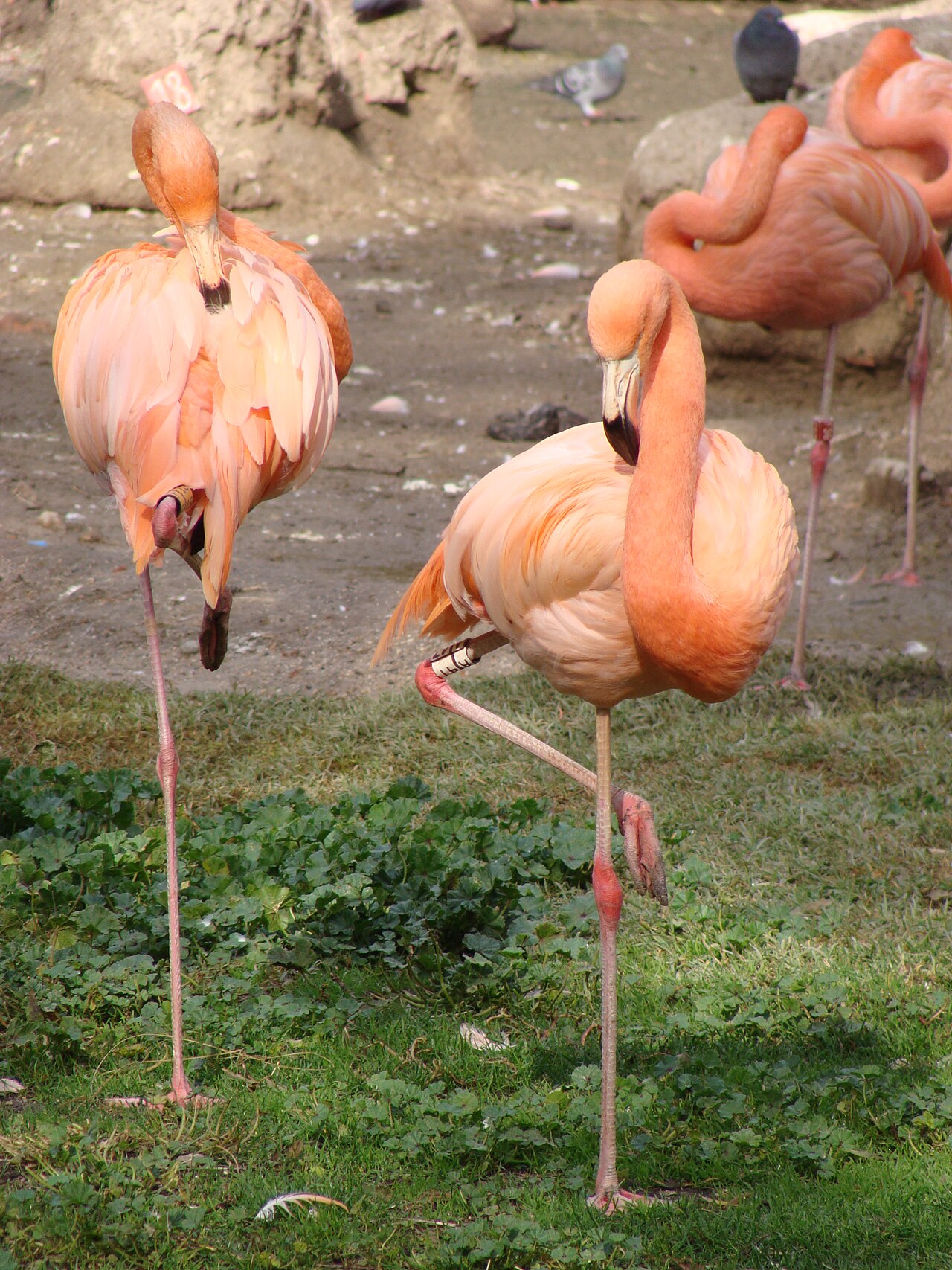
Yes, a stand of flamingos and a pat of flamingos are both recorded collective nouns, and each has a logic behind it. Stand refers to the birds’ habit of standing motionless in shallow water for long periods, often on one leg, which is the image most people carry of the species. A stand of flamingos describes exactly what you see at a lagoon at midday: dozens or hundreds of birds standing still in the shallows.
Pat is the odder term and its origin is debated. The most common explanation ties it to the way flamingos pat mud with their feet while feeding, stirring up the sediment so they can filter small organisms from the water. Others link it to the mud nests the birds build, which are patted into cone shapes about a foot high. Either way, pat is a genuine entry in collective noun lists rather than a modern joke, though it is rarely used.
Regiment is the fourth common term, and it comes from the birds’ habit of moving in tight, orderly formation. Flamingos walking in a group frequently fall into ranks and step in near unison, which really does look military. Colony, the term biologists prefer for breeding aggregations, is also correct and is the only one of these words that carries a precise technical meaning: a colony is a group nesting together in one place.
Do Flamingos Really Perform Group Displays?
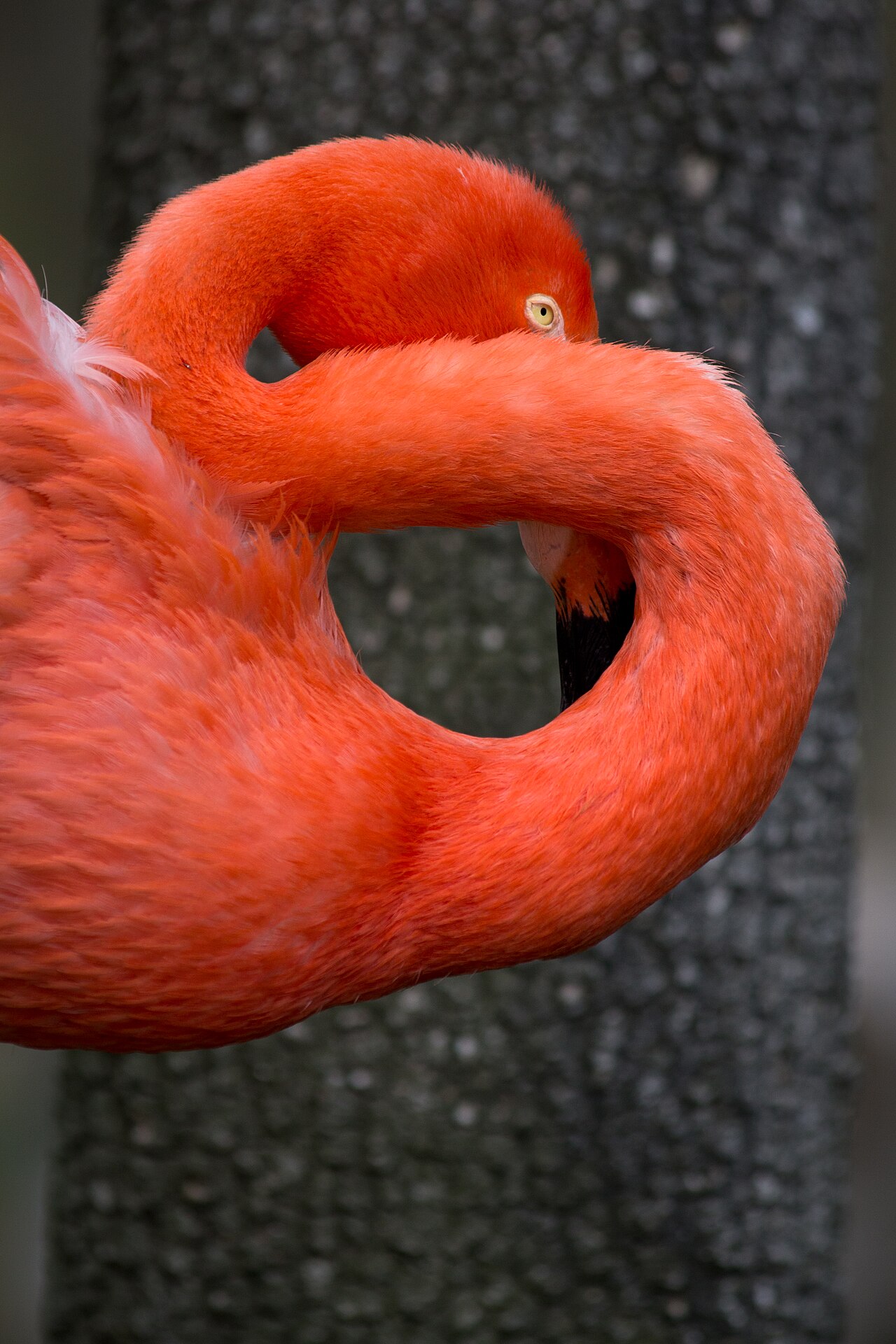
Yes, flamingos perform elaborate synchronized courtship displays involving dozens to hundreds of birds moving as one, and this collective behavior is one of the most striking sights in the bird world. The displays include head flagging, in which birds stretch their necks up and swing their heads side to side in unison; wing salutes, where the wings are flashed open to reveal black flight feathers against pink; and marching, in which a dense block of birds strides forward together and abruptly changes direction.
The purpose is to synchronize breeding across the whole colony. Flamingos nest in dense groups on mudflats, and the entire colony must come into breeding condition at roughly the same time so that chicks hatch together and can be pooled into crèches. Group display appears to stimulate hormonal readiness, and colonies that fail to reach a critical size often fail to breed at all. Zoos with small flamingo flocks sometimes install mirrors to make the group appear larger for exactly this reason.
The displays typically begin weeks or months before nesting and intensify as the season approaches. Both sexes participate, and individual birds shift between the different display types in a sequence that spreads through the group like a wave. The Smithsonian’s National Zoo (nationalzoo.si.edu) describes these displays as essential to successful captive breeding, which is why flamingo exhibits are designed to hold large groups rather than a handful of birds.
How Large Are Flamingo Colonies?
Flamingo colonies are among the largest bird aggregations on earth, and the lesser flamingo is the record holder. Lake Natron in Tanzania, an alkaline lake so caustic that few other animals can tolerate it, hosts breeding gatherings that have exceeded one million lesser flamingos, and the East African population as a whole is estimated at 1.5 to 2.5 million birds. Photographs of the lake show pink covering the water to the horizon. Similar mass gatherings occur at Lake Bogoria and Lake Nakuru in Kenya.
Other species form smaller but still substantial colonies. Greater flamingos in the Camargue of southern France breed in colonies of 10,000 to 20,000 pairs, and Caribbean flamingos in the Yucatan and Bonaire number in the tens of thousands. American flamingo colonies in the Bahamas at Great Inagua hold roughly 50,000 to 80,000 birds, the largest population of that species. Andean and James’s flamingos in the high Andes form far smaller colonies of a few thousand.
Colony size is driven by food and by the extreme habitats flamingos exploit. The birds filter cyanobacteria, diatoms, brine shrimp, and small invertebrates from saline and alkaline lakes where almost nothing else can survive, and those lakes can support extraordinary densities of that food. The tradeoff is that suitable lakes are few and scattered, so entire regional populations may depend on a handful of sites, which makes flamingos vulnerable to habitat loss despite their numbers. Colony density shapes how chicks are raised, which is covered further below.
Is a Flamboyance Bigger Than a Flock?
No, flamboyance and flock refer to the same thing and imply no difference in size. Flamboyance is the fanciful term, flock is the general one, and either can describe six birds in a zoo or a hundred thousand at a soda lake. There is no established rule that a flamboyance must reach a particular number, despite occasional claims online that it requires a minimum of a certain many birds. Such claims apply to none of the standard collective nouns and can be safely ignored.
The one term that does carry a technical distinction is colony. In ornithology, a colony means a group of birds nesting together in one location, so a flamingo colony implies breeding rather than merely gathering. A non-breeding aggregation of flamingos feeding at a lagoon is a flock, not a colony, and biologists use the words carefully in that sense. Outside scientific writing the distinction is rarely observed.
For practical purposes, use flamboyance when you want the memorable word, flock when you want to be understood without comment, and colony when the birds are nesting. All three will be recognized. The Cornell Lab of Ornithology (allaboutbirds.org) treats collective nouns generally as folklore and tradition rather than terminology, and notes that flock is always acceptable for any group of birds regardless of species.
What Are Baby Flamingos and Groups of Them Called?
A baby flamingo is called a chick, and a group of flamingo chicks is called a crèche, using the French word for a nursery. Crèche is a genuine technical term in ornithology, not a fanciful collective noun, and it describes one of the most remarkable aspects of flamingo breeding. Chicks leave their nests within a week or so of hatching and gather into dense groups that can number thousands of young birds, watched over by a small number of adults while the rest of the colony feeds.
Flamingo chicks hatch gray or white with straight bills, looking nothing like their parents. The distinctive downward-kinked bill develops over the first few months, and the pink color takes one to three years to appear. Both parents feed the chick crop milk, a bright red secretion produced in the upper digestive tract that is rich in fat and protein, and remarkably, parents locate their own chick in a crèche of thousands by voice alone. Chicks and parents learn each other’s calls in the days after hatching.
Nests are built as mounds of mud patted into a truncated cone about 12 to 18 inches high, which raises the single egg above flood level and away from ground heat. A female lays one egg per season, occasionally two, and incubation takes about 28 to 32 days shared by both parents. The crèche system frees adults to travel long distances to feed, sometimes flying 30 miles or more between the colony and a productive lake.
Why Are Flamingos Pink, and Does the Group Matter?
Flamingos are pink because of carotenoid pigments in their food, not because of anything inherent in the birds themselves. They eat blue-green algae, diatoms, and brine shrimp that are rich in beta-carotene and canthaxanthin, and enzymes in the liver break these compounds down into pigments that are deposited in the feathers, bill, and legs. A flamingo fed a diet lacking carotenoids turns white, which is why zoos supplement flamingo food with carotenoid additives.
Color intensity varies among individuals and carries social information. Brighter birds are generally in better condition, have better access to food, and tend to be dominant in feeding groups. Research on greater flamingos has shown that birds actively apply pigment to their feathers using secretions from the preen gland, effectively wearing makeup, and that they do so most intensively during the courtship period and let the color fade afterward. In a flamboyance, brightness is a competitive signal.
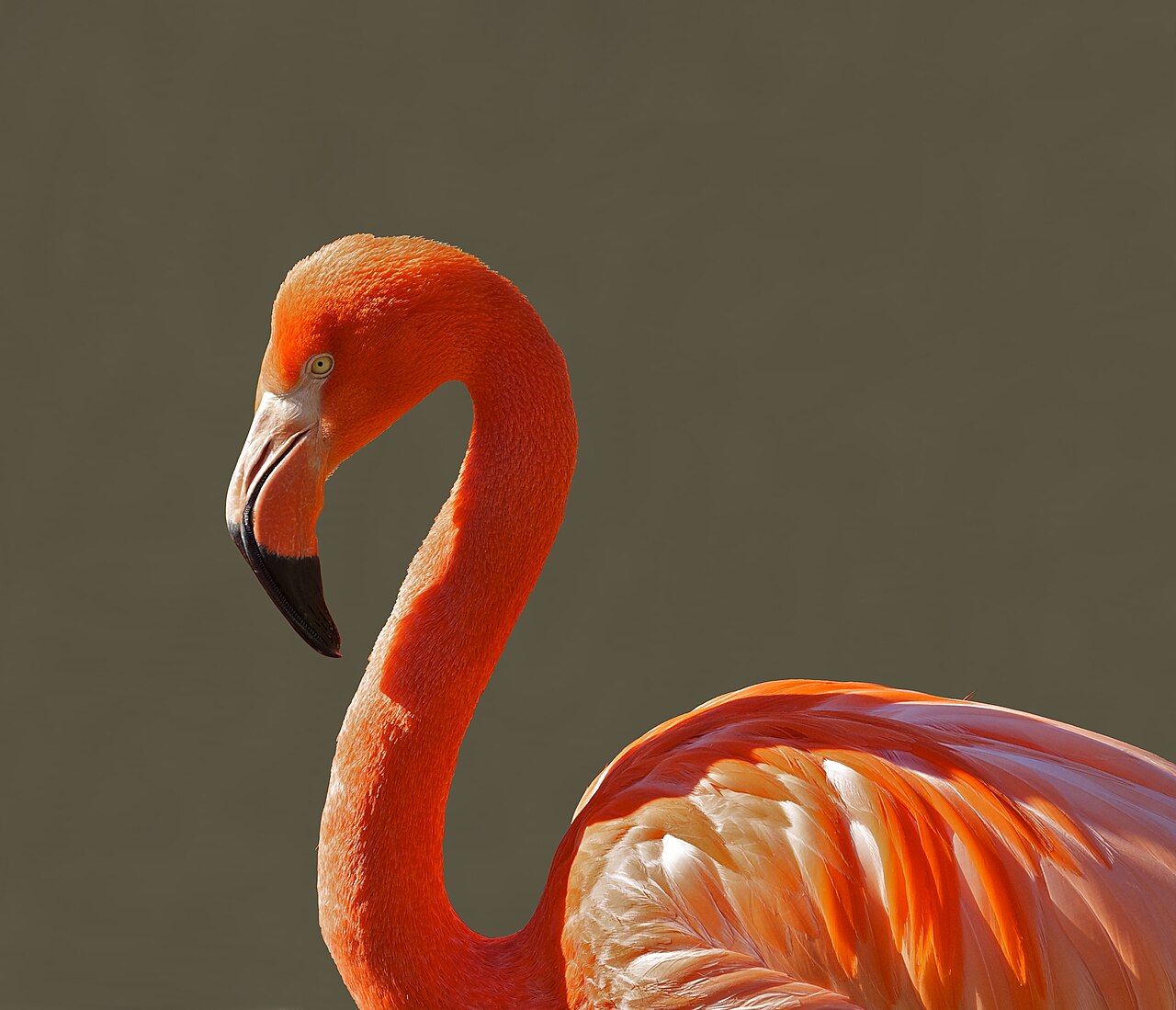
Species differ in shade. The Caribbean or American flamingo is the most intensely colored, a deep orange-pink; the greater flamingo of Africa, Europe, and Asia is the palest, often nearly white with pink wing coverts; the Chilean flamingo is pale pink with distinctive gray legs and pink knee joints; and the lesser flamingo, the smallest and most numerous species, is a rich pink. The birds’ filter-feeding bill is held upside down in the water, a unique adaptation among birds and the reason they can exploit lakes nothing else can use.
Collective Nouns for Flamingos and Other Birds Compared
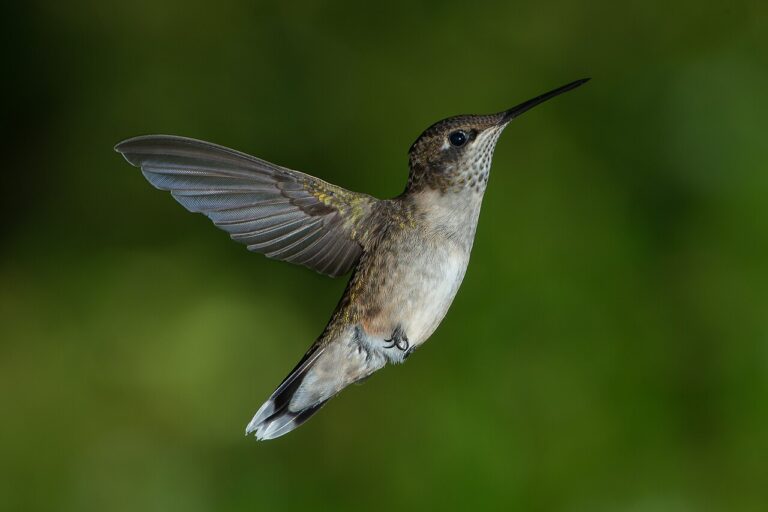
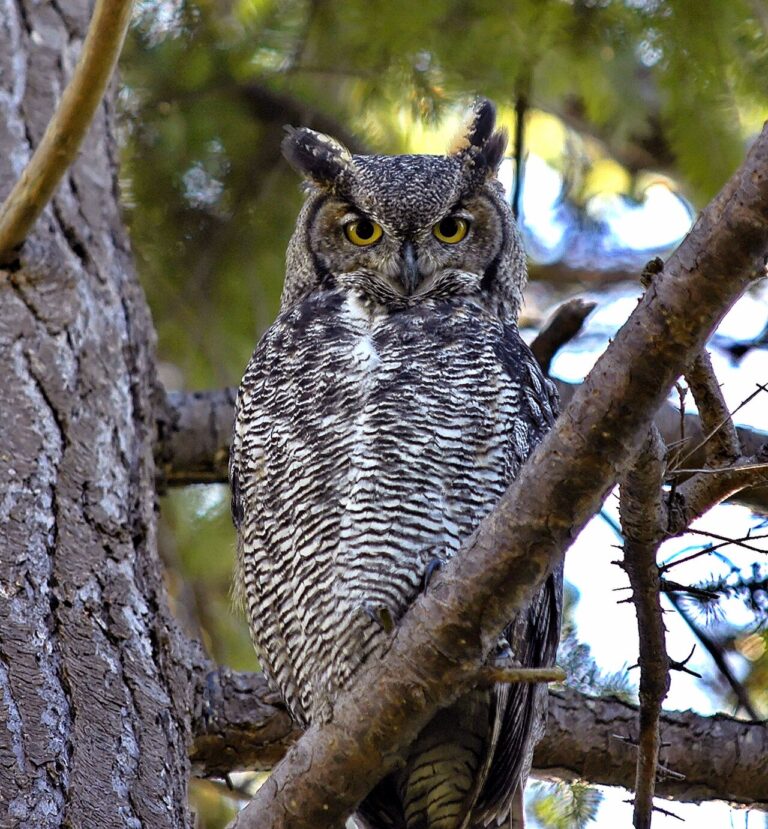
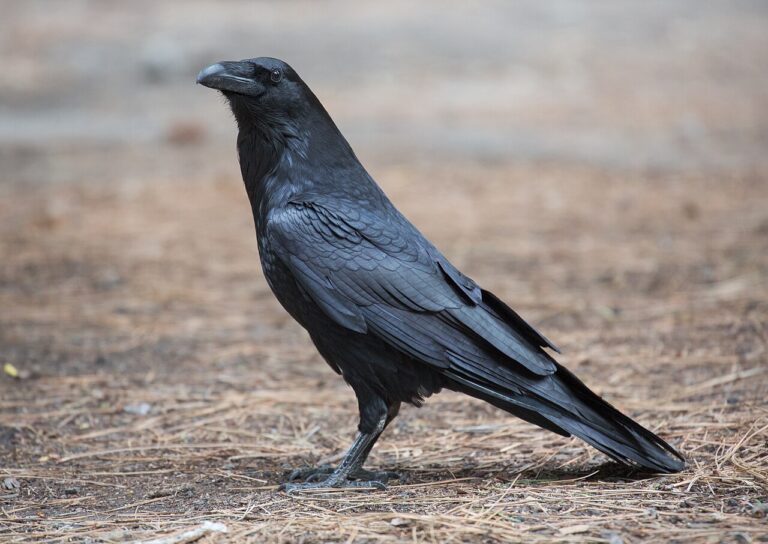
Flamingos sit in the modern tier of collective nouns alongside other species the medieval compilers never met, and the difference in tone is noticeable. Old terms tend to be dark or wry: a murder of crows, an unkindness of ravens, a parliament of owls. Newer coinages like flamboyance lean into visual description instead. Peacocks are given an ostentation or a muster, penguins a waddle or a huddle on land and a raft in the water, and hummingbirds a charm, which is one of the older entries.
The terms for wading and water birds are worth knowing if you watch wetlands, because several are genuinely useful. A group of herons is a siege, a group of geese on water is a gaggle and in flight is a skein, a group of swans is a bevy or a wedge in flight, and a group of ducks on water is a raft, which birders do use. A group of storks is a muster and a group of pelicans is a squadron, while the Canada goose gets separate terms for its groups on water and in the air.
What sets flamingos apart is that their behavior lives up to their name in a way most collective noun species do not. A parliament of owls is a fiction because owls do not gather. A flamboyance of flamingos describes something real, observable, and genuinely spectacular: thousands of pink birds, from tall adults down to the gray chicks covered in the baby flamingo guide, standing and marching in unison on a lake that would burn your skin. If any bird earned its fanciful collective noun, this one did.
Related reading: what is a group of geese called.
Related reading: what is a group of hawks called.
Frequently Asked Questions
What is a group of flamingos called?
A group of flamingos is called a flamboyance, the most widely cited term. Other accepted collective nouns are a stand, a colony, a regiment, and a pat. Biologists and birders simply say flock, or colony when the birds are nesting.
Is a group of flamingos called a parade?
Parade is not a standard collective noun for flamingos, though it appears occasionally online and is a reasonable description of their marching displays. The established terms are flamboyance, stand, colony, regiment, and pat.
Why is a group of flamingos called a flamboyance?
Because of their brilliant pink color and theatrical group displays. Flamboyant comes from the French for blazing or flaming, and the word was coined in the twentieth century rather than in the medieval lists that produced most collective nouns.
How many flamingos are in a flamboyance?
Any number. Collective nouns carry no minimum count. Real flamingo groups range from a handful in a zoo to breeding colonies of more than a million lesser flamingos at Lake Natron in Tanzania.
What is a group of baby flamingos called?
A crèche. Flamingo chicks leave their nests within about a week and gather into dense groups of hundreds or thousands, supervised by a few adults while the other parents travel to feed.
What is a group of flamingos called in Spanish?
Spanish uses the general terms bandada, meaning flock, or colonia for a breeding colony. There is no Spanish equivalent of the fanciful flamboyance, which is specific to English collective noun tradition.
Are flamingos born pink?
No. Flamingo chicks hatch gray or white with straight bills. The pink color comes from carotenoid pigments in their diet of algae and brine shrimp and takes one to three years to fully develop.