Gopher Sounds: What You Hear and What You Don’t
Gophers are among the quietest yard mammals, and the sounds they do make are mostly underground and easy to miss: soft scratching and digging, muffled scraping as soil is pushed along a tunnel, and occasional squeaks, chattering, or hissing when two animals meet or one is threatened. There is no distinctive call, no whistle, and nothing like the alarm chirp of a ground squirrel.
That silence is the reason gophers are almost always identified by their mounds rather than by ear. Pocket gophers are solitary, territorial, and spend nearly their entire lives below ground, so vocal communication has little value to them. This guide covers the sounds they do produce, what people mistake for them, how to confirm a gopher rather than a mole or vole, and whether sound-based repellents work.
Gophers make little sound: soft scratching and digging noises underground, muffled scraping as soil is pushed, and squeaks, chattering, or hissing during confrontations. They have no alarm call because they are solitary and live underground. Fan-shaped soil mounds with a plugged side entrance are the reliable sign, not sound.
| Sound or Sign | What It Means |
|---|---|
| Soft scratching underground | Digging or tunnel maintenance |
| Muffled scraping | Soil being pushed to a mound |
| Squeaks and chattering | Confrontation between two gophers |
| Hissing or teeth grinding | Threatened, cornered animal |
| Sharp whistle in a yard | Ground squirrel, not a gopher |
| Fan-shaped mound, plugged hole | Gopher |
| Conical mound, no visible hole | Mole |
What Noise Does a Gopher Make?
Very little that a person is likely to hear. The most common sound is the physical noise of work: claws scraping through soil, roots being cut, and the muffled sound of earth being pushed up a lateral tunnel toward the surface. On a quiet day with a fresh mound being built, this is audible from a few feet away.
Vocalisations exist but are rare and quiet. Pocket gophers squeak, chatter, and produce a thin whistling sound in confrontations, and a cornered animal may hiss or grind its incisors, a behaviour common across rodents as a threat display. Pups in a burrow squeak when handled or separated.
What is absent is any long-distance call. Ground squirrels, prairie dogs, and marmots all have loud alarm calls because they live in colonies above ground where warning each other pays off. A solitary gopher in a sealed tunnel system has nobody to warn and every reason not to advertise its position to a snake or a badger.
What Sounds Are Mistaken for Gophers?
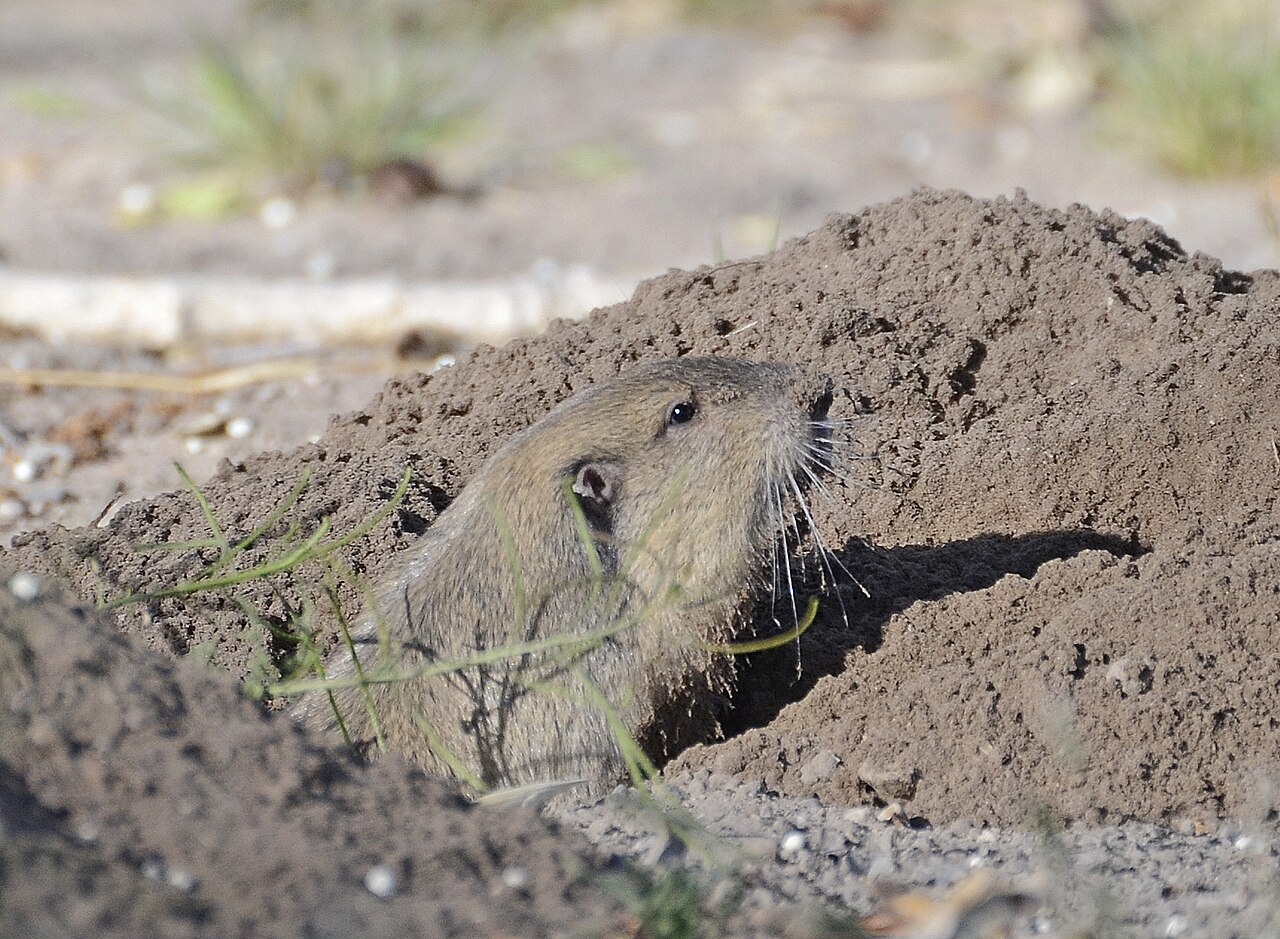
Ground squirrels are the main confusion, and their sharp repeated whistle or chirp from a burrow entrance is what most people mean when they say they heard a gopher. California ground squirrels in particular are noisy, active above ground in daylight, and often present in the same yards.
Voles and mice produce faint squeaking and rustling in surface runways under grass and mulch, and their sounds come from ground level rather than from beneath it. Moles are effectively silent, though their tunnelling can produce audible movement in dry soil.
Moles and their young are silent enough that people rarely connect them to any noise at all. Rats and mice in a crawl space or wall produce scratching that people attribute to something outdoors, and the direction is easy to misjudge. If a scratching noise comes from a structure rather than from open ground, it is a rodent inside rather than a gopher outside. The guide to voles covers the small mammal most often confused with gophers by their damage.
How Do You Tell if You Have Gophers?
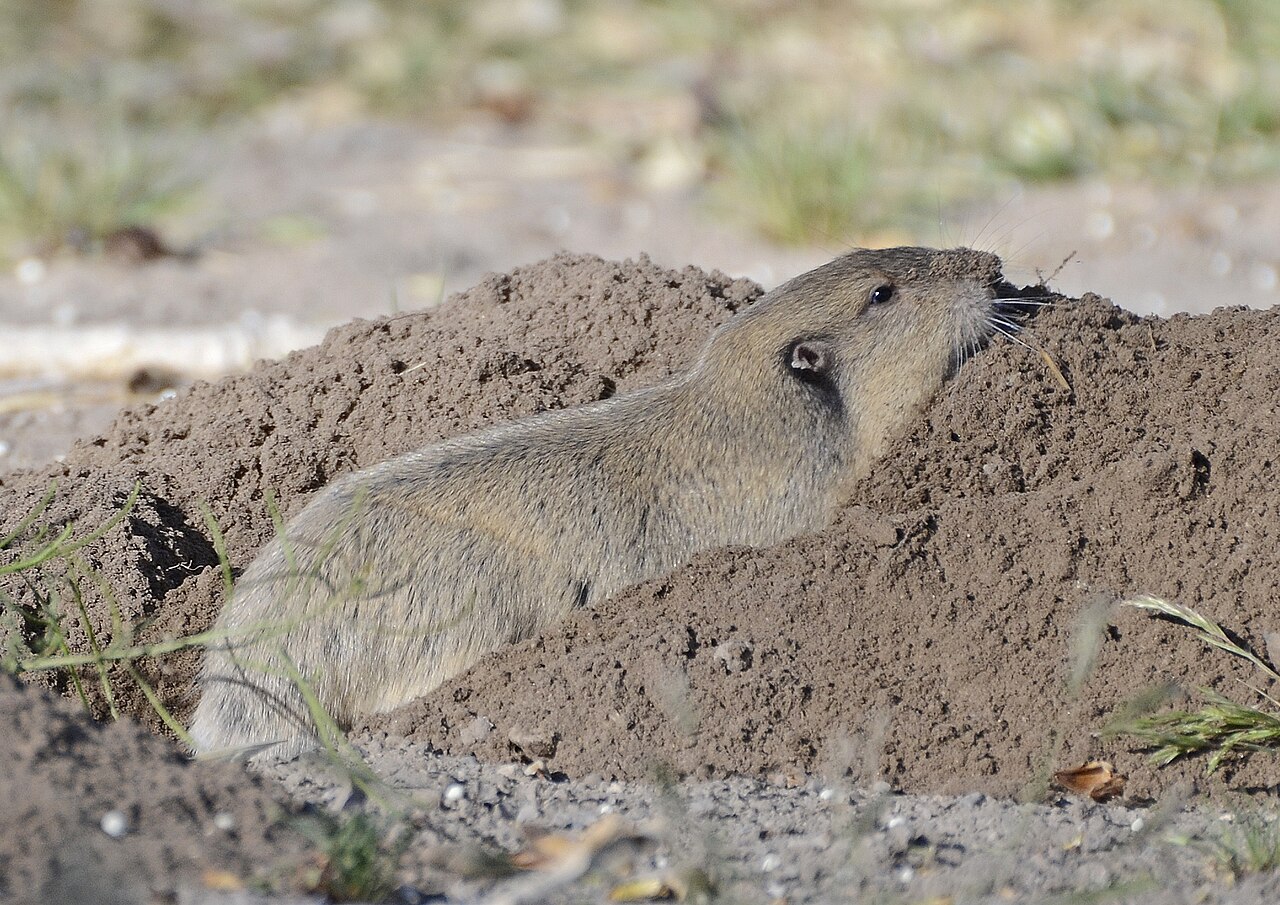
By the mound shape. A gopher mound is fan-shaped or crescent-shaped, made of finely worked soil, with the tunnel entrance off to one side and plugged with a soil cap that is often visible as a slightly different texture. Gophers push soil out sideways, which produces the asymmetric fan.
Mole mounds are the contrast: conical, roughly circular, with the soil pushed straight up from below and no visible entrance, often described as small volcanoes. Moles also leave raised surface ridges where they tunnel just under the turf, which gophers do not.
Other gopher signs include plants disappearing straight down into the ground, chewed roots, damage to irrigation lines and buried cables, and fresh mounds appearing in a rough line as a tunnel is extended. A single gopher can build several mounds a day and produce dozens over a season, which is why one animal often reads as an infestation. The mole sign guide covers the other tunneller in detail.
Is a Gopher a Rodent?
Yes. Pocket gophers are rodents in the family Geomyidae, with around 35 species across North and Central America, and they are more closely related to pocket mice and kangaroo rats than to squirrels, moles, or rats. Moles are not rodents at all but insectivores in a separate order.
The name comes from the fur-lined external cheek pouches that open outside the mouth, which the animal uses to carry food and nesting material. The pouches turn inside out for cleaning, and they are the feature that gives the group its name and distinguishes it from every other burrowing mammal.
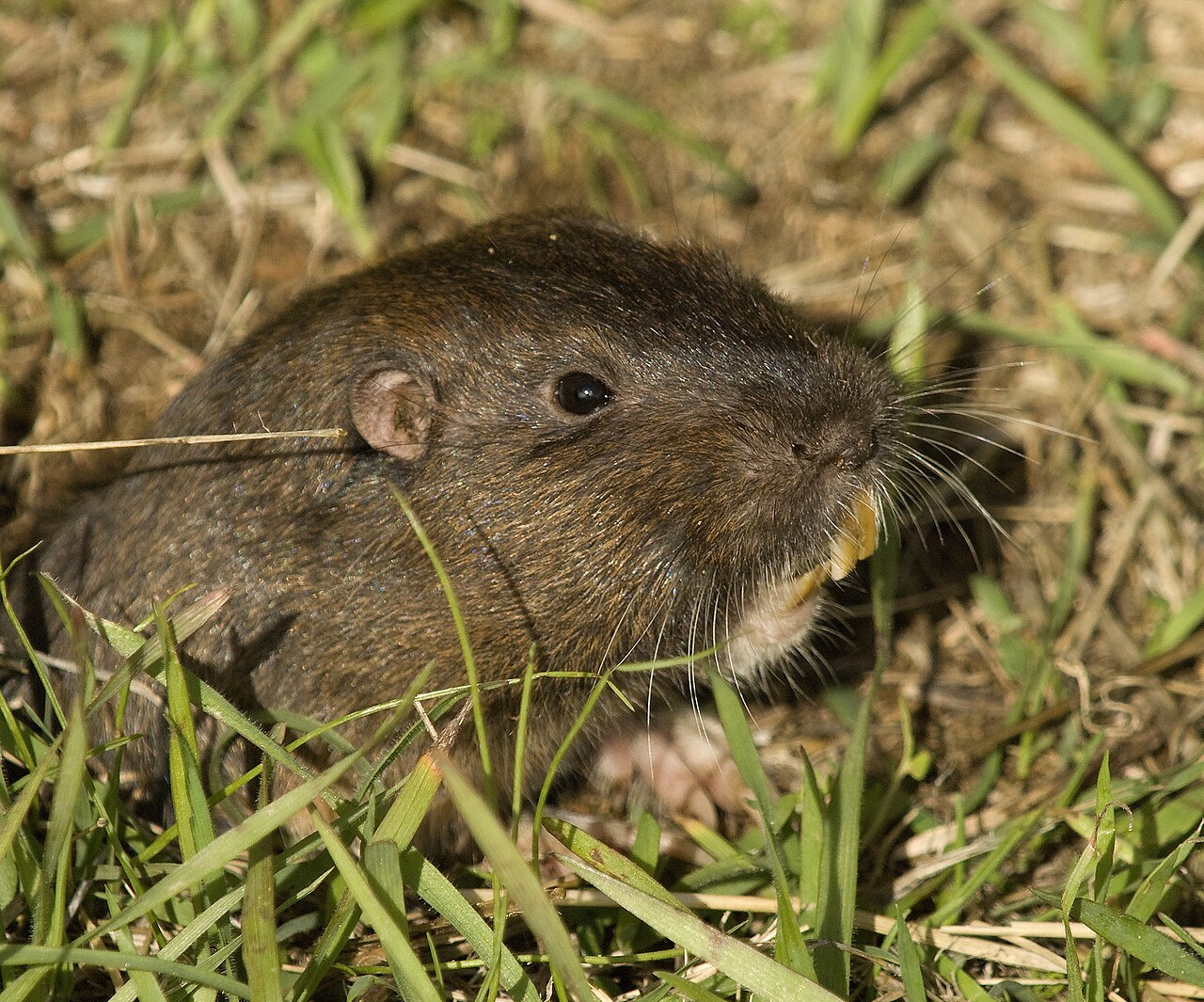
Physically they are built for digging: stocky bodies six to ten inches long, small eyes and ears, large curved front claws, and prominent incisors that stay outside the closed lips so the animal can cut roots without getting soil in its mouth. The lips seal behind the teeth, which is a genuinely unusual adaptation.
What Time of Day Do Gophers Come Out?
Mostly they do not. Pocket gophers are active in bursts throughout the day and night rather than following a clear pattern, and nearly all that activity happens underground. Surface appearances are brief and usually limited to pushing soil out of a lateral tunnel or clipping vegetation within reach of the opening.
Mound building tends to peak in the morning and evening and increases sharply after rain or irrigation, when soil is workable. That is the best time to look for fresh activity and the best time to set traps, since a freshly opened tunnel is one the animal is currently using.
Gophers do not hibernate and remain active year-round, including under snow, where they tunnel through the snowpack and pack soil into those tunnels. When the snow melts, the result is the ropey soil casts left snaking across lawns, which are diagnostic of gophers rather than moles.
Do Sound Repellents Work on Gophers?
No. Ultrasonic stakes, vibrating spikes, wind-driven noisemakers, and buried radios have been tested repeatedly by university extension programmes and consistently fail to move gophers off a site. Animals habituate within days, and several studies found no difference in activity between treated and untreated plots.
The theory sounds plausible, which is why the products keep selling. In practice a gopher’s tunnel system represents an enormous energy investment in a food supply it can reach, and low-level vibration does not outweigh that. Gophers have been recorded burrowing directly past active devices.
Chemical repellents fare no better. Castor oil products have some evidence for moles, whose diet and biology differ, but not for gophers, and mothballs, chewing gum, human hair, and predator urine all fail. The University of California IPM programme (ucanr.edu) publishes evaluations of each, and the conclusion is consistent across them.
What Actually Removes Gophers?
Trapping is the method with the best evidence and the one extension services recommend first. Two traps set facing opposite directions in the main runway, found by probing beside a fresh mound, catch most animals within a day or two, and because gophers are solitary and territorial, one animal per tunnel system is the norm rather than the exception.
Exclusion protects specific plantings. Wire baskets around root balls at planting, hardware cloth lining raised beds, and buried mesh barriers around vegetable gardens all work well, and they are the only permanent answer for prized trees and shrubs. Barriers need to run at least two feet deep.
Flooding, exhaust fumes, and the various explosive or gas devices sold for burrows are unreliable, dangerous, or both, and several are illegal in some jurisdictions. Baiting with anticoagulants risks secondary poisoning of the owls, hawks, foxes, and snakes that hunt gophers, which is a poor trade given how effective those predators are. The guide to birds that eat mice covers that predator community.
Will Gophers Eventually Leave?
Not on their own, as long as the food holds out. A pocket gopher occupies a tunnel system that represents months of digging and gives it access to roots, bulbs, and tubers across a defined territory, and it has no reason to abandon that while the plants are still there. Individual animals hold the same system for years.
What does change is who occupies it. Gophers are solitary and territorial, so when one dies or is trapped out, the tunnel system frequently gets taken over by a neighbouring animal or by a dispersing juvenile within weeks. That is why a yard cleared in spring often has fresh mounds again by autumn, and why people conclude that trapping did not work.
Dispersal is the one time gophers move above ground in numbers. Young animals leave the mother’s system in late spring and summer and travel overland to find unoccupied ground, which is when most road and predator mortality happens and when a property with good soil is most likely to be recolonised. Maintaining barriers around what matters is more durable than repeatedly clearing the whole property.
Are Gophers Good for Anything?
Ecologically, yes, and the case is stronger than most people expect. Gopher tunnelling aerates compacted soil, improves water infiltration, mixes organic matter down through the profile, and brings subsoil to the surface, and the disturbance creates germination sites for a range of native plants.
They are also a food source. Gopher snakes, rattlesnakes, badgers, coyotes, foxes, bobcats, weasels, barn owls, and hawks all hunt them, and in some grassland systems gophers are the primary prey base supporting the local predator community. A barn owl family can take hundreds over a nesting season.
The conflict is entirely about location. In pasture, rangeland, and natural grassland their activity is neutral or beneficial; in a lawn, orchard, or vegetable garden the same behaviour destroys plants and irrigation. Barn owl boxes are worth putting up where there is open ground, since a resident pair provides steady free pressure. The baby gopher snake guide covers the reptile named for hunting them.
Frequently Asked Questions
What noise does a gopher make?
Mostly digging sounds: soft scratching, root cutting, and muffled scraping as soil is pushed up a tunnel. Squeaks, chattering, and hissing occur in confrontations but are quiet and rarely heard.
Do gophers make a whistling sound?
A thin whistle occurs in close-range confrontations, but a loud repeated whistle from a yard burrow is a ground squirrel. Gophers are solitary and underground and have no alarm call.
How do you tell if you have gophers?
Fan-shaped or crescent mounds of fine soil with a plugged entrance off to one side. Mole mounds are conical with no visible hole, and moles also leave raised surface ridges that gophers do not.
Is a gopher a rodent?
Yes, in the family Geomyidae, related to pocket mice and kangaroo rats. Moles are not rodents at all. The name comes from the fur-lined external cheek pouches used to carry food.
What sounds do gophers hate?
None reliably. Ultrasonic stakes, vibrating spikes, and buried noisemakers have been tested by extension programmes and consistently fail; gophers habituate within days and tunnel past active devices.
What time of day do gophers come out?
They are active in bursts day and night, almost entirely underground. Mound building peaks morning and evening and increases after rain or irrigation, which is the best time to find fresh runways.
What actually gets rid of gophers?
Trapping in the main runway, found by probing eight to twelve inches from the plug side of a fresh mound, plus wire baskets and buried mesh to protect specific plantings. Repellents do not work.

Similar Posts
Baby Alligator Snapping Turtle: ID, Care, and the Law
A baby alligator snapping turtle has three rows of spiked ridges from hatching. How to tell it from a common snapper, what to do if you find one, and why keeping one is usually illegal.
Carpet Beetle vs Bed Bug: How to Tell Them Apart
Carpet beetles feed on fabric and don’t bite; bed bugs feed on blood and do. How to identify each, what attracts them, and why the treatment differs completely.
Carpet Beetle Bites: Rash vs Bed Bug Bites Guide
Why carpet beetle bites are really a rash, how to tell it apart from bed bug bites, and how to treat and prevent it.
Skunk Sounds: The Warning Sequence Before Spraying
Skunk sounds range from soft chirps to hissing and screeching, with a reliable warning sequence, stamping, hissing, tail-raising, before spraying ever occurs.
Black Snake: Species, Identification, and Whether to Worry
Eastern racer, black rat snake, or black kingsnake. All harmless, all beneficial. How to tell them apart and what actually attracts them.
Bed Bug or Baby Cockroach? How to Tell Them Apart
Antennae length and speed separate bed bugs from cockroach nymphs. Here is how to identify each one and why the wrong treatment wastes months.