Carpet Beetle Larvae: ID, Damage, and Removal
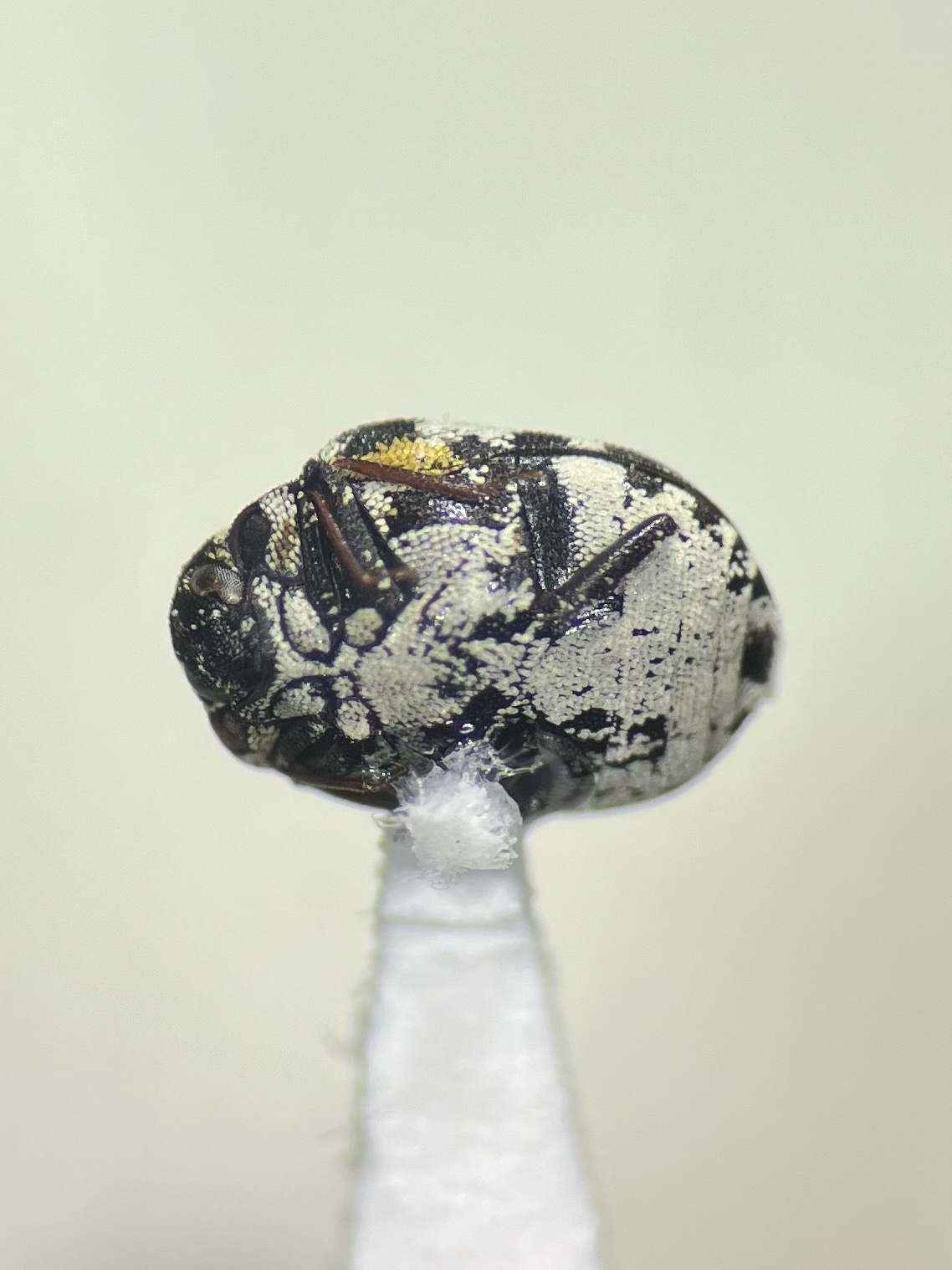
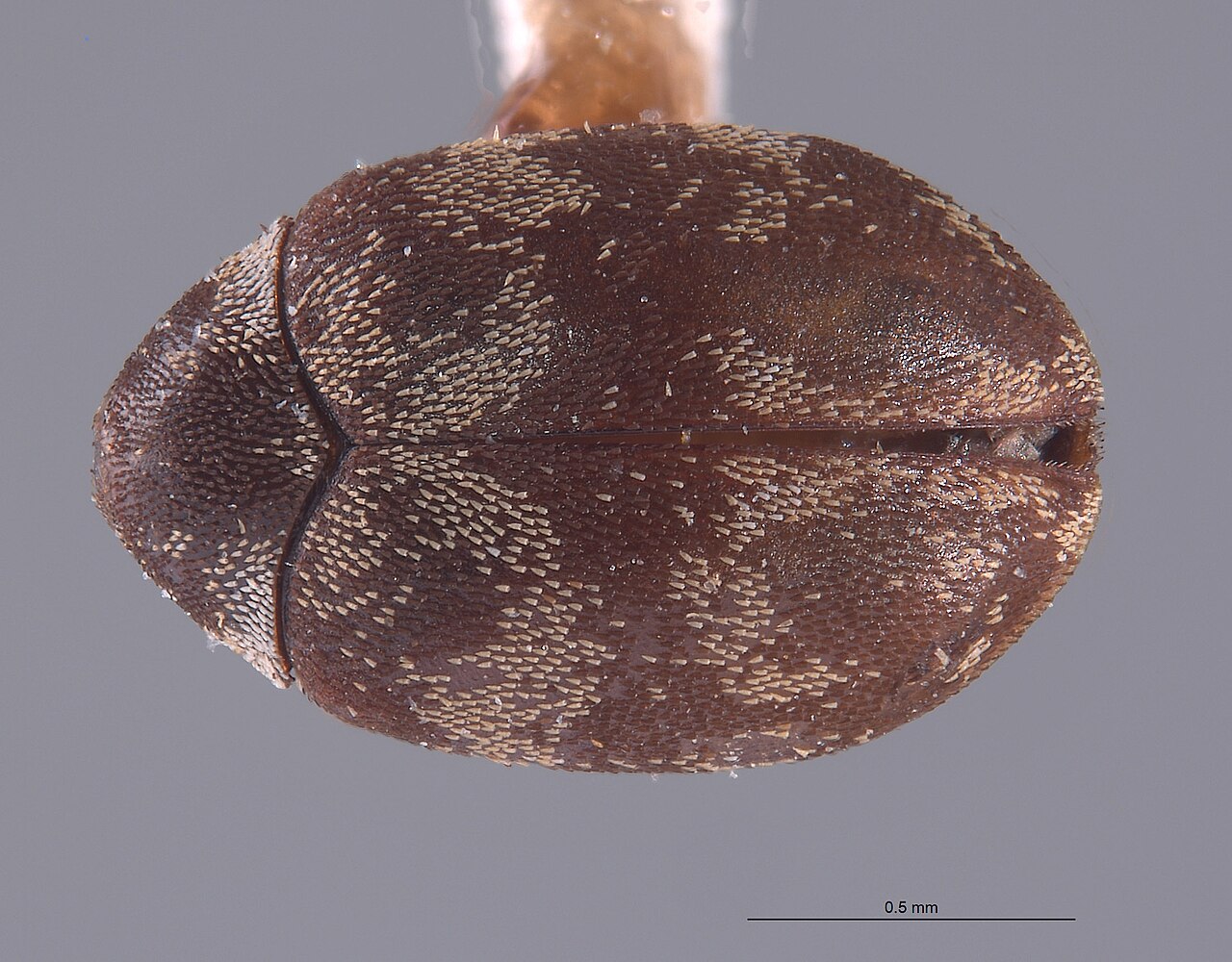
Carpet beetle larvae are small, oval, bristly grubs about a quarter of an inch long, banded brown and tan, covered in stiff hairs, and often with a tuft of longer bristles at the rear. They are the destructive stage: the adults eat pollen outdoors and do no damage, while the larvae eat wool, silk, feathers, fur, leather, and dried animal matter indoors.
Finding one does not mean the house is dirty. Carpet beetles get in through open windows, on cut flowers, and on second-hand textiles, and they survive on material most people never think of as food: shed pet hair under furniture, dead insects in light fittings, and lint in floor edges. This guide covers identification, what they eat, how to get rid of them, and the rash they can cause.
Carpet beetle larvae are quarter-inch bristly oval grubs banded brown and tan, and they are the stage that damages wool, silk, feathers, fur, and leather. Adults eat pollen outdoors and do no harm. Getting rid of them means finding the food source, usually lint, pet hair, or dead insects in undisturbed places, and vacuuming thoroughly.
| Feature | Carpet Beetle Larva |
|---|---|
| Size | About 0.2 to 0.25 in |
| Shape | Oval to carrot-shaped, bristly |
| Colour | Banded brown, tan, and gold |
| Damage | Irregular holes in wool, silk, fur, feathers |
| Adults | Harmless; eat pollen outdoors |
| Larval stage length | 2 months to 2 years |
| Shed skins | Hollow bristly casings; key evidence |
What Do Carpet Beetle Larvae Look Like?
Small, hairy, and slow. A varied carpet beetle larva is oval and about a fifth of an inch long, banded in alternating light and dark brown with three tufts of longer golden bristles at the rear that it can fan out when disturbed. Black carpet beetle larvae are longer and more carrot-shaped, shiny golden brown, with a distinct tail of long hairs.
They move slowly, avoid light, and curl up when touched. Because they are small and dark and prefer edges and undersides, they are almost always found by accident: under a rug edge, in a wardrobe corner, along a skirting board, or inside a stored box of clothes.
Shed skins are the more common find and are the clearest evidence. Larvae moult repeatedly and leave hollow, bristly, translucent casings that look like the larva itself but are empty, and a scatter of them along a floor edge or in a drawer means an active population rather than a single wandering insect. The carpet beetle poop guide covers the other sign to look for.
Should You Worry If You Find One?
Not immediately, but do not ignore it. A single larva may have arrived on a bunch of flowers or through a window and found nothing to eat. A cluster of larvae or a scatter of shed skins means a breeding population with a food source somewhere in the house.
What matters is what they can reach. A house with wool rugs, wool or cashmere clothing, silk, feather pillows and duvets, taxidermy, felt, or natural-fibre upholstery has plenty to lose; a house furnished entirely in synthetics has very little at risk, since carpet beetle larvae cannot digest polyester, nylon, or acrylic.
They do not bite, do not transmit disease, and do not infest food in the way pantry moths do, though they will feed on stored grain products in some cases. The damage is to textiles and it accumulates slowly and invisibly, which is why the first sign is often holes in a jumper taken out of storage. The carpet beetle bites guide covers the skin question directly.
What Do They Actually Eat?
Keratin, the protein in animal fibres. That means wool, silk, cashmere, fur, feathers, leather, felt, hair, and dried animal products, and it excludes cotton, linen, and all synthetics unless those are blended with wool or soiled with sweat, food, or body oils, which makes them palatable.
The food source that sustains most infestations is not clothing at all. It is accumulated lint, shed human and pet hair, dead insects, and dander in places nobody cleans: under and behind heavy furniture, along the edges under wall-to-wall carpet, in floor vents and ductwork, in light fittings full of dead flies, and in disused chimneys and bird nests in the eaves.
Dead insects in particular are a major reservoir. An old wasp nest in a wall void, a bird nest in a soffit, or a light fixture with a decade of dead flies in it can support a population indefinitely, which is why an infestation sometimes persists despite the house being spotless. The stink bug guide covers another insect that overwinters in the same voids.
How Do You Get Rid of Them?
Find the source, then clean thoroughly. Vacuuming is the primary tool and it needs to be done properly: edges of carpet, under and behind furniture, inside wardrobes and drawers, along skirting boards, in floor vents, and under beds, with the vacuum contents emptied outside immediately afterwards.
Treat the textiles at risk. Wash infested items at 120 degrees Fahrenheit or higher, or dry clean, or freeze at 0 degrees Fahrenheit for two weeks for items that cannot be washed. Steam cleaning carpets and upholstery kills larvae and eggs on contact.
Then remove the reservoir. Clear light fittings, check for old bird and wasp nests in eaves and vents, clean ductwork if it is accessible, and deal with any dead rodent or bird in a wall. Store clean wool and silk in sealed containers or garment bags rather than cardboard. Insecticide is rarely necessary and never sufficient on its own; extension programmes such as the University of Kentucky (uky.edu) advise source removal and cleaning over spraying.
Do They Cause a Rash?
Not by biting, but yes indirectly. Carpet beetle larvae do not bite, have no biting mouthparts capable of breaking skin, and are not parasites. What they do have is stiff barbed bristles called hastisetae, which detach easily and can cause an allergic reaction on contact.
The result is carpet beetle dermatitis: itchy red raised welts, often in a line or cluster, that look convincingly like insect bites and are routinely misdiagnosed as bed bugs or fleas. It usually appears on skin that contacts infested bedding, upholstery, or clothing.
The distinguishing feature is that the reaction develops from contact rather than at night in a pattern of feeding bites, and it stops once the source is removed rather than recurring nightly. Inhaled hairs can also trigger respiratory irritation and asthma in sensitive people. The carpet beetle rash guide covers telling it apart from bed bugs.
How Long Do They Live?
The larval stage is remarkably long and variable: anywhere from two months to two years depending on temperature, humidity, and food quality. That range is the single most frustrating fact about carpet beetles, because a population can persist quietly for a very long time on very little.
Larvae moult repeatedly, from five or six times up to twenty in poor conditions, and can survive extended periods with no food at all by entering a slowed state. That is why an unoccupied house, a storage unit, or a rarely opened wardrobe can produce a full-blown infestation with nothing obvious feeding it.
That variability is also why timelines quoted online conflict so much. Under warm dry conditions with abundant keratin a generation can complete in a few months; in a cool, food-poor cupboard the same species may take two years, and both figures appear in the literature because both are correct for different conditions.
Adults live only a few weeks and, in most species, leave the house to feed on pollen on flowers outdoors before returning to lay eggs in dark protected places. A female lays 50 to 100 eggs, which hatch in one to three weeks, and there are typically one to four generations a year depending on conditions.
What Causes Carpet Beetles?
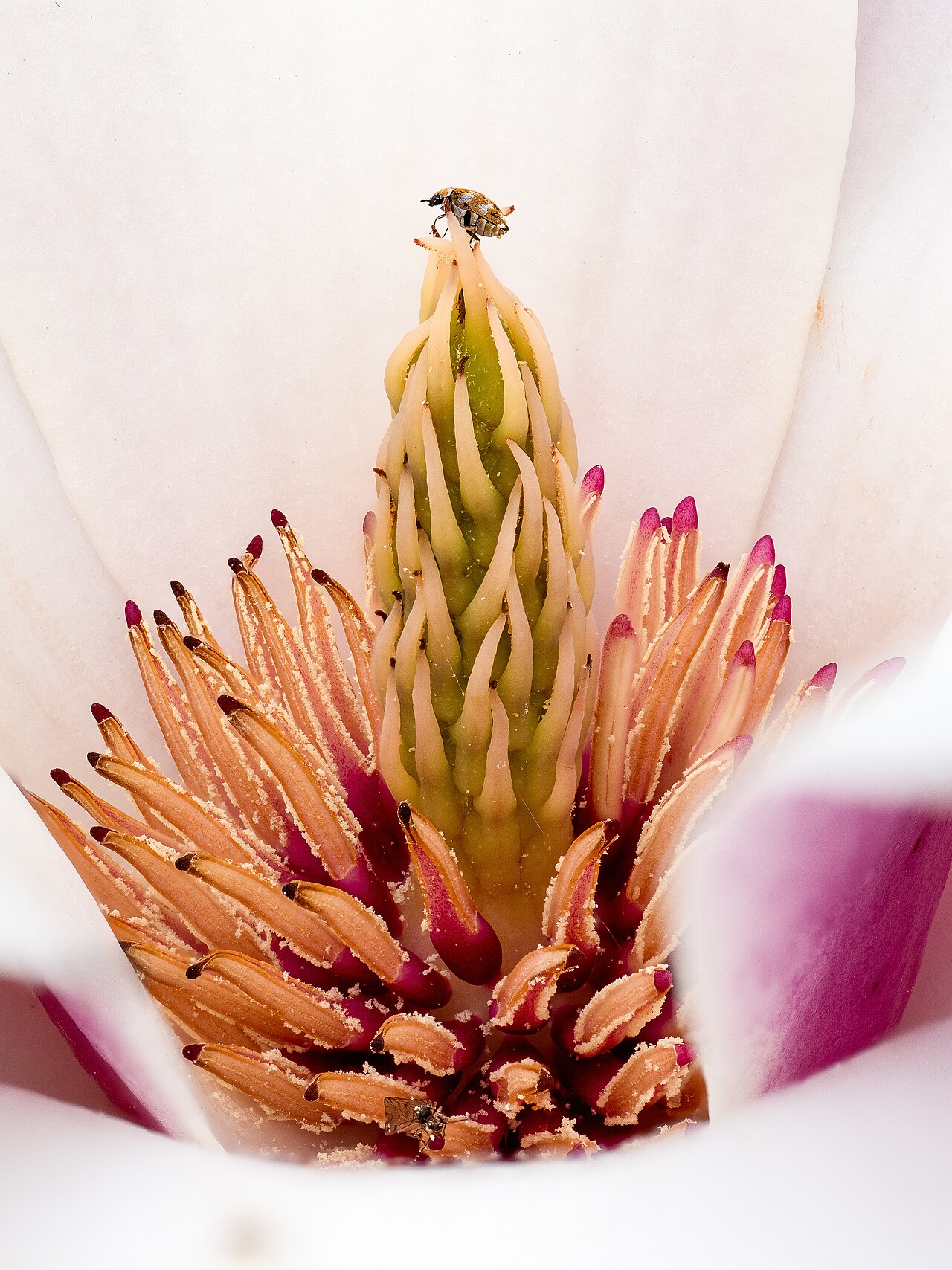
They fly in. Adults are attracted to light and to flowers, enter through open windows and doors, and are brought in on cut flowers, second-hand furniture, rugs, and clothing, and occasionally in bird or rodent nesting material in the roof space.
Cleanliness is not the cause, and this is worth saying plainly because it is the question people are actually asking. A meticulously kept house with wool rugs and a bird nest in the eaves will get carpet beetles; a messy house furnished entirely in synthetics probably will not. What matters is available keratin and undisturbed space.
The reason they are so common is that both conditions are ordinary. Estimates that carpet beetles are present in the great majority of homes are widely repeated and hard to verify, but they are certainly among the most widespread indoor insects in North America and Europe, and most households have them at some level without ever noticing.
Do They Ever Go Away?
Yes, if the food source goes. An infestation with no keratin available dies out, and a thorough clean-out of the reservoir plus proper storage of vulnerable textiles resolves most cases within a few months without any chemical treatment.
What keeps them going is an unfound source. Persistent problems almost always trace to something inaccessible: a nest in a wall or chimney, a dead animal, ductwork, or an item in storage nobody has opened. If cleaning and washing have not worked after a couple of months, the answer is to look harder rather than to spray more.
Prevention afterwards is straightforward: vacuum edges and under furniture regularly, keep light fittings clear, screen vents and chimneys, store wool and silk sealed, and check second-hand textiles and flowers before bringing them in. Pheromone monitoring traps are available and are useful for confirming whether a population is still active. The ladybug infestation guide covers a different insect that exploits the same neglected voids.
Frequently Asked Questions
What do carpet beetle larvae look like?
Oval to carrot-shaped bristly grubs about a quarter of an inch long, banded brown and tan, often with a tuft of long golden hairs at the rear. Hollow shed skins are the commonest evidence.
Should I worry if I find carpet beetle larvae?
One may be a stray; a cluster or a scatter of shed skins means a breeding population. The risk depends entirely on whether you own wool, silk, fur, feather, or leather items.
What do carpet beetle larvae eat?
Keratin: wool, silk, fur, feathers, leather, and felt. Most infestations are actually sustained by lint, shed hair, dander, and dead insects in undisturbed places rather than by clothing.
How do I get rid of carpet beetle larvae?
Find and remove the food source, vacuum edges and under furniture thoroughly, wash textiles at 120 degrees or higher, freeze what cannot be washed, and clear light fittings and old nests.
Do carpet beetles bite?
No. They have no biting mouthparts. The itchy welts people report are an allergic reaction to detached barbed larval bristles, which is often misdiagnosed as bed bug bites.
What causes carpet beetles?
Adults fly in through windows or arrive on cut flowers and second-hand textiles. Cleanliness is not the cause; available keratin and undisturbed space are what allow a population to establish.
Do carpet beetles ever go away?
Yes, once the food source is removed. Persistent cases almost always trace to something unfound, such as a nest in a wall, a dead animal, ductwork, or an unopened storage box.

Similar Posts
Giant Millipede: Care, Diet, and the Secretion Warning
Giant African millipedes reach 15 inches, have no bite, and eat their own substrate. Here is the care guide plus the chemical defense to respect.
What Is a Group of Squirrels Called? Scurry and Dray
A group of squirrels is called a scurry or a dray. What a dray actually is, why squirrels are solitary despite the terms, and when they really do share a nest.
Baby Arctic Fox: Why Litters Are So Unusually Large
A baby arctic fox is called a kit, born in litters of 5 to 8 that can reach 14 in good lemming years. Growth, dens, coat color, and the lemming connection explained.
Crane Fly: Why It Does Not Eat Mosquitoes
Crane flies are called mosquito hawks and eat no mosquitoes at all. Here is what they actually are, plus the larvae that do damage lawns.
Cricket Poop: Identification and Cleanup
Cricket droppings are dark cylindrical pellets 1 to 2 mm long. How to tell them from mouse, roach and bed bug evidence, the allergy risk, and safe cleanup.
Swallowtail Butterfly: Identifying 6 Common Species
Swallowtail butterflies are named for their tail-like wing extensions. Identify the tiger, giant, black, zebra, pipevine, and spicebush species by pattern and host plant.