What Do Camels Eat? Diet, Digestion, and Bite Danger
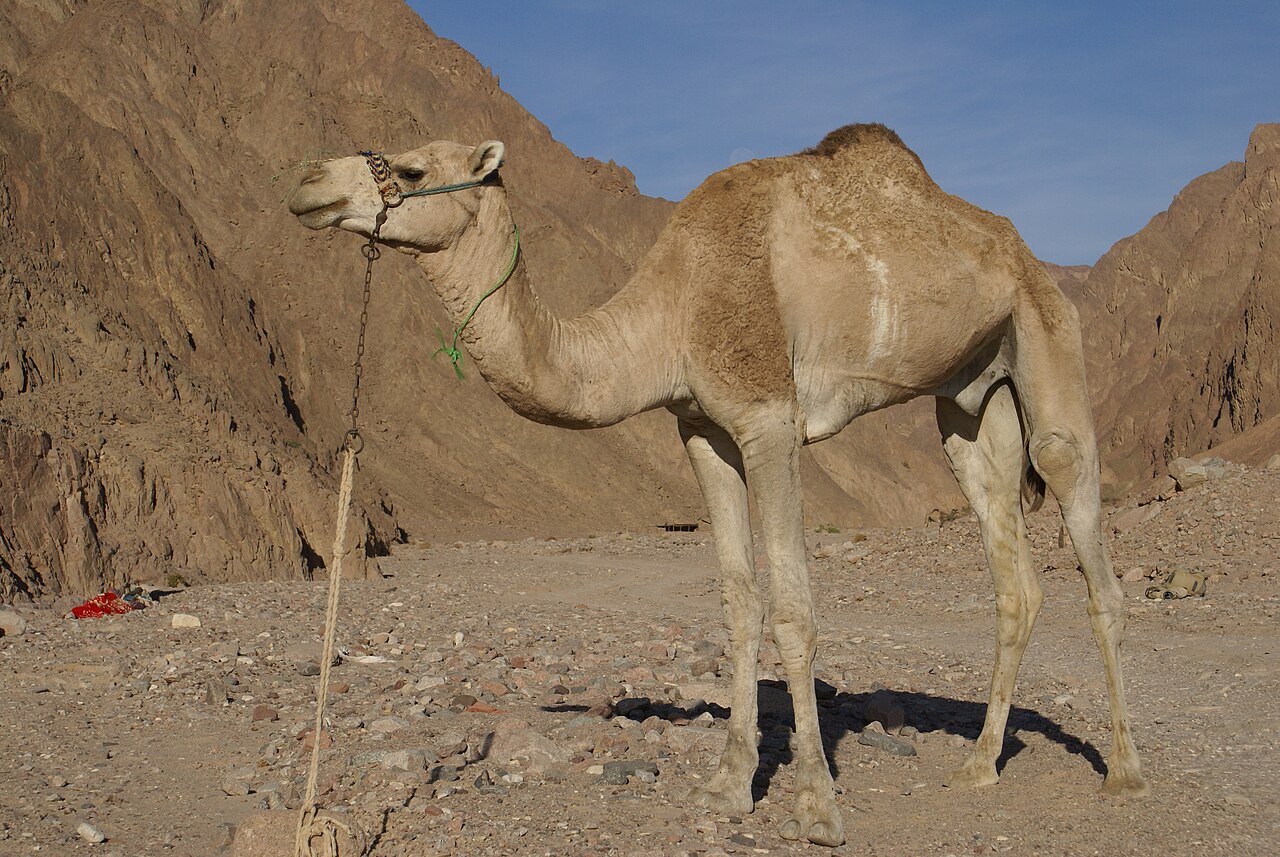
Camels eat grasses, shrubs, thorny plants, and desert vegetation that most animals avoid, and they are almost entirely herbivorous, occasionally taking bones or dried meat scraps opportunistically but never hunting. Their favorite foods, where available, include dates, grains, and softer leafy plants, but survival diets in the wild lean heavily on tough, dry, thorny desert shrubs.
What makes a camel’s diet remarkable is not the food itself but the mouth and gut built to process it. Thick lips, a tough leathery mouth lining, and a three-chambered stomach let camels eat plants that would injure or fail to nourish most grazing animals, and that adaptation is the whole story behind their reputation as the desert’s most efficient herbivore. This guide covers what they eat, how digestion works, and what happens if one bites you.
Camels eat grasses, shrubs, thorny desert plants, and dry vegetation, occasionally taking bones or dried scraps opportunistically, but they are not meat-eaters. A tough mouth lining lets them chew thorny plants unharmed, and a three-chambered stomach extracts maximum nutrition from low-quality forage. In captivity, diets add hay, grain, and fresh produce like dates and carrots.
| Aspect | Camel Diet |
|---|---|
| Main diet | Grasses, shrubs, thorny desert plants |
| Favorite foods | Dates, grains, softer leafy vegetation |
| Meat | Not a predator; rarely scavenges bones or dried scraps |
| Mouth adaptation | Tough lining resists thorns; cud chewing |
| Stomach | Three chambers; not a true ruminant |
| Water | Can go a week or more without drinking |
What Do Camels Eat?
Primarily coarse desert vegetation: grasses, dry shrubs, thorny bushes and acacia, and salt-tolerant plants that grow in arid and semi-arid regions where camels naturally range. This diet is low in water and often low in nutritional quality, which is exactly the gap camel physiology is built to close.
Camels are browsers as much as grazers, meaning they eat leaves, twigs, and shrubs at various heights rather than sticking to ground-level grass the way cattle do, and this flexibility lets them find food across a wider range of desert terrain than a strict grazer could manage.
In managed settings such as farms, zoos, and tourist operations, diets are supplemented with hay, alfalfa, grain, and fresh produce, giving a more balanced and calorie-dense intake than wild forage typically provides. The Smithsonian’s National Zoo, which maintains dromedary camels on public exhibit, documents this same browsing pattern in its published animal care notes. The giraffe diet guide covers another large browsing herbivore with a similarly specialized feeding strategy, and the baby llama guide covers a related camelid species with a very different native habitat.
What Are a Camel’s Favorite Foods?

Given a choice, camels favor softer, sweeter foods over their usual tough desert forage: dates are a well-documented favorite in regions where both animal and fruit are native, along with grains, fresh grass, and leafy greens when available.
This preference makes sense energetically. Softer, sugar-rich foods require far less chewing effort and digestive work than thorny, fibrous desert shrubs, so a camel offered dates or grain will generally choose them first, the same way most grazing animals prefer tender new growth over old, tough vegetation.
In captive and working settings, keepers commonly offer carrots, apples, and other produce as treats, and camels take readily to these softer foods, which is part of why camel diets in zoos and farms look considerably more varied than a wild camel’s actual forage would ever include, similar to how the elephant diet guide describes another large herbivore whose managed diet differs substantially from wild forage.
Do Camels Eat Meat?
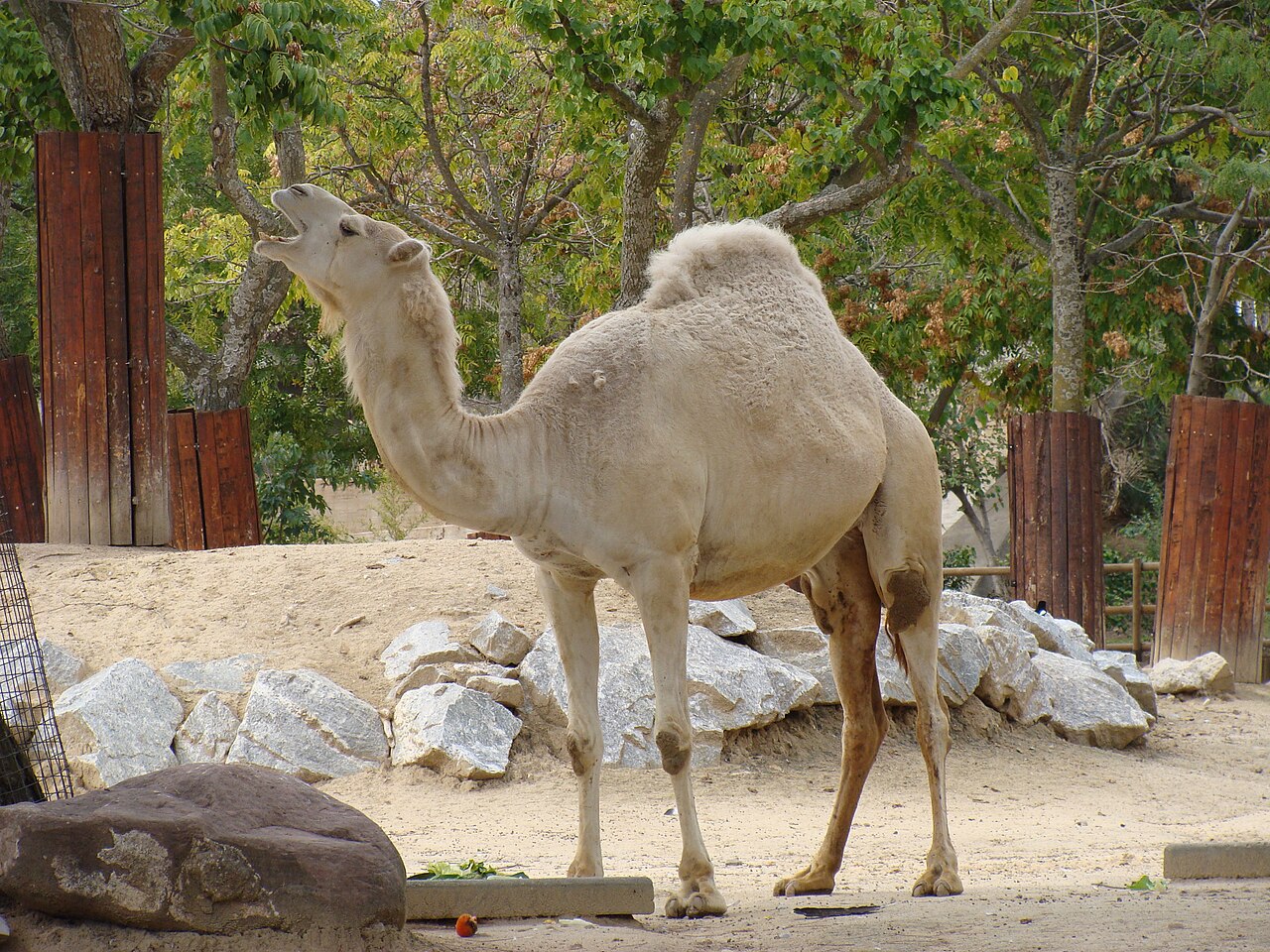
No, camels are not predators and do not hunt or actively seek meat as part of their diet. They are classified as herbivores, and their entire digestive system, from the specialized mouth to the multi-chambered stomach, is built around processing plant fiber rather than animal protein.
That said, camels are not strictly limited to fresh green plants and have been documented opportunistically chewing on bones, dried carcasses, or scraps of meat left in their environment, likely for mineral content such as calcium and phosphorus that can be scarce in pure desert forage, rather than as a nutritional strategy built around animal protein.
This occasional bone-chewing behavior is a documented curiosity rather than evidence that camels are omnivorous in any functional sense, and it does not change their classification or their dietary needs, which remain overwhelmingly plant-based across their entire natural range.
Why Are Camels Considered “Unclean” to Eat in Some Traditions?
This question refers to eating camel meat as food, not to what camels themselves eat, and the classification comes from religious dietary law rather than any property of camel biology. In Jewish dietary law, an animal must both chew its cud and have fully split hooves to be considered kosher, and while a camel chews cud, its foot structure does not meet the split-hoof requirement, placing it outside kosher classification.
Islamic dietary law treats camel meat differently and permits it as halal when slaughtered according to Islamic requirements, and camel meat and milk are traditionally consumed in many Middle Eastern, North African, and Central Asian cultures, so the “unclean” classification is specific to certain traditions rather than universal.
This is a separate topic entirely from a camel’s own diet, and the two questions get conflated online because they share the word camel and the word eat, but one concerns religious food law for humans and the other concerns what the animal itself consumes.
How Does a Camel’s Digestive System Work?
Camels chew cud like true ruminants such as cattle and deer, regurgitating partially digested food to chew it further, but they are technically pseudoruminants with a three-chambered stomach rather than the four chambers found in cattle, sheep, and goats.
The three chambers still allow extensive fermentation of tough plant fiber by gut microbes, extracting far more nutrition from coarse, low-quality forage than a simple-stomached animal could manage, which is central to how camels survive on vegetation that would leave many other herbivores malnourished.
This efficient digestion pairs with an equally efficient water-conservation system, including the ability to tolerate significant dehydration and rehydrate quickly when water becomes available, together explaining how camels persist in environments with minimal food and water for extended stretches. The moose diet guide covers a true ruminant for comparison.
Can Camels Eat Thorny Plants?
Yes, and this is one of their most distinctive adaptations. A thick, leathery mouth lining, along with specialized papillae inside the mouth, allows camels to chew and swallow thorny acacia branches and other spiny desert vegetation that would injure the mouths of most other grazing animals.
This adaptation opens up an enormous food source that goes largely uncontested by other herbivores in the same environment, since animals without this protection simply cannot access the same thorny browse, giving camels a competitive advantage in exactly the harsh habitats where food is already scarce.
The lips play a supporting role too, being unusually mobile and split, allowing precise selection and manipulation of thorny stems to position them for chewing while minimizing the risk of thorns catching in soft tissue. The combination of tough mouth lining and dexterous lips is what makes the thorny-plant diet workable at all.
How Much Food and Water Do Camels Need?
A camel can consume roughly 30 to 40 pounds of vegetation daily when food is available, though intake drops considerably during periods of scarcity, since camels can draw on fat reserves stored in the hump to sustain themselves for extended periods without regular feeding.
Water needs are famously modest by mammal standards. A camel can go a week or more without drinking under moderate conditions, and when water does become available, it can consume extraordinary quantities in a single session, sometimes over 30 gallons, to fully rehydrate.
The hump itself is fat storage rather than water storage, a common misconception, and it shrinks and softens visibly when a camel has gone a long stretch without adequate food, providing a useful visual indicator of a camel’s nutritional condition to anyone familiar with the animal.
What Do Baby Camels Eat?
A newborn camel calf nurses on its mother’s milk exclusively for the first several months of life, standing and walking within hours of birth but relying entirely on milk for nutrition during that early period, much like other large hoofed mammals.
Solid food is introduced gradually starting around two to three months old, as the calf begins sampling the same grasses and shrubs its mother eats, though nursing typically continues alongside solid food for a year or more before full weaning, giving the calf time to develop the gut microbiome needed to digest tough desert forage.
This extended nursing period is longer than many domestic livestock species, and it reflects the slower overall life history of camels, which can live 40 to 50 years, mature slowly, and invest heavily in each calf compared to faster-reproducing herbivores. The goat diet guide covers a livestock species with a much shorter nursing and maturation timeline for comparison.
What Happens If a Camel Bites You?
A camel bite can be seriously painful and cause significant injury, since camels have large, blunt molars and a powerful jaw built for grinding tough plant matter, and while they do not have sharp predator teeth, the sheer bite force can crush and bruise tissue badly, occasionally requiring medical attention for deep bruising or torn skin.
Camel bites are typically defensive or the result of frustration or overstimulation rather than predatory aggression, often occurring during handling, loading, or when an animal feels cornered or is in musth-like agitated states that occur seasonally in some camels, particularly males.
Working with or around camels, whether at a farm, market, or tourist ride operation, benefits from experienced handling and reading the animal’s body language, since warning signs like flattened ears, raised tail, or spitting typically precede a bite and give a window to back away safely.
How Hard Do Camels Bite?
Hard enough to break bones in severe cases, since a camel’s jaw is built to grind coarse, fibrous, thorny plant material all day, which requires considerably more force than a typical grazing animal’s bite. Documented incidents include broken fingers and serious hand injuries from camel bites at markets and tourist attractions.
The bite is also unpredictable in a way that adds to the risk, since camels can bite quickly and from an angle that is easy to underestimate given their long neck and the distance people often assume is safe when standing near the head.
This bite force, combined with the animal’s size and the fact that camels can also kick effectively with both front and hind legs, is why professional handlers emphasize calm, confident, experienced handling around camels rather than casual interaction, particularly with unfamiliar animals.
Frequently Asked Questions
What do camels eat?
Grasses, shrubs, thorny desert plants, and dry vegetation in the wild. Managed diets add hay, grain, and fresh produce like dates and carrots.
Do camels eat meat?
No, they are herbivores. They occasionally chew bones or dried scraps opportunistically, likely for minerals, but do not hunt or rely on animal protein.
Why can camels eat thorny plants without getting hurt?
A thick, leathery mouth lining and mobile, split lips let them chew and position thorny branches safely, an adaptation most other grazing animals lack.
How much water do camels need?
They can go a week or more without drinking under moderate conditions, then consume over 30 gallons in one session to rehydrate fully.
What happens if a camel bites you?
It can cause serious injury, including deep bruising or broken bones, due to powerful grinding jaws built for tough plant matter, even without sharp teeth.
Why is camel meat considered unclean in some traditions?
This concerns eating camel meat, not the camel’s own diet. In Jewish dietary law, camels lack fully split hooves despite chewing cud, so they fall outside kosher classification; Islamic law permits camel meat as halal.