Hummingbird Symbolism Death: Is a Loved One Visiting?
Hummingbird symbolism after a death points to comfort, not warning. When a hummingbird appears in the weeks after you lose someone, grieving families take it as a sign that the loved one’s spirit is near and wants you to feel joy again. These readings come from folk belief and personal faith, not from bird behavior.
A hummingbird that shows up after a death is read as a hello from the person you lost, a sign they are at peace and want you to feel joy again. Crying when you see it is normal; the sign is meant to comfort you, not to warn of more loss.
What a Hummingbird Means After a Loved One Dies
A hummingbird after a loss means a visit or a hello from the person who died. Most people notice it in the first days or weeks after the loss, and they take the timing as deliberate.
A ruby-throated hummingbird (Archilochus colubris) arrives with little more than the soft hum of its wings, hovers inches from your face, and leaves before you can react.
The phrase “messenger from heaven” is folk belief, not scripture. The Bible never names the hummingbird, and our page on the biblical meaning of a hummingbird covers the Christian readings attached to it. Readings differ by culture. In Aztec belief, fallen warriors returned as hummingbirds, and many Native nations tell their own distinct hummingbird stories, so no single meaning speaks for all of them.
Why the Sign Comforts Through Grief, Tears and Letting Joy In
The sign comforts because it gives you permission to feel a moment of happiness without guilt. Many mourners feel that smiling betrays the person they lost. A hummingbird breaks that rule for a few seconds.
Tears after a sighting are normal. The sign opens grief rather than closing it, and some people find they cry harder right after the bird leaves than they have in days.
Talking to the bird out loud is a common and harmless ritual. The wider hummingbird symbolism of joy and living in the moment is what mourners lean on here. If grief stops you from eating, sleeping or working for a long stretch, talk to a doctor or a grief counselor.
Where You See It, From Funeral to Dream
Where the hummingbird appears shapes its meaning.
At a funeral or grave. The bird confirms that the deceased is at peace. Cemeteries are planted with flowers, so the bird has a practical reason to be there.
At the window or inside the house. The hummingbird is checking in on the family left behind.
Crossing your path. A hummingbird crossing your path on a walk is a nudge to keep moving.
In a dream after a loss. A hummingbird in a dream after a death is read as the loved one reaching you while your guard is down.
| Behavior you notice | How mourners read it | What the bird is likely doing |
|---|---|---|
| Hovering at your face | A direct greeting from the deceased | Checking whether your clothing is a flower |
| Returning daily at the same hour | A standing appointment | Working a fixed feeding circuit |
| Tapping at the window | Trying to reach the family | Investigating reflections or red objects |
| Chasing other hummingbirds away | Guarding the household | Defending a feeder or flower patch |
| Appearing right after the funeral | Confirmation of peace | Drawn to the bright colors, especially red, in flowers and wreaths |
Keeping the Sign Close With Gardens, Keepsakes and Tattoos
A memorial garden keeps the visits coming. Red tubular flowers such as bee balm, trumpet honeysuckle and cardinal flower invite hummingbirds back season after season.
Keepsakes carry the sign indoors. Wind chimes with a hummingbird charm, an engraved garden stone, or an ornament with the loved one’s name turn one sighting into a lasting object. Some people choose a memorial tattoo with a name or a date, and the hummingbird tattoo meaning most often chosen for that is love that keeps moving.
A text to a sibling that says “she came by again” keeps the memory a shared ritual.
Found a Dead Hummingbird?
Mourners usually read a dead hummingbird as the close of a chapter, rarely as a warning. Those who find one take it as permission to set a piece of grief down.
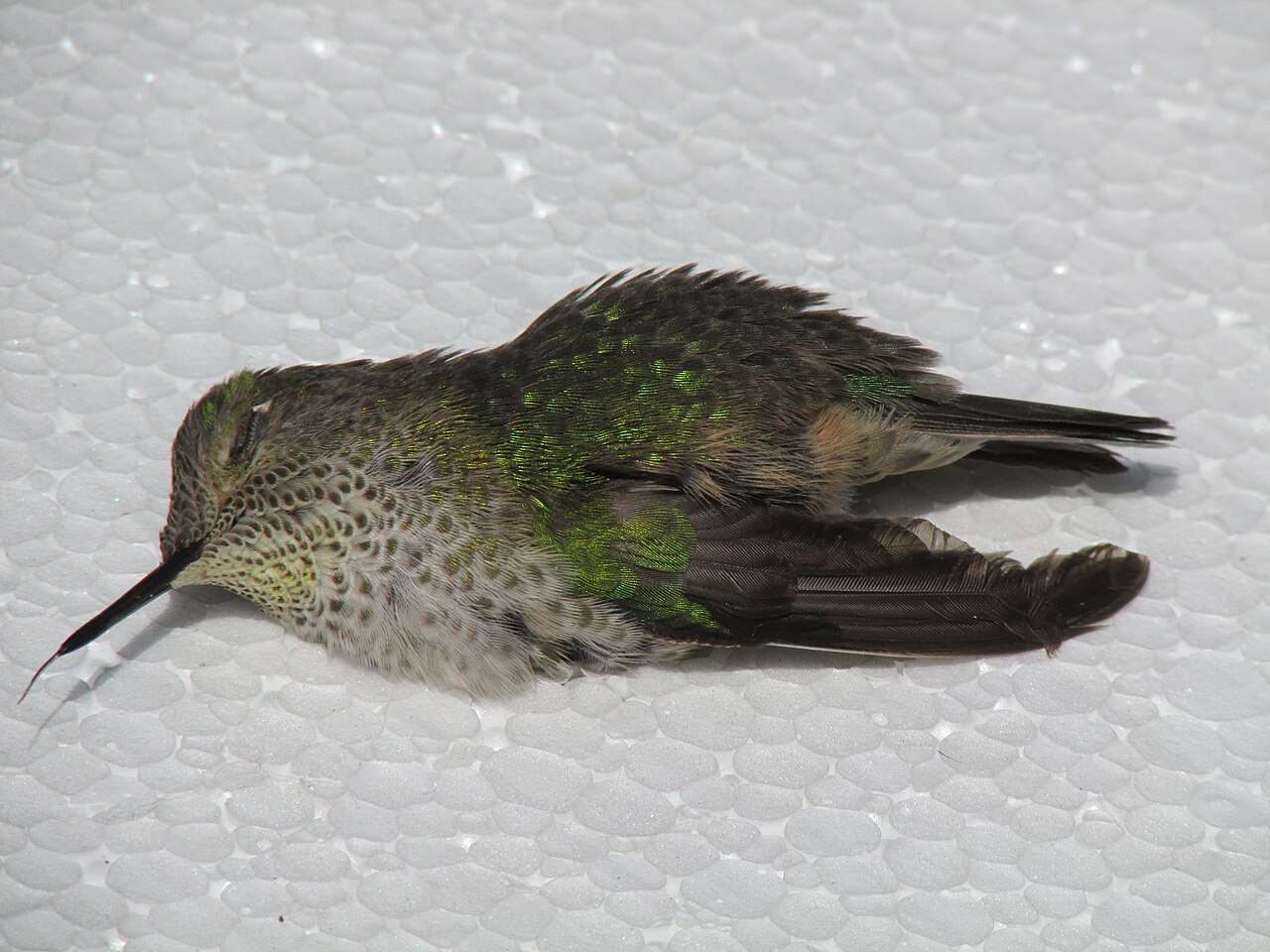
Do not touch it bare-handed; use gloves or an inverted bag, seal it, put it in the trash and wash your hands, as the CDC advises for any dead wild bird. Do not keep the bird or its feathers as a keepsake. Hummingbirds are protected under the Migratory Bird Treaty Act, and possessing one without a permit is illegal.
Common causes of death include window strikes, outdoor cats, cold snaps and starvation, none of which carry a message for the finder.
Frequently Asked Questions
Do hummingbirds say goodbye?
No, not in a human sense. Most hummingbirds in the U.S. and Canada leave on fall migration, so a last visit in autumn is often taken as a farewell. Anna’s hummingbirds are the exception and stay year-round along the Pacific Coast.
Do hummingbirds like it when you talk to them?
No sign they understand words. They react to movement and color, so a calm voice near a feeder rarely scares one off, and talking to it costs the bird nothing.
Is a red hummingbird a special sign after a death?
No more than any other, though many read it that way. Only adult males of species like the ruby-throated hummingbird have the red throat, and mourners see the red as love that outlasts death.
Do hummingbirds come back to the same yard every year?
Yes. Many hummingbirds return to the same feeding sites each year after migration, and families take that return as the loved one coming back annually.
Sources
- CDC, How Bird Flu Spreads
- USDA APHIS, Highly Pathogenic Avian Influenza (H5N1)
- U.S. Fish and Wildlife Service, Migratory Bird Treaty Act