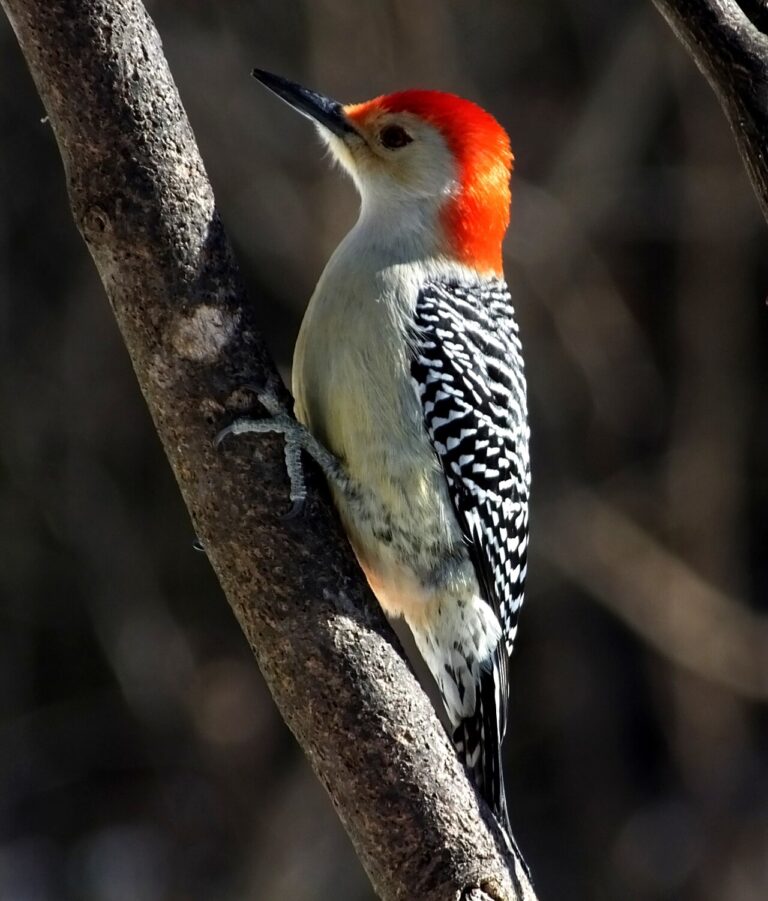
Eastern Bluebird Sounds: 6 Calls and What Each One Means
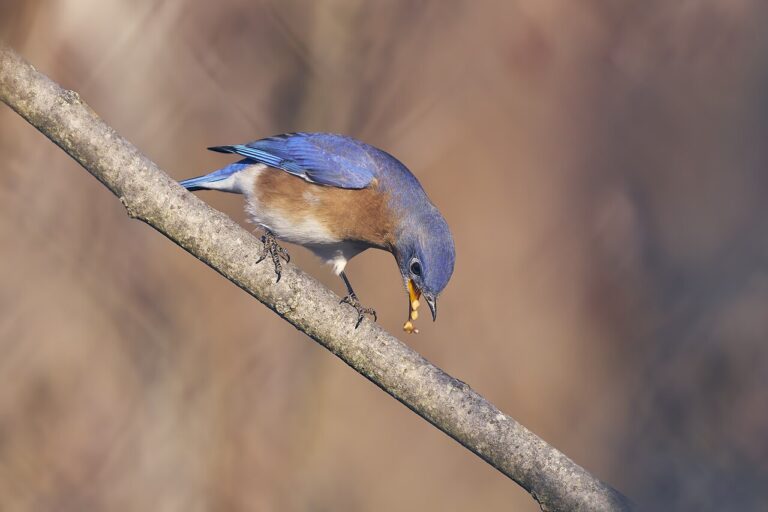
The Eastern Bluebird call that most people hear first is a soft, warbled tu-a-wee, a two to three note phrase so quiet that it is easy to walk past. Eastern Bluebird sounds are not loud performances. They are low, mellow and short, and they carry only 100 to 200 ft (30 to 60 m) across open ground, which is exactly why a bird this common goes unnoticed in backyards where it nests every spring.
Each sound in the repertoire does a different job. The male’s warble advertises a nest cavity, the clipped call note keeps a pair in contact across a field, and a dry chatter means something is too close to the box. Learning the four main sounds of Sialia sialis, and the season and hour each belongs to, turns a blue flash on a fence wire into a bird you can identify without ever raising binoculars.
Eastern Bluebirds make a soft, low warble of two to six notes, usually written as tu-a-wee or chur-lee chur-wi, plus a short chit contact call and a dry, harsh chatter used as an alarm near the nest. Males sing most from February through July, heaviest in the hour after dawn.
| Sound | How it sounds | What it means | When you hear it |
|---|---|---|---|
| Warbled song | Soft tu-a-wee, 2 to 6 notes, 1 to 2 seconds | Male advertising a cavity and a territory | February to July, peak at dawn |
| Contact call | Single clipped chit or tew | Pair keeping track of each other | All year, all day |
| Chatter | Dry, rattling chit-chit-chit | Alarm: predator, rival or human at the box | Nesting season, any disturbance |
| Courtship warble | Longer, repeated song with wing flicks | Male showing a female the nest hole | Late February to April |
| Begging call | Thin, insistent tu-wee peeps | Nestlings and fledglings asking for food | April to August |
| Flock notes | Scattered soft tew notes from a treetop | Winter flock moving between berry patches | October to February |
What the Eastern Bluebird song sounds like
The song is a short, liquid warble of two to six notes, delivered in about one to two seconds and repeated every few seconds from a wire, post or bare branch. Birders write it as tu-a-wee, chur-lee chur-wi or tru-ly, and the quality is the giveaway: it is unhurried and slightly hoarse, with no sharp edges and no buzz. There is almost no volume behind it.
Males do the singing, and at the height of courtship a single male may deliver as many as 20 songs a minute. Females sing only occasionally, usually a quiet version when a predator appears near the nest or when the male arrives with food. If you are learning the broader group first, the shared traits across the three North American species are covered in our guide to bluebird songs and calls.
The contact call: a soft tu-a-wee between mates
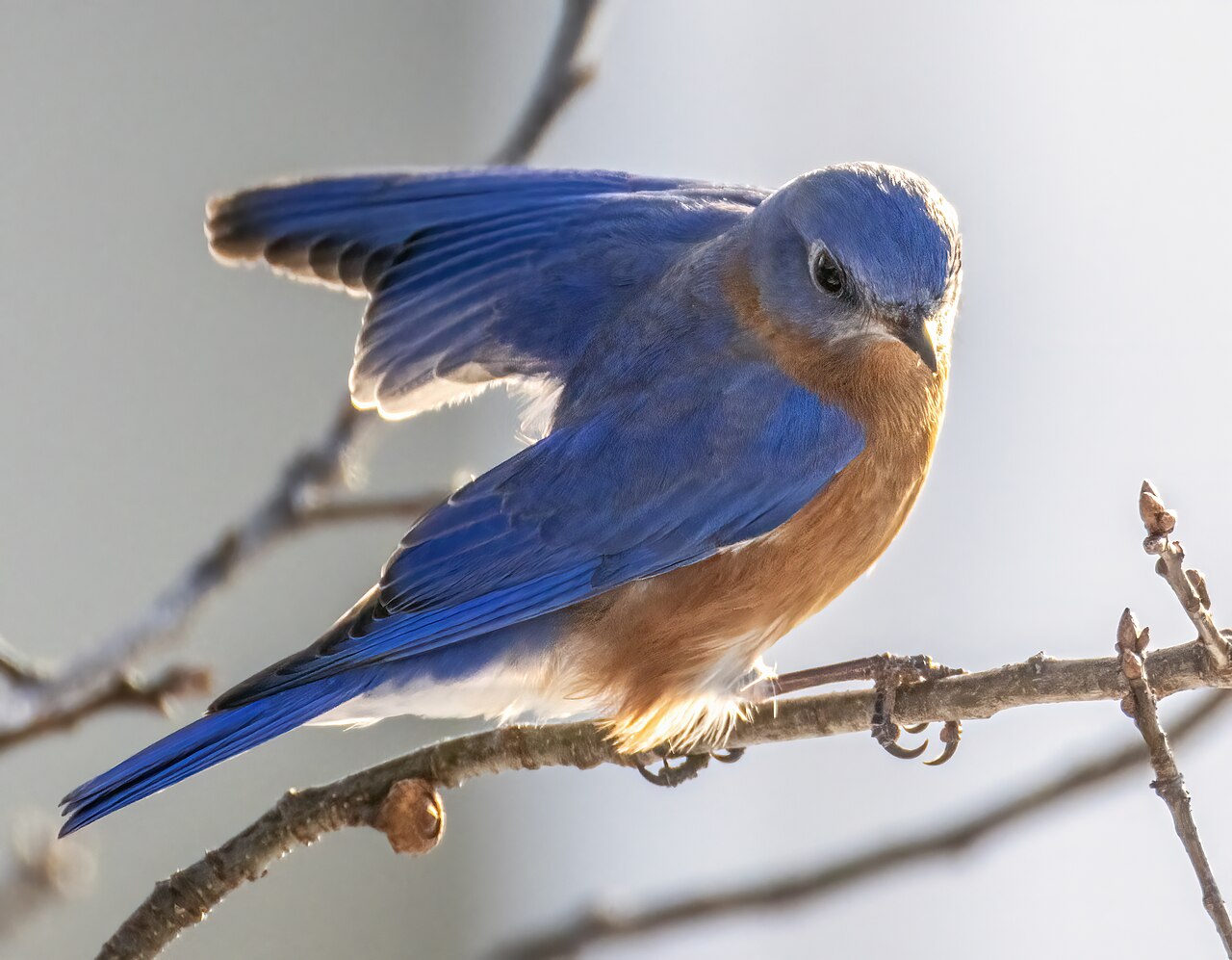
The contact call is the single most common Eastern Bluebird sound and the one you will hear in any month of the year. It is one clipped note, chit or tew, dropped casually every few seconds as a bird moves between perches. A pair uses it as a position check: one bird calls from a fence line, the other answers from 50 ft (15 m) away, and both keep hunting without looking up.
Because the note is so plain, it is the sound people hear for years without assigning it to anything. The trick is the tone. It is soft-edged and slightly whistled, never the hard metallic tick of a sparrow or the scolding sputter of a wren.
The chatter: the Eastern Bluebird alarm call
When something approaches the nest, the song stops and the pair switches to a dry, rattling chatter, a fast chit-chit-chit-chit that sounds annoyed rather than frightened. Both sexes give it, and it is usually paired with a visible wing flick, one wing flashed open while the bird perches above the cavity. Snakes, cats, House Sparrows and anyone checking a bluebird nest box will all trigger it.
The intensity scales with the threat. A passing hawk brings a few notes, a cat under the box brings a continuous rattle plus dives at the intruder. If you hear chatter while you are at a box, finish the check and step back 30 ft (9 m); the adults return within a minute or two.
Courtship song and the dawn chorus in early spring
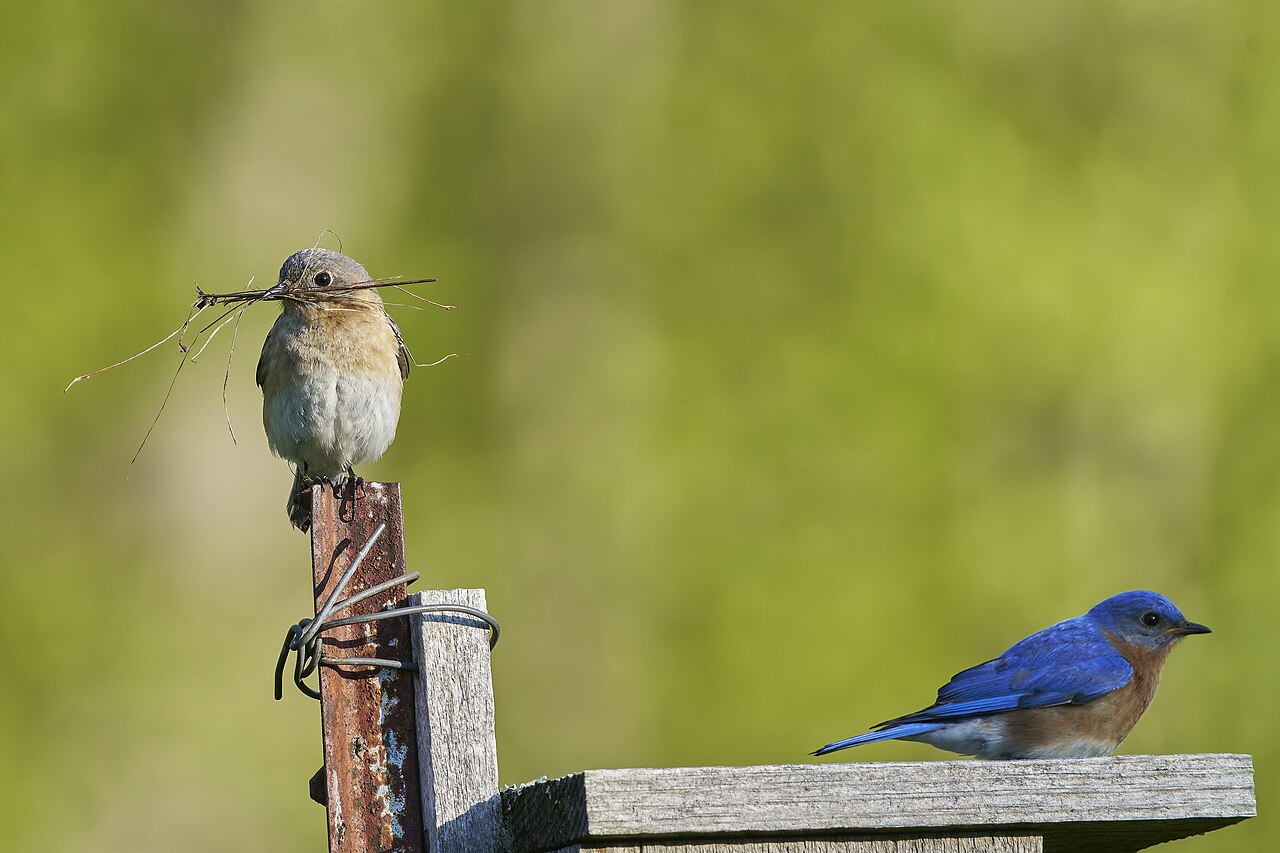
From late February through April the male’s song gets longer, more repetitive and more insistent, and it comes with a performance. He perches at the entrance of a cavity, warbles, flutters his wings half open, carries nest material in and out, and sometimes feeds the female where she can watch him. The sound itself is the same soft warble, but the delivery rate doubles.
This is also when the song concentrates into the first hour of daylight. A male may begin 20 to 30 minutes before sunrise and sing almost continuously until the light is full, then fall nearly silent by midmorning. If you want to census bluebirds on a property, that early window is the only reliable one.
Begging calls of nestlings and fledglings
Nestlings start with faint peeping that is barely audible from outside the box, then build to a thin, buzzy chorus you can hear 15 ft (5 m) away in the last few days before fledging. Once out, fledglings use a louder, more plaintive tu-wee that they repeat for minutes at a time while the adults bring insects.
Those begging whistles are the reason June and July sound different from May. Many of the bluebird noises in a yard at midsummer are young birds, not singing males, and the adults answer them with the same clipped contact note they use all year.
Winter flock calls: what you hear from October to February
Eastern Bluebirds do not go quiet in winter, but they stop singing. Birds that stay north gather into loose flocks of 5 to 20, work through sumac, cedar and holly, and keep up a scattered conversation of soft tew notes from the treetops. The effect is a thin, pleasant chorus with no structure to it, drifting across the woodlot as the flock moves.
When Eastern Bluebirds sing: time of day and season
Full song runs from late February to late July across most of the range, with a hard peak in March and April and a second, weaker burst when pairs start a second or third brood in June. Singing collapses during the late summer molt and does not return until the following spring. Within a day, the hour around sunrise accounts for most of it, with a smaller evening uptick on warm, still days.
Weather matters more than the calendar in February. A run of mild mornings pulls the first warbles forward by two weeks, and a cold snap shuts them off again. For what this early singing has meant to people historically, see our piece on Eastern Bluebird symbolism.
Sounds that are mistaken for an Eastern Bluebird
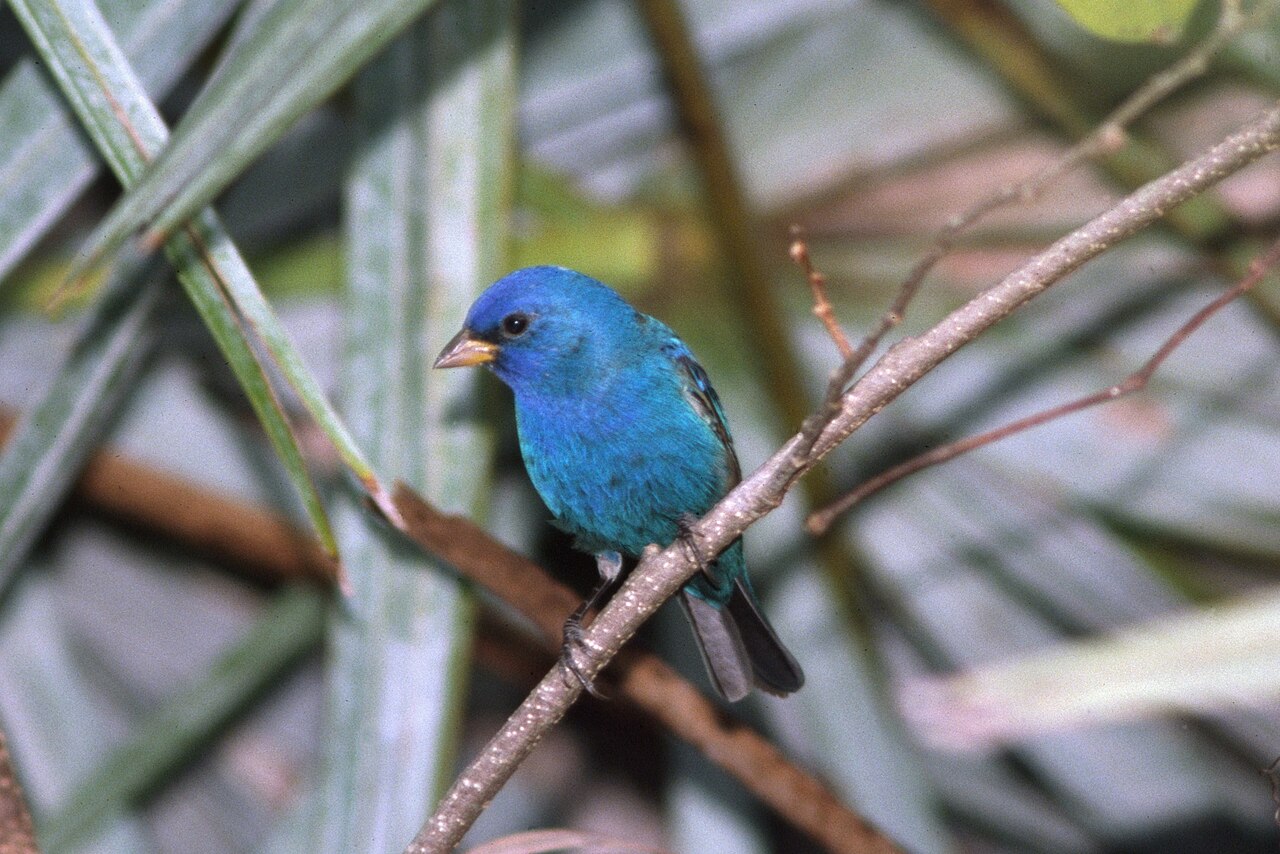
Four birds cause most of the confusion. The Indigo Bunting (Passerina cyanea) sings from an exposed perch in paired, higher and sharper notes, sweet-sweet, chew-chew, with none of the bluebird’s softness. The House Finch warbles longer and rougher and usually ends on a rising, buzzy wheer. The Purple Martin gurgles in a richer, more liquid run. The Western Bluebird, where ranges meet on the Great Plains, gives a harsher, lower kew.
The reliable test is loudness. An Eastern Bluebird song is the quietest of the group, short, and never buzzy. If the phrase pushes across a whole field or ends in a buzz, it is not a bluebird. Nocturnal confusion is a separate problem: the quavering whistle people report after dark usually belongs to the Eastern Screech-Owl, and the deeper hooting to a Barred Owl.
What noises do blue jays make, and why people mix them up
Blue Jays share the blue plumage and nothing else. Their common sound is a harsh, screaming jeeer that carries hundreds of feet, along with a bell-like toolool, a creaking pumphandle note, and a good imitation of a Red-shouldered Hawk. Nothing in that repertoire is soft or warbled.
The mix-up happens by sight, not by ear: a blue bird crosses the yard, the listener assigns whatever call came next to it, and a jay’s scream gets logged as a bluebird. If the sound was loud enough to make you flinch, it was the jay.
Bluebirds tapping at your window: the household case
Eastern Bluebirds do not nest in attics, walls or chimneys, so they rarely become a house problem. The one complaint that does come up is spring window tapping: a male sees his reflection in glass or a car mirror, reads it as a rival in his territory, and attacks it for days, hammering and chattering from dawn onward. It peaks in March and April and stops once the clutch hatches.
The fix is to kill the reflection from the outside, since blinds on the inside do nothing. Screening, soaped glass, static film or a cover on the mirror ends it within a day or two. The bird is not sick and is not trying to get in.
How to use sound to find bluebirds in your yard
Go out in the first hour of light between March and May and listen for a short, soft warble repeated at an even pace, then follow it to the highest open perch nearby. Bluebirds sing from exposed spots, not from inside cover, so the singer is usually sitting in plain sight on a wire, post or dead limb. Full identification details and plumage marks are in our Eastern Bluebird profile.
Recordings help, but use them sparingly. Playback in a defended territory pulls a male off the nest area and wastes his morning; one or two passes is enough to confirm what you are hearing. The Cornell Lab’s sound library at All About Birds has reference clips of each call type.
Frequently Asked Questions
Are Eastern Bluebirds rare to see?
No. They are one of the most common songbirds in the eastern United States, with a population estimated in the tens of millions, and the trend has been upward since the nest box campaigns of the 1960s and 1970s. They are easy to miss rather than rare, because they hunt from quiet perches along field edges instead of visiting seed feeders.
What is another name for a bluebird?
Older American usage called them blue robins, a nod to the rusty breast they share with the American Robin, and farmers once knew them as blue redbreasts. Scientifically all three North American species sit in the genus Sialia, so Eastern, Western and Mountain Bluebird are the only names in current field use.
What looks like a bluebird but isn’t?
The Indigo Bunting is the usual answer: smaller, all blue with no rusty breast, and a sharper song. Blue Grosbeaks, Tree Swallows and Barn Swallows also read as blue in flight, and Blue Jays are far larger with a crest. Check for the orange breast and the hunched, upright posture on a low perch.
What birds are enemies of bluebirds?
House Sparrows and European Starlings are the serious ones, since both take over cavities and House Sparrows will kill an incubating female inside the box. House Wrens puncture eggs and fill boxes with sticks. Raccoons, snakes and outdoor cats take nestlings, which is why guards on box poles matter more than any other precaution.
Which bird sings the most beautifully?
That is a matter of taste, and the usual nominees are the Hermit Thrush and Wood Thrush for their flutelike, overlapping tones. The Eastern Bluebird wins on a different quality: its warble is gentle and unhurried rather than impressive, which is why it reads as calm to most listeners rather than virtuosic.
What is a bluebird call versus a bluebird song?
The song is the longer, learned warble a male uses to claim territory and attract a mate, and it is seasonal. Calls are short, innate and used all year for specific jobs: the chit note keeps a pair in contact, and the dry chatter signals danger. Both sexes call, but sustained song is almost entirely the male’s.