Grey Cat Spiritual Meaning: Symbolism and Luck
Symbolically, a grey cat stands for balance, calm and quiet independence, the middle ground between the black cat and the white cat. That is the heart of the grey cat spiritual meaning, and it holds whether the cat rests on your porch or crosses the street in front of you.
A grey cat is also a real animal with a clear genetic story, and a grey stray at your door needs water, food and a microchip scan before it needs an interpretation.
As a sign, a grey cat points to balance, calm and independence. A grey cat crossing your path asks you to pause and take the middle road before a decision. The silver-blue Korat is a good-luck cat of Thailand, and most grey coats come from one recessive dilution gene.
What a Grey Cat Means Spiritually
A grey cat signifies balance, calm and independence. Grey is the meeting point of black and white, so the grey cat holds the mystery of the black cat and the clarity of the white one without leaning hard toward either. It points to steady ground, the place where you stop swinging between extremes.

Calm is the second theme. A grey cat moves quietly, watches before it commits and rests between bursts of activity. That pace is the message. When one appears during a stressful week, it points to observation over reaction.
Independence is the third. Cat symbolism and spiritual meaning rests on self-reliance, watchfulness and protection, and the grey coat narrows those themes toward a quiet kind of freedom. The grey cat keeps its own counsel and still chooses company, a model for closeness without losing yourself.
Grey Cat Meanings at a Glance
Each grey cat encounter carries its own focus, from a Thai luck cat to a stray at the door. The table pairs each one with its source and its meaning.
| Encounter or source | Tradition or context | Meaning |
|---|---|---|
| Grey cat in general | Color symbolism of black plus white | Balance and calm |
| Korat (Si-Sawat) | Tamra Maew cat-book poems, Thailand | Good fortune and prosperity |
| Russian Blue | Breed history, Archangel Isles, Russia | Quiet companionship, no luck lore |
| Grey cat crossing your path | Everyday sign | Pause before a decision |
| Stray grey cat at the door | Everyday sign and animal welfare | Shelter and care, then a chip scan |
| Any cat as guardian | Bastet, ancient Egypt | Protection of the home |
Are Grey Cats Lucky? Which Cat Color Brings Luck
Yes, one grey cat is lucky in Thailand: the silver-blue Korat is a good-luck cat there, while Scottish folklore favors black and Japanese folklore the tricolor mi-ke. Black cat symbolism turns on prosperity in Scotland, where a strange black cat arriving at the house signals money to come. The luck follows the color the local story names.
Japan gives its luck to the mi-ke, the calico coat of white, black and orange. White cat symbolism centers on purity and new beginnings, a thread that grey shares only in part.
Grey earns its luck through a single breed. The Korat is kept as a living good-luck charm, and the Thai lore names that breed, not every grey coat. The tradition is specific, which makes it firmer than a vague color superstition.
Is Seeing a Grey Cat a Good Omen?
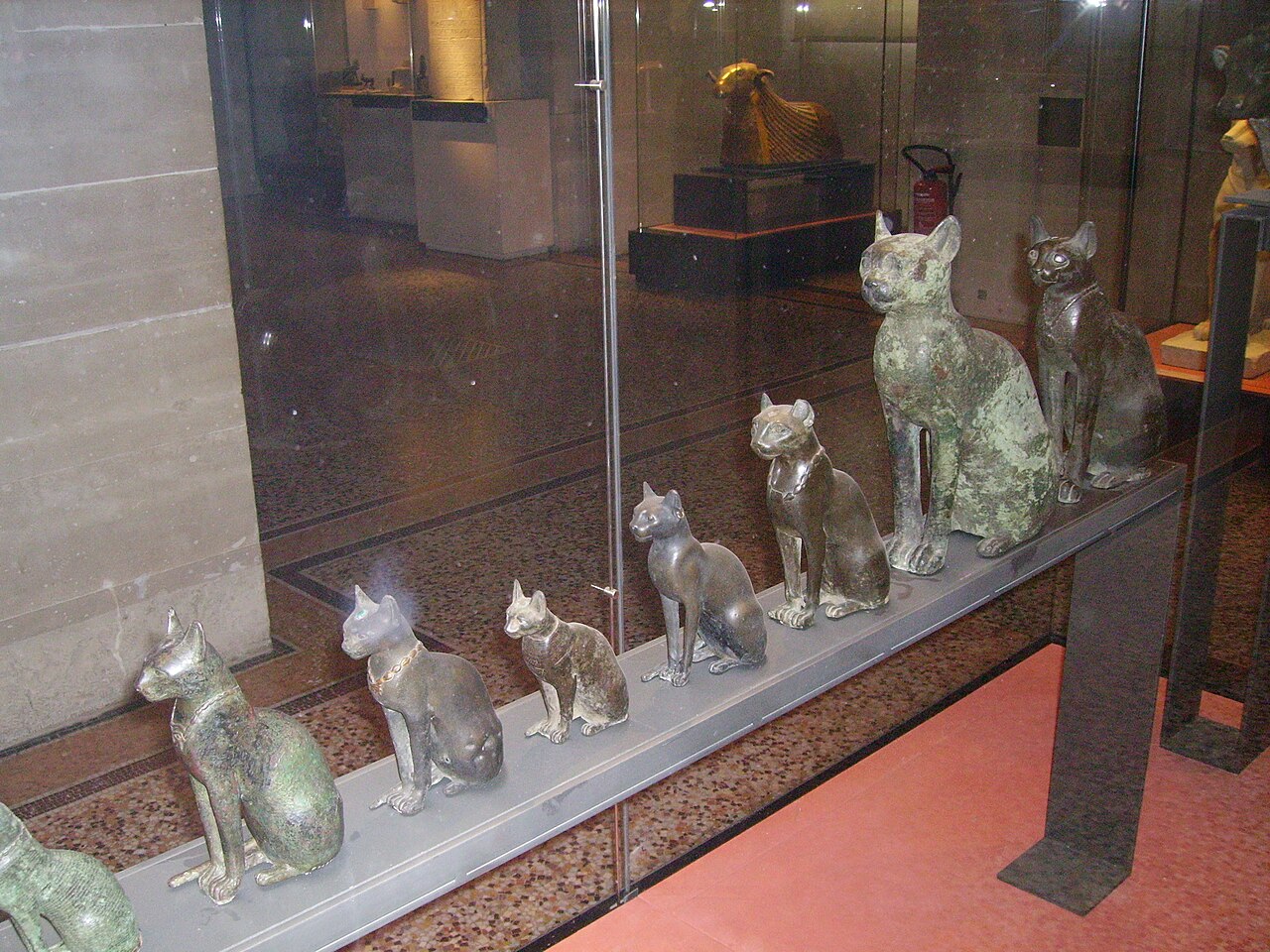
Seeing a grey cat is a good omen, a nudge toward patience and protection. In ancient Egypt, the cat belonged to Bastet, the goddess who guarded the home, women and childbirth. Her cats were not tied to one coat, so the grey cat inherits her protective meaning as a cat, not as a color.
A cat that keeps appearing at the same time or place points to a habit worth noticing in your own routine. The repetition is the message. One sighting asks for a pause, and three in a week ask you to look at what you keep postponing.
Cats in the house point to shelter and a settled home, and a grey cat that walks inside uninvited points to calm returning after a rough stretch. A stray at the door is a different case. It is hungry or looking for shelter first, and the omen comes second.
What Does It Mean When a Grey Cat Crosses Your Path?
A grey cat crossing your path means pause and choose the middle road. In American superstition, a black cat crossing your path carries bad luck, and grey removes that charge. The crossing marks a moment of balance before a choice.
Black cats crossing your path carry the heaviest superstition of any cat in the United States. A grey cat in the same spot carries none of that weight. Take it as a cue to slow your step, not as a warning.
The timing matters more than the direction. A crossing on the way to an interview, a hard talk or a big purchase points to that exact decision. Give it a breath, then go.
How Rare Are Grey Cats?
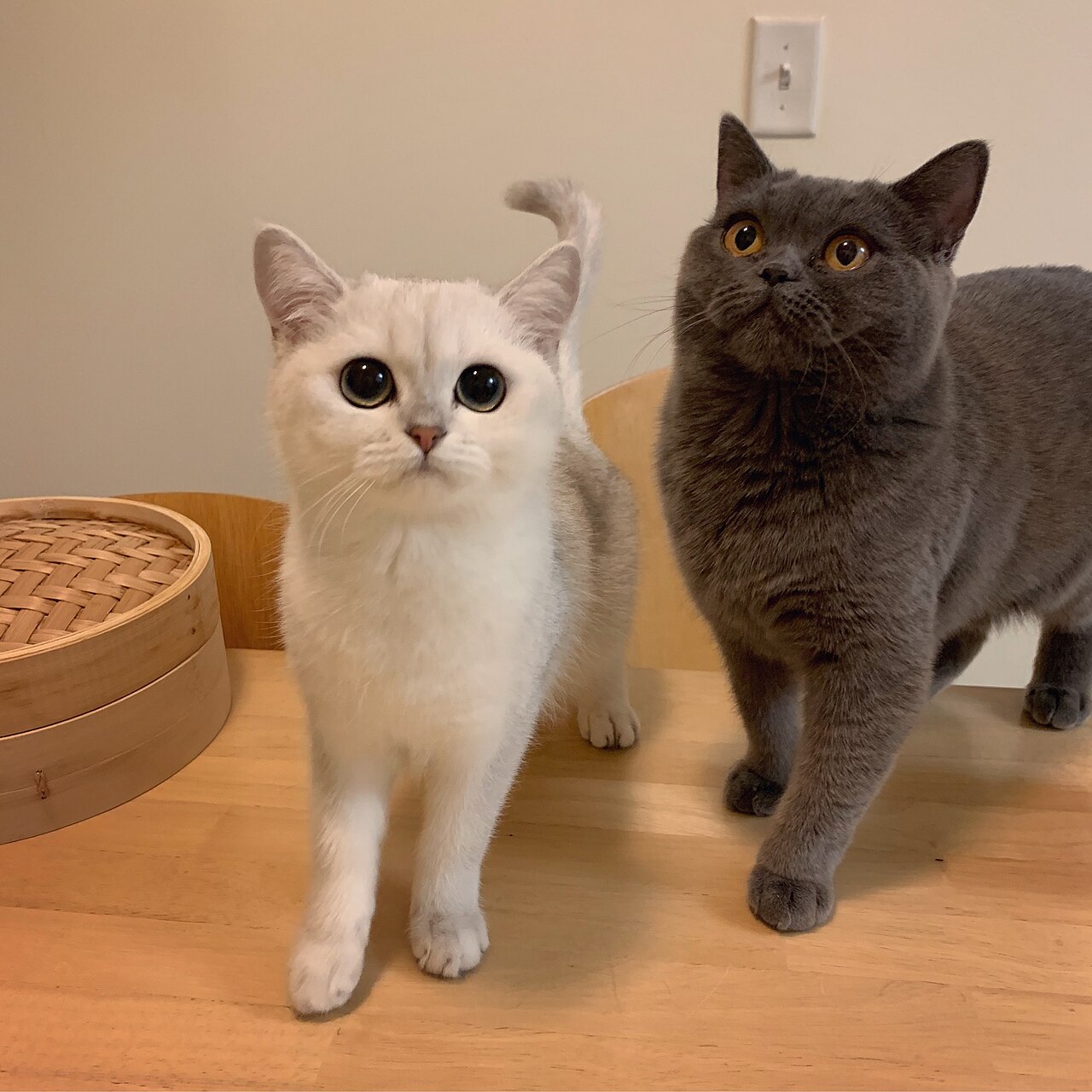
Grey cats are not rare. Grey is a diluted black, produced by a recessive mutation in the MLPH gene, and a kitten turns grey only when it inherits a copy from each parent. Two black parents that both carry the gene can produce grey kittens.
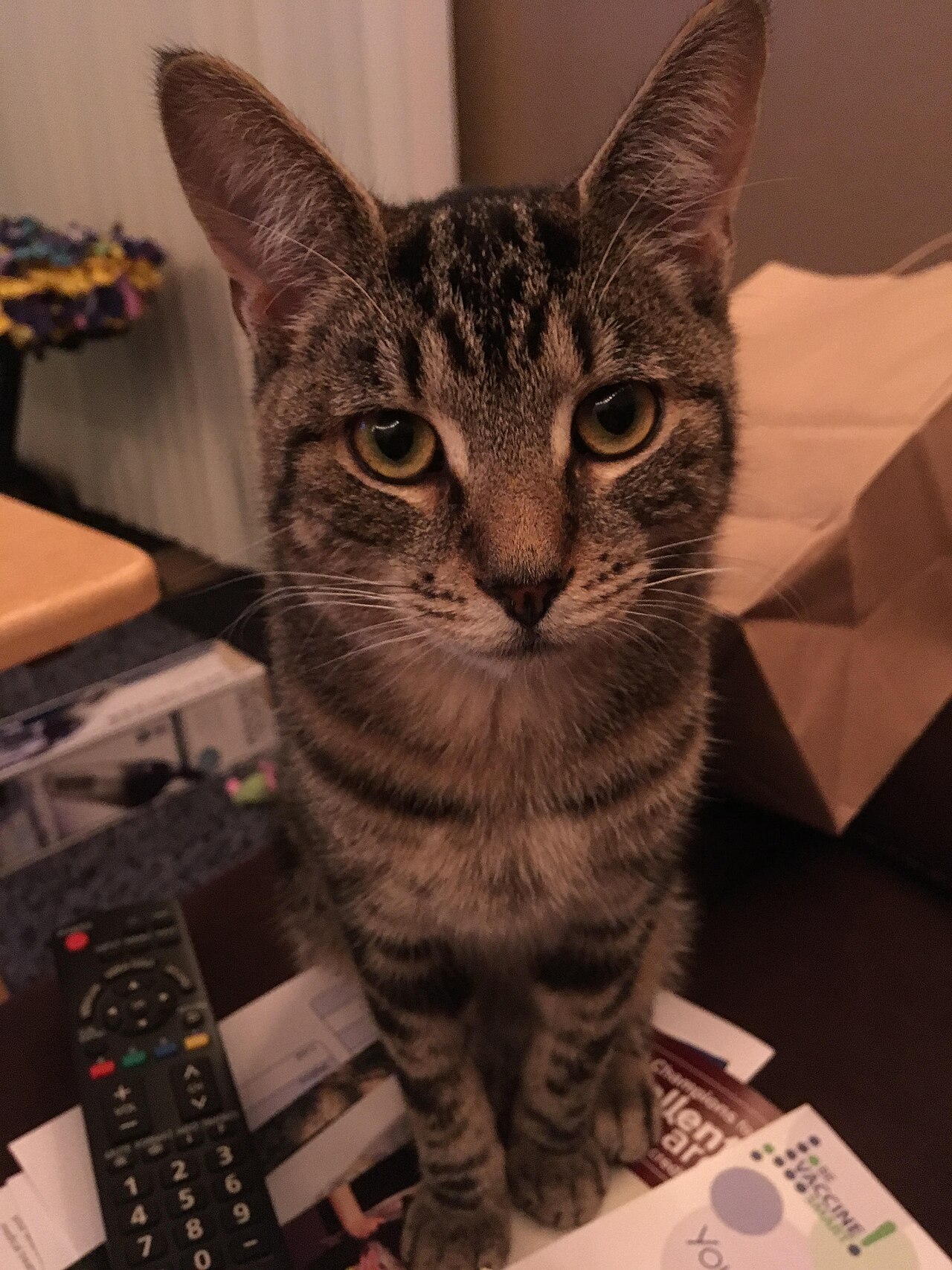
Cat registries call this color blue, not grey. The dilution clumps pigment unevenly along the hair shaft, so black reads as slate grey and orange reads as cream.
Solid, tabby and bicolor grey cats all exist, from the even slate of a Korat to the blue-and-white coat of a farm cat. The pattern comes from other genes, and the grey shade comes from the dilution alone.
Grey Cats in Thai and Russian Cat Traditions
Thailand gives grey its strongest tradition through the Korat. The breed appears in the Tamra Maew, the Thai cat-book poems from the Ayutthaya era, as one of the cats that bring good fortune, under the name Si-Sawat. Its silver-tipped blue coat stands for wealth, and its eyes turn green as it matures.
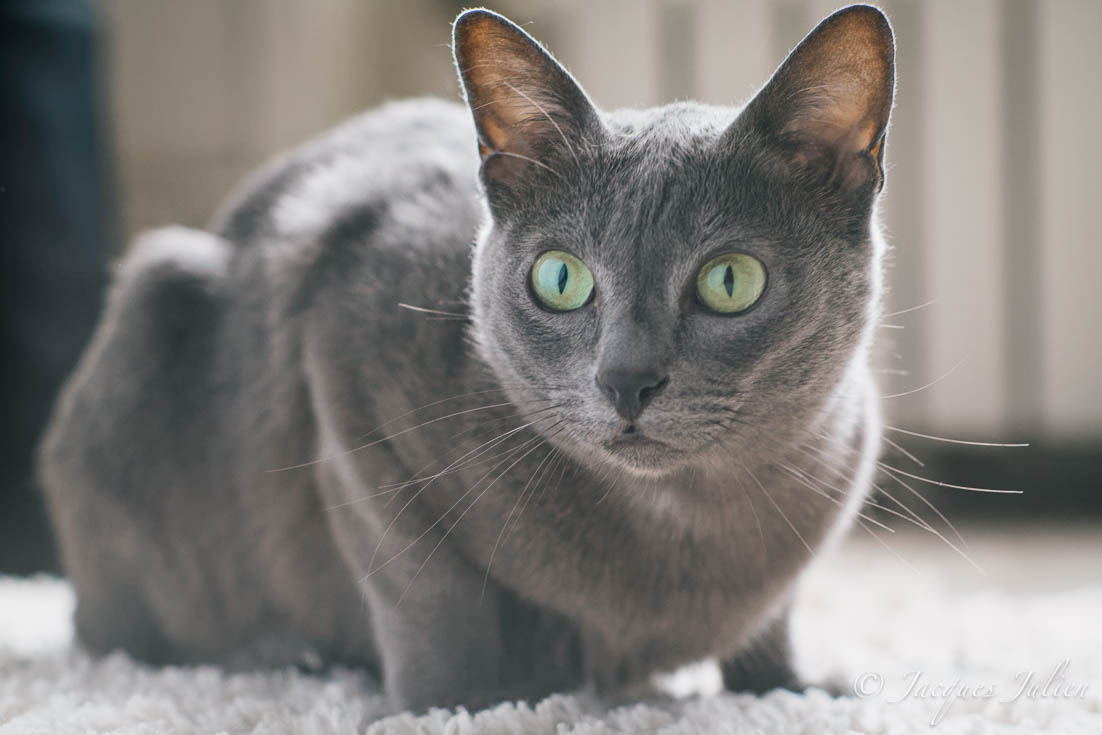
The Russian Blue carries a port-city origin story. Breed histories trace it to the Archangel Isles in northern Russia, from where sailors brought the cats to Britain in the 1800s. It has a dense, plush blue coat and green eyes, and early shows listed it as the Archangel Cat.
Other grey breeds include the Chartreux of France and the Nebelung, and the British Shorthair comes in a well-known blue. Their stories are breed histories, not luck traditions. Thailand remains the anchor for grey cat luck.
Which Color Cat Is Lucky for the Home?
The grey Korat is a lucky cat for the home in Thai tradition, where a pair given to a bride wishes the new household prosperity. The luck attaches to the marriage and the house, not to a passing sighting.
Orange cat symbolism brings warmth, appetite and sociability to a home, a cheerful contrast to the grey cat’s calm. Each color adds its own note to a household.
For luck at home, the match matters more than the coat. A cat whose energy suits the household, and that you can feed, house and take to a vet, brings more good to a home than the right color.
What It Means if God Sends You a Cat
The Bible shows God sending animals with a task, and the clearest case is the ravens of 1 Kings 17:4 to 6, which bring Elijah bread and meat by the brook Cherith. The animal arrives to provide, and the prophet receives and keeps going. No verse describes God sending a cat.
Cats appear once, in Baruch 6:22, a book of the Apocrypha found in Catholic and Orthodox Bibles and in the 1611 King James Version. The verse lists bats, swallows, birds and cats on the bodies and heads of idols. The cats there show that the idols cannot guard themselves, and the verse gives cats no sacred role.
These are the limits of the record. Scripture reports provision through ravens, not messages through cats, so a grey cat at your door fits the Elijah pattern only as care that arrives when needed. Feed it, check it for a chip, and let gratitude be the response.
Meeting a Stray Grey Cat Safely
Approach a stray grey cat slowly and avoid handling it bare-handed until you know it is healthy and vaccinated. Rabies spreads through the bite of an infected mammal, according to the CDC, and a stray cat’s vaccination history is unknown. Seek medical advice after any bite.
Offer water and food at a distance and let the cat choose to come closer. A friendly grey cat with a clean coat and no fear of people is likely someone’s pet that slipped out.
A vet clinic or animal shelter can scan for a microchip and contact the owner. If no chip turns up, the shelter can advise on vaccination and care before you decide to keep the cat.
What a Grey Cat Teaches: Balance and Independence
A grey cat teaches you to hold steady in transitions. Grey is the color between night and day, and the cat that wears it moves easily through that in-between hour. When life is between jobs, homes or relationships, the grey cat points to calm as the right tool, not speed.
Its second lesson is boundaries. A cat chooses when to be touched and walks away when it has had enough, without apology. That is a clean model for saying no while staying warm.
Put it into practice with one small habit. Take five quiet minutes before a hard decision, the way a cat watches before it jumps. Cat dream meaning follows the same call toward instinct and self-trust, so a grey cat in a dream points to a balanced decision waiting to be made.
Frequently Asked Questions
Is a stray grey cat at the door a sign?
Yes, a stray grey cat at the door points to hospitality and care, but it is first a hungry animal looking for food and safety. Offer water, keep your distance, and have a vet or shelter scan it for a microchip, since it may belong to a neighbor who is searching for it.
Do grey cats have different personalities?
No, coat color is a weak guide to personality. A University of California, Berkeley survey of cat owners found that people assign traits by color, which measures human expectation rather than cat behavior. Breed, early handling and the individual cat shape temperament far more than a grey coat does.
Is a grey tabby the same as a solid grey cat?
No, a grey tabby has darker stripes, swirls or spots on a lighter base, while a solid grey cat is one even shade from nose to tail. Both carry two copies of the same recessive dilution gene, so the difference comes from the pattern genes layered on top.
What is the spiritual message of a cat?
The spiritual message of a cat is protection, independence and a guarded kind of love. In ancient Egypt, Bastet made the cat a guardian of the home, women and childbirth. In the Prose Edda, the goddess Freyja rides a chariot pulled by two cats, linking the animal to love and fertility. The text gives those cats no coat color, so their meaning belongs to every cat.
Do grey kittens change eye color?
Yes, grey kittens are born with blue eyes, like other kittens, and the color shifts toward the adult shade during the first months of life. Korats and Russian Blues end up green-eyed, while grey cats of mixed breeding can settle on green, gold or copper, and some keep blue eyes.
Are blue cats and grey cats the same?
Yes, blue is the cat-fancy name for grey. Breeders, registries and many shelter listings use blue for any coat diluted from black, including the Korat, the Russian Blue and the Chartreux. Shades range from pale silver to deep slate, and every one of them counts as blue.
Sources
- The Cat Fanciers’ Association, Korat Breed Profile
- The Cat Fanciers’ Association, Russian Blue Breed Profile
- Centers for Disease Control and Prevention, Rabies
- Bible Gateway, 1 Kings 17:4 to 6 (KJV)
- Bible Gateway, Baruch 6:22 (King James Version with Apocrypha)