Orange Spider: 5 Common US Species and the One to Watch
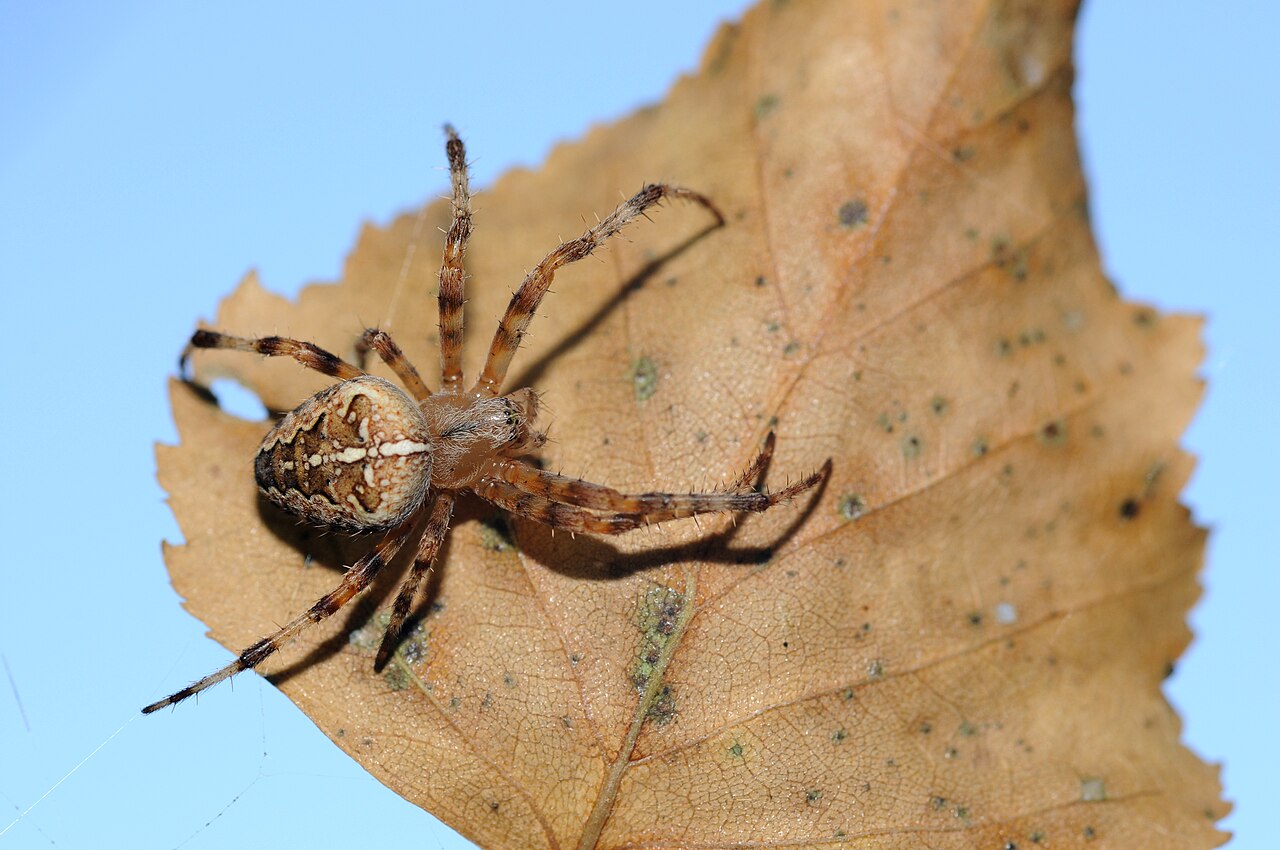
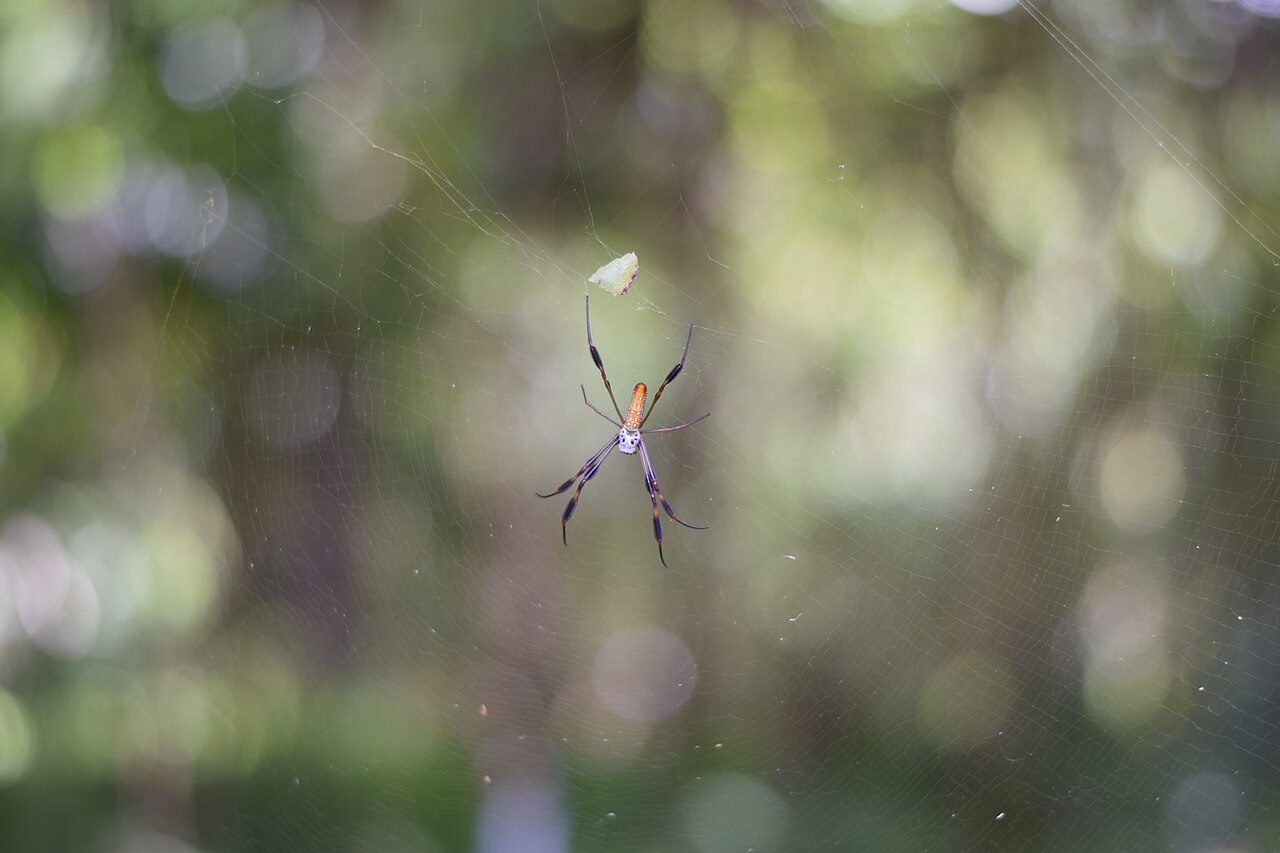
An orange spider in the US is almost always a harmless orbweaver, most often a marbled orbweaver (Araneus marmoreus), a cross orbweaver (Araneus diadematus), or a golden silk orbweaver (Trichonephila clavipes) in the Southeast. None of them is medically dangerous to people.
Color alone never identifies a spider, so the useful clues are the web, the body shape, and the region. Big orange spiders hanging head down in a round web in the yard are orbweavers. Small, fast, orange red spiders found under stones or indoors are usually woodlouse hunters (Dysdera crocata).
Orange spiders in the United States are mainly orbweavers: the marbled orbweaver, the cross orbweaver, and the golden silk orbweaver. All are harmless to humans. The only orange brown spider of real medical concern is the brown recluse, which has a violin mark and no bold pattern on its abdomen.
Are Any Orange Spiders Poisonous?
No orange spider in the United States is poisonous, and none of the common orange species is dangerous. Every spider has venom, but orbweaver venom is built for insects and their bites feel like a pinprick. The one caution is the brown recluse (Loxosceles reclusa), which ranges from tan to orange brown and can cause a slow healing wound.
Common Orange Spiders in the US
Five species cover most sightings. Size below is body length without legs, and all five catch prey the same way other garden spiders do, which is covered in what spiders eat.
| Species | Size | Region | Where you see it | Risk |
|---|---|---|---|---|
| Marbled orbweaver | 0.4 to 0.7 in (9 to 18 mm) | East, Midwest | Round web, fall | Harmless |
| Cross orbweaver | 0.25 to 0.8 in (6 to 20 mm) | North, Pacific NW | Gardens, porches | Harmless |
| Golden silk orbweaver | 0.9 to 1.5 in (24 to 40 mm) | Southeast, Gulf, Texas | Large gold web | Harmless |
| Woodlouse hunter | 0.4 to 0.6 in (11 to 15 mm) | Nationwide | Under stones, basements | Harmless pinch |
| Brown recluse | 0.25 to 0.5 in (6 to 12 mm) | Central, South | Boxes, closets | Medically significant |
Orange Spider in the House
Indoor sightings are usually a woodlouse hunter, which is glossy orange red with a pale tan abdomen and long fangs it uses on pillbugs. A tiny orange spider in the house is more often a juvenile orbweaver that wandered in, or a cobweb spider, and both leave on their own. Check bugs that look like spiders before treating anything.
Orange Spider Lookalikes
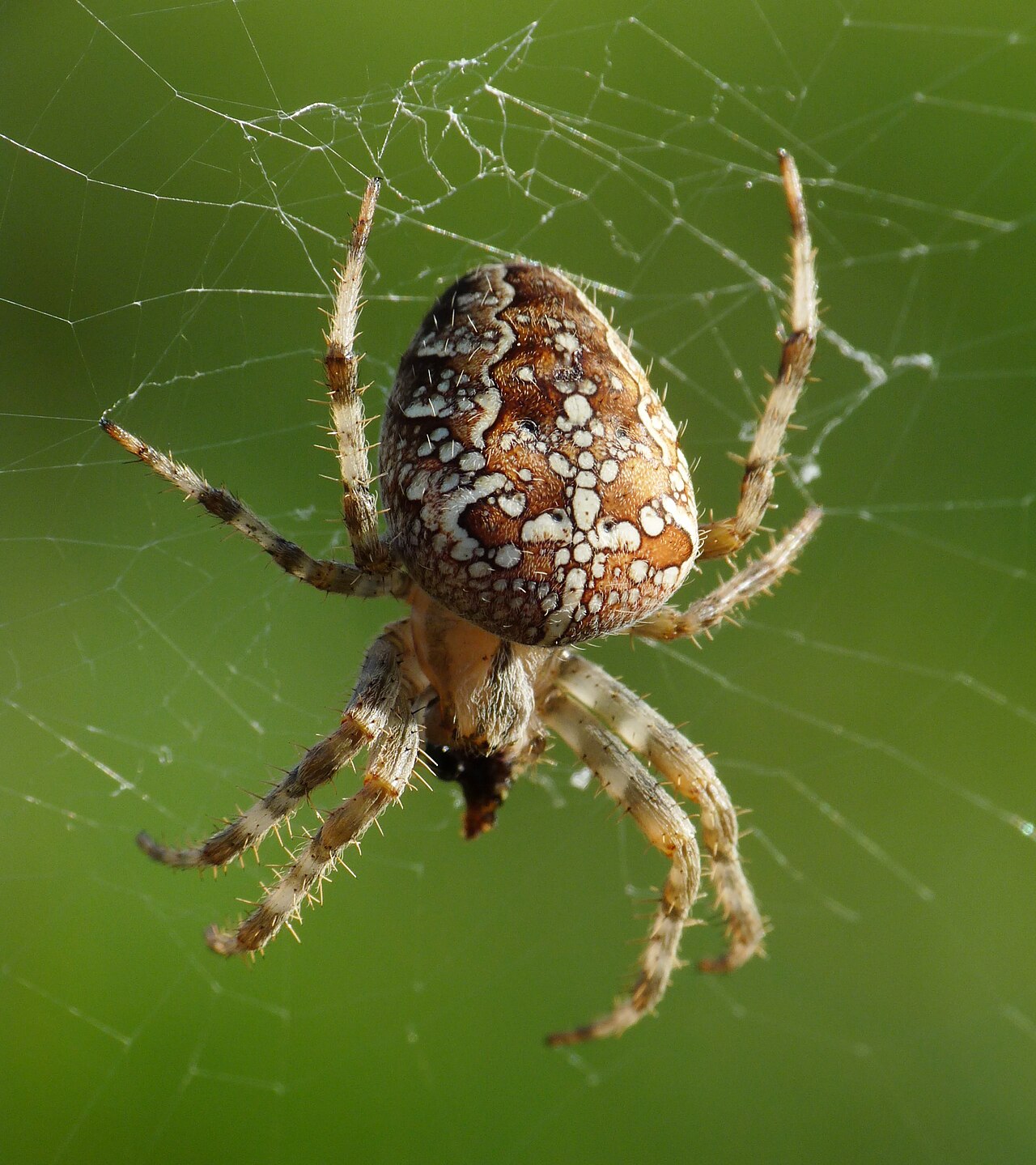
Pattern, not color, separates the harmless from the risky. Orbweavers have a bold marbled or banded abdomen and sit in a web; a recluse is plain, has a dark violin behind the eyes, and never builds a round web. The same logic sorts the black and yellow spider, the black and white spider, and the black spider with white spots from each other.
| Feature | Marbled orbweaver | Brown recluse |
|---|---|---|
| Abdomen | Orange with dark marbling | Plain tan to orange brown |
| Marking | None on head region | Dark violin shape |
| Web | Round, vertical | Loose, irregular, hidden |
| Eyes | Eight in two rows | Six in three pairs |
Frequently Asked Questions
What kind of spider is orange?
Most orange spiders are orbweavers in the genus Araneus, especially the marbled orbweaver, often called the pumpkin spider for its color and fall timing. Orange red hunting spiders found under rocks are woodlouse hunters. Juvenile blue and other oddly colored spiders show how much color varies with age and light.
What kind of spider is the orange spider in Florida?
In Florida the large orange and gold spider in a big web is the golden silk orbweaver, also called the banana spider. Females reach 1.5 in (40 mm) in body length with much longer legs. It bites only if squeezed, and the effect is a brief sting with mild swelling.
Does an orange spider bite hurt?
An orbweaver bite feels like a pinprick with slight redness for an hour or two, and bites are uncommon because the spider drops from the web instead of attacking. A woodlouse hunter can deliver a sharper pinch. Any bite with spreading pain or a darkening center over a few days needs medical review.
What does it mean if a spider is orange?
Biologically it means pigment and camouflage, not danger. Orange matches dead leaves and bark in autumn, which is when marbled orbweavers reach full size and become obvious. Bright warning colors in spiders are rare, so an orange spider carries no reliable signal about venom at all.