Sheep Symbolism: What Lambs, Rams and Flocks Really Mean
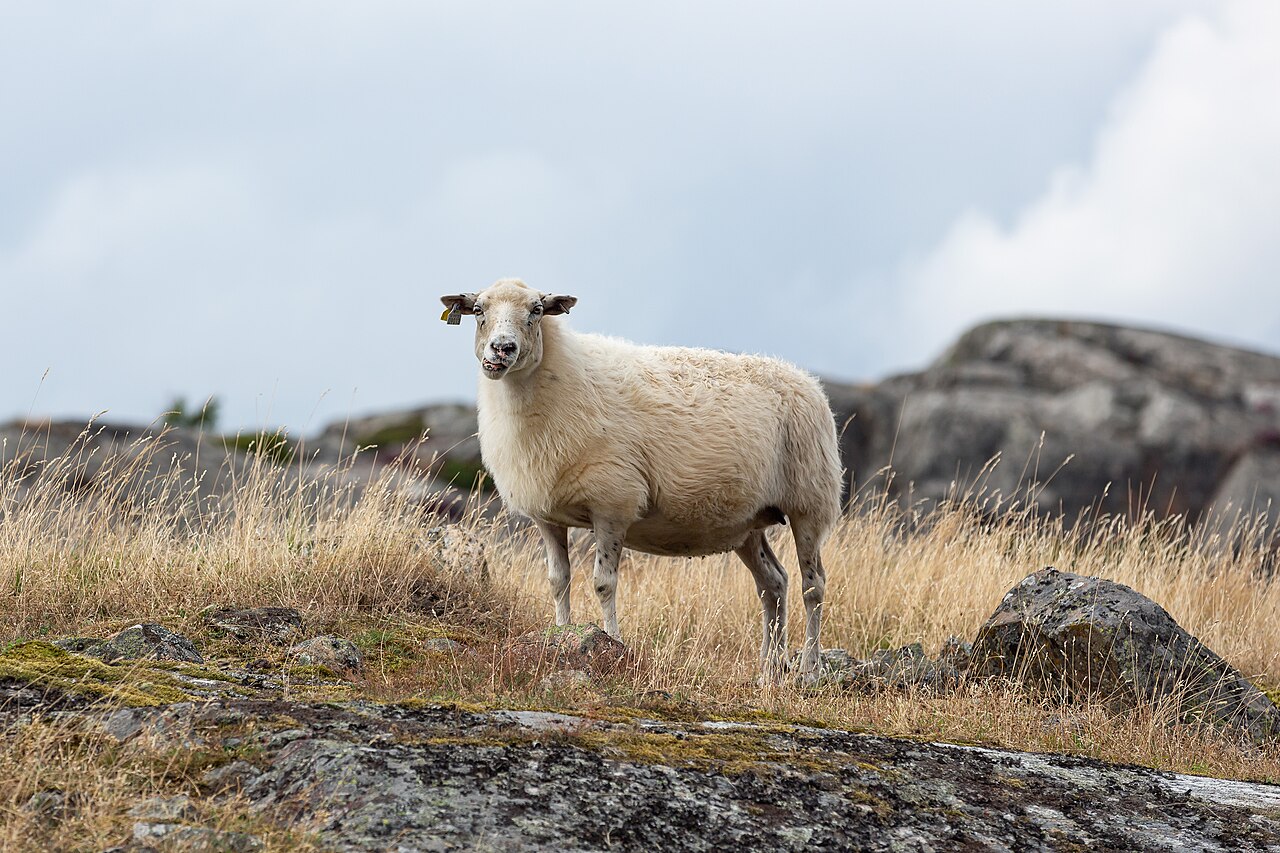
Sheep symbolism grows out of how sheep live. An animal without claws or fangs survives by staying with its flock and following a guide. The domestic sheep (Ovis aries) has carried that meaning through the Bible, Egyptian temples, Greek myth, the Chinese zodiac and modern novels.
Sheep symbolize gentleness, trust and belonging to a community and its guide, but the form matters. A lamb points to innocence and sacrifice, a ram to drive and leadership, and a flock to belonging or conformity. In the Bible, sheep stand for God’s people and the Lamb for Christ.
What Do Sheep Symbolize Spiritually?
Sheep symbolize gentleness, trust and surrender to guidance. A sheep does not fight its way through life. It follows, grazes and stays calm when its shepherd is near. Spiritually, that makes the sheep a call to soften and to stop forcing outcomes.
The second meaning is belonging. A lone sheep is easy prey, and a flock is safety. The sheep stands for community, for the people who keep you whole and for the place where you are known by name.
The third meaning is provision. Wool and milk come from the same animal year after year, so the sheep is a symbol of quiet abundance that does not need to show off. When a sheep shows up as a sign, its message is to accept help instead of carrying everything alone.
Five Sheep Traits Behind the Symbolism
Five traits explain the symbolism. They are the flocking instinct, following, prey caution, a body without weapons and a fleece that grows back. Sheep stay close to each other and become stressed when they are cut off from the flock. That instinct is the root of every reading about belonging.
Sheep follow. A flock trails one lead sheep or the shepherd, and that habit is the source of both the trust reading and the conformity reading. As prey animals, sheep watch every movement around them, so their alertness becomes a symbol of vigilance. They have no claws and no fangs, and the group itself is their defense.
The fleece of wool breeds grows back after shearing, an image of renewal that farmers see every year. Icelandic sheep regrow a double coat of long outer tog and soft inner thel, and farmers in Iceland traditionally shear them twice a year.
Lamb, Ewe or Ram and Why the Form Changes the Message
The form of the sheep changes the message, from the softest reading in the lamb to the most forceful in the ram. A lamb stands for innocence, new beginnings and sacrifice. It is the youngest and most defenseless form, so its meaning is purity and a fresh start.
A ewe stands for nurture and motherhood. She feeds her lamb, guards it inside the flock and gives wool and milk to the people who keep her. Her message is patient provision for others. A doe carries the same maternal gentleness in deer symbolism.
A ram stands for drive, courage and head-first initiative. His curled horns are the symbol of willpower, and he uses them to settle disputes by charging. The ram is also the sign of Aries, the first sign of the Western zodiac. That ties him to beginnings and to bold action.
The Shadow Side of Herd Mentality and the Black Sheep
The negative side of sheep symbolism is conformity. Following the flock without thinking is the classic insult in the image, and calling people sheep means they obey without asking why.
The black sheep is the family outsider. A black fleece in a white flock stands out at once, and English turned that sight into an idiom for the relative who breaks the family pattern. The label can sting. Many black sheep are simply the ones who chose a different road.
Passivity is the third shadow. A sheep sign can warn that you are dodging your own decisions and waiting for someone else to lead. Bison show the other face of herd life, where the group stands for strength together, not obedience.
Who Do Sheep Represent in the Bible?
In the Bible, sheep represent God’s people, and God or Jesus is their shepherd. Psalm 23 opens with “The Lord is my shepherd,” and in John 10:11 Jesus calls himself the good shepherd who gives his life for the sheep. The image runs through both Testaments because ancient Israel was a herding culture.
Sheep also stand for human straying. Isaiah 53 says “All we like sheep have gone astray.” In Luke 15, the shepherd leaves ninety-nine sheep to find the one that is lost, and the parable shows that every single stray matters.
Judgment uses the same animal. In Matthew 25:32-33 the sheep stand at the right hand and the goats at the left. Goats take the opposite side of that scene. Matthew 7 adds the warning about false prophets who come as wolves in sheep’s clothing, so the Bible’s sheep must also learn to tell a shepherd from a predator.
The Lamb of God and the Passover Lamb
The lamb in the Bible symbolizes sacrifice, and above all the sacrifice of Christ. In John 1, John the Baptist sees Jesus and says “Behold the Lamb of God, which taketh away the sin of the world.” The title ties Jesus to every lamb offered before him.

The oldest of those lambs is the Passover lamb. Exodus 12 tells each household in Israel to kill a lamb and mark the doorposts with its blood, and the firstborn in those houses are spared. Christians read Easter through that night, and the lamb became the animal of the holiday.
Revelation 5 brings the image to its end. A Lamb that looks as if it had been slain stands at the center of the throne, and it alone can open the sealed scroll. Christian art shows this Agnus Dei with a victory banner, or bound and laid out for sacrifice as Francisco de Zurbarán painted it.
Rams in Judaism and Islam, from Abraham to Eid al-Adha
In Judaism and Islam, the ram is the animal of substitution and mercy. Genesis 22:13 tells how Abraham, ready to sacrifice Isaac in the land of Moriah, sees a ram caught in a thicket by its horns. He offers the ram in place of his son.
The shofar keeps that ram alive in Jewish worship. It is most often made from a ram’s horn and is blown in synagogues on Rosh Hashanah, and in traditional synagogues the Torah reading on the second day of the holiday is Genesis 22. Most Reform congregations read it on the first day. The sound calls the listener to repentance and remembrance.
The Quran tells the same story in Surah 37:102-107, and most Muslim tradition names the son Ismail. God ransoms him with a great sacrifice, which tradition identifies as a ram. Eid al-Adha remembers the sacrifice that God provided in place of Ibrahim’s son, and many Muslim families mark the feast by sacrificing a sheep and sharing the meat with relatives and the poor. In both traditions the ram means more than strength. It is the gift that takes someone’s place.
Ram Gods of Egypt and the Golden Fleece of Greece
In mythology, the ram stands for fertility, creation and royal power. Egypt gives the clearest examples. Khnum, the ram-headed creator god of Elephantine, shapes human beings on a potter’s wheel in temple reliefs.

Amun, the great god of Thebes, also took the form of a ram. An avenue of ram-headed sphinxes lines the approach to his temple at Karnak in modern Luxor. Each statue shelters a small figure of the pharaoh beneath its head. The ram marked the king as protected by the god.
Greece gave the ram a fleece of gold. In the myth, a flying golden ram carries the boy Phrixus to Colchis, and its fleece hangs there under guard until Jason and the Argonauts sail to take it. Jason needs the prize to claim his throne, so the Golden Fleece stands for kingship and the right to rule.
The Sheep in the Chinese Zodiac
In the Chinese zodiac, the Sheep is the eighth sign and stands for gentleness, calm and creativity. The sign is called yang, and the word covers sheep, goat and ram. English calendars switch between Year of the Sheep, Goat or Ram, and all three translations are correct.
Chinese astrology gives people born in a Sheep year a gentle, artistic and compassionate character. They are calm in company and loyal to friends. The weak side is indecision and a habit of worrying. The next Sheep year begins in February 2027.
The Sheep matches best with the Rabbit and the Pig in the traditional pairings. Its hardest match is the Ox, the sign directly opposite it on the zodiac wheel.
Sheep Symbolism in Literature
In literature, sheep most often mark innocence or mass obedience, though writers also use them for status and for the uncanny. William Blake’s “The Lamb,” from Songs of Innocence (1789), asks a lamb who made it. The answer is a child’s faith. The maker shares the lamb’s name, because Christ calls himself a Lamb.

George Orwell’s Animal Farm (1945) uses sheep the other way. The sheep learn the slogan “Four legs good, two legs bad” and bleat it whenever a debate starts, until no one can hear the argument. Later the slogan changes to “two legs better,” and the sheep bleat that too.
Philip K. Dick’s Do Androids Dream of Electric Sheep? (1968) turns sheep into status. Real animals are rare, the hero keeps an electric sheep because he cannot afford a living animal, and he hides the fake from his neighbors. Caring for animals proves a person’s empathy. Haruki Murakami’s A Wild Sheep Chase (1982) gives the sheep its strangest role, a mystical animal with a star on its back that possesses the people it enters.
What Does a Sheep Mean in a Dream or Sighting?
A sheep in a dream points to your place in a group, and the details decide whether that place feels safe. The same applies to a sheep you meet awake. Look at how many there are, what color they are and how they behave.
| Detail in the sighting or dream | Core reading | Question to ask yourself |
|---|---|---|
| White sheep | Purity and peace | Where do I need a clean start? |
| Black sheep | The outsider, independence | Where do I not fit, and does it matter? |
| Shorn sheep | Exposure and renewal | What have I just let go of? |
| Grazing sheep | Contentment, having enough | Am I at peace with what I have? |
| Injured sheep | Vulnerability, a call to care | Who needs my help, or do I need it? |
| Lamb with ewe | Nurture and protection | Who looks after me, and whom do I look after? |
| Charging ram | Drive, conflict, willpower | Where am I pushing too hard? |
Flock in a dream A flock in a dream stands for belonging. If the flock feels warm, you have found your people. If it feels crowded, the dream is about the fear of losing yourself in the group.
Lost sheep or lamb in a dream A lost sheep or lamb points to a neglected part of yourself, a talent, a need or a relationship you left behind. The shepherd of Luke 15 goes back for the one. The dream asks you to do the same.
Sheep crossing your path A sheep crossing your path is a cue to slow down and trust the people guiding you. A deer crossing your path carries a related message of gentle caution.
Lamb near home or on a farm visit A lamb near your home or on a farm visit announces a new beginning. It can mean a new project, a new relationship or a new phase of family life.
Sheep as Spirit Animal and Totem
A sheep spirit animal belongs to gentle, loyal and community-minded people who avoid conflict. They hold groups together and notice who is left out. Their risk is giving in to keep the peace.
A ram totem belongs to self-starters. These people begin things head-first and have the will to finish them, but they must learn patience.
The shared lesson of the sheep is to trust guidance and to choose your shepherd with care.
Frequently Asked Questions
What are the four animals of God?
The four living creatures in Ezekiel 1 have the faces of a human, a lion, an ox and an eagle. Revelation 4 repeats the set as lion, calf, human face and eagle. No sheep appears among them. The Lamb stands apart in Revelation as the central figure at the throne.
What color will we wear in heaven?
White, in the picture of Revelation 7:14. The great multitude has washed its robes and made them white in the blood of the Lamb. The white robe stands for purity won through the Lamb’s sacrifice, not through the wearer’s own effort. Revelation 19:8 repeats the picture, with the bride of the Lamb dressed in fine linen, clean and white.
What does a fleece mean in the Bible?
A fleece is a test of God’s will in Judges 6. Gideon lays out a wool fleece and asks for dew on the fleece alone while the ground stays dry. God answers, and the next night reverses the sign. “Putting out a fleece” still means asking for a clear sign.
What animal did God not let on Noah’s ark?
None of the land animals. Genesis 7:2-3 sends every kind of beast and bird aboard, the clean animals such as sheep by sevens and the unclean by pairs. Only sea creatures stayed outside, since Genesis 7:22 limits the flood’s toll to life on dry land.
Why does a lamb appear at Easter?
The Easter lamb stands for Christ, the Lamb of God, risen after his sacrifice. In Poland, a lamb made of butter or sugar is placed in the święconka, the basket of food blessed on Holy Saturday.
What is the most sacred animal in the Bible?
The lamb. Revelation calls Christ the Lamb 28 times, and Exodus 29:38-42 orders two year-old lambs offered every day, one in the morning and one at evening.
Why is the sheep a lucky sign in China?
The character for sheep, yang (羊), forms part of the characters for beauty (美) and auspicious (祥). Chinese writing therefore ties the animal to good fortune. The word also sounds like yang, the bright and warm force of yin and yang, which adds to its luck at New Year.
Sources