Red and Black Wasp: Identification and Sting Risk
A red and black wasp seen crawling on the ground or flying low over a lawn in the US is most often a red velvet ant, a solitary wingless wasp despite its ant-like name and one of the most strikingly colored insects in North America. True flying wasps in red and black combinations include the red paper wasp and the blue-winged scoliid wasp, both far less aggressive than their bold coloring might suggest. Behavior and body shape separate these species quickly once you know what to check.
The red velvet ant earns the nickname cow killer for a sting reputed to be intensely painful, though it is rarely encountered because females spend most of their time on the ground rather than flying. Paper wasps and scoliid wasps, by contrast, are true winged insects seen more often around gardens and flowers. The sections below cover how to tell these species apart and what their coloring is actually communicating.
A red and black wasp in the US is usually a red velvet ant, a red paper wasp, or a blue-winged scoliid wasp. The velvet ant is wingless and ground-dwelling with an intensely painful sting, while the paper wasp and scoliid wasp fly and are generally less aggressive despite similar warning coloration.
| Species | Wings | Sting Level | Nesting | Behavior |
|---|---|---|---|---|
| Red Velvet Ant | None (females) | Very painful | Ground, solitary | Wanders open ground |
| Red Paper Wasp | Yes | Moderate | Open paper nest | Defends nest only |
| Blue-Winged Wasp | Yes | Mild | Underground, solitary | Docile, rarely stings |
| Cicada Killer | Yes | Mild (males harmless) | Underground burrows | Large but nonaggressive |
What Kind of Wasp Is Red and Black
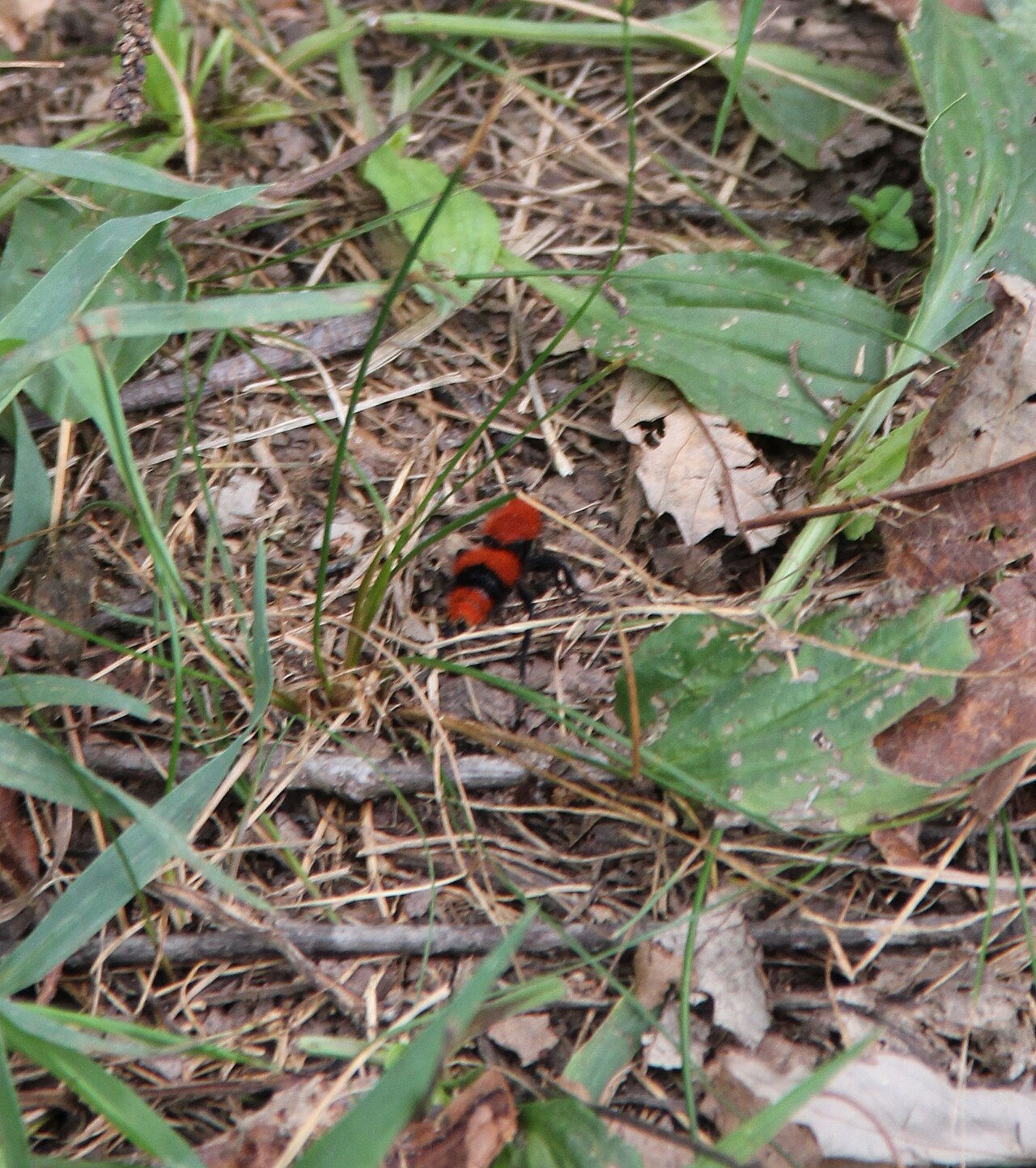
The species most often reported as a red and black wasp is the red velvet ant, a densely furred, wingless insect that moves quickly across open ground in sunny gardens, sandy lots, and along trails. Despite the common name, it is a true wasp in the family Mutillidae, and only the females lack wings while males fly but appear more muted in color.
Red paper wasps build open, umbrella-shaped nests under eaves, in shrubs, or in similar sheltered spots, and show reddish-brown coloring across the body with darker wings. Blue-winged scoliid wasps have a black body with a broad reddish-orange band and distinctive smoky blue-black wings, nesting underground rather than building visible paper structures.
Checking whether the insect has wings is the fastest first step in identification, since a wingless red and black insect moving across the ground is almost certainly a velvet ant, while any flying version points toward paper wasps or scoliid wasps instead.
Red Velvet Ants and the Cow Killer Name

The cow killer nickname reflects folklore claiming the sting is painful enough to kill a cow, an exaggeration, but one that captures how intense the actual sting reportedly is according to entomologists who study stinging insect pain scales. Female velvet ants carry a long, effective stinger and use it defensively when handled or stepped on rather than offensively.
Despite the alarming reputation, red velvet ants are solitary and do not defend a nest or colony, since females are parasitic on the nests of ground-nesting bees and wasps rather than building their own. This means encounters happen by chance rather than through territorial defense, and simply avoiding contact eliminates virtually all sting risk.
The dense fuzzy coat and bright warning coloration serve as a signal to potential predators like birds and lizards, most of which learn to avoid velvet ants after a single unpleasant encounter. This aposematic coloring is a shared strategy among many stinging insects with high-intensity venom.
Red Paper Wasp Identification
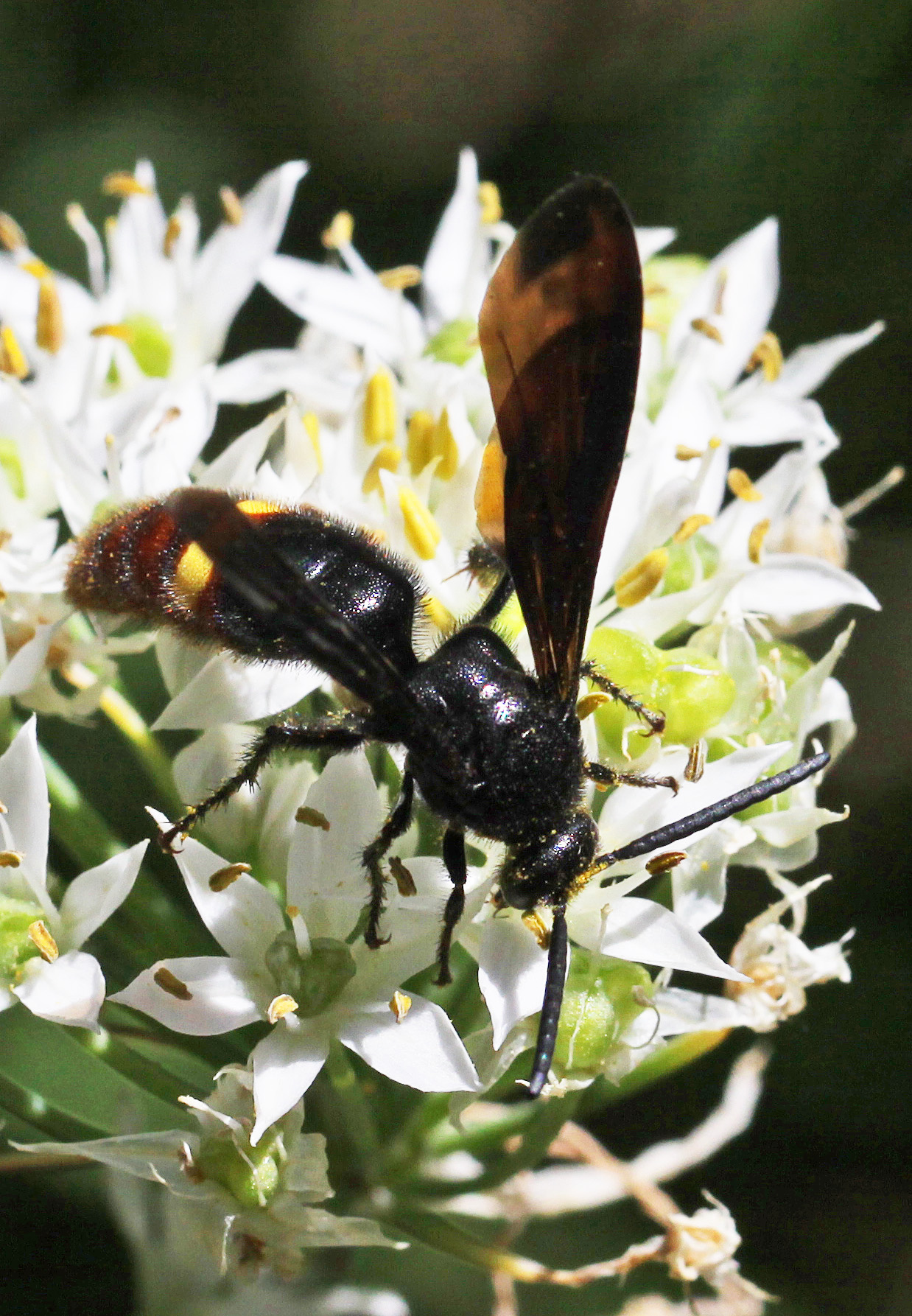
Red paper wasps show a reddish-brown body with darker wings and the narrow waist typical of paper wasps generally, building open, exposed nests with visible hexagonal cells rather than the enclosed nests hornets construct. Nests are usually found under roof eaves, deck railings, and similar sheltered overhangs close to human activity.
These wasps are generally not aggressive away from the nest and spend much of their time foraging on flowers for nectar or hunting small caterpillars to feed larvae. Defensive behavior increases sharply near an active nest, where multiple wasps may respond to a perceived threat, making nest location the single biggest factor in sting risk.
Red paper wasps are beneficial predators of garden pests including many caterpillar species, which means leaving an out-of-the-way nest undisturbed often provides more benefit than removing it, provided the location does not create a direct conflict with regular foot traffic.
Blue-Winged Wasps and Scoliid Behavior
Blue-winged scoliid wasps show a black body with a wide reddish-orange band across the abdomen and smoky, iridescent blue-black wings that catch light distinctively in flight. Unlike paper wasps, they nest underground as solitary insects rather than building visible colonies, and are frequently seen flying low over lawns in a distinctive side-to-side pattern. For a closely related question, see our guide to black and white wasp.
These wasps are parasitic on beetle grubs, particularly Japanese beetle larvae, and lay eggs directly on grubs found while digging through soil and turf. This makes scoliid wasps genuinely beneficial for natural grub control in lawns, reducing reliance on chemical grub treatments in areas where the wasps are established.
Scoliid wasps are notably docile and rarely sting even when closely approached, since their focus while flying is locating grubs rather than defending territory. Their presence in a lawn is generally a positive sign of natural pest control activity rather than a hazard.
Are Red and Black Wasps Aggressive
None of the common red and black wasps in the US actively seek out humans to sting, and aggression is typically limited to defensive responses when an insect is handled, stepped on, or its nest is directly disturbed. Red velvet ants sting only when physically contacted, since they have no nest to defend and no reason to approach a person otherwise.
Paper wasps show the most nest-defense behavior of the group, becoming noticeably more reactive when something approaches within a few feet of an active nest, particularly during the peak colony growth period in mid to late summer. Staying clear of visible nests avoids the vast majority of paper wasp stings.
Blue-winged scoliid wasps and cicada killers, despite their large size and intimidating appearance, are among the least aggressive stinging insects commonly encountered, focused entirely on grubs or cicadas rather than showing any interest in humans nearby.
Is a Red Wasp Sting Dangerous
A red velvet ant sting is intensely painful but not medically dangerous for most people, producing sharp, localized pain that typically peaks within minutes and fades over the following hour without lasting tissue damage. Paper wasp stings are less intense but can trigger a more prolonged, throbbing pain with localized swelling. Faunalist Tip: a cold compress applied immediately after any wasp sting reduces swelling and discomfort far more effectively than folk remedies like meat tenderizer or baking soda paste.
Anyone with a known allergy to stinging insect venom should treat any wasp sting, including from these species, with the same caution as a bee sting, since anaphylactic reactions are tied to venom allergy rather than species identity. Watching for symptoms like widespread swelling, difficulty breathing, or dizziness after any sting is the appropriate response regardless of which insect was responsible.
Multiple stings in a short period raise overall risk even without an allergy, since venom load increases with each additional sting, which is a more realistic concern around an actively defended paper wasp nest than from a single, solitary velvet ant encounter.
What Attracts Red and Black Wasps to a Yard
Flowering plants draw paper wasps and scoliid wasps consistently, since both feed on nectar as adults even though their larvae depend on different prey. A yard with a diverse mix of blooming plants through the growing season naturally supports higher wasp activity as a byproduct of good pollinator habitat.
Grub-infested lawns are a particular draw for scoliid wasps and cicada killers, both of which target soil-dwelling larvae directly. A lawn with a significant grub population may show noticeably more of these ground-hunting wasps than a well-maintained lawn with lower grub density.
Open, sandy, or sparsely vegetated ground attracts red velvet ants specifically, since females search this type of terrain for the ground nests of host bees and wasps. Dense, thick lawn cover is less likely to show velvet ant activity than exposed dirt patches or trail edges.
How to Avoid Getting Stung
Wearing closed shoes in areas with open or sandy ground reduces the risk of an accidental step-on encounter with a red velvet ant, since most sting incidents happen when bare feet or hands make direct contact. Checking eaves and overhangs for paper wasp nests before working nearby prevents most defensive sting incidents from that species.
Moving slowly and avoiding sudden swatting motions near any wasp reduces the chance of triggering a defensive response, since rapid movement is often interpreted as a threat by insects capable of stinging. This applies equally to docile species like scoliid wasps, which rarely sting unless directly grabbed or pinned.
Removing a paper wasp nest, if genuinely necessary due to its location, is safest done at dusk when activity is lowest, using appropriate protective equipment, or by hiring pest control for nests in hard-to-reach or high-traffic areas.
Should You Kill a Red and Black Wasp
Killing these wasps is rarely necessary given their overall ecological benefit, since paper wasps prey on caterpillars, scoliid wasps control beetle grubs, and even velvet ants play a role in the broader insect community despite their painful sting. Removal makes sense mainly when a nest sits in a high-traffic location with real sting risk to people or pets.
In cases where action is warranted, targeting the specific nest or individual insect rather than broad-spectrum insecticide use limits collateral harm to beneficial pollinators and other garden insects that share the same space. A wasp encountered away from a nest, simply passing through a yard, rarely poses enough risk to justify killing it.
Tolerance for a wasp nest in an out-of-the-way spot, such as a rarely used shed corner, often provides more pest control benefit over a season than the minor inconvenience of its presence, particularly for paper wasps actively hunting garden caterpillars.
Red and Black Wasp Life Cycle
Paper wasp colonies begin each spring with a single queen founding a small nest, growing through summer as workers are produced and the colony expands, before naturally declining and dying off with the first hard frosts of fall. Only newly mated queens survive winter, overwintering in sheltered spots to start new colonies the following spring.
Red velvet ants follow a very different life cycle, with females seeking out the underground nests of host bees and wasps to lay eggs that develop as parasitic larvae, ultimately killing the host larva. This solitary, parasitic strategy means no true colony or nest structure exists for this species at all.
Scoliid wasps follow a similar solitary parasitic pattern focused on beetle grubs rather than bee or wasp nests, with adult females actively digging through soil to locate suitable grub hosts throughout the summer months before laying eggs directly on them.
Similar Insects Worth Knowing
Black wasps and hornets are frequently confused with red and black species, particularly when lighting affects perceived coloration or when only a brief glimpse is possible. Learning the general body shapes and nesting habits of each group builds faster identification skills over time.
Media coverage of invasive hornet species has raised general awareness of large stinging insects, though most red and black sightings in US yards involve the native species covered above rather than anything exotic, and the distinctive coloring of each makes confirmed identification straightforward with a clear photo.
Building general familiarity with common stinging insects in a specific region, through state extension resources or local pest control guides, makes future identification faster and reduces unnecessary anxiety around insects that are ultimately more beneficial than threatening.
Frequently Asked Questions
Are red and black wasps aggressive?
Generally no, since most species only respond defensively when handled or when a nest is directly disturbed. Red velvet ants and scoliid wasps in particular are docile away from direct contact.
Are red and black mason wasps poisonous?
Mason wasps carry venom similar to other solitary wasps, causing localized pain rather than serious poisoning in people without a venom allergy. Reactions are typically mild and short-lived.
Is a red wasp poisonous?
Red wasp venom causes pain and localized swelling rather than systemic poisoning in most people. Anyone with a known insect sting allergy should treat any wasp sting seriously regardless of color.
What’s the worst wasp to get stung by?
Among common red and black species, the red velvet ant has the reputation for the most intense pain, though it fades relatively quickly without lasting damage in nonallergic individuals.
What kills wasps immediately?
Direct-spray aerosol insecticides labeled for wasps work quickly on contact, though targeting only nests that pose a genuine risk avoids unnecessary harm to beneficial individuals foraging away from the colony.
What smell do wasps hate the most?
Peppermint, clove, and eucalyptus scents are commonly cited as wasp deterrents, though effectiveness varies and reapplication is typically needed to maintain any repellent effect.
For sting safety information, the ASPCA and local university extension programs maintain guidance on stinging insect encounters involving pets and people.
Related reading: animals that eat wasps, hornet nest versus wasp nest, and types of bees.