Brown Moth Identification: 9 Species in US Homes and Yards
A brown moth in your house is most often one of two pantry or fabric pests, the brown house moth (Hofmannophila pseudospretella) or the Indian meal moth (Plodia interpunctella), while a brown moth outdoors is usually an owlet moth, a tent caterpillar moth, or the male of a species whose female looks nothing like it. Brown is the single most common moth color in North America because it hides the insect against bark, leaf litter and wood during the day, which is when most moths rest and when most people find them.
Telling the harmless yard moths from the ones that eat sweaters and cereal comes down to size, resting posture and where you found the moth. This guide covers the nine brown moths people in the United States search for most, how to separate a house pest from a visitor that came in through the door, what the moth in your closet is actually doing, and what a brown moth has meant in folklore for anyone who found one on the porch light and wondered.
Most brown moths inside a home are brown house moths or Indian meal moths, small pantry and fabric pests under half an inch long. Brown moths outdoors are usually owlet moths, tent caterpillar moths, or male gypsy moths. None bite or sting; only the larvae of a few species damage food or wool.
| Brown moth | Size | Where you find it | Harmful? |
|---|---|---|---|
| Brown house moth (Hofmannophila pseudospretella) | 0.3 to 0.5 in (8 to 14 mm) | Closets, under carpets, birdseed | Larvae eat wool, feathers, grain |
| Indian meal moth (Plodia interpunctella) | 0.3 to 0.4 in (8 to 10 mm) | Pantry, pet food, kitchen ceiling | Larvae web up dry food |
| Case-bearing clothes moth (Tinea pellionella) | 0.25 to 0.4 in (6 to 10 mm) | Wool, fur, upholstery | Larvae eat keratin fibers |
| Army cutworm or miller moth (Euxoa auxiliaris) | 0.6 to 0.8 in (15 to 20 mm) | Porch lights, garages, May to June | No, nuisance only |
| Eastern tent caterpillar moth (Malacosoma americanum) | 0.8 to 1.2 in (20 to 30 mm) | Near cherry and apple trees | No, larvae defoliate trees |
| Isabella tiger moth (Pyrrharctia isabella) | 1.7 to 2.4 in (45 to 60 mm) | Meadows, yards, spring and summer | No |
| Spongy moth male (Lymantria dispar) | 1.2 to 1.6 in (30 to 40 mm) | Oak woods, July, flies by day | No, larvae strip oaks |
What is a brown moth called?
There is no single species called the brown moth; the name covers hundreds of species across several families, and the one in front of you is identified by size, wing shape and resting posture rather than color alone. Most brown moths belong to the owlet moth family Noctuidae, which has more than 2,500 species in North America, or to the smaller pest families Tineidae and Pyralidae that live indoors.
Entomologists group brown moths by how they hold their wings at rest. Owlet moths fold their wings flat over the back like a roof, giving a triangular outline. Clothes moths and house moths hold theirs tightly rolled along the body, so the insect looks like a narrow brown splinter. Tiger moths and tent caterpillar moths rest with the wings tented steeply, showing a clear shoulder line.
The common names people use, such as miller moth, house moth, meal moth or cutworm moth, describe behavior rather than a species. A miller moth is any drab moth that sheds scales like flour when handled, and in the Rocky Mountain states the name is applied specifically to the army cutworm moth on its spring migration to the mountains.
What are the brown moths in my house?
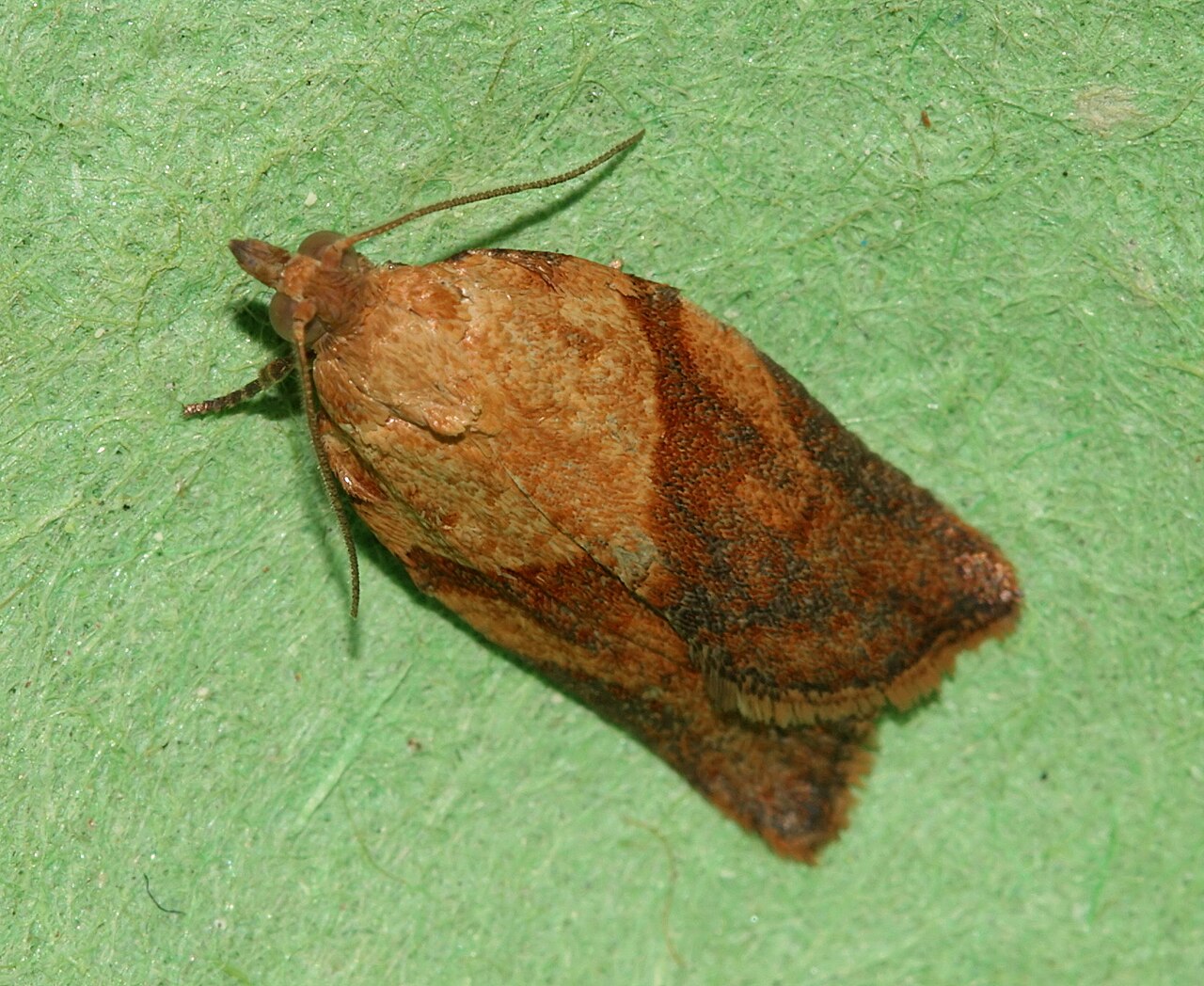
A small brown moth flying in slow loops near the kitchen ceiling or resting on a closet wall is almost always a brown house moth or an Indian meal moth, and the room you found it in tells you which. Indian meal moths live where dry food is stored and are attracted to cereal, flour, nuts, chocolate, dried fruit, birdseed and dry pet food. Their forewings are two toned, pale gray near the body and reddish brown toward the tips.
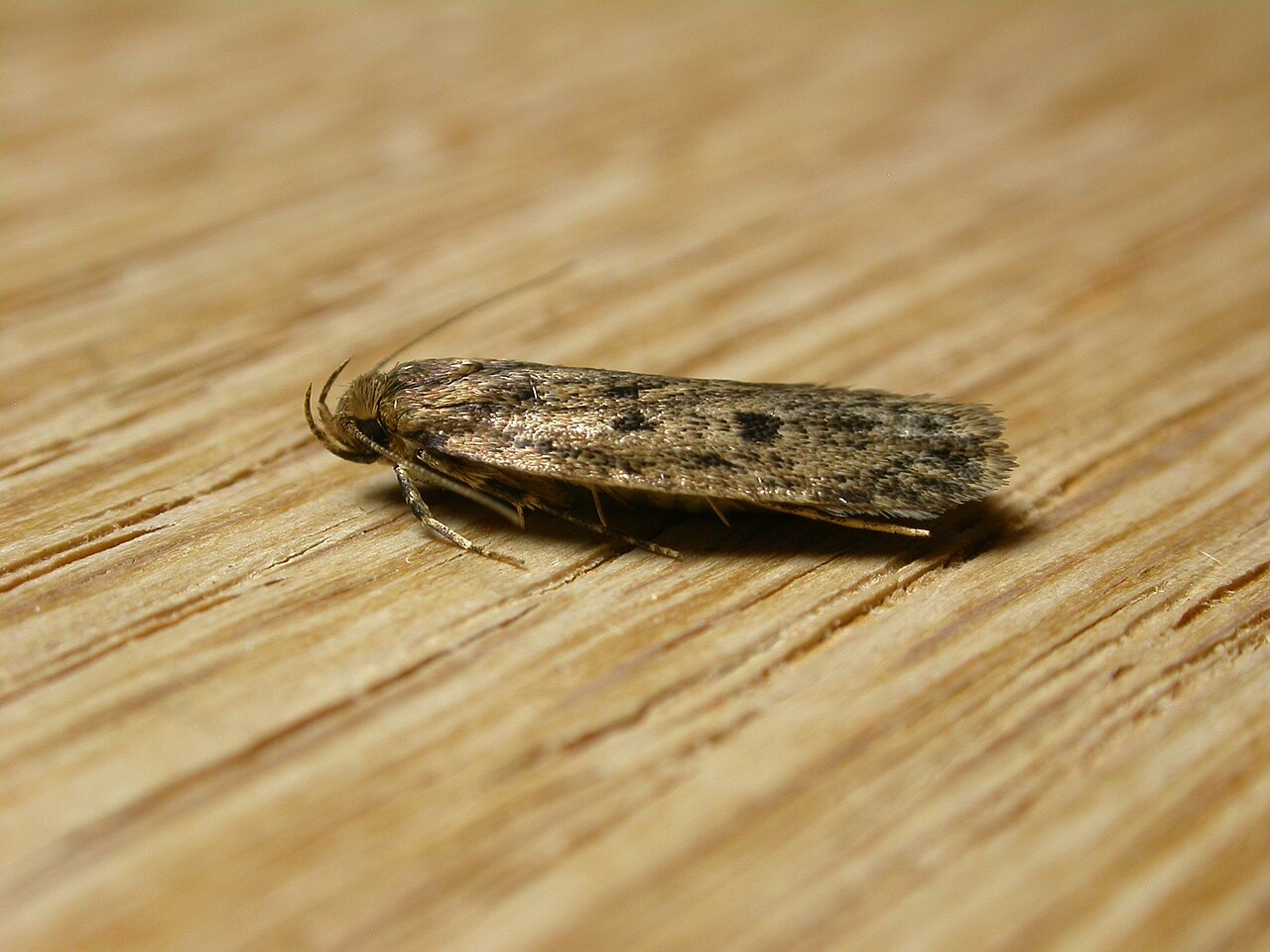
Brown house moths are darker, uniformly bronze brown with a few black flecks, and they prefer cool, damp, undisturbed places: under rugs, behind baseboards, in a bag of birdseed in the garage, or in a wool blanket stored in a closet. The larvae feed on almost anything with animal protein, including wool, feathers, leather, dried insects and spilled grain, which makes this species the most versatile household pest among moths.
A third possibility is the case-bearing clothes moth, a smaller buff brown moth whose larvae drag a silk case around like a sleeping bag. If you see the moths but cannot find damage, follow them at dusk; adults are weak fliers that stay close to the material the larvae are eating, so the source is usually within a few yards of where the moths appear.
Are brown moths harmful to people?
No brown moth in North America bites, stings or carries disease, and the adults of even the pest species cannot eat at all because their mouthparts are reduced or absent. The harm is done entirely by larvae, and only by the larvae of a handful of species. Clothes moths and house moths destroy wool, silk, fur and feathers. Pantry moths contaminate dry goods with webbing and droppings, which spoils food but does not make it dangerous if discarded.
The one real irritant is contact with the hairs of some caterpillars, not the moths. The larvae of the Isabella tiger moth, the familiar woolly bear, are harmless to touch, but hairs from tussock moth and browntail moth caterpillars can cause a rash. Adult moths shed only scales, which are dust sized and can trigger sneezing in people with allergies but nothing more.
Outdoor species with brown adults can still be economically harmful as caterpillars. The spongy moth, formerly called the gypsy moth, defoliates oaks across the Northeast and Great Lakes, and eastern tent caterpillars strip wild cherry and apple. The University of Minnesota Extension and other state extension services publish regional control guidance for both. If you found the moth indoors, however, tree pests are not your problem.
Do brown house moths bite?
Brown house moths do not bite, and neither do pantry moths or clothes moths; adult moths of these families have no functional jaws and live only to mate and lay eggs. The itchy welts sometimes blamed on moths in a bedroom are almost always from bed bugs, fleas or carpet beetle larvae, which can share the same closets and carpets and are easy to confuse with moth activity.
What a brown house moth does do is lay 200 to 600 eggs in a lifetime, hidden in seams, folds and crevices near a food source. The larvae hatch in about two weeks and spend anywhere from two months to two years feeding, depending on temperature and diet, before pupating in a silk cocoon speckled with bits of whatever they were eating. That long larval stage is why a closet can be infested for a year before anyone notices a single adult moth.
If you are finding brown moths and getting bitten, treat the two as separate problems. Look for the moth larvae in wool, birdseed or pet food, and look for the biters with a flashlight along mattress seams and in pet bedding. Our guide to brown ladybugs covers another small brown insect that turns up indoors in fall and is often mistaken for a pest.
How do I tell a house moth from a moth that flew in from outside?
Size is the fastest separator: the moths that breed indoors are all under half an inch long, while a brown moth over three quarters of an inch is almost certainly an outdoor species that came in through a door or an open window. Indoor pest moths are also poor fliers that flutter weakly and land often, whereas outdoor moths fly strongly and are drawn hard to lights.
Timing helps too. Pantry and clothes moths appear year round because heated homes keep them breeding continuously. Outdoor brown moths show up in waves that follow their natural flight seasons: miller moths in May and June, tent caterpillar moths in early summer, male spongy moths in July, owlet moths in warm evenings from spring through fall. A sudden dozen brown moths around the porch light in late May is a migration, not an infestation.
Finally, look at what the moth is sitting on. A pest species rests on or next to its food source, so a moth on a cereal box or a wool coat is telling you something. A moth on a window screen, a lampshade or the ceiling near an exterior door is trying to get back out. Open the door, turn off the indoor lights, and it usually leaves within an hour.
Light brown moth or dark brown moth: does the shade matter?
Shade matters less than pattern, but it does narrow the field. Pale tan and buff moths indoors are most often case-bearing clothes moths or the light brown apple moth (Epiphyas postvittana), an introduced species established in California that also lives on garden shrubs. Pale brown moths outdoors are often the females of tent caterpillar moths or the many tan owlet moths whose forewings carry a kidney shaped spot and a round spot near the center.
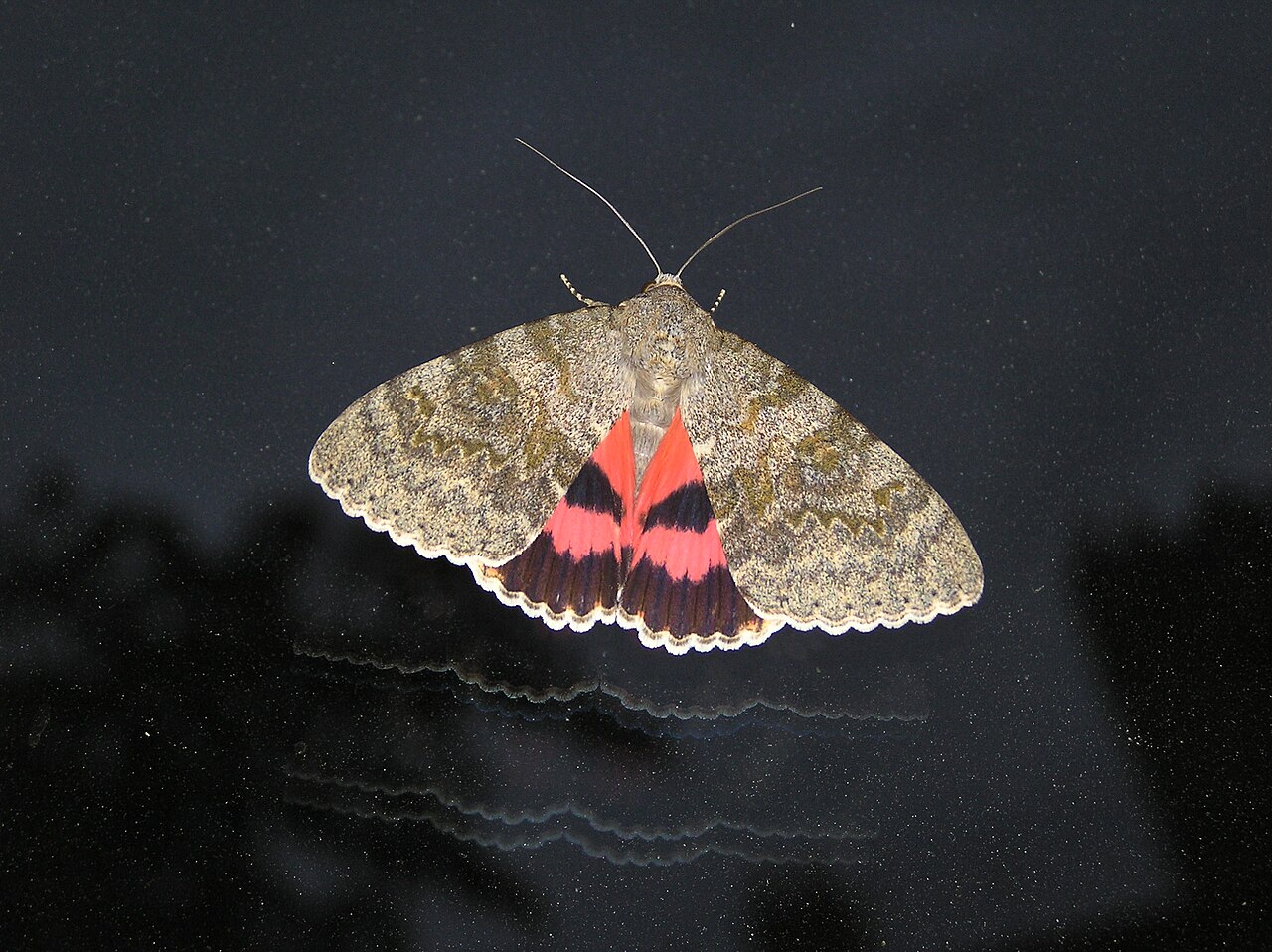
Dark bronze or chocolate brown with black flecks points to the brown house moth indoors. Outdoors, dark brown moths with jagged pale lines across the wings are usually underwing moths of the genus Catocala, which hide vivid orange or red hindwings under drab forewings and flash them when disturbed. A dark brown moth with a white or cream comma mark on each forewing is often an army cutworm moth.
Reddish brown or orange brown moths with a fuzzy body are tiger moths, most commonly the Isabella tiger moth whose caterpillar is the woolly bear. If you are trying to identify a brown fuzzy caterpillar rather than the adult, our guide to brown caterpillars covers the same species at the larval stage, where color is a far more reliable clue than it is on the adult moth.
What does it mean if you see a brown moth?
In most Western folklore a brown moth is read as a sign of grounding, patience and quiet persistence, the earthy counterpart to the white moth’s association with spirits and messages. The reading comes from the color rather than the species: brown is the color of soil and bark, so the moth is taken as a reminder to stay practical, finish what you started and pay attention to the ordinary things you have been ignoring.
Some traditions treat a brown moth in the house as a visitor bringing news of home and family, and a brown moth that keeps returning to the same room as a nudge to deal with an unfinished domestic matter. In parts of the American South a moth at the window in the evening is still called a sign that a letter or a visitor is coming, a belief that predates electric lights, when a moth at a lamp inside the house was a rarer event than it is today.
None of this changes what the moth is doing biologically, which is looking for a mate, a place to lay eggs or a way back outside. If the symbolic side interests you, the same folklore that reads brown moths as grounding reads a white moth as a message from someone who has died, and the two are usually discussed together.
How long does a brown moth live in a house?
An adult brown house moth or pantry moth lives one to three weeks indoors, and it does not eat during that time, so the moth you see today will be dead within a month regardless of what you do. The problem is what it leaves behind: eggs that hatch into larvae with a two month to two year feeding period, followed by a new generation of adults. In a heated home the cycle repeats four to six times a year.
Outdoor moths that wander inside live even less time, typically a few days, because they cannot find nectar or a mate indoors. Owlet moths and tiger moths will batter themselves against lights and windows until they exhaust their fat reserves. Simply releasing them outside at dusk is both the kindest and the most effective option.
If brown moths keep appearing for more than a few weeks, an indoor breeding population is established and the adults are only the visible fraction. Count backward from the moth: the eggs were laid two to eight weeks earlier, and the larvae are feeding right now in something made of wool, feathers, grain or dry pet food within a few yards of where the moths appear.
How do I get rid of brown moths in the house?
Find the food source and remove it; nothing else works for long, because sprays kill only the adults while the larvae keep feeding out of sight. For pantry moths, empty every dry food container, check for webbing and small white larvae, discard anything infested, and store the rest in sealed glass or hard plastic. Vacuum shelf corners and wipe them down, since eggs hide in the joints.
For brown house moths and clothes moths, the source is usually a stored wool or feather item, a forgotten bag of birdseed, or lint and pet hair under a rarely moved piece of furniture. Wash or dry clean anything made of animal fiber, or freeze it for a week; both kill eggs and larvae. Vacuum edges of carpets and inside closets, and empty the vacuum outside immediately.
Pheromone traps, sold separately for pantry moths and clothes moths, catch males and tell you whether the population is still active, but they do not end an infestation on their own. Cedar and lavender repel adults weakly and do nothing to larvae. Give a cleaned space six to eight weeks before deciding the problem is solved, because pupae already in the walls will keep emerging for that long.
Which large brown moths visit yards and porch lights?
The large brown moths people find on screens and siding in summer are mostly owlet moths, underwing moths and the giant silk moths whose brown forms are easy to overlook. The polyphemus moth (Antheraea polyphemus) is tan to cinnamon brown with a wingspan up to six inches and a clear window spot on each wing, and it is one of the most reported large brown moths in the eastern United States, often mistaken for a bat when it lands on a porch light.
Underwing moths of the genus Catocala are the classic mottled brown moth on a tree trunk, matching bark so closely that they vanish when they close their wings. More than 100 species occur north of Mexico, and their orange, red or pink hindwings are a startle defense against birds. Sphinx moths add another set of brown species, streamlined and fast, that hover at flowers at dusk; several are covered in our hawk moth guide, and the day flying hummingbird moth is one of them.
For scale and identification of the largest species, including the brown and tan giants that appear only for a week or two each summer, see our roundup of giant moths. Most of these adults live less than ten days and do not feed, so a large brown moth resting on your house in the morning has usually already done everything it needs to do.
What is the life cycle of a brown moth?
Every brown moth, pest or not, passes through egg, larva, pupa and adult, but the pace varies enormously between species and the larval stage is where the differences show. Pantry and house moths complete the cycle in six to ten weeks in a warm kitchen. Outdoor owlet moths take a full year, overwintering as pupae in the soil. Giant silk moths and tent caterpillar moths also produce one generation a year, wintering as a pupa in a tough cocoon or as an egg mass on a twig.
The larval stage is the only stage that eats and grows, which is why identifying the caterpillar is often easier and more useful than identifying the adult. Brown house moth larvae are cream colored with a brown head. Indian meal moth larvae are off white or slightly pink. Army cutworm larvae are the dull striped caterpillars that clip young crop plants at the soil line and gave the group its name.
The pupa is the stage most people never see. Indoors it is a small brown cylinder in a silk cocoon tucked into a crevice or a fold of fabric. Outdoors it is buried in soil, wrapped in a leaf, or hidden in a bark furrow. Adults emerge, mate within days and lay eggs, and for most brown moths the entire adult life is shorter than the time it took the caterpillar to grow.
Other brown animals homeowners ask about
Brown moths share their color for the same reason many other small brown yard animals do: camouflage against bark, soil and dead leaves. Birders run into the same identification problem with the dozens of streaky brown birds that visit feeders, where posture, bill shape and behavior separate species that look identical at first glance. The approach transfers directly to moths.
The same logic applies underfoot. A brown snake in the garden is far more likely to be a harmless DeKay’s brownsnake or a garter snake than anything dangerous, and the field marks that settle it are pattern and head shape, not shade. Learning to look past color to structure is the single most useful identification habit for any brown animal, moths included.
If the brown moth you found does not match anything here, a photo with a size reference submitted to a state extension entomology office or the Missouri Department of Conservation’s online field guide will usually produce an answer within a day. Regional lists matter, because the brown moth fauna of Arizona overlaps only partly with that of Maine.
Frequently Asked Questions
Are brown moths poisonous?
No adult brown moth in North America is poisonous to touch or to pets that eat one. Some caterpillars, particularly tussock moth larvae, carry irritating hairs that cause a rash, but the adults shed only harmless scales. A dog or cat that eats a brown moth will not be harmed.
Why are there suddenly so many brown moths outside my house?
A sudden wave of brown moths in late spring is almost always the army cutworm migration, known regionally as miller moths, or the emergence of tent caterpillar moths. Both peak for two to three weeks and then disappear. Turning off outdoor lights or switching to yellow bulbs sharply reduces the number that gather.
Do brown moths eat clothes?
Adult moths eat nothing, but the larvae of brown house moths and case-bearing clothes moths eat wool, silk, fur, feathers and leather. Cotton and synthetics are safe unless they are soiled with food or sweat. Damage appears as irregular holes and bare patches, often under collars, in folds and along seams.
What attracts brown moths into the house?
Indoor breeders arrive as eggs or larvae in birdseed, pet food, bulk grains, secondhand wool items or dried flowers. Outdoor moths are drawn in by light through open doors and windows at night. Sealing dry food in hard containers and using yellow porch bulbs addresses both routes.
Can brown moths damage my trees?
The adults cannot, but the caterpillars of several brown moth species can. Eastern tent caterpillars defoliate cherry and apple, spongy moth larvae strip oaks, and army cutworms clip seedlings. Healthy trees recover from one defoliation; contact your state extension service if a tree is stripped two years in a row.
How do I keep brown moths away from my porch light?
Switch to warm yellow or amber LED bulbs, which moths see poorly, and put the light on a motion sensor so it is not on all evening. Moving the fixture away from the door reduces the number that slip inside. During the May miller moth flight, no light will keep every moth away for long.