Halfmoon Betta Fish: Care, Cost and the 180 Degree Tail
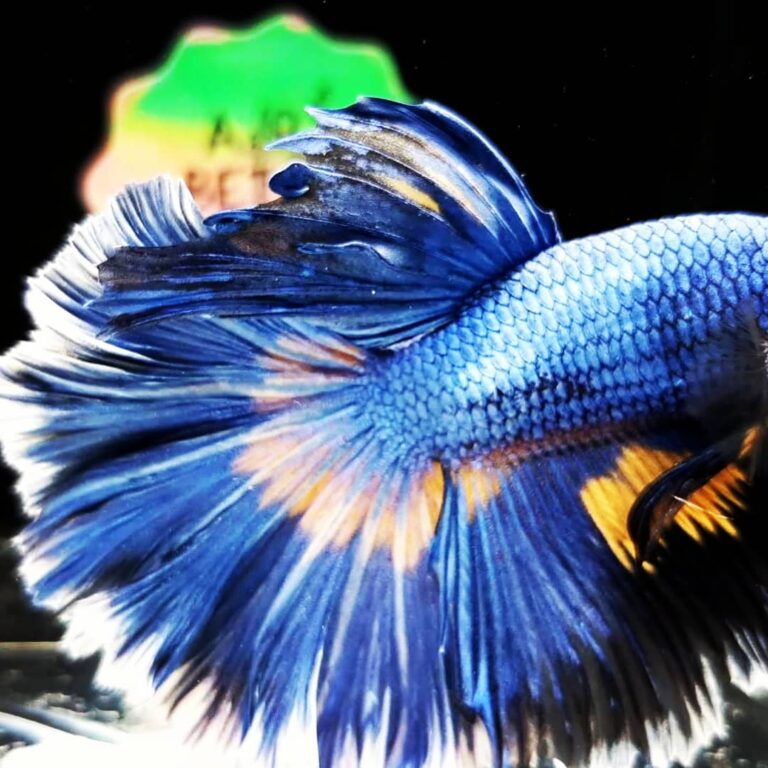
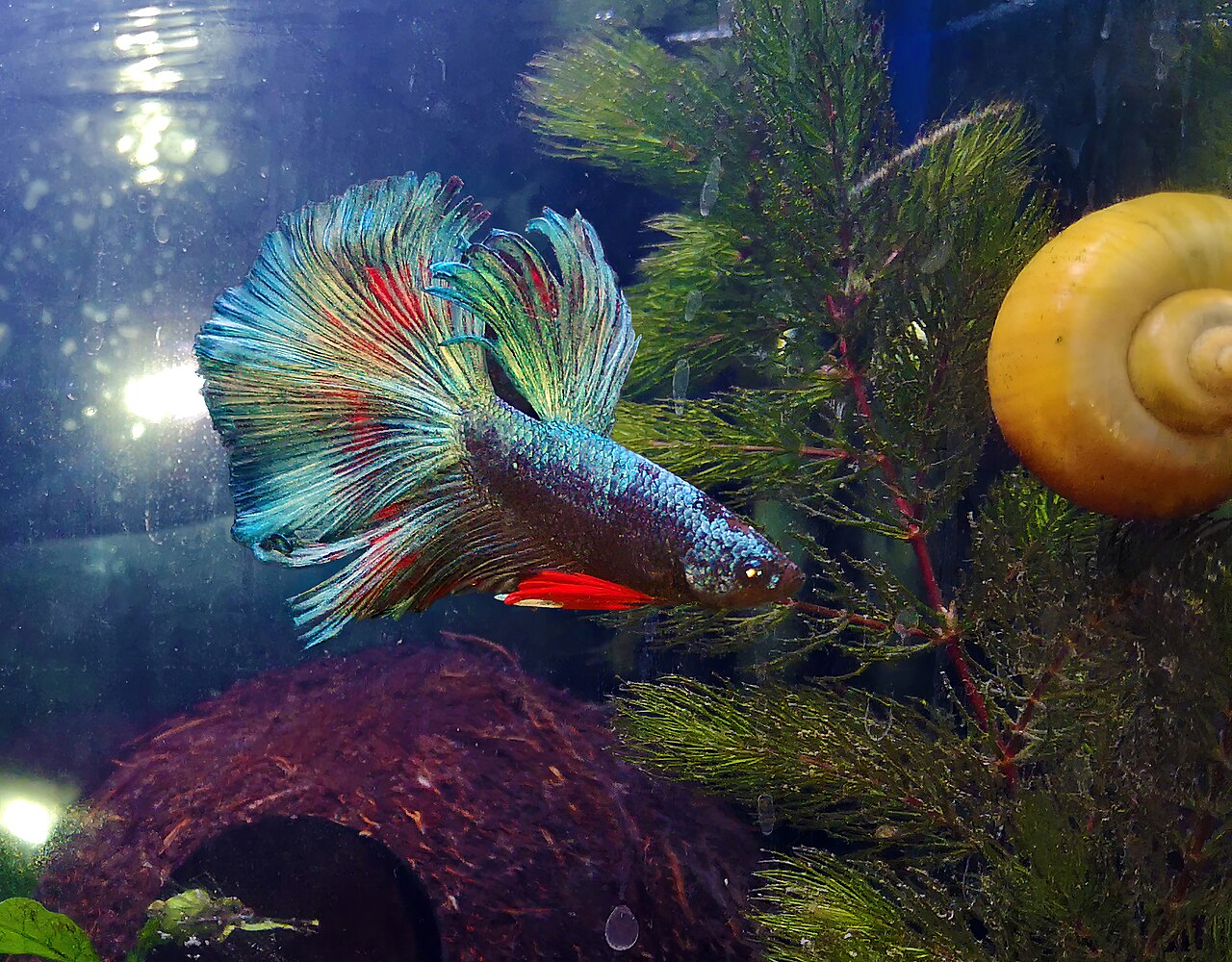
A halfmoon betta fish is a Betta splendens bred so its tail opens into a full 180 degree half circle when the fish flares, with straight top and bottom edges like the letter D. Everything else is standard betta: same species, same labyrinth organ, same temper. The tail is the whole difference, and it is also why this variety needs slightly more care than a plain veiltail.
Halfmoons reached the hobby in the early 1990s, after breeders in Europe and the United States fixed that spread over many generations. They are now one of the most common tail types in pet stores.
A halfmoon betta is a Betta splendens whose caudal fin spreads a full 180 degrees when flared, forming a half circle with straight top and bottom edges. Adults reach 2.5 to 3 inches (6 to 7.5 cm), live 2 to 4 years, and need a heated, gently filtered tank of at least 5 gallons (19 L).
| Quick fact | Halfmoon betta |
|---|---|
| Species | Betta splendens |
| Adult size | 2.5 to 3 in (6 to 7.5 cm) with tail |
| Caudal spread | 180 degrees, straight edges |
| Lifespan | 2 to 4 years, 5 with excellent care |
| Minimum tank | 5 gal (19 L), heated, gently filtered |
| Water | 78 to 80 F (25.5 to 27 C), pH 6.5 to 7.5 |
| Typical price | $15 to $40, show lines $60 and up |
What Makes a Halfmoon Betta a Halfmoon
The single test is the flare. Hold a mirror to the glass and a true halfmoon opens its caudal fin to a 180 degree half circle with unbroken straight edges. Anything narrower is a delta or super delta, anything past 180 degrees is an over halfmoon. Breeders also want even ray branching, usually four branches per ray, which keeps the edge from sagging.
Tail type is independent of color and sex. The same spread appears in solids, koi patterns and marbles, and female bettas carry the genes even though their short fins hide it.
Are Halfmoon Bettas Rare, and How Much Does a Half Moon Betta Fish Cost?
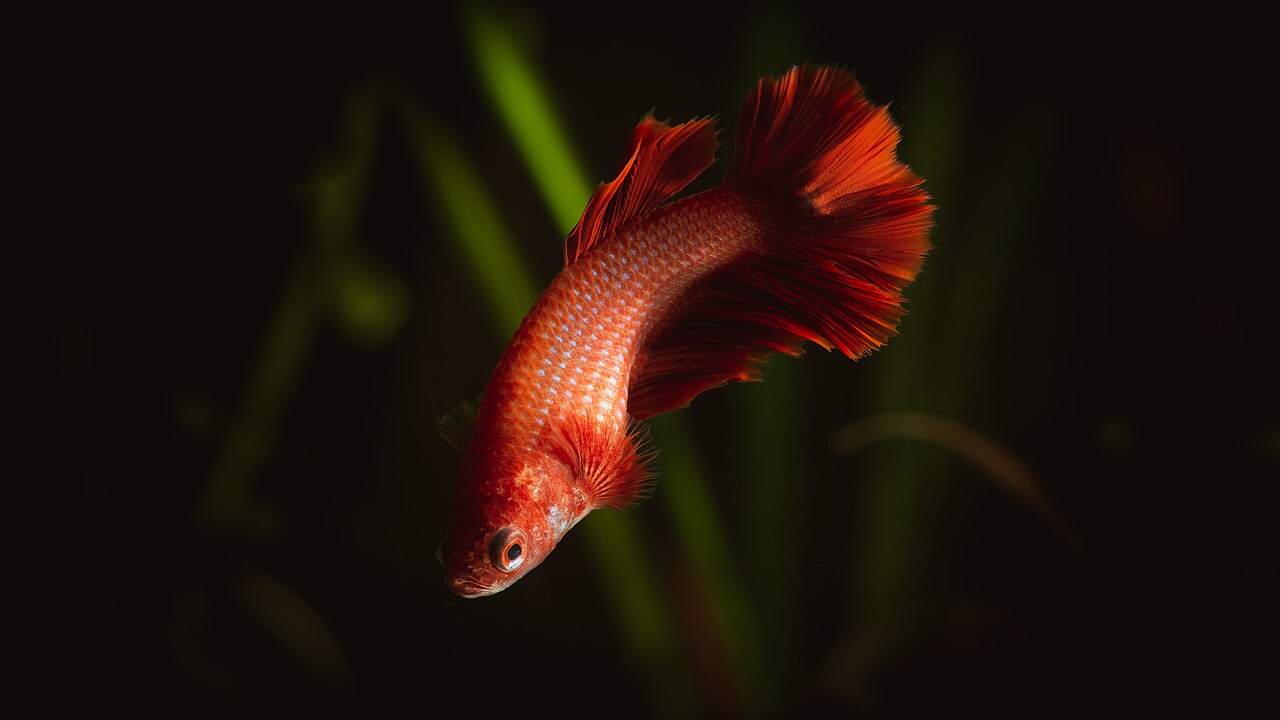
Halfmoon bettas are not rare. They are farm bred in large numbers in Thailand and Indonesia and sit in most chain store tanks. Expect $15 to $40 for a pet grade male in the United States, roughly double a veiltail, and $60 to $150 for an imported show line.
Price follows consistency, not the label. Cheap halfmoons often flare only 160 or 170 degrees. Color adds more than the tail does, which is why a pink or pastel betta costs more than a red one of equal quality.
Are Half Moon Bettas Hard to Keep?
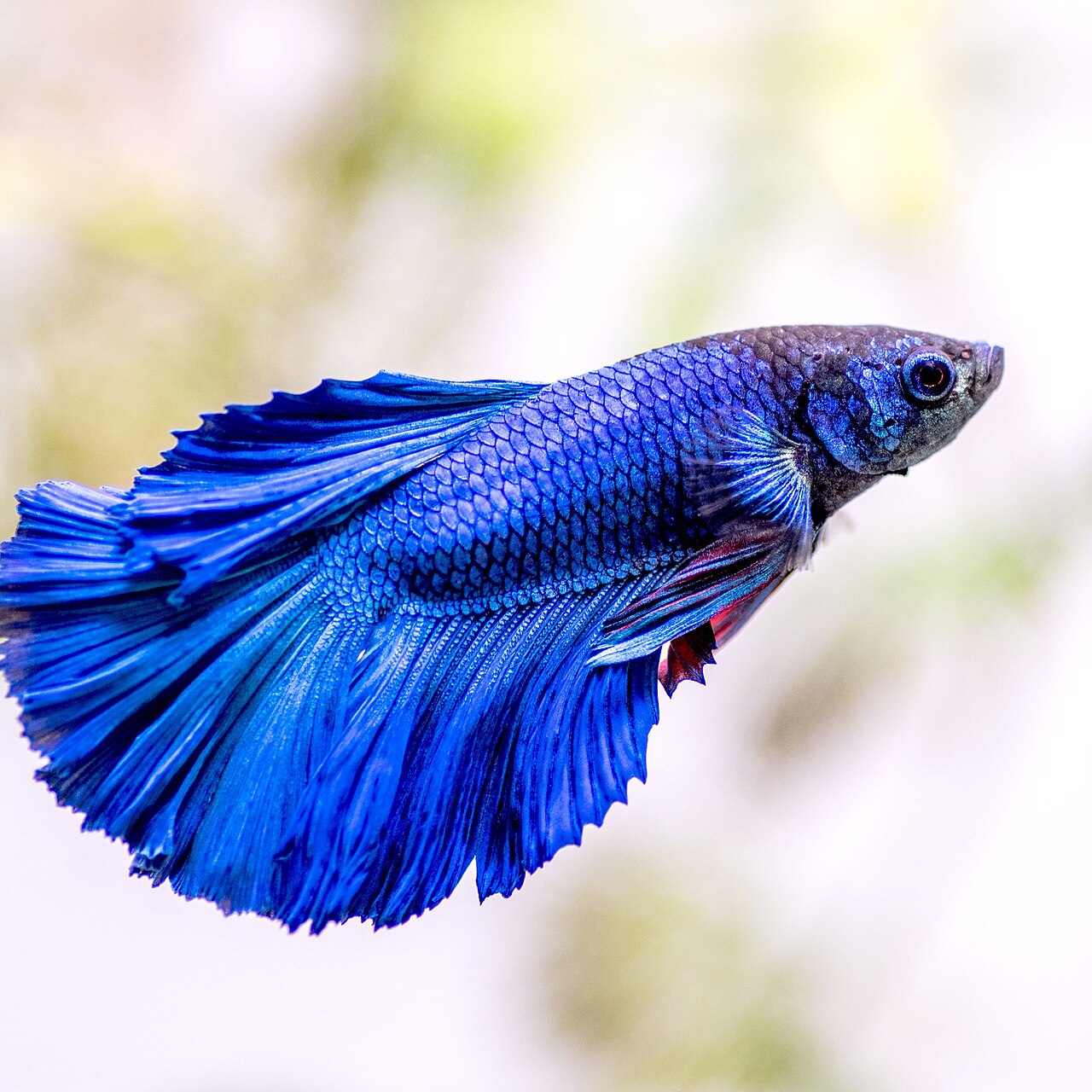
They are not hard, but they are less forgiving than short finned bettas. The oversized tail works like a sail: it drags in current, tears on sharp decor, and makes every trip to the surface more effort for a fish that breathes air through its labyrinth organ. Halfmoons are also the tail type most often reported biting their own tails.
Water chemistry holds no surprises. Warm, stable water at the temperature bettas actually need plus weekly partial changes covers it.
Tank Setup That Protects a Heavy Tail
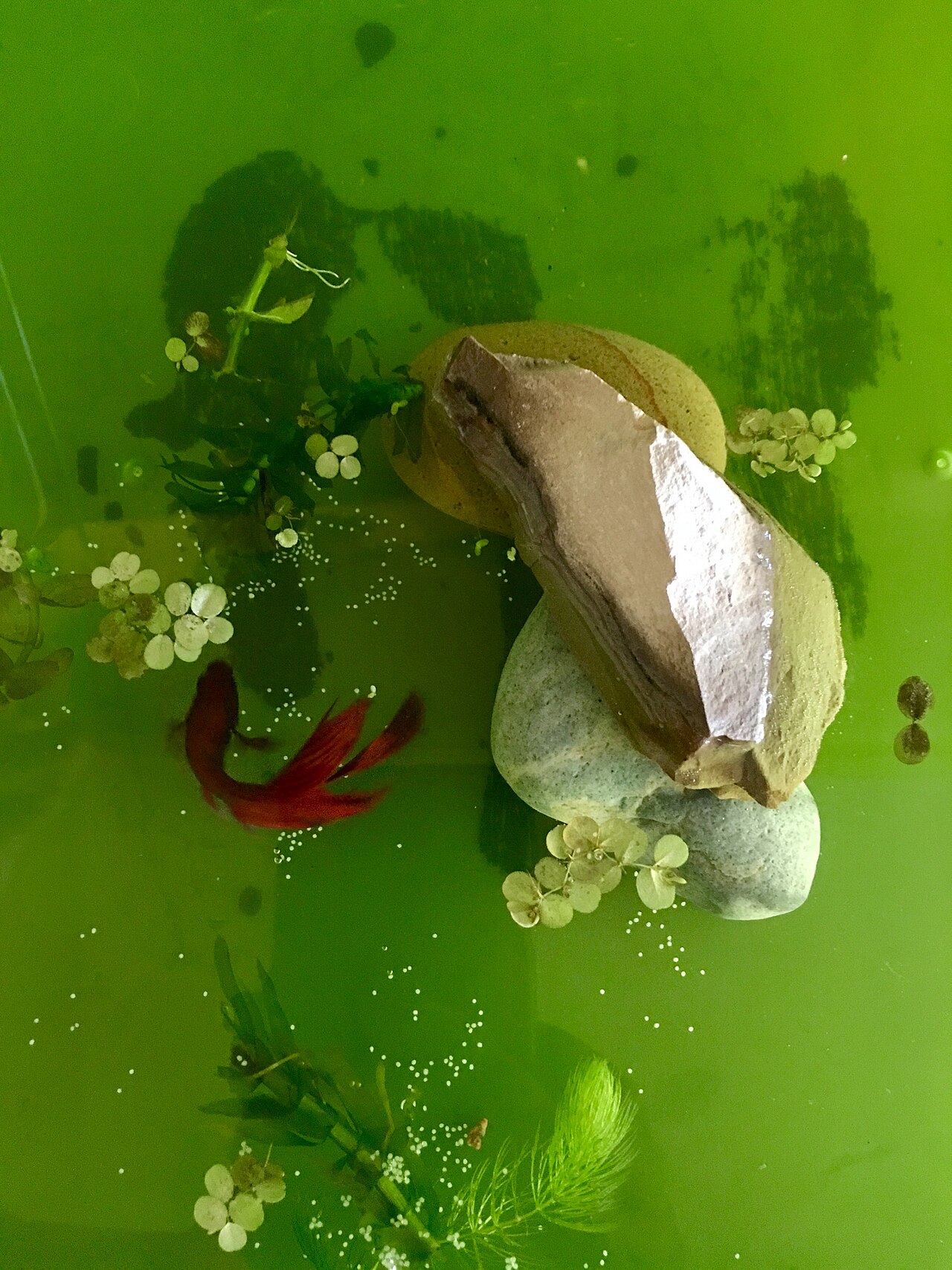
Start at 5 gallons (19 L) and go larger if you can, since floor space matters more than height for a fish that swims in short bursts. Use a sponge filter or a baffled hang on back unit so the outflow cannot pin the fish.
Silk plants, smooth driftwood and floating leaves are safe. Molded plastic plants and rough ceramic ornaments are the usual cause of split rays. Add a leaf hammock two inches under the surface, since halfmoons rest there and bettas genuinely sleep in those spots at night.
Feeding and Everyday Care
Feed a quality betta pellet once or twice a day, four to six pellets total, with frozen bloodworms or brine shrimp twice a week. Bettas are insectivores, so plant heavy flake food is a poor staple. Skip one day a week, since constipation and bloating are common in overfed fish.
Change 25 percent of the water weekly and keep a lid on to hold the air above the surface warm. Cold surface air damages the labyrinth organ.
How Long Do Halfmoon Bettas Live?
Most halfmoon bettas live 2 to 4 years, and 5 is realistic in a heated, filtered, quiet tank. Store fish are usually 6 to 12 months old at purchase, so the clock has already started. Tail type does not shorten life, but fin damage does: torn fins invite bacterial and fungal infection, and repeated fin rot is the most common preventable cause of early death.
The husbandry that stretches average betta lifespan applies here unchanged. FishBase, the ichthyological reference database, lists Betta splendens as a shallow, slow water fish of the Mekong basin, which is the environment a tank should imitate.
Frequently Asked Questions
What is the rarest color betta?
True solid white and genuine purple are the hardest colors to fix in a line, with albino bettas rarer still because the trait is fragile and the fish are often weak. Most purples sold commercially are blue or violet marbles that shift over time. Copper and koi patterns look exotic but are widely bred.
What is the prettiest betta?
That is a matter of taste, but halfmoon and rosetail forms in koi or galaxy marble patterns win the most show placings. Keep in mind that the heaviest finned show fish are also the most prone to tail biting, so looks and durability pull against each other.
Why can’t you touch betta fish?
Bettas are covered by a slime coat that blocks bacteria, fungus and parasites. Handling wipes it away and leaves open skin, and oils and soap residue on human hands make it worse. Move a betta with a soft net or a cup.
How can you tell if a betta fish is happy?
A settled betta uses the whole tank instead of hovering in a corner, keeps its fins open rather than clamped, eats readily and shows strong color. Males often build bubble nests at the surface, a sign of comfortable warm water. Faded color and all day hiding point to cold water or poor conditions.
Do betta fish like to be talked to?
They do not hear speech the way a pet mammal does, but they sense vibration through the lateral line and quickly learn to link a person at the glass with food. That recognition looks like a response to your voice. Tapping the glass is different and should be avoided, since it startles the fish.
Can a halfmoon betta live with other fish?
Only in a tank of 10 gallons (38 L) or more with calm companions such as corydoras, kuhli loaches or snails. Guppies and tetras with bright trailing fins often trigger attacks. Never house two males together, and compare temperaments across the common betta varieties before mixing.