World Record Smallmouth Bass: 11 lb 15 oz and the Fight Over It
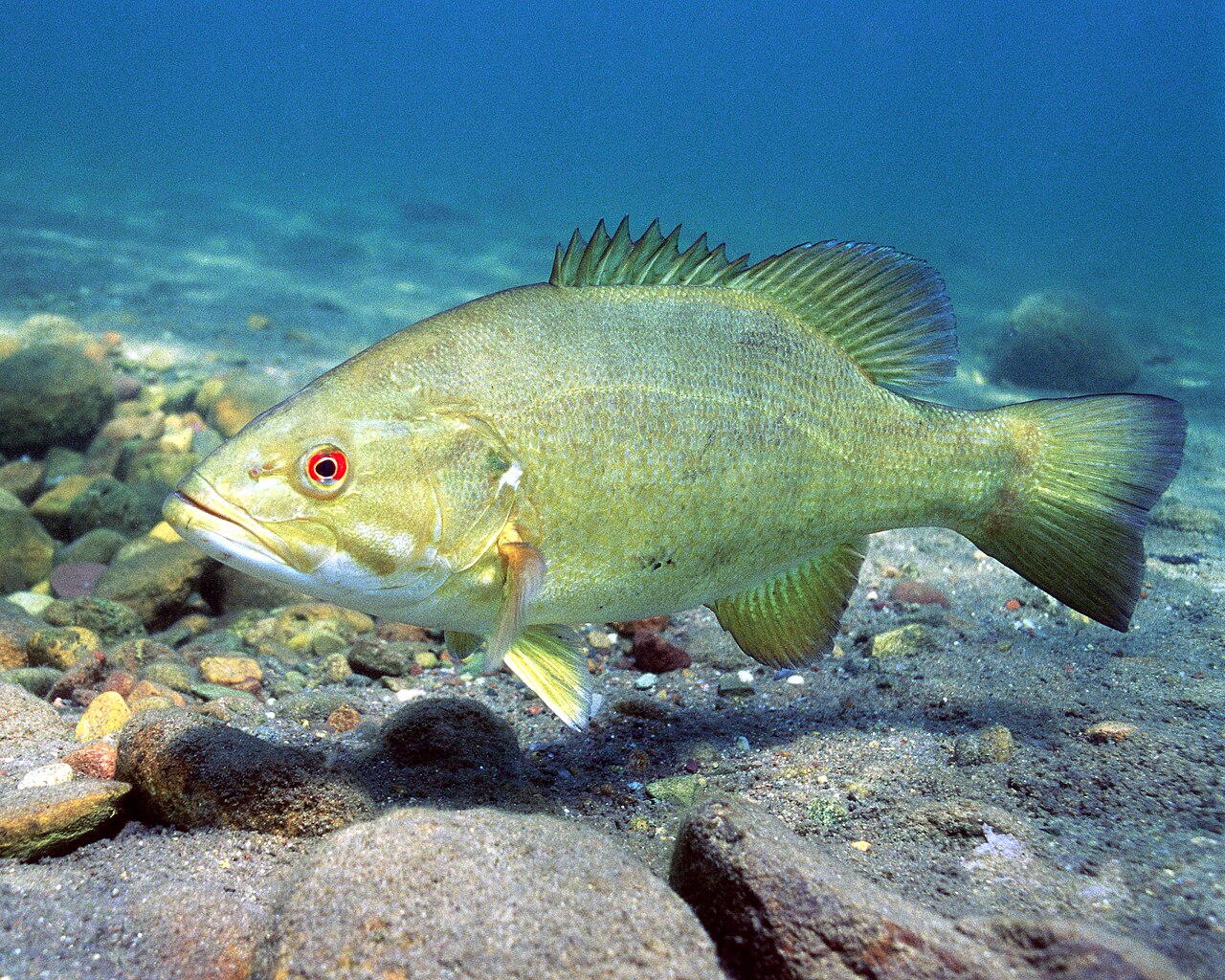
The world record smallmouth bass weighed 11 pounds 15 ounces (5.41 kg) and was caught by David L. Hayes on Dale Hollow Lake on the Tennessee and Kentucky line on July 9, 1955. The fish measured 27 inches (69 cm) long with a girth close to 22 inches (56 cm), and the International Game Fish Association still lists it as the all tackle record more than seventy years later. No certified smallmouth has come within a pound of it since.
That single fish also carries the longest running dispute in freshwater record keeping. The IGFA stripped the record in 1996 after a sworn statement claimed the bass had been weighted, then restored it in 2005 when that testimony fell apart. Understanding the record means understanding both the fish and the forty year argument over whether it was honest.
The world record smallmouth bass is an 11 pound 15 ounce (5.41 kg) fish caught by David L. Hayes at Dale Hollow Lake, on the Tennessee and Kentucky border, on July 9, 1955. It was disqualified in 1996 over a tampering allegation and reinstated by the IGFA in 2005. It remains the all tackle record today.
| Detail | Record smallmouth bass |
|---|---|
| Weight | 11 lb 15 oz (5.41 kg) |
| Angler | David L. Hayes |
| Date | July 9, 1955 |
| Water | Dale Hollow Lake, Tennessee and Kentucky |
| Length | About 27 in (69 cm) |
| Species | Micropterus dolomieu |
| Status | Disqualified 1996, reinstated 2005, still standing |
The Catch That Set the Record in 1955
Hayes was trolling a pearl colored Bomber lure behind a boat guided by a local dock hand when the fish hit. He was fishing Dale Hollow in early July, a period when big smallmouth in that lake move along deep points and channel edges chasing baitfish. The bass was weighed on certified scales at the marina and reported through the usual channels of the day.
At 11 pounds 15 ounces the fish was more than two pounds heavier than any smallmouth then on record, which is an enormous margin for a species that tops out for most anglers at four or five pounds. It replaced a record that had stood since the 1940s and it has now outlasted every challenger for seven decades.
The Disqualification and the Forty Year Argument
In 1996 the IGFA removed the record after receiving an affidavit from a man who had worked at the dock in 1955. He stated that the bass had been packed with lead or a heavy object before the official weighing, which would have made the reported weight fraudulent. On the strength of that single statement the organization moved the record down the list.
Hayes and his supporters fought the decision for nearly a decade. Investigators eventually concluded that the accuser’s account contained factual problems, that he had motive to damage the claim, and that his story had shifted over the years. In 2005 the IGFA and Kentucky officials reinstated the catch. Anglers still argue about it, and anyone reading older tournament literature will find the record listed both ways depending on the year it was printed.
Where Was the World Record Smallmouth Bass Caught?

Dale Hollow Lake is a 27,700 acre (11,200 ha) reservoir on the Obey River, impounded by the Army Corps of Engineers in the 1940s and split between north central Tennessee and south central Kentucky. It is deep, clear, rocky and cold in its lower layers, which is close to the ideal template for growing oversized smallmouth.
The combination that matters is thermal. Deep cool water lets smallmouth stay active through a southern summer instead of shutting down, while the latitude gives a longer growing season than the northern lakes where the species is native. Add a forage base of shad and alewife over rock and gravel structure, and fish gain weight for more months of the year than they could anywhere further north.
Why Dale Hollow Holds the Top of the List

The lake does not hold one freak fish. It holds most of the heaviest certified smallmouth ever recorded, including John T. Gorman’s 10 pound 14 ounce bass taken there in 1969 and several other fish above ten pounds. When a single body of water produces that many outliers, the explanation is habitat rather than luck.
Fisheries biologists point to the same factors repeatedly: depth, clarity, stable oxygen at the thermocline, hard bottom, and a forage species that smallmouth can eat at every size class. Dale Hollow also enforced protective slot limits for smallmouth decades before that became common practice, which let more fish reach the ages at which they put on the last two pounds.
The Rest of the All Time List
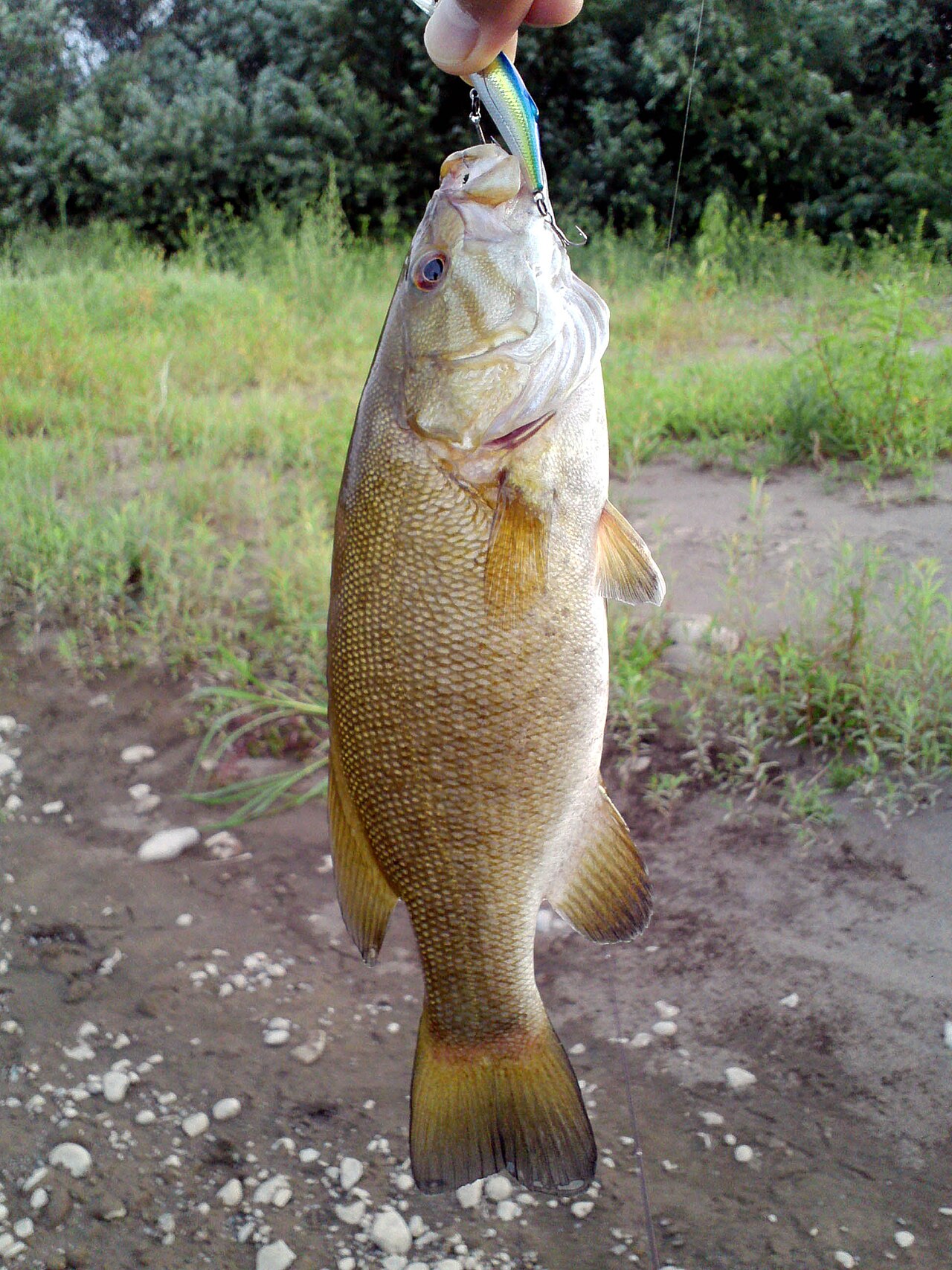
Below Hayes the certified list drops quickly. Fish between ten and eleven pounds number in the low single digits worldwide, and almost all of them came from Dale Hollow or from waters with similar deep, cool, southern reservoir conditions. Past that, the list falls into the eight and nine pound range, where northern fisheries begin appearing.
There is also a shadow list of uncertified giants. Every few years an angler lands a smallmouth that would challenge a state record, photographs it, and releases it without a certified scale or witnesses. Those fish never enter the books, and catch and release culture among serious smallmouth anglers means the real ceiling of the species is almost certainly higher than the record table shows.
What Is Considered Big for a Smallmouth Bass?
A three pound smallmouth is a good fish in almost any water in North America. Four pounds is a trophy in most rivers and small lakes, five pounds is a fish that many dedicated anglers never land, and six pounds belongs to a handful of exceptional fisheries. Anything past seven pounds is a state record contender in most of the species range.
Context matters more than the number. A 20 inch (51 cm) smallmouth from a cold northern river may weigh 4 pounds, while a fish of the same length from a fertile southern reservoir with a shad forage base can weigh 5.5 pounds in late fall with a full belly. Length is the fairer comparison between waters, and 20 inches is the honest dividing line for a genuinely large smallmouth.
How Old Is a Record Class Smallmouth?
Smallmouth bass grow slowly and live a long time, which is why the biggest fish come from waters that protect their oldest age classes. In cold northern lakes a smallmouth may need 10 to 15 years to reach 5 pounds and can live past 20. In warm southern reservoirs growth is faster but life is shorter, often 8 to 12 years total.
A fish near 11 pounds is therefore almost certainly an old female in the upper range of her lifespan, taken at the top of her weight cycle before spawning or after a heavy fall feeding period. Those conditions have to line up at the same moment, which is a large part of why the record has held so long.
Smallmouth Bass Biology Behind the Size Ceiling
Micropterus dolomieu is a member of the sunfish family Centrarchidae, the same group that includes bluegill, crappie and the redear sunfish. Its native range covers the Great Lakes basin and the Ohio and Mississippi drainages, and stocking has since spread it across most of the continental United States and into Canada, Japan and parts of Europe.
Smallmouth are built for current and cool water, with a smaller mouth than a largemouth and a preference for crayfish, minnows and insect larvae rather than large prey. That diet caps the growth rate: a fish that eats crayfish adds weight more slowly than one swallowing gizzard shad. The family connection shows in behavior too, since smallmouth share the nest guarding habits of other sunfish species.
Where the Giants Come From Today
The modern hot spots are mostly northern. Lake Erie and Lake St. Clair produce enormous numbers of fish in the five to seven pound class, Green Bay and Sturgeon Bay on Lake Michigan turn out fish above seven, and the Columbia River and its impoundments in Washington and Oregon have produced several near record class smallmouth. Lake Champlain, Mille Lacs and Table Rock round out the list.
What changed is forage. Invasive round goby colonized the Great Lakes and became a year round protein source for smallmouth, and average weights in Erie and St. Clair rose measurably afterward. Those same waters hold walleye and other predators competing for the same forage, which is why the biggest smallmouth tend to come from areas where rock structure keeps the two species separated.
What It Takes to Certify a Record
The IGFA does not accept a photograph and a story. An all tackle claim requires the fish to beat the standing record by a set margin, a weighing on a scale certified within the past year, two witnesses to that weighing, a sample of the line used, clear photographs of the fish, the rod and reel and the scale, and a completed application submitted within 60 days for catches in the continental United States.
State agencies run parallel programs with their own rules, and many require a fisheries biologist to verify the species before the fish is released or mounted. The U.S. Fish and Wildlife Service and state wildlife departments publish the current record tables, and those are the lists that matter for a regional claim.
World Record Smallmouth Bass Compared to Largemouth
The largemouth record dwarfs the smallmouth one. George Perry’s 22 pound 4 ounce largemouth from Montgomery Lake, Georgia, in 1932 stood alone until Manabu Kurita landed a 22 pound 5 ounce fish on Lake Biwa, Japan, in 2009; because IGFA rules require a margin of at least two ounces for fish under 25 pounds, the two are certified as a tie rather than a new record.
Roughly speaking, a world class largemouth weighs about twice a world class smallmouth. The difference is mouth size and prey selection: largemouth eat whole sunfish, trout and even small birds and rodents, while smallmouth work through crayfish and baitfish. Anyone comparing what different fish species eat will find that prey size, not water quality, sets the ceiling on freshwater predators.
Will the World Record Smallmouth Bass Be Broken?
It is possible but unlikely in the near term. Dale Hollow no longer produces double digit smallmouth the way it did in the 1950s and 1960s, largely because forage and nutrient conditions in the reservoir have changed since it was first impounded. Newer reservoirs in the same latitude band have not replicated the combination.
The realistic challenger is a goby fed Great Lakes fish or a Columbia River bass in a mild winter, and even there the gap is nearly four pounds above the current best from those waters. Catch and release ethics work against a new record as well, since the anglers most likely to hook one are also the most likely to release it before a scale appears. For now the 1955 fish holds, alongside far less dramatic aquarium records like the century old lineages behind the Ryukin goldfish and the predation pressure that fish eating birds put on every bass fishery in the country.
Frequently Asked Questions
Has there ever been a 20 lb bass?
Yes, but only largemouth. George Perry’s 22 pound 4 ounce Georgia fish from 1932 and Manabu Kurita’s 22 pound 5 ounce fish from Japan in 2009 are the two certified giants, and California and Texas have produced several others above 20 pounds. No smallmouth bass has ever been certified above 12 pounds.
Where was the 25 lb bass caught?
Nowhere, as far as the record books are concerned. No certified largemouth or smallmouth bass has reached 25 pounds. Claims of 25 pound bass circulate on social media and usually involve unverified scales, hybrid species or a misidentified fish such as a peacock bass or striped bass, neither of which is a black bass.
Is there a 50 pound bass?
Not among black bass, but striped bass pass 50 pounds regularly. The all tackle striped bass record is an 81 pound 14 ounce fish caught by Greg Myerson in Long Island Sound, Connecticut, in 2011. Striped bass belong to a different family entirely and should not be compared to largemouth or smallmouth weights.
How rare is a 7 lb bass?
For smallmouth it is genuinely rare, a state record contender in most of the range and a once in a lifetime catch for the majority of anglers. For largemouth a 7 pound fish is uncommon but achievable, routine in Florida, Texas and California and difficult anywhere north of the Ohio River. Species matters more than the number.
What fish weighs 1000 pounds?
Several. Atlantic blue marlin, black marlin, great white shark, Atlantic bluefin tuna and ocean sunfish all exceed 1,000 pounds. The certified bluefin tuna record is 1,496 pounds, landed off Nova Scotia in 1979, and the all tackle blue marlin record sits above 1,400 pounds. No freshwater North American gamefish comes close.
What state has the biggest bass?
For largemouth the answer is California, which has produced more 20 pound class fish than any other state thanks to stocked Florida strain bass and trout forage, with Texas, Florida and Georgia close behind. For smallmouth the best current odds are Michigan, Ohio, Wisconsin and Washington, while Kentucky and Tennessee hold the historical record.