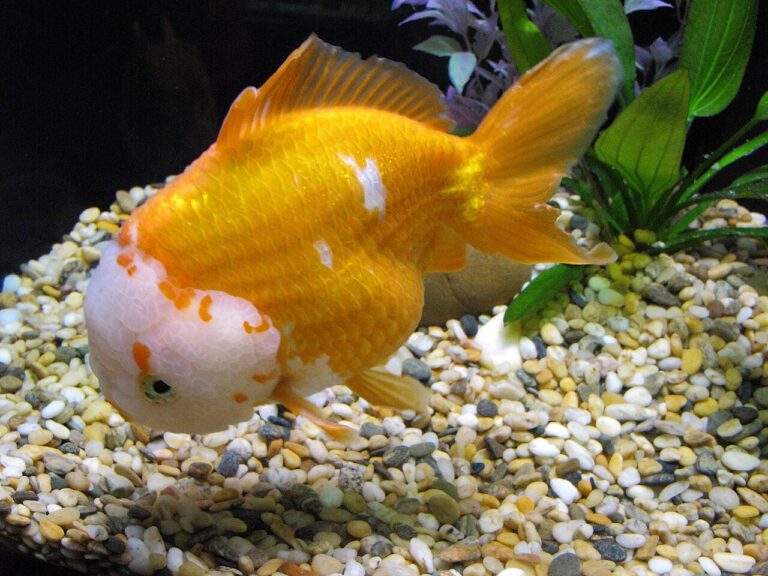
Telescope Goldfish Care: Size, Lifespan, Tank Setup and Cost
The telescope goldfish is a fancy goldfish variety recognizable by its protruding eyes, which sit on stalks that extend outward from the sides of the head. It is one of the oldest selectively bred goldfish types, developed in China several centuries ago and known in Japan as the demekin. Everything about keeping one comes back to those eyes.
A telescope goldfish is not a difficult fish, but it is a fragile one in ways that a standard single tail goldfish is not. Poor eyesight, reduced swimming ability and vulnerable eye tissue mean the tank has to be built around the fish rather than the other way round. Get that part right and a telescope goldfish will live 10 to 15 years.
Telescope goldfish (Carassius auratus) are a fancy goldfish variety with large protruding eyes on stalks. They grow 6 to 8 in (15 to 20 cm) and live 10 to 15 years in a well maintained tank. They need at least 20 gallons for the first fish, smooth decor with no sharp edges, and slow sinking food because their eyesight is poor.
| Attribute | Detail |
|---|---|
| Scientific name | Carassius auratus |
| Adult size | 6 to 8 in (15 to 20 cm) |
| Lifespan | 10 to 15 years, up to 20 with excellent care |
| Minimum tank | 20 gallons first fish, 10 more per additional fish |
| Temperature | 65 to 75 degrees F (18 to 24 C) |
| pH | 6.5 to 7.5 |
| Care level | Intermediate, mainly because of the eyes |
What Is a Telescope Goldfish?
A telescope goldfish is a double tailed fancy goldfish bred for eyes that project from the head on conical stalks. The eyes develop gradually. Fry hatch with normal eyes, and the telescoping becomes visible somewhere between three and six months of age, reaching full extension by the end of the first year.
The variety originated in China, where records of protruding eye goldfish go back to the 1700s. Japanese breeders refined it into the demekin, and from there it spread to Europe and North America. All goldfish varieties, from the plain comet to the most elaborate fancy, belong to the same species, Carassius auratus, and descend from wild Prussian carp.
Body shape matters as much as the eyes. Telescopes have the short deep egg shaped body of fancy goldfish, which shortens the spine and compresses the swim bladder. That is the underlying reason fancy varieties are slower, less agile and more prone to buoyancy problems than their streamlined relatives.
How Big Can a Telescope Goldfish Get?

A telescope goldfish reaches 6 to 8 in (15 to 20 cm) in body length, with exceptional specimens in large tanks or ponds hitting 10 in (25 cm). Including the flowing double tail, the total length of a mature fish is often closer to 10 to 12 in (25 to 30 cm).
Growth is fast in the first two years and then slows considerably. A fish that stays small past year three is usually telling you something about its tank. Goldfish growth is limited by water quality and space, and a stunted fish is not a conveniently small fish, it is one whose internal organs have kept growing while the body did not.
Plan for the adult size from day one. The common advice of 20 gallons for the first fancy goldfish and 10 gallons for each additional fish is a floor, not a target. Goldfish produce a heavy bioload, and more water volume gives you a buffer against the ammonia spikes that do the real damage.
How Long Can Telescope Goldfish Live?

Telescope goldfish live 10 to 15 years with good care, and individuals reaching 20 years are documented. Fancy varieties generally fall a little short of the 15 to 25 years that hardy single tail goldfish manage, because the selectively bred body shape carries built in health costs.
Most telescopes that die early do not die of old age or of anything exotic. They die of ammonia poisoning in an uncycled tank, of chronic poor water quality in an undersized bowl, or of untreated swim bladder and buoyancy issues. All three are husbandry problems with straightforward fixes.
The fish sold at carnivals and big box stores often arrive already stressed and carrying parasites. A two week quarantine in a separate container before adding a new telescope to an established tank prevents most of the disease outbreaks that kill established fish, and it costs almost nothing to set up.
Are Telescope Goldfish Hard to Keep?

Telescope goldfish are moderately difficult, harder than a common goldfish and easier than a bubble eye. The difficulty is not water chemistry, which is forgiving, but the physical vulnerability of the eyes and the fish’s poor vision.
Protruding eyes catch on everything. Sharp gravel, plastic plants with rigid edges, rough driftwood, intake strainers and ornament crevices all cause corneal injury, and an injured eye can become infected or be lost entirely. Everything in the tank should pass a simple test: run it across the back of your hand, and if it scratches, it does not belong in there.
The eyes also do not help the fish see. Telescope goldfish have notably poor eyesight and find food largely by smell and touch. In a tank with fast competitors they simply lose out at feeding time, gradually thinning while the other fish thrive.
Tank Size and Setup
Start with 20 gallons for a single telescope goldfish and add 10 gallons per additional fish. A 29 or 40 gallon breeder tank suits a pair well and gives the horizontal swimming room that fancy goldfish use more than height. Long tanks beat tall tanks for this species.
Substrate should be either bare bottom or smooth sand. Standard aquarium gravel presents two problems at once: sharp edges near the eyes, and pieces exactly the size a goldfish will try to swallow and lodge in its mouth. Sand avoids both, and it makes waste easy to siphon.
Keep decor minimal and smooth. Silk plants, river rock and large open swimming lanes work. Avoid anything with holes a fish can wedge into, because a slow telescope that swims into a gap often cannot reverse out of it. Cover filter intakes with sponge prefilters to protect both the eyes and the fins.
Water Parameters and Filtration
Telescope goldfish do well at 65 to 75 degrees F (18 to 24 C) with a pH of 6.5 to 7.5 and moderate hardness. They are coldwater fish and do not need a heater in most homes, though stable temperature matters more than any particular number within that range.
Filtration has to handle a heavy bioload while producing gentle flow, which is a genuine tension. Goldfish are messy eaters and produce a lot of ammonia, but a fancy telescope pushed around by strong current burns energy it cannot spare. Oversized filtration with the output baffled or spread across a spray bar solves both sides.
Ammonia and nitrite must read zero, and nitrate should stay under 40 ppm. Weekly water changes of 25 to 50 percent are normal for a goldfish tank, and skipping them is the most common reason an otherwise healthy telescope develops fin rot or cloudy eye. A liquid test kit tells you more than any schedule.
What to Feed a Telescope Goldfish
Feed a quality sinking goldfish pellet as the staple, supplemented with blanched vegetables and occasional frozen foods. Sinking is the key word. Floating pellets make goldfish gulp air at the surface, which contributes directly to the buoyancy problems that plague deep bodied fancy varieties.
Soak dry pellets for a minute before feeding so they expand in the water rather than in the fish’s gut. Blanched peas with the skin removed, deshelled and chopped, are the standard home remedy for constipation and mild swim bladder trouble, and many keepers offer them once a week as prevention.
Feed small amounts two or three times a day rather than one large meal, and give the telescope time to find its food. Details on balancing staples with treats are covered in our guide to what goldfish eat, but the short version is that overfeeding is far more dangerous than underfeeding.
Telescope Goldfish Tank Mates
The best tank mates for a telescope goldfish are other slow moving fancy goldfish of similar size. Orandas, ryukins, fantails and other telescopes all swim at a comparable pace and compete on equal terms at feeding time.
Avoid fast single tail goldfish. Comets, shubunkins and common goldfish are athletic, grow much larger and will strip food from the water before a telescope registers that feeding has started. Over months this produces a thin, stressed fish even though nothing looks obviously wrong.
Also avoid fin nippers and anything that targets eyes. Barbs, most cichlids and many tetras are unsuitable, and tropical species are wrong on temperature anyway. Small snails and, in larger tanks, white cloud mountain minnows are among the few non goldfish options that genuinely work.
Telescope Goldfish Colors and Varieties
Telescope goldfish come in orange, black, calico, red and white, chocolate and panda patterning. The solid black form is sold as the black moor, which is a telescope goldfish with black pigmentation and slightly rounder eyes, and it is by far the most widely available version in US stores.
Butterfly tail telescopes are bred for a tail that spreads horizontally when viewed from above, and they are traditionally kept in shallow bowls or top view tanks. Panda telescopes carry a black and white pattern that often shifts over the fish’s life, since goldfish pigmentation is famously unstable.
Color change is normal and not a health problem. Black telescopes frequently fade toward bronze or orange with age, and calicos shift patterning year to year. Temperature, light and diet all influence the process, which we cover in more detail under goldfish color changes.
Common Health Problems
The three problems that account for most telescope goldfish illness are eye injury, swim bladder disorder and ich. Eye damage shows as cloudiness, swelling or a visible tear, and it needs clean water plus removal of whatever caused it. Mild cases heal; severe ones can cost the eye without ending the fish’s life.
Swim bladder disorder makes the fish float, sink or swim upside down. In fancy goldfish it is usually digestive rather than infectious, triggered by gulped air or constipation. Fasting for two days followed by blanched peas resolves a good share of cases, while persistent buoyancy problems in a deep bodied fish may be anatomical.
Ich appears as white salt grains on fins and body and spreads fast in a stressed tank. Raising temperature gradually toward 78 degrees F (26 C) alongside an appropriate treatment works, though goldfish handle heat poorly so the increase must be slow. Goldfish released into US waterways also spread parasites to native fish, which is one reason the USGS invasive species program tracks them; never release an unwanted fish outdoors.
Telescope Goldfish Price and Where to Buy
Telescope goldfish cost 5 to 20 dollars for a standard black moor or orange telescope in a chain pet store, and 30 to 100 dollars or more for quality butterfly tail or panda specimens from a dedicated breeder. Price mostly tracks finnage, symmetry and color stability.
Buy from a tank where every fish looks healthy, not just the one you want. Clamped fins, resting on the bottom, visible white spots or cloudy eyes anywhere in the system mean the whole tank is likely affected. Ask how long the batch has been in the store; fish that arrived that morning have not yet shown what they are carrying.
Specialist breeders and online fancy goldfish retailers ship well and offer better stock, though shipping adds 30 to 60 dollars. If you are starting with young fish, remember that telescoping is not fully developed at purchase size, so what you see is not yet what you get.
Do Goldfish Recognize Their Owners?
Goldfish do recognize individual people, and research on associative learning in Carassius auratus supports it. They distinguish human faces and shapes, learn feeding routines and respond to the specific person who approaches the tank at feeding time. Memory spans of months are well documented, which retires the three second memory myth entirely.
Telescope goldfish manage this despite weak eyesight, leaning more on movement, vibration and timing. A telescope that rises to the front glass when you enter the room has learned the pattern, even if the visual detail it perceives is limited compared to a sighted variety.
A happy goldfish swims actively through the whole tank, holds its fins open rather than clamped, eats eagerly and shows normal coloration. A fish hanging at the surface, sitting on the substrate, or hiding constantly is signaling a water quality problem long before disease becomes visible.
Frequently Asked Questions
Can I keep a telescope fish as a pet?
Yes, telescope goldfish are widely kept as pets and are legal everywhere in the US. They need a proper cycled aquarium of at least 20 gallons, not a bowl. With correct tank size, weekly water changes and smooth decor, they are rewarding long term pets that interact readily with their keepers.
Are telescope goldfish hard to keep?
They are moderately demanding. Water chemistry is forgiving, but the protruding eyes are easily injured and the fish sees poorly, so the tank must be free of sharp decor and fast tank mates. Keepers who have managed a standard goldfish tank successfully will find the step up manageable.
What fish can live up to 200 years?
The rougheye rockfish and the Greenland shark are the record holders, with Greenland sharks estimated at 250 to 400 years. Goldfish are nowhere near this, topping out around 20 years in aquariums and a little longer in ponds. The longest documented goldfish lived 43 years in the UK.
Do fish like it when you talk to them?
Fish cannot hear speech the way we do, but they detect vibration through the lateral line and inner ear. A goldfish may associate the sound and movement of an approaching person with feeding and respond accordingly. Tapping the glass is different and should be avoided, since it startles rather than soothes.
What is the friendliest fish ever?
Goldfish rank among the most interactive aquarium fish, alongside oscars, bettas and some cichlids. Telescope goldfish in particular become noticeably tame, learning to take food from fingers and approaching their keeper at the glass. Friendliness here means learned association with a food source rather than affection.
How big of a tank does one telescope goldfish need?
Twenty gallons is the practical minimum for one telescope goldfish, with 10 additional gallons per extra fish. Long tanks work better than tall ones because fancy goldfish swim horizontally. Anything smaller leads to poor water quality and stunted growth, and a bowl is not a viable home at any size.