Cayuga Duck: Black Eggs, Quiet Temperament, and Why It Turns White
The Cayuga duck is a medium sized American domestic breed known for black plumage with a beetle green sheen and for the strange grey to charcoal eggs it lays at the start of each season. It weighs 7 to 8 lbs (3.2 to 3.6 kg), lays 100 to 150 eggs a year, and is one of the calmest and quietest ducks a backyard keeper can choose.
It is also the only duck breed most people can identify on sight, because nothing else in a farmyard is that black. The catch is that the color does not last: Cayugas go progressively white with each molt, and a hen in her fifth year may look almost nothing like the bird you brought home. This guide covers the eggs, the temperament, the noise level, the care requirements, and how the breed stacks up against a Pekin.
The Cayuga is an American duck breed with black, green sheened plumage, weighing 7 to 8 lbs (3.2 to 3.6 kg). Hens lay 100 to 150 eggs a year, and the first eggs of a season are coated in dark grey to near black pigment that fades as the season goes on. Cayugas are quiet, docile, and cold hardy, which makes them a strong backyard breed.
| Quick Fact | Detail |
|---|---|
| Class | Medium, American Poultry Association Medium class |
| Weight | Drake 8 lbs (3.6 kg), hen 7 lbs (3.2 kg) |
| Eggs per year | 100 to 150 |
| Egg color | Black or charcoal early in season, fading to white |
| Temperament | Calm, docile, very quiet for a duck |
| Flight | Poor. Heavy enough that fencing is rarely needed |
What Is a Cayuga Duck?
The Cayuga is a domestic duck breed developed in New York State and admitted to the American Poultry Association Standard of Perfection in 1874. Like nearly all domestic ducks apart from the Muscovy, it descends from the wild mallard, which is why a Cayuga will interbreed freely with any other farmyard duck.
It was bred as a dual purpose bird for meat and eggs, and for most of the 1800s it was the main duck raised for market in the northeastern United States. The Pekin displaced it after 1873 because a white carcass plucks cleaner. Today the Cayuga is kept mostly by smallholders and is listed as a breed to watch by conservation organizations.
Cayuga Duck Appearance: The Beetle Green Sheen
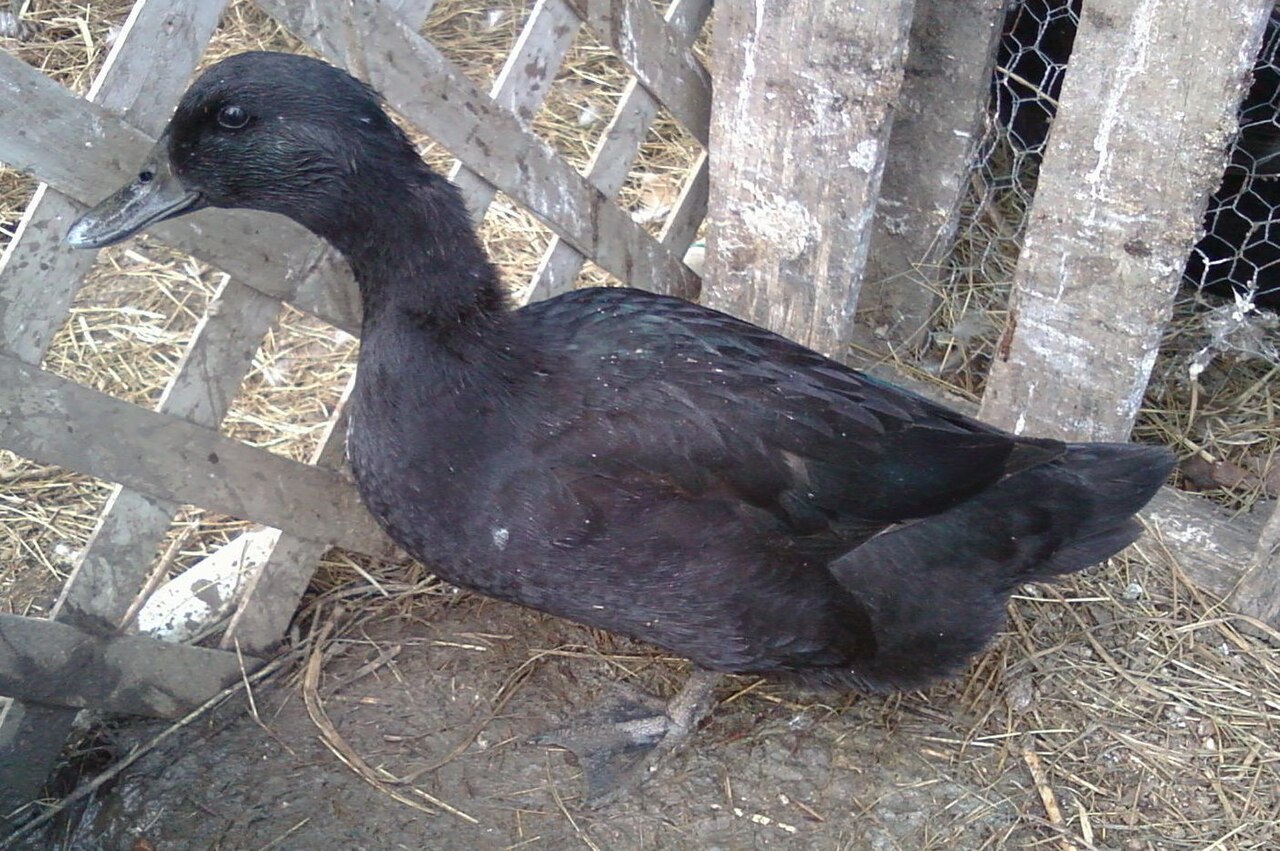
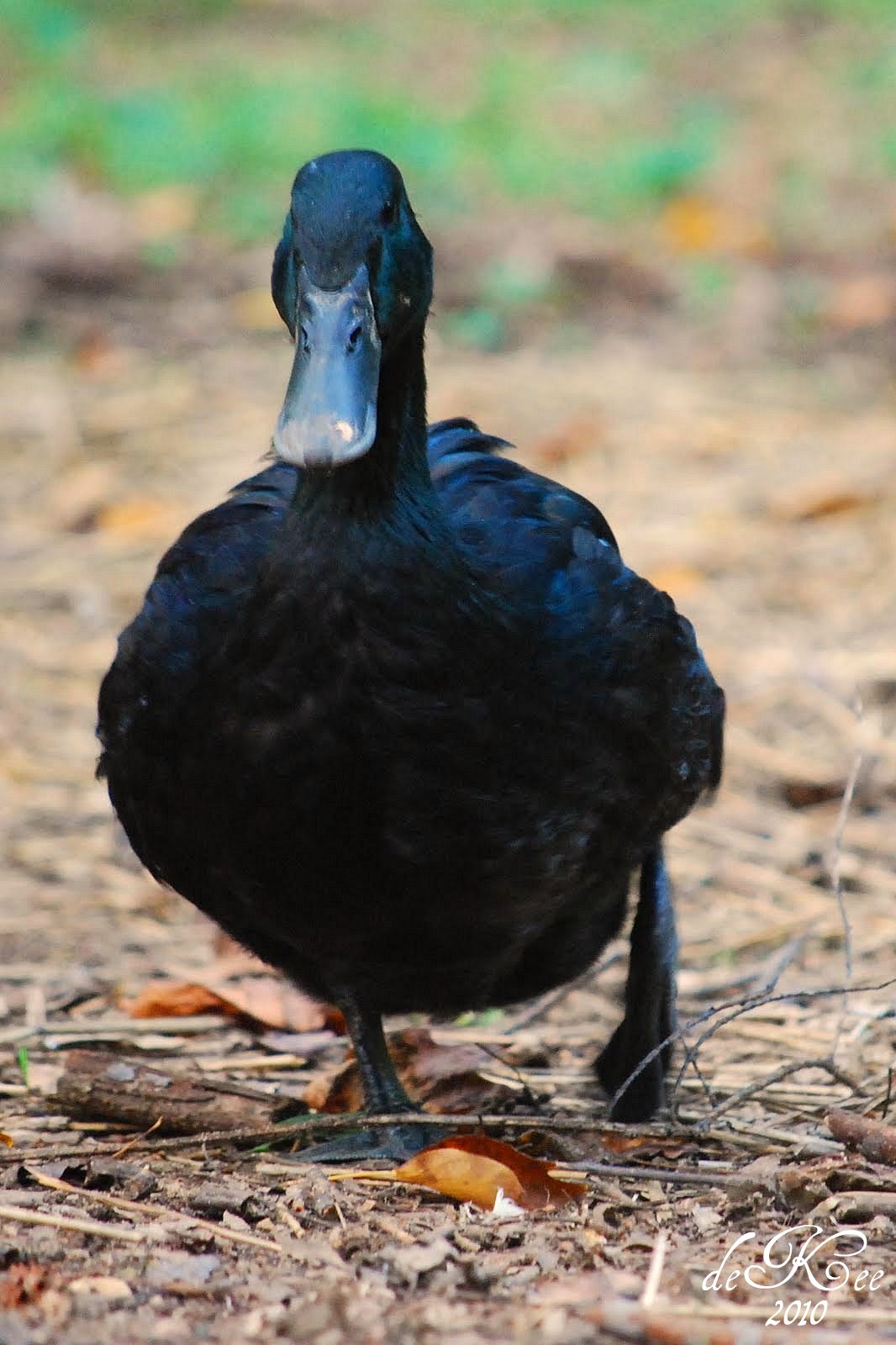
A good Cayuga is solid black over the entire body, bill, and legs, with an iridescent green sheen that runs across the head, back, and wings in direct sunlight. The effect is structural rather than pigmented: the feather surface scatters light, so the bird looks flat black in shade and metallic green in the sun.
Eyes are dark brown, the bill is slate black, and the feet are black to dark grey, often lightening with age. Drakes carry the curled tail feathers common to mallard derived breeds, which is the easiest way to sex an adult. Young birds may show a few stray white feathers, and judges count these as a fault even though the whitening is inevitable later.
Where the Cayuga Duck Came From
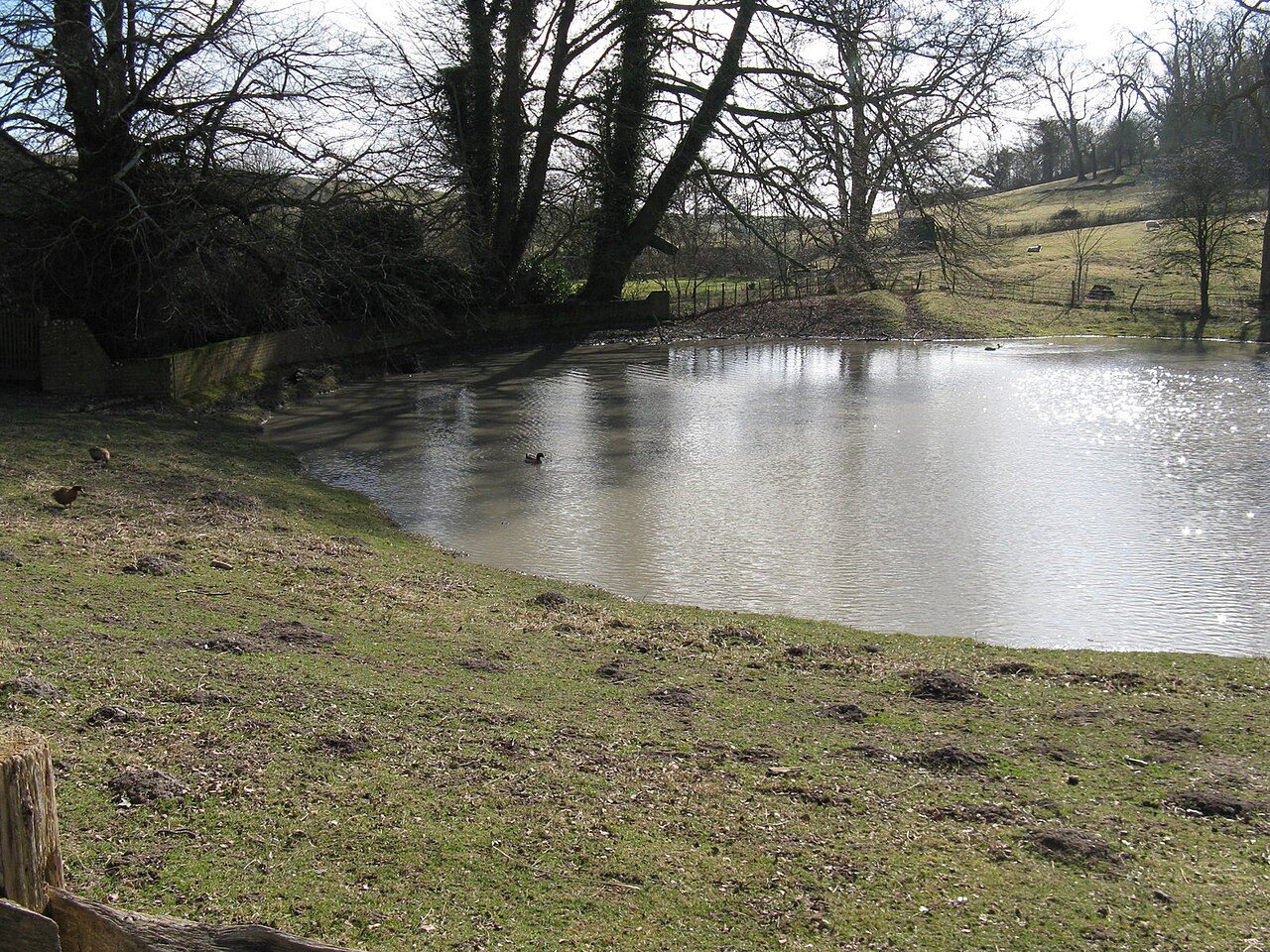
The accepted account traces the breed to the Finger Lakes region of New York around 1809, near Cayuga Lake, where a miller is said to have caught a pair of wild black ducks and bred them. A competing account holds that the foundation stock came from black ducks brought from Lancashire in England, and that the American story grew around them later.
Sources genuinely disagree here, and no documentary record settles it. What is certain is that the breed was established in New York by the 1840s, spread through the Northeast as a market duck, and reached the Standard of Perfection in 1874. The name stuck to the lake regardless of where the original birds came from.
Cayuga Duck Size and Weight
Standard weights are 8 lbs (3.6 kg) for a drake and 7 lbs (3.2 kg) for a hen, which places the Cayuga in the medium class alongside breeds such as the Swedish and the Buff. That is noticeably lighter than a Pekin and heavier than a Runner or a Khaki Campbell.
The build is broad and deep bodied, carried closer to horizontal than a Runner. Weight has a practical effect: Cayugas cannot fly meaningfully, so a 2 ft (60 cm) garden fence usually holds them. That makes them easier to contain than the lighter laying breeds, which will clear a low fence when startled. For a broader comparison see the overview of types of ducks.
Do Cayuga Ducks Lay Black Eggs?
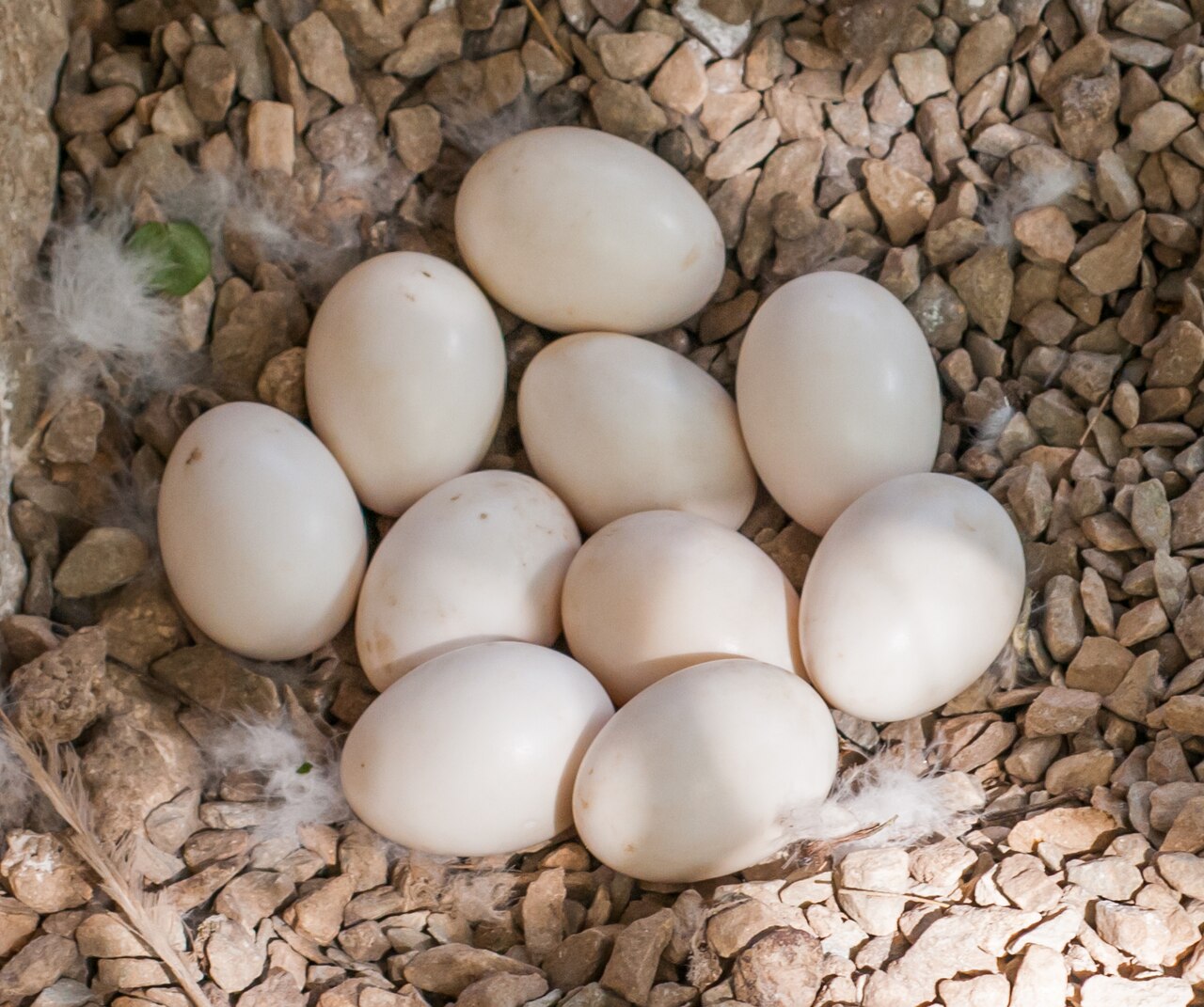
Almost. The first eggs a Cayuga hen lays each season are coated in a dark grey to charcoal pigment that can look genuinely black, and photographs of a fresh Cayuga egg next to a white one are striking. The shell underneath is not black: the color sits in a surface layer applied in the oviduct.
The pigment rubs off with a wet thumb, and it thins as the laying season progresses. By midseason eggs are grey green, and by late season most hens lay plain white. The pattern repeats the following spring. Some lines hold the dark color longer than others, and breeders who select for it can keep it running several weeks deeper into the season.
Egg Production: How Many Eggs Per Year
Expect 100 to 150 eggs a year from a Cayuga hen, with well managed birds at the upper end and show bred lines often lower. That is solid but not exceptional: a Khaki Campbell can pass 250 and a Runner will beat it comfortably. The Cayuga trades volume for temperament and hardiness.
Laying starts at five to six months and is heaviest in the first two years. Production is driven by daylight, so output falls sharply in late autumn and recovers in spring unless you add supplemental light. Duck eggs run larger than chicken eggs and hold more fat and protein, which is why bakers seek them out.
Cayuga Duck Temperament
Cayugas are among the calmest domestic ducks. They are slow moving, not prone to panic, and tolerant of handling once used to it, which makes them a reasonable choice for a family flock or a first duck. They are not lap birds, but they will follow a person carrying a feed scoop without scattering.
They mix well with chickens and other duck breeds and rarely start conflict. Drakes can get pushy in spring like any mallard derived breed, and a ratio of one drake to four or five hens prevents the overmating that damages hens’ backs and necks. Anyone raising them from young should read the baby duck basics before the birds arrive.
How Loud Are Cayuga Ducks?
Quiet, by duck standards. Cayuga hens produce a softer, lower quack than most breeds, and the volume is one of the reasons the breed suits suburban lots where noise complaints are a risk. Drakes are quieter still, since in all mallard derived breeds the drake has a raspy whisper rather than a true quack.
Quiet does not mean silent. A Cayuga hen will call loudly when separated from the flock, when a hawk passes over, or at feeding time. If noise is the deciding factor, keep hens only and skip the drake, which also removes the overmating problem and the fertile eggs. The difference between the sexes is a common surprise, and it is the same distinction behind the question of what a male duck is called.
Housing and Water Needs
Cayugas need a dry, draft free shelter with deep bedding and about 4 sq ft (0.37 sq m) of floor space per bird. They do not roost, so floor space matters more than perches. The breed is notably cold hardy and will stay outside in snow happily, but wet bedding causes foot and respiratory problems fast, so the shelter has to shed water.
Swimming water is not strictly required, but water deep enough to submerge the whole head is, because ducks clean their eyes and nostrils by dunking. A rubber tub or child’s pool works. Provide a pond or tub for bathing if you can, since access to water keeps the plumage oiled and the birds visibly healthier.
What to Feed Cayuga Ducks
Feed a waterfowl or all flock crumble at 16 to 18 percent protein for adults, with oyster shell offered separately once hens are laying. Never feed medicated chick starter, and add brewer’s yeast or a niacin supplement for ducklings, since ducks need roughly twice the niacin chickens do and deficiency causes leg problems.
Cayugas forage well and will clear slugs, snails, and insects from a garden, though they trample seedlings as readily as they eat pests. Greens, peas, and chopped vegetables are good supplements. Bread is not food and should never be offered. The full list of safe options is covered under what ducks eat, and Penn State Extension publishes practical small flock waterfowl guidance at extension.psu.edu.
Why Cayuga Feathers Turn White With Age
Every Cayuga goes white eventually, and hens go faster than drakes. The whitening appears first around the face and neck, spreads across the breast, and increases with each annual molt. A six year old hen may be more white than black.
This is normal and is not a health problem, a nutritional deficiency, or a sign of poor breeding. It is a pigment trait tied to the genetics of the black plumage in this breed, and it happens even in show quality birds fed perfectly. Buyers who want a black flock long term have to keep replacing it with young stock, which is worth knowing before the first molt takes you by surprise.
Cayuga Duck vs Pekin and Other Breeds
Against a Pekin duck, the Cayuga is smaller, quieter, lays fewer but darker eggs, and takes longer to reach table weight. The Pekin wins on meat yield and growth rate, which is exactly why it replaced the Cayuga commercially in the 1870s. For a backyard keeper who values calm birds and low noise, that commercial advantage means very little.
Against a Khaki Campbell or Runner the Cayuga loses on egg count and wins on temperament and containment. Against a Muscovy it is louder but easier to keep, since Muscovies fly well and are a separate species. If you want one breed that is handsome, quiet, hardy, and lays a respectable number of eggs, the Cayuga is a strong pick. Keep more than three and you will quickly learn what a group of ducks is called.
Related reading: Call Duck.
Frequently Asked Questions
Are Cayuga duck eggs really black?
The first eggs of each season carry a dark grey to near black coating over a white shell, and they do look black in the nest. The pigment is a surface layer that rubs off when wet and fades as the season progresses, so eggs turn grey green and then white by late summer. The pattern returns the next spring.
Are Cayuga ducks good for beginners?
Yes. They are calm, cold hardy, poor fliers, and quieter than most breeds, which covers the three things that usually go wrong for new duck keepers: escapes, noise complaints, and skittish birds. The main limitation is moderate egg production, so anyone keeping ducks primarily for eggs should look at Khaki Campbells instead.
How long do Cayuga ducks live?
Eight to twelve years is typical for a well kept Cayuga, and some reach fifteen. Egg production drops sharply after the third year, so a laying flock is usually rotated well before the birds reach old age. Predation rather than illness ends most backyard duck lives, so secure night housing has more effect on lifespan than anything else.
Do Cayuga ducks need a pond?
They do not need a pond, but they need water deep enough to dunk their entire head, which ducks use to clear their eyes and nostrils. A rubber stock tub or a shallow child’s pool meets the requirement. Full bathing water improves feather condition and is worth providing where the mud it creates can be managed.
How can you tell a male from a female Cayuga?
At about four months the drake develops one or two curled feathers on the tail, which no hen ever grows. Voice works earlier: hens quack loudly, drakes make a quiet raspy sound. Adult drakes are also slightly larger and often hold their black color longer than hens, which whiten faster with each molt.
Will Cayuga ducks fly away?
No. At 7 to 8 lbs (3.2 to 3.6 kg) a Cayuga can manage only a short low flutter and cannot clear a modest fence. A 2 to 3 ft (60 to 90 cm) barrier contains them in normal conditions, though the same weight means they cannot escape a predator either, so night housing has to be genuinely secure.